Don’t Become a Photo”saur”

A lot of people tell me that I’m way ahead of things since I got into video/motion over ten years ago. Most still photographers weren’t even thinking about video ten years ago. Neither was I. Nor did I have a crystal ball. But I am a visual communicator and that means that I am always looking for the best way to communicate the message or tell the story. And twelve years ago, it became possible and affordable for me to deliver the message with another medium. Not instead of still photography but in addition to it.

My desire to explore video and motion at the time, wasn’t coming from a “tool” point of view. It was coming from a cultural one. When I think about it, I wasn’t fascinated by the technology – I was fascinated by what people were doing with the technology. Fast forward a decade later and I’m just wowed by where all this has gone. Our culture has changed dramatically in the last ten years because of technology. And while that is still “fascinating” and like creative adrenalin, it’s also a game changer in how it has affected the business of photography.

Don’t get me wrong and think that my message is to tell you to get into video or multimedia so as not to become a photo”saur” and become extinct. That’s not what I’m saying. What I am saying is that the cultural psyche has changed. Take notice and adapt. That doesn’t just mean, change the subject matter you shoot or how you shoot it to stay “fresh”. And it doesn’t mean to buy a video camera or a hybrid and start shooting motion. Those are probably good ideas but probably not going to be what keeps you in business.

The old days aren’t coming back. The ways of doing business have changed. Technology is democratizing when it’s placed in everyone’s hands. Understand that. Know that your clients understand that. So, think past the tool and technique and focus more on who you are and what you can bring to your customers to stay relevant. Some thoughts to ponder:

• Who are you? (why do your customers come to you and not your competition?)
• What services do you offer your client? If you don’t offer video and your client needs to look elsewhere – you’ve lost an opportunity.
• Are you still a one-man band? I don’t mean you need a large staff but have you considered setting up a virtual company when you need it with editors, sound people etc.?
• Do you continue to learn?
• Are you still using a dated business model ? Consider different licensing strategies for new media.
• Do you utilize social media?
• Are you noticing who’s “coming up” – the new talent? Do you try to see them through your customer’s eyes.
• Are you interested in other things besides photography?
• Are you willing to take risks? Creatively and otherwise.
• Ask yourself the question – how would I have approached this if I was just starting out?
• Think of solutions – then look at those decisions at a total 180.

Learn. Grow. Adapt.

Don’t become a photo”saur” and become extinct.

Add to FacebookAdd to DiggAdd to Del.icio.usAdd to StumbleuponAdd to RedditAdd to BlinklistAdd to TwitterAdd to TechnoratiAdd to Yahoo BuzzAdd to Newsvine

Listen Up – Audio is Everything

Audio is everything in video. I can’t stress this enough. Most times “capturing audio” is a skill that still photographers don’t have. If your job is on the line – my suggestion is hire a good sound guy. If you’re doing a personal project and want to learn more about getting good sound, here are some tips.

• Don’t use the camera’s internal microphones, except for reference.
• Never use “auto” when recording audio. Turn off the AGC (automatic gain control) on the DSLR cameras.
• Get your microphones in close. For b-roll situations, you can get away with a shotgun mic mounted on the camera. But microphones mounted on cameras can pick up camera noises.
• Use a good wind screen or dead cat when outside. Even if you’re inside, on a windy day, with windows open, you can pick up wind noise.
• Use a good set of headphones. Over the ear is best but earbuds can be used in a pinch. Your audio meters tell you that you’re getting sound, but not if the sound is any good.
• Use shotgun microphones for your interviews. Get them in close to your subject – no more than 1-3 feet away.
• Lav microphones, attached to lapels can be used wired or wirelessly. Be careful with your positioning to avoid unnecessary noise from hair or jewelry.
• Go wired whenever you can. Resort to wireless solution if wired isn’t possible.
• Use an omni-directional or cardiod microphone when you are in more acontrolled situation and you want your sound coming from more directions.
• Don’t cross your audio cords with your electrical cords. This causes a hum that you will detect if you are wearing headphones.

Pay attention to audio. Start letting your ears do more of the work. Every room and situation has its own sound. Listen up.

Add to FacebookAdd to DiggAdd to Del.icio.usAdd to StumbleuponAdd to RedditAdd to BlinklistAdd to TwitterAdd to TechnoratiAdd to Yahoo BuzzAdd to Newsvine

Getting Your Train Back on Track

I was going to write about audio today, but my mind wasn’t there – it was elsewhere. That’s the fun part about it for me, I write if there’s something I’m thinking about.

This morning my mind was drifting to other things, like the highs and lows of the last couple of weeks. But when I have weeks that are like life on a roller coaster, I remind myself that I have to focus on the peaks and the thrills to survive the plunges. I also know that if I really want to live life then I have to be prepared for both ends of the spectrum.

I’ll share some thoughts that have helped me keep my train on the track.

  • I love myself for who I am.
    If timing is everything, then sooner or later I’ll get it right.
    Work is not a negative word.
    Do what I love to do, regardless of what others say.
    Understand my adversaries – I may learn something.
    Some of the things that have upset me the most, have helped me grow.
    Value friendships.
    True friendship continues to grow over the longest distance.
    Understand, no matter how much I care, others won’t. That’s OK.
    Be fearless to love.
    Forgive those who have hurt me.
    Forgive myself.
    There’s a time for everything.
    Be fearless to keep trying even though I’ve lost before.
    If I create from the heart, nearly everything works.
    Be fearless to think that anything is possible.

And one more from Yoda –“ Train yourself to let go of what you fear to lose.”

Maybe I’ll talk about audio next week.

Add to FacebookAdd to DiggAdd to Del.icio.usAdd to StumbleuponAdd to RedditAdd to BlinklistAdd to TwitterAdd to TechnoratiAdd to Yahoo BuzzAdd to Newsvine

Editing Tips for Multimedia and Video

A few days ago, I wrote a blog about “having a point” – or telling a story when you create multimedia pieces. Of course you have to have an overall idea and focus to start with, but below are some editing tips on how to make it come together in the editing room.

  • Edit with a purpose. Why are you making the “cut” where you are? Are you cutting on the action? Are you cutting on the beat of the music? What’s the reason behind your cut?
  • Set a pace or rhythm. Just like writing, where you have pauses in sentences with commas, edit your visuals to your narrative or interview soundbites, cutting after words and phrases.
  • Use image sequences to transition between different ideas and themes.
  • Let your images linger on the screen, giving time to breathe between them.
  • Cut on the beat or against the beat of music. Edit the music and let it become part of your piece, rather than just a background soundtrack.
  • Adjust the volume of your music – lowering it during interviews and raising it when there is no narrative or dialog.
  • Use audio fades between music cuts to soften the cut.
  • Insert room tone between cuts in interview soundbites, making the cuts less apparent.
  • Use interview footage sparingly – when introducing someone or when someone is expressing emotion on the screen.
  • Identify interview subject with name and title text in lower third.
  • Use text that’s easy to read and break it up over many slates. Leave the slate on the screen long enough to read twice.
  • Always start with your strongest images.
  • Don’t “move” all your still images – leave some static on the screen.
  • Don’t use dissolves.
  • When working with media from DSLR cameras, keep the media in the DCIM folders for logging and transferring into Final Cut Pro with the plug-in. If you have taken your media out of the DCIM folders – then create a new DCIM folder for the purposes of importing the media into FCP.

Remember to keep the story in mind at all times. When you think you have the story laid down in a rough cut – have friends over to watch it. Ask them what the story was. If they don’t know or can’t tell you, then you have more work to do.

Add to FacebookAdd to DiggAdd to Del.icio.usAdd to StumbleuponAdd to RedditAdd to BlinklistAdd to TwitterAdd to TechnoratiAdd to Yahoo BuzzAdd to Newsvine

“Here’s an Idea – Have a Point”

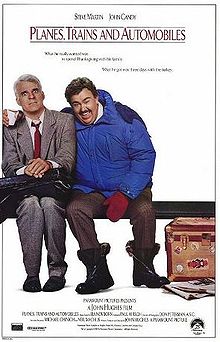
One of my favorite holiday movies is “Planes, Trains and Automobiles” with Steve Martin and John Candy. There’s a great scene in the movie where Steve Martin loses it and starts a rant directed toward Candy’s character, Del Griffith. Del, is a “nice guy” who talks incessantly. Martin’s character, Neal Page, an uptight ad man, frustrated by the day’s travel mishaps, finally explodes at his travel companion Del after one too many stories and says – “here’s an idea – when you tell a story, have a point!”

Am I the only one who has been oversaturated with multimedia and video pieces that are little more than pretty visuals to music? Don’t get me wrong, there are plenty of pieces that I do like, but there are far too many where I get bored and bail mid-way through because there is no point – there is no story.

Worse yet, the audio or music track many times feels like it has no connection to the visuals. It may be a great piece of music and provide pacing for the video, but it doesn’t complement the story. And there are times that the music is the most interesting part about the piece – if you take it away, what do you have? Most likely a pagination of moving and/or still images – like pages in a magazine or prints on a gallery wall. Independent and isolated vignettes with a music track – but no story- just eye candy.

What holds my interest is a story, where all the elements of audio, music, video clips, stills, text and narrative are parts of the whole and each one is integral in telling the story. I don’t think I’m alone in being interested in the story. Humans have enjoyed “the story” since the beginning of time. It doesn’t matter if it’s told verbally in a one on one conversation, in a multimedia piece, or in a major motion picture – a good story is a key ingredient for human interest. We all love a good story.

Personally, there is so much out there to watch these days on any given site that hosts videos, if I’m going to invest time in viewing something – I want it to have a point. If it doesn’t when I get to the end – I feel somehow let down.

I’m sure some of you will disagree with me on these thoughts and many of you may get loads of satisfaction from watching pretty visuals laid down to music and that’s OK. I’ve just had my fill of pretty content splashed before me, becoming a blurred palette in my head.

So, here’s an idea – have a point.

Add to FacebookAdd to DiggAdd to Del.icio.usAdd to StumbleuponAdd to RedditAdd to BlinklistAdd to TwitterAdd to TechnoratiAdd to Yahoo BuzzAdd to Newsvine

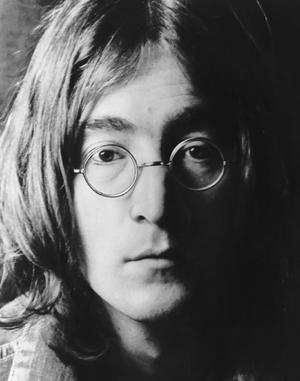
30 Years Ago Today – John Lennon Murdered

It’s hard to believe that it’s been 30 years since John Lennon was shot and killed outside outside The Dakota, his apartment building in New York City.

From the first time I saw the Beatles perform on The Ed Sullivan Show as a young girl in February, 1964, I decided that John was “my favorite Beatle”. There was something about him that appealed to me. Sure Paul was the cute one – but John was the …. well he just sort of struck me as more rebellious which was very exciting, even back then.

John followed his own path and used his voice to speak for Peace. After the Beatles broke up, he went on to have a great solo career and then when his son Sean was born, he pretty much left the limelight. He had recently resurfaced and had recorded a new album – and then he was killed.

I’ll always remember that night. I was watching the local NYC 11 o’clock news that had been delayed because a football game had gone into overtime. Half way through the anchor’s report came a breaking news bulletin saying that an unnamed man had been shot outside the Dakota, on West 72nd St. I instantly got a jolt and somehow knew that it was John Lennon and within a half hour it was confirmed that Lennon was dead.

The following week was a sad one in NYC. People gathered in Strawberry Fields, a section of Central Park that John and Yoko used to frequent. Night after night there were candlelight vigils and people took comfort in the collective.

The entire world mourned the loss of John and along with that went any and all hopes that the Beatles would get together again.

Rest in peace John. You made a difference in many people’s lives.

Add to FacebookAdd to DiggAdd to Del.icio.usAdd to StumbleuponAdd to RedditAdd to BlinklistAdd to TwitterAdd to TechnoratiAdd to Yahoo BuzzAdd to Newsvine

Yoda Who?

Twice this past weekend, while in conversation with friends, I had been referred to as Yoda. The second time it happened, I asked “Who is Yoda?” That’s right. I didn’t really know who Yoda was, even though I had heard the character’s name referenced over the years. I knew he was from Star Wars or Star Trek or some movie like that. But I had never seen either of those movies, so I wasn’t sure.

Shocking isn’t it? Or that’s what a friend thought when I “fessed up” to never having seen Star Wars – none of them – not even the first one. The truth is, I’m not a science fiction fan. I love fantasy, and spend my life living a fantasy, or trying to, but sci fi is too much of a stretch for me, as far as having the ability to come true – and I’m a believer that fantasies can come true.

I followed a link that my friend forwarded which led me to all things Yoda and I was instantly hooked by his wisdom. The more I learned about Yoda, the more intrigued I became. I had found my soulmate, an ugly little troll like creature with a glowing green wand, but with the wisdom of the ages.

Some of my favorite Yoda-isms:

  • “Fear is the path to the dark side. Fear leads to anger. Anger leads to hate. Hate leads to suffering.”
  • “So certain are you. Always with you it cannot be done. Hear you nothing that I say?”
  • “Train yourself to let go of everything you fear to lose.”
  • “You will find only what you bring in.”
  • “Always in motion is the future.”

I have been instructed to go “old school” over the holidays and watch the first three Star Wars films, which I will endeavor to do. So, forgive me all you “trekkies” (just kidding), but what do you call a Star Wars fan or in my case a Yoda fan?

Add to FacebookAdd to DiggAdd to Del.icio.usAdd to StumbleuponAdd to RedditAdd to BlinklistAdd to TwitterAdd to TechnoratiAdd to Yahoo BuzzAdd to Newsvine


How Do You Tell the Story?

I’ve said it hundreds of times – “the story is everything”, “without a story, you’ve got pretty pictures to a soundtrack”. So, how do you tell a story? How do you do it?

A friend called me the other day, struggling with this very question, of how do you tell the story? He was putting together a multimedia piece and he had captured sound and had taken photos during an event and was about to record an audio interview. I wasn’t sure at first, if he was asking about the mechanics of how to edit a story together in Final Cut– or was he asking me for guidance on how to tell the story? Those are two completely different discussions.

I thought back to when I was just starting to learn video journalism and had taken the Platypus Workshop. We had to tell our commitment or our story idea to an instructor, before we could start executing it. If the idea wasn’t delivered clearly and concisely, we went back to the drawing board to nail down the idea or the focus.

Every story starts out with an idea. Ideas have always come pretty easily to me, usually in spurts. All sorts of environments or activities can trigger ideas.

Seth Godin did a blog about a week ago titled, Where do ideas come from? Here are a couple of my favorites:

  • Ideas come out of the corner of the eye, or in the shower, when we’re not trying
  • Ideas come in spurts, until you get frightened. Willie Nelson wrote three of his biggest hits in one week
  • Ideas occur when dissimilar universes collide
  • Ideas fear experts, but they adore beginner’s mind. A little awareness is a good thing
  • Ideas hate conference rooms, particularly conference rooms where there is a history of criticism, personal attacks or boredom

Once I get the idea, I then start focusing it in my head. I play out the movie in my mind. What is the message? Whose message is it – mine? – the client’s? What is the motivation for the piece? A call to action? Once I get a pretty clear idea of what the story is that I’m trying to tell, then I start to put the pieces together. First I gather and capture all the assets that I’ll need, the interviews, b-roll, still photos etc. Then, when it’s time to edit the story, I’ll have a much clearer focus of how I will edit the pieces together to deliver the message.

Right now, I’m editing a feature length documentary, that is made up of ten different stories about ten different people in various corners of the globe. All together, the ten stories are unified by the theme of “the power of the individual in making a difference in the world”. Essentially the idea is, global stories about the power of one. That has been my underlying story from the moment of concept, to shooting it, to editing it all together.

So, how do you tell the story?  For me, it’s focusing on the “idea” at all times and editing toward that purpose.  There are hundreds of ways to tell the same story, but you need to know what the story is before you can begin to tell it.

Add to FacebookAdd to DiggAdd to Del.icio.usAdd to StumbleuponAdd to RedditAdd to BlinklistAdd to TwitterAdd to TechnoratiAdd to Yahoo BuzzAdd to Newsvine