Looking Back

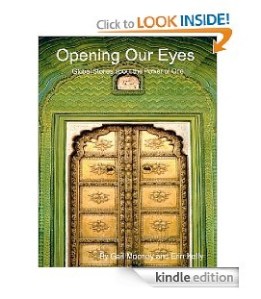
Today, I’ve been looking back through two year’s worth of blog posts that I have written. Wow – I’ve written a lot!  I really surprised myself at just how much when I started gathering the content that I had written in regards to the making of my documentary, Opening Our Eyes. I’m putting together my 2nd ePub that will be a companion to my first ePub, recently published on Amazon and Barnes and Noble.
My focus is centered on the “craft” and the making of the film, and I talk about everything from “the gear” I put together for our 99-day journey around the world to the distribution process for the final film. A bulk of the content has already been written with photographs ready to upload and links.  It’s just a matter of consolidating the information and presenting it in a more concise way.

Earlier in the year, I paid my dues in the learning department when I put together the first ePub.  After my experience working with a professional formatter, I quickly realized what not to do.  One big thing I learned was not to get too heavy with the images because the first generations of Kindles have only b&w displays.  I also learned not to create intricate designs in Pages because later I had to undo all the work I had done for a PDF version of the printed book.

I am amazed at how much I have written over the last few years.  It was interesting to look back through some of my blog entries, and see how I was “processing things”  at the time I was writing those posts.  I’ve never really kept a journal before, accept for a one year period in my life, between the ages of 19 and 20, when I was making my first journey around the world.

I’m really happy that I have archived these stories and records of my life, but that’s not what motivated me to first start writing. I used to wake up super early in the morning – my mind spinning with ideas and random thoughts, not allowing me to get back to sleep.  So, I would get up and I started writing down my random thoughts and I found it therapeutic.  It was like having a conversation with someone and sorting things out.

There are chunks of time in my life that I simply don’t feel like writing or that I have nothing to really say.  My mind seems to go into a dormant phase where I convalesce with other distractions – usually mindless ones. But then there are days when I just have the need to get my thoughts down on paper.  I’m grateful for those days – on days like this when I take the time to look back from where I’ve been.

Add to FacebookAdd to DiggAdd to Del.icio.usAdd to StumbleuponAdd to RedditAdd to BlinklistAdd to TwitterAdd to TechnoratiAdd to Yahoo BuzzAdd to Newsvine

Monetization of Photography in Spite of a Lousy Economy

I talk to a lot of photographers. I don’t define the word “photographer” by the type of camera he or she shoots with. Whether someone is shooting with a still camera, a traditional video camera, a motion picture film camera or a hybrid camera that shoots both stills and motion – a “photographer” these days is apt to embrace more than one of these tools.

Regardless of the tools you may use, I’ve come up with a few tips on how photographers can stay afloat and make money in this continued stagnant economy.

  • Think outside the box – don’t think of yourself as one who just shoots still images. Even your “still” clients will have a need for motion imagery these days.  It may not warrant the need for them to hire a big video production crew to make a broadcast spot.  But it could be one of your corporate clients needs a “talking head” for their website. Even if you don’t shoot motion or don’t want to – collaborate with someone who has these skills to fill your client’s needs instead of sending your clients  elsewhere.
  • You don’t need someone else to commission your services in order for you to make a living. When photographers take on personal projects, not only are they creating a buzz and getting noticed by potential clients, they are also creating their own “content” to monetize. It is possible now to get our content to market without the need of a middleman. Portals are open and plentiful to all.
  • Take advantage of what is “free”, rather than be put out of business by it. There are so many ways to build your brand and get noticed without spending a fortune. The costs of building and maintaining a website have dropped significantly because of advances in technology. And utilizing social media to create a buzz and get the word out about your company is virtually free with Facebook, Twitter,LinkedIn and YouTube. But be prepared to do the work and discipline yourself because this territory is ripe with distractions.
  • Re-purpose your content. If you’ve been blogging or have something useful to share – consider packaging your “knowledge” into ePubs, podcasts or “how to” webinars. One thing I’ve learned about making an ePub is that you can either do it yourself or hire a formatter so that it gets to market quickly – via Amazon, Barnes and Noble or the iTunes platform. Price it right – and offer more than one ePub at a time. (I’m working on my 2nd ePub now) In this market, if someone has just spent $3 or $4 to buy your ePub and they see you have another one for sale – it’s not a big stretch for them to buy that other book you offer at the same time.
  • Collaborate with others. Partner with others to put on webinars, podcasts, call in phone seminars etc. Use this opportunity to build your own brand. Don’t always feel that you have to be the only “act” offered. In fact many times, if you join forces with other creatives, it will get you further than if you are the only speaker in a half filled room. Get out there and get noticed and learn from your colleagues at the same time.
  • Be authentic. I cringe when I write that word because it has become a bit trite. I guess in a way I have always been authentic. In fact I just can’t help myself. If you are true to yourself, you will be ready, eager and able to work hard on your dreams. And hard work is exactly what is necessary to make it in this profession.  You’ve got to want it bad enough in order to do the work. If you are a clone of other photographers, you’re career will be short lived. I guarantee the photographers that you are emulating will be “moving on” because their passion is driving them to new things. So, what happens to the cloned versions then?
  • Don’t focus solely on the money. Easy to say and really hard to embrace when you can’t pay your mortgage. But look at any successful person – I don’t care which business you choose to look toward in terms of finding successful people – but you’ll see that most people who have “made it big” were not driven by the money. I’m not saying that money is not important, but if you are solely focused on the money and not on the act of creating – it will show.   Being too focused on the  money part of the equation, can sometimes push it away. People sense it. It’s human nature to want to be around a “winner” – not someone who is begging for a job to keep them afloat financially.
  • Be patient. Everything turns around. While the old days and ways of doing things won’t come back, better opportunities will replace them. Don’t be paralyzed by your own fears. Do what you can that won’t cost you a lot of money and there is plenty you can do. Work social media, learn new skills – audio, editing, writing etc., network with people, create new content for ePubs, webinars, and podcasts. Use your imagination, pursue what you are passionate about and when the economy turns around – you’ll be ready.

Add to FacebookAdd to DiggAdd to Del.icio.usAdd to StumbleuponAdd to RedditAdd to BlinklistAdd to TwitterAdd to TechnoratiAdd to Yahoo BuzzAdd to Newsvine

When “We” Became “Me”

It started happening after JFK was assassinated, followed by Martin Luther King’s death and finally the brutal slaying of JFK’s brother, Robert in the kitchen of a hotel in Los Angeles.  We were beginning to shift from a culture of “we” that began after the troops came back from the “big war – WWII” and everyone wanted to get back to normal life – having families, friends, and earn enough money to take a vacation every year, pay your bills and be able to educate your kids so that they would have a chance at a better life.

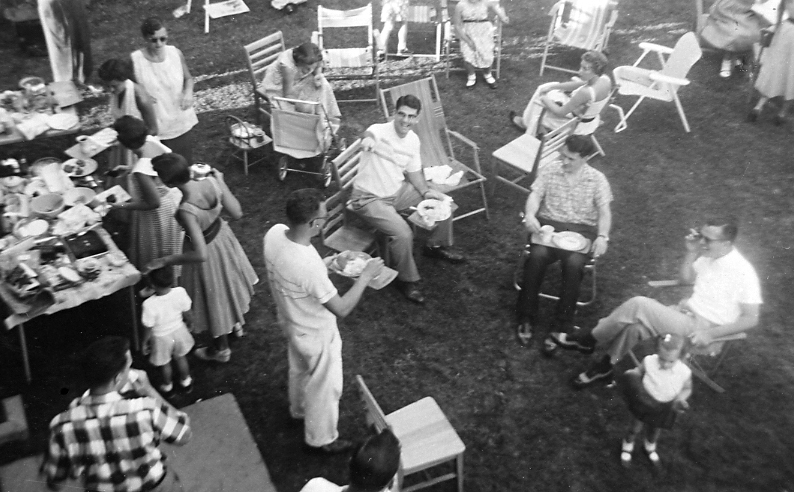
I was a kid in the fifties and it was a time when there was a real sense of community – definitely a “we” feeling in many ways.  Our backyards all connected into one big play field for all the kids in the neighborhood with the “woods” being the un-chartered territory beyond. We ran free, till dark, feeling like our own tribe of “we” with our own set of rules. Everyone pretty much looked out for one another –parents looked out for their neighbors’ kids, kids watched out for other kids, moms helped out other moms and dads the same.  We had a sense of community.

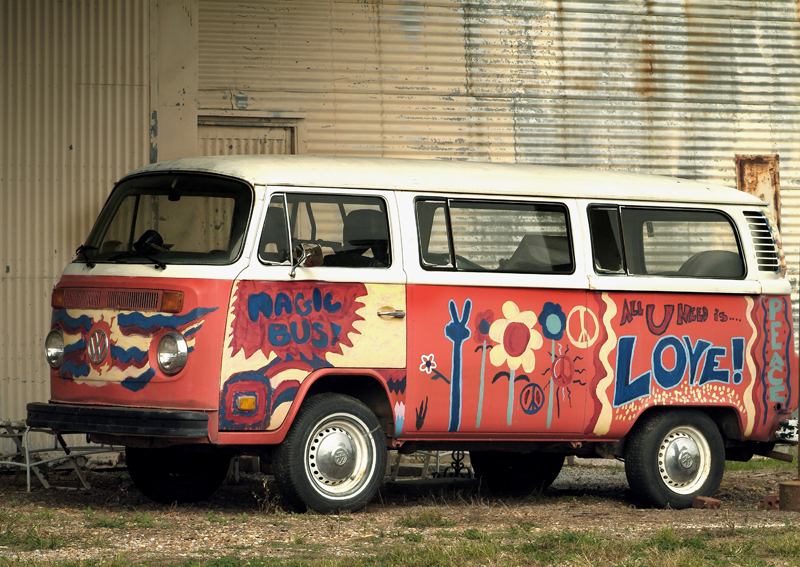
In the late sixties things began to change.  The Vietnam War was in full swing, along with the Civil Rights Movement and student unrest was building to the “Arab Spring” of its times. Our dreams were beginning to fade – our friends were coming home in body bags, our cities and neighborhoods were being destroyed during the riots of the late sixties, and our leaders were assassinated, one after another.  A shift was starting to happen.  We were becoming divided.  Fences and hedges started to divide our backyards, breaking up that once endless playing field.  We were starting to become more about “me.”

As a culture we roared through the 80’s and 90’s following a path as a society that believed that in order to win, others had to lose.  We became greedy, thinking only of our personal gain and caring little how that affected others. The divide among us has exceeded beyond what most of us would have ever thought possible.  We have made an art of  “ how to get nothing done” with our political system and no one is getting anywhere.  We are expending so much negative energy and if we don’t turn that around, we are all doomed.

I’m not a pessimist – just the opposite. I think if we can all just stop and flip our mindset into what we “can do”, instead of slamming the “other guy”, we just might be able to turn things around.  I see a younger generation, the 25-30 year olds who are thinking more in terms of the “we”, and getting away from the “me” mentality.  I have great hopes for this generation. We are at a turning point.  I’d like to look back at this time 10 years from now and say to myself  “I’m glad I did something.”

Add to FacebookAdd to DiggAdd to Del.icio.usAdd to StumbleuponAdd to RedditAdd to BlinklistAdd to TwitterAdd to TechnoratiAdd to Yahoo BuzzAdd to Newsvine

Journeys of a Hybrid

I came across a wonderful blog entitled “What Does Love Mean to a Four-Year Old?”


I thought I’d share some of the words and wisdom that came from children.

  • “When someone loves you, the way they say your name is different. You just know that your name is safe in their mouth.” Billy – age 4
  • “Love is when my mommy makes coffee for my daddy and she takes a sip before giving it to him, to make sure the taste is OK.” Danny – age 7
  • “Love is what’s in the room with you at Christmas if you stop opening presents and listen.” Bobby – age 7 (Wow!)
  • “If you want to learn to love better, you should start with a friend who you hate,” Nikka – age 6 (we need a few million more Nikka’s on this planet)
  • “Love is like a little old woman and a little…

View original post 140 more words

New Business Models in Photography and Video

This topic comes up a lot these days.  But you could apply “new business models” to just about any business – not just photography and video. Photography and video, in and of themselves are not business models at all, but rather they are mediums that are used commercially, non-commercially and personally. The business end of photography and video comes when you determine how you want to apply them in terms of today’s markets.

Today’s markets are global.  That’s good news and bad news, depending on the type of work you do.  If you are a stock photographer or even if you have expanded that into also shooting stock motion footage – your inventory or your content if you will, must be unique in some way in order to sustain that type of business model in our global economy. You will need to stand out if you pursue this type of market.

If you are a commissioned commercial or editorial photographer, cinematographer, or director, the competition is fierce and once again, if you don’t have a unique style or vision, most likely you will end up playing by others’ rules or signing “their” contracts.  It comes down to supply and demand of talent and work, and you either need to compete by price or offer something that you do better than your competition.

The good news is, if you are willing to do the work, the world is your stage.  The portals for distribution of your “content” are open to all and as “creatives” we are no longer dependent on middlemen.  When I get asked to talk about “new business models”, I always look at it as “where are the new opportunities?” – where I will be carving out my own “new business model”, rather than having to adapt to others ideas of what that is.  There is a big difference in those two approaches.

I am carving out a business model for who I am creatively, and where I see the most opportunities for what I do well.  When I am authentic to who I am and apply this to my work, I am able to get the type of work to market and reach the right audience while maintaining ownership and control over the licensing of my work.  I am able to do that not only because technology has enabled me to do that, but more importantly it has created a demand for the type of content that I create.

Think about it.  What are your strengths? What are your passions?  Now imagine a business model based on your answers. The world is our stage.

Add to FacebookAdd to DiggAdd to Del.icio.usAdd to StumbleuponAdd to RedditAdd to BlinklistAdd to TwitterAdd to TechnoratiAdd to Yahoo BuzzAdd to Newsvine