Five Things Photographers Should Do if They Want a Future in Photogaphy

An RKO publicity still of Astaire and Rogers d...
An RKO publicity still of Astaire and Rogers dancing to “Smoke Gets in Your Eyes” in Roberta (1935) (Photo credit: Wikipedia)

Understand there’s no such thing as “just do it”.  Nobody “just” does anything; even the folks that make it look that way. I used to watch old Fred Astaire movies and he always made dancing look effortless and easy. But he worked every day of his life on perfecting his skills. It takes a lot of hard work to make a life “your own”, rather than follow a more conventional path.  If you want to sustain yourself financially with a profession like photography, you have to be prepared and willing to do what it takes to make that happen.

Don’t just say no – come up with alternatives. About a decade ago, photographers started rallying together to stand up and say no to bad contracts.  It didn’t work and still doesn’t because there’s always going to be somebody that will say yes.  The problem with “just” saying no is that photographers are only focusing on the problem and not coming up with better options or solutions.  These days photographers have the benefit of technology that has made possible a variety of new options photographers can use to promote and market their work. If we all start focusing on what we can do, instead of just saying no to bad deals, we’d all be better off.

Collaborate/Partner with other creatives.  Photographers have always been fiercely independent creatures.  That has its benefits creatively but can be a real detriment in business.  These days it is a lot easier to connect and collaborate with others, even virtually, and in the process we become stronger as a team of creatives.  Think about teaming up with people who are good at skills you don’t possess, whether it is video or CGI or graphic design.

Walk the Walk – Don’t Just Talk the Talk.  If you have something to say, then by all means say it.  Don’t be a whiner or hang around other whiners and say, “somebody should do something”.  If you don’t like what is happening around you – then do something about it. I am on the board of directors of my trade association, ASMP (American Society of Media Photographers).  I feel that my role on the board is to share my knowledge and skills at this “table” so our members may benefit and the industry stays healthy.  I can only do that if I have something to share and that means I need to be walking the walk – not just talking the talk.  If you are an ASMP member and feel you have something to share with your colleagues, I encourage you to run for the board and become part of the solution. You can declare your candidacy up until December 31st.

Don’t aspire to be part of the status quo.  That just doesn’t work in photography.  You need to be better than the rest to stand out.  What does that mean and how does one do that?  There’s only one way – listen to the voice inside you – and shut out the “noise”.  If you can remember to be true to who you are, you’ll knock the socks off the status quo.
 

Building an Audience and Why It’s More Important Than SEO

If my sole goal in writing my blog were to attract as many hits as I could, I’d focus my concentration on using all the “right” SEO keywords throughout the context of my writings.  I don’t want to write like that though, with my thoughts focused on using certain key words, in order to get the most eyeballs.  I would rather write with my focus on what I have to share with my audience and what they want and value from me. That may yield a smaller audience, but it will be the right audience.

It’s nice when something I write goes viral, but I’m more interested in building an audience that is also a community of people who are interested in what I have to say, share or sell. I’m also interested in building a community who understand that by interacting with one another, they make each other stronger.  Ultimately, by finding that niche of people who are interested in, and value what I and other members of this “community” have to offer, I am building a sustainable audience. It takes a lot longer to build this type of audience, but in the long run, the returns are longer lasting.

Chris Guillebeau, is a guy who understands how to build an audience.  He writes a blog called The Art of Non-Conformity,

Yesterday he wrote:

“I used to run several little businesses that produced a good income, but they were completely dependent on external factors such as Google rankings or the lack of competition in my space. It was fun while it lasted, but when efficiency entered the marketplace, I had to move on. Looking back, I can now see that I didn’t really have a business; I was merely taking advantage of an opportunity. And most critically of all, I didn’t have an audience. “

He goes on to say:

“When you devote your attention to cultivating and enriching an audience over time, you have much more security. You aren’t dependent on the whims of Apple, the fluctuations of Google rankings, or whether a publisher will return your calls. Listen closely and the audience will tell you what they want. Even if you don’t always get it right, well, keep caring and you’ll get another chance. “

I’m a big fan of Guillebeau because he does listen to his audience. I know that I will always get something of value from his writings.  He gives me a reason to come back, whether it is to read his blog or buy another book or attend one of his World Domination Summits.

I try to apply this type of thinking in how I promote my photography and video business as well in promoting my film.  With my film, I have been able to get a very clear sense of who my audience is, through my FB fan page interactions, the film’s blog and recently by physically meeting people at various film festivals over the last couple of months.  I was able to interact with my audiences and to find out, what they liked about the film through their comments and questions.  I could see how I made them feel through the film how that prompted them to action.  Sometimes the action was to buy a DVD or ten DVD’s for friends and family. And sometimes, I find out later that I had motivated somebody who had watched the film to take some positive action.

I know that if I want to build a sustainable audience I need to do more than to just someone into a theater or to buy a DVD, I need to continue to create and share what I do best, and I will be giving the audience what they want at the same time.

It really all comes down to knowing what your audience wants or needs and being the one who has the desire and the skills to fulfill that need. To really build an audience you need to identify two things that will work together in making that happen:

What you are good at?

And

What your audience (client)  is looking for?

When those two things are in sync with one another, you’ll be building the right audience, which is far better than attracting lots of eyeballs but not giving them what they’re looking for.

Copyright, Contracts and the Independent Photographer

Most photographers hold copyright sacred.  By law, (in the United States) a photographer holds the copyright to his or her work, unless they transfer it to another person, company, institution or organization.  Generally, this happens in a “work for hire” situation.  But it appears that this is becoming more and more the standard in contracts between photographers and the clients who are commissioning them.

This is happening more frequently in editorial markets, where magazines see the added value of the photographs that they commission, beyond their original usage and want to keep that additional revenue, rather than relinquish it to the photographer.  Many publications have partnered with stock agencies for the purpose of “reselling” the images.  Historically, photographers would benefit from relicensing their photographs when shooting for publications. Editorial assignments paid much lower rates than commercial commissions so in return a photographer would receive a credit and in most cases could make additional money by relicensing their images for other uses.  That is quickly changing.

Photographers have been so narrowly focused on just holding on to their copyright, they haven’t been paying much attention to the details in the contracts. Some contracts being offered, transfer the photographer’s copyright to the magazine and in turn offer the photographer a small percentage of any future commissions made from the “resale” of their images, but this of course is a percentage of the magazine’s commission after the stock agency takes their cut.  A lot of photographers think that’s better than not getting anything at all.  But is it?

What’s most alarming in some of the recent contracts that I have seen, is a clause that states that the photographer will hold the magazine harmless if there should be any legal consequences resulting from their images.  So, contractually, even though a photographer no longer holds the copyright to the images they were commissioned to create, nor maintains any control over how those images are used (by the magazine or the stock agency) they are liable if there are legal consequences.

The devil is in the details.  Read the contracts. Do the math and ask yourself if you’ll still be in business in 5 years.  As for me, I see new opportunities beyond commissioned work and one of the many rewards is that I will hold the copyright to the images (still or motion) that I create.

“Old Enough to Know Better but Still Too Young to Care”

I was talking to a friend recently about getting “older” and how it really sucks on the one hand but on the flip side, I’ve never felt more liberated in my life. He laughed and  said that I reminded him of a line in an old country/western song – depicted in the title of this post.

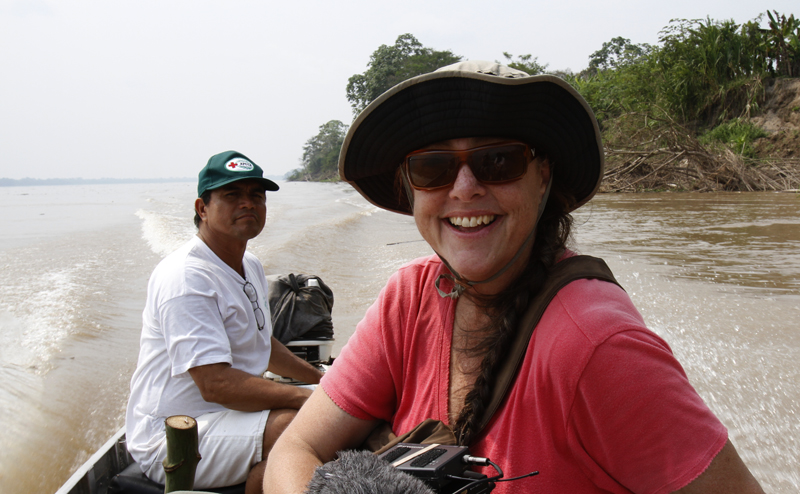
On the Amazon River, Peru

It’s pretty accurate, at least in terms of who I am.

I have never been one for “labels” of any kind.  I’m much more interested in what’s going on in the “inside” opposed to what someone is displaying on the outside.  So much so that when my daughter was younger, if she didn’t come home from school right away,  I would worry and think that I wouldn’t be able to describe what she was wearing if the police should come asking.

Our American culture seems to be obsessed with labels, more interested in the packaging and fizz than the substance.  “Older” people are invisible, dismissed and ignored as being too set in their ways, dated, and useless, when in fact some of the most interesting people I have ever taken the time to talk to, were ones that most folks seemed to overlook, simply because of their “packaging”.  I was lucky that I came to that realization at a very young age, when an art director, who was a great mentor to me in my early years, introduced me to the legends of photography.  They were all “old”, at least to my young eyes, but I quickly realized that age had nothing to do with how they saw the world.

It amazes me when seemingly intelligent people use catch phrases to describe others and don’t even realize that in the process that they are the ones with “narrow” sights and they would do better to open their eyes and see beyond.  My eyesight has gotten worse as I have aged, but at the same time, my vision has gotten so much better.

When I was younger, there was a popular saying “don’t trust anyone over 30”.  I’m glad I never really bought into that notion, because I would have been the one who was shortchanged. Don’t judge people because of gender, color or age or the type of car they drive.  Take the time and the energy to look past the packaging and really see.  You’ll probably be surprised that ignorance, narrow mindedness, fear, and pessimism comes in all sexes, shapes, sizes and ages.

“How old would you be if you didn’t know how old you was?”

Satchel Paige (1906-1982) Baseball legend who continued his successful career well into his 60’s.

The Power of Film in Making a Difference

When I set out to make a film about individuals on six continents who were making a positive difference on our planet, I didn’t set out to save the world.

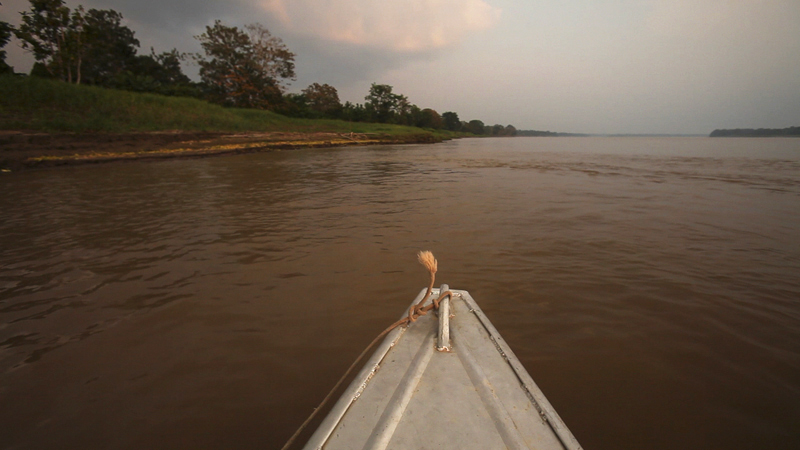
Amazon River

That would not only be something impossible to achieve, but it would diminish what I could do. And in fact, if I had set out to attain such an overwhelming feat of saving the world, I may have quit before I even got started – out of pure frustration.

But I do know the power of what a film can do.  I know I can use my craft and my tools in my own small way to make a difference.  And I know that by breaking down tasks into small actions; they add up to some very big accomplishments. Even with no backing, little funds and virtually no help, my daughter and I created a film that is doing exactly what we set out to do – inspire and move people to action to do what they can do to make our planet a better place.

All too often, we over think things.  Big productions, big money, celebrities and everything else that shouts out to us on the airwaves and the Internet dazzle us.  We start to believe that anything that isn’t grandiose isn’t worthy at all.  It’s a pity because in our attempt to gain perfection or notoriety – we shortchange ourselves and everyone else on what we could have accomplished.

I’ve seen a lot of “small” films over the last few months as I travel from festival to festival with my documentary, Opening Our Eyes.  While many of these films are “small” – or at least deemed small by some – they are powerful in every way.  Sometimes, there may be only 10 people in the audience and I think what a shame, that these powerful films won’t be seen by the masses.  That is changing though, as filmmakers have access to new tools and platforms that can take their small films global.  I’ve witnessed that first hand.

As consumers we need to start taking notice of films, books and photographs that don’t have millions of dollars or stars behind them.

As filmmakers we need to stay true to ourselves, believe in our dreams and take advantage of the power of the age we live in to not only make films that create awareness but to get them seen on a global scale.

I hope I never lose sight of what’s possible through the power of film and how photographers and filmmakers can use their craft to create awareness and make our world a better place. These days, with a lot of hard work and determination, the individual has the power to make a difference globally.  We live in an amazing time – take advantage of it.