Mentors and Lessons Learned

I recently visited with one of my mentors, Adrian Taylor who had been instrumental in my career.  I met Adrian when he was art director at Travel & Leisure Magazine.  He had just taken that job and relocated to NYC from San Francisco where he had been based for almost 20 years.  My partner, Tom and I had just graduated from Brooks Institute and were young eager photographers when we met Adrian. Looking back, I think that meeting was perhaps the most instrumental and fortunate bit of fate in our beginning careers.

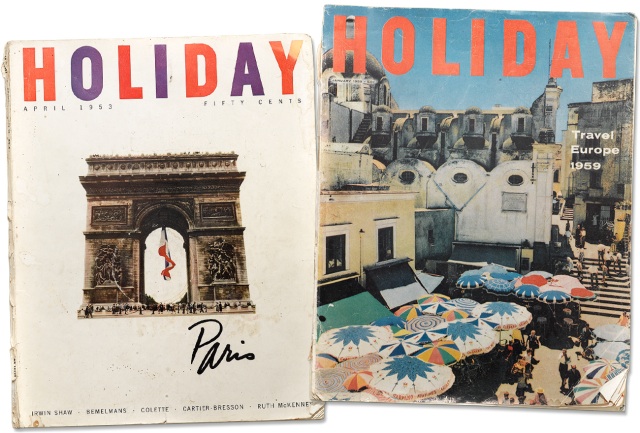
During our visit, Adrian started recanting his amazing stories of when he first got started as an art director.  He was also young and eager to learn, when Frank Zachary, editor of Holiday Magazine took him under his wing.  Adrian was reminiscing because Vanity Fair had just run a story about those early days of cn_image.size.holiday-magazineHoliday and the legendary writers and photographers who contributed to it at the time.  The contributors read like a who’s who:  John Steinbeck, Carier-Bresson, Slim Aarons, Fred Maroon, John Lewis Stage and so on.  At one point in referring to Zachary, Adrian said “he encouraged me.” Without missing a beat Tom replied, “That’s what you did for us too.”
I’ve been thinking about how important “encouragement” is for someone just starting out.  Learning technique and business tips from a mentor are very important things for young photographers to learn when first starting out, but I think perhaps the greatest gift a mentor can give is his or her encouragement.   If there were one thing that I can point to that I got from Adrian it would be just that.  He encouraged us to be the best we could be.  He believed in me so much that I couldn’t not believe in myself and that made me challenge myself and grow with every assignment.

Years later, I had a friend who became a mentor to me when I first started to write.  He too encouraged me.  At times he praised me and other times he was incredibly harsh with his comments, but I learned and I got better because of his encouragement.  He is no longer here, but his encouragement, as well as the lessons learned have played a part in my life. In fact, he gave me the courage to take on one of the most challenging projects of my life.

Mentors come and go in one’s life each making their own mark as they do.  If you should be so lucky to have people like this in your life, make sure you do one thing – take the time to make an impact on someone else’s life.  You never know what will come of that but no doubt it will make a difference, not only in that person’s life, but in your own as well.
We Are All Broadcasters

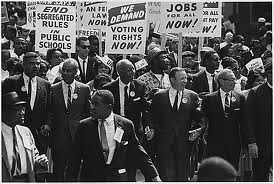
Back in the early1960’s, during the height of the Civil Rights Movement marchersthe world watched as violence and hatred played out every night on TV.  A few years later, we watched the horrors of the Vietnam War taking place on the other side of the globe, from the comfort of our living rooms. Those broadcasts made an indelible mark on me at the time, growing up in my fairly sheltered life in suburbia.  They opened my eyes to the world and I took it all in.

Yesterday, a tragic bombing occurred during the Boston Marathon that took the lives of three people and injured dozens more.  Seconds, after the first of the two bombs went off, everyone who was connected to the Internet, immediately knew what had happened, regardless of where they were in the world.  Photos, video and sound recordings went viral – globally and instantly.  Along with the “bonified” news broadcasts transmitted in real time, rumor and speculation spread instantly as well.

In the 50 plus years that have gone by since those early days of “live” news coverage, bringing “awareness” into our homes, technology continues to impact our lives in a profound way.  We are connected globally and there’s no turning back that clock.  We are no longer isolated from what is taking place anywhere and everywhere on the planet.

We are all collective participants. We can tweet, blog, post images and video on Facebook and numerous other social media platforms without really needing anyone’s validation, permission or vetting whatsoever.  Think of the power in that.  It gives everyone a voice on a global scale.  But along with that comes responsibility. It used to be that if you saw something written in a newspaper or heard it on the evening nightly news on TV, it was true and you could believe it.  But now what do we do?  How can we decipher and determine what we see and hear online is true and accurate? Ultimately, we need to make those judgments ourselves.

I’ve been thinking about this all morning, and I can only hope that as we become more connected through technology, that we start to embrace our similarities as human beings, instead of being split apart by our differences.  For those of us who are documenting the world through images and video, whether professionally or not, we are broadcasting on a global scale, on a daily basis.  Think about the power of that and the responsibility.

6 Ways Video has Made Me a Better Photographer

Lately, I’m finding that I “get the job” because I know how to shoot video. What’s odd is that these are still photography assignments and I was NOT hired to shoot video, but because I knew how to shoot video. What I’ve discovered is that many clients love the “eye” of the “hybrid”.

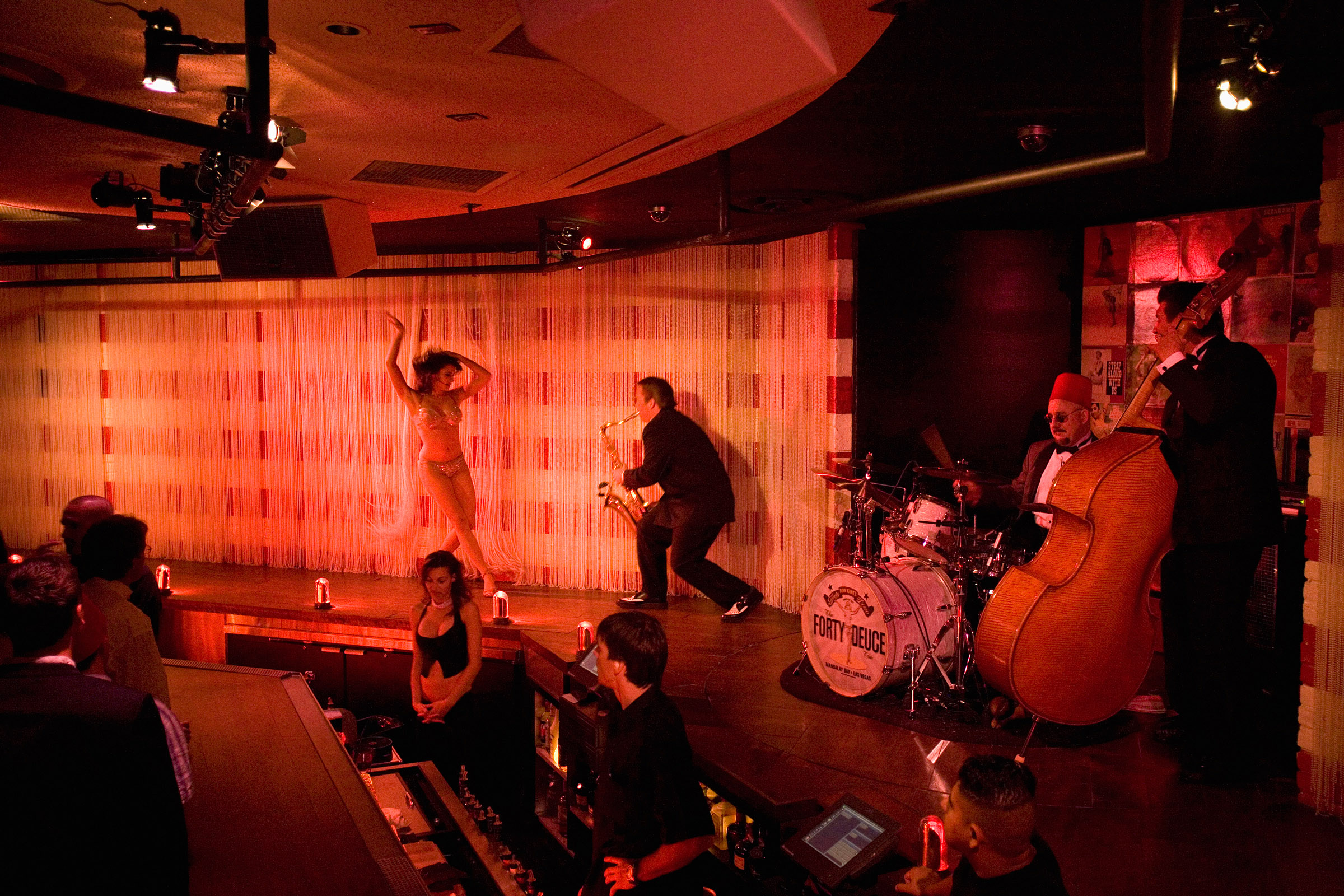
I’ve been thinking about what is it about the “eye of a hybrid” that clients are finding attractive. Forty Deuce burlesque club, Las Vegas, Nevada In a nutshell, it’s the eye of a master storyteller.  That’s because the medium of video is the perfect medium for telling a story. It encompasses movement, action, pace, rhythm and sound to engage, entice and feel.

I got a call this week for an editorial still photo assignment.  As usual, there was the customary business paperwork, but the client also provided a “shot list”.  I’ve been shooting editorial assignments for over 35 years and have had all kinds of direction. Sometimes, I’m given a writer’s manuscript and I’ve come up with my own shot list and sometimes I’m just told to come up with a variety of images.  But this “shot list” was intriguing because it read more like a shooting script for a video project.  As I read through the list, I could see how the person who had written it – had the “eye of a hybrid”.

Here are some of the suggested shots and “direction” from the list they provided:

(This is how I think and shoot in video. It has made me a better still photographer)

Cover it – Get comprehensive coverage – different perspectives, focal lengths, wide, medium and close-ups.  When I shoot video I will get a variety of angles as well as a variety of focal lengths because I know I will need plenty of b-roll to work with when editing the story together.

Get sequences – Get a variety of mini stories with people interacting. I am accustomed to thinking about how my “shots” will come together as part of the whole video that I’m working on.  Now, I approach a still editorial assignment like this as well. It’s kind of like of a moving pagination of imagery in my head.

Get storytelling images – With still photography I need to make sure those independent shots or moments in time also tell a story and stand on their own.  They can’t just be “wowy zowy” photos as Bob Gilka of the National Geographic used to say when I showed him an eye grabbing and colorful, abstract image.

Action/motion – make the images “feel”.  One that that motivated me to start exploring motion was because I was finding that it was difficult for me to convey the feeling of motion in a still image.  I’m finding that it’s easier for me to convey movement in a still image now because my eye is trained to look for it.

Give the images sound – (like a hammer hammering)Natural sound gives a video the element of reality.  It’s almost like it gives the video a well-needed extra layer or dimension.  When I’m shooting still images, I look for images that will illustrate the “sound” of an environment.

Shoot more – Give me more to choose from.  Again, you can never have enough b-roll when you are shooting video so I have naturally started shooting more on still photography shoots and my clients love having the abundance of choice.

What’s Your End Goal?

Do you ever feel stuck – like you just can’t quite make it to the finish line?  This can happen for a number of reasons – your plan wasn’t well thought through – your perfectionism has stopped you – you don’t see the big picture or you can’t break down the details – or maybe you never had a goal to begin with.

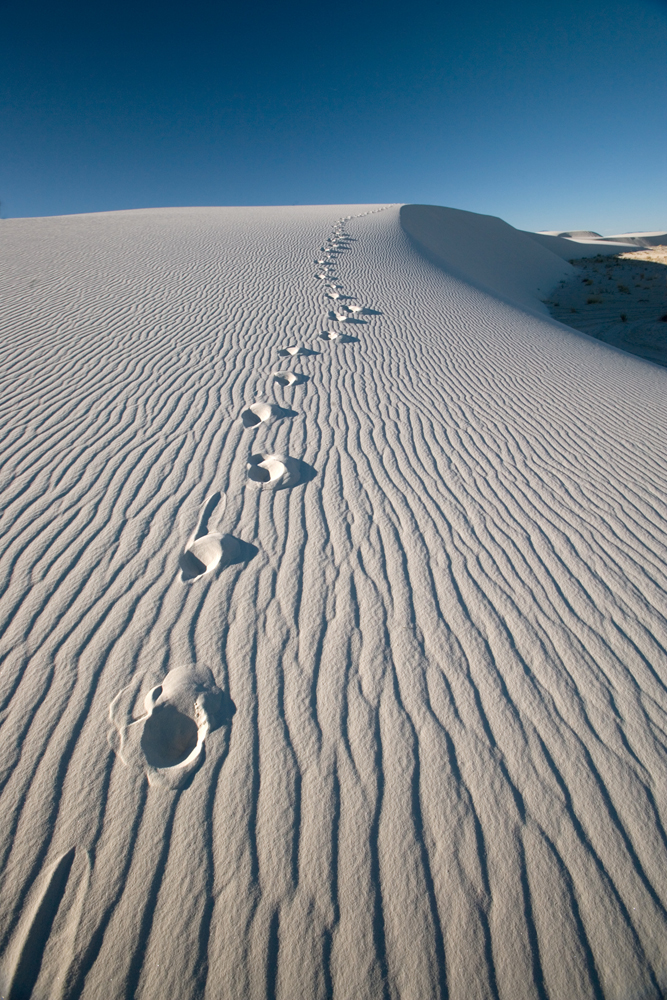
The one thing I try to do whenever I think about embarking on a project is to define my end goal – “What are my expectations?”  White Sands, New MexicoWhen I make myself think about my end goal, it forces me to clearly define it.  This allows me to assess my underlying motivations, cut out the chaff and move forward to stay on target and reach the finish line.

Sounds simple, but the problems arise when I let other people sidetrack me from my original goal.  For example: when I was working on the trailer for              Opening Our Eyes, I posted my work in progress on Vimeo and shared it with friends and colleagues.  Many people offered up advice and solutions according to how they wanted  to see the story to unfold.  Some suggested that my daughter and I (the filmmakers) should be more present in the trailer and in the film itself.  Some thought we shouldn’t be in it at all.  At one point I started to incorporate everyone’s suggestions and ended up with a trailer that was neither here nor there.  I had lost sight of my own end goal and I needed to step back from the edit, the technology and the influence and ask myself  “What is it I’m trying to say?”

Well intentioned people in our life can easily distract us from our own purpose and before you know it you’re not living the life you are meant to live and you can’t understand why you’re not getting anywhere.  When this has happened in my life’s journey, it’s usually taken something “bad” or “good” to take place, that stops me in my tracks and makes me step back from the noise and ask myself “What is my end goal? – Where is it I’m trying to get to?”  I don’t always have a clear answer but at least I’ve taken notice of the question.

I think that’s the key – to take notice of how you’re living your life and if you are on the right path.  Goals come and go and it’s all those little unexpected surprises that life throws at you that determine the outcome.  We can’t control everything in our lives but we can take notice of where we are going and ask ourselves “Is that the destination we are bound for?”

I Don’t Want to be the Smartest One in the Room

My mom used to tell me, “You don’t want to buy the nicest house on the block.” She didn’t just say it when I was buying real estate, but used it as an analogy when she was dispensing other words of wisdom.  Maybe that’s why I grew up not wanting to be the “smartest person in room.”

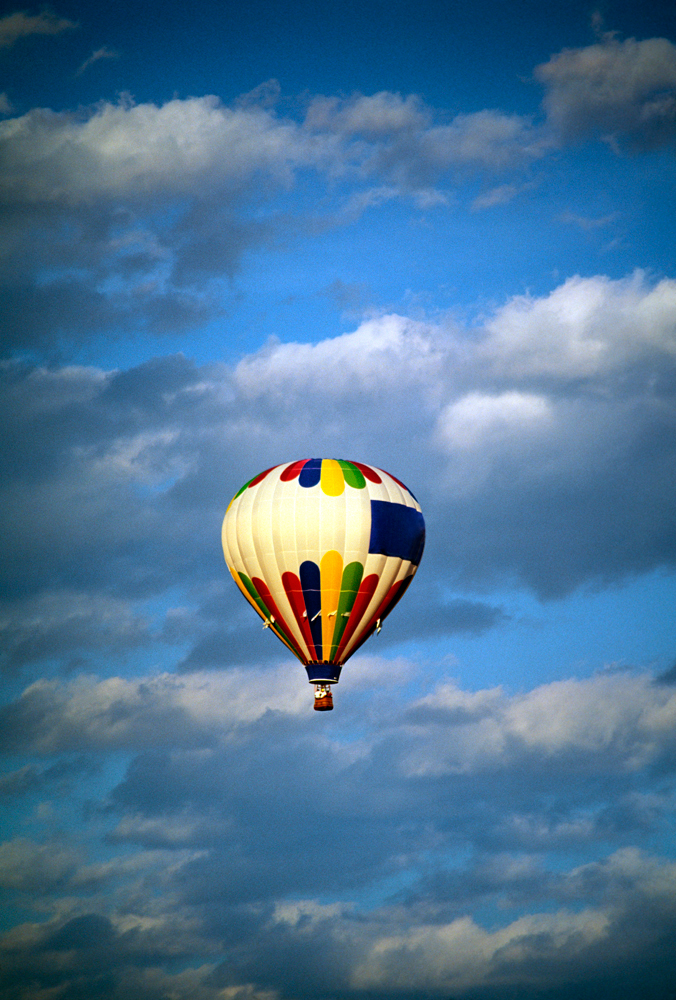
When I was very young, I used to create characters that I wanted to hang out with. Hot air balloon floating overe Hunterdon County, NJ One was my imaginary friend Peteso who was a “newspaper boy” in China, doing dare devil stunts on his bicycle as he delivered his papers.  There were plenty of others, each one bringing something exciting to my more mundane life of a typical 5 year old child.

By the time I got out of college, I had traveled the world, building all sorts of relationships with people from many different cultures who had broadened my mind as to how I saw the world and myself.  I gravitated toward people who were NOT like me.

When I first began my career as a photographer, I had the great fortune of having  an incredible art director, Adrian Taylor as my mentor.  Adrian had a colorful career as an art director for magazines like Holiday (the original) and Travel & Leisure, which is how I connected with him.  Adrian took my partner Tom and I under his wing when we were first starting out.  He encouraged us by believing in us and he made me always want to put everything I had into an assignment and improve with each one.

We learned a lot from Adrian, but perhaps one of his greatest gifts was to include us in lunches, dinners and parties with some of the best photographers of that time – Arnold Newman, Slim Aarons, Pete Turner, Al Satterwhite, John Lewis Stage, Fred Maroon and countless others.  Being in the room or literally “at the table” with these legends and listening to their stories and advice was probably the best thing that could have happened to me. What I learned from these photographers is the kind of stuff you don’t learn at a photography school.  And it wasn’t necessarily things like business tips or photographic technique.  They talked about their passion and their ideas and it awakened me to the possibilities within myself.

I’ve been preparing a presentation that I’ll be doing for ASMP at the NAB Show (National Association of Broadcasters) next week. As much as I’m grateful to be able to share my knowledge at this prestigious conference, I have to remind myself that it’s only possible because I’ve lived my life, putting myself in situations and environments where there are people who are much smarter than me.  In fact, for me the best part of NAB is to sit in on some of the panel discussions with the movers and shakers of the industry and listen to what they’re talking about.

These days, when I fantasize, I no longer create make believe characters to hang out with.  Instead I imagine myself at a table, having a discussion with people who intrigue me on some level and expand my mind to a place it hasn’t gone before. And then I set out to make my fantasy come true.