6 Reasons Why You Shouldn’t Take a DSLR Video Workshop

So many photographers think that buying a DSLR capable of shooting video and taking a workshop on how to use it, is all they’ll need to do in order to get into the business of video production.   They couldn’t be more wrong.  It’s kind of like someone buying a really “good” camera, and thinking that’s all they need to be able to shoot a professional photography assignment.  And yet, so many of my professional photographer colleagues continue to think that it’s about the camera, instead of the skill set.

For starters, most of the professional video productions I do,I wouldn’t be able to shoot with a DSLR camera.  Don’t get me wrong, a DSLR can produce stunning video, but those cameras  fall short on certain tasks.  More importantly, they won’t necessarily meet the expectations that many high-end advertising art directors require. red cameraYou’ll look like a fool if you show up with your DSLR kit when they expected a lot more in the way of gear.

I get quite annoyed when I see the proliferation of DSLR video and filmmaking workshops that mislead photographers that this “tool” or camera will be sufficient for any and all video assignments – because it won’t.  It may be fine for a wedding shoot and I even made a feature length film with a DSLR, but for a lot of corporate jobs I shoot – it just doesn’t cut it.

My advice to photographers who want to learn video:

  • Learn how to think and shoot video.  It’s not just about the camera. When I shoot motion, I’m thinking and shooting much differently than I do for stills.
  • Pick the right camera for the job.  That means you’ll have to know how to use a traditional video camera or a more sophisticated camera like a RED or hire someone who does.
  • If you contain your video experience and knowledge to the DSLR, realize that your competition will be fierce.  The buy in price is low – so you won’t be the only one who thinks they can buy a relatively inexpensive camera and go after video jobs.
  • Stay away from DSLR workshops.  They are way too limited and limiting.  Plus, they are based on technology that changes way too fast.  It may be tempting – but you’ll place yourself in the lower end crowd and will most likely be competing on price.  How low are you prepared to go – or can you go and stay in business.
  • Learn video and/or filmmaking the right way.  Don’t make it dependent on a particular camera.  Learn the cinematic language and how to translate the message in a motion medium.
  • The business of video is much different than that of still photography.  If the workshop you are thinking about taking doesn’t address sound business practices – move on. You can lose your shirt on a video production if you don’t know how to price and/or structure your shoots.

Think about it.  If you were just starting out and learning photography – would you take a workshop that was about a particular camera?  Obviously not, so why would you approach learning video that way?

For more information about video production check out Gail’s guide  The Craft and Commerce of Video and Motion

One Million Miles

Yesterday, I took a look at my United Airlines frequent flyer statement, and realized that I had flown 822,571 miles with that airline!

United Airlines Boeing 777–200 landing in the ...
United Airlines Boeing 777–200 landing in the Blue Tulip livery. (Photo credit: Wikipedia)

I was 177,429 miles away from a million lifetime flight miles. And that’s just the miles that I’ve flown with United!  It doesn’t include all the miles I’ve flown on other airlines, nor any of the miles I’ve flown using reward tickets. And it doesn’t include the miles I flew traveling around the world during the making of my film, Opening Our Eyes.

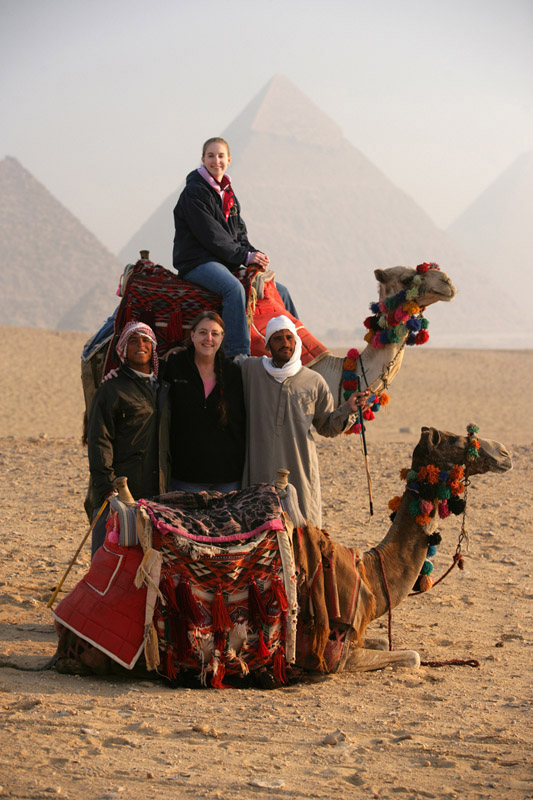
As I looked at that number, and thought about all those miles, Gail Mooney and daughter Erin Kelly, Giza, EgyptI couldn’t help but think about the destinations, the purpose and the motivation behind them. When I set out to live the life of a “traveler” at the young age of 19, I had absolutely no idea of how that would mold my life.  As a professional photographer, I’ve gone to the corners of the globe on dream assignments for magazines and corporations and loved every bit of it – my work has always been my pleasure.  When I wasn’t working, I’d still find a reason to travel, whether on a press junket or simply exploring the world with my husband and daughter.  Some of my favorite family memories are from our travels to Peru and Egypt.

I will always be a traveler.  I am a nomadic creature and I have a huge curiosity about our world and its people. For me, travel is more than going from point A to point B. Sure, there are plenty of times, on corporate jobs when I travel somewhere to photograph a particular person or a place and I’m never there long enough to get a sense of the place I am in.  But, for the most part, I travel to a destination to find out more about that place and tell the visual story of that particular place and its people.

As I thought about all those miles traveled, I started to think about reaching the “Million Miler” status with United.  I was only 177,429 miles away!  That may seem like a lot to many of you, and it might seem like no big deal to others, but to me it seems like a very attainable goal.  In fact, when I started to think about reaching that goal, I thought that I could easily attain that in 3 year’s time – just in time for a milestone birthday.  That’s something to consider and I shall.  I certainly have the motivation; I just need to define the destinations and more importantly the purpose.

Any suggestions?  I’m open to your thoughts.

Rejection Therapy

©Mike Rode
©Mike Rohde

A few weeks ago, I attended the World Domination Summit in Portland, OR.  Any time I‘ve mentioned this conference to my friends, their eyes get wide and they all want to know more about it.  Essentially, WDS is a worldwide gathering of creative, unconventional people who want to live a remarkable life in a conventional world.

This was my second time attending WDS and I was inspired, enlightened, invigorated and awed by the speakers like Jonathan Fields, Nancy Duarte, Tess Vigeland, Chase Jarvis and many others.  There was one speaker Jia Jiang that really resonated with me.  He talked about his 100-day “rejection therapy” project. You can watch Jia’s talk online. He must have struck a chord with a lot of other people as well, because he brought the house down.

I’m certainly not a stranger to knowing what rejection feels like.  The last two years of my life I have been rejected more times than I have probably in my entire life.  It’s not that I’ve been seeking ways to get rejected.  It’s because I’ve pushed myself into new and foreign territories – I mean that both literally and figuratively.  For example, I challenged myself in my career by producing a big film project that literally took me around the world.  But when I think about the “journey” part and the production of that film, it pales compared to the hard work, time, blood, sweat and plenty of tears on getting the film seen. I got scads of rejection letters and emails from film festivals, distributors and agents but most outsiders see only my successes.

When I heard Jia talk about his rejections that led to his “rejection therapy”, I understood exactly how he felt.  In a way, I’ve lived my life like Jia’s rejection therapy. But, it wasn’t because I set out to heal myself from some missteps and misses that didn’t work out for me.  As I look back at some of the things that I’ve done in my life, I realize now that I was simply naively bold enough to do them.

I can’t really say that I have ever gotten used to rejection.  It continues to hit me hard at times.  But when that happens, I stop and I think about all the wonderful and crazy things that I’ve done in my life that never would have happened if I had let my past rejections stop me. I suppose I’m like one of those blow up punching bags that keeps popping back up.

5 Tips for Filmmakers (and other artists) for Building an Audience

The good news for Indie filmmakers, musicians, photographers and new media artists is that technology enables us to take control and distribute our own work to the masses or a more targeted niche audience.  The bad news is that even though we are able to reach a global audience without giving the lion’s share of our profits to an agent or distributor – it’s a lot of hard work.

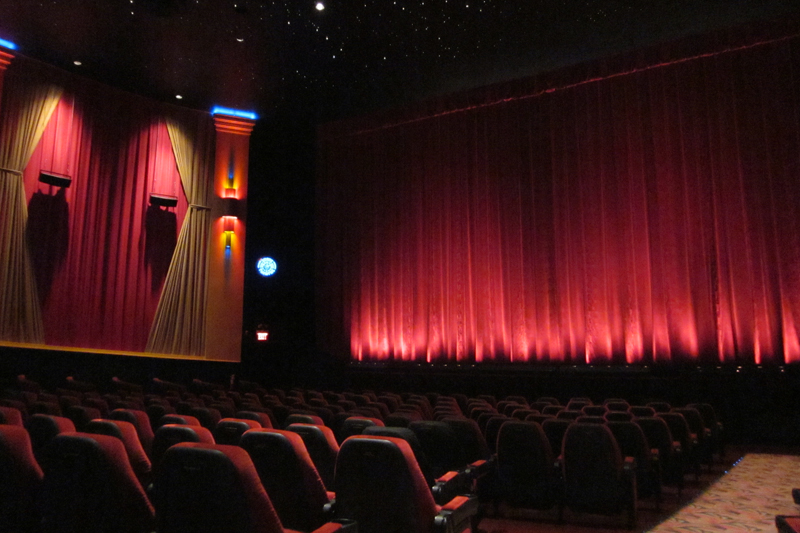
When I completed final production on my first feature documentary, Opening Our Eyes, I knew I was hardly finished with this film, not if I wanted people to see it. theater interioeIMG_0150Since most filmmakers make their movies to be seen, they need to decide how they want their movies distributed and marketed.  As a filmmaker, do you want to delegate this task to a distribution company or do it yourself?  Will you be one of the lucky 1% of filmmakers who get their films picked up for distribution?  If not, do you have a plan on how to do that?

1. Identify and build audience – Regardless if you decide to sign with a distributor or distribute your work yourself, the most important part of marketing and distributing a film is to identify and build your audience – and you should start building your audience before the film is finished.  As soon as I made a commitment to make a film, I started blogging about it.  I created a blog specifically about the film where my daughter and I talked about preparing for and taking a 99-day journey around the world. I also wrote about the making of the film on this blog where I talked about gearing up for it as well as the post-production process.  I didn’t realize it at the time, but I was building our niche audience.

2. Have a social media plan:

  • Decide on platforms – Twitter, Facebook, Tumblr, Google+, YouTube, Vimeo
  • Carve out the time to engage
  • Decide where the content will come from – behind the scenes photos or footage, blogs, podcasts?
  • Who and where is your audience? Find other Facebook groups or pages and followers who are interested in the same topic as yours.  Collaborate. Build your Twitter followers same way.

3. Finding true fans – Since most filmmakers will most likely NOT have a mega hit with huge profits, the best thing a filmmaker can do is build their “true fan” base.  First you should ask yourself how many “true fans” would you need to sustain yourself as a filmmaker? And by true fan, I mean people who are willing to buy whatever you are selling, be it a book, a DVD, a music download or a t-shirt.  The key to growing your core “true fans” is to engage them by sharing interesting content as opposed to just selling something.

4. Be consistent and stick with it – Like anything else, building an audience takes time.  Be prepared to constantly interact and engage your audience by sharing relevant and interesting content with them.  You’re building a tribe or a community.

5. Find likely partners – Making films is a collaborative effort.  Similarly, for filmmakers to be successful in marketing their films they need to find their core niche.  One great way to find your niche audience is to identify like minded groups and share links.  The non-profit my daughter works for partnered with us and we frequently share each other’s news with our followers.

Karma and Being Real

I had an awesome night last night.  My husband and I had tickets to a Jackson Browne concert. The seats were way up in the up most reaches of an old theater in New Brunswick, NJ.  They weren’t great tickets, but nevertheless, they were tickets to a concert by Jackson Browne, my favorite singer/songwriter.

During intermission, a guy, who had climbed four extremely steep flights of steps, walked into the “gallery” and announced that he had one available ticket in the third row and asked “Does anybody want it?” After a minute of trying to comprehend what the man had said, I spoke up and said “I’ll take it” and then asked  “Is it really in the third row?.  He confirmed, and then I asked my husband “you don’t mind do you?, gave him a kiss and flew down to my “new” seat.

It was an amazing night, JBto sit so close and be able to see and feel the music.  Jackson is one of the most intimate and real songwriters around and I got totally absorbed into his performance. I thought about my stroke of luck in getting that seat.  I thought perhaps my luck was changing after a very “trying” month. It was like a karmic blessing.

As I watched and listened to Jackson, I saw an artist whose talents and music have endured the test of time.  His topics and lyrics are just as relevant as they were when I first started following him, some 40 years ago.  That’s because he writes about the human experience – the triumphs and the failures that we all have.  He strikes a nerve with his truth and honesty.  Some say his music defines a generation.  Perhaps.  But Jackson’s music certainly defines who he is.  He’s about as authentic as you can be.

Jackson inspires me to create from my true self and do the work that I am meant to do.  He also inspires me to be a better person. After his encore, he waved to the audience and said, “Be good to each other”.  That said it all.

 From The Pretender, by Jackson Browne

I want to know what became of the changes
We waited for love to bring
Were they only the fitful dreams
Of some greater awakening
I’ve been aware of the time going by
They say in the end it’s the wink of an eye
And when the morning light comes streaming in
You’ll get up and do it again
Amen