Past Predictions of the Future Have Been Greatly Exaggerated

One of the blogs that I regularly read is Copyblogger, which provides a lot of great information and insights into content marketing.  This past week, Brian Clark wrote a post entitled,  The Future of Content Marketing.   He writes:

“A bunch of really smart people got together in 1880 to predict the future, according to Jeff Stibel in his intriguing book Breakpoint. These experts were called on to predict how the rapidly growing Gotham would manage into the next century and beyond.

The prognosis was not positive.

NYC was a major source of American innovation in 1880. Skyscrapers, subways, stock exchanges — and it was doubling in size every 10 years. abb36e44-0c30-4a09-9279-0cd3c3fefa9b-A01867The experts were concerned by this growth, because they projected by 1980, you’d need six million horses to transport all the people who would live there.”
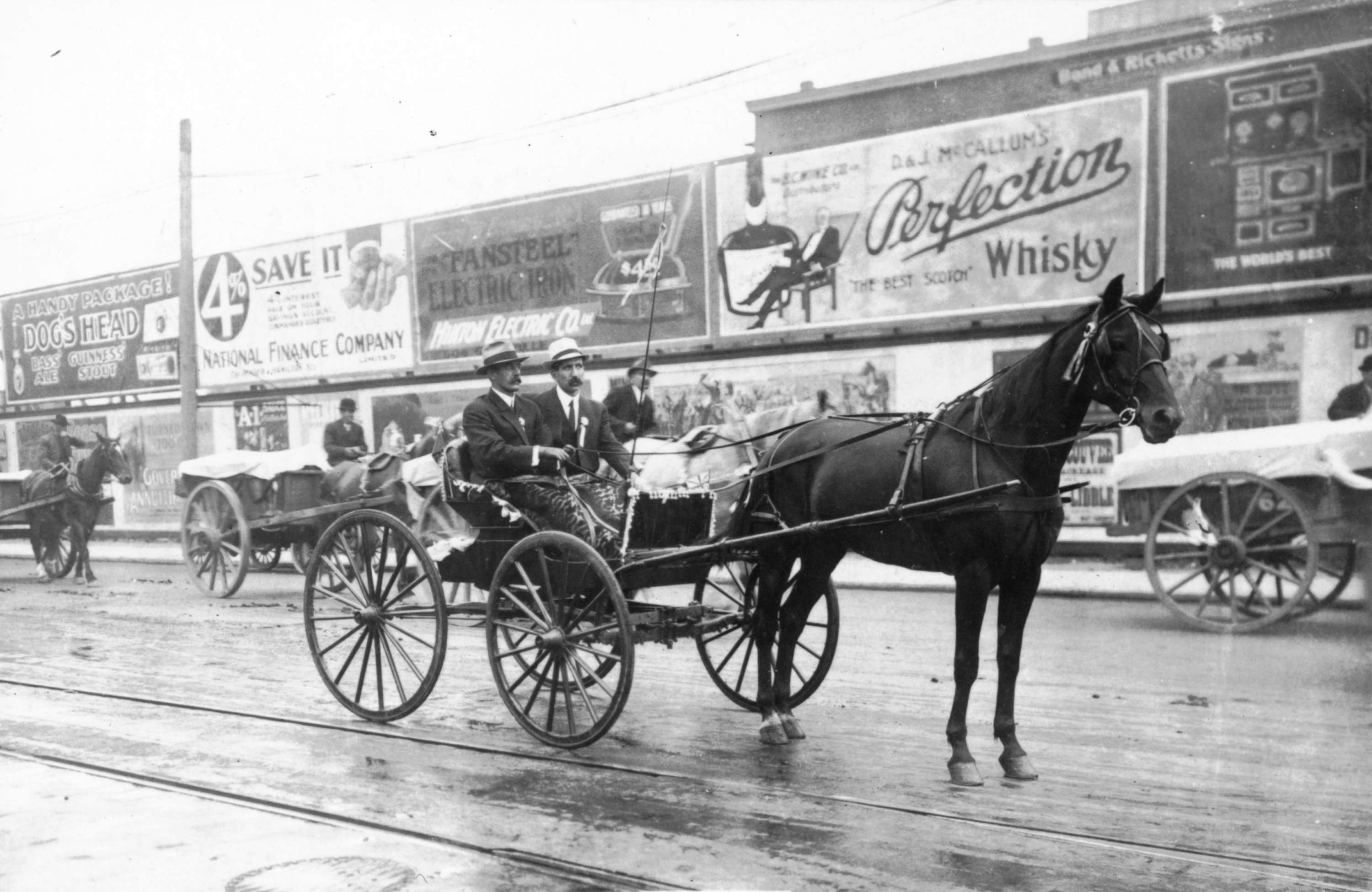
Folks were predicting the future of New York City, looking at it through the eyes of what was technologically possible then.  They were more concerned about all the horses and the “crap” that would be produced, than they were about greenhouse gases, because nobody knew what that was.

When I re-ran a blog post How Motion is Changing the Future of Photography, I used a similar analogy, that Ray Kurzweil had given when I heard him speak at NAB.  Ray said that, at the turn of the century (the beginning of the 1900’s), if you thought of yourself as being in the “horse and buggy business”, you were doomed to fail because of advent of the automobile.  But if you saw yourself in the “transportation business”, you thrived, no doubt because you broadened your view to include the automobile.  In my blog, I compared that analogy to what is happening in the still photography business, as the mediums of still imagery and video converge.  I received a lot of responses from that post, mostly from people who argued that still photographs would always be around. I don’t disagree with them.  I do think there will still be still images in the future – however, I think the still photography business will drastically change from how it is now.

Interestingly enough, every year I’m asked to bid on a still photography assignment for a tourism client.  Yesterday, I received the bid packet and there was a profound change.  They were not asking for a quote for still photography.  They were asking for a quote for video – and not just video – but video shot on a RED camera so that they could pull frame grabs from the footage and use those “still images” in their ads.  Now, that’s a game changer.

There’s always a danger in predicting the future and that’s because we tend to use and be influenced by the information and the knowledge that we have now – in the present.  What I’ve learned in my many years on this Earth is that the future will be nothing like how we imagine it will be.   I know that because what I imagined the future to be, some 35 years ago when I set out to make a career as a still photographer, was very limited in terms of how technology has changed things.

The human need to create will continue to mold a future that is way beyond what most of us could ever imagine.

What’s Next for Still Photography? Things We Could Never Begin to Imagine.

One of the only good things about getting older is that I have gained a lot of perspective. Fortune teller through window, Atlantic City, NJ I never speculate what the future will hold by limiting it to what’s possible now because…..

When I began studying photography at Brooks Institute in the early 1970’s

I never would have imagined:

  • That I would own a personal computer that would change the way I communicated with people and ran my business.
  • There would be the Internet, email and mobile phones.
  • There would be auto-focus cameras and lenses.
  • Cameras would be fully automated – if you so choose to use them that way. When I began my career as a photographer, I needed to be a technician, and that meant understanding aperture and shutter speed and a lot of other things that went into making a still image.
  • I would be shooting still images without film.
  • I wouldn’t be limited to 36 frames on a roll of film.
  • I could change the ISO on my camera, as need be.
  • I could change the white balance on my camera, as need be. (No need for different types of film)
  • I wouldn’t need to “get it right” in the camera because I could “fix it later in post” with Photoshop or hundreds of other apps.
  • I could see what I shot – right after I shot it.  Without waiting for the film to come back from the lab or taking Polaroids.
  • There would be data cards and hard drives able to store thousands of images at affordable prices.
  • I could transmit my images digitally and globally with ease and speed.
  • I could share my portfolio electronically with virtually anyone, anywhere in the world.
  • That still cameras would be able to shoot video.
  • That video cameras would be able to shoot at high resolution with fast shutter speeds – good enough to take still images from the frame grabs.
  • My mobile phone would be able to shoot high res still images and video.
  • Magazines and newspapers would publish electronically,  running stories online with static and moving imagery  – and sound.
  • I would be able to watch a movie in my own home.  (without being wealthy enough to build a home theater with analog projector and sound system).  This was before the VCR and DVR were invented.
  • That feature movies and TV shows (other than soap operas) would be shot in video.
  • I would be able to make a feature length film without a Hollywood budget and big crew.
  • I could self-publish and distribute a book or a movie without a publisher or movie studio.
  • My TV would have access to the Internet (I couldn’t even imagine the Internet)
  • The Internet would give birth to  “new networks” producing original content.
  • I would be competing and doing business on a global scale  – as a small business owner.

A lot of the things I listed seem commonplace or even old technology nowadays.  But, I when I first began my career as a photographer, I never would have imagined any of them – not in my wildest dreams.

What do you imagine the future will bring?  There’s one thing for certain, if you limit your imagination to what’s possible now – you probably won’t even come close to what’s in store in the future.

Hitting a Nerve

English: camera Français : video
English: camera Français : video (Photo credit: Wikipedia)

What an interesting week it has been. This past Friday (the day before a long holiday weekend), on impulse, and feeling a little lazy, I shared a link on Facebook to a blog that I had written 8 months ago, How Motion is Changing the Future of Photography.  I didn’t expect to get thousands of hits in 2 days time – it had barely gotten noticed when I posted it the first time, back in February, 2013.

What had happened was that Rob Haggart linked to it from his blog, APhotoEditor and it went viral after that – all around the world.  That’s what amazes me about the age we live in, that something someone says, or writes can be heard globally in record time.  It truly demonstrates the power of “one”.   It’s staggering and something I never would have imagined some 35 years ago when I began my career as a still photographer.  In fact, most of what is happening now in photography. I never could have imagined – not in my grandest dreams.

What surprised me most about the comments I received from that post, was that most folks just couldn’t begin to imagine the future that I was contemplating in my writings. With the convergence of cameras, in regards to stills and video, I imagined a future, where a still image might not be captured by a “still camera” or by a “still photographer” for that matter.  A still image may come from a “frame grab” captured by a video camera.  I struck a nerve for sure, and most people thought I was predicting the demise of still photographs – perhaps because of Ron’s headline, excerpted from my text “ I think we are at a tipping point as far as the future of the still photography business”.

To be clear, I do think the photography “business” is at a tipping point, but not just because of the convergence of still and video cameras, but because of the glut of imagery.  The iPhone has been the game changer in that sense. Everyone has become a photographer and has a camera on them at all times, taking, sending and sharing millions of still images globally every day.  What that means in terms of the still photography industry is that if you want to stay in business as a professional photographer, you will need to create something that is authentic and unique to only you AND more importantly, you will need to provide a product or service that a market is willing to pay for – and pay enough that will sustain you in an industry that requires a reinvestment in tech and gear every two years, minimally.

In my attempt to “get off easy”, by rerunning a blog that I had written and previously posted more than a half a year ago, I learned a couple of things:

  1. Timing is everything
  2. It’s all perspective.

That’s the one good thing about getting older; I have a lot more perspective.  I’ve learned that the future is not at all like I imagined it would be.  I never could have imagined half the things that are happening right now.  And I’m sure that if I’m still alive 20 years from now, it will be a future filled with things and ideas that I could never even begin to imagine.

I will be moderating a panel at PPE this year, sponsored by ASMP “How Motion is Changing the Future of Still Photography”.   Our panelists include, Vincent LaForet, Brian Storm and Chase Jarvis.  Join us, it will be a discussion you won’t want to miss.