Being Thankful

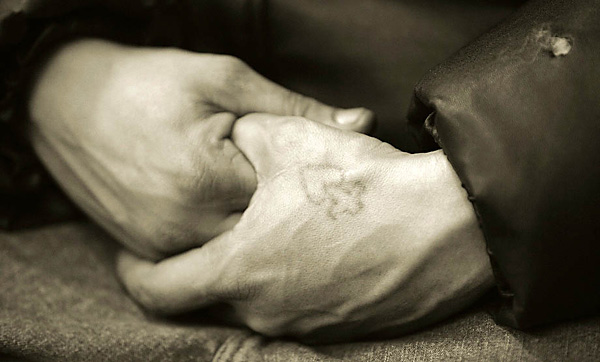
Next week is Thanksgiving.Hands of man in homeless shelter, New York City Call me corny but I’m one of those people that like to think about the real meaning behind the holidays that we celebrate. So today I’m taking pause to think about all the things that I’m thankful for this year. Sure there’s plenty of angst, jobs are less and money is tight but I have a lot to give thanks for.
• My health – for this I am most grateful.
• My family – both my immediate family and my far-flung relatives who I don’t get to see often but are always in my thoughts and I know are always there for me.
• My freedom – I think about this a lot. No matter how many times I feel that things have gotten off track in my country – I have the freedom to speak my mind, pursue my dreams and to change the things that I don’t like.
• My home – I’m lucky to have a home where I feel safe because I know there are so many who aren’t as fortunate these days. I never take this for granted.
• My passion – Sure I have my down days, but I’m thankful that I have an inner spirit that won’t let me give up on my pursuits.
• My friends and my peers – Because of my career and my collaborations with others, I have good friends – some I’ve recently gotten to know and others I’ve known for a long time. And some who I’ve recently reconnected with.
• My sharing of knowledge and making a difference. My husband and I trained a small army of volunteers in our town to shoot our town meetings and get them broadcast on our public access station. And I can see it has made a difference – people have become more civic minded and taken more of an interest in their community.
• I’m thankful that I am able to use my craft and create awareness through my personal projects in both stills and video.  I’m thankful they can be seen globally, via the Internet and the power that has.
• I’m thankful for the many volunteers everywhere who give their time generously to others who are in need.
• I’m thankful for all the little things that are so precious – the sun that warms me on a cold day, the rain that nourishes the land, the colors and calm of a beautiful dawn and the thousands of stars on a clear night.

I’d love to hear what others are thankful for. I have found many times that those who seem to be less fortunate are also the ones who are the most thankful for what they have.
New Business Models in Photography and Motion – in a Global Economy

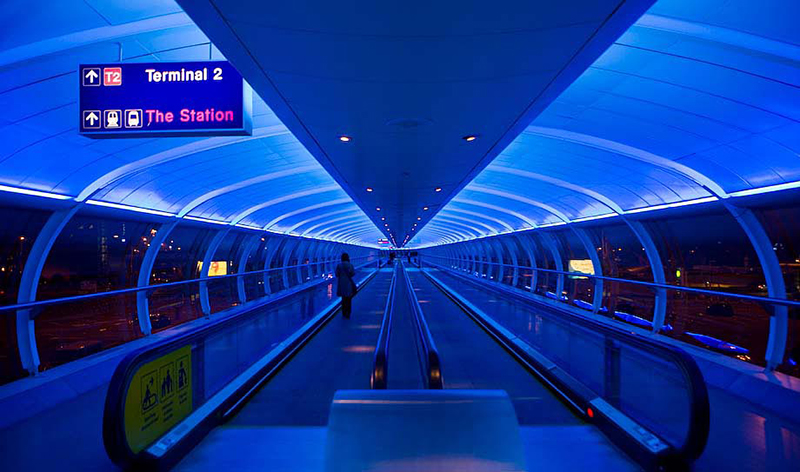
Manchester Airport, Manchester, England

This topic comes up a lot these days.  You  could apply “new business models” to just about any business – not just photography and video. Photography and video, in and of themselves are not business models at all, but rather they are mediums that are used commercially, non-commercially and personally. The business end of photography and video comes when you determine how you want to apply them in terms of today’s markets.

Today’s markets are global.  That’s good news and bad news, depending on the type of work you do.  If you are a stock photographer or even if you have expanded that into also shooting stock motion footage – your inventory or your content must be unique in some way in order to sustain that type of business model in our global economy. You will need to stand out and offer something unique,  if you pursue this type of market.

If you are a commissioned commercial or editorial photographer, cinematographer, or director, the competition is fierce and once again, if you don’t have a unique style or vision, most likely you will end up playing by others’ rules or signing “their” lopsided contracts.  It comes down to supply and demand of talent and work, and you will either compete with price or offer something that you do better than your competition.

The good news is, if you are willing to do the work, the world is your stage.  The portals for distribution of your “content” are open to all and as “creatives” we are no longer dependent on middlemen.  When I get asked to talk about “new business models”, I always look for where the new opportunities are.  Where will I be able to carve out my own “new business model”, rather than having to adapt others’ ideas of what that may be.  There is a big difference in those two approaches.

I am carving out a business model for who I am creatively, and where I see the most opportunities for what I do well.  When I am authentic to who I am and apply this to my work, I am able to deliver my own unique vision and reach the right audience,  while maintaining ownership and control over the licensing of my work.  I am able to do that not only because technology has enabled me to do that, but more importantly because I have set myself apart from everyone else who has a camera.

Think about it.  What are your strengths? What are your passions?  Now imagine a business model based on your answers. The world is our stage.

What Makes a Professional (Photographer)?

I heard a remark made recently, by a colleague of mine.  I was with a group of photographers and we were discussing what makes a photographer, professional. stock-80 At a time when it seems like just about everybody is a photographer, and we are bombarded with thousands of images on a daily basis, what separates a “pro” from an amateur? My colleague stated, “A pro “makes” photographs – an amateur “takes” them”.  While that sounded like a reasonable distinction, it implied that photographers who shot “found moments” were not “professionals”.  What about photojournalists then, who are bound by ethics not to contrive an image?  So, I started thinking, “What set of criteria is used to determine what makes a photographer, a professional?”

Inspired by Steven Pressfield’s book The War of Art, I will paraphrase, some of the qualities that Pressfield points out that define us as professionals:

  • “We show up every day” – no matter what.
  • We are committed for the long haul and the stakes are high. We need to feed our families and survive.
  • “We accept remuneration for our labor.” (I’ll add, we expect remuneration)  We love what we do but we work for the money.
  • We master our craft. This doesn’t stop. A professional is always trying to master their technique.
  • We act in the face of fear.  This is certainly applicable to a “war photographer”, but I would go further and say that it takes courage to follow a career path of photography.  Courage and commitment.
  • “A professional self-validates.”  We don’t need others to commission us, in order for us to work.  We are passionate about what we do and we will create regardless if we are commissioned or not.
  • “A professional reinvents himself. “  If you aren’t reinventing yourself, then you probably aren’t taking enough risks.  A professional knows not to play it safe – not in a creative profession.
  • A professional doesn’t take rejection or failure personally.  I have learned first hand, that whenever I have taken a leap and challenged myself, it has always come with rejection or some may say, failure.  Personally, I don’t equate rejection with failure.  Failure implies it’s the end of the story.  Rejection needs to take place, in order to get to the next chapter of the story.

I would highly recommend reading, The War of Art. It’s a must for anyone contemplating a creative career.  As far as my thoughts about using the criteria,  “making” or “taking” a photo to determine who is a professional photographer – let’s just say that a professional photographer is always “making” a photograph, regardless if it is contrived or not.  It is a conscious decision of a professional photographer, when and which “moments” to capture.  We show up every day, to do our job, whether it’s in a studio or a war zone. We are consistent, responsible and accountable.  We are in it for the long haul.  It’s our passion.  It’s our life. It’s our craft and our gift to the world, a legacy of images that define the time we live in.