New Business Models in Photography and Video

This topic comes up a lot these days.  But you could apply “new business models” to just about any business – not just photography and video. Photography and video, in and of themselves are not business models at all, but rather they are mediums that are used commercially, non-commercially and personally. The business end of photography and video comes when you determine how you want to apply them in terms of today’s markets.

Today’s markets are global.  That’s good news and bad news, depending on the type of work you do.  If you are a stock photographer or even if you have expanded that into also shooting stock motion footage – your inventory or your content if you will, must be unique in some way in order to sustain that type of business model in our global economy. You will need to stand out if you pursue this type of market.

If you are a commissioned commercial or editorial photographer, cinematographer, or director, the competition is fierce and once again, if you don’t have a unique style or vision, most likely you will end up playing by others’ rules or signing “their” contracts.  It comes down to supply and demand of talent and work, and you either need to compete by price or offer something that you do better than your competition.

The good news is, if you are willing to do the work, the world is your stage.  The portals for distribution of your “content” are open to all and as “creatives” we are no longer dependent on middlemen.  When I get asked to talk about “new business models”, I always look at it as “where are the new opportunities?” – where I will be carving out my own “new business model”, rather than having to adapt to others ideas of what that is.  There is a big difference in those two approaches.

I am carving out a business model for who I am creatively, and where I see the most opportunities for what I do well.  When I am authentic to who I am and apply this to my work, I am able to get the type of work to market and reach the right audience while maintaining ownership and control over the licensing of my work.  I am able to do that not only because technology has enabled me to do that, but more importantly it has created a demand for the type of content that I create.

Think about it.  What are your strengths? What are your passions?  Now imagine a business model based on your answers. The world is our stage.

Add to FacebookAdd to DiggAdd to Del.icio.usAdd to StumbleuponAdd to RedditAdd to BlinklistAdd to TwitterAdd to TechnoratiAdd to Yahoo BuzzAdd to Newsvine

Why Did You Want to Become a Photographer?

That was one of the questions posed to me during an interview this past weekend. A young woman had asked to interview me for a college paper she was writing. The call and the questions started out somewhat clinical, most likely another task or paper that she needed to check off her list. She proceeded through the usual list of questions: “Did you go to photography school?” “What type of photography are you interested in?” So on and so forth.
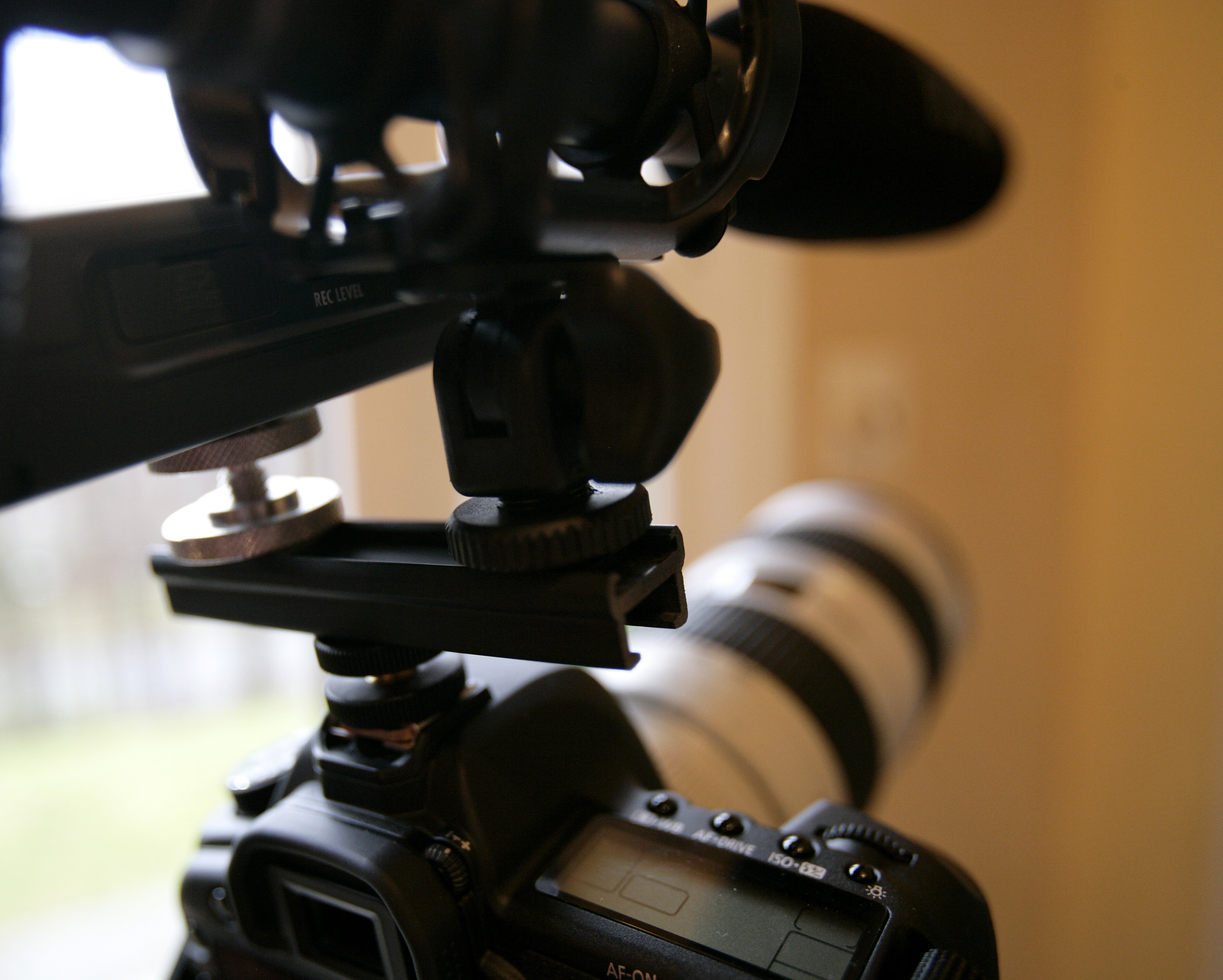
I could hear her typing my answers and I paused to let her catch up. But then she asked a question that really struck me on many levels. “Did you get into photography because it was cheaper?” I asked her what she meant by that – did she mean the tools of the trade were cheaper? When she responded “yes”, I told her that was somewhat of a misnomer and that the first cameras I bought (mechanical ones) I had used for 10 years. I added that now, because of the exponential impact of technology on my profession, my cameras and the software I need on the post end, have to be upgraded at least every two or three years, and that was only part of the investment required in the “tools of the trade.”

As she typed my response, I felt myself getting a bit anxious and I started speaking rapidly. I told her that even if that were true – meaning that I got into the photographic profession because it was cheaper – that would have been the absolute worst reason for me or anyone else, to choose photography as a profession. I went on to say that you need to be passionate about some aspect of photography that makes you want to do it more than anything, if you want to have a chance of sustaining yourself financially in this profession. Pursue photography because it brings you joy and that if you are getting into it because the entry level costs were “cheaper” you’ll simply be competing with thousands or tens of thousands of button pushers.

I went on to tell her that I became a photographer as a means to an end. I had been studying architecture in college and after two years left school to travel. I traveled the world for a year and came back knowing that I wanted to pursue a lifestyle that would incorporate travel but more importantly fill my endless curiosity of people and cultures and exploration. I wanted to become a storyteller, and became a photographer as a means to that end.

As the interview progressed I noticed the typing started to diminish as I told her that I have never separated my business from my pleasure and that they have always been tied together throughout my life. Simply put – my business is my pleasure. I talked about my frustrations starting out as one of a handful of women in a man’s world and for the most part a man’s profession – at least in the early days. I talked about the endless stream of rejections and the “wins” that seemed to pop into my life when I needed them most, rescuing me in the knick of time, just when I was thinking of quitting and moving into another career. I told her that unless she really wanted to do photography, she wouldn’t survive in this profession. I talked about my mentors when I was her age and how grateful I am that I had those people in my life. I relayed a couple of anecdotes about things my mentors had said to me and how those words had been pivotal moments in my life and that when things got tough, I drew upon those words of wisdom to get me through the day.

Then there was a very loud audible sigh, followed by a long period of silence and my mind raced through the various things that I had said to her. Was I too harsh? Did I paint too bleak of picture? Or worse yet – did I make it sound too easy and that all she had to do was “just do it”. I felt this overwhelming sense of responsibility that maybe I said something that was going to dictate the rest of her life and I kind of panicked in that moment of silence. And then she said “thank you so much for talking to me today, I started out just wanting to write my paper, and I’m going to have a great paper, but you have no idea how much talking to you has helped me.” She went on to tell me that she had been struggling with a decision that she was trying to make between going to law school and going to film school. I told her that she needed to make that decision all by herself and that it wasn’t a decision that anyone else could make for her – not I – not her parents – not anyone else. I told her to dig down deep into herself for the answer, beyond the influence of others, the dogma of the day and all the noise. And most importantly to remember that it was her life and that she got to choose how to live it and that she had every right to change her mind along the way.

Quite honestly, it has been one of those “onion” months for me, with layers of setbacks and second-guessing myself. I got off the phone feeling good about paying forward what I have learned along my way and in that moment, I realized that this might be my “purpose” at this point in my life. The day had turned into one of those sweet “strawberry days”. She didn’t know it, but she had helped me as much as she said I had helped her. It’s those conversations and those little moments that keep me going, and come to my rescue, just in the knick of time.

I would love to hear from you all – why did you want to become a photographer?  Something you say or write just may help someone and paying it forward is the best feeling in the world.

Add to FacebookAdd to DiggAdd to Del.icio.usAdd to StumbleuponAdd to RedditAdd to BlinklistAdd to TwitterAdd to TechnoratiAdd to Yahoo BuzzAdd to Newsvine

Licensing Video?

There are probably people who would argue with me as far as the practice of licensing video being the norm in the world of video production, other than the licensing of stock motion footage. Perhaps that may be true in some business models and certainly true in older business models, but I can tell you that has not been my experience.

I should clarify that I do not position myself as a “hired gun”– meaning a camera operator who turns over their footage at the end of the day. I choose to assume the role of producer and maintain control over my intellectual property or the finished video product. I cannot do this in the traditional motion picture industry but that business model is changing due to technology and the influx of indie filmmakers who are making their own rules and bringing their films to market themselves. And for the most part – I can’t do this in high-end broadcast spots when working with a middleman – or ad agency where ultimately their end customer maintains all rights.

However, the demand for video has skyrocketed in recent years and with that has created a new client base who are using video in new ways and on new platforms. I am establishing my own set of rules accordingly. One of them is licensing the finished product just as I did my still images. I can only do that with video productions that I have produced and hold the copyright to.
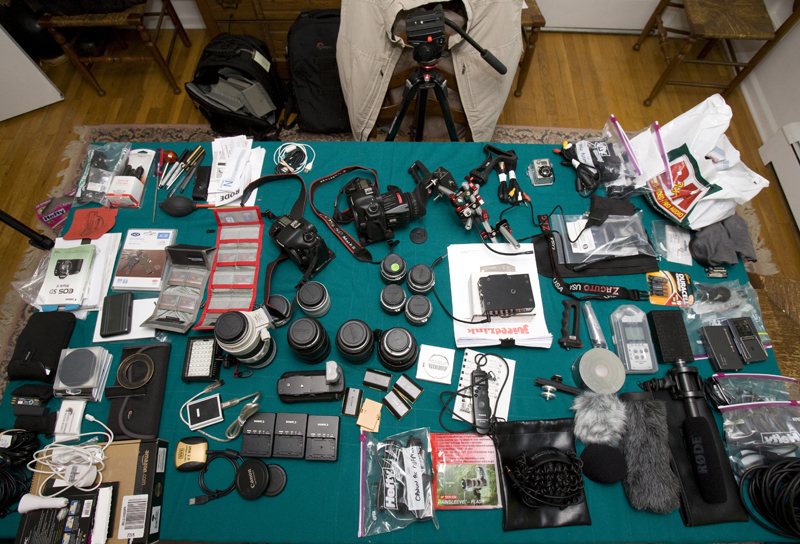
Typically, I will separate the licensing of my still images from the video product as well as the creative fees. I may be shooting both mediums on the same job but I handle the licensing differently. I have found that video has a shorter shelf life so I am not as concerned about the duration of the license (length of time) as I am with still imagery. But I am concerned about it’s “reach” which these days is global – thanks to YouTube.

Another thing I do is I make sure that it is stated in my contract and/or estimate that the license for the entire video production does NOT include permissions and/or licenses to any still images that are made from frame grabs pulled out of the video footage. Putting this up front in the estimate has actually proved beneficial because if a client does anticipate the need for still images – they will hire me to create stills – rather than take them from frame grabs.

We are living at a time where just about everyone’s business models are changing. So, if someone tells you that licensing video isn’t the norm – outside of the stock motion footage business – think again. What is the norm these days? It may be the precedent we are setting now.

Add to FacebookAdd to DiggAdd to Del.icio.usAdd to StumbleuponAdd to RedditAdd to BlinklistAdd to TwitterAdd to TechnoratiAdd to Yahoo BuzzAdd to Newsvine

Dealing with Rejection

Steve Jobs used to quote a saying “If you live each day as if it was your last – some day you’ll be right”.

I’ve pretty much applied this philosophy in my life and in doing so, many (but certainly not most) of my days are full.  Some days are filled with joy and accomplishment and other days it seems like nothing is working out.  Most days are a mixture of both – “hits and misses.”

I’m the type of person who tends to live life passionately, with hopes and dreams that are probably too lofty, and with that comes a lot of rejection.  A lot of successful people are like me in that way.  That’s not to say that I always feel successful, but some people may perceive me that way because every so often I achieve what I set out to do. What they don’t realize are all the times it didn’t work out. I can tell you, that I’ve had my fair share of misses.  So how do I deal with rejection?

  • I remind myself – not to take it personally.  Many times, it’s just that someone else has a different point of view and it’s just not the right fit.  It may be a job that I didn’t get or a party I didn’t get invited to. And more times than not – it’s not about me or my work at all.
  • I try to find out why something was rejected.  I do this because even though it’s hard to hear “why”, I know that if I can take my emotions out of the equation, I can learn and grow from it.
  • I remind myself that something I thought I wanted, maybe just wasn’t meant to be and in fact, many times that rejection ends up being a blessing in disguise.  I look back at some of the pivotal points in my life, where I took a different direction after things didn’t work out.  Almost every time, a low point prompted me to make a shift, it led to something extremely rewarding.
  • I tell myself that “playing it safe” is in fact very risky. If I don’t try, then  it’s a given that I won’t succeed. So, while “playing it safe” may seem like it can eliminate rejection – it can also eliminate feelings of accomplishment and maybe even self-worth.
  • I talk about my rejections, rather than pretend that everything in my life is roses.  In fact I have found in writing this blog over the past few years that the most popular posts have had the word “mistake” in the title.  Why is that?  Because, we humans seem to take comfort in the fact that we aren’t the only ones getting rejected. Misery loves company.  Ask any successful person how many times things didn’t go their way. You’ll find out more times than not.
  • I take comfort in the ones I love and who love me.  They get me through it every time and I’m grateful for those people in my life.

Rejection comes with living a life fully and I tell myself that every time I want to throw in the towel and give up on my dreams.  I want to live every day as if it were my last and if it comes with heartache and rejection, I’ll remind myself that it makes the “hits” that much sweeter.

Add to FacebookAdd to DiggAdd to Del.icio.usAdd to StumbleuponAdd to RedditAdd to BlinklistAdd to TwitterAdd to TechnoratiAdd to Yahoo BuzzAdd to Newsvine

How to be a More Interesting Person

I came across one of the best blog posts I’ve ever read this past week on Forbes.com.  But before you jump off to that link, I’d like to share some of my thoughts-about what makes some people interesting – and some not.

  • Talk to people outside your inner circles – I found when I was a student at Brooks Institute, I was frequently bored at the student/photographer parties because all the conversations centered around just photography.  It was a natural topic for discussion but the talk was always about gear and rarely about creative ideas. I found more stimulating conversations outside my peer group which actually helped me creatively with my photography.
  • Be a better listener.  Have you ever had dinner with someone who commanded most of the conversation but followed up later with a note telling you what a great evening they had in your company?  People love to hear themselves talk and for many – great listeners become “interesting people” in the process.
  • Do things and go places where interesting people hang out.  Get out of the house and away from your TV set and interact with people from all walks of life.  I’ve spent a lifetime street shooting for magazines.  My most memorable conversations have been with people I’ve encountered along the way.  These are people who I never would have interacted with normally but those are the conversations that have stayed with me over the years.
  • Be yourself. So many people do things to “fit in”.  They become clones of their environment rather than staying true to themselves. There is nothing interesting about people like that for me.  That’s why I travel and embrace other cultures.
  • Minimize the swagger.  This one is right off the Forbes list but it’s a good one.  No one likes being around folks who are full of themselves and have big egos.  Some groups of people are more prone to this than others – generally people who come from professions where they feel what they do for a living has life or death consequences. Doctors are really the only ones dealing with life or death situations – and quite honestly a lot of doctors I’ve met aren’t very interesting to talk to because many are so self important, they let their egos get in the way.

I hate to make broad strokes but I find artists, filmmakers, musicians, taxi drivers, doormen (and women) and circus people some of the more interesting people to be around.
Get out more – live life fully – try new things – talk to more people and people who aren’t like you at all – be open – be giving – be caring – share – and embrace life every day with joy.

But check out the Forbes.com post – it’s an easy read and will bring a smile to your face.

Add to FacebookAdd to DiggAdd to Del.icio.usAdd to StumbleuponAdd to RedditAdd to BlinklistAdd to TwitterAdd to TechnoratiAdd to Yahoo BuzzAdd to Newsvine

Closing Thoughts and Best of Best

It’s been a very full year for me. I mean that in every sense of the word full – full of new experiences, full of hope, full of achievements – but also full of my share of rejections and disappointments. I’ve shared a lot of these experiences through this blog.

There have been times I haven’t written in a while because I didn’t feel like I’ve had anything worthwhile to say. And there have been times when I did write but I probably shouldn’t have because it wasn’t worth reading. I always told myself that when I didn’t feel like writing in my blog, that I just wouldn’t do it. So if there are long periods of time when I haven’t posted a new entry – it’s because for whatever reason, the desire may not be there. I have always appreciated the comments and feedback.

Here are the top 5 posts as far as number of hits:

My DSLR Kit for a Three-Month Road Trip

Gearing Up With HD DSLR’s


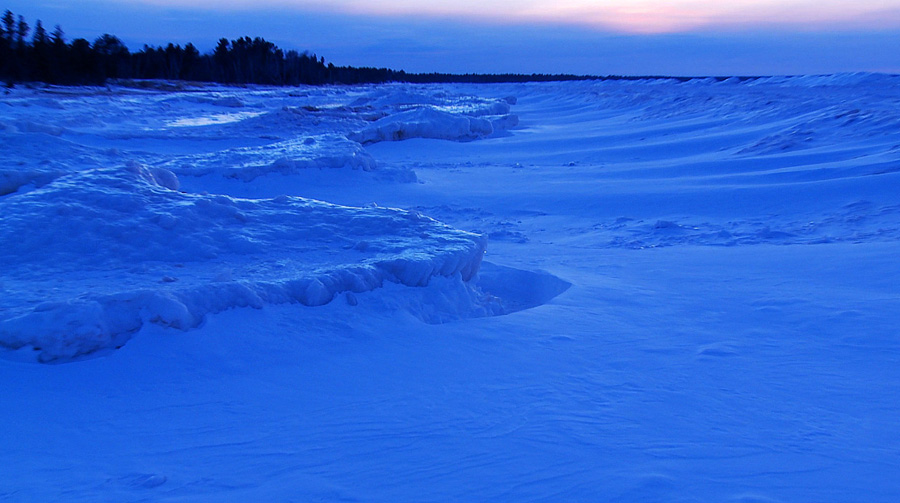
Standing on a 10-Foot Frozen Wave

Putting Together a DSLR Video Kit – and Why

Cultural Context and Photography

As you can see, the blogs about DSLR (for video) gear is where the interest was.  But I’d have to say that out of those 5 posts, “Standing on a 10 Foot Frozen Wave” was my favorite.  For me, it’s all about the story. And as Orson Welles once said “If you want a happy ending, it depends on where you stop the story”.

Happy New Year everyone.

Add to FacebookAdd to DiggAdd to Del.icio.usAdd to StumbleuponAdd to RedditAdd to BlinklistAdd to TwitterAdd to TechnoratiAdd to Yahoo BuzzAdd to Newsvine

Happy New Day

This is the time of year when we look back at our past year – our ups, our downs and everything in between. And we all pretty much look forward with optimism for a better year ahead – making pledges to ourselves with good intentions, to do better or be better in the New Year.

But what happens when you break the pledge that you made to yourself early in the year? Many of us tend to feel that we’ve somehow failed if we don’t live up to our own expectations with our yearly resolutions. Some of us think it’s better not to even make resolutions or have any expectations.

As for me, I look at every day as a new day rather than limit my aspirations to an annual event.

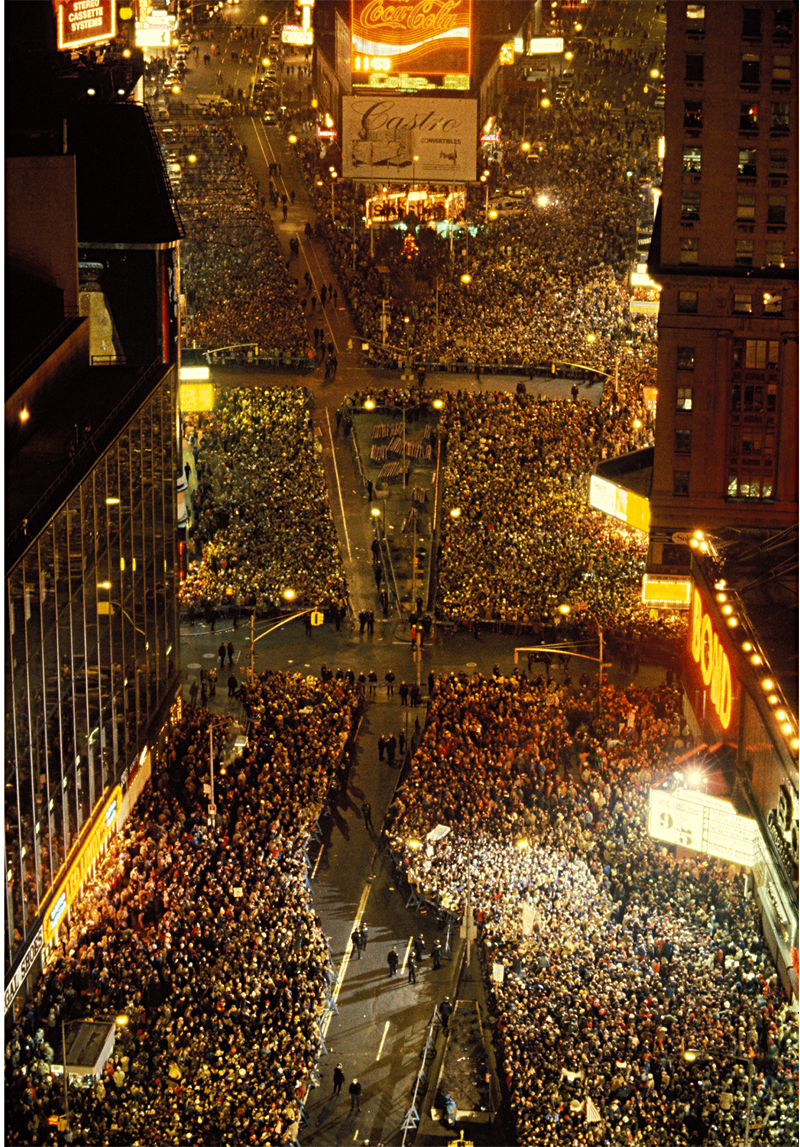
Times Square

Every day that I wake up is a “fresh start” for me. Any given day comes with the hope of possibilities. Anything can happen, especially if I open my mind to that way of thinking. Rather than pledge every New Year’s Eve that next year will be better – I tell myself every day that the yesterday is gone, and I don’t know if there will be a tomorrow, so all I have is the now.

I do know that I’ve grown personally this past year. I have learned to quiet my mind and in doing so I have gotten more in touch with myself. I question myself as to why I think I may want to do something. If the answers are mostly ego driven – I dismiss the notion. The more I get in touch with who I am and listen to my own voice, the more I have to give. I have opened my heart with no expectations in return but have been richly rewarded by doing so.

I wish I had learned all that I learned this past year, a long time ago. But everything has its own time and I needed to get through all those days along the way. That’s what makes life worth living.

Here’s to every new day.

Add to FacebookAdd to DiggAdd to Del.icio.usAdd to StumbleuponAdd to RedditAdd to BlinklistAdd to TwitterAdd to TechnoratiAdd to Yahoo BuzzAdd to Newsvine

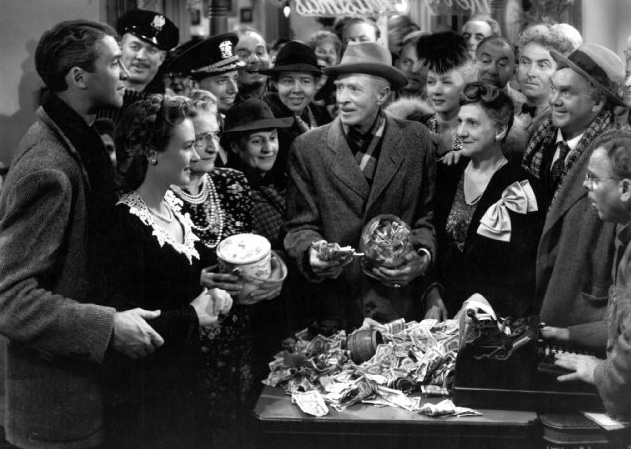
It’s a Wonderful Life

We have a holiday tradition in our family. Every Christmas Eve we watch the classic Capra movie, “It’s a Wonderful Life.” No matter how many times I have seen it – I cry every time at the end when George Bailey, Jimmy Stewart’s character, opens a book that is inscribed “no man is a failure who has friends.” The movie is about George Bailey a frustrated but compassionate businessman following in the footsteps of his father. He runs a small building and loan company, barely making a profit, but making it possible for his customers – his friends and neighbors – to get a home.

There’s a crisis in the film where George wants to end his life. An angel comes to him and shows him what it would have been like if he had never been born. That’s when George realizes how much his life has affected the lives of others and what a rich life he really has.

I think we all tend to forget how our lives affect the lives of others. In the things we say. In the things left unsaid. Often times we don’t even realize how we affect others because we are too narrowly focused on ourselves and only see our own perspective. Many times, our perspective might not be what’s really happening at all. The funny thing is that you never really know how your life has affected another’s unless they tell you – and most people don’t.

Every so often when I get frustrated by people’s actions, I remind myself that those very things that people do that make me feel bad or angry or sad – are the human imperfections that make life what it is. I remind myself that my imperfections and actions have an affect on others as well.

Every now and then, I’ll get an email or a Facebook message where somebody lets me know that I affected them in a positive way. It’s usually very something simple that I did or said, but it makes me feel good to hear that I made someone else’s life a little bit better.

Our world has changed a lot since Capra made this movie in 1946. A “friend” has taken on a different meaning – certainly a broader as we communicate globally with ease. But ultimately people are people with the basic human need of wanting to be loved and to know that someone cares about them. When we begin to understand that – it is what we do for others that brings the most rewards to our own life – then it really is a wonderful life.

Add to FacebookAdd to DiggAdd to Del.icio.usAdd to StumbleuponAdd to RedditAdd to BlinklistAdd to TwitterAdd to TechnoratiAdd to Yahoo BuzzAdd to Newsvine

A Solo Act

Video is very much a collaborative effort, and that’s exactly what I love about it. I’ve made some wonderful connections and partnerships while creating my documentary, Opening Our Eyes.

But every now and then, I find that I need to go “solo”.  I am a storyteller and a bit of a wanderer by heart and it had led to an interesting life – a life full of people, cultures and far flung destinations around the world. I have found that when I travel solo, I become more absorbed into the culture of where I am. I have no one with me to distract me or draw my attention away.

I’ve spent many years, traveling, observing and shooting stories for magazines all over the globe. In looking at my old work or even when editing new work, I’ve noticed a similarity in “feeling” among many of my images. There’s a quiet contemplative mood that shows through. In my people photos this “mood” is apparent in the connection that I make with my subjects – whether in a posed or candid photo. With my landscapes there’s more of a serene, yet melancholy moment.

I’ve come to realize that this “feeling” in many of my still images come my perspective as an”individual” who is solo when shooting. I can always tell which images I’ve shot when I’ve been by myself as opposed to those shot when traveling with a group. It’s hard to put into words, but when I’m alone and I’m exploring, I shoot differently. I see differently. I interact differently and people react differently to me.

So, I will always make room for both ways of working in my life – collaboratively and as a solo act. Each one brings its own rewards into my life and to my craft.

Add to FacebookAdd to DiggAdd to Del.icio.usAdd to StumbleuponAdd to RedditAdd to BlinklistAdd to TwitterAdd to TechnoratiAdd to Yahoo BuzzAdd to Newsvine

The Problem With (Most) Video/Motion Workshops

This has been something that has been weighing on my mind for months now – ever since the seemingly “overnight sensation” of people giving video workshops as well as the growing number of still photographers that are feeling the need to take these workshops.

The biggest problem that I see with all the video/motion workshops that are out there is that they oversimplify video production and take the approach that the single independent still photographer can learn and do it all – produce, operate the camera, capture good audio and manage the post-production and edit.  I suppose to be fair – while it may be true that the independent still shooter can learn all facets of video production, that is not the best approach as far as setting up a viable business model for a video production company.

Video is a collaborative medium.  While I may be able take just about any video production from soup to nuts single handedly – I know that the production would suffer if I did.  I learned a long time ago to build a team of good sound people, editors and even camera operators that I can draw on to hire on a need be basis.  They make the production and me look good and that’s what keeps my clients coming back.  It also allows my business to grow because I can take on more projects. If I’m not entrenched in all aspects of the production. It frees me up to start production on another project while still in post-production of a previous project.  If you are a one-man band, you not only don’t have this option but you actually make yourself look small in the process.

Video and motion have many facets to them.  I advocate that the best business models are when one positions themselves at the top of the content creation ladder by overseeing the production of the whole and hiring the appropriate crew that will facilitate the process.  By recognizing the differences between this business model and the “solo” model that most independent photographers work under, you’ll have a much better shot of maintaining ownership of your work and creative vision as well as having the potential to grow your business beyond your own singular capabilities.

The other problem with workshops that over simplify the process of video production by promising that you will be up and running after a one day workshop is that they are centered around learning the gear and the software which changes by the month.  If you learn just the gear du jour and not focus on the business of video production you will be in competition with other independent dabblers and that’s a quick way to the poor house in terms of sustainability.

A week doesn’t go by when I don’t get at least a dozen calls or emails from still photographers who feel they need to get into video and are overwhelmed by the learning curve.  I tell them that the best thing they can do is NOT to try and learn all these skills themselves and that in fact that will only delay their entry into the video production, business if that is what they are after.  A better way is to keep your focus on your vision, apply that to a sustainable business model that will incorporate video and collaborate with others who will make you look good and help you grow your business.

Add to FacebookAdd to DiggAdd to Del.icio.usAdd to StumbleuponAdd to RedditAdd to BlinklistAdd to TwitterAdd to TechnoratiAdd to Yahoo BuzzAdd to Newsvine