Tools of Change and New Distribution

Up early again, my mind restless and spinning with ideas, thoughts and reflections on last week’s Photo Expo in New York City.  Ironically this year’s Expo didn’t really reveal anything “new” for me in the way of new toys and tools of the trade.  What was new was the obvious absence of Adobe on the exhibitor floor – a sign of the economic times?  Or is it  a sign of how the photographic business is shifting – from professional to prosumer?

While in NYC I took time to see Robert Frank’s exhibition “The Americans” at the MET.  His beautiful images have stayed in my head and no doubt will provoke me to jump-start one of the many projects that continue to bubble to the surface in my mind.  But there was one thing I read in context of the exhibition and that was a statement made about the camera being a “tool of change” during Frank’s time. I started thinking about that and realize that the camera, whether it be a still camera or a motion camera is still a “tool of change”.  James Natchwey’s images are powerful examples of that.

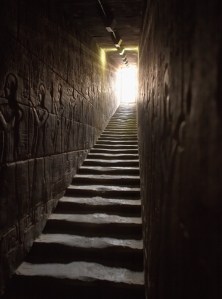
What is radically different today is our means of distribution – of getting our imagery seen.  No tool has the power to make a difference or a change if what it creates is never seen.  I started thinking about the demise of newspapers and print in general and I was dismayed about the future Temple of Horus, Edfu, Egyptand the still photos that may never be seen.
With the Internet and global distribution, the playing field has been leveled and democratized and anyone can share anything they create with the rest of the world – right?  Maybe not – because ultimately the web is controlled.  It’s controlled by what search engines find and how information is ranked. Listen to Eric Schmidt, Google’s CEO talk about the Internet of the future.  Even Facebook now is deciding which friends will see our news feed.  That default can be changed of course – but you have to be aware of it to change it.  How many of us are aware? And I mean that in the broadest sense, meaning aware of what and how our information is delivered.

All the “free” content we get these days over the web excites us all.  It’s great – but even free comes at a price.  I can only hope that future generations will understand the underlying cost of  “free content” and be aware of who is controlling distribution in this new paradigm.
Life on the Road and My Favorite Place

When I was a little girl my mom used to take my sister and I to Walgreens to get an ice cream sundae.  Back then, like other drug stores and five and dimes, you could get a bite to eat at the counter.  I had a game that I’d play every time we’d go.  I’d sit on the stool and spin myself around. I would assign exotic destinations to various landing spots that the stool would stop spinning – and determine that those were the places that I would travel to in my life.  I somehow knew back then that “the road” would become a huge part of my life.

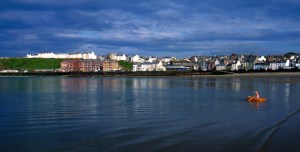
Over the years people have asked me “Where is your favorite place that you’ve ever been?”. To be honest, I hated that question because I never had an answer.  There were too many places, all different in their own way that attracted me to them.Iom peel boat And then about 10 years ago I had an assignment for Islands Magazine to cover the Isle of Man.
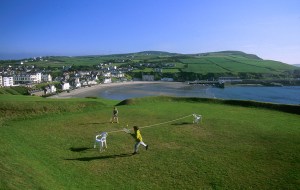
The island pulled me in from the start. I felt a strange sense of belonging, a connection that I couldn’t explain.  The air was cool and pure with a constant wind that blew across the island from one sea to the other.  It’s a small island located in the Irish Sea somewhere between Ireland and Scotland.  An island that’s reminiscent of Ireland 50 years ago –port erin an island where time seems to have stopped.
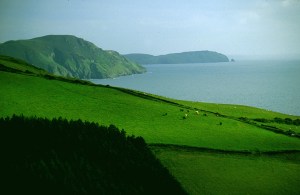
Because the island is small, I didn’t feel the usual rapid pace that I have felt on previous assignments where I was given too much to cover and too little time.  I could linger and catch the moods of the island and the vibe of the people.  It was a magical place with open, cinematic vistas of aiom scenic patchwork of every shade of green you can imagine, stretching from the barren upland’s to the blue of the sea.  The sea was always present.
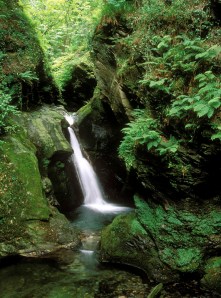
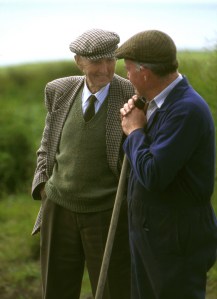
There were secret glens with waterfallwaterfalls and I thought that fairies must surely live there, somewhere beneath the ferns.  The island was enchanting on every level.  One day I came upon a crowd of people in a field.  I asked someone what was going on and they replied that it was a turnip weeding contest.  How wonderful I thought, a contest to weed a field.  I spent the morning caught up in the event, taking a few images, but mostly just talking with peoplemen iom and storing those conversations in my head.
And then like every other time I’ve taken to the road – my journey came to an end and it was time for me to leave.  There’s a legend on the island that every time the Queen of England comes to the Isle of Man (the island is an independent nation), the great god Mananan covers the island in a mist, so that she won’t find her way there and take the isle back.  The night before I left, a dense fog enveloped the isle and I thought the gods didn’t want me to leave – and I didn’t want to leave.  But the fog lifted and it was my time to go, but I knew that I finally had an answer to the question “Where is your favorite place you’ve been?”

Robert Frank, “The Americans” and The Road

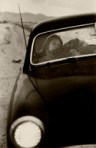
I went to see Robert Frank’s “The Americans” this past week at the Met in New York City. I have always been a fan of Frank, not so much for his fashion photography but his photographic observations of “us”robertfrank_10.T – us Americans, our culture at that time in our history.  He was an observer of “all” people not just the beautiful ones captured on the pages of Harper’s Bazaar, and he captured those observations for generations to come.
As I took my time looking at the prints and contact sheets displayed, I was able to get a glimpse of how he shot – what his camera lingered on and where he went from there.  I could see his thought process in how he made his selections, looking at the frames circled with his red grease pencil. I read his letters to his colleague Walker Evans, another favorite of mine and I got a much better sense of him as a person and photographer.  I watched an early video that he filmed and was amazed by how he pushed his own photographic boundaries into another medium.  The exhibition provided a wealth of insight and information on Frank, his project “The Americans” and a time in our country’s history – and I was captivated.

His images linger in my head and remind me of my beginnings in photography and “why” I became a photographer.  Like Frank, I’m an observer of all people, of cultures and use my camera as a means to capture my observations and share them with others.  My passion is rooted in my own personal road trips; I have taken over the years with my camera. It has triggered in me the desire to explore, to embark on another journey with my camera and see where it takes me.

I’ve spent a career and a lifetime “on the road”, always the traveler, observing and capturing the daily lives of others – not the famous, but the common man.  Not the horrific, the outrageous, the exotic for those reasons  – but because they’re part of the world I live in.  My hope is that I the images I leave behind, will provide others a glimpse of that time, that space, those lives that I stumbled upon during a lifetime spent on the road.

Technology News – New Video Cameras Announced

Anyone who reads my blog knows that I’m not one to get overly infatuated with the “tools of the trade” – but this week a few new cameras and upgrades were announced.

Sony announced two new cameras the PMW-EX1R – a revision of the EX-1 and the PMW-350 with a 2/3” chip. Redesigned viewfinders on both cameras make them attractive upgrades but there are many other added features as well.

Canon announced that it is currently developing a firmware for their hybrid camera – the EOS 5D Mark II enabling the camera to record at 24fps, obviously responding from user feedback.

Canon also announced their latest still camera (that also shoots video) the EOS 1D Mark IV.  The sensor however, is a non full frame but the autofocus system has been totally revamped.

All for now as I am headed into New York for Photo Plus Expo, where I’m sure to see more new toys.  More later.

Converging Technologies and Photo Plus Expo 2009

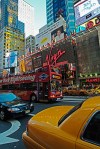
I’ve been attending the Photo Expo for as long as I can remember, back when it used to be at the old Convention Center at Columbus Circle.  It changed over the years, growing in size, moving to Javits and now shrinking, taking up ½ the floor space it used to.  Times SquareThat could be yet another sign of the economy, or how the photographic industry has changed over the years – or both.
This year is the first year there will be a Video Pavilion, where manufacturers can showcase their products and attendees can get a glimpse of how the converging industries of photography and video continue to change the paradigm of how we deliver our visual message.

Another profound change on the floor this year is the absence of the Adobe booth.  I can’t remember a time when Adobe has not been an exhibitor at Photo Expo.  Has the economy played a part in that – or is it another sign of changing times in the photography business?

It will be interesting this year to observe who is exhibiting and what the new “cool” tools are?  Like last year when Canon displayed their first hybrid camera the 5D – a still camera that also shoots video – their booth, along with Nikon will be the “main attraction”. Video continues to be the hot topic.

Gone are the manufacturers of lab equipment, along with the last vestiges of film. Gone are Apple and Adobe – maybe next year?  Or will next year look more like NAB”s (National Association of Broadcasters) show in Las Vegas as we continue to move from ink and print to electronic delivery?

Making Still Images Move

Burlesque
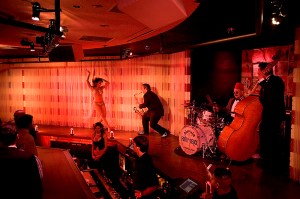
Burlesque club, Las Vegas (click image for motion sample)

I’m often asked how to prep still images and how to make them move in a multimedia/video piece.  My initial response to this question is to reply with a series of questions – “Why do you want to make your images move?” “What’s your motivation? What do you want to communicate to the viewer?” “Do you need sound and movement to better tell your story?”

I’m not one to do things just because I can – I need a reason.  For me a still image is an entity in and of itself – a moment in time to be studied and contemplated.  When I present still images in a multimedia presentation – those “moments in time” become part of a greater whole.  That new entity becomes a different visual message with sound and motion becoming the underlying spine of the piece.  Added information that’s needed to convey that particular story. The still images become sequences and the sound and movement of the piece create the “feel” and “pace” of the whole.

As far as the practical aspects of creating a multimedia piece – the first step is to choose an editing software that works into your workflow.  I use Final Cut Pro Studio on a Mac.  I use Final Cut Pro (within the suite)  if I don’t have a lot of images to edit but lately I’ve been using Motion (also included in the Studio suite)  – because it’s easy – once you know it. You don’t need the depth of these software applications  to create a simple multimedia piece.  There are plenty of software applications to choose from  – iMovie and FCP Express in the Apple family, Adobe Premiere (cross platformed if using an Intel Mac) , Sony Vegas for PC’s  and simpler programs like Soundslides or Audacity.

There are many tutorials on this subject – check out Ken Stone or Lynda.com – both great places to learn.  In the meantime I will share my recipe for how I size and prep my images for multimedia presentations.  Like anything else, there are hundreds  of ways to get to the same end – but these are my suggestions that I find work best.  Another note – I use large image sizes so that I when I bring the images into my editing timeline – I have room to zoom into the images without having to  enlarge them beyond 100% in the video application.

My sizing/prepping suggestions for still images:

RGB color mode

Srgb color profile for SD (standard def)

HDTV (Re.709) color profile for HD (hi def)

Tiff, PSD or PNG – better than Jpeg

Don’t over sharpen image – it will jitter on screen

Use de-interlace filter for web videos – but this is something you need to test – I don’t always like the effect this filter has.

Sizing – I always upsize my images 2.5 x needed for video timeline  if I will be moving them “Ken Burns” style. Below are different specs for HD and SD and different aspect ratios:

Standard Def – DV NTSC 4:3 – 1800x1350x72 (pixels)(res)

Standard Def – NTSC 16:9 – 2132x1200x72 (pixels)(res)

HD – 720p – 3200x1800x72 (pixels)(res)

HD – 1080i – 4800x2700x72 (pixels)(res)

It’s really never been easier to prep still images in an application like Photoshop because there are lots of built in presets. I always prep all my assets and import them into my editing software before I even begin to edit.  That way I don’t need to depart from the edit and lose a train of thought whenever I need to add a still image or other graphic.

Have fun – and when you do decide to move an image – ask yourself why first?

Why I (Still) Shoot Still Images

Even though I’ve been shooting motion for over 10 years, I still spend half my time shooting still images. When my story can be or should be told with images that are “moments in time” then a still camera is always my tool of choice.

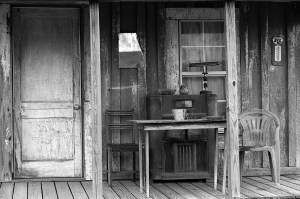
For me there is a certain timeless quality of a still image. Still images are meant to be explored by the eye while lingering on the “moment” captured. Perhaps a better way to explain the power that I find within still photographs is to show you some recent images I shot. Hopsons_shack

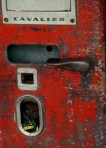
This past weekend I visited a favorite spot of mine. It’s an old plantation in Mississippi and every time I visit, I see it in a different way. But I always see it in a timeless way – it’s like time just stopped there.Hopsons_vending_J2X8487 Even though this plantation is worlds away from my cultural norm – I get a feeling of comfort mixed with a bit of melancholy for my own past when I’m there.
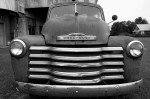
I could put these images in a multimedia format and add a narrative or a music track. But the question I ask myself is why? Hopsons_car_grillJ2X8622Will it add or will it distract? What piece of music should I use and what will that add to the story? Will the music overpower the piece – because many times it can. And too many times people try to add music to mediocre images to make them more exciting.Hopsons_car_J2X8561
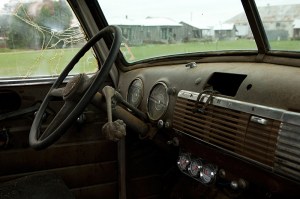
A still image has the power to capture the eye of the viewer and make them want to know more. If an image I make draws the viewer in – to see that moment in time – just as I saw it – when I shot it – then I’ve done my job as a storyteller.

Add to FacebookAdd to DiggAdd to Del.icio.usAdd to StumbleuponAdd to RedditAdd to BlinklistAdd to TwitterAdd to TechnoratiAdd to Yahoo BuzzAdd to Newsvine

Finding Your Passion

How does one find their passion?  How does one even define the word – passion?  The dictionary gives a few definitions. I’ll cite two:
– “intense or overpowering emotion such as love, joy, hatred, or anger.”
– “the object of somebody’s intense interest or enthusiasm”

Passion isn’t something you can teach someone – you just have to have it inside of yourself.  If you’re passionate about something – you just know.  I’m a photographer and a filmmaker .  But my passion is “telling the story” and I use my craft as a means to that end.  I’m interested in the human story and the cultural context that gives birth to those stories.

My insatiable desire to seek out and explore the human story has led me down many wonderful paths in my life. One of those paths led me to shoot a personal multimedia project on The Delta Blues Musicians.  My goal was to shoot environmental still portraits– as well as shoot video interviews of them .  I met my goal – at least in terms of creating an exhibition of still images and a short documentary – but I’ve never thought of this project as really being finished.  And that’s because I’m so passionate about the subject – “the blues”.

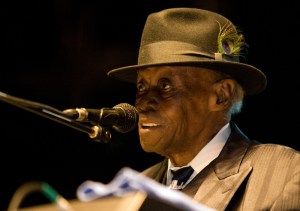
This past Friday, I headed down to Mississippi for Pinetop Perkins homecoming.  PinetopPinetop Perkins is a legendary boogie woogie piano player in the blues world.  He’s 96 years old and still going strong.  He is living proof of a man who is “living his passion.  I’ve become friends with Pinetop’s manager over the years and yesterday we got together over lunch to catch up on what was going on in our lives. I hadn’t been to the Delta for a few years and she was giving me the latest news on some of the musicians that I had interviewed for my film.  Four have since died – Little Milton, Robert Lockwood Jr., Ike Turner and most recently Sam Carr.

Pinetop’s manager is a very interesting woman who used to be an Anthropology professor at University of California at Berkeley.  She taught interview techniques as part of her ethnology classes.  When I had originally called her up to request an interview with Pinetop – she turned me down.  But not being one to take my first no – I asked her to check out my website and I also sent her a portrait I had taken of Sam Carr.  When she saw the photo I had taken of Sam – she changed her mind – she gave me my time with Pinetop.  She said that after she saw the portrait I took of Sam – she knew that  I understood “cultural context”

Yesterday at lunch she paid me another high compliment.  She told me that while she couldn’t quite dissect my “interview technique” (and she kind of rolled her eyes as she said it – because at times my techniques are quite comical) – she said that people just seem to be comfortable with me and  because of that they wanted to talk.  She also told me that I’ve been the only one to get a smile out of Robert Lockwood Jr. in an interview – but that’s another story.  Those comments were rewards in themselves for the efforts I’ve made on this project over the years – but there have been so many more.  Many rewards – all because of my passion for “the blues”.

Later that evening I got a chance to see Pinetop perform again.  I was backstage at the main festival stage – it was unusually chilly and I had a blanket with me.  Pinetop was sitting in the wings and I gave him my blanket as he waited for his cue.  He seemed so small and fragile.  When he got up to walk on stage and take his place at his keyboard before the crowd – he came alive.  And when he played his first note – I caught “it” in his eyes – a passion for his music and more than that – a passion to play for “his people”.  He didn’t want to leave last night – he played another song for “his people” and raised his arms in joy as the crowd embraced him.  It was a moment I’ll never forget.

Why Shoot Video Instead of Stills

Video seems to be the “hot” topic these days.  There’s nothing really new about video – it’s been around for quite some time.  So why do we see and hear it everywhere? You Tube gets one billion hits a day!  Perhaps the short, simple answer is because society interacts and communicates more and more via the web through social media sites.  And because of broadband capabilities – we “can” watch videos without the painful experience of watching stuttering video while it downloads.

So as the economy stays soft and still photographers try to stay afloat and camera manufacturers incorporate video capabilities  into still cameras – there seems to be more and more photographers who feel the need to start shooting video.  I’m a big advocate of video – but for all the right reasons and those reasons are different for each and everyone of us.  But – you must have a reason why to shoot video from a story point of view.  Because visual communication should be all about telling the story or relaying a message.

I used to shoot a lot of stories for the National Geographic Traveler – mostly city stories.  I spent quite a bit of my time – observing life and waiting for the “moments”.  I’d also spend a lot of time talking to people and listening to their stories.  I stored a lot of those conversations in my head over the years but because I am a photographer – my images were published – but not those conversations. So in a sense there was a large part of my experience that was never shared.

When I started shooting video projects, along with it came the need to do interviews. A big part of many of my videos are interviews that drive the narrative of the story.   Interviewing someone on video can be a powerful thing. That is truly one of the most powerful aspects of video  and the reason “why” I choose that tool when I do.  When I sit down and speak with someone  face to face – I get the type of experience and interview that one can only get in person.  I pick up on all the nuances – the body language – of the subject.  When I really care about my subject – the connection becomes that much stronger – the questions are answered not only with words but with the body and the eyes and everything in between.  And that shows – on camera and can drive the story in a meaningful way.

So when I need to tell someone’s story and that person tells their story not solely through their words but with every inflection of their voice and body – then video is my tool of choice.  That choice is made because it makes the story stronger.  Not just because I “can” because my camera has video capabilities. Choose your tool wisely.  I’d love to hear how and why others decide on which tool to choose. There’s so many reasons.

The Business of Video

The “business” of video encompasses a lot of things –  your marketing strategy, your cost of doing business, your skill set needed to survive in business, your management of employees or outside contractors and paperwork.  For now I’ll speak to paperwork and how critical it is in communicating with clients.

A paperwork trail starts with an estimate for a job and I don’t take the process of estimating lightly.  I try to get as much information that I can when a client comes to me and asks me to bid on a job – or asks me  to provide an estimate for a job I’ve already been hired to do.  I keep a database of past SOW’s (Statement of Work) to use as references. While every job is different, I use these archived SOW’s as a starting point.

In addition to estimating the costs of crew, equipment, location needs, pre-production and post-production, I  clearly state terms as well as a schedule for post-production – including client response time and completion dates.

Terms – Here is where I state rights and  “usage” of the finished product – where will it be used and for how long.  I also spell out payment terms, cancellation fees as well as provide an accurate description of exactly what I’m going to deliver.  For instance:

  • 10-minute video to be delivered on DVD and compressed files for the web.
  • One day shoot on location at………….includes 2 interviews and b-roll
  • Post production – edit will include x amount of still images – sized and digitally provided by client – logos  provided by client– stock photos and/or footage – narrative (voiceover) track and music.
  • Payment – one third upon signed SOW – one third after shoot – and balance due upon delivery of final product.
  • Cancellation terms and fees
  • Change fees
  • How many edit revisions are included and the additional hourly editing costs if more revisions are needed.

Schedule – This is extremely important in video production – a schedule sign off by the client that stipulates delivery dates for each part of the process. The reason this is critical is that if the client delays things on their end – it’s clearly understood that the rest of the schedule gets extended in terms of deadline dates.  Otherwise if your client needs their boss to approve things  and their boss has an unexpected out of town trip come up – thus delaying the process – you won’t be left with half the time you need to deliver the final product.  Example of post production schedule:

  • Aug. 31 –  Script approved by client
  • Sept. 1  –   Casting reel delivered to client
  • Sept. 7  –   Talent decisions made by client
  • Sept. 20  – Shoot date
  • Sept. 25  – Voiceover recorded
  • Sept. 26  – All logos, graphics and still images provided by client
  • Oct. 5 –     Rough Cut delivered to client for review
  • Oct. 12 –   Any edit changes noted by client and communicated to production house.
  • Oct. 19 –   Final cut delivered.

Lastly here’s a link to AICP (Association of Independent Commercial Producers) with examples of bid forms and contracts that are helpful in terms of bringing to mind all the things that should be covered in your SOW.