Mistakes Professional Still Photographers Make When “Moving” to Video

1.  They forget about the story – it’s not your camera that tells the story – it’s the person using the camera. Pretty visuals, slapped into a motion timeline with music, doesn’t necessarily tell a story.  Video is a story telling medium – don’t forget that.

2.  They think they already know how to shoot – if you think because you are a professional photographer and all you need to do is get a camera with a “video mode” on it, you are mistaken. Shooting in motion is far different than shooting still images. An experienced motion shooter can spot a video shot by a still photographer with little know how, right away.

3.  Thinking audio isn’t important – audio is more important than the visual when producing video.  Hire a sound person to do it right, but don’t discount it.

4.  Thinking the DSLR camera is all you need for video productions – this is a biggie.  How are you going to go after professional video jobs if this is the only tool in your kit?  Sure you can rent a RED – but make sure you are as proficient with this tool as your competition is before hanging out your “motion” shingle.
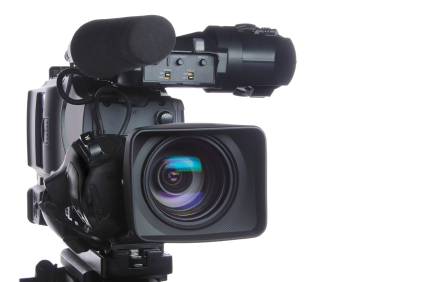
5.  Positioning themselves just as DP’s or Directors and thinking you’ll maintain ownership of your work. If you assume the role of a camera operator, DP or even a director – you will be in a work for hire position in most markets.  Position yourself as a producer – shoot if you want to – and direct – but realize that you’ll be just one rung on the “content ladder”.

6.  They don’t learn interview skills – this is what separates the pros from the still shooters who have DSLR cameras and think that’s all they need.  I’d say about  70% of my work includes on camera interviews.  Even though I ask the questions- I’m not on camera, my subject is.   I not only need to know how to ask the right questions and get great audio, but I need to produce a usable interview clip for an editor. That means knowing how to get great soundbites. This is one area I excel in – it’s all about rapport with your subject.

7.  They try to compete in “old business model” markets – Everyone wants to shoot broadcast spots and feature films (or short films) so they think that after shooting motion for only a few months – or even a year – they will be able to compete in the high end business of video production.  First, this market, like the still photography market,  has changed drastically, mostly marginalized by still photographers who are just starting to shoot motion,  shooting jobs for next to nothing because they have no understanding of this “business”.

8.  Learning the “how to’s” in terms of gear – but nothing about the business – this is also a biggie.  There are so many “how to shoot motion” workshops and roadshows out there but no one seems to be teaching the business end of things.  Still photographers think they already know “the business” but quickly realize that they don’t, and they put themselves out of business in this medium – before they’ve barely started.

9.  Teaching “how to” workshops in video with little or no experience – I can’t tell you how many photographers have called me for technical advice about some pretty basic stuff in terms of video,  and four months later they are teaching workshops. Please don’t become part of the problem and send more shooters out into this field without teaching them something about business. And if you are considering taking a workshop – do your homework and take the workshop from someone who is accomplished in this field and has done something.

10. They forget about the story – I know that’s #1 but it needs reinforcing.
Teaching and Learning – Four Weeks in China

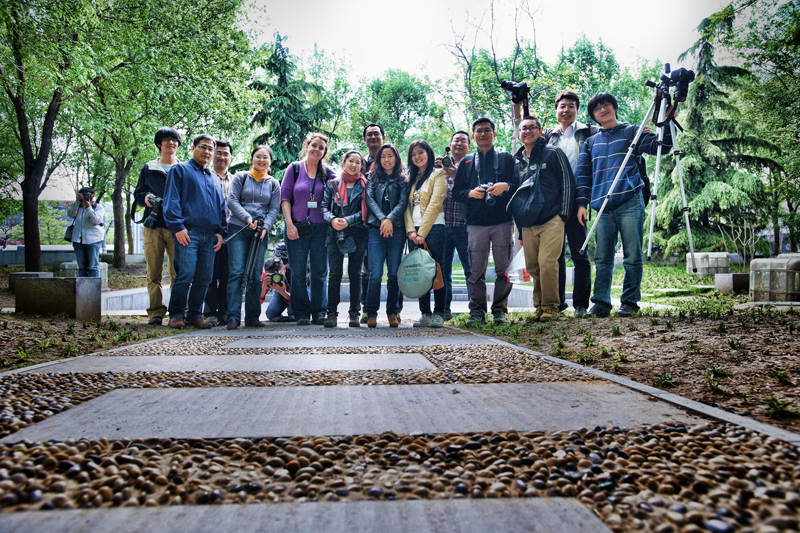
It’s the start to a beautiful day in Brookside, NJ and I’m home at last after a long and arduous 4-week trip to China.  I had been teaching Chinese journalists, video journalism or new media as they refer to it in China.

I hadn’t fully realized how hard “teaching” really is until after these past four weeks.  To begin with, I was teaching a difficult subject – “how to produce and shoot short video stories”, to journalists at the “state’s” largest news and photo agency.  I had 4 days to teach 4 weeks worth of material –how to think and shoot in motion, edit video stories and upload them online. To make things even more difficult, everything I said had to be translated by my interpreter to my students, making the instruction take three times longer.

Each week my students amazed me by their eagerness to learn, despite coming to the class with the bare minimum in the way of  “tools”.  Some students didn’t even have cameras that could shoot video. Some had dated low res video cameras and no one had any audio gear at all.  When it came to the editing part of the program, their computers were under equipped to handle Adobe Premiere CS 5.5, which they had recently downloaded and installed on their PC’s. And yet, each class managed to produce a short story after less than four days!

This entire adventure was a lesson in collaboration. My students learned to collaborate.  Like most photojournalists they were used to working solo, so collaborating was a foreign concept to them.  But, collaboration is a common way of working when it comes to video and it was a necessity in China, because the students were lacking in gear.

I was part of a team of four teachers on this trip, so I too was working in a collaborative way.  That was equally tough, as I am used to working as an independent producer and accustomed to making my own decisions.  The other three photographers/teachers were also independent photographers, used to doing things their own way.  Egos collided from time to time within the group, yet we ultimately knew we needed to maintain the “group” in order to deal with the angst that came with doing this job. On top of that, our Chinese hosts wanted to control us.

I think we all learned a lot about each other in the process as this adventure played out.  I know I did.  But, I also learned a lot about myself. Perhaps, this was the purpose of this trip – to learn more about myself and grow from the experience.  Time will tell.

I can also say that I learned from my students.  There is always one student who feels that they already know everything, and usually tries to “stump the teacher”.  When this happens, I handle it with humility and thank the student for teaching me something that I did not know. I do not hide the fact that I don’t know everything.  And then I take the opportunity to relay to the rest of the class, that I never want to stop learning, no matter how old I get.  I tell them that in living this way, it has brought many rewards in my life and I encourage them to do the same.

I’m home now.  It’s a beautiful Sunday morning in Brookside, NJ and I’m reflecting on my last weeks, which remained an adventure until the end.  Chinese activist, Chen Guangcheng was on my flight from Beijing to Newark, NJ, seeking asylum in the US and making a new life for himself and his family.  As Chen adjusts to a totally new life in America, I’m happy to be home again with my freedom and liberties in tact.

Week One – Teaching in China

I’ve just wrapped up week one, teaching Chinese photojournalists, in Beijing, to think and shoot in motion.  Like any new job or new experience – the first day or the first week – is always the hardest.  The week flowed like any good story, with “ups” and “downs” but by Friday afternoon – my students triumphed and amazed me.

It’s difficult to teach any “still” photographer “motion” because so many photographers are so gear oriented, they underestimate the most important part of the process – thinking and shooting in motion.  I find that many times, still photographers think that all they need to do is switch their DSLR’s to “video mode” and shoot.  There’s a certain attitude amongst some professional photographers – that all they really need to do is get a camera that’s capable of shooting video.  But they quickly realize that there is a lot more to learn.

Day one, we talked about thinking and shooting in sequencing.  It took longer to get this message across, simply because everything needed to be translated into Chinese.  I showed examples that helped and then gave them an assignment to shoot a sequence of video clips that told the story.  The next day we reviewed the work of the students and they quickly understood the successful attempts and the not so successful results.  They also realized how different shooting motion is from shooting stills.  I had told them in class that “stills are moments in time” and “video is time in motion” but until they actually tried to shoot that way – and then analyzed their results in the critique – did they begin to understand. Many made the common mistake of moving the camera, rather than letting the motion happen in front of the camera and many produced video clips that didn’t relate to one another.

Day two we started to talk about audio.  That’s a subject that all still photographers underestimate because they don’t realize the importance of capturing good audio.  They think that their camera mics are sufficient in this task. After all, they are capturing sound.  It’s not until they can hear the difference between good audio and bad audio that they really begin to understand that audio is more important than the visual.  I could see the light bulbs going off the next day in the critique that they were beginning to understand this important concept.

Day three we talked more about the importance of audio and that when shooting with a DSLR camera, it is essential that they capture audio with an external microphone and a separate digital audio recorder.  After a morning in the classroom, we all headed out for a field trip.  I set up a situation where I did an interview of a subject and they shot the b-roll.  That evening, we broke into 3 groups (video is a collaborative effort) and they set off to capture a story, using everything we had learned in the past 3 days

Day four, we put a small dent into learning the vast editing application, Adobe Premiere.  That was perhaps the most challenging day for all of us.  I’m somewhat new to Premiere, since I’ve been editing in Final Cut Pro for the last 10 years, but it was the most viable solution since most of the students were using PC’s and Premiere is cross plat formed.  We learned the basics in the morning and in the afternoon – the hard work began.  The next day, we would be joining the other 3 groups who had been learning things like lighting and Lightroom and the clock was ticking to get their assignments edited.  I cannot even begin to tell you how amazed I was at how far these students had come in just 4 days – it was remarkable.

The next morning we showed our completed projects to the entire student body and other faculty.  Based on the resounding applause – I believe we amazed them as well. That evening we were all beyond exhausted, but my students invited me out for a “banquet”.  I was lucky  – many in my group spoke some English – so the evening was spent sharing stories and cultural experiences and food and drink.  It created a bank of memories that I will cherish.

We had two days of rest and our first day; we headed to a remote area of the Great Wall.  I shot some still images and then I needed to just take pause.  As the other 3 teachers continued to shoot – I knew I needed to stop and just take a moment to put the camera down and really “see” where I was.  I needed that time to absorb not only the week I had spent but to relish the “now” and think about where I was in the context of the world.  It’s those moments, when I put the camera down, that always create the memories that linger in my mind forever more.

Monetization of Photography in Spite of a Lousy Economy

I talk to a lot of photographers. I don’t define the word “photographer” by the type of camera he or she shoots with. Whether someone is shooting with a still camera, a traditional video camera, a motion picture film camera or a hybrid camera that shoots both stills and motion – a “photographer” these days is apt to embrace more than one of these tools.

Regardless of the tools you may use, I’ve come up with a few tips on how photographers can stay afloat and make money in this continued stagnant economy.

  • Think outside the box – don’t think of yourself as one who just shoots still images. Even your “still” clients will have a need for motion imagery these days.  It may not warrant the need for them to hire a big video production crew to make a broadcast spot.  But it could be one of your corporate clients needs a “talking head” for their website. Even if you don’t shoot motion or don’t want to – collaborate with someone who has these skills to fill your client’s needs instead of sending your clients  elsewhere.
  • You don’t need someone else to commission your services in order for you to make a living. When photographers take on personal projects, not only are they creating a buzz and getting noticed by potential clients, they are also creating their own “content” to monetize. It is possible now to get our content to market without the need of a middleman. Portals are open and plentiful to all.
  • Take advantage of what is “free”, rather than be put out of business by it. There are so many ways to build your brand and get noticed without spending a fortune. The costs of building and maintaining a website have dropped significantly because of advances in technology. And utilizing social media to create a buzz and get the word out about your company is virtually free with Facebook, Twitter,LinkedIn and YouTube. But be prepared to do the work and discipline yourself because this territory is ripe with distractions.
  • Re-purpose your content. If you’ve been blogging or have something useful to share – consider packaging your “knowledge” into ePubs, podcasts or “how to” webinars. One thing I’ve learned about making an ePub is that you can either do it yourself or hire a formatter so that it gets to market quickly – via Amazon, Barnes and Noble or the iTunes platform. Price it right – and offer more than one ePub at a time. (I’m working on my 2nd ePub now) In this market, if someone has just spent $3 or $4 to buy your ePub and they see you have another one for sale – it’s not a big stretch for them to buy that other book you offer at the same time.
  • Collaborate with others. Partner with others to put on webinars, podcasts, call in phone seminars etc. Use this opportunity to build your own brand. Don’t always feel that you have to be the only “act” offered. In fact many times, if you join forces with other creatives, it will get you further than if you are the only speaker in a half filled room. Get out there and get noticed and learn from your colleagues at the same time.
  • Be authentic. I cringe when I write that word because it has become a bit trite. I guess in a way I have always been authentic. In fact I just can’t help myself. If you are true to yourself, you will be ready, eager and able to work hard on your dreams. And hard work is exactly what is necessary to make it in this profession.  You’ve got to want it bad enough in order to do the work. If you are a clone of other photographers, you’re career will be short lived. I guarantee the photographers that you are emulating will be “moving on” because their passion is driving them to new things. So, what happens to the cloned versions then?
  • Don’t focus solely on the money. Easy to say and really hard to embrace when you can’t pay your mortgage. But look at any successful person – I don’t care which business you choose to look toward in terms of finding successful people – but you’ll see that most people who have “made it big” were not driven by the money. I’m not saying that money is not important, but if you are solely focused on the money and not on the act of creating – it will show.   Being too focused on the  money part of the equation, can sometimes push it away. People sense it. It’s human nature to want to be around a “winner” – not someone who is begging for a job to keep them afloat financially.
  • Be patient. Everything turns around. While the old days and ways of doing things won’t come back, better opportunities will replace them. Don’t be paralyzed by your own fears. Do what you can that won’t cost you a lot of money and there is plenty you can do. Work social media, learn new skills – audio, editing, writing etc., network with people, create new content for ePubs, webinars, and podcasts. Use your imagination, pursue what you are passionate about and when the economy turns around – you’ll be ready.

Add to FacebookAdd to DiggAdd to Del.icio.usAdd to StumbleuponAdd to RedditAdd to BlinklistAdd to TwitterAdd to TechnoratiAdd to Yahoo BuzzAdd to Newsvine

Closing Thoughts and Best of Best

It’s been a very full year for me. I mean that in every sense of the word full – full of new experiences, full of hope, full of achievements – but also full of my share of rejections and disappointments. I’ve shared a lot of these experiences through this blog.

There have been times I haven’t written in a while because I didn’t feel like I’ve had anything worthwhile to say. And there have been times when I did write but I probably shouldn’t have because it wasn’t worth reading. I always told myself that when I didn’t feel like writing in my blog, that I just wouldn’t do it. So if there are long periods of time when I haven’t posted a new entry – it’s because for whatever reason, the desire may not be there. I have always appreciated the comments and feedback.

Here are the top 5 posts as far as number of hits:

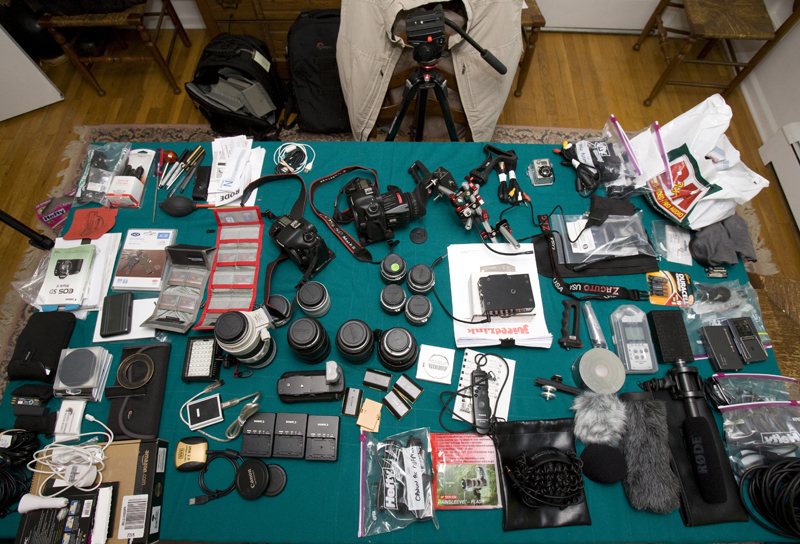
My DSLR Kit for a Three-Month Road Trip

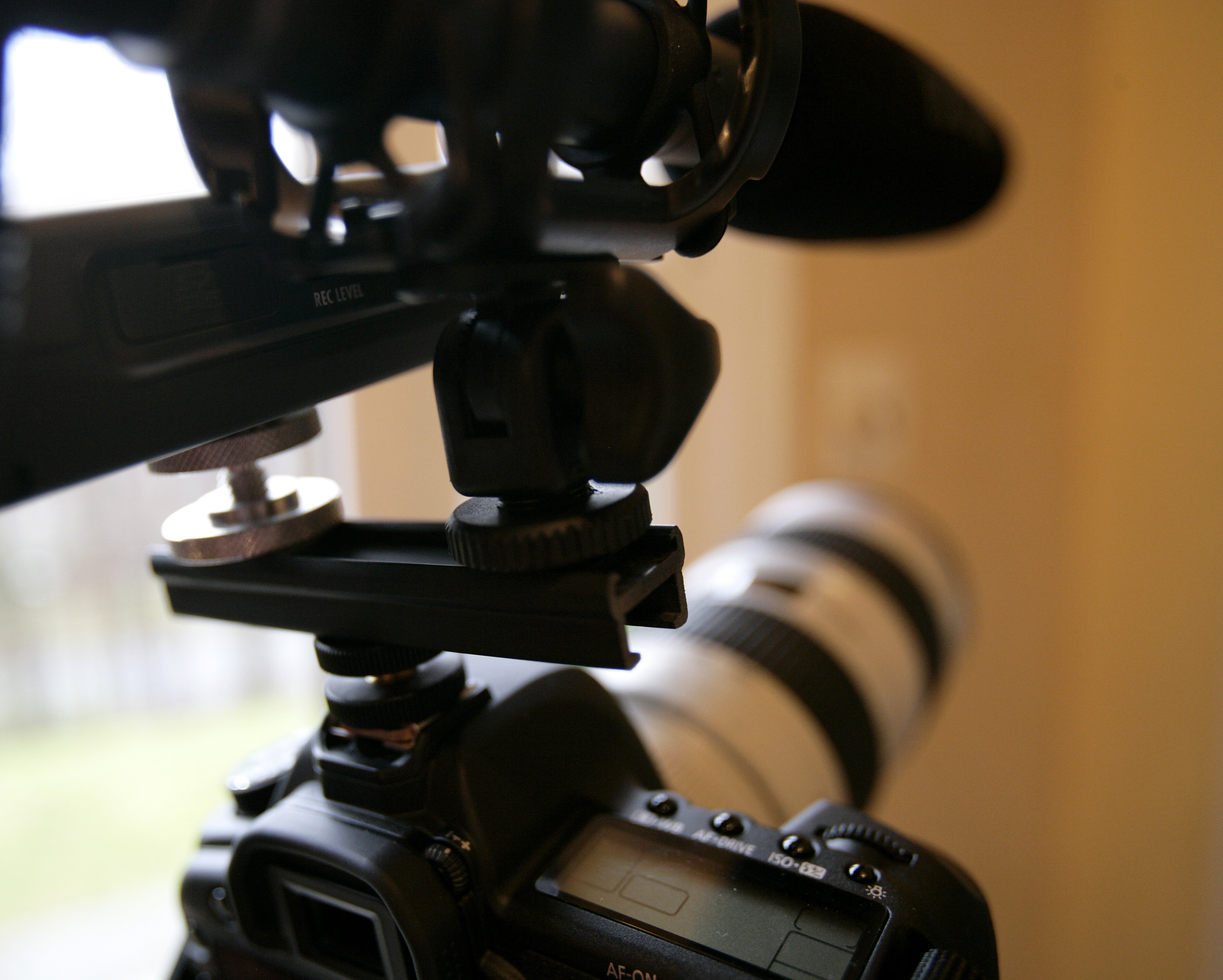
Gearing Up With HD DSLR’s


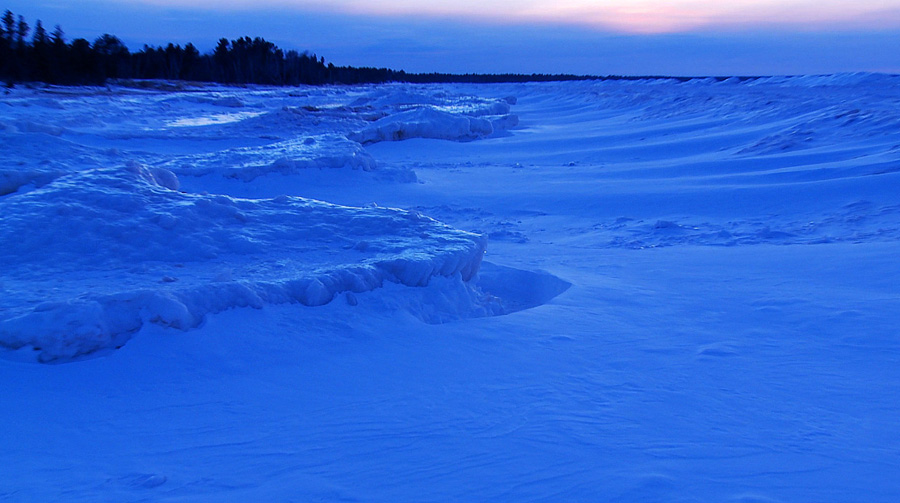
Standing on a 10-Foot Frozen Wave

Putting Together a DSLR Video Kit – and Why

Cultural Context and Photography

As you can see, the blogs about DSLR (for video) gear is where the interest was.  But I’d have to say that out of those 5 posts, “Standing on a 10 Foot Frozen Wave” was my favorite.  For me, it’s all about the story. And as Orson Welles once said “If you want a happy ending, it depends on where you stop the story”.

Happy New Year everyone.

Add to FacebookAdd to DiggAdd to Del.icio.usAdd to StumbleuponAdd to RedditAdd to BlinklistAdd to TwitterAdd to TechnoratiAdd to Yahoo BuzzAdd to Newsvine

The Problem With (Most) Video/Motion Workshops

This has been something that has been weighing on my mind for months now – ever since the seemingly “overnight sensation” of people giving video workshops as well as the growing number of still photographers that are feeling the need to take these workshops.

The biggest problem that I see with all the video/motion workshops that are out there is that they oversimplify video production and take the approach that the single independent still photographer can learn and do it all – produce, operate the camera, capture good audio and manage the post-production and edit.  I suppose to be fair – while it may be true that the independent still shooter can learn all facets of video production, that is not the best approach as far as setting up a viable business model for a video production company.

Video is a collaborative medium.  While I may be able take just about any video production from soup to nuts single handedly – I know that the production would suffer if I did.  I learned a long time ago to build a team of good sound people, editors and even camera operators that I can draw on to hire on a need be basis.  They make the production and me look good and that’s what keeps my clients coming back.  It also allows my business to grow because I can take on more projects. If I’m not entrenched in all aspects of the production. It frees me up to start production on another project while still in post-production of a previous project.  If you are a one-man band, you not only don’t have this option but you actually make yourself look small in the process.

Video and motion have many facets to them.  I advocate that the best business models are when one positions themselves at the top of the content creation ladder by overseeing the production of the whole and hiring the appropriate crew that will facilitate the process.  By recognizing the differences between this business model and the “solo” model that most independent photographers work under, you’ll have a much better shot of maintaining ownership of your work and creative vision as well as having the potential to grow your business beyond your own singular capabilities.

The other problem with workshops that over simplify the process of video production by promising that you will be up and running after a one day workshop is that they are centered around learning the gear and the software which changes by the month.  If you learn just the gear du jour and not focus on the business of video production you will be in competition with other independent dabblers and that’s a quick way to the poor house in terms of sustainability.

A week doesn’t go by when I don’t get at least a dozen calls or emails from still photographers who feel they need to get into video and are overwhelmed by the learning curve.  I tell them that the best thing they can do is NOT to try and learn all these skills themselves and that in fact that will only delay their entry into the video production, business if that is what they are after.  A better way is to keep your focus on your vision, apply that to a sustainable business model that will incorporate video and collaborate with others who will make you look good and help you grow your business.

Add to FacebookAdd to DiggAdd to Del.icio.usAdd to StumbleuponAdd to RedditAdd to BlinklistAdd to TwitterAdd to TechnoratiAdd to Yahoo BuzzAdd to Newsvine

Licensing and Music

Music is the heart of any film, tv show, commercial and just about any other type of “content” that delivers a message.  Personally, I think that music is equally important to the visuals and dialog, in setting the feel and pace in any of those “products” I just mentioned. Imagine any of those things without music!

While working on the post production of a feature documentary recently, I became aware of just how important music was to the film and that I needed lots of it. In all I think we used over 53 pieces of music in a film that was 76 minutes long. And, I think we still could have used a little more in spots.

It’s amazing to me how many professional photographers don’t consider the licensing process when it comes to music. I’ve seen too many portfolio samples with “main stream” music that I know hasn’t been licensed because it’s prohibitively costly.
When you enter into the world of incorporating music into your creative projects and businesses be prepared to spend money and keep proper documentation. I learned a lot in this process and I’ll share with you some tips:

• Be prepared to spend money, especially if you are looking for broad rights. Even licensing royalty free music adds up if you want a mass market license. That would include everything from TV to a theatrical screenings to DVD’s and VOD, internationally.
• Even royalty free music in some cases comes with different tiers of licensing rights. One company I worked with www.neosounds.com had two options – Standard Licensing and Mass Market Licensing – the difference was that for TV broadcast, standard was national and mass market was worldwide.
• Make sure you keep all licensing agreements as well as any receipts for  music – both electronically and printed copies. You will need this documentation. If you want to mass duplicate DVD’s – you will be asked for proof of licensing.
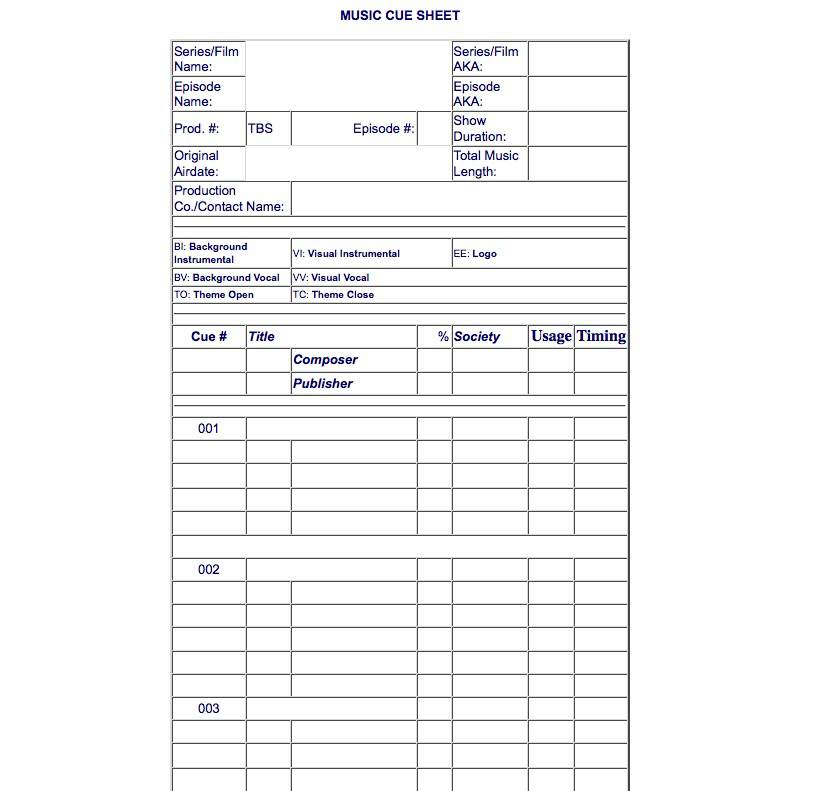
• Keep track of the music, the title, the publisher, the recording company, the artist, the songwriter as well as how much of the music was used (time) and where in the film. You’ll need all this info for your “cue sheet”. A cue sheet is basically a list of all the music that is used in a film in the order that it appears – with all the info above listed. If your film is accepted by a film festival they will ask for it.
• Don’t forget that most times you will need two licenses for a song. One is the “synchronization license” which is permission from the publisher to use the song and the other is the “master use license” which is permission from the recording company for a particular recording of that song.
Apple Loops is “free” to use as long as you aren’t reselling just those clips as clips. But you’ll still need to download that license on the Apple website.

I’ve learned a lot over the last couple of months in what it really means to be a producer – at least in terms of what is needed to get a film off the ground after the “fun” part of creating it is over. But, while this type of work isn’t “fun” – I’ve grown by the process.

Ten Things I Learned While Making a Movie With a DSLR

1. It will take twice as long as you think. This is especially true if you have a limited budget. With a limited budget comes a smaller crew and therefore you need to do a lot more of the work yourself – if you can.
2. It will take more money than you think. Everything adds up. There are a lot of costs in post-production – licensing music is a big one and a feature film needs lots of music – and having the sound professionally mixed, makes all the difference and is well worth the money – so anticipate that cost.
3. If you need to transcode files for your editing application – then make that the first thing you do. In fact, I used the Log and Transfer plug-in on Final Cut Pro to do a pre-edit on all my clips as well as add  metadata to the files.
4. Hire a professional editor. Smartest thing I did. I raised funds on Kickstarter so that I could hire a pro. I know how to edit – or at least I thought I did – till I worked with a professional editor. My editor crafted the story and cut it like a musical composition with beautiful timing and rhythm.
5. You will need twice the memory or drives than you thought you would. Even, when working with a professional editor – in fact because I was collaborating with an editor, we had duplicate projects and media on 3 – 2 terabyte drives each!
6. Stay focused on the story. Don’t even go into the editing room without a clear idea of what story you want to tell.
7. Define your target audience. Iit’s important, especially in terms of how you want to craft the story and the rhythm of the piece.
8. Plan ahead as far as screenings or putting content online. Many film festivals have strict guidelines about previous screenings, premiers etc. I wanted to show my film on a big screen, but I couldn’t have it open to the public or charge money, so I opted to have an “invitation only” event and called it a “sneak preview”. Test screenings are done all the time with studios. It gives you a chance to get feedback.
9. Utilize social media. Have a website for the film and a fan page on Facebook.
10. Don’t try to be what you’re not. And don’t try to be all things to all people in your film. Stay true to your vision. Push yourself to try new things. Go with your gut.

Add to FacebookAdd to DiggAdd to Del.icio.usAdd to StumbleuponAdd to RedditAdd to BlinklistAdd to TwitterAdd to TechnoratiAdd to Yahoo BuzzAdd to Newsvine

s

The NON Convergence of Still Photography and Video

Many people, myself included have written about the convergence of stills and video. In fact ever since Vincent LaFloret paved the way, shooting video in a cinematic way with the Canon Eos 5D Mark II, it seems like every still  photographer wants to shoot video with a DSLR . At the same time, high end “video cameras” – not still cameras that also shoot video – but a high end camera like the RED is capable of capturing stunning stills from frame grabs and they aren’t just good enough – they’re great.

I suppose in this sense one could argue that there is not only a convergence of our tools – meaning a camera that is capable of shooting high quality video and still images – but that it also may mean – the end of still photography. I don’t have a crystal ball but if one defines a still image as a “moment in time” then still photography will never go away. If you have a camera that shoots hi res video and can pick and choose the exact frame that fits your still image needs – then we need to realize that this is a convergence of our “tools”  not the the end of creating still imagery.

I love to point out the differences of still photography and video because for me, and many others who shoot both still photographs and video, we think differently when shooting these mediums.

  • A still image is a moment in time.
  • Video is time in motion
  • A still image is one that is meant to linger on – where one can take pause
  • Motion imagery is made up of  a variety of shots and sequences
  • Video provides more information – there’s sound and  movement
  • Still images leave more for viewer interpretation
  • Still images deliver a message visually
  • Video delivers a message utilizing sight and sound

Everyone of these differences requires us to put our minds in a different place. When shooting video, I need to think about what shot will come before and what shot will come after the shot I’m about to shoot. I have to think that way or I won’t have the goods to cut with in the editing room. The message or story gets crafted further in post production with music and interviews and each element plays its part in the feel and arc of the story.

When I’m shooting still images, I must tell the story in that one frame and timing is everything – it’s the “decisive moment”. So, one must ask is it the same – is it even fair – to grab that “moment in time” from a video clip where the camera operator didn’t make a conscious decision when shooting that decisive moment ?

The point is with everyone talking about “convergence” and taking that to mean the demise of still photography – I have to wonder. Is it the end of still photography? Personally, I don’t think so. I think that it merely means a convergence of the tools – not what we create with those tools.

Add to FacebookAdd to DiggAdd to Del.icio.usAdd to StumbleuponAdd to RedditAdd to BlinklistAdd to TwitterAdd to TechnoratiAdd to Yahoo BuzzAdd to Newsvine

The Making of a Movie with a DSLR

It’s been a wild ride since I first began this journey of making a feature film with a DSLR camera – in my case, the Canon Eos 5D Mark II. I had already completed three short documentaries to date – all made with traditional video cameras from my first Canon XL-1 to my current HD Sony EX-1. But this time I was heading out on a 99-day journey around the globe, with my 23 year old daughter in search of ordinary people on six continents, who were making a difference in the world, and we had to pack light.

We were “the crew” – the two of us. We had to work efficiently and with gear that would fit into two backpacks and would endure the adventure as we traveled to 17 different countries on 30 flights. I also wanted to shoot both still images and motion, so I opted for the DSLR solution. Of course, I was enchanted by the “big chip” and the cinematic look of these cameras, but I was also thinking of my gear in practical terms – how I was traveling – how I would be shooting – and of course the desired outcome.

You can read more about the gear I took here.

So with my daughter “running sound”, doing the interviews with our subjects, shooting still images, and navigating us through the subway systems in Moscow and Buenos Aires, and me taking care of all the logistics and  shooting both video and stills, we came back 99 days later with almost 3000 gigabytes of content – that’s approx. 150 hours of footage and 5000 still image captures!

I wasn’t mentally prepared for what came next and that was 2 intensive months on my part ingesting all the content into my editing system, transcoding and adding metadata to the files and culling through hours of interview soundbites until I had cut it down to three . It was grueling and my winter months were spent putting in 14 hour days – 7 days a week. I was overwhelmed, yet somehow driven by some force.  It was a lot of work, it was tedious and it was daunting – but yet it was my passion and somehow this inexplicable “force” got me through it.

I raised money along the way through crowd funding on Kickstarter and with that, I hired an editor. After I handed the project off to my editor, Erik Freeland of Springhouse Films, there was a huge sigh of relief on my part. I knew the post production had a long way to go but, I also knew that I had to let it go for a while and step back. Working with Erik has been amazing in itself and he has brought enormous value to this project and film. I have learned a lot from his insights and his talents in knowing how to” tell a story”, and we are finally coming to the completion of this film. Or at least in getting the “first cut” done for a sneak preview on July 17th, at the State Theater in Traverse City, Michigan. The screening is by invitation only and if you would like to attend, just drop me an email at gail@openingoureyes.net and tell me how many people would like to attend.

Since I first dreamed up this project in the final days of 2009, to the departure of our trip in the Spring of 2010, to where we are now, it has been a continual journey on every level imaginable. And I have had many angels working on my behalf – my husband Tom Kelly who has been the “wind beneath my wings” and without his support none of this would have been possible, my extended family who have been amused over the years with my schemes and dreams, my dear friends Angel Burns and Ally Raye who have believed in me and this project and have made incredibly exciting things happen for this film. (I’m not quite ready to divulge some of those exciting things publicly, just yet), Maria Grillo and Jason Harvey at The Grillo Group who have been so giving with their time and talents and created all the graphic design for the film’s release, and so many other “angels” who have helped me with foreign translations, been financial backers, helped me spread the word globally, and every person who was there for me when I needed support and encouragement. I am deeply grateful to have all these people in my life.

We live in an empowering time. When I began my career as a still photographer, over 30 years ago, I never would have imagined doing any of this. In fact just two years ago, none of this would have been possible. Our dreams are as big as we want them to be. I have seen this dream clearly from the start and each day I get closer and closer to seeing it become a reality.

Watch the Trailer

Add to FacebookAdd to DiggAdd to Del.icio.usAdd to StumbleuponAdd to RedditAdd to BlinklistAdd to TwitterAdd to TechnoratiAdd to Yahoo BuzzAdd to Newsvine