Top 5 Mistakes Photographers Make Moving From Stills to Motion

1.    Give it away – One of the best opportunities that still photographers have when expanding their businesses with video is to offer their new services to their existing clients.  I hear from so many still photographers who squash this opportunity from the start by throwing in the video clips for free  because they are still learning.  First of all, I’m not a fan of learning on the job, but more importantly if you give your new skills away because you’re still learning, then the question is “At what point will you be good enough or have learned enough to charge for it?” Who decides that you or your client?
2.    Audio is an afterthought – Capturing good audio is more important than making a great  image.  If a viewer cannot understand the dialog, they will walk away.  Don’t make audio an afterthought.  Hire a good sound person.
3.    Position themselves as “just” a shooter – If you position yourself as just a camera person, then you will not only lose a lot of creative control, but you will leave money on the table by not making a profit on the other aspects of a video production.  I position myself as a producer.  That’s not to say that I don’t also shoot a job, but I oversee the entire production and charge accordingly for pulling together all the pieces.
4.    Don’t collaborate  – Get over the one man band, solo creature model and surround yourself with a crew of experts that will make you look good.  Build a team of editors, sound mixers, motion graphics artists etc.
5.    Forget about the story – Every good product, including commercial videos have a great story.  You can have the best production values in the world, but if you don’t tell a good story, it will not resonate with your audience or your client.

Add to FacebookAdd to DiggAdd to Del.icio.usAdd to StumbleuponAdd to RedditAdd to BlinklistAdd to TwitterAdd to TechnoratiAdd to Yahoo BuzzAdd to Newsvine

Editing a Trailer

Like anything else the best way to learn how to do something is to “see” how it’s done.  I wanted to create a trailer for my documentaryI’m working with a professional editor on this project but while he is getting acquainted with over 160 hours of footage, I wanted to challenge myself to see if I could create a trailer.

For me, it’s always much harder to edit a very short piece. Everything becomes more critical – every cut – every shot – every sound bite and sound effect – every slate and every high and low in the music. And trailers are the ultimate shorts. You need to peak someone’s interest and make them wanting more.

I started paying attention to the trailers on DVD’s and online. I watched them to see how they were constructed. I analyzed them and paid close attention to things like sound effects, music and slates and if it made me want to see the movie.  There were a couple of trailers in particular that I really liked, each for different reasons.  One trailer was for the film I Am.  This trailer gave me some ideas on how to use music and text to deliver the story idea in a concise way and get people’s attention. I also liked it because it was just vague enough to intrigue me but not to confuse me.  Another trailer I like is Dennis Connor’s Breaking Boundaries; the Art of Alex Masket.  There are a lot of things I love about this trailer.  Dennis’s subject Alex Masket couldn’t communicate verbally so Dennis blended visuals of Alex using other people’s sound bites as the narrative.  He also had a beautiful jazzy musical score composed for the trailer.

My challenge was that I had to make a trailer for a film that was about 11 stories. The first thing that I needed to remind myself was that it really wasn’t about  11 stories.  It was about 11 people but ultimately one story.  With that thought I started pulling together  my strongest sound bites.  One benefit of spending all that time editing the past few months was that I was very intimate with the interview footage and I knew where to look for the gems.  I was looking for provocative remarks that left one wondering and they needed to be short and to the point.

Once I got the stand out sound bites on a timeline I started looking for some live action footage and other b-roll.  Then I began to interweave the appropriate visuals with the sound bites – pacing them – giving the piece a bit of time to breathe.  I also added slates with text to help tell the story.

Once I got it down to a reasonable length – in my case 3:45 – which is still a minute too long – I started looking for the perfect music.  I came across Neosounds.com a royalty free music site with some of the best RF music out there.  Picking music for me is like picking wallpaper, going back and forth until everything starts to sound the same.  After making a few painful decisions, I integrated my musical choices into the timeline.  There was still something missing and that was sound effects.  There are hundreds of great free sound effects that come with Soundtrack Pro.  I picked a couple of them to boost and emphasize certain spots in the trailer but I wanted to keep them subtle.  For example I used a sound effect of a motorcycle in one spot and a jet engine taking off in another.

What has resulted from this exercise are two variations of a trailer.  I am sharing these both with everyone because I would like feedback. I don’t want to influence opinion here, other than to say one trailer has a bit of more information than the other. One is also 15 sec. longer. Any and all comments are welcome.

Which one should I use?

Watch the links in this order.

http://www.vimeo.com/21241911

http://www.vimeo.com/21376387

Add to FacebookAdd to DiggAdd to Del.icio.usAdd to StumbleuponAdd to RedditAdd to BlinklistAdd to TwitterAdd to TechnoratiAdd to Yahoo BuzzAdd to Newsvine

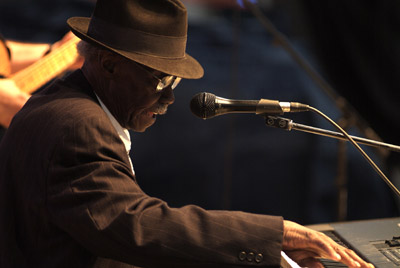
We’ve Lost a Blues Legend – Pinetop Perkins July 7, 1913 – March 21, 2011

Yesterday, legendary bluesman Pinetop Perkins died. Pinetop was 97 years old. He was one of the greatest boogie-woogie piano players ever to strike those keys. I could go on and list all of his awards and accolades because Pinetop has received some of  music’s highest distinctions. He recently received a Grammy, making him the oldest Grammy winner on record bumping George Burns. He had previously been awarded a lifetime achievement Grammy.
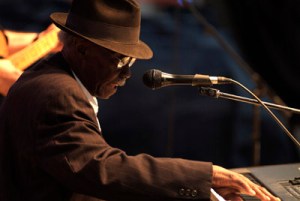
But rather than go on and list more of Pinetops achievements, which can be quickly googled, I’d like to share some personal experiences I had with Pinetop over the years. I first met Pinetop and his manager Pat Morgan in 2001 when I was shooting my Delta Bluesmen Project. It was my very first multimedia project where I was shooting still environmental portraits of blues musicians, images and b-roll video of the Mississippi Delta region and interviews of legendary blues musicians from this part of America. I had no idea what I was taking on by myself – I just had this crazy idea that I needed to document these men before they died and I had no time to waste since the youngest was in his 70’s. So, I just decided to do it with the unstoppable enthusiasm of a kid.
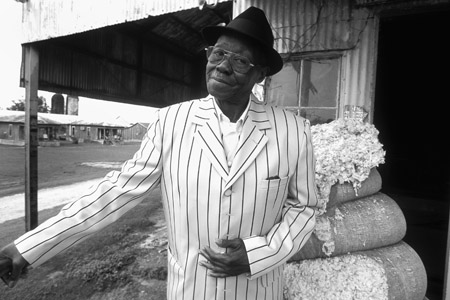
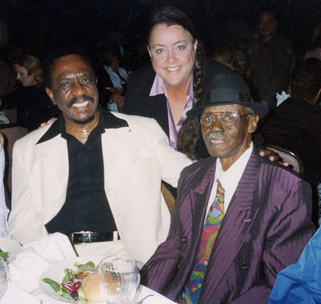
When I first contacted Pinetop’s manager Pat to set up an on camera interview with Pine, she quite firmly rejected my request. Pat was very protective of Pinetop and never wanted to overload him with interviews and fan requests and she had already granted an interview to another filmmaker, so I was out of luck. But I was persistent and Pat finally said that I should come to Pinetop’s homecoming party at Hopson’s Plantation in Clarksdale, MS and get what I could catch of Pinetop there. The day of the homecoming, I was allowed to put a lav on Pinetop to get better audio of his interactions with people throughout the day. One reason Pat thought the homecoming would be a good opportunity for me was because Ike Turner was going to be there. Pinetop had taught Ike to play piano during the 1940’s when they were both working at Hopson’s Plantation and this was going to be a true homecoming.

I put the wireless on Pinetop and kind of forgot about it as the day went on. I was roving around the plantation getting great b-roll and then went into the commissary where there was a big music jam going on. I had taken my earphones off outside, but quickly put them back on to protect my hearing in this incredibly loud environment. I dialed the audio way down on the camera mic but Pinetop’s wireless was still loud and clear. All a sudden I heard Pine and Pat talking about giving Ike a little tour and showing him Pinetop’s old sharecropper shack. I glanced around the commissary looking for them and couldn’t see them – I could just hear them. So, I raced outside, camera in hand just in time to see Pat, Pinetop, Ike Turner and a couple of other people walking across the grounds of the plantation headed toward Pinetop’s shack, just as the sun was setting. I caught up to the group and managed to get some great b- roll and audio of this historic moment. With camera running, I followed them inside the shack where Pinetop naturally sat down at the piano and started to play with Ike chiming in. I was in b-roll heaven and just hoping I was getting it right in camera.

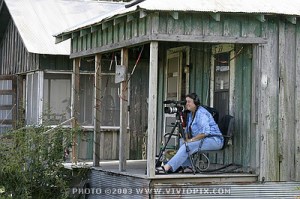
After that little tour was over Pat came up to me and told me that she had worked with a lot of photographers and filmmakers over the years but had never seen instincts like mine. She said she was blown away when I just showed up out of nowhere to film this mini event. Then she told me that if I could come by the next morning, I could get an interview with Pinetop. I did come back the next day and spent a memorable morning with Pinetop on the porch of his old shack. I will never forget that morning – the quiet and the warmth of the place and the man and the moment. You can see some of that footage in this 7 minute sample of my film. The still images and video component of that project is still being exhibited around the country.
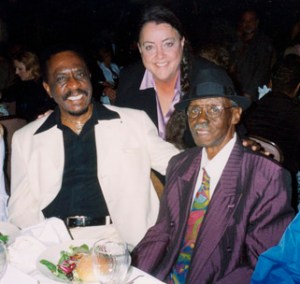
I’ve stayed in touch with Pat and Pinetop over the years. In 2005 when Pinetop was awarded the Lifetime Achievement Grammy, the producers used some of my interview footage of Pine in his tribute film. I was there with Pinetop and Pat and a whole lot of rock legends like Jerry Lee Lewis, Ike Turner and Jimmi Page. Another memory etched in my mind.
The last time I saw Pinetop was at the Arkansas Blues and Heritage Festival (aka King Biscuit) in 2009. We were driving somewhere with Pat and she noticed that we had a small army blanket in our car and asked to borrow it for Pinetop that evening. It was a chilly October evening and she didn’t want Pinetop (95 years old then) to get cold that evening as he waited in the wings to go on stage. That night when I was shooting from the photo pit I saw Pinetop sitting just off stage with my army blanket wrapped around him and his customary cigarette hanging out of his mouth. I thought for a second, “I hope he doesn’t burn a hole in my blanket” and then I quickly thought that I wouldn’t mind if he did. In fact if he did burn a hole, I’d be reminded of him every time I saw it. The blanket was returned unscarred – but I still think of Pinetop every time I see that blanket in the back of my car.

I’ll miss you Pinetop. But I sure am glad I got to know you. We’ll always have your music and the wonderful memories you gave us all.

Add to FacebookAdd to DiggAdd to Del.icio.usAdd to StumbleuponAdd to RedditAdd to BlinklistAdd to TwitterAdd to TechnoratiAdd to Yahoo BuzzAdd to Newsvine

Grow or Die

I’m borrowing the title from Ian Summers, a creative coach and visionary. Through personal sessions with Ian as well as from his writings, I’ve learned that there is joy in any exploration, especially the exploration of the creative self. Ian expresses what he does more beautifully on his blog: Heartstorming

“ I co-create an environment where people are safe to bring what they love and what matters to come into being by being a compassionate teacher and expressive painter.”

There is so much to learn simply because it’s such an amazing age we live in. I try to take advantage of that and embrace new skills and knowledge to further my creative self. Learning and exploration is a necessary ingredient in my life. It stimulates me, it brings me wonder and joy and it empowers me. The more I learn, the more I grow, and the more the universe opens to me and sets my creative spirit free to be the one I am meant to be. Learning is happiness.

Here are some links to some wonderful sources for learning – some technical and some inspirational – but all valuable in their own way.

To start with don’t miss Selina Maitreya’s Clarion Call 2011, a free 2-day professional photography telesummit.
I’ll be on at 10AM Friday, Feb. 11th.

If you’d rather have the benefit of networking face to face with your peers then sign up for ASMP’s Strictly Business 3
Next one coming up is in Philadelphia Feb. 25-27, 2011.

Here’s a few a my favorite links to continued learning:

Video Vimeo School – Tutorials, articles
Creative Cow – Tutorials, forums, articles
2 Pop – Forum, articles
Ken Stone –Tutorials video

If you have any real or virtual places that you frequent to learn, please feel free to share.

The key of course to learning is to apply the knowledge that you’ve learned. So be ready to grow when you set out on your explorations of learning. Embrace that thought and ready your mind to be open and receptive to new ideas and ways of seeing.

Add to FacebookAdd to DiggAdd to Del.icio.usAdd to StumbleuponAdd to RedditAdd to BlinklistAdd to TwitterAdd to TechnoratiAdd to Yahoo BuzzAdd to Newsvine

SB3 – Get Inspired

If you haven’t registered for the ASMP Strictly Business 3 conference yet, I would highly suggest that you do so.  They will be held in three locations starting next week: January 21-23 in Los Angeles; February 25-27 in Philadelphia; and April 1-3 in Chicago.

There’s an incredible line up of speakers presenting workshops on pricing, estimating, copyright, workflow, strategic career planning, successful portfolios and branding and video production. I’ll be presenting two workshops: “Thinking in Motion” and “Shooting Video with the DSLR”.

Branding expert Colleen Wainwright will deliver her keynote “Making People Love You Madly: Selling Yourself in a Postmodern Marketplace”.  Tom Kennedy, whom I’ve know since his days at the National Geographic Magazine will give a keynote “Learning New Skills for the Changing Media Landscape”.

This conference series is meant for everyone, not just photographers who are beginning their careers.  In fact, I think that photographers who have been in business for many years will benefit equally, if not more than a shooter who is new to the business.

I have been in business for over 30 years and I have found that one of the most dangerous things that can happen to a creative person,  is for them to become complacent, especially in a business like photography.  It’s even more deadly to become complacent these days in our fast changing world of technology.  We not only need to stay current with our skills, we need to keep our vision fresh.

When I got into video and motion more than a decade ago, I was looking for something to excite me.  I felt that even though my business was successful and that I had accomplished many of my creative goals, the spark was getting dim inside me and at times I felt like I was reinventing the wheel.  So, I set out on a learning curve and have been soaking up information ever since.

I love to learn and I have found that the more I wonder and grow, the better off I am creatively and the more successful I am in business.  I’ve also found that networking and collaborating with my peers has opened my eyes to all sorts of possibilities that I never knew existed.  I think that’s what makes the SB3 conference so powerful – the sharing of information with our peers.  You don’t get that from online learning.

We live in a time where anything is possible.  Come to SB3 in LA, Philadelphia and Chicago and be prepared to be inspired.

Add to FacebookAdd to DiggAdd to Del.icio.usAdd to StumbleuponAdd to RedditAdd to BlinklistAdd to TwitterAdd to TechnoratiAdd to Yahoo BuzzAdd to Newsvine

Listen Up – Audio is Everything

Audio is everything in video. I can’t stress this enough. Most times “capturing audio” is a skill that still photographers don’t have. If your job is on the line – my suggestion is hire a good sound guy. If you’re doing a personal project and want to learn more about getting good sound, here are some tips.

• Don’t use the camera’s internal microphones, except for reference.
• Never use “auto” when recording audio. Turn off the AGC (automatic gain control) on the DSLR cameras.
• Get your microphones in close. For b-roll situations, you can get away with a shotgun mic mounted on the camera. But microphones mounted on cameras can pick up camera noises.
• Use a good wind screen or dead cat when outside. Even if you’re inside, on a windy day, with windows open, you can pick up wind noise.
• Use a good set of headphones. Over the ear is best but earbuds can be used in a pinch. Your audio meters tell you that you’re getting sound, but not if the sound is any good.
• Use shotgun microphones for your interviews. Get them in close to your subject – no more than 1-3 feet away.
• Lav microphones, attached to lapels can be used wired or wirelessly. Be careful with your positioning to avoid unnecessary noise from hair or jewelry.
• Go wired whenever you can. Resort to wireless solution if wired isn’t possible.
• Use an omni-directional or cardiod microphone when you are in more acontrolled situation and you want your sound coming from more directions.
• Don’t cross your audio cords with your electrical cords. This causes a hum that you will detect if you are wearing headphones.

Pay attention to audio. Start letting your ears do more of the work. Every room and situation has its own sound. Listen up.

Add to FacebookAdd to DiggAdd to Del.icio.usAdd to StumbleuponAdd to RedditAdd to BlinklistAdd to TwitterAdd to TechnoratiAdd to Yahoo BuzzAdd to Newsvine

Getting Your Train Back on Track

I was going to write about audio today, but my mind wasn’t there – it was elsewhere. That’s the fun part about it for me, I write if there’s something I’m thinking about.

This morning my mind was drifting to other things, like the highs and lows of the last couple of weeks. But when I have weeks that are like life on a roller coaster, I remind myself that I have to focus on the peaks and the thrills to survive the plunges. I also know that if I really want to live life then I have to be prepared for both ends of the spectrum.

I’ll share some thoughts that have helped me keep my train on the track.

  • I love myself for who I am.
    If timing is everything, then sooner or later I’ll get it right.
    Work is not a negative word.
    Do what I love to do, regardless of what others say.
    Understand my adversaries – I may learn something.
    Some of the things that have upset me the most, have helped me grow.
    Value friendships.
    True friendship continues to grow over the longest distance.
    Understand, no matter how much I care, others won’t. That’s OK.
    Be fearless to love.
    Forgive those who have hurt me.
    Forgive myself.
    There’s a time for everything.
    Be fearless to keep trying even though I’ve lost before.
    If I create from the heart, nearly everything works.
    Be fearless to think that anything is possible.

And one more from Yoda –“ Train yourself to let go of what you fear to lose.”

Maybe I’ll talk about audio next week.

Add to FacebookAdd to DiggAdd to Del.icio.usAdd to StumbleuponAdd to RedditAdd to BlinklistAdd to TwitterAdd to TechnoratiAdd to Yahoo BuzzAdd to Newsvine

Editing Tips for Multimedia and Video

A few days ago, I wrote a blog about “having a point” – or telling a story when you create multimedia pieces. Of course you have to have an overall idea and focus to start with, but below are some editing tips on how to make it come together in the editing room.

  • Edit with a purpose. Why are you making the “cut” where you are? Are you cutting on the action? Are you cutting on the beat of the music? What’s the reason behind your cut?
  • Set a pace or rhythm. Just like writing, where you have pauses in sentences with commas, edit your visuals to your narrative or interview soundbites, cutting after words and phrases.
  • Use image sequences to transition between different ideas and themes.
  • Let your images linger on the screen, giving time to breathe between them.
  • Cut on the beat or against the beat of music. Edit the music and let it become part of your piece, rather than just a background soundtrack.
  • Adjust the volume of your music – lowering it during interviews and raising it when there is no narrative or dialog.
  • Use audio fades between music cuts to soften the cut.
  • Insert room tone between cuts in interview soundbites, making the cuts less apparent.
  • Use interview footage sparingly – when introducing someone or when someone is expressing emotion on the screen.
  • Identify interview subject with name and title text in lower third.
  • Use text that’s easy to read and break it up over many slates. Leave the slate on the screen long enough to read twice.
  • Always start with your strongest images.
  • Don’t “move” all your still images – leave some static on the screen.
  • Don’t use dissolves.
  • When working with media from DSLR cameras, keep the media in the DCIM folders for logging and transferring into Final Cut Pro with the plug-in. If you have taken your media out of the DCIM folders – then create a new DCIM folder for the purposes of importing the media into FCP.

Remember to keep the story in mind at all times. When you think you have the story laid down in a rough cut – have friends over to watch it. Ask them what the story was. If they don’t know or can’t tell you, then you have more work to do.

Add to FacebookAdd to DiggAdd to Del.icio.usAdd to StumbleuponAdd to RedditAdd to BlinklistAdd to TwitterAdd to TechnoratiAdd to Yahoo BuzzAdd to Newsvine

How Do You Tell the Story?

I’ve said it hundreds of times – “the story is everything”, “without a story, you’ve got pretty pictures to a soundtrack”. So, how do you tell a story? How do you do it?

A friend called me the other day, struggling with this very question, of how do you tell the story? He was putting together a multimedia piece and he had captured sound and had taken photos during an event and was about to record an audio interview. I wasn’t sure at first, if he was asking about the mechanics of how to edit a story together in Final Cut– or was he asking me for guidance on how to tell the story? Those are two completely different discussions.

I thought back to when I was just starting to learn video journalism and had taken the Platypus Workshop. We had to tell our commitment or our story idea to an instructor, before we could start executing it. If the idea wasn’t delivered clearly and concisely, we went back to the drawing board to nail down the idea or the focus.

Every story starts out with an idea. Ideas have always come pretty easily to me, usually in spurts. All sorts of environments or activities can trigger ideas.

Seth Godin did a blog about a week ago titled, Where do ideas come from? Here are a couple of my favorites:

  • Ideas come out of the corner of the eye, or in the shower, when we’re not trying
  • Ideas come in spurts, until you get frightened. Willie Nelson wrote three of his biggest hits in one week
  • Ideas occur when dissimilar universes collide
  • Ideas fear experts, but they adore beginner’s mind. A little awareness is a good thing
  • Ideas hate conference rooms, particularly conference rooms where there is a history of criticism, personal attacks or boredom

Once I get the idea, I then start focusing it in my head. I play out the movie in my mind. What is the message? Whose message is it – mine? – the client’s? What is the motivation for the piece? A call to action? Once I get a pretty clear idea of what the story is that I’m trying to tell, then I start to put the pieces together. First I gather and capture all the assets that I’ll need, the interviews, b-roll, still photos etc. Then, when it’s time to edit the story, I’ll have a much clearer focus of how I will edit the pieces together to deliver the message.

Right now, I’m editing a feature length documentary, that is made up of ten different stories about ten different people in various corners of the globe. All together, the ten stories are unified by the theme of “the power of the individual in making a difference in the world”. Essentially the idea is, global stories about the power of one. That has been my underlying story from the moment of concept, to shooting it, to editing it all together.

So, how do you tell the story?  For me, it’s focusing on the “idea” at all times and editing toward that purpose.  There are hundreds of ways to tell the same story, but you need to know what the story is before you can begin to tell it.

Add to FacebookAdd to DiggAdd to Del.icio.usAdd to StumbleuponAdd to RedditAdd to BlinklistAdd to TwitterAdd to TechnoratiAdd to Yahoo BuzzAdd to Newsvine

Should You Be Thinking About Video?

For the past two years I’ve been traveling around the country presenting a seminar called “Should I Be Thinking of Video” for ASMP (American Society of Media Photographers.  This seminar had become quite popular with still photographers as interest in video escalated, partly due to the hybrid cameras and partly due to the increased demand for video content for the web and mobile devices.  The iPad in particular is a game changer and everyone seems to be keen on either creating video content or buying it.

With this rush to find or produce video, I’ve seen quite of few people attend these seminars because they feel they have to get onboard.  A few weeks ago, someone in the audience, who appeared quite annoyed, raised their hand and said, “but you didn’t answer the question – should I be thinking of video”.  He went on to say that there was nothing new about video and weren’t there plenty of videographers already out there. I replied that he needed to answer that question himself.  I could only provide him with background information about video production but that decision as far as if he should embrace video was for him to make.  I also said that yes there were plenty of videographers out there working in traditional markets that have been around for decades.  What is new is the increased demand for video because we as a society are moving more toward an electronic means of communication and away from print.

I think the most important point here is that no matter what creative path you may wish to pursue, you need to have a reason for doing it.  For me, I started shooting video more than a decade ago because as a storyteller, I felt the need for motion and sound to adequately tell the stories that I wanted to tell.  I certainly wasn’t chasing a trend – not that video is a trend.  Just like in still photography, it’s not about the tool or the camera, it’s about your vision and if you don’t know why or if you should be shooting video then how can you possibly have a clear vision.

I can probably better answer the question “should you be thinking of video?” this way.  If it’s because you have a camera that is also capable of shooting in video mode then then the answer is no – you shouldn’t be thinking of video, because you will be a technician or a button pusher and will compete with every other person who has that same tool. But if you are thinking, seeing and feeling projects and stories that are all about motion and sound, then you’ve answered that question for yourself.

Add to FacebookAdd to DiggAdd to Del.icio.usAdd to StumbleuponAdd to RedditAdd to BlinklistAdd to TwitterAdd to TechnoratiAdd to Yahoo BuzzAdd to Newsvine