What is Your Value as a Professional Photographer?

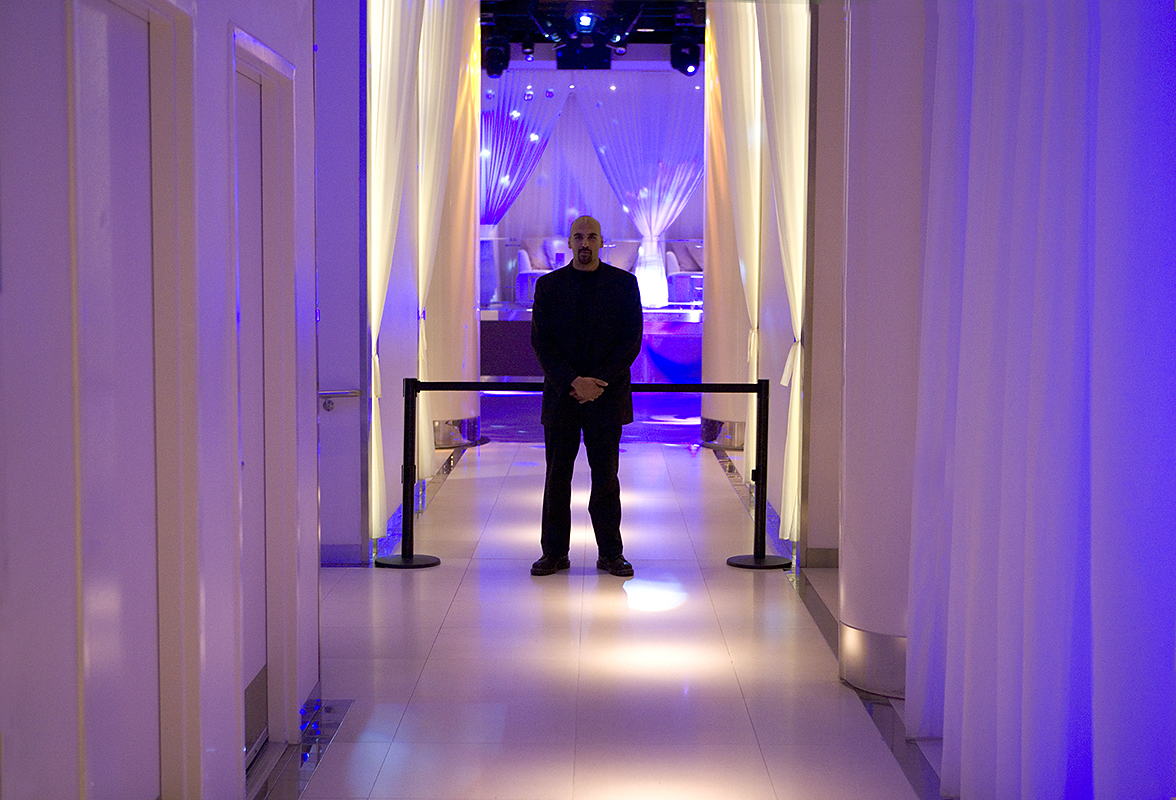
Let’s face it, these days, professional photographers Bouncer at Pure Night Club, Las Vegas, NVaren’t only competing with other pros – they are competing with anyone and everyone with an iPhone. Before you get upset and kill the messenger – ask yourself “What is my value proposition?” What do you offer that your competition doesn’t’?

I started making a list of things that professional photographers could offer to boost their value to potential clients:

  • Skills – Do you have any unique skills that can set you apart from your competition? If you define yourself by a specialized piece of gear that’s new – keep in mind, you may have just 5 years or less before ‘everyone” has it.
  • Vision – Make sure your “vision” comes from you and isn’t just a copy of what’s “hot” or trendy at the moment.
  • Access – Do you have access that others don’t? I realized when I was shooting for National Geographic that I was given access to a lot of photo opportunities that others didn’t have. Sometimes these opportunities yield photo opps that are off limits to others and make some stand out portfolio samples.
  • Rapport – If you are working in video and part of your job is doing interviews, then having a good rapport with your subjects will give you results that only you will get. Good interviews are dependent on social chemistry.
  • Your audience or following – These days, even getting a commissioned assignment may be dependent on your own social media following. Advertisers want to capitalize on that if it’s the same target audience they are trying to reach.
  • Project management skills – Getting the shot is only one skill set that photographers need to compete. Clients expect you to manage the project from soup to nuts and deliver the goods. That could mean wrangling large crews, getting access or simply making sure that everything that needs to get done to complete a project – is done.
  • Sensitivity – Be sensitive not only to your clients’ needs and problems but to whomever you are working with. I know a very good photographer who began burning most of his bridges with his clients. He was more interested in getting his point across and making demands than he was listening to the needs of his clients.
  • Likeability – Similar to above. There are just too many photographers out there to choose from that if you aren’t likable – well – you may want to look for work that doesn’t require any social skills.

If all this sounds simple –  it is. It’s applying it that’s the tough part. But if you do, you will set yourself apart from your competition.

Thinking of moving into motion?  Check out The Craft and Commerce of Video and Motion
10 Tips for Sustaining a Long Career as a Professional Photographer

Grow or die – My good friend and coach Ian Summers coined that phrase. He also taught me that growth requires a temporary surrender of security.

Be yourself – There’s a great quote – “be yourself because everyone else is taken” Many folks say that you need to have your own vision but I really don’t like this phrase because it is overused and is not really specific or clear – to the point that most of us get frustrated if we don’t feel we have “a vision”. Your gut will let you know when you’re “on purpose”.

Don’t operate in a vacuum – Photographers are independent creaturesYJ2X9041 for the most part. Take joy in collaborating and/or networking. Expand your networks to include all types of folks – not just your fellow photographers. This is how and where ideas are born.

Don’t focus on the gear – I get weary of people asking me about my gear or the age old question “Does that camera take good pictures?” – to which I reply “It depends on the operator.”

Embrace failure – Or at least don’t let your fear of failure stop you. Try instead asking yourself “what’s the worst thing that could happen?” Let’s face it, we don’t do brain surgery, so for the most part, our fears don’t involve fatalities.

Do the work – I believe it was Malcolm Gladwell who said that it took 10,000 hours to get good at something. If you want to sustain a long career in any career, be prepared to do the work to get good at it.

Get rid of the resistance – It’s really easy to give yourself lots of seemingly logical reasons why NOT to do something. Try replacing your reasons NOT to do something, with why you SHOULD. Get rid of the people in your life that are giving you resistance – they’re poison. Read more about resistance in Steven Pressfield’s The War of Art.

Don’t set out to prove yourself – Instead strive to improve. This attitude is ultimately more beneficial and leads to better self esteem. It’s also not dependent on someone else’s validation or approval.

Enjoy the good times – but be prepared for the bad times. Nothing stays the same – ever. Don’t let those glory days mislead you or your ego. There are always competitors waiting in the wings.

Keep your passion and enthusiasm – If you don’t, you’ll never survive this business. And if you have to ask “should I be a professional photographer or practice law?” I would have to answer – “practice law”. If you have to ask that question, it’s an indication that the passion isn’t there.

If you are thinking of expanding your skills with video,  check out my book “The Craft and Commerce of Video and Motion”

Commitment

Commitment is everything.  It’s what makes us get things done.  It’s what makes relationships work.

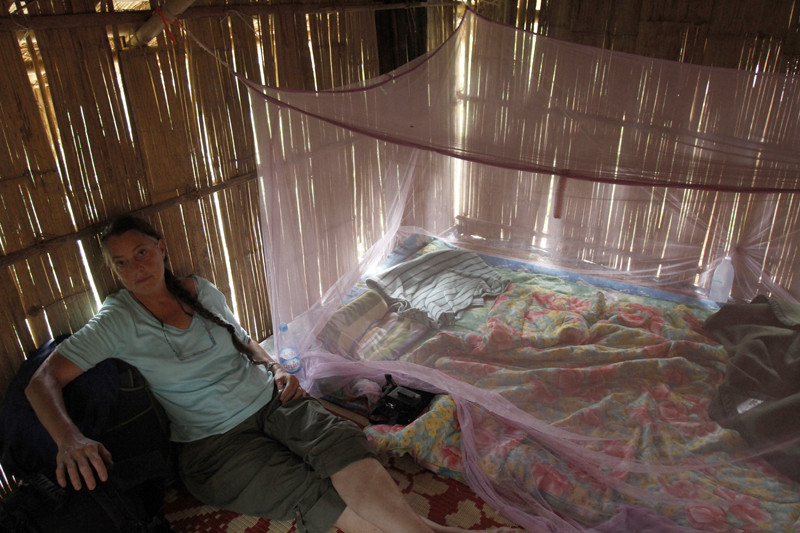
Gail in bamboo hut in hill tribe village, northern Thailand

It’s what makes us not give up, no matter how bleak it may look at times. It’s what gets us to stay focused on “the story” and be true to ourselves.

To some people, commitment can be frightening.  Their heads are filled with negative “what if” thoughts of failure that hold them back.  So, they plod along through life letting things happen to them instead of going after what they want. Those are the people who let resistance win.

I’ve always been a determined and committed person – if I say I’m going to do something, you can count on me to do it.  It’s tough sometimes though, to stay committed to myself and to what my true purpose is – it’s far too easy to get caught up with the regular flow of work and life.  But every now and then I get an idea for a creative project that just won’t go away.   When I finally decide to stop ignoring the idea and do something, I have a mechanism I use to help me make the commitment – I tell someone about it.  I’m the type of person that feels, once I’ve told someone I’m going to do something, then I have to do it – just to save face.  I call it “forced accountability.”

Seth Godin writes today about commitment: “One way to play in the digital age is to appeal to those that browse, the window shoppers, the mass audience that can’t and won’t commit.  The alternative is to focus on impact, not numbers and impact comes from commitment. “ He says: “ price is more than an exchange of coins. Price is a story.” Essentially, Godin is saying that in our noisy digital world, where ideas and content are free – we’ve got to be better, to make an impact.  In order to connect with the buyers on an emotional level, we’ve got to be “better than free”.

Every commitment that I’ve ever made has come with tremendous personal growth.  When I traveled around the world a couple of years ago making a feature length documentary, Opening Our Eyes, I not only challenged myself physically and creatively, but spiritually as well and I feel that I became a better person because of it.  I would not have been able to endure the hardships of that journey, nor the intense workload of post production had I not been committed to the idea.

What are you willing to commit to?  Commitment may be frightening, but without it, you may be spending your later years wondering, “what if I had”

How to Sustain a Long Career in Photography

I came across this old “tear sheet” in the process of cleaning out the attic.  Tom and I have dozens of boxes containing over 35 years of printed collateral with our “work” in it.

Tom Kelly and Gail Mooney

This brochure cover was from a shoot for I Love NY.  Clearly it was a low budget job, based on the fact that we were also the “talent” in our own photograph.  When this photo was shot, we were just starting out in the business of photography. It’s hard to believe that it’s been over 35 years since we started Kelly/Mooney Photography, because it seems like yesterday.   As I sifted through decades of work, I started thinking  – “What is it that sustains a career?”

Some thoughts:

Don’t let age define you.  Let’s face it; we’re a youth obsessed culture. It’s not easy getting older, especially when you’re in a creative business like photography where “fresh” is equated with “young”. But there’s absolutely nothing you can do about your age.  You can’t change it.  It’s like your height – it is what it is.  But you can choose how you think about it. If you tell yourself that you’re old – you will be.

Take more risks – not less. Why not?  What is the worst that could happen?  Am I the only one who thinks this way?  I guess I was lucky that my mom and dad put those types of thoughts in my head a long time ago and they’ve served me well.  Why should I change my outlook now, when I have fewer years on the planet?

You’ll fail more than you succeed.  I sure have.  In the last couple of years I’ve been rejected more times than not, but only because I have been challenging myself more than at any other time in my career.  I have always “been on the move” in my life and my career and I am not one to stay too complacent or static.  There are just too many things left to explore.

Fear comes with the territory.  Fear is what motivated me to start writing.  For me fear would often visit in the wee small hours of the morning.  My mind would bounce from one unfounded worry to another and I couldn’t turn off the chaos in my head. So rather than toss and turn for hours, I got out of bed and started to write down my thoughts. It’s amazing how trivial some of the worries looked in the light of the day, written on a sheet of paper.

Listen to the ideas that don’t go away.  We all have ideas.  But how many of us act on them?  Less than 5%.  When I have an idea that just won’t “quit me”, I take action. The first thing I do is I commit to the idea.  Then I tell someone – someone I respect, because then I have to carry it out – just to save face.  I call it forced accountability.

Don’t take things for granted.  Nothing stays the same or lasts forever.  Be grateful for your loyal clients and show your gratitude.  Business is all about relationships and it is amazing how people seem to pop in and out of your life.  Doors are always closing and windows are eternally opening in a well-lived life.  Recognize those times when they happen.

Always wonder.  My spirit has not aged past 25 years old.  I still have dreams and they are vivid and real in my mind.  My dreams are propelled by my insatiable curiosity about everything. Many years ago I made the choice to become a professional photographer because I knew that my camera would give me access to a rich and rewarding life and to interesting people, places and cultures. My cameras (“my tools”) are still a means to a life of wonderment.

What Happened to Professionalism – or Manners?

What does it mean to be a professional?  Regardless of the business you’re in, a professional is someone who treats their clients and their vendors with respect.  That means that everyone should be mindful of his or her manners.8__CS_d_072151  Yes, manners! That may sound old fashioned but being courteous to people never goes out of style.

Some things that define a “professional”:

  • Professionals know how to get the job done, on time and on schedule.
  • Professionals don’t learn on the job.
  • A professional should respect everyone on his or her team – EVERYONE plays a part that makes the whole stronger, even the “guy” who gets coffee.
  • A professional has good manners – that usually means treating people how they wish to be treated.
  • A professional understands that situations change.  That means that the assistant you are dealing with at a magazine or ad agency may just be in a position to hire YOU some day.  Don’t burn your bridges.
  • A professional has an understanding of their clients’ position.  Understanding works both ways. Good clients who are professional will also have an understanding of what their “vendors” are up against.
  • Professionals understand that they don’t work in a vacuum – especially these days.  Bad manners don’t stay isolated – they trickle down.
  • A professional doesn’t ignore people, especially people who they depend on. We are all busy and we all have only 24 hours in our day.  That doesn’t give you a reason to ignore someone.  Unfortunately, this happens all the time, but if you have asked someone to provide you with an estimate for a job that you need to produce and they take their time to provide you with one – give them the courtesy of letting them know if they didn’t get the job.  Remember, they are helping you come up with figures you need to produce the job.  If someone invests their time to do that, don’t you think they deserve to know the outcome?

Remember, we are all connected.  We are all humans, with families, bills to pay, kids to put in college, parents who may be sick etc. etc.  Regardless if we are the one who is dangling the proverbial carrot or on the receiving end of it – I think perhaps we should realize that respect and good manners is the hallmark of a professional.

Business Tips for Photographers in a Multi-Media World

In the blogging world of photography and motion, there is a lot written about gear and how to use it, red camerabut precious little written about “the business”.  Chances are, if you are photographer who has been in business for more than 10 years, then you know that technology has not only changed our tools, it has changed the way we do business.

For starters, we are doing business in a global economy, and with that comes pluses and minuses. One big plus is that we are able to reach a much wider audience, than ever before. That is, if you have an understanding of how to do that and take advantage of the opportunities that are out there.  The minus or downside is, if we don’t adapt our dated business models, in a business that has seen monumental changes, we will not be able to compete.

Commercial photographers are in the visual communications business.  We create imagery that delivers a message or tells a story for a variety of “markets” including; advertising, corporate, architectural and editorial.  Each market has a need for visual content and these days that encompasses both still photography and video.  In the last couple of years, the lines dividing these two mediums have faded away, at least in terms of how content is consumed in our culture.

Here are a couple of tips to help photographers prosper in our “multi-media” world:

  • Decide what your company will offer.  Will you only provide still imagery?  Or will you expand your business and offer both still photography and video? Are you quick to answer: “I don’t want anything to do with video” ? The problem with that answer is that most of your clients will probably have a need for video.  Are you going to send them away to your competition?  Or will you keep your clients “in house” and take care of their video needs and hire or outsource your competition? That’s a different way of thinking and has the potential to broaden your revenue stream.
  • Decide what role you will play if your company does offer video?  Will you be the director and work with a camera operator?  Or will you assume the role of a DP (Director of Photography) and direct as well as operate the camera?
  • What will you outsource and what will you keep in house?  Maybe you want to expand your business by offering both still photography and motion, but you’d prefer to just shoot the still photography and outsource the video.  In that case, you could assume the role of producer and oversee or outsource the video production.
  • Reassess your insurance.  Video productions have a lot more variables. They also usually have larger crews.  More than likely, you will need to upgrade your current insurance policy to accommodate and cover that.
  • Change your paperwork.  Make sure that you go through your talent and property releases and modify the language for multi-media.  Change any boilerplate contract language to include video (motion).
  • Licensing.  Regardless, if you decide not to expand into video production, you will have to contend with the fact that your still images won’t always be used in a stand-alone fashion.  Many still images will be commissioned and/or licensed as part of multi-media projects and that has a dramatic effect on licensing. And if you do decide to expand into video production, in your role as a producer, you will be licensing other people’s work.
  • Understand new business models.  Let’s face it, things have changed in the business of photography.  Photography has become ubiquitous and the competition is fierce.  You are not only competing with professional photographers – you’re competing with semi-pros, amateurs AND video production companies.  One thing is certain, it’s never been more important to have an understanding of multiple mediums and to be unique and stand out amongst the noise. There are no templates you should follow.  You have to be authentic and true to yourself.

Check out more tips and information in my ePub, The Craft and Commerce of Video and Motion.

6 Social Media Marketing Mistakes to Avoid

I must admit, I’m not an SEO or Social Media guru.  In fact, on a scale of 1 – 10 (10 being extremely interesting), I’d give this topic a 3.  But, after reading Gary Vaynerchuk’s book “Jab, Jab, Jab, Right Hook,” (which I would give a 10), I’ve shifted my thinking entirely.  I also realized why, the topic has had little interest for me – most of the books, articles and blogs I had read were full of formulaic tips  – but none of the advice and tips felt like a good fit who I was and what I had to offer.  And in fact if I had applied some those tips to my blog or my Facebook posts, I would have done myself and my business a disservice by not being “myself” – or authentic.

Some social media marketing mistakes to avoid:

  • Putting the wrong content on a platform – Each platform, (Facebook, Twitter, LinkedIn, Pinterest, Instagram etc.) has it’s own “native” language or how the community communicates  and interacts with one another.  A good marketer understands that “context” is just as important as content.  Your content must provide the same value to the viewer that is native to that platform. Your content should fit in with what drives people to that platform.
  • Content is not memorable – Your content should be something that people want to share. ooe fb [age Facebook uses edge rank, which determines who and how many people see your posts.  The more shares, comments and likes, the better your edge rank and the more people who see your posts.  Keep your content, informative, entertaining or both and give people the desire to share.
  • Selling too often – You have to “give” more than you “sell” on social media platforms. If every post you make is a pitch for your products, no one will be interested, let alone want to share them.
  • Text is too long – Twitter has a cut off, but Facebook doesn’t.  Keep in mind that more and more people are viewing your posts on mobile devices and simply won’t read lots of information.  Provide more info via links. Make sure your text is provocative and entertaining.
  • No use of imagery – If you don’t have an image in your posts on platforms like Facebook or Tumblr, you won’t attract attention.  People will just move on to something that catches their eye on their news feed.  And, make sure the images you post are good and professional – they’re a reflection of your business. Make sure you overlay your logo on your images.
  • No call to action – Remember you are ultimately selling your products and your services, so don’t forget to give your viewers a call to action.  But don’t confuse them by giving them too many.

New Business Models in Photography and Motion – in a Global Economy

Manchester Airport, Manchester, England

This topic comes up a lot these days.  You  could apply “new business models” to just about any business – not just photography and video. Photography and video, in and of themselves are not business models at all, but rather they are mediums that are used commercially, non-commercially and personally. The business end of photography and video comes when you determine how you want to apply them in terms of today’s markets.

Today’s markets are global.  That’s good news and bad news, depending on the type of work you do.  If you are a stock photographer or even if you have expanded that into also shooting stock motion footage – your inventory or your content must be unique in some way in order to sustain that type of business model in our global economy. You will need to stand out and offer something unique,  if you pursue this type of market.

If you are a commissioned commercial or editorial photographer, cinematographer, or director, the competition is fierce and once again, if you don’t have a unique style or vision, most likely you will end up playing by others’ rules or signing “their” lopsided contracts.  It comes down to supply and demand of talent and work, and you will either compete with price or offer something that you do better than your competition.

The good news is, if you are willing to do the work, the world is your stage.  The portals for distribution of your “content” are open to all and as “creatives” we are no longer dependent on middlemen.  When I get asked to talk about “new business models”, I always look for where the new opportunities are.  Where will I be able to carve out my own “new business model”, rather than having to adapt others’ ideas of what that may be.  There is a big difference in those two approaches.

I am carving out a business model for who I am creatively, and where I see the most opportunities for what I do well.  When I am authentic to who I am and apply this to my work, I am able to deliver my own unique vision and reach the right audience,  while maintaining ownership and control over the licensing of my work.  I am able to do that not only because technology has enabled me to do that, but more importantly because I have set myself apart from everyone else who has a camera.

Think about it.  What are your strengths? What are your passions?  Now imagine a business model based on your answers. The world is our stage.

What Makes a Professional (Photographer)?

I heard a remark made recently, by a colleague of mine.  I was with a group of photographers and we were discussing what makes a photographer, professional. stock-80 At a time when it seems like just about everybody is a photographer, and we are bombarded with thousands of images on a daily basis, what separates a “pro” from an amateur? My colleague stated, “A pro “makes” photographs – an amateur “takes” them”.  While that sounded like a reasonable distinction, it implied that photographers who shot “found moments” were not “professionals”.  What about photojournalists then, who are bound by ethics not to contrive an image?  So, I started thinking, “What set of criteria is used to determine what makes a photographer, a professional?”

Inspired by Steven Pressfield’s book The War of Art, I will paraphrase, some of the qualities that Pressfield points out that define us as professionals:

  • “We show up every day” – no matter what.
  • We are committed for the long haul and the stakes are high. We need to feed our families and survive.
  • “We accept remuneration for our labor.” (I’ll add, we expect remuneration)  We love what we do but we work for the money.
  • We master our craft. This doesn’t stop. A professional is always trying to master their technique.
  • We act in the face of fear.  This is certainly applicable to a “war photographer”, but I would go further and say that it takes courage to follow a career path of photography.  Courage and commitment.
  • “A professional self-validates.”  We don’t need others to commission us, in order for us to work.  We are passionate about what we do and we will create regardless if we are commissioned or not.
  • “A professional reinvents himself. “  If you aren’t reinventing yourself, then you probably aren’t taking enough risks.  A professional knows not to play it safe – not in a creative profession.
  • A professional doesn’t take rejection or failure personally.  I have learned first hand, that whenever I have taken a leap and challenged myself, it has always come with rejection or some may say, failure.  Personally, I don’t equate rejection with failure.  Failure implies it’s the end of the story.  Rejection needs to take place, in order to get to the next chapter of the story.

I would highly recommend reading, The War of Art. It’s a must for anyone contemplating a creative career.  As far as my thoughts about using the criteria,  “making” or “taking” a photo to determine who is a professional photographer – let’s just say that a professional photographer is always “making” a photograph, regardless if it is contrived or not.  It is a conscious decision of a professional photographer, when and which “moments” to capture.  We show up every day, to do our job, whether it’s in a studio or a war zone. We are consistent, responsible and accountable.  We are in it for the long haul.  It’s our passion.  It’s our life. It’s our craft and our gift to the world, a legacy of images that define the time we live in.

The Value of Photography

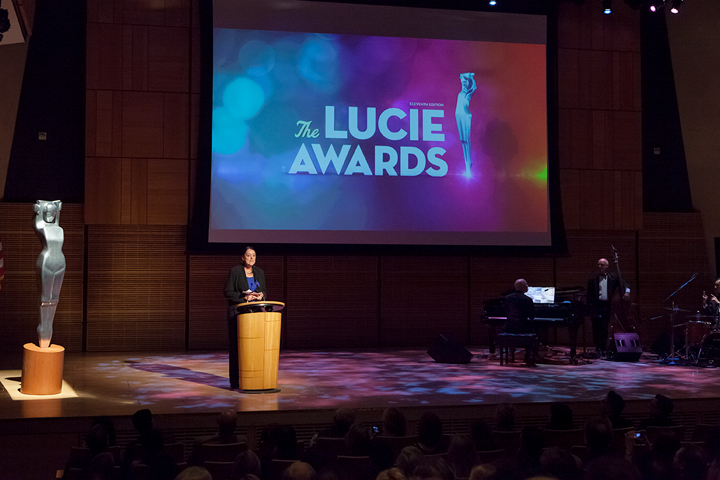
The who’s who of photography gathered last night, at Carnegie Hall to honor the “masters” of their trade at the Lucie Awards. The Lucies are like the Oscars of the “photographic industry”.

2013 Lucie Awards, Carnegie Hall ©Thomas Kelly
2013 Lucie Awards, Carnegie Hall
©Thomas Kelly

I had been asked to step in to present the “2013 Deeper Perspective Photographer of the Year Award”. on behalf of the ASMP when Executive Director, Gene Mopsik and President, Ed McDonald couldn’t attend.

I don’t usually get nervous about things like this, but I was last night. As I stood in the wings with photographer John H. White, who was waiting to go on stage to accept his Lucie, for Achievement in Photojournalism, I was mesmerized as I watched John.  He seemed to glow and I felt his grace, his humility and his gratitude.  It was a moment in my life that will stay with me forever.  It was calming. I watched and listened to his acceptance speech on the monitor backstage, and I was deeply touched.  So was the audience, as evidenced in their standing ovation.

John H. White is not a “rock star” type of photographer.  His images don’t “shock and awe”, not in the way a war photographer’s images do. John’s photographs capture the subtle moments of the human experience.  His legacy of images show us life as it really is.

This past spring, after 35 years with the Chicago Sun Times, John and the rest of the newspaper’s photographic staff were fired.  It was a huge blow to the photographic community, magnified by the fact that even John H. White, the “chairman” was “let go”, without even as much as a thank you. John wasn’t bitter about it though.  Michelle Agins wrote a wonderful article for the New York Times where she quoted John: “A job’s not a job because of labor law,” he said. “It’s just something you love. It’s something you do because it gives you a mission, a life, a purpose, and you do it for the service of others.”

All he had wanted to hear from the executives who let him go was two words that never came: thank you. But even then, he did not respond with anger.

John spoke more about the Sun Times’ firings in an interview with NPR where he said: “I will not curse the darkness. I will light candles. I will live by my three “F” words: faith, focus and flight. I’ll be faithful to life, my purpose in life, my assignment from life. Stay focused on what’s really important, what counts.” He repeated those three “F” words last night as he accepted his award.  The audience was humbled.  John had shed his light.

I have been thinking a lot lately, about the value of photography and the value that a professional brings to this craft.  John H. White and his archive of work is a stellar example.  His images, capturing the subtleties of life stand out amongst the noise.  They make us take notice of what is often over looked – the quieter moments of life.

As far as what a professional photographer brings to the world, I think John stated it best: “Every day, a baby is born. Every day, someone dies. Every single day. And we capture everything in between. You think of this thing called life and how it’s preserved. It’s preserved through vision, through photographs.”

As John walked off the stage and back into the wings, I felt enveloped by his glow that had seemed to magnify.  I caught his eye for a moment and said “thank you”. He nodded, and flashed his wonderful smile and in that moment, we connected and shared our understanding, of the “value” of photography.