10 Tips for Sustaining a Long Career as a Professional Photographer

Grow or die – My good friend and coach Ian Summers coined that phrase. He also taught me that growth requires a temporary surrender of security.

Be yourself – There’s a great quote – “be yourself because everyone else is taken” Many folks say that you need to have your own vision but I really don’t like this phrase because it is overused and is not really specific or clear – to the point that most of us get frustrated if we don’t feel we have “a vision”. Your gut will let you know when you’re “on purpose”.

Don’t operate in a vacuum – Photographers are independent creaturesYJ2X9041 for the most part. Take joy in collaborating and/or networking. Expand your networks to include all types of folks – not just your fellow photographers. This is how and where ideas are born.
Don’t focus on the gear – I get weary of people asking me about my gear or the age old question “Does that camera take good pictures?” – to which I reply “It depends on the operator.”

Embrace failure – Or at least don’t let your fear of failure stop you. Try instead asking yourself “what’s the worst thing that could happen?” Let’s face it, we don’t do brain surgery, so for the most part, our fears don’t involve fatalities.

Do the work – I believe it was Malcolm Gladwell who said that it took 10,000 hours to get good at something. If you want to sustain a long career in any career, be prepared to do the work to get good at it.

Get rid of the resistance – It’s really easy to give yourself lots of seemingly logical reasons why NOT to do something. Try replacing your reasons NOT to do something, with why you SHOULD. Get rid of the people in your life that are giving you resistance – they’re poison. Read more about resistance in Steven Pressfield’s The War of Art.

Don’t set out to prove yourself – Instead strive to improve. This attitude is ultimately more beneficial and leads to better self esteem. It’s also not dependent on someone else’s validation or approval.

Enjoy the good times – but be prepared for the bad times. Nothing stays the same – ever. Don’t let those glory days mislead you or your ego. There are always competitors waiting in the wings.

Keep your passion and enthusiasm – If you don’t, you’ll never survive this business. And if you have to ask “should I be a professional photographer or practice law?” I would have to answer – “practice law”. If you have to ask that question, it’s an indication that the passion isn’t there.

If you are thinking of expanding your skills with video,  check out my book “The Craft and Commerce of Video and Motion”
What Happened to Professionalism – or Manners?

What does it mean to be a professional?  Regardless of the business you’re in, a professional is someone who treats their clients and their vendors with respect.  That means that everyone should be mindful of his or her manners.8__CS_d_072151  Yes, manners! That may sound old fashioned but being courteous to people never goes out of style.

Some things that define a “professional”:

  • Professionals know how to get the job done, on time and on schedule.
  • Professionals don’t learn on the job.
  • A professional should respect everyone on his or her team – EVERYONE plays a part that makes the whole stronger, even the “guy” who gets coffee.
  • A professional has good manners – that usually means treating people how they wish to be treated.
  • A professional understands that situations change.  That means that the assistant you are dealing with at a magazine or ad agency may just be in a position to hire YOU some day.  Don’t burn your bridges.
  • A professional has an understanding of their clients’ position.  Understanding works both ways. Good clients who are professional will also have an understanding of what their “vendors” are up against.
  • Professionals understand that they don’t work in a vacuum – especially these days.  Bad manners don’t stay isolated – they trickle down.
  • A professional doesn’t ignore people, especially people who they depend on. We are all busy and we all have only 24 hours in our day.  That doesn’t give you a reason to ignore someone.  Unfortunately, this happens all the time, but if you have asked someone to provide you with an estimate for a job that you need to produce and they take their time to provide you with one – give them the courtesy of letting them know if they didn’t get the job.  Remember, they are helping you come up with figures you need to produce the job.  If someone invests their time to do that, don’t you think they deserve to know the outcome?

Remember, we are all connected.  We are all humans, with families, bills to pay, kids to put in college, parents who may be sick etc. etc.  Regardless if we are the one who is dangling the proverbial carrot or on the receiving end of it – I think perhaps we should realize that respect and good manners is the hallmark of a professional.

Business Tips for Photographers in a Multi-Media World

In the blogging world of photography and motion, there is a lot written about gear and how to use it, red camerabut precious little written about “the business”.  Chances are, if you are photographer who has been in business for more than 10 years, then you know that technology has not only changed our tools, it has changed the way we do business.

For starters, we are doing business in a global economy, and with that comes pluses and minuses. One big plus is that we are able to reach a much wider audience, than ever before. That is, if you have an understanding of how to do that and take advantage of the opportunities that are out there.  The minus or downside is, if we don’t adapt our dated business models, in a business that has seen monumental changes, we will not be able to compete.

Commercial photographers are in the visual communications business.  We create imagery that delivers a message or tells a story for a variety of “markets” including; advertising, corporate, architectural and editorial.  Each market has a need for visual content and these days that encompasses both still photography and video.  In the last couple of years, the lines dividing these two mediums have faded away, at least in terms of how content is consumed in our culture.

Here are a couple of tips to help photographers prosper in our “multi-media” world:

  • Decide what your company will offer.  Will you only provide still imagery?  Or will you expand your business and offer both still photography and video? Are you quick to answer: “I don’t want anything to do with video” ? The problem with that answer is that most of your clients will probably have a need for video.  Are you going to send them away to your competition?  Or will you keep your clients “in house” and take care of their video needs and hire or outsource your competition? That’s a different way of thinking and has the potential to broaden your revenue stream.
  • Decide what role you will play if your company does offer video?  Will you be the director and work with a camera operator?  Or will you assume the role of a DP (Director of Photography) and direct as well as operate the camera?
  • What will you outsource and what will you keep in house?  Maybe you want to expand your business by offering both still photography and motion, but you’d prefer to just shoot the still photography and outsource the video.  In that case, you could assume the role of producer and oversee or outsource the video production.
  • Reassess your insurance.  Video productions have a lot more variables. They also usually have larger crews.  More than likely, you will need to upgrade your current insurance policy to accommodate and cover that.
  • Change your paperwork.  Make sure that you go through your talent and property releases and modify the language for multi-media.  Change any boilerplate contract language to include video (motion).
  • Licensing.  Regardless, if you decide not to expand into video production, you will have to contend with the fact that your still images won’t always be used in a stand-alone fashion.  Many still images will be commissioned and/or licensed as part of multi-media projects and that has a dramatic effect on licensing. And if you do decide to expand into video production, in your role as a producer, you will be licensing other people’s work.
  • Understand new business models.  Let’s face it, things have changed in the business of photography.  Photography has become ubiquitous and the competition is fierce.  You are not only competing with professional photographers – you’re competing with semi-pros, amateurs AND video production companies.  One thing is certain, it’s never been more important to have an understanding of multiple mediums and to be unique and stand out amongst the noise. There are no templates you should follow.  You have to be authentic and true to yourself.

Check out more tips and information in my ePub, The Craft and Commerce of Video and Motion.

The Value of Photography

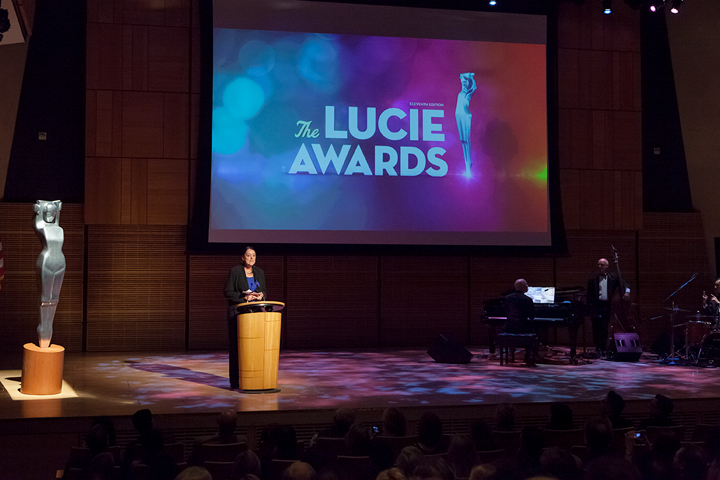
The who’s who of photography gathered last night, at Carnegie Hall to honor the “masters” of their trade at the Lucie Awards. The Lucies are like the Oscars of the “photographic industry”.

2013 Lucie Awards, Carnegie Hall ©Thomas Kelly
2013 Lucie Awards, Carnegie Hall
©Thomas Kelly

I had been asked to step in to present the “2013 Deeper Perspective Photographer of the Year Award”. on behalf of the ASMP when Executive Director, Gene Mopsik and President, Ed McDonald couldn’t attend.

I don’t usually get nervous about things like this, but I was last night. As I stood in the wings with photographer John H. White, who was waiting to go on stage to accept his Lucie, for Achievement in Photojournalism, I was mesmerized as I watched John.  He seemed to glow and I felt his grace, his humility and his gratitude.  It was a moment in my life that will stay with me forever.  It was calming. I watched and listened to his acceptance speech on the monitor backstage, and I was deeply touched.  So was the audience, as evidenced in their standing ovation.

John H. White is not a “rock star” type of photographer.  His images don’t “shock and awe”, not in the way a war photographer’s images do. John’s photographs capture the subtle moments of the human experience.  His legacy of images show us life as it really is.

This past spring, after 35 years with the Chicago Sun Times, John and the rest of the newspaper’s photographic staff were fired.  It was a huge blow to the photographic community, magnified by the fact that even John H. White, the “chairman” was “let go”, without even as much as a thank you. John wasn’t bitter about it though.  Michelle Agins wrote a wonderful article for the New York Times where she quoted John: “A job’s not a job because of labor law,” he said. “It’s just something you love. It’s something you do because it gives you a mission, a life, a purpose, and you do it for the service of others.”

All he had wanted to hear from the executives who let him go was two words that never came: thank you. But even then, he did not respond with anger.

John spoke more about the Sun Times’ firings in an interview with NPR where he said: “I will not curse the darkness. I will light candles. I will live by my three “F” words: faith, focus and flight. I’ll be faithful to life, my purpose in life, my assignment from life. Stay focused on what’s really important, what counts.” He repeated those three “F” words last night as he accepted his award.  The audience was humbled.  John had shed his light.

I have been thinking a lot lately, about the value of photography and the value that a professional brings to this craft.  John H. White and his archive of work is a stellar example.  His images, capturing the subtleties of life stand out amongst the noise.  They make us take notice of what is often over looked – the quieter moments of life.

As far as what a professional photographer brings to the world, I think John stated it best: “Every day, a baby is born. Every day, someone dies. Every single day. And we capture everything in between. You think of this thing called life and how it’s preserved. It’s preserved through vision, through photographs.”

As John walked off the stage and back into the wings, I felt enveloped by his glow that had seemed to magnify.  I caught his eye for a moment and said “thank you”. He nodded, and flashed his wonderful smile and in that moment, we connected and shared our understanding, of the “value” of photography.

The Past Always Seems Better…….But Was It?

Chris Guillebeau struck a chord with his blog today ,“ The Past Wasn’t Better. Choose the Present Instead”, .  He relayed a story about a time his friends got together for a “gaming session”. They had ordered an emulator, which allowed them to play the games of their youth on the modern gaming console of the time.  They realized after a couple of hours of playing the “old games” that the games weren’t as fun as what they remembered.  They were very simplistic and hard – dying over and over again and not advancing to the next level wasn’t fun – it was frustrating.

Chris made the point that it’s easy to look back with fondness on the good ole days, but our memories get distorted as time passes and sometimes what we looked back on with fondness, never happened.

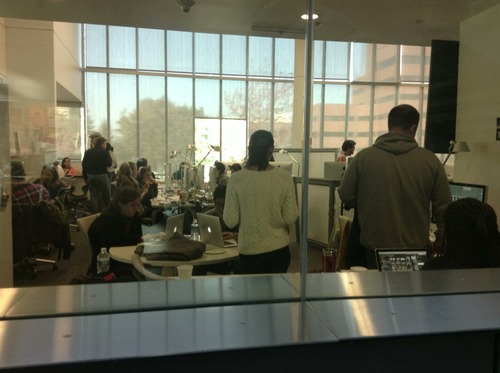
I had an interesting and somewhat similar experience this past weekend.  I had been invited to speak and coach at the 2013 Syracuse University Fall Workshops, which ASMP had contributed to as a sponsor.tumblr_muyzapUjbp1qe6iepo1_500  It was an intensely creative 3-day workshop where journalism students from the Newhouse School, came together with some of the best editors, designers, photographers and multimedia producers working in journalism. It was a hands-on workshop, where students worked with their coaches, to produce their projects (stories), under a tight 3-day deadline. What stood out to me this weekend, was that the “learning” wasn’t a one-way experience.  I learned as much as I shared – from the other coaches, as well as from the students. I’m sure I’m not the only coach, who picked up some tips from their students this weekend. I was also inspired and amazed at what is possible now, in terms of new ways to tell a story.

Sure, there are days when I’m simply overwhelmed by technology and the continued learning curve that comes with it.  And sometimes, I look back and fantasize how much better it was in the past.  At the workshop, one of my students had more than her share of technology mishaps.  At one point after losing hours of work, due to a software glitch along with not being able to access her audio files, somewhere in “the cloud”, she remarked with exasperation “ I wish things were like they used to be”.  She meant when things were tangible and analog. I quickly replied, “No you don’t because this 3 day workshop would have taken 3 months”. It was a moment when we both had the same realization that Chris Guillebeau had – our memories and perceptions of the old days are sometimes blurred and over glorified.

As much as we remember and long for the old days, the fact is we have it pretty good now.  There’s not a day that goes by that I don’t remind myself of that.  I choose to focus on what I am able to do in the present rather than look back at what was. If we choose to stay in the past and remember things being better then they are now, we’ll miss out on a whole lot of possibilities. As Chris beautifully sums it up: “Let go of the glory days.  Live in the present and build for the future.”

What’s Next for Still Photography? Things We Could Never Begin to Imagine.

One of the only good things about getting older is that I have gained a lot of perspective. Fortune teller through window, Atlantic City, NJ I never speculate what the future will hold by limiting it to what’s possible now because…..

When I began studying photography at Brooks Institute in the early 1970’s

I never would have imagined:

  • That I would own a personal computer that would change the way I communicated with people and ran my business.
  • There would be the Internet, email and mobile phones.
  • There would be auto-focus cameras and lenses.
  • Cameras would be fully automated – if you so choose to use them that way. When I began my career as a photographer, I needed to be a technician, and that meant understanding aperture and shutter speed and a lot of other things that went into making a still image.
  • I would be shooting still images without film.
  • I wouldn’t be limited to 36 frames on a roll of film.
  • I could change the ISO on my camera, as need be.
  • I could change the white balance on my camera, as need be. (No need for different types of film)
  • I wouldn’t need to “get it right” in the camera because I could “fix it later in post” with Photoshop or hundreds of other apps.
  • I could see what I shot – right after I shot it.  Without waiting for the film to come back from the lab or taking Polaroids.
  • There would be data cards and hard drives able to store thousands of images at affordable prices.
  • I could transmit my images digitally and globally with ease and speed.
  • I could share my portfolio electronically with virtually anyone, anywhere in the world.
  • That still cameras would be able to shoot video.
  • That video cameras would be able to shoot at high resolution with fast shutter speeds – good enough to take still images from the frame grabs.
  • My mobile phone would be able to shoot high res still images and video.
  • Magazines and newspapers would publish electronically,  running stories online with static and moving imagery  – and sound.
  • I would be able to watch a movie in my own home.  (without being wealthy enough to build a home theater with analog projector and sound system).  This was before the VCR and DVR were invented.
  • That feature movies and TV shows (other than soap operas) would be shot in video.
  • I would be able to make a feature length film without a Hollywood budget and big crew.
  • I could self-publish and distribute a book or a movie without a publisher or movie studio.
  • My TV would have access to the Internet (I couldn’t even imagine the Internet)
  • The Internet would give birth to  “new networks” producing original content.
  • I would be competing and doing business on a global scale  – as a small business owner.

A lot of the things I listed seem commonplace or even old technology nowadays.  But, I when I first began my career as a photographer, I never would have imagined any of them – not in my wildest dreams.

What do you imagine the future will bring?  There’s one thing for certain, if you limit your imagination to what’s possible now – you probably won’t even come close to what’s in store in the future.

The Biggest Mistake Photographers Make in Video Post-Production

English: High end linear editing suite, 1999.
English: High end linear editing suite, 1999. (Photo credit: Wikipedia)

I’ll make it simple and provide a quick answer to the title statement  – “What is the biggest mistake photographers make in the post production process, when they are just starting out?  They think they need to do it all them selves.

Photographers are independent creatures by nature. Most are solo entrepreneurs who create visual content for a living. But when they enter into the business of video production, unless they have decided to work solely as a hired camera operator, they will have to deal with a lot of other creative needs and variables – producing, lighting, shooting, sound, editing, music, motion effects, sound mixing, and color grading to name a few.  Unless you are pursuing a career as a backpack journalist, which I have the utmost respect for; you can’t possibly do it all.  If you try, you will either go broke, or you will put limits on the quality of your product.

I know how to edit – meaning I know the editing software.  But that doesn’t make me an editor.  I realized early on, how the craft that a good editor brings to a project could greatly raise the bar on what I produce.  Generally, I try to look at all my shot footage and do a very rough first edit.  This not only familiarizes me with my material, it helps me keep costs down. I did that on my film, and with 150 hours of footage, it was a long and tedious process.  But it also made me intimate with what I had shot so I was helpful to my editor and it made the collaborative process very creative and focused on the story.

Too many photographers stop them selves from getting into video because they think they have to learn how to edit and that it would be another huge software program to learn.  Don’t let that be a stumbling block.  You can delegate that task to someone who already knows how. More than likely you won’t be composing music for your videos or creating complex motion graphics. You don’t need to learn and do everything and in fact, working with an editor frees you up to start working on another job.  It’s a more profitable use of your time, especially when you are invoicing the post-production costs as part of the job.

There are times when I love to work in a solo style or with a very small crew.  I love the intimacy it brings to the production.  But when it comes to post-production, working in a collaborative way with other professionals is one of the things I love most about video production.  It has been a very powerful and creative force in my life and has challenged me in wonderful ways.

Rejection Therapy

©Mike Rode
©Mike Rohde

A few weeks ago, I attended the World Domination Summit in Portland, OR.  Any time I‘ve mentioned this conference to my friends, their eyes get wide and they all want to know more about it.  Essentially, WDS is a worldwide gathering of creative, unconventional people who want to live a remarkable life in a conventional world.

This was my second time attending WDS and I was inspired, enlightened, invigorated and awed by the speakers like Jonathan Fields, Nancy Duarte, Tess Vigeland, Chase Jarvis and many others.  There was one speaker Jia Jiang that really resonated with me.  He talked about his 100-day “rejection therapy” project. You can watch Jia’s talk online. He must have struck a chord with a lot of other people as well, because he brought the house down.

I’m certainly not a stranger to knowing what rejection feels like.  The last two years of my life I have been rejected more times than I have probably in my entire life.  It’s not that I’ve been seeking ways to get rejected.  It’s because I’ve pushed myself into new and foreign territories – I mean that both literally and figuratively.  For example, I challenged myself in my career by producing a big film project that literally took me around the world.  But when I think about the “journey” part and the production of that film, it pales compared to the hard work, time, blood, sweat and plenty of tears on getting the film seen. I got scads of rejection letters and emails from film festivals, distributors and agents but most outsiders see only my successes.

When I heard Jia talk about his rejections that led to his “rejection therapy”, I understood exactly how he felt.  In a way, I’ve lived my life like Jia’s rejection therapy. But, it wasn’t because I set out to heal myself from some missteps and misses that didn’t work out for me.  As I look back at some of the things that I’ve done in my life, I realize now that I was simply naively bold enough to do them.

I can’t really say that I have ever gotten used to rejection.  It continues to hit me hard at times.  But when that happens, I stop and I think about all the wonderful and crazy things that I’ve done in my life that never would have happened if I had let my past rejections stop me. I suppose I’m like one of those blow up punching bags that keeps popping back up.

5 Tips for Filmmakers (and other artists) for Building an Audience

The good news for Indie filmmakers, musicians, photographers and new media artists is that technology enables us to take control and distribute our own work to the masses or a more targeted niche audience.  The bad news is that even though we are able to reach a global audience without giving the lion’s share of our profits to an agent or distributor – it’s a lot of hard work.

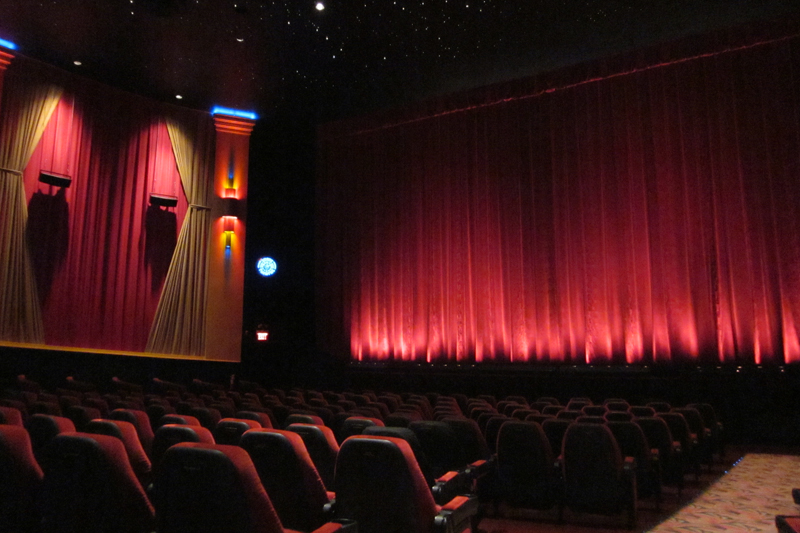
When I completed final production on my first feature documentary, Opening Our Eyes, I knew I was hardly finished with this film, not if I wanted people to see it. theater interioeIMG_0150Since most filmmakers make their movies to be seen, they need to decide how they want their movies distributed and marketed.  As a filmmaker, do you want to delegate this task to a distribution company or do it yourself?  Will you be one of the lucky 1% of filmmakers who get their films picked up for distribution?  If not, do you have a plan on how to do that?

1. Identify and build audience – Regardless if you decide to sign with a distributor or distribute your work yourself, the most important part of marketing and distributing a film is to identify and build your audience – and you should start building your audience before the film is finished.  As soon as I made a commitment to make a film, I started blogging about it.  I created a blog specifically about the film where my daughter and I talked about preparing for and taking a 99-day journey around the world. I also wrote about the making of the film on this blog where I talked about gearing up for it as well as the post-production process.  I didn’t realize it at the time, but I was building our niche audience.

2. Have a social media plan:

  • Decide on platforms – Twitter, Facebook, Tumblr, Google+, YouTube, Vimeo
  • Carve out the time to engage
  • Decide where the content will come from – behind the scenes photos or footage, blogs, podcasts?
  • Who and where is your audience? Find other Facebook groups or pages and followers who are interested in the same topic as yours.  Collaborate. Build your Twitter followers same way.

3. Finding true fans – Since most filmmakers will most likely NOT have a mega hit with huge profits, the best thing a filmmaker can do is build their “true fan” base.  First you should ask yourself how many “true fans” would you need to sustain yourself as a filmmaker? And by true fan, I mean people who are willing to buy whatever you are selling, be it a book, a DVD, a music download or a t-shirt.  The key to growing your core “true fans” is to engage them by sharing interesting content as opposed to just selling something.

4. Be consistent and stick with it – Like anything else, building an audience takes time.  Be prepared to constantly interact and engage your audience by sharing relevant and interesting content with them.  You’re building a tribe or a community.

5. Find likely partners – Making films is a collaborative effort.  Similarly, for filmmakers to be successful in marketing their films they need to find their core niche.  One great way to find your niche audience is to identify like minded groups and share links.  The non-profit my daughter works for partnered with us and we frequently share each other’s news with our followers.

The Top 5 Mistakes the Chicago Sun-Times Made

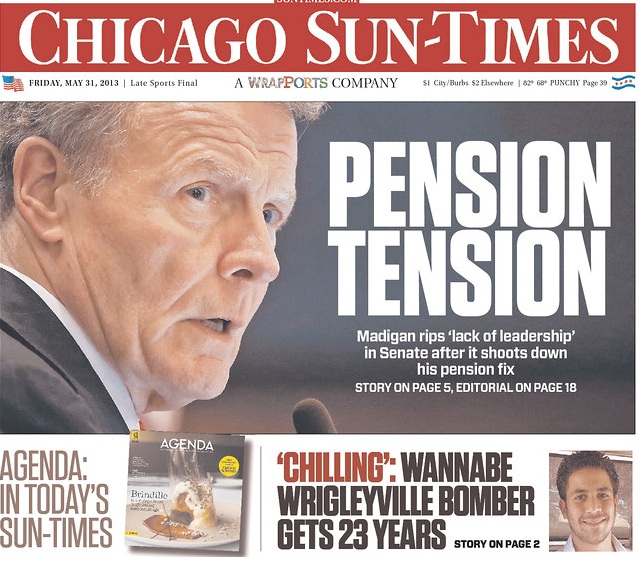
There’s been quite a lot of talk over the last couple days about the Chicago Sun-Times ChicagoSunTimeslaying off their entire staff of photographers.  When media writer Robert Feder posted on his Facebook Page , he was flooded with nasty comments about what the paper was doing.

“Sun-Times reporters begin mandatory training today on “iPhone photography basics” following elimination of the paper’s entire photography staff. “In the coming days and weeks, we’ll be working with all editorial employees to train and outfit you as much as possible to produce the content we need,” managing editor Craig Newman tells staffers in a memo.”

There has been general outrage amongst professional photographers on listservs and social media channels adding to the extreme angst that already exists in this demographic.  I’ve been giving this a lot of thought, not only over the last couple of days but over the last decade as technology has thrust enormous change on my industry.  If I allow myself to look at the state of professional photography as an unsustainable profession because of these technological changes, than that’s what it will be – an unsustainable profession for me.  But if I turn the “problem” into an “opportunity” and realize that technology has brought me a lot more possibilities in how to monetize my craft, then I will have a profession that I will be able to sustain.

Biggest Mistakes that the Sun-Times Made when they got rid of their staff photographers:

  1. Cheated their readers.  Their readers will see the difference in the photographs that their paper is running.  A professional photojournalist doesn’t just take a picture – they capture a storytelling image.  They are visual communicators and they are good at it.  They make the viewer feel, empathize or connect with their images. I don’t think it will take a long time before their readers see that the paper’s photos aren’t any better than theirs or their friends and have no reason to get the story from the Sun-Times.
  2. Focused on the technology – the iphone.  How many times have I said “It’s not about the tool”?  Do I think that the iphone isn’t a viable tool for taking good photos?  No, in fact if it is the only “camera” you have on hand when a story is breaking – then it becomes the best camera for the job.  On the other hand, the same day the paper sent the memo out to their staff about the layoffs, their front page was covered with images that one wouldn’t have a chance of getting if all they had was an iphone.
  3. Burdened their writers with another job.  Let’s face it, something is going to suffer.  Just like when I try to shoot both video and still images on the same job myself, I always feel like I have the wrong camera for the wrong moment.  A lot of my writer friends can take pretty good photographs, and some merely make a “reference” shot of what’s happening, instead of an image that captures a story.  A writer’s workflow is different than that of a photographer.  Writers go out in the field and gather facts and write the story for the most part, back at the office.  A photographer does pretty much everything in the field.  Nowadays, many times that includes the edit.  Something will suffer, when one person sets out to do two totally different types of jobs.
  4. Made their “cuts” in the wrong place.  They undermined what a professional photojournalist brings to their paper.  You can’t find a more passionate, committed group than photojournalists.  They work long hours, under terrible conditions – many times dangerous ones, receive a lousy pay, but will go above and beyond to deliver “the story”.  Some say this was a “union busting” move and that after a decent amount of time, the paper will begin to hire photographers who will work for less and no benefits.  If that’s the case, then shame on them for cutting out health benefits for such a committed group of people. In the long run,  that is not a sustainable business model.
  5. They forgot that technology works both ways.  Let’s hope that photographers don’t forget that they can use technology to their advantage – that is if they can get past their fear.  Alex Garcia of the Chicago Tribune, writes in a blog post:  “Fear is the worst and greatest enemy of photographers. Why? Physiologically, fear triggers the fight or flight complex. You can’t think creatively, imaginatively and proactively when your entire body is pumping blood and adrenaline to the parts of your body necessary to fight barbarians at the gate. It pushes your body into a reactive-about-to-become-a-victim state of mind. The very creativity that is your unique selling proposition as a photographer is crippled. Your body become’s your mind’s worst enemy.

We no longer need a publisher to publish our images.  With technology we can create and publish with a variety of platforms and portals.  Just take a look at Issuu a portal for digital publishing. With a modest amount of effort, I put together a test for a new magazine called “The Back Story”.  Future issues will be composed of my image outtakes from the dozens of commissioned assignments that I’ve shot over the years.  Maybe, down the road it will include other photographers’ work and give the readers an opportunity to see the images that never ran and get “the back story.”

Fear not, my fellow professional photographers.  We are in a position of opportunity if we begin to realize that and make a conscious effort to change our mindset.  We don’t have  control over the choices that the Sun-Times or any other newspaper makes. We only have control over how we react to those changes. If we think and act smart and not from a position of fear, maybe one of the best business decisions we can make is to take control, and create and publish story telling images that the public will want to see.  And the public  won’t be finding those kinds of images in the Chicago Sun-Times.