Living a Remarkable Life in a Conventional World

Have you ever had an experience that you just don’t want to end?  I have.  I have just returned from
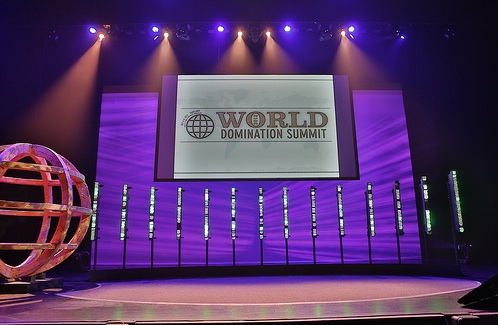
Photo WDS by Chris Guillebeau

The World Domination Summit in Portland, OR and I want the experience to linger on – I don’t want the thoughts and feelings inside to end.

It has been hard and amusing when I try to explain to someone what this conference was all about with a name like The World Domination Summit.  It sparked impromptu conversations with people I met in elevators, in restaurants, or on the street, when they spotted my tag.  I told them that it is a gathering of people – 1000 people – who wanted to live a remarkable life in the conventional world we live in. Unlike other conferences, where attendees come from similar professions – this conference was attended by people of all ages, from college kids to 70 year olds and from all walks off life.  But, everyone had one thing in common – they wanted to live a rewarding life – a life of hope, happiness and possibility.

When I signed up last January, I knew it was bound to be an interesting weekend. I had no idea who the speakers were going to be, but the first WDS that Chris Guillebeau and his team organized last year, was quickly sold out and I didn’t want miss out on this year’s event.  When the tickets were put on sale for this year’s conference – they sold out in 10 minutes.  1000 tickets were sold – 5000 people were waitlisted.  I was one of the fortunate ones.

I should point out another unique thing about this conference – it is entirely done with volunteers.  Even the amazing speakers volunteer  – speakers like Brene Brown, Scott Harrison, Scott Belsky, and Chris Brogan.  There were informative and quirky workshops like “ The Right-Brain Business Plan: Turn Passion into Profit” to “Mondo Beyondo Meetup: What are your Superpowers” and there were plenty of other meetups around town, one could find out about on the WDS.fm twitter page.

I met the most interesting people, from all over the world and it was easy to pick up on other people’s enthusiasm and energy. 1000 people who thought a little bit different from the status quo. – people who looked at the whole notion of “business” differently.  They understood the importance of both serendipity and strategy, the power of mentoring and leading by service and soul.

After the final keynote speaker, Chris Guillebeau announced that he had a surprise.  He stood on the stage with an empty chair beside him and talked about the conference itself.  How it had doubled in size from the first year to the next and how he capped it at 1000 people, even though he had another 5000 people on the waiting list.  He talked about the fact that the conference had no sponsors and that nothing was promoted – there was a table where one could buy some of the speakers’ books but they were never promoted. Chris said he decided not to have sponsors because he didn’t want to devote time to sponsor announcements. And then he said that an anonymous donor came forward and made a sizable donation.  Chris and his team talked a lot about what they would do with this money and they decided to give it back to all of the attendees.  And then he told us that when we left the theater we would be handed an envelope with a note and a $100 bill!  Chris and his team of volunteers would be handing out $100,000.

As I left the theater I received an envelope with a crisp new $100 in it wrapped around a note that said:

The $100 Investment

Thanks for making the #WDS2012 a fantastic experience.  We’d love to see how you can put these funds to good use.  Start a project, surprise someone, or do something entirely different – it’s up to you.

The World Domination Summit

Incidentally, when we first checked in for the summit, we were handed our credentials, a t-shirt, and a backpack.  Inside the backpack was a stainless steel water bottle and Chris’s new book “The $100 Startup“.

I don’t think there will be one person who received that envelope that day who won’t think twice about spending that $100.  And think about the power in that – think about the possible outcomes.  That’s a refreshing way to look at “business”.  If that type of philosophy has a chance of dominating the world – I’m all for it.

“Unused creativity is not benign. It turns into grief judgment and shame.”Brene Brown – speaker at WDS 2012
Collaboration

I’ve often talked about how important collaboration is in video.  And with the right mix of people collaborating – wonderful things can happen.

My longest collaboration has been with my husband and business partner, Tom Kelly.

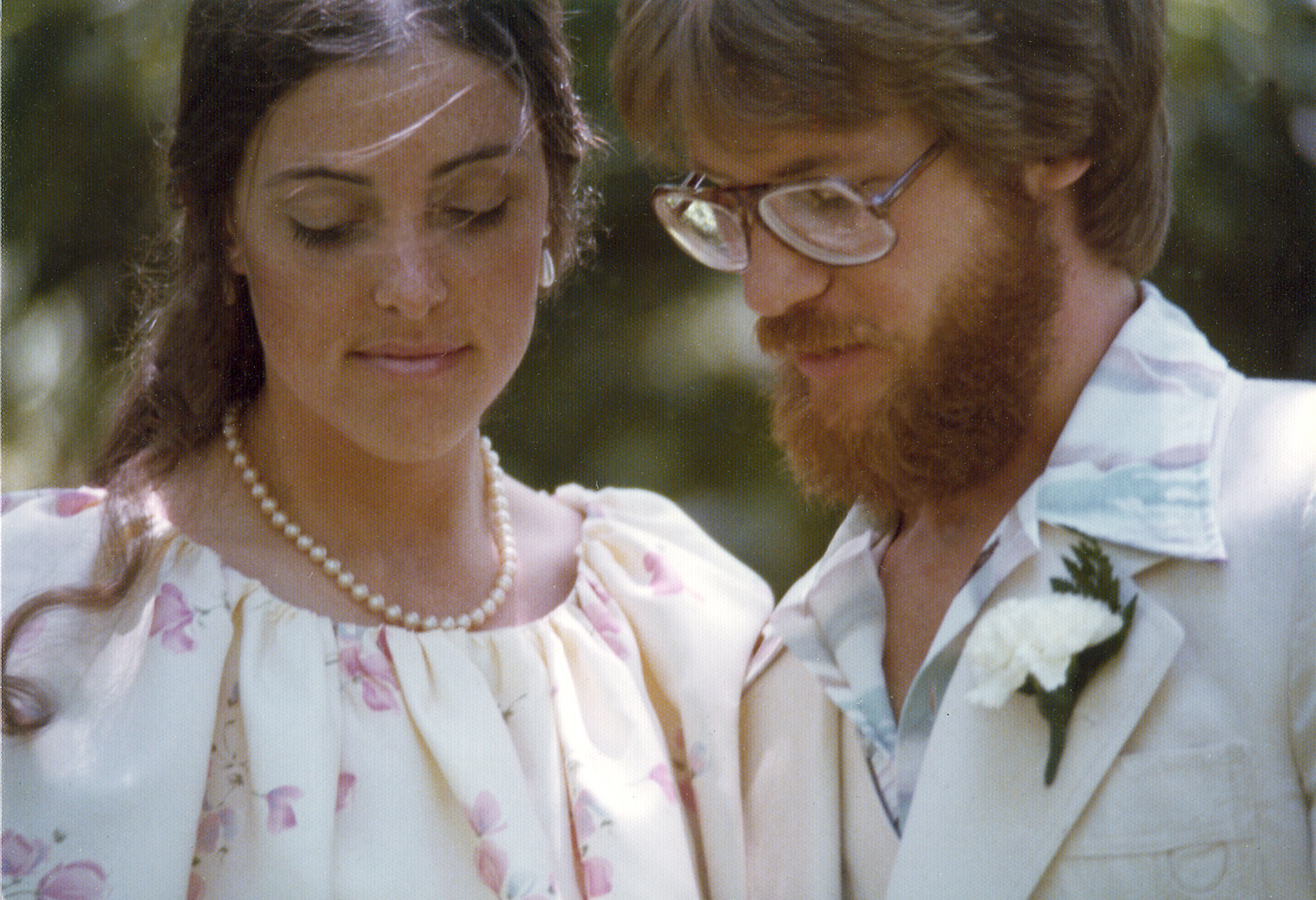
June 4, 1977

Today marks our 35th wedding anniversary, but our relationship goes back even further – another 4 years.  It’s truly hard for me to believe that so many years have gone by, but that’s what happens when one is busy living life.

The way Tom tells the story of the day we met is that we were with our classmates (our first class of Brooks Institute) on a field trip, and we ended up at a roadside hangout in the mountains just outside Santa Barbara, California.  We were on a patio drinking beer – I was barely of legal age – and Tom spotted me – “this exotic chick with rings on all of her fingers and smoking Turkish Ovals (cigarettes)”. I didn’t have rings on all my fingers and I stopped smoking long ago, but the real reason I stood out back then was that I was 1 of only 6 women who attended Brooks at that time.

For me, going to Brooks Institute in the mid ‘70’s, was like mixing “oil and water”.  I had just come back from a yearlong “hippie-backpacking” odyssey around the world. I was the ultimate free spirit and I was thrown into a rigid educational environment with ex GI’s from the Vietnam War.  But, I met Tom and that’s when our collaboration began.  I knew nothing about photography, other than managing to get lucky with some images that I took with my Nikon FTN and 50 mm lens, on my travels.  Tom had processed reconnaissance film in the Air Force and had a dark room as a kid, so I looked to him for advice. That’s how we started and we quickly became a couple – being there for one another.

After graduating from Brooks, we moved back East and worked a year in NYC as assistants to two commercial studio photographers. (I had gone to high school in NJ and Tom grew up just over the state line in Pennsylvania) We also moonlighted, shooting jobs our bosses didn’t want to do and also shooting for ourselves on the weekends. One summer we took our bikes and cameras “down the shore” and shot a wonderful personal project on the boardwalk – some of those images shot during that summer, remain favorites of mine. Perhaps that’s when the lines between business and personal became blurred.

We were extremely lucky in our early years to have an amazing mentor, Adrian Taylor, who was art director of Travel & Leisure at the time.  Adrian gave us many precious gifts as young photographers just starting out.  The most important gift was his encouragement and his unwavering belief in us. Every time Adrian gave us an assignment, we wanted to raise the bar and Adrian’s eyebrows as well.  Each assignment for the magazine was more challenging and ambitious, shooting major city stories with celebrity subjects, and luxurious environments in fabulous destinations.  And the best part – we got to experience this together!

As much as we’ve had an extraordinary career, working together and independently,  we’ve also had a wonderful marriage and family – our best collaboration – our daughter Erin. Tom and I  are so completely opposite of one another, but somehow it has worked.  Tom is more comfortable being out of the limelight and pointing it at me. What’s amazing is that Tom not only manages to produce his own jobs but he also takes care of a lot of things around the house.  There is a whole secret world in our basement, that I know nothing about. I’m the dreamer with the crazy notion to think anything is possible and  Tom has always been there for me, supporting my latest scheme and adventure. He has been the wind beneath my wings. It hasn’t been easy,  and there have been times, when both of us have wanted to walk away – but we didn’t.  In our “throw away society” I suppose that’s rare. I think it’s a pity that people give up too quickly – you never know what’s just around the corner.

Like any good story though, a life well lived comes with conflict and contrast.  Sometimes that has to happen to get you to the “next place”.  I’m grateful to be celebrating a life well lived with Tom, my husband, my partner, my soul mate.

Happy Anniversary Tom – love you.

Teaching and Learning – Four Weeks in China

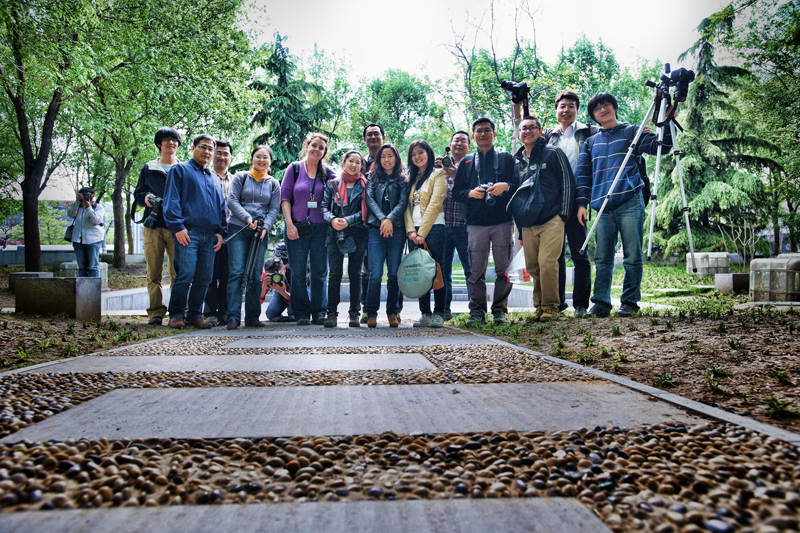
It’s the start to a beautiful day in Brookside, NJ and I’m home at last after a long and arduous 4-week trip to China.  I had been teaching Chinese journalists, video journalism or new media as they refer to it in China.

I hadn’t fully realized how hard “teaching” really is until after these past four weeks.  To begin with, I was teaching a difficult subject – “how to produce and shoot short video stories”, to journalists at the “state’s” largest news and photo agency.  I had 4 days to teach 4 weeks worth of material –how to think and shoot in motion, edit video stories and upload them online. To make things even more difficult, everything I said had to be translated by my interpreter to my students, making the instruction take three times longer.

Each week my students amazed me by their eagerness to learn, despite coming to the class with the bare minimum in the way of  “tools”.  Some students didn’t even have cameras that could shoot video. Some had dated low res video cameras and no one had any audio gear at all.  When it came to the editing part of the program, their computers were under equipped to handle Adobe Premiere CS 5.5, which they had recently downloaded and installed on their PC’s. And yet, each class managed to produce a short story after less than four days!

This entire adventure was a lesson in collaboration. My students learned to collaborate.  Like most photojournalists they were used to working solo, so collaborating was a foreign concept to them.  But, collaboration is a common way of working when it comes to video and it was a necessity in China, because the students were lacking in gear.

I was part of a team of four teachers on this trip, so I too was working in a collaborative way.  That was equally tough, as I am used to working as an independent producer and accustomed to making my own decisions.  The other three photographers/teachers were also independent photographers, used to doing things their own way.  Egos collided from time to time within the group, yet we ultimately knew we needed to maintain the “group” in order to deal with the angst that came with doing this job. On top of that, our Chinese hosts wanted to control us.

I think we all learned a lot about each other in the process as this adventure played out.  I know I did.  But, I also learned a lot about myself. Perhaps, this was the purpose of this trip – to learn more about myself and grow from the experience.  Time will tell.

I can also say that I learned from my students.  There is always one student who feels that they already know everything, and usually tries to “stump the teacher”.  When this happens, I handle it with humility and thank the student for teaching me something that I did not know. I do not hide the fact that I don’t know everything.  And then I take the opportunity to relay to the rest of the class, that I never want to stop learning, no matter how old I get.  I tell them that in living this way, it has brought many rewards in my life and I encourage them to do the same.

I’m home now.  It’s a beautiful Sunday morning in Brookside, NJ and I’m reflecting on my last weeks, which remained an adventure until the end.  Chinese activist, Chen Guangcheng was on my flight from Beijing to Newark, NJ, seeking asylum in the US and making a new life for himself and his family.  As Chen adjusts to a totally new life in America, I’m happy to be home again with my freedom and liberties in tact.

Week One – Teaching in China

I’ve just wrapped up week one, teaching Chinese photojournalists, in Beijing, to think and shoot in motion.  Like any new job or new experience – the first day or the first week – is always the hardest.  The week flowed like any good story, with “ups” and “downs” but by Friday afternoon – my students triumphed and amazed me.

It’s difficult to teach any “still” photographer “motion” because so many photographers are so gear oriented, they underestimate the most important part of the process – thinking and shooting in motion.  I find that many times, still photographers think that all they need to do is switch their DSLR’s to “video mode” and shoot.  There’s a certain attitude amongst some professional photographers – that all they really need to do is get a camera that’s capable of shooting video.  But they quickly realize that there is a lot more to learn.

Day one, we talked about thinking and shooting in sequencing.  It took longer to get this message across, simply because everything needed to be translated into Chinese.  I showed examples that helped and then gave them an assignment to shoot a sequence of video clips that told the story.  The next day we reviewed the work of the students and they quickly understood the successful attempts and the not so successful results.  They also realized how different shooting motion is from shooting stills.  I had told them in class that “stills are moments in time” and “video is time in motion” but until they actually tried to shoot that way – and then analyzed their results in the critique – did they begin to understand. Many made the common mistake of moving the camera, rather than letting the motion happen in front of the camera and many produced video clips that didn’t relate to one another.

Day two we started to talk about audio.  That’s a subject that all still photographers underestimate because they don’t realize the importance of capturing good audio.  They think that their camera mics are sufficient in this task. After all, they are capturing sound.  It’s not until they can hear the difference between good audio and bad audio that they really begin to understand that audio is more important than the visual.  I could see the light bulbs going off the next day in the critique that they were beginning to understand this important concept.

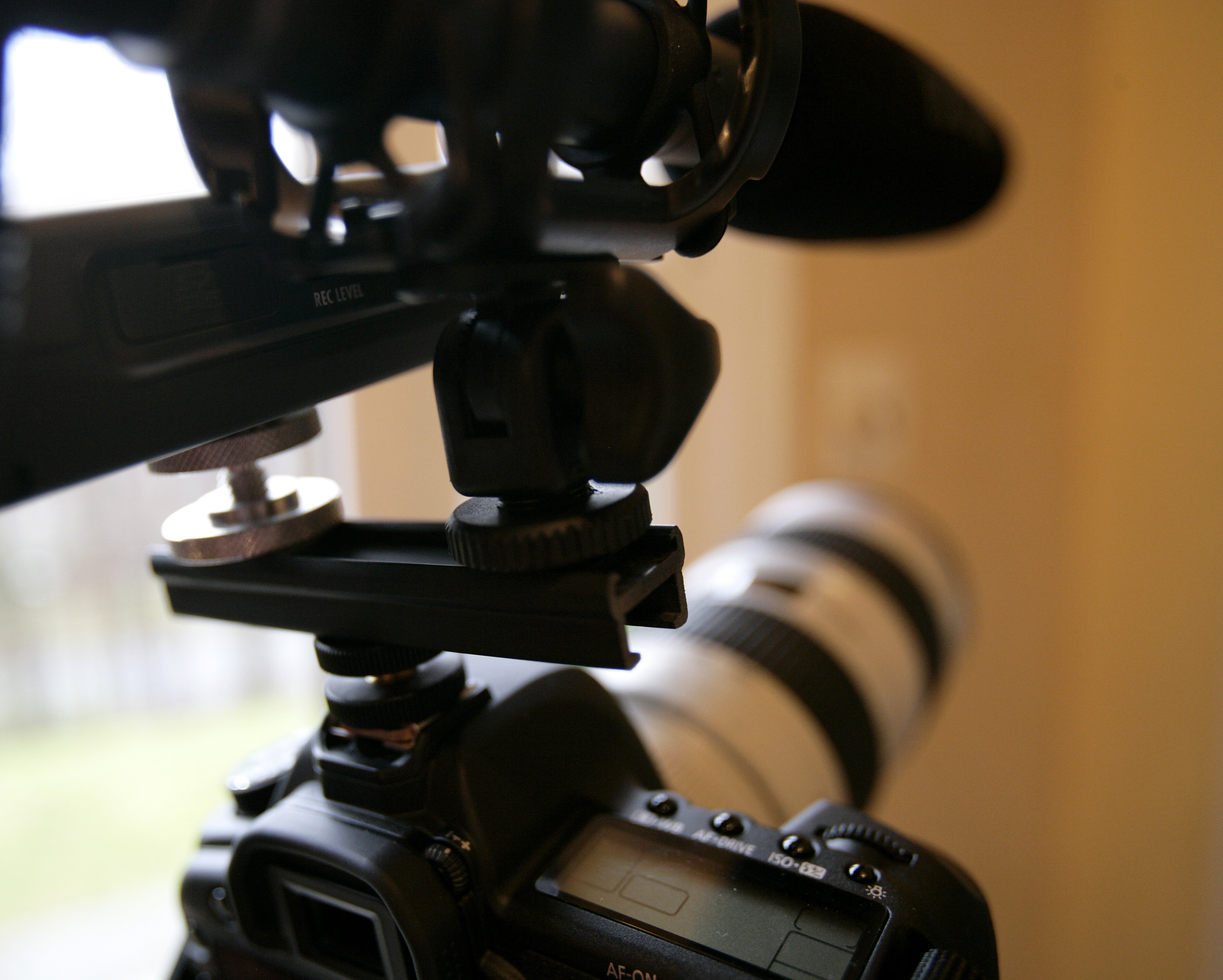
Day three we talked more about the importance of audio and that when shooting with a DSLR camera, it is essential that they capture audio with an external microphone and a separate digital audio recorder.  After a morning in the classroom, we all headed out for a field trip.  I set up a situation where I did an interview of a subject and they shot the b-roll.  That evening, we broke into 3 groups (video is a collaborative effort) and they set off to capture a story, using everything we had learned in the past 3 days

Day four, we put a small dent into learning the vast editing application, Adobe Premiere.  That was perhaps the most challenging day for all of us.  I’m somewhat new to Premiere, since I’ve been editing in Final Cut Pro for the last 10 years, but it was the most viable solution since most of the students were using PC’s and Premiere is cross plat formed.  We learned the basics in the morning and in the afternoon – the hard work began.  The next day, we would be joining the other 3 groups who had been learning things like lighting and Lightroom and the clock was ticking to get their assignments edited.  I cannot even begin to tell you how amazed I was at how far these students had come in just 4 days – it was remarkable.

The next morning we showed our completed projects to the entire student body and other faculty.  Based on the resounding applause – I believe we amazed them as well. That evening we were all beyond exhausted, but my students invited me out for a “banquet”.  I was lucky  – many in my group spoke some English – so the evening was spent sharing stories and cultural experiences and food and drink.  It created a bank of memories that I will cherish.

We had two days of rest and our first day; we headed to a remote area of the Great Wall.  I shot some still images and then I needed to just take pause.  As the other 3 teachers continued to shoot – I knew I needed to stop and just take a moment to put the camera down and really “see” where I was.  I needed that time to absorb not only the week I had spent but to relish the “now” and think about where I was in the context of the world.  It’s those moments, when I put the camera down, that always create the memories that linger in my mind forever more.

Paying it Forward – It’s Amazing

I got the best email yesterday. It was from a young man who had attended a seminar I had given at Yale for ASMP on “Should I Be Thinking of Video”. I remember that evening well. I had recently returned from a 3-month journey circling the globe with my daughter creating a documentary on people making a positive difference in the world.
I was still very much in the same head-set that I had been for the past few months – one full of peace and belief in myself. I had just come off an intensive period where I was “walkin’ the walk” and I was practicing what I preached.

The young man, Brian, wrote, that he had attended my seminar with his father, who was a photographer and that he, himself had grown up wanting to make movies. So, my seminar was a perfect combination for them. Then Brian wrote “That night you inspired me.” My heart jumped when I read it. He went on to remind me of things that I had said that evening – about overcoming fears in order to realize your dreams – in my case traveling the world to make a movie. Leaving the known behind – for the unknown. Telling yourself “yes” instead of giving yourself reasons not to.

Brian said that he had recently landed his first job of his career as a structural engineer. He loved it, but he also had a great desire to travel. That night he went home and furiously “googled” anything about traveling the world and beyond. He came across the website of “Engineers Without Borders” and as serendipity would have it, they were having their monthly meeting that week.

To make a long, but interesting story, short, Brian went to that meeting that week, and talked with some people during a break who were organizing a trip to a village in India.

©Brian Skelcher

Then they invited him to go with them in February. He was astounded. And then he did the same thing many of us do in similar situations – he started giving himself every rational reason why he shouldn’t/couldn’t possibly do something like this. In Brian’s case – how could he ask his new boss for 3 weeks of time off?

That night when Brian heard me speak, was about a year and a half ago. In the email he sent to me yesterday, he talked about spending the last year editing his 15 hours of footage, down to a 40 minute piece. He told me that it hadn’t been easy and that he frequently read my blog posts where I had written about my similar experiences with post-production – magnified. What I had shared had helped him through it – angst and all.

My favorite line in his email read:

“So, I’m finally done with my movie, although there’s things I wish I had done differently, I did my best and I’m glad it’s finished! The final product is one thing, but the journey to get there is another, and the past 18 months have been such an amazing experience for me! I owe it all to you! Sorry for the long email but I’ve been waiting 18 months to tell you my story!!”

Brian just launched a Kickstarter campaign to send another engineer to Nepal for a similar project. You can find out more about it here: http://www.kickstarter.com/projects/videotaping/welcome-to-abheypur-the-movie

I think back on that evening and the year and a half in between. I’ve gone through two tough winters, doing the kind of work that needs to be done, but nevertheless takes its toll on my heart and my soul. That evening, my spirit was alive and well. Brian and others felt it and it moved them to a place they wanted to be. And now, after a tough winter, that same “energy” has come back around to me through Brian’s email. It has reminded me to stay the course and stay on purpose. Thanks Brian.

Add to FacebookAdd to DiggAdd to Del.icio.usAdd to StumbleuponAdd to RedditAdd to BlinklistAdd to TwitterAdd to TechnoratiAdd to Yahoo BuzzAdd to Newsvine

Monetization of Photography in Spite of a Lousy Economy

I talk to a lot of photographers. I don’t define the word “photographer” by the type of camera he or she shoots with. Whether someone is shooting with a still camera, a traditional video camera, a motion picture film camera or a hybrid camera that shoots both stills and motion – a “photographer” these days is apt to embrace more than one of these tools.

Regardless of the tools you may use, I’ve come up with a few tips on how photographers can stay afloat and make money in this continued stagnant economy.

  • Think outside the box – don’t think of yourself as one who just shoots still images. Even your “still” clients will have a need for motion imagery these days.  It may not warrant the need for them to hire a big video production crew to make a broadcast spot.  But it could be one of your corporate clients needs a “talking head” for their website. Even if you don’t shoot motion or don’t want to – collaborate with someone who has these skills to fill your client’s needs instead of sending your clients  elsewhere.
  • You don’t need someone else to commission your services in order for you to make a living. When photographers take on personal projects, not only are they creating a buzz and getting noticed by potential clients, they are also creating their own “content” to monetize. It is possible now to get our content to market without the need of a middleman. Portals are open and plentiful to all.
  • Take advantage of what is “free”, rather than be put out of business by it. There are so many ways to build your brand and get noticed without spending a fortune. The costs of building and maintaining a website have dropped significantly because of advances in technology. And utilizing social media to create a buzz and get the word out about your company is virtually free with Facebook, Twitter,LinkedIn and YouTube. But be prepared to do the work and discipline yourself because this territory is ripe with distractions.
  • Re-purpose your content. If you’ve been blogging or have something useful to share – consider packaging your “knowledge” into ePubs, podcasts or “how to” webinars. One thing I’ve learned about making an ePub is that you can either do it yourself or hire a formatter so that it gets to market quickly – via Amazon, Barnes and Noble or the iTunes platform. Price it right – and offer more than one ePub at a time. (I’m working on my 2nd ePub now) In this market, if someone has just spent $3 or $4 to buy your ePub and they see you have another one for sale – it’s not a big stretch for them to buy that other book you offer at the same time.
  • Collaborate with others. Partner with others to put on webinars, podcasts, call in phone seminars etc. Use this opportunity to build your own brand. Don’t always feel that you have to be the only “act” offered. In fact many times, if you join forces with other creatives, it will get you further than if you are the only speaker in a half filled room. Get out there and get noticed and learn from your colleagues at the same time.
  • Be authentic. I cringe when I write that word because it has become a bit trite. I guess in a way I have always been authentic. In fact I just can’t help myself. If you are true to yourself, you will be ready, eager and able to work hard on your dreams. And hard work is exactly what is necessary to make it in this profession.  You’ve got to want it bad enough in order to do the work. If you are a clone of other photographers, you’re career will be short lived. I guarantee the photographers that you are emulating will be “moving on” because their passion is driving them to new things. So, what happens to the cloned versions then?
  • Don’t focus solely on the money. Easy to say and really hard to embrace when you can’t pay your mortgage. But look at any successful person – I don’t care which business you choose to look toward in terms of finding successful people – but you’ll see that most people who have “made it big” were not driven by the money. I’m not saying that money is not important, but if you are solely focused on the money and not on the act of creating – it will show.   Being too focused on the  money part of the equation, can sometimes push it away. People sense it. It’s human nature to want to be around a “winner” – not someone who is begging for a job to keep them afloat financially.
  • Be patient. Everything turns around. While the old days and ways of doing things won’t come back, better opportunities will replace them. Don’t be paralyzed by your own fears. Do what you can that won’t cost you a lot of money and there is plenty you can do. Work social media, learn new skills – audio, editing, writing etc., network with people, create new content for ePubs, webinars, and podcasts. Use your imagination, pursue what you are passionate about and when the economy turns around – you’ll be ready.

Add to FacebookAdd to DiggAdd to Del.icio.usAdd to StumbleuponAdd to RedditAdd to BlinklistAdd to TwitterAdd to TechnoratiAdd to Yahoo BuzzAdd to Newsvine

When “We” Became “Me”

It started happening after JFK was assassinated, followed by Martin Luther King’s death and finally the brutal slaying of JFK’s brother, Robert in the kitchen of a hotel in Los Angeles.  We were beginning to shift from a culture of “we” that began after the troops came back from the “big war – WWII” and everyone wanted to get back to normal life – having families, friends, and earn enough money to take a vacation every year, pay your bills and be able to educate your kids so that they would have a chance at a better life.

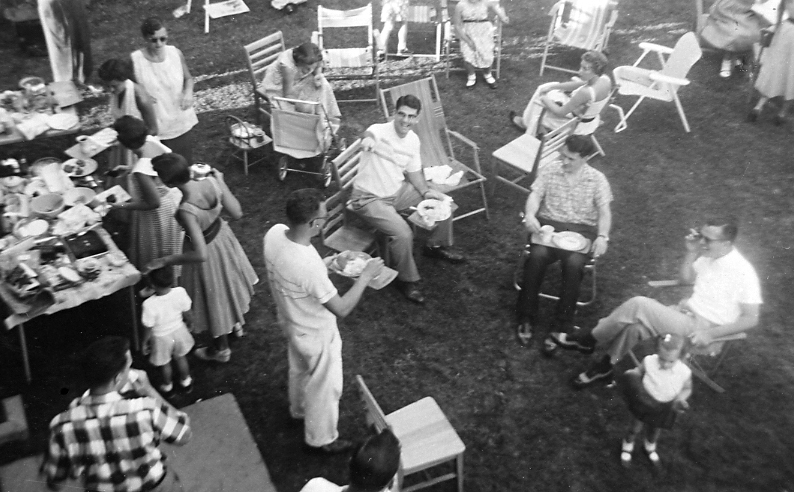
I was a kid in the fifties and it was a time when there was a real sense of community – definitely a “we” feeling in many ways.  Our backyards all connected into one big play field for all the kids in the neighborhood with the “woods” being the un-chartered territory beyond. We ran free, till dark, feeling like our own tribe of “we” with our own set of rules. Everyone pretty much looked out for one another –parents looked out for their neighbors’ kids, kids watched out for other kids, moms helped out other moms and dads the same.  We had a sense of community.

In the late sixties things began to change.  The Vietnam War was in full swing, along with the Civil Rights Movement and student unrest was building to the “Arab Spring” of its times. Our dreams were beginning to fade – our friends were coming home in body bags, our cities and neighborhoods were being destroyed during the riots of the late sixties, and our leaders were assassinated, one after another.  A shift was starting to happen.  We were becoming divided.  Fences and hedges started to divide our backyards, breaking up that once endless playing field.  We were starting to become more about “me.”

As a culture we roared through the 80’s and 90’s following a path as a society that believed that in order to win, others had to lose.  We became greedy, thinking only of our personal gain and caring little how that affected others. The divide among us has exceeded beyond what most of us would have ever thought possible.  We have made an art of  “ how to get nothing done” with our political system and no one is getting anywhere.  We are expending so much negative energy and if we don’t turn that around, we are all doomed.

I’m not a pessimist – just the opposite. I think if we can all just stop and flip our mindset into what we “can do”, instead of slamming the “other guy”, we just might be able to turn things around.  I see a younger generation, the 25-30 year olds who are thinking more in terms of the “we”, and getting away from the “me” mentality.  I have great hopes for this generation. We are at a turning point.  I’d like to look back at this time 10 years from now and say to myself  “I’m glad I did something.”

Add to FacebookAdd to DiggAdd to Del.icio.usAdd to StumbleuponAdd to RedditAdd to BlinklistAdd to TwitterAdd to TechnoratiAdd to Yahoo BuzzAdd to Newsvine

Licensing Video?

There are probably people who would argue with me as far as the practice of licensing video being the norm in the world of video production, other than the licensing of stock motion footage. Perhaps that may be true in some business models and certainly true in older business models, but I can tell you that has not been my experience.

I should clarify that I do not position myself as a “hired gun”– meaning a camera operator who turns over their footage at the end of the day. I choose to assume the role of producer and maintain control over my intellectual property or the finished video product. I cannot do this in the traditional motion picture industry but that business model is changing due to technology and the influx of indie filmmakers who are making their own rules and bringing their films to market themselves. And for the most part – I can’t do this in high-end broadcast spots when working with a middleman – or ad agency where ultimately their end customer maintains all rights.

However, the demand for video has skyrocketed in recent years and with that has created a new client base who are using video in new ways and on new platforms. I am establishing my own set of rules accordingly. One of them is licensing the finished product just as I did my still images. I can only do that with video productions that I have produced and hold the copyright to.

Typically, I will separate the licensing of my still images from the video product as well as the creative fees. I may be shooting both mediums on the same job but I handle the licensing differently. I have found that video has a shorter shelf life so I am not as concerned about the duration of the license (length of time) as I am with still imagery. But I am concerned about it’s “reach” which these days is global – thanks to YouTube.

Another thing I do is I make sure that it is stated in my contract and/or estimate that the license for the entire video production does NOT include permissions and/or licenses to any still images that are made from frame grabs pulled out of the video footage. Putting this up front in the estimate has actually proved beneficial because if a client does anticipate the need for still images – they will hire me to create stills – rather than take them from frame grabs.

We are living at a time where just about everyone’s business models are changing. So, if someone tells you that licensing video isn’t the norm – outside of the stock motion footage business – think again. What is the norm these days? It may be the precedent we are setting now.

Add to FacebookAdd to DiggAdd to Del.icio.usAdd to StumbleuponAdd to RedditAdd to BlinklistAdd to TwitterAdd to TechnoratiAdd to Yahoo BuzzAdd to Newsvine

The Problem With (Most) Video/Motion Workshops

This has been something that has been weighing on my mind for months now – ever since the seemingly “overnight sensation” of people giving video workshops as well as the growing number of still photographers that are feeling the need to take these workshops.

The biggest problem that I see with all the video/motion workshops that are out there is that they oversimplify video production and take the approach that the single independent still photographer can learn and do it all – produce, operate the camera, capture good audio and manage the post-production and edit.  I suppose to be fair – while it may be true that the independent still shooter can learn all facets of video production, that is not the best approach as far as setting up a viable business model for a video production company.

Video is a collaborative medium.  While I may be able take just about any video production from soup to nuts single handedly – I know that the production would suffer if I did.  I learned a long time ago to build a team of good sound people, editors and even camera operators that I can draw on to hire on a need be basis.  They make the production and me look good and that’s what keeps my clients coming back.  It also allows my business to grow because I can take on more projects. If I’m not entrenched in all aspects of the production. It frees me up to start production on another project while still in post-production of a previous project.  If you are a one-man band, you not only don’t have this option but you actually make yourself look small in the process.

Video and motion have many facets to them.  I advocate that the best business models are when one positions themselves at the top of the content creation ladder by overseeing the production of the whole and hiring the appropriate crew that will facilitate the process.  By recognizing the differences between this business model and the “solo” model that most independent photographers work under, you’ll have a much better shot of maintaining ownership of your work and creative vision as well as having the potential to grow your business beyond your own singular capabilities.

The other problem with workshops that over simplify the process of video production by promising that you will be up and running after a one day workshop is that they are centered around learning the gear and the software which changes by the month.  If you learn just the gear du jour and not focus on the business of video production you will be in competition with other independent dabblers and that’s a quick way to the poor house in terms of sustainability.

A week doesn’t go by when I don’t get at least a dozen calls or emails from still photographers who feel they need to get into video and are overwhelmed by the learning curve.  I tell them that the best thing they can do is NOT to try and learn all these skills themselves and that in fact that will only delay their entry into the video production, business if that is what they are after.  A better way is to keep your focus on your vision, apply that to a sustainable business model that will incorporate video and collaborate with others who will make you look good and help you grow your business.

Add to FacebookAdd to DiggAdd to Del.icio.usAdd to StumbleuponAdd to RedditAdd to BlinklistAdd to TwitterAdd to TechnoratiAdd to Yahoo BuzzAdd to Newsvine

Five Top Tips for Emerging Photographers

I talk to a lot of young aspiring photographers these days and invariably I am asked, “What advice would you give someone who is just starting their career in photography? – Is there a future? – Can I make a living?”

I don’t have a crystal ball but I do have 35 years of experience behind me but yet the enthusiasm and outlook of a 25 year old.  I remind myself of what I learned from my mentors when I was just starting out. One mentor, who shaped my career, was art director Adrian Taylor of Travel & Leisure Magazine. Adrian taught me a lot – about magazines, about the story, about style and taste and most importantly he gave me the confidence to believe in myself.  Adrian gave two young, naïve photographers, my partner and myself a chance and in return – we always gave it our all every time we set out to shoot a story.

Add to FacebookAdd to DiggAdd to Del.icio.usAdd to StumbleuponAdd to RedditAdd to BlinklistAdd to TwitterAdd to TechnoratiAdd to Yahoo BuzzAdd to Newsvine

With that said, I would not be where I am today if it had not been for mentors like Adrian Taylor and my greatest joy at this point in my life is to pay that forward to photographers just starting their careers.

  • Learn video – Video is no longer a “specialty niche” or in fact a separate genre at all.  In the very near future – which is already upon us – a photographer will need to know how to shoot both stills and motion – or partner with someone who does.
  • Stay true to what your inner voice is telling you.  For example, if your passion is to be a photojournalist, don’t listen to people who are telling you that photojournalism is dead and that newspapers are a thing of the past.  While “printed” newspapers may be dying out – journalism and photojournalism is not.  Don’t let others’ dogma determine what your path should be.
  • Collaborate with your peers.  When I was first starting out, photographers kept their clients, their techniques and their ideas to themselves.  But I have found that whenever I have collaborated with others – we all push the bar to the next level – each bringing their own strong suits to the project.  As a subject of my film Opening Our Eyes told me “We’ve got to shine each other up.”
  • You don’t need the validation of others to proceed with your idea and make it into a tangible plan and product.  As far as publishing and/or distribution is concerned – the gates to the kingdom are open and the kingdom is the entire world.  We are living in a time of empowerment for the individual and for a content creator that is profound.  If you are willing to do the work – the rewards are bountiful.
  • Act on the ideas that don’t go away.  It’s easy to let resistance sabotage you.  Resistance comes from many places – your loved ones, friends, your peers – but mostly yourself.  Stop talking yourself out of ideas and start acting on the ones that just won’t quit you.

I have made my work my pleasure in my life.  I have always found it difficult to separate the two.  When you feel that – you’ll know you are on the right path.