Fear and Innovation

One Fear illustration from Book of Fears
One Fear illustration from Book of Fears (Photo credit: Wikipedia)

We are taught from an early age to conform.  Think about it.  Schools emphasize conformity with rules, regulations and a system built on recitation and memorization. We are told there are two types of answers – “right” and “wrong” ones. I suppose when speaking about math and science, it could be stated that there are only two types of answers or conclusions – it’s either right or wrong.  But is that true?  Are there really only two types of answers?  Or is that merely a mechanism that makes it easier to grade tests and papers?

Is it any wonder that we are programmed from an early age NOT to be innovative or creative with our thinking?  Is it any wonder that we are afraid or fearful to take a leap and question something?  But what are we afraid of? Essentially, we are afraid to be wrong.  We are afraid to fail.  So what do we do?  We let our fear stop us and in doing so we stifle creativity and innovation.

We have been trained to obey rules, comply, sit and stand in an orderly fashion, “don’t rock the boat”, “be a good soldier”, and in the process we stifle innovation and growth.  The problem is that “system” left over from the industrial age doesn’t work anymore. The world has changed.  These days, people are entering a “workforce” that is no longer contained within geographic boundaries with an established set of rules and controls. It’s out of our control. Wow, that’s enough to make anyone afraid.

So, what do most people do when their world is changing and they are scared to death?  Sadly, they tend to desperately hold onto a system that is broken and no longer serves them well.  They spend enormous amounts of energy defending this broken system from the past because it’s all they know.

We can either succumb to change, and merely react to it little by little over time, until there isn’t much left of a life we once knew, or we can face our fears and take responsibility for our lives.  In order to do that, we need to change our outlook and identify what it is we are really afraid of.  Ironically, what most of us fear is failing, so in an effort to protect ourselves from this fear – we ultimately fail because we end up with a life that brings few rewards.

Listen to what Sue Bryce and Seth Godin have to say on this topic.
Storytelling – Words or Pictures?

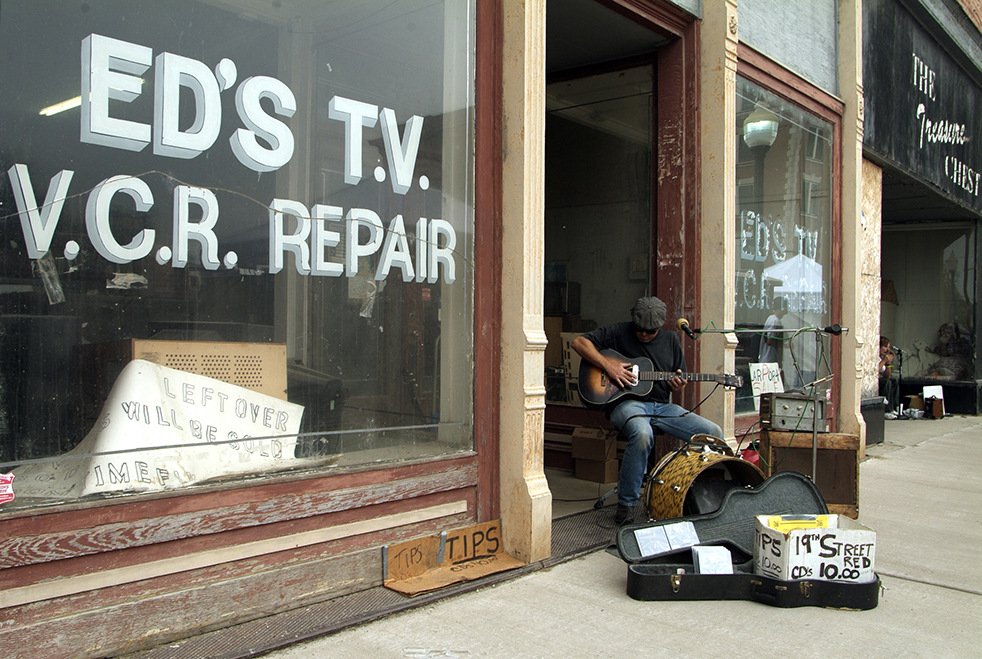
I have always been a visual communicator.  For over 35 years I have been making a living taking photographs for magazines all over the world.  I have always “seen” the world and captured its stories through visuals.  Somehow, it was far easier for me to communicate with images than with words.  Sidewalk performer King Biscuit Festival Helena, ArkansasBut it was also a bit frustrating for me because many times when I was photographing a person, I felt like I was leaving a portion of their story untold.

When I photograph people, invariably I spend a good deal of time talking and listening to them.  It’s this rapport that usually enables me to capture a more intimate photograph. For me, this has always been my favorite part of the “process”, yet I never had an outlet for my subjects’ words, other than through the captions of my photographs.

When I started producing documentaries, my conversations with my subjects finally had an outlet through their recorded interviews that became the backbone of the “script”.  Even though the script was not something that I wrote using my own words, I was instrumental in the process because I was selecting the words and giving them an order.  I was involved in the process and structure of screenwriting.

In recent years, I have become fascinated with story structure and screenwriting.  I have read numerous books on the topic of screenwriting and this past weekend I decided to immerse myself in an intensive 3-day workshop with John Truby.  John has taught some of the best screenwriters around.  I knew going into this, it was going to be a great and informative workshop, but I had no idea how rewarding it would be.  Essentially, John gave me knowledge of the “process” and the structure of storytelling to enable me to take an idea and turn it into a really good story.

I have come away from this workshop with a deeper understanding and respect for a well-written story.   We can all spot poor writing in a film.  It stands out.  Even the layman who knows nothing about “the process” or story structure can identify really bad writing.  The audience may not know why the story or the film doesn’t work – they just know it doesn’t and they’re not buying it.  Like any other craft, screenwriting has gone through stylistic changes over the years, but the fundamentals remain.  After all, telling stories is as old as time and there has always been a constant – and that is “the audience”.  Ultimately the audience will decide if a writer has done their job well.

I think those of us who are “content creators” in this era of multi-media communications need to broaden our understanding of all kinds of mediums in order to effectively communicate.  Many times, I see creatives become too narrowly focused on their one set of tools and in the process lose sight of their end goal  – and that is to deliver the message or story to the audience.  Ultimately, the audience will always let you know if you’ve hit the mark or not because they are looking at the “whole” and not the “parts” of the story.

Mentors and Lessons Learned

I recently visited with one of my mentors, Adrian Taylor who had been instrumental in my career.  I met Adrian when he was art director at Travel & Leisure Magazine.  He had just taken that job and relocated to NYC from San Francisco where he had been based for almost 20 years.  My partner, Tom and I had just graduated from Brooks Institute and were young eager photographers when we met Adrian. Looking back, I think that meeting was perhaps the most instrumental and fortunate bit of fate in our beginning careers.

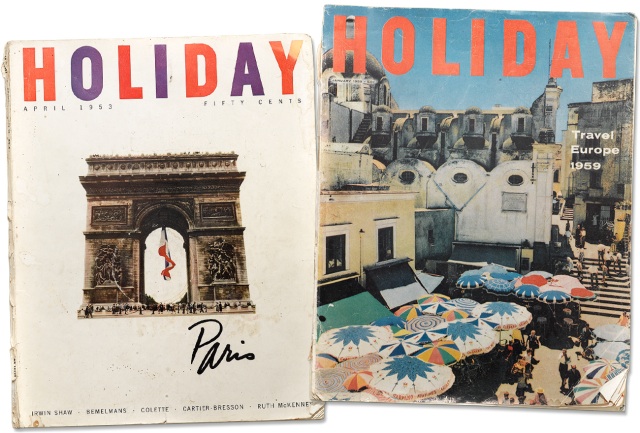
During our visit, Adrian started recanting his amazing stories of when he first got started as an art director.  He was also young and eager to learn, when Frank Zachary, editor of Holiday Magazine took him under his wing.  Adrian was reminiscing because Vanity Fair had just run a story about those early days of cn_image.size.holiday-magazineHoliday and the legendary writers and photographers who contributed to it at the time.  The contributors read like a who’s who:  John Steinbeck, Carier-Bresson, Slim Aarons, Fred Maroon, John Lewis Stage and so on.  At one point in referring to Zachary, Adrian said “he encouraged me.” Without missing a beat Tom replied, “That’s what you did for us too.”

I’ve been thinking about how important “encouragement” is for someone just starting out.  Learning technique and business tips from a mentor are very important things for young photographers to learn when first starting out, but I think perhaps the greatest gift a mentor can give is his or her encouragement.   If there were one thing that I can point to that I got from Adrian it would be just that.  He encouraged us to be the best we could be.  He believed in me so much that I couldn’t not believe in myself and that made me challenge myself and grow with every assignment.

Years later, I had a friend who became a mentor to me when I first started to write.  He too encouraged me.  At times he praised me and other times he was incredibly harsh with his comments, but I learned and I got better because of his encouragement.  He is no longer here, but his encouragement, as well as the lessons learned have played a part in my life. In fact, he gave me the courage to take on one of the most challenging projects of my life.

Mentors come and go in one’s life each making their own mark as they do.  If you should be so lucky to have people like this in your life, make sure you do one thing – take the time to make an impact on someone else’s life.  You never know what will come of that but no doubt it will make a difference, not only in that person’s life, but in your own as well.

I Don’t Want to be the Smartest One in the Room

My mom used to tell me, “You don’t want to buy the nicest house on the block.” She didn’t just say it when I was buying real estate, but used it as an analogy when she was dispensing other words of wisdom.  Maybe that’s why I grew up not wanting to be the “smartest person in room.”

When I was very young, I used to create characters that I wanted to hang out with. Hot air balloon floating overe Hunterdon County, NJ One was my imaginary friend Peteso who was a “newspaper boy” in China, doing dare devil stunts on his bicycle as he delivered his papers.  There were plenty of others, each one bringing something exciting to my more mundane life of a typical 5 year old child.

By the time I got out of college, I had traveled the world, building all sorts of relationships with people from many different cultures who had broadened my mind as to how I saw the world and myself.  I gravitated toward people who were NOT like me.

When I first began my career as a photographer, I had the great fortune of having  an incredible art director, Adrian Taylor as my mentor.  Adrian had a colorful career as an art director for magazines like Holiday (the original) and Travel & Leisure, which is how I connected with him.  Adrian took my partner Tom and I under his wing when we were first starting out.  He encouraged us by believing in us and he made me always want to put everything I had into an assignment and improve with each one.

We learned a lot from Adrian, but perhaps one of his greatest gifts was to include us in lunches, dinners and parties with some of the best photographers of that time – Arnold Newman, Slim Aarons, Pete Turner, Al Satterwhite, John Lewis Stage, Fred Maroon and countless others.  Being in the room or literally “at the table” with these legends and listening to their stories and advice was probably the best thing that could have happened to me. What I learned from these photographers is the kind of stuff you don’t learn at a photography school.  And it wasn’t necessarily things like business tips or photographic technique.  They talked about their passion and their ideas and it awakened me to the possibilities within myself.

I’ve been preparing a presentation that I’ll be doing for ASMP at the NAB Show (National Association of Broadcasters) next week. As much as I’m grateful to be able to share my knowledge at this prestigious conference, I have to remind myself that it’s only possible because I’ve lived my life, putting myself in situations and environments where there are people who are much smarter than me.  In fact, for me the best part of NAB is to sit in on some of the panel discussions with the movers and shakers of the industry and listen to what they’re talking about.

These days, when I fantasize, I no longer create make believe characters to hang out with.  Instead I imagine myself at a table, having a discussion with people who intrigue me on some level and expand my mind to a place it hasn’t gone before. And then I set out to make my fantasy come true.

Abundance or Scarcity – What’s Your Choice?

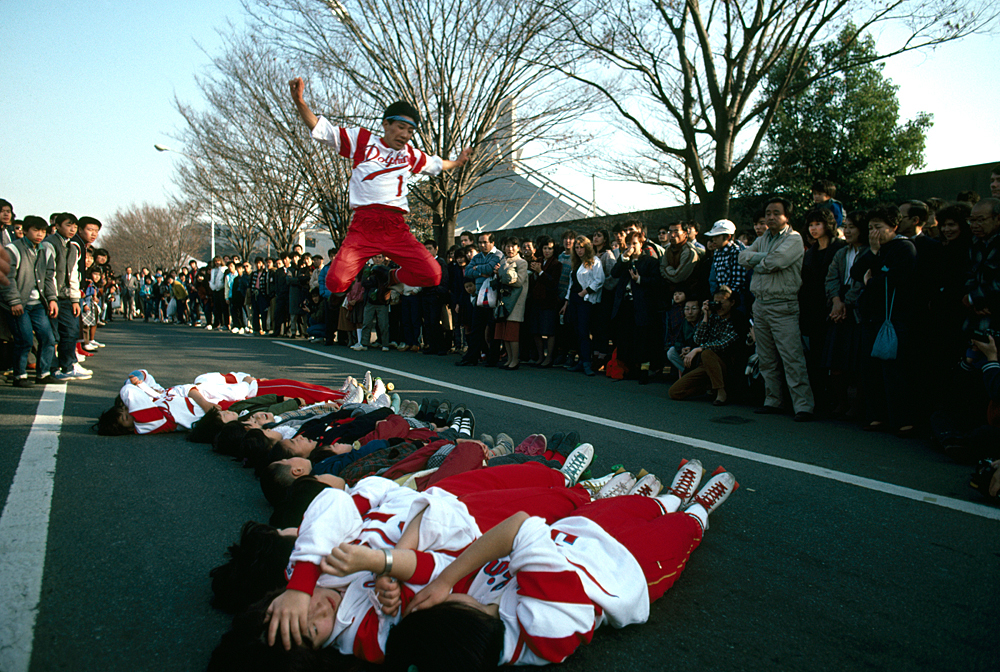
I read Seth Godin’s blog this morning and as usual, he was right on target with his observations of our culture and the shift in our economy.  We are moving out of the “industrial age”, an economy based on scarcity and into a “connection economy” Roller skaters jump over teammates, Tokyo, Japanbased on abundance – abundance of  “choice, connections and access to knowledge.”

In our new “connection economy”, we can connect with more people and “leverage our skills at a higher level.” This is leading to two races:  a race to the bottom which is forcing us to lower our prices, because it’s easy to find plenty of people who will do something cheaper or a race to the top which gives us the opportunity to use our new connections, resources and knowledge and become the one “they can’t live without.”

“The connection economy doesn’t create jobs where we get picked and then get paid; the connection economy builds opportunities for us to connect, and then demands that we pick ourselves.”  It’s no longer sufficient to just deliver a job at a fair price; a “connection economy” is all about standing out and being remarkable.

We need to invent – not duplicate.

So how do we stand out in a world of noise?  I believe we need to be authentic and true to ourselves.  We need to take the ultimate risk and listen to that voice inside because that’s the voice that should be heard.  We need to be vulnerable in order to race to the top.  At the end of the day, we are all human and we can spot a phony or an imitation when we see one.

Most of all we need to remember, we are human beings with basic human needs  – one being the need to connect with our fellow human. We don’t connect merely on devices alone – you connect by telling your “story”.   If your story resonates with others – it spreads. Today that means it gains traction quickly and spreads globally.  But you don’t connect with people by doing the same things as everyone else or regurgitating the same information.  You make connections because people are human and they’ll always spot “the real deal” in a crowd.

So be vulnerable, be different, be brave enough to stand out with a fresh approach to old problems and you won’t need to race to the bottom along with others clamoring for those “scarce” jobs.  You’ll be the one carving out the opportunities and picking yourself.

How Video Has Helped My Still Photography Business

After a slow spell, which I can’t say I ever get used to after 30 plus years of freelancing, the phone started ringing.  The calls were all in regards to still photography assignments.  Having been a still photographer for most of my life, that wasn’t unusual, but what was interesting was that I beat out my competition – other still photographers – because I knew video.

Times have sure changed. When I started exploring the medium of video, over 15 years ago, I didn’t abandon my still photography10Ft.WaveI simply added another skill set.  Most of my clients over the years have hired me to shoot one or the other, and sometimes both.  But what I see happening now is that as print moves to electronic delivery, my still photographic clients are also looking for a “photographer” that can shoot video components on a still photography assignment.  They need multimedia content for mobile devices and online platforms that cry out for movement and sound.

I don’t think of myself as a “still photographer” or a “videographer”.  First of all, I absolutely hate the word videographer because it smacks of a dated notion of what video used to be.  I think of myself as an “imaging professional” or sometimes a “new media producer” or sometimes just a “storyteller” because that’s what I do – I tell a client’s story, or deliver their message to their targeting audience.  I don’t define myself by the tool I use.

With convergence happening not only in the cameras we shoot with but in the media we create, I will opt for the “tool” or camera(s) that enable me to tell the story I need to tell, in the best way possible.  I’ve been thinking that way since I first forayed into video.  It’s nice to know that now my clients are thinking that way too.

Creating Inspiration

I’ve gotten away from writing lately, maybe because I’ve been really busy, and maybe because I’ve felt uninspired.  That’s a terrible feeling for me, it’s as if I’m void of any “feeling” at all.  It tends to happen when I’m spending more time doing the things I don’t want to do instead of what I feel I’m here to be doing.

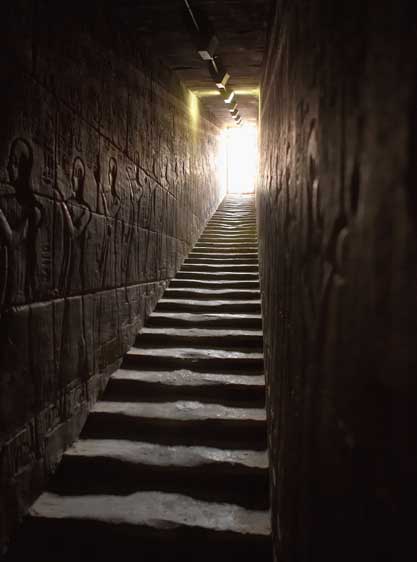
When I woke up this morning I thought, “anything can happen today”.  Temple of Horus, Edfu, EgyptThat thought in it self makes me want to get out of bed. I start thinking about the endless possibilities that can happen on any given day.  I grabbed a cup of coffee, checked my email and read Seth Godin’s blog and it was like it was written for me.  It was called “The moment of highest leverage”.  He was talking about moments when you’ve either lost something or won – when it feels hopeless or when it appears to be a lock.  He said that these were the times you can choose to do what’s in your heart and bring your real work to the world, instead of the lesser version that you think the market wants.

I’ve been struggling with feelings of hopelessness after a slew of rejections and misses. I knew I needed two things:  a change of scenery and some insightful conversation.  I went to Hawaii on impulse and got both.  One day, my good friend PF Bentley was showing me the “film” that he made for National Geographic photographer Dewitt Jones.  Dewitt has been shooting extraordinary images for the Natl. Geo for over 40 years and he had hired PF to create inspirational corporate training videos.    The “film” segments were a combination of Dewitt speaking about his life and his career in an inspirational way and b-roll of him shooting in beautiful Hawaiian settings interwoven with his amazing still images.   The piece was so touching; it brought tears to my eyes.  When it was over I started crying and I apologized to PF.  He said, “that’s ok, I know I’ve done my job right”.  PF and Dewitt had done theirs jobs right and they had inspired me.

I’ve had two speaking engagements and a screening of Opening Our Eyes this past weekend and in each situation, I was feeling good and that I had something to say and to share.  It must have come across because at each venue there was at least one person who I inspired – I could tell – I could feel it.  There was one woman at the screening, who had found out about it through one of our subject’s blog, Maggie Doyne. After the movie was over and most people had gone, I talked to her for a long time and I could see that the film had inspired her greatly.  I knew that I had done my job right and it was the best feeling in the world.  It reminded me of what is most important to me in my life and that is to create awareness with my still images or movies and move people or inspire them.

I don’t spend a lot of time on Facebook these days but I was looking at my news feed at the end of that long weekend and I noticed a photo that Ethan Browne (Jackson Browne’s son) had posted on his page.  It was a photograph of Jackson with one of his fans and Ethan had commented underneath it  “proud of   my pops – he stokes people for a living”.  I smiled and I thought, “That’s what I want to do”.

Words of Wisdom For and From Young Photographers

I’m on the advisory board of the YPA (Young Photographers Alliance) and while there are times that I feel I am on one too many boards and spreading myself too thin these days, it’s nights like last night that make it all worthwhile.

Last night was the Mentee/Mentor Exhibition and Awards Ceremony at the Calumet Gallery in New York City.  I must confess that I really didn’t want to go for a couple of reasons:  I needed to get up at 3:30AM to leave for the airport (this morning) and I’ve been in a bit of a funk that I can’t seem to shake myself out of and I didn’t want to be one of those negative cynical people bringing the “mood” down.  But I’m also one of those people that everyone can count on – so I did my best to rise to the occasion.

Before the affair, there was a meeting with the young photographers (mentees) and the mentors to receive and give feedback.  One of the students said that they wished some of their time with their mentors had been spent discussing the “business” of photography – something she didn’t feel she was learning in school.  I pointed out that there was a lot of information about business practices on the ASMP website, including contract shares and encouraged the students to check it out.  And then I told them that the best “business” advice I could give them was to be true to themselves and that if they did that and didn’t stray from their “purpose” that would set that apart from their competition because there is only one “you”.

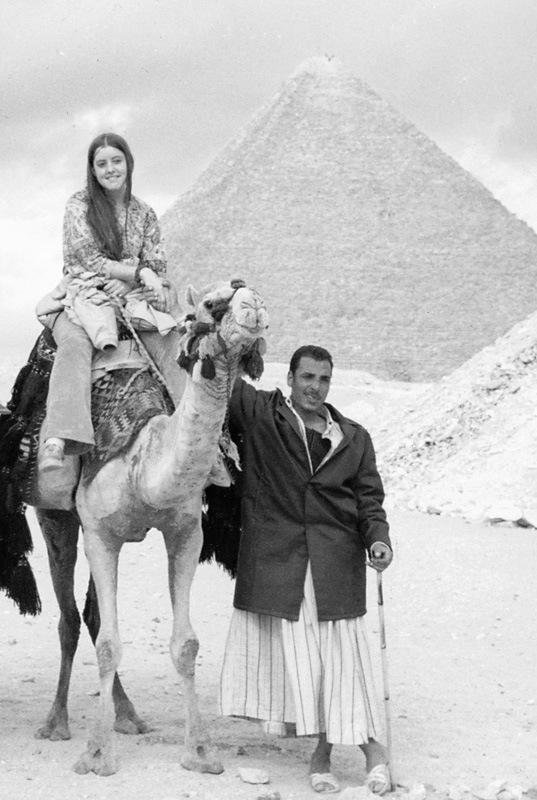
And then I relayed my “Jay Maisel” story as I have dozens of times. Gail at the Great Pyramids 1971 I had gone to see Jay when I was just starting out.  My heart and my passion was in photojournalism, but countless professional photographers had told me that I couldn’t make a living doing that kind of work – so I when I went to see Jay, I had my “commercial” portfolio with me, which I thought was pretty good.  He looked at it, pushed it back at me and said, “ This is crap – this isn’t what you want to do is it?”  I said no and told him that I wanted to be a photojournalist.  He asked me how old I was to which I replied “25 years old”.  He looked me straight in the face and said, “You’re 25 years old and you’re already making compromises”.

I told the kids that it was a turning point in my life and that whenever I strayed from my purpose – and felt it – over the last 35 years – I remembered Jay’s words.  Then one of the students asked me a question that I hadn’t ever been asked when telling that story over the years.  She said “What was it about your work that made him think your heart wasn’t in it?”  I hadn’t really ever thought about that – I had always focused on what I wanted to do instead.  But when she asked that question, I had to reply, “I really don’t know”.

I’ve been thinking about it all morning on my way from Newark to San Francisco and I wonder – was it the work that felt empty or impersonal?  Or was it the way I looked when I handed it to him?  Or was it both?  I’m waiting for my next leg to Honolulu and then on to Molokai to meet up from one of my mentors, PF Bentley who taught me everything I know about how to tell a story in motion. I’ll have another 7 hours to contemplate that question and even if I never come up with the answer, that question pulled me out of my funk.  Just in time to once again put my head in an “open” place to learn and get back on purpose.

It’s All About the Story

I’ve said it a million times “It’s all about the story”.  If you don’t have a good story to tell – and tell it – you’ve got nothing.

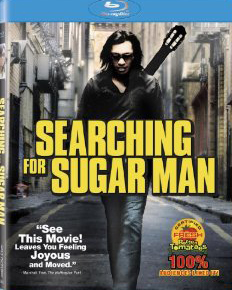
Last night I watched the documentary Sugarman“Searching for Sugar Man” and all I can say is WOW – it is probably the most incredible story I have ever heard in my life.  It’s the kind of story that’s almost to good to be true and yet it is.

It’s a story about Sixto Rodriguez, a Detroit folksinger who in the early 1970’s recorded a couple of records that were brilliant and “well received” but – they didn’t sell.  Rodriguez went on to live a simple life as a laborer, spending his time demolishing abandoned buildings in a city wracked by ruin and hard times.  Little did he know that on the other side of the world, in South Africa, he was a legendary music icon and an inspiration for generations who grew up with Apartheid. 

Back in the early ‘70’s, a young American woman went to South Africa to visit a friend and took with her one of Rodriguez’s records.  At that time, in South Africa, you could be put in jail for just listening to records like Rodriguez’s. It was a heavily censored society and ripe for rebellion.  He became a cult hero, bigger than Elvis.  Rumors grew up around this legend where it was said he committed suicide in front of his audience, at the end of a concert.  No one could find any information about him at all, because nothing had been written about him, unlike many of the popular rock musicians of his day.

Meanwhile, back in Detroit, Rodriguez had no idea his music had touched millions.  It wasn’t until the 1990’s, that a few die-hard fans tracked him down using cryptic clues from his lyrics and the Internet.  They finally found Rodriguez alive and well in the city of Detroit and brought him to South Africa.  What transpired was a series of concerts to sold out stadiums for this folksinger who had lost sight of his musical dreams.

It’s one of the most powerful inspiring stories I have ever heard.  Almost like parallel universes colliding to complete dreams across the divide.  Of course it took another 10 years for a filmmaker to bring awareness of this story in this incredible film.

When I was at the Traverse City Film Festival, I saw and met Rodriguez at the opening night outdoor party.  I couldn’t get into the screening because it was sold out and I had to wait until it was available on DVD.  It was worth the wait and it’s a film that you shouldn’t miss.

If you want to know what Rodriguez is doing now – well you’ll have to watch the movie.

PS I just bought his CD that was released in ’71. You couldn’t find in America before this film was released.  Like Orson Welles said “If  you want a happy ending that it depends on where you stop the story”.

Photographers – Grow or Die

I’ve been a professional photographer for over 35 years.  While some may look at that sentence and think I must surely be “over the hill” – others may look at that and say “wow, she must have been doing something right, to stay in business that long”. I suppose, it all depends on the outlook of the person.

Personally, I truly believe that the secret to longevity in any career field is to be open-minded as to how they define themselves.  One thing I have never done is define myself by the tools I use. Just because one has expensive camera gear, it doesn’t make them a “professional photographer”.  If that was the case, then who are you if you have a camera that happens to shoot both still images and video?

I’m really amazed when photographers define themselves by the tools of their trade.  I think with the way things are going in terms of how technology continues to affect our industry, if a photographer defines him/herself in such narrow terms – it’s the kiss of death.

When technology enabled me to explore video production without having to make a prohibitively investment in expensive “tools”, the creative part of me wanted to take full advantage of those new opportunities that were coming my way.  After all, I’m a storyteller and I shouldn’t have to limit myself to one medium, but rather choose the

Category:Wikipedia requested photographs of ph...
(Photo credit: Wikipedia)

right  tool (camera)  to use that best tells the story that I need to tell.  Sometimes that means delivering the message in video and sometimes the story is better told with still images.

Because I was an early adaptor of video (at least from a still photographer’s point of view), many of my peers equate me with just shooting video.  Many assume I’ve abandoned still photography, which couldn’t be further from the truth.  The real truth is, my clients see me as an imaging professional, who is able to deliver their message with the medium(s) that is best suited for the job.  These days with print publication giving way to electronic delivery, clients are delighted that I am able to fulfill their needs because I am proficient in both video and stills and most times they need both.

My curiosity for exploring a variety of mediums and tools has not only kept me in business – it’s kept me from getting jaded and stale. I am a photographer.  I am a director of photography.  I am an imaging professional and am thrilled to still be in business at a time when we have so many tools and options in how we are able to deliver a visual message.