I’m Not Cut Out For That

Systems thinking about the society
Systems thinking about the society (Photo credit: Wikipedia)

Anyone who has been reading my blog knows that I’m not the sort of person who would think or say “I’m not cut out for that”.  Most times, I tell myself that anything is possible and set out to face my fears.  But, there have been times when I’ve had to question taking on an assignment or assuming a role and ask myself, if in fact, I’m cut out for it.

There are generally two types of scenarios that mandate a decision to be made:

  • When I am listening to my inner voice that is prompting me to do something.
  • When I am listening to family, friends or colleagues who are encouraging me to do something

I’ve learned the best thing for me to do in either scenario, in order to make the right decision is to think of it in terms of what is the right fit for me. Is it in harmony with who I am?

Right now, I am working on a marketing plan so I am not only looking at what markets to target in terms of where there is a demand but also in terms of which markets I am suited for.  That doesn’t necessarily mean I’m thinking of what’s in my comfort zone, it means that I am thinking about which markets I can provide the most value to. If I do it right, everybody wins.


Ten Things Photographers Should do in 2013

Be optimistic – I’m going to start with the hardest one of all, because it’s really difficult to be optimistic these days.  But I find that if I can maintain a positive attitude and turn my thoughts to what is possible, I actually open myself up to more opportunities in my life, instead of creating more roadblocks.

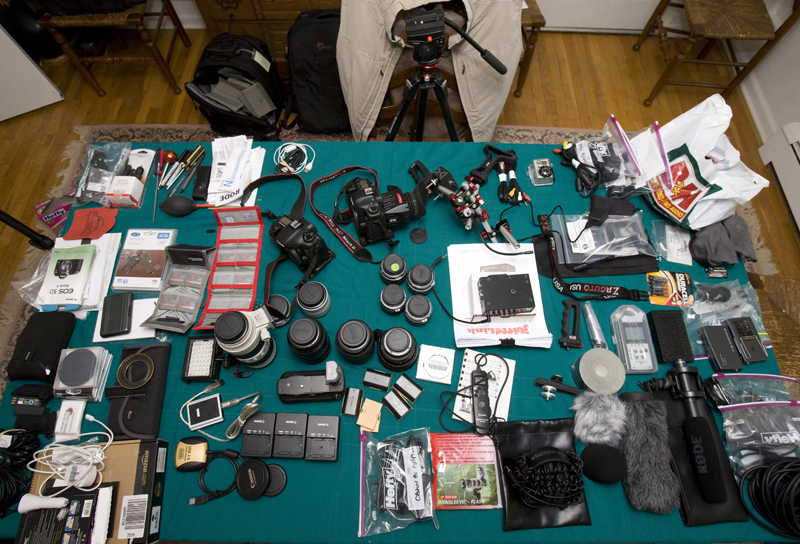
Be open to possibilities. – Be more flexible in how you perceive things and who you are. 500x_housecanon copyChange is always happening, but it’s usually gradual.  Most people don’t take notice until “change” forces their hand to act.  It’s always better to be proactive than reactive so embrace “change” as an ever-present fact of life that creates opportunities for those who are open to seeing them.

Collaborate – Photographers are very independent creatures and collaboration is not part of their norm. As the “photography” business continues to change, photographers will find that collaborating with other artists will make their own businesses stronger.

Diversify – I’m not quite so sure why so many photographers are so rigid in how they define who they are and what they do.  Having a “style” is great, but the trick is to not to be so narrowly defined by that style, so that when styles change, you don’t find yourself obsolete by your own design. It’s kind of like being type cast, where your audience or your clients can only see you in one way.

Concentrate more on “the story”– I had the opportunity to speak with a lot of still photographers and filmmakers this past year and I began to notice a difference in the conversations I was having with each.  Most times, filmmakers would be telling me a story, whereas still photographers would be telling me how they executed a photograph, or essentially telling me the “back story” of the creation of the image. It’s all interesting but “the story” is the bottom line – if that doesn’t come through to the viewer – the rest doesn’t matter – including how it was executed.

Be authentic – be true to yourself.  That means that you have to trust your gut instead of second guessing it.  This is hard, especially when things don’t always work out the way you had hoped.  Step away from the “noise” and listen to the voice inside.

Fail more. – Rejection is a tough pill to swallow but it usually means that you are either pushing yourself to try new things, you are too far ahead of your time or it just wasn’t meant to be.  If you look at successful people you’ll see that most have had failures and rejections in their lives but they stuck with it – instead of letting failure defeat them.

Self-Initiate more projects. – I don’t like to call non-commissioned work, “personal projects”. That co notates that there is no monetary value and these days, just the opposite could be true.  With more and more lopsided contracts  being presented to photographers for commissioned work, a photographer has a better chance to make more money and keep ownership of their work by creating self-initiated projects.  But they need to be prepared to work hard.

Forget about the past except to learn from mistakes. – You can’t change the past but you can learn from it and then, move on.  Look toward the future but make sure you take time to enjoy the “now”.

Realize that in the scheme of things, you are just one small speck in the universe. – I think we all get way too stressed about things that really don’t matter and we let those things control our life.  When we become more conscious of that, we really begin to live life.

10 Ways I’m Making the New Year More Analog

I’ve been thinking a lot lately about what I miss from my “analog” days. I’m far from being a Luddite; in fact if anything I’m just the opposite, continually embracing technology and using it to grow creatively. I’m having the time of my life right now exploring a variety of mediums and I’m amazed at the global reach that I have as an artist and a member of the human race.

It’s a powerful time to be alive, because the world is literally at our fingertips. But I’m finding that as much as technology has “connected” more of us together, these “viral connections” are vastly different than our “analog” connections.  I’m not just referring to how we connect with each another, but also how we connect to ourselves and figure that out amongst all the noise.

So, I got to thinking about how I could be more “analog” in the New Year. Here’s some things I came up with:

  • Cut in half, the amount of time I spend interacting with people on social media platforms, and spend that time instead on personal interactions.
  • Get together more, face-to-face with clients, colleagues and friends.  Gosh, I think this is what I miss the most – people just don’t make the time for this anymore. And chatting via text, email and FB isn’t the same.
  • Write more letters, and send printed invitations and cards in the mail rather than always electronically.
  • Go online less often and have a specific purpose or task in mind when I do.
  • Make images the best I can in camera.  Just because I can change an image digitally in post – doesn’t mean that I always need to do that.
  • Create something printed – a photograph, a portfolio, an exhibition or a book.
  • Read more printed books on the couch, the porch, the beach or in bed.
  • Read a printed newspaper on a Sunday morning. ( If I can find one.)
  • Walk more in nature instead of on the treadmill.
  • Stare at a fire and look up at the sky more often.

Anyone else have suggestions on how to live more analog?

The Difference Between Photographers & Filmmakers

Red carpet of the Palais des Festivals et des ...
Red carpet of the Palais des Festivals et des Congrès during the 2001 Cannes Film Festival. (Photo credit: Wikipedia)

I am winding down after a couple of intense months, traveling the film festival circuit with my documentary Opening Our Eyes.  I have enjoyed every bit of it, but it wore me out – in a good way.

I find that when I am “out there”, I get richly rewarded in many ways.  I think what I enjoyed the most about the film festivals, and what was the most beneficial to me, was the opportunity to dialog with other filmmakers.  I learned a lot in the process. But what stood out to me was how different these conversations were from conversations that I have with my still photographer colleagues.

Many times the conversations I was having with other filmmakers were centered on a story.  That should come as no surprise because that’s what filmmakers do – they tell stories.  But filmmakers tell stories “cinematically”, so when they are talking about the story that they are currently working, or a story idea they want to pursue, they speak in great visual detail so I see a very clear picture in my head.

My conversations with my still photographer peers, in terms of craft, are more apt to be about how they created an image.  Photographers generally talk more about the role they played in making the photo, like how they lit it or the gear they used.  Sometimes, photographers will tell me a story about what they went through to make a photograph and those stories can be very interesting and entertaining, but again the conversation is more about the execution of the image – than the story of the image.

Lately I’ve been trying to figure out how and where I fit into the mix. The truth is, I remain in the middle – a true hybrid.  I realize that ever since I can remember, I have always seen stories playing out cinematically in my head, so I guess I have always had a filmmaker’s mind even though it lay dormant for most of my professional career.  On the other hand, as a still photographer and one who has been an observer of life through my camera I see things like light and composition.

So, I am a true hybrid and I can see my still photographic “eye” in the motion work I create. Others who have seen my film have remarked about the composition and lighting, because it does look different and stands out from other documentaries.  Sometimes that has been a good thing and sometimes not.  Regardless, it is what it is – a creation from a still photographer’s eye applied to motion.

Embrace the differences – see what happens.

“Old Enough to Know Better but Still Too Young to Care”

I was talking to a friend recently about getting “older” and how it really sucks on the one hand but on the flip side, I’ve never felt more liberated in my life. He laughed and  said that I reminded him of a line in an old country/western song – depicted in the title of this post.

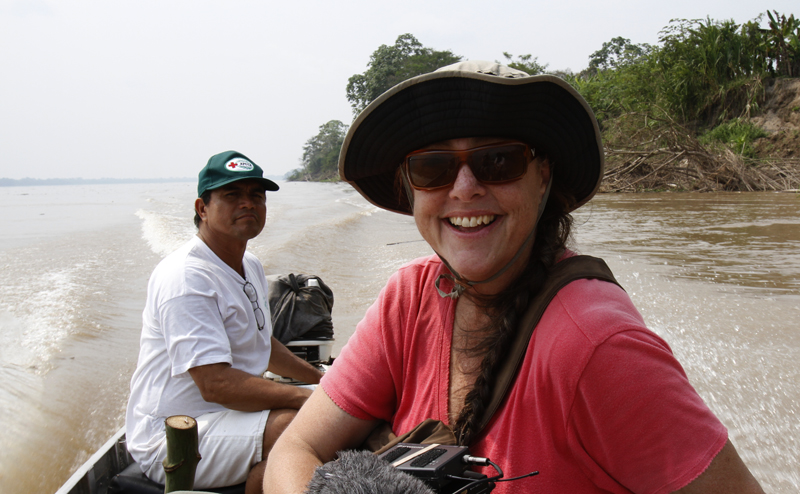
On the Amazon River, Peru

It’s pretty accurate, at least in terms of who I am.

I have never been one for “labels” of any kind.  I’m much more interested in what’s going on in the “inside” opposed to what someone is displaying on the outside.  So much so that when my daughter was younger, if she didn’t come home from school right away,  I would worry and think that I wouldn’t be able to describe what she was wearing if the police should come asking.

Our American culture seems to be obsessed with labels, more interested in the packaging and fizz than the substance.  “Older” people are invisible, dismissed and ignored as being too set in their ways, dated, and useless, when in fact some of the most interesting people I have ever taken the time to talk to, were ones that most folks seemed to overlook, simply because of their “packaging”.  I was lucky that I came to that realization at a very young age, when an art director, who was a great mentor to me in my early years, introduced me to the legends of photography.  They were all “old”, at least to my young eyes, but I quickly realized that age had nothing to do with how they saw the world.

It amazes me when seemingly intelligent people use catch phrases to describe others and don’t even realize that in the process that they are the ones with “narrow” sights and they would do better to open their eyes and see beyond.  My eyesight has gotten worse as I have aged, but at the same time, my vision has gotten so much better.

When I was younger, there was a popular saying “don’t trust anyone over 30”.  I’m glad I never really bought into that notion, because I would have been the one who was shortchanged. Don’t judge people because of gender, color or age or the type of car they drive.  Take the time and the energy to look past the packaging and really see.  You’ll probably be surprised that ignorance, narrow mindedness, fear, and pessimism comes in all sexes, shapes, sizes and ages.

“How old would you be if you didn’t know how old you was?”

Satchel Paige (1906-1982) Baseball legend who continued his successful career well into his 60’s.

The Power of Film in Making a Difference

When I set out to make a film about individuals on six continents who were making a positive difference on our planet, I didn’t set out to save the world.

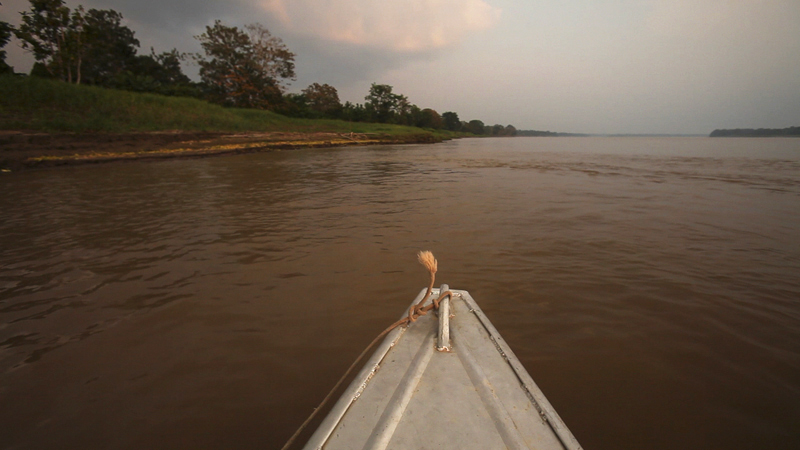
Amazon River

That would not only be something impossible to achieve, but it would diminish what I could do. And in fact, if I had set out to attain such an overwhelming feat of saving the world, I may have quit before I even got started – out of pure frustration.

But I do know the power of what a film can do.  I know I can use my craft and my tools in my own small way to make a difference.  And I know that by breaking down tasks into small actions; they add up to some very big accomplishments. Even with no backing, little funds and virtually no help, my daughter and I created a film that is doing exactly what we set out to do – inspire and move people to action to do what they can do to make our planet a better place.

All too often, we over think things.  Big productions, big money, celebrities and everything else that shouts out to us on the airwaves and the Internet dazzle us.  We start to believe that anything that isn’t grandiose isn’t worthy at all.  It’s a pity because in our attempt to gain perfection or notoriety – we shortchange ourselves and everyone else on what we could have accomplished.

I’ve seen a lot of “small” films over the last few months as I travel from festival to festival with my documentary, Opening Our Eyes.  While many of these films are “small” – or at least deemed small by some – they are powerful in every way.  Sometimes, there may be only 10 people in the audience and I think what a shame, that these powerful films won’t be seen by the masses.  That is changing though, as filmmakers have access to new tools and platforms that can take their small films global.  I’ve witnessed that first hand.

As consumers we need to start taking notice of films, books and photographs that don’t have millions of dollars or stars behind them.

As filmmakers we need to stay true to ourselves, believe in our dreams and take advantage of the power of the age we live in to not only make films that create awareness but to get them seen on a global scale.

I hope I never lose sight of what’s possible through the power of film and how photographers and filmmakers can use their craft to create awareness and make our world a better place. These days, with a lot of hard work and determination, the individual has the power to make a difference globally.  We live in an amazing time – take advantage of it.

How to Become a Still and Motion Hybrid

I’ve been living the life of a still and motion hybrid for the last 13 years.  Sometimes my work is weighted toward still imagery and sometimes more toward motion.  These days, it seems more like the two mediums have merged and my time is evenly balanced between both.

This past month I’ve talked to a lot of filmmakers as I’ve traveled around the film festival circuit with my film, but I’ve also talked to lots of photographers at Photo Plus Expo and other photographer gatherings.  I started to notice a difference in the conversations I was having with still photographers and filmmakers.  Filmmakers were usually talking about “the story” and the conversations were more like listening to the unveiling of a movie.  Still photographers, tended to talk more about how they executed “the story”.

When I talk to “hybrids”, the conversations are a blend of telling the story, with a bit of “execution” thrown in. I’m starting to notice something new in visual communications with a new aesthetic developing.  This recently became very apparent to me when I was asked to be a juror on the 1st AP-AI Motion Arts Awards.   I looked at over 50 entries and what I saw was a very unique look emerging.  What I saw was motion through a still photographer’s eye and it was incredibly exciting.

As technology continues to change how society communities, I truly believe that we as photographers need to think of ourselves as more than just someone who shoots still imagery.  As print gives way to electronic delivery, photography will take on a broader meaning as to how it’s executed.

Some things to keep in mind going forward:

  • Hang around with people who are embracing change.

From Seth Godin:

“Who you hang out with determines what you dream about and what you

collide with.

And the collisions and the dreams lead to your changes.

And the changes are what you become.

Change the outcome by changing your circle.“

  • Stop thinking of video or motion as a separate market
  • Stop giving yourself reasons NOT to do something.
  • Say YES more often
  • Remember the “tools” and the “medium” are just a means to an end. We have a whole array of new tools to create with and platforms that allow us to communicate globally.  Get excited about that.

Your Inspirational Heroes Are Just Like You

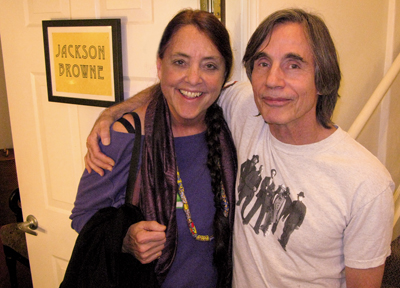
Today, October 9th is the birthday of two people who have been very inspirational to me over the years – Jackson Browne and John Lennon. Lennon would have turned 73 years old today if he had not been gunned down in NYC when he was only 40 years old.  I admire both of these men, not only for their incredible skills in writing but also for their activism and courage to stand behind their beliefs.

I had the honor of meeting Jackson after one of his concerts last October.  It was a memorable moment. Jackson had allowed me to use his song, “Alive in the World” in my film, Opening Our Eyes and it had been arranged for me to personally thank him after the show. He was warm and generous with his time and we talked a bit about the blues – a topic that continues to surface in my life.

The blues (music) seems to be the foundation of many of the musicians that inspire me. The blues is authentic and that authenticity comes through in the lyrics of both Jackson and John.  Throughout their songs, we get a very clear idea of how they feel and think. They share their frailties and inner thoughts as we see them as real people just like us.

I suppose a lot of us think it’s too risky to be so open with our thoughts and our hearts and choose instead to bury our  dreams, desires and fears inside the deepest recesses of our minds. A lot of angst can come sometimes from remembering things that have happened in our past – things we did or wished we had done – things we said and wished we hadn’t said – you know all those fleeting thoughts that seem to haunt us at times.  None of us can change the past – it has already happened. But we all can choose how we let our past affect our present and our future.

Some of us try to “block out” the painful things that have happened in our lives. I have found that I can’t really succeed in doing that because there will always be something that will trigger a memory. In fact when I try to “close myself” off like that, it actually just continues the pain, because I’m expending negative energy, trying to “block” it out . Instead, I try to channel those thoughts when they come, into more positive energy by reminding myself who I am, not how someone or something made me feel.

Everyone has ups and downs in their lives – it comes with being human.  That’s why the music and lyrics of Lennon and Browne resonate with their fans – they can relate- as humans. I think as creative people we can learn from these two musicians – how to take chances and how to be true to ourselves and follow our own path – regardless of how unconventional it may seem to others .  When we are true to ourselves, we will find that our future direction will unfold as it should – we just need to get out of our own way.

“You don’t need anybody to tell you who you are or what you are. You are what you are!” John Lennon

Stressing the Story

Years ago, a colleague wrote an article about me for a trade magazine and entitled it “Gail Mooney – Past and Future Storyteller”.  Before that was written, I had never really thought of calling myself a storyteller, even though I had lived my entire life pursuing “the story”. In fact, it was because of my infatuation with people’s stories that I became a photographer and filmmaker. The pursuit of the story is what has driven me in making my own choices in life

But having a love for the story is far different than being able to tell a story. Regardless, if the story is told through still images, movies, songs, poems or books, the story must come through in order to resonate with an audience. I’ve been reading a lot about screenwriting lately, and how a story is written and structured for the movies.  Certain things must take place within the structure to make a story work.

  • Characters should be well defined and developed in the first third of the film.  The audience will need to get enough information about the characters in order to care, one way or another.
  • Stories should have conflict and contrast – just like life.  In every good film there is usually a low point right before a character prevails or a situation turns itself around.
  • Cinema has a language all of its own in how it tells and drives the story. The choice of lens or the way the camera is moved and from what angle, conveys to the audience a feeling. Make conscious choices and decisions as to what cinematic tools you use and why.
  • They say editing is the last line of defense for the story.  Every cut an editor makes has a profound effect on how the audience will feel.  An editor is able to tell a story in a hundred different ways, based on what clips they choose, how they cut them together and their selection of music.

I was very fortunate when I first started learning video.  I took the Platypus Workshop with PF Bentley and Dirck Halstead and they always stressed  “the story”.  I remember that I couldn’t even begin to shoot my project until I got my “commitment” (story) ok’d by Dirck or PF.  In order for them to commit to my story, I needed to commit to it first and they knew I wouldn’t be able to do that until I knew the story well enough to tell it.

Knowing and communicating your story in any medium simply means always being present in what your doing.  When the choices and decisions become obvious and effortless, then you know that you are telling the story you meant to tel

Forcing Accountability

Yesterday was one of those days that I had a hundred things to do and only a few hours to do them.  I had to give final approval of an ePub I was wrapping up, package and send out exhibition Blurays and posters to film festivals that I have been invited to and finish a video job I was editing, all before heading into NYC to moderate a panel discussion on video for the NYC chapter of ASMP.  My mom used to say, “If you want something done – ask a busy person”.  I never did understand that when I was younger but I know now, that the busier I am – the better I am with utilizing my time.

I was also fine-tuning the presentation that I was going to be giving to the students at Brooks Institute next week. As an alumna of Brooks,

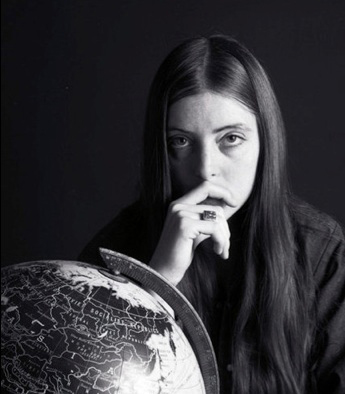
Gail Mooney as a student at Brooks Institute
© Chad Weckler

I was honored when I was asked to speak. I was also taking this responsibility seriously and I was getting a bit stressed over it, which is uncharacteristic for me.  I’m usually very comfortable with public speaking.  I knew I wanted to talk about the value of “community” and how being part of the ASMP has played into that, but I didn’t want to sound “canned”.  I knew that I needed to personalize that message and really boil it down to what that has meant to me.  But I also knew I needed to come off as someone who is still relevant and not be perceived by the students as just someone whose their mother’s age. I needed to show my spirit inside that hasn’t aged at all since graduating from Brooks all those years ago.  I knew I needed to put myself in their shoes and see through their eyes in order to really connect with them. I started thinking in terms of what I know now and what I wished I had known back when I was a student at Brooks.

So, as I headed into NYC, I had a lot going through my mind.  The ASMP event was great.  It was a packed room with an engaged audience and terrific panelists.  But the best part of the evening was the networking after the event.  That’s where the real sharing of information happens and a sense of community is felt.  It’s easy to get disconnected these days from the human connection because we all spend so much (too much) time online.  That human connection will never be replaced by technology. That was one thing I wanted to point out to the students when I talked to them next week – to physically get “out there”.

I got home late and woke up early and needed a good jolt of coffee while I checked my emails.  One email jumped out at me. It was a newsletter from Jonathan Fields who I started subscribing to after hearing Jonathan speak at the World Domination Summit this summer.   The newsletter had a link to a video of Jonathan interviewing, Chris Guillebeau the founder of the World Domination Summit.  Chris writes a blog that I follow, called the Art of Non-Conformity.  As I listened to the interview, it became clearer as far as what I wanted to say to the students in my presentation next week. Chris said one thing that was right on target.  He was talking about pursuing an idea and he said that by putting your idea out to the world – by telling someone about it – you were in fact “forcing accountability”.

I thought back to when I first had the crazy notion of traveling around the world with the purpose of creating a feature documentary about individuals on six continents who were making a positive difference in our world.  The idea had been tossing around in my head for months before I told anyone.  Then one evening as I was walking back from dinner with fellow ASMP board member, Blake Discher, I decided to put the idea “out there”.  It was something I did on impulse, but as I look back on it now, Blake was probably the right one to “test run” this crazy idea on.  He responded with an affirming, “thumbs up”, but not overly exuberant, which was exactly what I needed. Blake is a very grounded person, so for someone like him to not look at me and tell me that I was out of my mind, was the nudge I needed.  So, it was that short, impulsive, casual conversation that forced me to be accountable with my idea.

I went on to make the movie that I set out to make and even better, I got to share the experience with my daughter Erin.  It has changed both of our lives for the better.  That’s not to say that everything has worked out in ways that I may have wanted or thought I wanted.  But it has been a journey that I was meant to take. I have met people that I never would have met in the process and that in turn has led to so many more incredible experiences and adventures that I couldn’t have possibly imagined.

I started thinking about my life’s journey and all the things I have learned since my days as a student at Brooks.  And then I thought,  “what if I knew then what I know now? “  The thing is, if I had already known all those things back when I was a student, I never would have had the journey that I’ve had.  Everything happens in its own time and when it is meant to happen.  And that’s what life’s all about – the journey along the way and that only happens when we leave room for the unexpected.