Monday Morning Quarterbacking

Ok, I’m just going to come right out and say it.  I was one of the few people in America who did NOT watch the Super Bowl yesterday.  Before you try to enlighten me as to the merits of the game and sentence me to watch NFL highlights, let me just say I don’t like football.  Just never got into the touchy feeliness of the sport. And besides, I’m still chained to my editing station – finally starting to see light at the end of the tunnel.

But this morning I couldn’t escape the pundits grading and scoring the Super Bowl commercials as I clicked through the morning programs looking for the “news”.  It was interesting to hear their “take” on what commercials were successful.  Most of the pundits made their assessments through the eyes of their “ad men” (and women) persona, debating which commercials caught the attention of the viewers.

One “expert” frequently commented, “now this one had people telling their friends – be quiet – I want to hear the commercial.  I’m not quite sure what Super Bowl party this person went to, but no doubt it was a party made up of other advertising folks. Now, I’ve had very limited experience attending Super Bowl parties, but as for the ones I have been to – nobody has ever said “be quiet – so I can hear the commercial”.  With that said, as I watched many of the spots this morning via YouTube, some of the most effective commercials required no listening at all. Check out this one for Bridgestone.

I guess the creatives who made this spot go to the same kind of parties as I do –  parties where people don’t ask someone to turn the volume up for the commercials.  Actually, I’ve learned a lot about editing by watching TV commercials with the sound off.  The “story” either becomes apparent – or not.

The New York Times did a pretty good critique of the ads this morning. But what I found most interesting was the running commentary from the “average Joes” via Twitter and Facebook.  No doubt some of these advertising experts were paying as much attention to the social media chatter this morning as Mumbarak’s men were. Hands down, the Chrysler “Detroit” spot won the most hearts – mine included. It drew me in from the start and kept me the entire two minutes.  Imagine that – a two minute commercial! When was the last time you saw that?  A beautiful mini-film told in credible brevity. Quite frankly, to me it would have been just as effective without Eminem or any celebrity for that matter. It evoked emotion – that’s what kept me watching.

At the end of the day, the commercials that resonated most with just about everyone – pundit and laymen alike were the ones that told a simple story that rang true with the human spirit.  Works every time.  To tell those stories, one needs to get out of the meeting rooms and late nights at the office and spend more time living life. Otherwise, what you end up with is a bunch of people creating commercials about what they think life is like.

Add to FacebookAdd to DiggAdd to Del.icio.usAdd to StumbleuponAdd to RedditAdd to BlinklistAdd to TwitterAdd to TechnoratiAdd to Yahoo BuzzAdd to Newsvine

Telling the Story with the DSLR

The sub-title should read…”or with any camera for that matter”.  For those of you not new to this blog, you know that my mantra is “it’s not about the tool”.  And my other mantra is “embrace collaboration”.

But back to the thought behind this blog entry and that is “telling the story”.  I recently read a great book that a dear friend had given me about screenwriting called “Save the Cat” by Blake Snyder. Snyder’s book is geared more toward writing a fictional screenplay, as opposed to writing a narrative for a documentary, but I thought it would be helpful for me as far as learning more about the dynamics of story telling – and indeed it was.

Snyder talks about the different genres that most movies fall into.  The category that my documentary came closest to if I was writing a fictional piece was what he referred to as The Golden Fleece. Blake writes:

“The name comes from the myth of Jason and the Argonauts and yet it’s always about the same thing: A hero goes “on the road” in search of one thing and winds up discovering something else – himself.”

“Like the twists of any story, the milestones of The Golden Fleece are the people and incidents that our hero or heroes encounter along the way.  The theme of every Golden Fleece movie is internal growth, how the incidents affect the hero is, in fact, the plot.

“It’s not the mileage we’re racking up that makes a good Golden Fleece, it’s the way the hero changes as he goes”.

Wow, I thought as Snyder’s words resonated with me and how I “saw” the documentary that I was in the midst of editing.  In my case, I had many heroes who in setting out to make a positive difference in the world had also experienced intense and rewarding personal growth.  I too had changed and grown, along with my daughter who journeyed with me to tell our subjects’ stories.

As I read more of Snyder’s book, my vision of our film became much clearer in my head.  This week, I had a meeting with the editor who will be collaborating with me on this film.  I’m thankful that I was able to have a face to face meeting with him where we could both get a better feel for each other and more importantly  – the story.  We had a wonderful conversation about the story that I wanted to tell – the heroes – the conflicts – all those things that are part of a good story.  I knew we were on the same page when he said: “It’s not about the trip – it’s about the journey”.

Or as Snyder writes:
“It’s not the incidents encountered.  It’s what the hero(es) learn about himself from the incidents that make the story work.”

We’ll see if I can do my heroes justice in telling their stories, but I’m not alone in this task.  I’ll be collaborating with an editor who not only has an understanding of “the story” but the skills and ability to make it come to life. What joy.

Add to FacebookAdd to DiggAdd to Del.icio.usAdd to StumbleuponAdd to RedditAdd to BlinklistAdd to TwitterAdd to TechnoratiAdd to Yahoo BuzzAdd to Newsvine

Getting Your Train Back on Track

I was going to write about audio today, but my mind wasn’t there – it was elsewhere. That’s the fun part about it for me, I write if there’s something I’m thinking about.

This morning my mind was drifting to other things, like the highs and lows of the last couple of weeks. But when I have weeks that are like life on a roller coaster, I remind myself that I have to focus on the peaks and the thrills to survive the plunges. I also know that if I really want to live life then I have to be prepared for both ends of the spectrum.

I’ll share some thoughts that have helped me keep my train on the track.

  • I love myself for who I am.
    If timing is everything, then sooner or later I’ll get it right.
    Work is not a negative word.
    Do what I love to do, regardless of what others say.
    Understand my adversaries – I may learn something.
    Some of the things that have upset me the most, have helped me grow.
    Value friendships.
    True friendship continues to grow over the longest distance.
    Understand, no matter how much I care, others won’t. That’s OK.
    Be fearless to love.
    Forgive those who have hurt me.
    Forgive myself.
    There’s a time for everything.
    Be fearless to keep trying even though I’ve lost before.
    If I create from the heart, nearly everything works.
    Be fearless to think that anything is possible.

And one more from Yoda –“ Train yourself to let go of what you fear to lose.”

Maybe I’ll talk about audio next week.

Add to FacebookAdd to DiggAdd to Del.icio.usAdd to StumbleuponAdd to RedditAdd to BlinklistAdd to TwitterAdd to TechnoratiAdd to Yahoo BuzzAdd to Newsvine

Editing Tips for Multimedia and Video

A few days ago, I wrote a blog about “having a point” – or telling a story when you create multimedia pieces. Of course you have to have an overall idea and focus to start with, but below are some editing tips on how to make it come together in the editing room.

  • Edit with a purpose. Why are you making the “cut” where you are? Are you cutting on the action? Are you cutting on the beat of the music? What’s the reason behind your cut?
  • Set a pace or rhythm. Just like writing, where you have pauses in sentences with commas, edit your visuals to your narrative or interview soundbites, cutting after words and phrases.
  • Use image sequences to transition between different ideas and themes.
  • Let your images linger on the screen, giving time to breathe between them.
  • Cut on the beat or against the beat of music. Edit the music and let it become part of your piece, rather than just a background soundtrack.
  • Adjust the volume of your music – lowering it during interviews and raising it when there is no narrative or dialog.
  • Use audio fades between music cuts to soften the cut.
  • Insert room tone between cuts in interview soundbites, making the cuts less apparent.
  • Use interview footage sparingly – when introducing someone or when someone is expressing emotion on the screen.
  • Identify interview subject with name and title text in lower third.
  • Use text that’s easy to read and break it up over many slates. Leave the slate on the screen long enough to read twice.
  • Always start with your strongest images.
  • Don’t “move” all your still images – leave some static on the screen.
  • Don’t use dissolves.
  • When working with media from DSLR cameras, keep the media in the DCIM folders for logging and transferring into Final Cut Pro with the plug-in. If you have taken your media out of the DCIM folders – then create a new DCIM folder for the purposes of importing the media into FCP.

Remember to keep the story in mind at all times. When you think you have the story laid down in a rough cut – have friends over to watch it. Ask them what the story was. If they don’t know or can’t tell you, then you have more work to do.

Add to FacebookAdd to DiggAdd to Del.icio.usAdd to StumbleuponAdd to RedditAdd to BlinklistAdd to TwitterAdd to TechnoratiAdd to Yahoo BuzzAdd to Newsvine

“Here’s an Idea – Have a Point”

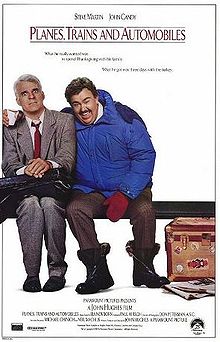
One of my favorite holiday movies is “Planes, Trains and Automobiles” with Steve Martin and John Candy. There’s a great scene in the movie where Steve Martin loses it and starts a rant directed toward Candy’s character, Del Griffith. Del, is a “nice guy” who talks incessantly. Martin’s character, Neal Page, an uptight ad man, frustrated by the day’s travel mishaps, finally explodes at his travel companion Del after one too many stories and says – “here’s an idea – when you tell a story, have a point!”

Am I the only one who has been oversaturated with multimedia and video pieces that are little more than pretty visuals to music? Don’t get me wrong, there are plenty of pieces that I do like, but there are far too many where I get bored and bail mid-way through because there is no point – there is no story.

Worse yet, the audio or music track many times feels like it has no connection to the visuals. It may be a great piece of music and provide pacing for the video, but it doesn’t complement the story. And there are times that the music is the most interesting part about the piece – if you take it away, what do you have? Most likely a pagination of moving and/or still images – like pages in a magazine or prints on a gallery wall. Independent and isolated vignettes with a music track – but no story- just eye candy.

What holds my interest is a story, where all the elements of audio, music, video clips, stills, text and narrative are parts of the whole and each one is integral in telling the story. I don’t think I’m alone in being interested in the story. Humans have enjoyed “the story” since the beginning of time. It doesn’t matter if it’s told verbally in a one on one conversation, in a multimedia piece, or in a major motion picture – a good story is a key ingredient for human interest. We all love a good story.

Personally, there is so much out there to watch these days on any given site that hosts videos, if I’m going to invest time in viewing something – I want it to have a point. If it doesn’t when I get to the end – I feel somehow let down.

I’m sure some of you will disagree with me on these thoughts and many of you may get loads of satisfaction from watching pretty visuals laid down to music and that’s OK. I’ve just had my fill of pretty content splashed before me, becoming a blurred palette in my head.

So, here’s an idea – have a point.

Add to FacebookAdd to DiggAdd to Del.icio.usAdd to StumbleuponAdd to RedditAdd to BlinklistAdd to TwitterAdd to TechnoratiAdd to Yahoo BuzzAdd to Newsvine

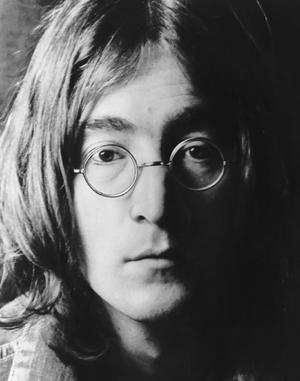
30 Years Ago Today – John Lennon Murdered

It’s hard to believe that it’s been 30 years since John Lennon was shot and killed outside outside The Dakota, his apartment building in New York City.

From the first time I saw the Beatles perform on The Ed Sullivan Show as a young girl in February, 1964, I decided that John was “my favorite Beatle”. There was something about him that appealed to me. Sure Paul was the cute one – but John was the …. well he just sort of struck me as more rebellious which was very exciting, even back then.

John followed his own path and used his voice to speak for Peace. After the Beatles broke up, he went on to have a great solo career and then when his son Sean was born, he pretty much left the limelight. He had recently resurfaced and had recorded a new album – and then he was killed.

I’ll always remember that night. I was watching the local NYC 11 o’clock news that had been delayed because a football game had gone into overtime. Half way through the anchor’s report came a breaking news bulletin saying that an unnamed man had been shot outside the Dakota, on West 72nd St. I instantly got a jolt and somehow knew that it was John Lennon and within a half hour it was confirmed that Lennon was dead.

The following week was a sad one in NYC. People gathered in Strawberry Fields, a section of Central Park that John and Yoko used to frequent. Night after night there were candlelight vigils and people took comfort in the collective.

The entire world mourned the loss of John and along with that went any and all hopes that the Beatles would get together again.

Rest in peace John. You made a difference in many people’s lives.

Add to FacebookAdd to DiggAdd to Del.icio.usAdd to StumbleuponAdd to RedditAdd to BlinklistAdd to TwitterAdd to TechnoratiAdd to Yahoo BuzzAdd to Newsvine

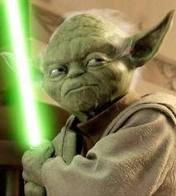
Yoda Who?

Twice this past weekend, while in conversation with friends, I had been referred to as Yoda. The second time it happened, I asked “Who is Yoda?” That’s right. I didn’t really know who Yoda was, even though I had heard the character’s name referenced over the years. I knew he was from Star Wars or Star Trek or some movie like that. But I had never seen either of those movies, so I wasn’t sure.

Shocking isn’t it? Or that’s what a friend thought when I “fessed up” to never having seen Star Wars – none of them – not even the first one. The truth is, I’m not a science fiction fan. I love fantasy, and spend my life living a fantasy, or trying to, but sci fi is too much of a stretch for me, as far as having the ability to come true – and I’m a believer that fantasies can come true.

I followed a link that my friend forwarded which led me to all things Yoda and I was instantly hooked by his wisdom. The more I learned about Yoda, the more intrigued I became. I had found my soulmate, an ugly little troll like creature with a glowing green wand, but with the wisdom of the ages.

Some of my favorite Yoda-isms:

  • “Fear is the path to the dark side. Fear leads to anger. Anger leads to hate. Hate leads to suffering.”
  • “So certain are you. Always with you it cannot be done. Hear you nothing that I say?”
  • “Train yourself to let go of everything you fear to lose.”
  • “You will find only what you bring in.”
  • “Always in motion is the future.”

I have been instructed to go “old school” over the holidays and watch the first three Star Wars films, which I will endeavor to do. So, forgive me all you “trekkies” (just kidding), but what do you call a Star Wars fan or in my case a Yoda fan?

Add to FacebookAdd to DiggAdd to Del.icio.usAdd to StumbleuponAdd to RedditAdd to BlinklistAdd to TwitterAdd to TechnoratiAdd to Yahoo BuzzAdd to Newsvine


How Do You Tell the Story?

I’ve said it hundreds of times – “the story is everything”, “without a story, you’ve got pretty pictures to a soundtrack”. So, how do you tell a story? How do you do it?

A friend called me the other day, struggling with this very question, of how do you tell the story? He was putting together a multimedia piece and he had captured sound and had taken photos during an event and was about to record an audio interview. I wasn’t sure at first, if he was asking about the mechanics of how to edit a story together in Final Cut– or was he asking me for guidance on how to tell the story? Those are two completely different discussions.

I thought back to when I was just starting to learn video journalism and had taken the Platypus Workshop. We had to tell our commitment or our story idea to an instructor, before we could start executing it. If the idea wasn’t delivered clearly and concisely, we went back to the drawing board to nail down the idea or the focus.

Every story starts out with an idea. Ideas have always come pretty easily to me, usually in spurts. All sorts of environments or activities can trigger ideas.

Seth Godin did a blog about a week ago titled, Where do ideas come from? Here are a couple of my favorites:

  • Ideas come out of the corner of the eye, or in the shower, when we’re not trying
  • Ideas come in spurts, until you get frightened. Willie Nelson wrote three of his biggest hits in one week
  • Ideas occur when dissimilar universes collide
  • Ideas fear experts, but they adore beginner’s mind. A little awareness is a good thing
  • Ideas hate conference rooms, particularly conference rooms where there is a history of criticism, personal attacks or boredom

Once I get the idea, I then start focusing it in my head. I play out the movie in my mind. What is the message? Whose message is it – mine? – the client’s? What is the motivation for the piece? A call to action? Once I get a pretty clear idea of what the story is that I’m trying to tell, then I start to put the pieces together. First I gather and capture all the assets that I’ll need, the interviews, b-roll, still photos etc. Then, when it’s time to edit the story, I’ll have a much clearer focus of how I will edit the pieces together to deliver the message.

Right now, I’m editing a feature length documentary, that is made up of ten different stories about ten different people in various corners of the globe. All together, the ten stories are unified by the theme of “the power of the individual in making a difference in the world”. Essentially the idea is, global stories about the power of one. That has been my underlying story from the moment of concept, to shooting it, to editing it all together.

So, how do you tell the story?  For me, it’s focusing on the “idea” at all times and editing toward that purpose.  There are hundreds of ways to tell the same story, but you need to know what the story is before you can begin to tell it.

Add to FacebookAdd to DiggAdd to Del.icio.usAdd to StumbleuponAdd to RedditAdd to BlinklistAdd to TwitterAdd to TechnoratiAdd to Yahoo BuzzAdd to Newsvine

Don’t Let the Music Die Inside You

Einstein said “Logic will take you from A to B but imagination will take you anywhere.”

I have always had a vivid imagination, spending many waking and sleeping hours dreaming and picturing myself in all sorts of situations. Some of my dreams were just crazy ideas running through my head and some were very real dreams that I believed would come true. I was thinking about what I wanted in my life – not what I didn’t want.

Everyone has dreams for how they want their life to be but not everyone believes their dreams will manifest. The future has to become the present in one’s imagination. And one needs to commit to their idea for it to happen – not just have intentions. Intentions without conviction is a waste of energy.

At this point in my life, I have been focusing more and more on pursuing my thoughts and ideas that have been running through my head. It was a year ago, that I made the decision to embark on the biggest personal project of my life, Opening Our Eyes. I’m now in the midst of editing hundreds of hours of footage. It’s tedious because there is so much, and there are interviews in foreign languages that need to be translated and transcribed before I can edit them. All the files need to be transcoded, which is taking far longer than I imagined it would, but now that I have my workflow down, it’s going faster.

When I’m finished with this film, it will be the most satisfying and successful project I’ve ever worked on. I use the word successful to mean that it was an incredible accomplishment for me personally and professionally. That’s not to say that it won’t be financially rewarding, and in fact every personal project I have ever self-funded has always been profitable, just not immediately.

More importantly, by executing my ideas, without needing validation from someone else, I am following my purpose. I am doing what I’m meant to be doing in my life. That in itself is the biggest reward of all.

We all have our own music inside of us. Find yours. Don’t die with the music still inside of you.

Add to FacebookAdd to DiggAdd to Del.icio.usAdd to StumbleuponAdd to RedditAdd to BlinklistAdd to TwitterAdd to TechnoratiAdd to Yahoo BuzzAdd to Newsvine

The Power We Have as Visual Creators

The last two weeks have been enlightening and humbling for me, and I’ll try to share some of the thoughts that have been racing through my mind.

I was honored to be asked to speak about video, at ASMP’s Ohio Valley Chapter’s Photo Tech conference last week.  It’s a great event and an enthusiastic and engaged group of people.  I also had the pleasure of seeing Walt Jones presentation:  “CGI – Friend or Foe”.  Walt is a talented photographer and CGI artist.  He is in my opinion a new breed of visual communicators.  He started out by showing examples of “images” and asking the audience if they were photos or CGI.  I was 100% wrong with every one of my guesses.  The point is – I couldn’t tell the difference.  I was in awe of the power of these relatively new tools that we as “image creators” have at our fingertips.

It really got me thinking that “seeing is NOT believing” anymore and the ramifications of that.  I started thinking of the ethical consequences and how in the wrong hands this power can be misused. But as I tossed those thoughts around in my head, I realized that this is really nothing new as far as the power we, as visual creators have, to manipulate an image or skew the story or the message.  Even before Photoshop and similar applications hit the scene, we as image creators could sway opinion or belief, just by what we chose to show, or not show.  If you look back in history, photographs, film and TV, have swayed public opinion long before the tools of Photoshop and CGI.

Yesterday, I got an email from a photographer, Aaron Huey, with a link to his Ted talk.  He told the story of the Lakota Sioux Indians through his words and his images.  He presented a timeline of this tribe’s history through his words, as he showed his images of modern day Lakota on their reservation or as he refers to it – their prisoner of war camp.  It was one of the most powerful Ted talks, I have ever seen.  It also reinforced the notion of the “power” that we all have as visual creators.

I’ve been thinking about that power a lot, and the responsibility that comes with it and that I believe that we all have the obligation, to use it wisely.  A few years ago, I created a documentary entitled Freedom’s Ride, a story about two diverse groups of high school students who rode the bus together to Alabama, tracing back the Civil Rights Movement of the 1960’s. The words of one teacher that I interviewed have stayed with me.  He said, “we can pass all the laws we want – but we can’t legislate morality”.   I’ve been thinking about that statement a lot this week.  It’s never been more important than it is now, because of the tools of technology, that we make sure our moral compasses are in check and headed in the right direction.

Add to FacebookAdd to DiggAdd to Del.icio.usAdd to StumbleuponAdd to RedditAdd to BlinklistAdd to TwitterAdd to TechnoratiAdd to Yahoo BuzzAdd to Newsvine