I realized recently that I had succumbed to the prevailing trend in editorial writing – the “top ten” syndrome – the top ten places to see in a lifetime, 10 tips on how to be more productive, 10 tips for taking better photos, the 10 best towns to live in – you get the picture.
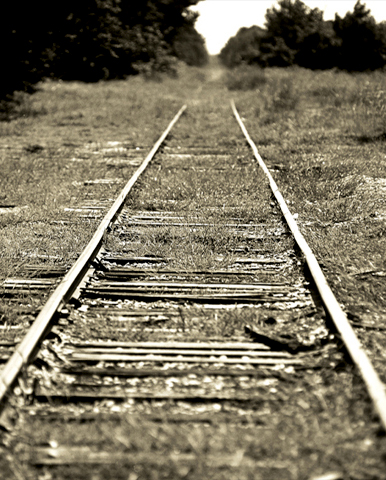
Train tracks, Mississippi
Seems like we want our info and we want it fast and easy to digest. The problem is we tend to lose sight of the things that aren’t on the top ten lists and lose focus on who we are.
I spent my summer redesigning our company’s website, editing a new motion reel and strategizing with my partner on marketing ideas. I am grateful for whatever outside forces motivated me creatively to have such a productive summer. I learned some of the pitfalls of following just the advice of “top ten” check lists when it came to editing our new motion reel. For example, these tips:
Pick music that sets the tone for your brand and footage.
Select only your best clips.
Cut on the action.
Cut to the music – to the beat
Have an opening that hooks the audience – gets their attention.
Include your company’s logo and/or info.
Pace it like a story with lows and peaks.
That’s not 10, I know, but that’s not the point. The point is that I had lost sight of the most important thing of all and that was I hadn’t shown our company’s vision. After months of work, I had picked the right music, culled through hours of footage and selected the very best clips, came up with an opening that I thought was intriguing and did my very best to cut to the beat of the music. I had shown what we have done, but I hadn’t shown who we are. So, I went back to the drawing board and re-edited the reel.
I realized that there are no short cuts to doing really good work. Good work comes from lots of trial and error and learning from our own experiences. It’s the journey that has its rewards.
By the way, we’re very close to launching the new site. Stay tuned.
I’ve been a photographer for the better part of my life. It’s who I am. I’m also a filmmaker and love telling stories in this medium. And, I’ve been a woman living in a man’s world. Photography and filmmaking are professions that are dominated by men. The still photography business has changed dramatically since I started out – it has become far less technical and many more women have entered this industry. Nevertheless, I’ve spent a lifetime working in a profession where, as a woman, I was in the minority. I never really focused on being a minority. I didn’t have a corporate job and had to compete against men for equal pay and/or opportunities. I was an independent creative entrepreneur. My latest assignment photos were my calling card and they got me in the door and my next assignment. I worked hard, harder than most because I wanted to – I had a strong desire to do something good. There were times (probably more than I know) when I didn’t get the job because I was a woman and there were times, when I was paid less money because of my gender.
Things have gotten better for women in the business of photography as well as in other industries but it took the tenacity and commitment of countless women who needed to break down barriers. There have been gains for women but gender biases still exist and we can’t be lulled into complacency by saying, “well, it’s better than it used to be.” The movie industry is dismal in terms of gender equality, women are paid less and make up a small percentage in “behind the scene” roles in the industry, especially in certain sectors like directing and sound design. Other industries like engineering, architecture, computer programming, aviation, firefighting are all gender lopsided and less than 5% of Fortune 5oo companies are led by women. And that’s the key word “led”. We need more women leaders. It’s not just about equality and justice, but women’s leadership potential has been massively untapped. And that’s a fail for us all – economically and socially.
So, I’ve decided to do something about it. I am initiating a project called Breaking Barriers – Like a Woman. My plan is to use my craft (photography/ filmmaking) as I always have, to make a difference. My intention is to create still environmental portraits and short video stories of women who are working in male dominated professions – pilots, computer programmers, engineers, doctors, construction workers, mechanics etc. etc. I want to tell their stories about the barriers they had to break and are breaking. I want to share these stories with the hope they go viral and start a revolution that will empower other women and young girls. I have built a FB page and opened Twitter and Instagram accounts so please “follow” and “like”. But, more importantly, please share with me and with others your own stories about barriers you’ve broken.
CALL TO ACTION Are you a women working in a profession that is male dominated? Or know someone who is? I am looking for subjects to photograph and film. Please contact me: gail@kellymooney.com
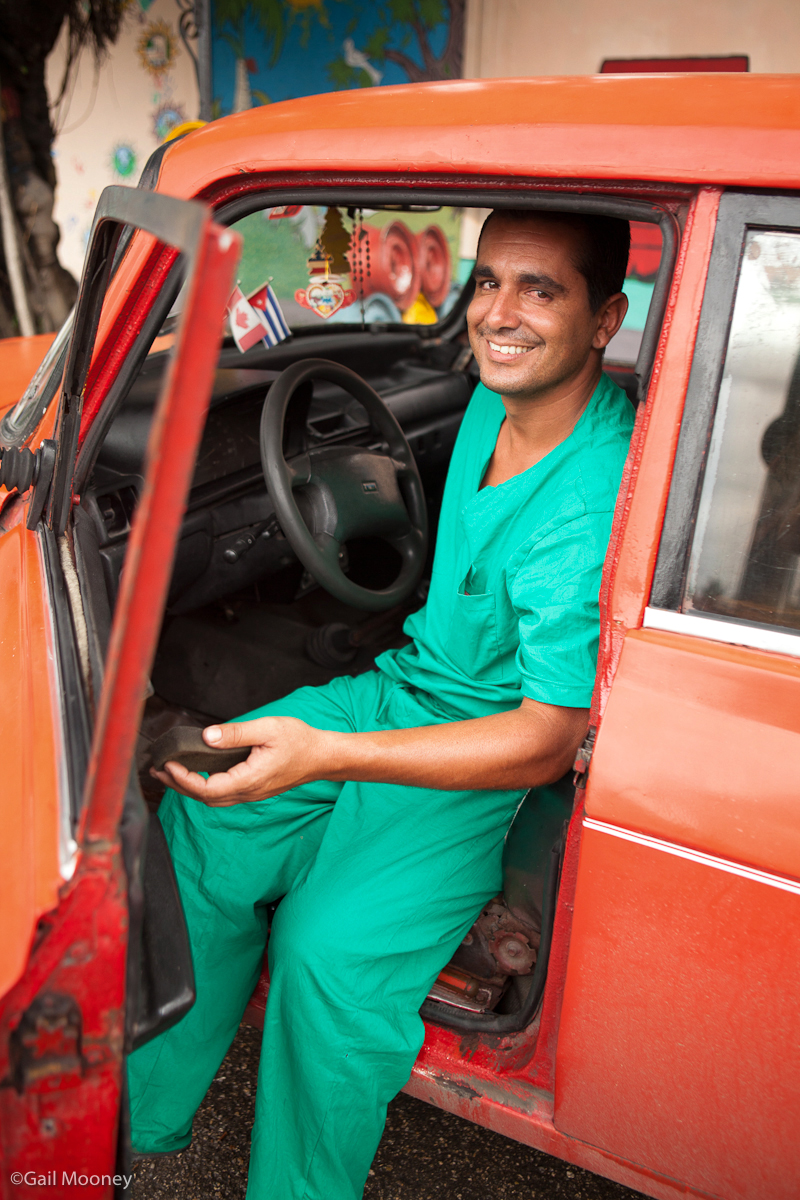
How can I possibly sum up a 5 day trip to Cuba, a country that up until recently was the “forbidden fruit” for US citizens. That in and of itself is what made me want to go there. My childhood impressions of Cuba came from seeing Ricky Ricardo on the “I Love Lucy” show and watching the Cuban MissileCrisis play out in my living room on our
TV set. What I saw as a child, was enticing with its music and its passion, and threatening, all at the same time.
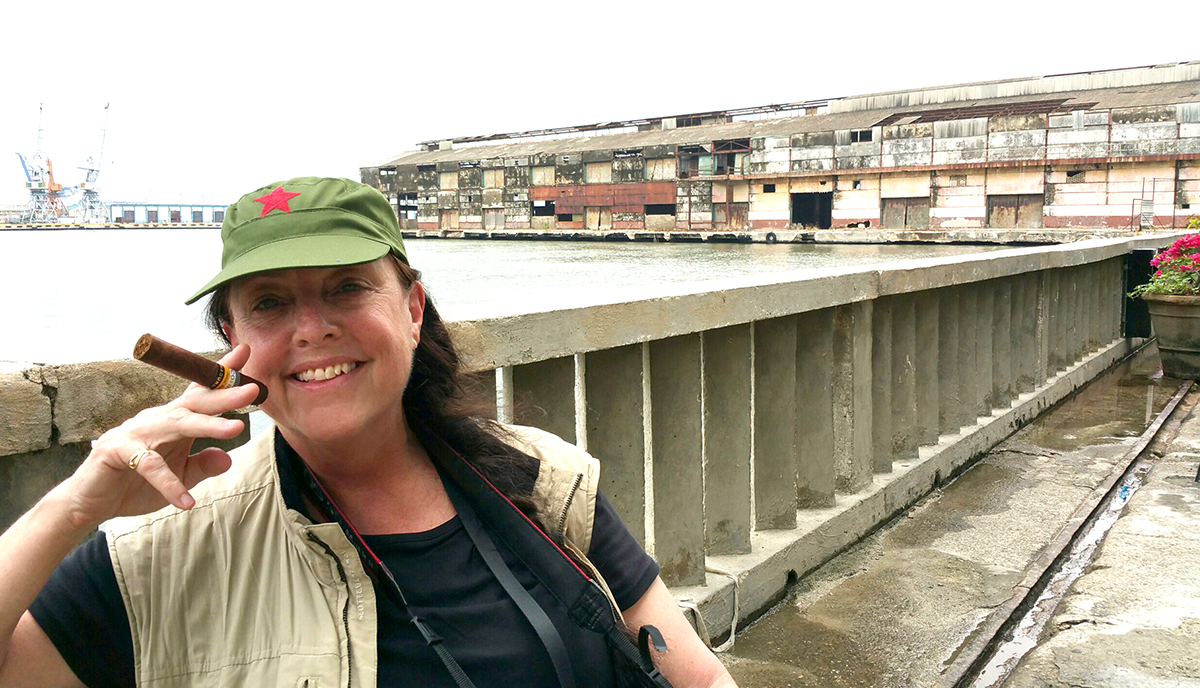
I had an opportunity to join a group of travel writers who were traveling to Cuba, on a “people to people” program. The purpose of the trip was to make cultural connections with the people of the country through various planned interactions. As a “people shooter” and a photographer who is drawn to capturing the spirit of a place” through my visuals, I knew I had to go to Cuba at a time when the country was on the brink of change.
We had a lot of interesting experiences as a group and I had many more on my own exploring the streets of old Havana and walking along the Malecon. The people were open to being photographed, – that was my experience. When I’m street shooting and I come upon people that I want to photograph, initially I approach the situation in a candid way. After I take a few shots, I will engage the person and proceed to shoot more. Our interaction is usually natural and seamless, even though we don’t speak the same language. We communicate in another way.
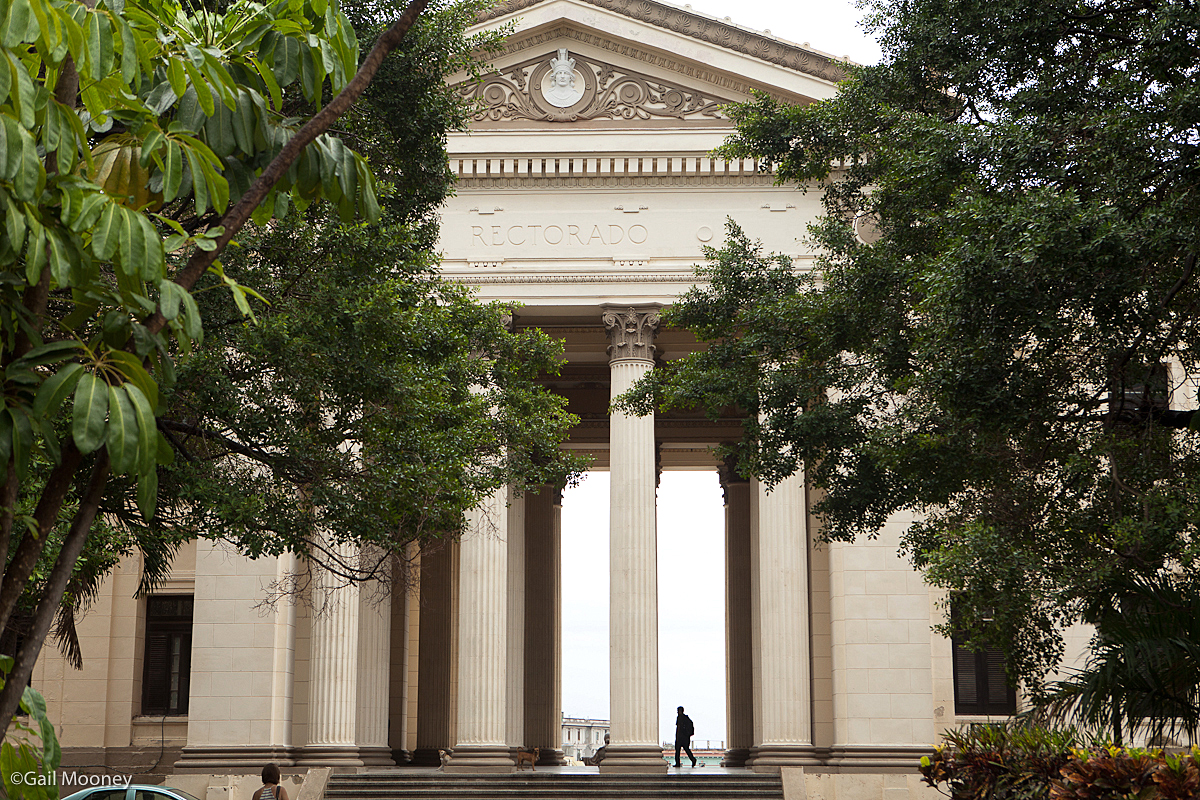
One day we met with a student at the University of Havana. He spoke about the day that President Obama met with President Raoul Castro in Panama. He said that all around the University, students and professors stopped what they were doing to watch the event on TV. As he told the story, his eyes filled with tears. He spoke of hope for his family, his people and his country and looked forward to the “embargo” being lifted so that Cuba can move forward. But he was also mindful of the potential downsides that come with rapid change.
Early on in our trip, we were driving through one of Havana’s neighborhoods that had been built during the “American years” and our guide said; “These are the good buildings built by the bad people”. As I look back at my interactions with the Cuban people, I hope that I had an impact on how they perceive Americans.
The Cuban people give true meaning to the word “resolve”. They’ve had over a half a century of practice. I will surely return to Cuba and see what’s yet to come in this country’s story.
I read an interesting blog post “On Real Photographers” by David duChemin recently. He talks about growing weary of the photographers’ complaints that “now everyone has a camera and suddenly everyone’s a photographer”.
My first experiences of being part of a group of my peers did not go well. My memories of being in school are mostly filled with my efforts to fit in, and the efforts of others to keep me out. The new kid. The smaller kid. The kid with the funny name. So I come honestly by my desire to see others included.
So when I hear people complain that “now everyone has a camera and suddenly everyone’s a photographer” I hear the same old, fear-driven, mean-spirited, zeitgeist of the schoolyard.
The same craft, beautiful for it’s democratic nature, that admitted you, and admitted me, will admit others. And with the same tools we picked up with such wonder, those others will make photographs. That’s what cameras do. And it’s what people who own them do. And they will, in that moment, become photographers: makers of photographs.
They are not faux-tographers. They are not necessarily “just camera-owners”. Neither are they DSLR-monkeys, or whatever other pejorative seems clever at the time. Shame on you. Shame on us as an industry.”
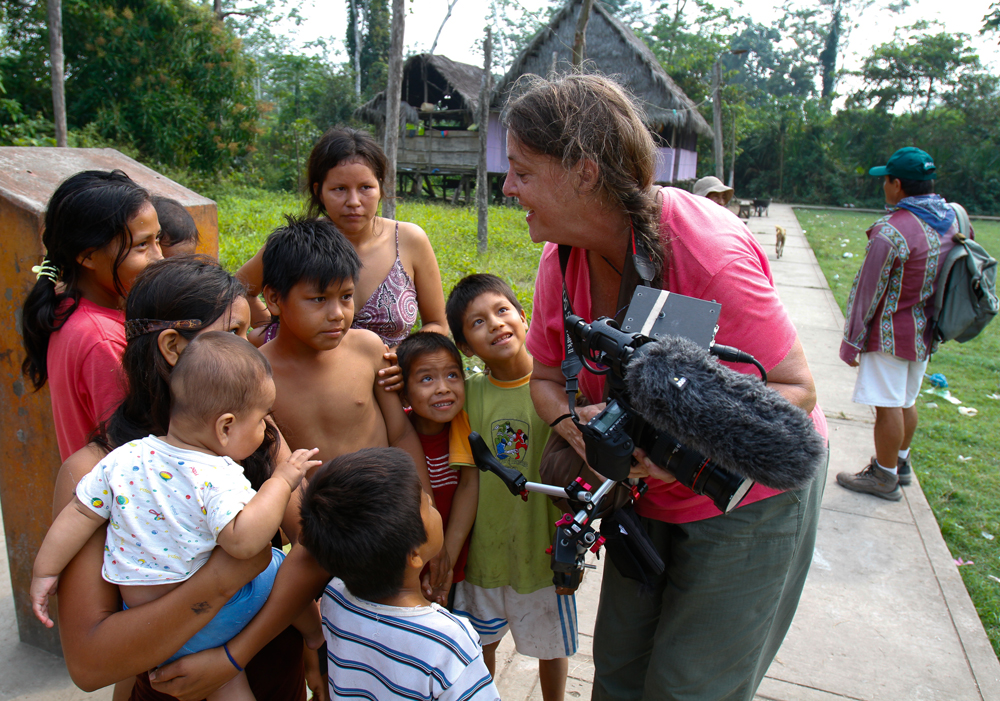
Gail shooting her feature documentary “Opening Our Eyes” at the Kopila Valley Primary School, Surkhet, Nepal
It hit home. As the perennial “new kid” (moving 11 times before I graduated from high school), being one of only six women when I attended Brooks Institute and now being dismissed or frequently feeling invisible because of my age, I’ve personally faced a lifetime of the “same old, fear-driven, mean-spirited, zeitgeist of the schoolyard.”
I despise our seemingly human need for “definitions and categories” and placing people into boxes defined by gender, age, race or religion. So I question why do we determine the creative value of photographers based on whether they are “professionals” or “amateurs” or if photography is their sole means of making a living? It’s exclusionary and judgmental based on fear and the notion that someone has to be excluded for the rest of us to win. This attitude has no business in a creative business because creativity has no boundaries dictated by “who’s in” or “who’s not”.
I have always been more interested in the power of what a good photograph or film can do – not who created it and what box that creator fits into. I’m interested in the story one has to tell. We are visual communicators and we are all unique but only if we listen to our own voice and create from that voice. Whenever I have trusted and listened to my internal voice and created from my own unique perspective and my life’s experiences, I have been “on purpose” and my work has resonated across genders, race and age. I suppose I could copy or mimic the “style du jour” whether it is HDR or photographing hipsters with tattoos and attempt to be someone I’m not. I don’t have the desire to do that because that is not why I became a photographer or filmmaker. That’s not to say that I don’t like and appreciate photographers who are following these styles but it’s not me and creativity doesn’t come from mimicking others. I’ve seen a lot of styles and techniques over the decades I’ve been in the photo business. They come and they go – just like the photographers who chase after the latest trend.
David states so eloquently:
‘Our categories are useless. Harmful, even. They separate us. They keep us siloed and cut off from generosity and openness and collaboration. They keep us focused on our own “qualifications” and not on the audiences and markets we should be finding new ways to serve, to inspire, to connect with. Our scarcity mentality is hurting us. It’s stopping us from being creative about making a living. The world owes us nothing, which is hard to accept when we’ve paid for a degree, invested in gear, or bought business cards, only to find out the universe doesn’t give a damn, and cares only about what value we bring.’
I too am weary of the blame, the finger pointing and all the stupid human tricks based on fear, and the notion that someone has to lose in order for me to win, because ultimately that comes from a place of insecurity and ego and rarely does that produce something of value. I don’t need a license that proclaims I’m a professional or feel the need to hide my age in order to compete. My value comes from a lifetime of experiences that made me who I am. If I choose to allow someone to define who I am or what I am capable of, or allow myself to be stopped by the naysayers, then I only have myself to blame.
It would have been so much easier to quit or stop myself every time someone threw roadblocks in my way based on their own notions of “what’s in” or “what’s not” and that would have led to an empty life. I chose instead to follow my heart and my convictions and accept the rejections that ultimately come when one faces their fears and stays true to who they are. It has never been easy but I’ve never sought easy. I’ve too busy living a full and rich life, using my craft to create awareness, impact social change or just to bring a smile to someone’s face and create a memory.
I wrote this blog in the fall of October 2013, after the Chicago Sun Times fired its entire staff of photographers. Yesterday, the Sun Times laid off its video staff. I thought that it would be a good time to repost this blog, about the value of what a professional photographer brings to photography and to our lives.
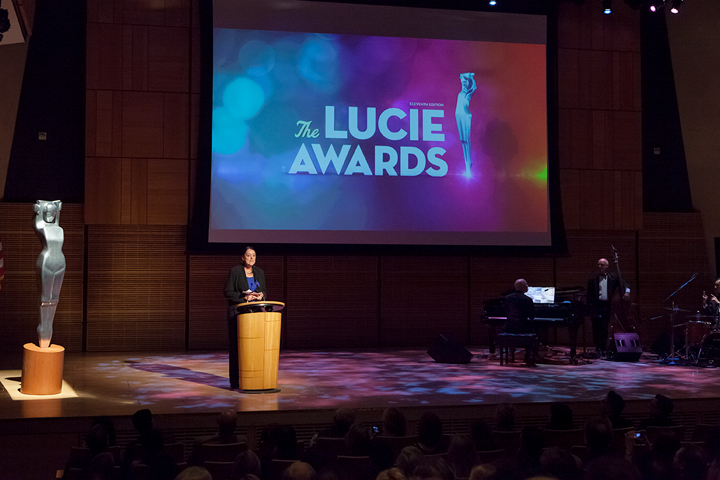
The who’s who of photography gathered last night, at Carnegie Hall to honor the “masters” of their trade at the Lucie Awards. The Lucies are like the Oscars of the “photographic industry”.
I had been asked to step in to present the “2013 Deeper Perspective Photographer of the Year Award”. on behalf of the ASMP when Executive Director, Gene Mopsik and President, Ed McDonald couldn’t attend.
I don’t usually get nervous about things like this, but I was last night. As I stood in the wings with photographer John H. White, who was waiting to go on stage to accept his Lucie, for Achievement in Photojournalism, I was mesmerized as I watched John. He seemed to glow and I felt his grace, his humility and his gratitude. It was a moment in my life that will stay with me forever. It was calming. I watched and listened to his acceptance speech on the monitor backstage, and I was deeply touched. So was the audience, as evidenced in their standing ovation.
John H. White is not a “rock star” type of photographer. His images don’t “shock and awe”, not in the way a war photographer’s images do. John’s photographs capture the subtle moments of the human experience. His legacy of images show us life as it really is.
This past spring, after 35 years with the Chicago Sun Times, John and the rest of the newspaper’s photographic staff were fired. It was a huge blow to the photographic community, magnified by the fact that even John H. White, the “chairman” was “let go”, without even as much as a thank you. John wasn’t bitter about it though. Michelle Agins wrote a wonderful article for the New York Times where she quoted John: “A job’s not a job because of labor law,” he said. “It’s just something you love. It’s something you do because it gives you a mission, a life, a purpose, and you do it for the service of others.”
All he had wanted to hear from the executives who let him go was two words that never came: thank you. But even then, he did not respond with anger.
John spoke more about the Sun Times’ firings in an interview with NPR where he said: “I will not curse the darkness. I will light candles. I will live by my three “F” words: faith, focus and flight. I’ll be faithful to life, my purpose in life, my assignment from life. Stay focused on what’s really important, what counts.” He repeated those three “F” words last night as he accepted his award. The audience was humbled. John had shed his light.
I have been thinking a lot lately, about the value of photography and the value that a professional brings to this craft. John H. White and his archive of work is a stellar example. His images, capturing the subtleties of life stand out amongst the noise. They make us take notice of what is often over looked – the quieter moments of life.
As far as what a professional photographer brings to the world, I think John stated it best: “Every day, a baby is born. Every day, someone dies. Every single day. And we capture everything in between. You think of this thing called life and how it’s preserved. It’s preserved through vision, through photographs.”
As John walked off the stage and back into the wings, I felt enveloped by his glow that had seemed to magnify. I caught his eye for a moment and said “thank you”. He nodded, and flashed his wonderful smile and in that moment, we connected and shared our understanding, of the “value” of photography.
I’ve had a long career with a lot of successes and failures. Here are 3 tips with examples of lessons I learned along the way.
Get rid of the resistance in your life – Long before I became a photographer, I was on a different path. I was studying architecture at Syracuse University. During the summer of my sophomore year, my friend and I went on a hitchhiking journey to Canada. Along the way, we met and stayed with people we met. I remember one such stay very well. It was pouring outside and we decided to just hang out, rather than face the elements. There were quite a few other travelers sitting around the room, smoking dope and talking about what everyone talked about those days – their disenchantment with the war (Vietnam) and everything else that was status quo, when one fellow erupted and said – “I’m sick and tired of hearing the same old complaints – why don’t you all do something about it.” That stayed with me my whole life. To this day, I try to get rid of the whiners in my life and be the one who does something. My proudest achievement to date has been making the documentary Opening Our Eyes, a film about individuals who are creating positive change.
Don’t hide your vulnerabilities – It took me a long time before I could tell anyone one of my biggest embarrassments, but when I did it was liberating. I was working on an assignment about Martha’s Vineyard and Nantucket for the National Geographic Traveler Magazine. I had made an appointment to photograph Walter Cronkite, who was a well-known figure on Martha’s Vineyard. The day before our scheduled appointment, I called Mr. Cronkite to confirm. This was way before cell phones and email and even before everyone had answering machines and his phone just rang and rang and rang. I kept calling throughout the day and the same thing happened. By evening, I was upset because I thought that Mr. Cronkite had stood me up. That night, I had a terrible feeling. I thought perhaps that when I had re-written my production notes and contact info for the job, I might have written down the wrong number for Cronkite. I had kept my old notes and discovered that I had been calling the wrong number all day. Imagine how horrified I was when I discovered that it was I who had stood up Walter Cronkite – not the other way around. I called the correct number, Walter answered and I was profusely apologetic as I explained the situation. He was kind and understanding and rescheduled and then he said, “Why didn’t you look me up in the phone book?” I replied that I assumed someone of his stature would not be listed. I learned never to make assumptions. It took me years before I could tell anyone this story. It’s really hard to admit mistakes but when you do, you gain trust.
Be who you are – not who you aren’t – I had just graduated from Brooks Institute and I wanted to pursue my passions. I wanted to be a photojournalist and use my craft to gain access to a world full of stories. Before I enrolled at Brooks, I had spent a year backpacking around the world. I had one camera and one lens and came back with my snapshots and a whole lot of desire. But it was a bad time for magazine photojournalism – Life Magazine had just folded (the second time) and everyone was telling me that if I wanted to make a living as a photographer, I needed to do commercial work. I bought into that and built a pretty good commercial photography portfolio. Then I went to see legendary NY photographer Jay Maisel, a man known for being blunt. He looked at my work, threw a print at me and told me it was “garbage”. Then he asked me if this was what I wanted to do. I told him no, that I wanted to be a photojournalist but that everyone had been telling me to pursue commercial work. He asked me how old I was and I replied “25” and then he looked me straight in the eye and said, “You’re 25 years old and you’re already making compromises”. It changed my life and I remind myself every day to be who I am and dream big, even though I may have to settle for less.
I’ve been around long enough to know that nothing lasts forever. I’ve experienced the up and down cycles of business and life in general and can tell you that nothing ever stays the same. Having an understanding and acceptance of that gives me the freedom to look around corners for opportunities and think outside the confines of my box. What I’m seeing is a growing demand for mixed media storytelling content from communications and marketing people to fill a plethora of needs –social media campaigns, TV spots, online pre-roll ads, and print ads.
Last September while attending the Next Video Conference and Expo in Pasadena, CA a light bulb went off after seeing a presentation given by Max Kaiser, Founder/Director of Hand Crank Films called Make Content That Resonates and Multi-Purpose. It was eye opening. Max explained how he demonstrates to clients the value of creating content that not only resonates with an audience but can also be multi-purposed and fill their other visual needs – including provide still images from his frame grabs. He said because he shoots 6K – he is able to produce high quality still images. I could see that still photographers aren’t just competing with other still photographers any more, they’re competing with guys like Max and small production companies that are providing solutions to all their visual needs.
There’s no reason still photographers can’t provide mixed media for their clients’ visual needs, but they need to scale the way they think about their business and their role and become more of a visual assets producer. Most photographers are producers anyway, so why not provide more services to a client and keep them in house – in your house.
I think sometimes it seems easier to give ourselves reasons not to do something but change is going to happen regardless if you embrace it or not.
Some things to keep in mind:
Video is not a business model – It’s a medium and one that is well suited for storytelling.
There is a demand for mixed media. Video is not new. But these days it’s easier, faster and cheaper to distribute, stream and watch motion content online – anytime -anywhere. Our phones and other mobile devices are our “go to” platforms for news, shopping and even entertainment. Position your brand and business to fit with today’s communication needs.
Make content that resonates and multi-purpose it. Video + Stills + Sound = Storytelling messaging. Content should be well-planned, scripted with high production values and should feel authentic. Create from your own point of view and identify the niches and needs in the marketplace that fit with your vision and style. Demonstrate value to a client by providing solutions to more of their visual needs.
Another year gets ticked off the books tonight. Personally, I’ll be happy to sign off on 2014. it’s been a year of extreme peaks and valleys but also a year of personal growth. Despite the challenges, I’ve come through this year a better person – certainly more humble.
I’ve never been a big fan of making New Year’s resolutions. If I’m going to commit to making a behavior change, I know that I have to want to make that change. If I’m not mentally ready and willing to commit on News Years Day, then I’m doomed to fail. But, I do like to look back at the old year, reflect on lessons learned and close the door on the unnecessary garbage in my life.
Lessons learned in 2014
It’s none of my business what others think of me. I cannot control what others think or say about me. But I can control how I let it affect me. This year was challenging but I found that when I didn’t allow the gossip and back talk to cloud my perspective, I became a better person. Let go of the petty drama that others try to suck you into.
Trust my gut – Whenever I am in a difficult situation and everything seems to be in chaos I take a moment, calm my mind and listen to my inner voice. It’s always there but it’s difficult to shut out the noise and clutter and tune into it. When I do, it never steers me wrong. I actually learned this lesson early in my life and it served me quite well in 2014.
Find hope – Finding a glimmer of hope saved me on some of my darkest days. I’m an optimist by nature but a few of life’s punches hit me hard this year. Finding that bit of hope got me through it.
Let go of the past – Sometimes, you have to let go. It could be a relationship, a job or a lifestyle pattern that just isn’t beneficial any longer. It’s tough to change especially when habits are so deeply entrenched they’ve become part of your identity. When you begin to see clearly the areas of resistance in your life, you need to decide whether you will stay on that path or take an alternative route and pursue something better.
Have gratitude – There are so many things I am grateful for in my life. It’s far better to focus on them than to dwell on what I don’t have. That’s tough to do in a consumer society but it leads to true happiness. We are all in charge of our own happiness.
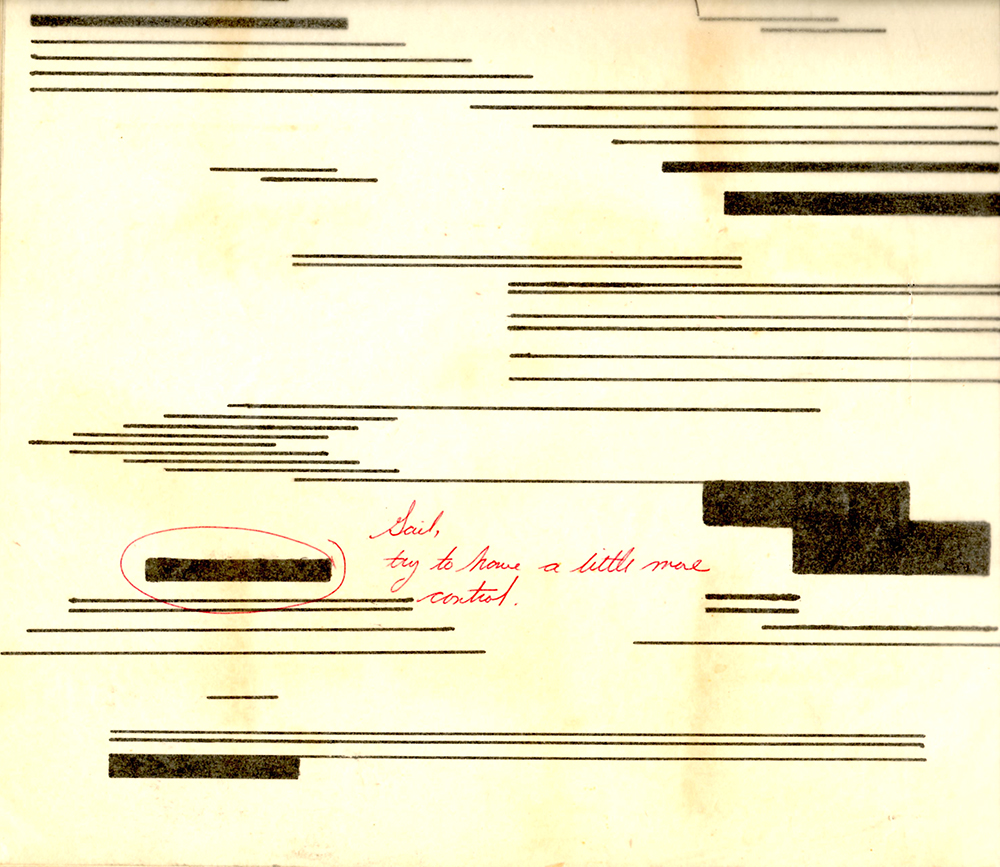
I’ve been spending a lot of time lately purging – getting rid of a lot of stuff I don’t need any longer. I came across a portfolio of architectural drawings that I had made during my days as an architectural student at Syracuse University. Stuck inside the portfolio were graded copies of the drawings with remarks from the professor. The comments were consistent and repeatedly pointed out my lack of “control”.
“Try to have a little more control!”
“Without control of lines and line quality, solution is lost!”
Back then I used a rapidograph (technical pen) for rendering these drawings. Unlike a lot of my fellow architectural students, I had very little training in the way of art classes before coming to Syracuse and my skills as an artist were terrible. Drawing fine straight lines with a rapidograph was my downfall. The ink would blotch or would seep under the ruler or triangle that I was using and my drawing would usually end up being a big mess.
I think my lack of “control” as an artist ultimately turned me away from pursuing architecture as a career. Instead, I changed my path and pursued a career in photography. Today, architectural students use CAD for their drawings and I would imagine that perfecting one’s skill with a rapidograph is no longer a requirement.
I wonder if things would have been different as far as the path I chose, if I had the tools available to me, that we have today? It’s an interesting question to ponder, but ultimately I don’t think I was well suited for a career in architecture and it went beyond the fact that I had poor drafting skills. I was a “big picture” thinker and not focused on the details.
Fundamentally, I haven’t changed. I’m still a big picture thinker. I am able to clearly visualize, my creation or project as a “whole” and know usually know what I need to do to achieve that end, but in determination to finish, I sometimes overlook the details. I’ve trained myself over the years, to not be in such a rush to complete something, that I compromise the quality. I’ve also accepted the person I am – what I’m good at and what I’m not so good at and found that I’ve produced my most gratifying work in collaboration with others.
I will always be a big picture thinker – the bigger the idea and the more possibilities – the more I love it. I have learned to have more control, but I still love to color outside the lines and push the boundaries.







 Journeys of a Hybrid