Storytelling – Words or Pictures?

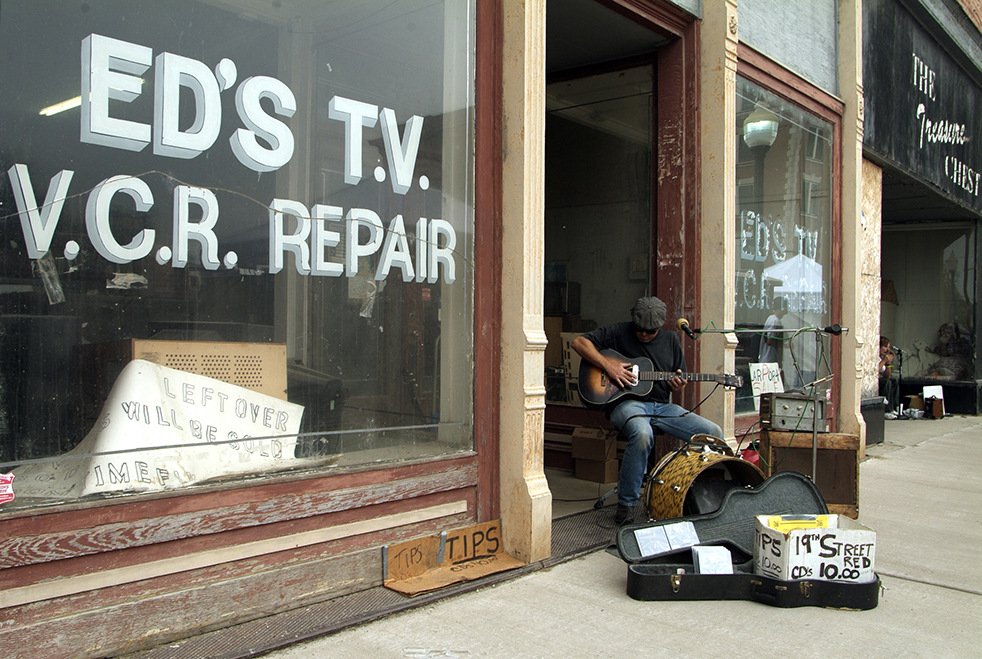
I have always been a visual communicator.  For over 35 years I have been making a living taking photographs for magazines all over the world.  I have always “seen” the world and captured its stories through visuals.  Somehow, it was far easier for me to communicate with images than with words.  Sidewalk performer King Biscuit Festival Helena, ArkansasBut it was also a bit frustrating for me because many times when I was photographing a person, I felt like I was leaving a portion of their story untold.
When I photograph people, invariably I spend a good deal of time talking and listening to them.  It’s this rapport that usually enables me to capture a more intimate photograph. For me, this has always been my favorite part of the “process”, yet I never had an outlet for my subjects’ words, other than through the captions of my photographs.

When I started producing documentaries, my conversations with my subjects finally had an outlet through their recorded interviews that became the backbone of the “script”.  Even though the script was not something that I wrote using my own words, I was instrumental in the process because I was selecting the words and giving them an order.  I was involved in the process and structure of screenwriting.

In recent years, I have become fascinated with story structure and screenwriting.  I have read numerous books on the topic of screenwriting and this past weekend I decided to immerse myself in an intensive 3-day workshop with John Truby.  John has taught some of the best screenwriters around.  I knew going into this, it was going to be a great and informative workshop, but I had no idea how rewarding it would be.  Essentially, John gave me knowledge of the “process” and the structure of storytelling to enable me to take an idea and turn it into a really good story.

I have come away from this workshop with a deeper understanding and respect for a well-written story.   We can all spot poor writing in a film.  It stands out.  Even the layman who knows nothing about “the process” or story structure can identify really bad writing.  The audience may not know why the story or the film doesn’t work – they just know it doesn’t and they’re not buying it.  Like any other craft, screenwriting has gone through stylistic changes over the years, but the fundamentals remain.  After all, telling stories is as old as time and there has always been a constant – and that is “the audience”.  Ultimately the audience will decide if a writer has done their job well.

I think those of us who are “content creators” in this era of multi-media communications need to broaden our understanding of all kinds of mediums in order to effectively communicate.  Many times, I see creatives become too narrowly focused on their one set of tools and in the process lose sight of their end goal  – and that is to deliver the message or story to the audience.  Ultimately, the audience will always let you know if you’ve hit the mark or not because they are looking at the “whole” and not the “parts” of the story.
Abundance or Scarcity – What’s Your Choice?

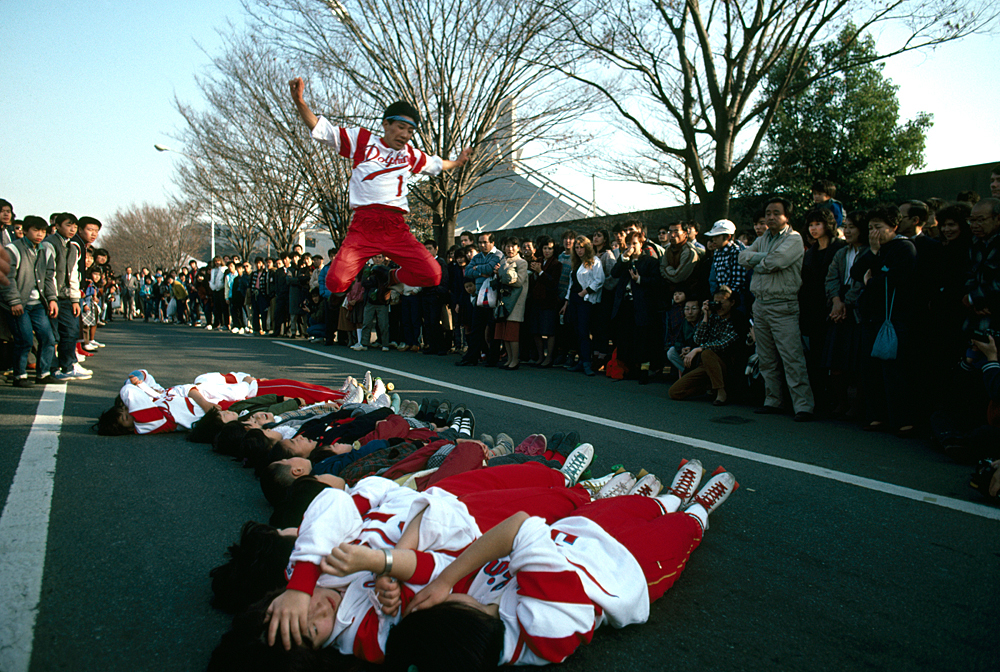
I read Seth Godin’s blog this morning and as usual, he was right on target with his observations of our culture and the shift in our economy.  We are moving out of the “industrial age”, an economy based on scarcity and into a “connection economy” Roller skaters jump over teammates, Tokyo, Japanbased on abundance – abundance of  “choice, connections and access to knowledge.”

In our new “connection economy”, we can connect with more people and “leverage our skills at a higher level.” This is leading to two races:  a race to the bottom which is forcing us to lower our prices, because it’s easy to find plenty of people who will do something cheaper or a race to the top which gives us the opportunity to use our new connections, resources and knowledge and become the one “they can’t live without.”

“The connection economy doesn’t create jobs where we get picked and then get paid; the connection economy builds opportunities for us to connect, and then demands that we pick ourselves.”  It’s no longer sufficient to just deliver a job at a fair price; a “connection economy” is all about standing out and being remarkable.

We need to invent – not duplicate.

So how do we stand out in a world of noise?  I believe we need to be authentic and true to ourselves.  We need to take the ultimate risk and listen to that voice inside because that’s the voice that should be heard.  We need to be vulnerable in order to race to the top.  At the end of the day, we are all human and we can spot a phony or an imitation when we see one.

Most of all we need to remember, we are human beings with basic human needs  – one being the need to connect with our fellow human. We don’t connect merely on devices alone – you connect by telling your “story”.   If your story resonates with others – it spreads. Today that means it gains traction quickly and spreads globally.  But you don’t connect with people by doing the same things as everyone else or regurgitating the same information.  You make connections because people are human and they’ll always spot “the real deal” in a crowd.

So be vulnerable, be different, be brave enough to stand out with a fresh approach to old problems and you won’t need to race to the bottom along with others clamoring for those “scarce” jobs.  You’ll be the one carving out the opportunities and picking yourself.

How Video Has Helped My Still Photography Business

After a slow spell, which I can’t say I ever get used to after 30 plus years of freelancing, the phone started ringing.  The calls were all in regards to still photography assignments.  Having been a still photographer for most of my life, that wasn’t unusual, but what was interesting was that I beat out my competition – other still photographers – because I knew video.

Times have sure changed. When I started exploring the medium of video, over 15 years ago, I didn’t abandon my still photography10Ft.WaveI simply added another skill set.  Most of my clients over the years have hired me to shoot one or the other, and sometimes both.  But what I see happening now is that as print moves to electronic delivery, my still photographic clients are also looking for a “photographer” that can shoot video components on a still photography assignment.  They need multimedia content for mobile devices and online platforms that cry out for movement and sound.

I don’t think of myself as a “still photographer” or a “videographer”.  First of all, I absolutely hate the word videographer because it smacks of a dated notion of what video used to be.  I think of myself as an “imaging professional” or sometimes a “new media producer” or sometimes just a “storyteller” because that’s what I do – I tell a client’s story, or deliver their message to their targeting audience.  I don’t define myself by the tool I use.

With convergence happening not only in the cameras we shoot with but in the media we create, I will opt for the “tool” or camera(s) that enable me to tell the story I need to tell, in the best way possible.  I’ve been thinking that way since I first forayed into video.  It’s nice to know that now my clients are thinking that way too.

Creating Inspiration

I’ve gotten away from writing lately, maybe because I’ve been really busy, and maybe because I’ve felt uninspired.  That’s a terrible feeling for me, it’s as if I’m void of any “feeling” at all.  It tends to happen when I’m spending more time doing the things I don’t want to do instead of what I feel I’m here to be doing.

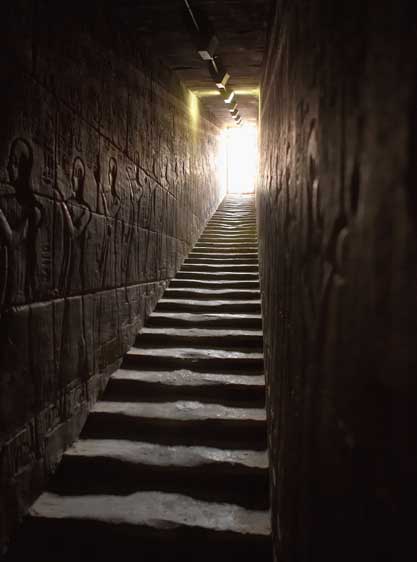
When I woke up this morning I thought, “anything can happen today”.  Temple of Horus, Edfu, EgyptThat thought in it self makes me want to get out of bed. I start thinking about the endless possibilities that can happen on any given day.  I grabbed a cup of coffee, checked my email and read Seth Godin’s blog and it was like it was written for me.  It was called “The moment of highest leverage”.  He was talking about moments when you’ve either lost something or won – when it feels hopeless or when it appears to be a lock.  He said that these were the times you can choose to do what’s in your heart and bring your real work to the world, instead of the lesser version that you think the market wants.

I’ve been struggling with feelings of hopelessness after a slew of rejections and misses. I knew I needed two things:  a change of scenery and some insightful conversation.  I went to Hawaii on impulse and got both.  One day, my good friend PF Bentley was showing me the “film” that he made for National Geographic photographer Dewitt Jones.  Dewitt has been shooting extraordinary images for the Natl. Geo for over 40 years and he had hired PF to create inspirational corporate training videos.    The “film” segments were a combination of Dewitt speaking about his life and his career in an inspirational way and b-roll of him shooting in beautiful Hawaiian settings interwoven with his amazing still images.   The piece was so touching; it brought tears to my eyes.  When it was over I started crying and I apologized to PF.  He said, “that’s ok, I know I’ve done my job right”.  PF and Dewitt had done theirs jobs right and they had inspired me.

I’ve had two speaking engagements and a screening of Opening Our Eyes this past weekend and in each situation, I was feeling good and that I had something to say and to share.  It must have come across because at each venue there was at least one person who I inspired – I could tell – I could feel it.  There was one woman at the screening, who had found out about it through one of our subject’s blog, Maggie Doyne. After the movie was over and most people had gone, I talked to her for a long time and I could see that the film had inspired her greatly.  I knew that I had done my job right and it was the best feeling in the world.  It reminded me of what is most important to me in my life and that is to create awareness with my still images or movies and move people or inspire them.

I don’t spend a lot of time on Facebook these days but I was looking at my news feed at the end of that long weekend and I noticed a photo that Ethan Browne (Jackson Browne’s son) had posted on his page.  It was a photograph of Jackson with one of his fans and Ethan had commented underneath it  “proud of   my pops – he stokes people for a living”.  I smiled and I thought, “That’s what I want to do”.

Words of Wisdom For and From Young Photographers

I’m on the advisory board of the YPA (Young Photographers Alliance) and while there are times that I feel I am on one too many boards and spreading myself too thin these days, it’s nights like last night that make it all worthwhile.

Last night was the Mentee/Mentor Exhibition and Awards Ceremony at the Calumet Gallery in New York City.  I must confess that I really didn’t want to go for a couple of reasons:  I needed to get up at 3:30AM to leave for the airport (this morning) and I’ve been in a bit of a funk that I can’t seem to shake myself out of and I didn’t want to be one of those negative cynical people bringing the “mood” down.  But I’m also one of those people that everyone can count on – so I did my best to rise to the occasion.

Before the affair, there was a meeting with the young photographers (mentees) and the mentors to receive and give feedback.  One of the students said that they wished some of their time with their mentors had been spent discussing the “business” of photography – something she didn’t feel she was learning in school.  I pointed out that there was a lot of information about business practices on the ASMP website, including contract shares and encouraged the students to check it out.  And then I told them that the best “business” advice I could give them was to be true to themselves and that if they did that and didn’t stray from their “purpose” that would set that apart from their competition because there is only one “you”.

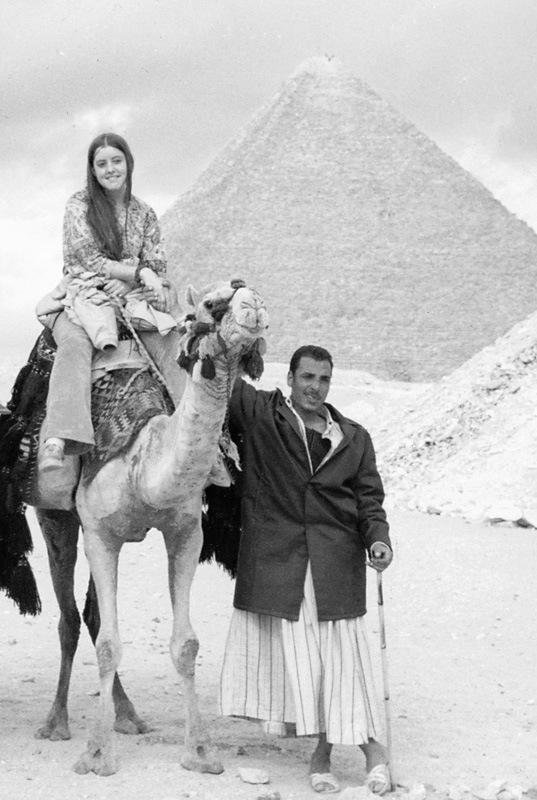
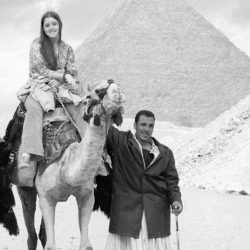
And then I relayed my “Jay Maisel” story as I have dozens of times. Gail at the Great Pyramids 1971 I had gone to see Jay when I was just starting out.  My heart and my passion was in photojournalism, but countless professional photographers had told me that I couldn’t make a living doing that kind of work – so I when I went to see Jay, I had my “commercial” portfolio with me, which I thought was pretty good.  He looked at it, pushed it back at me and said, “ This is crap – this isn’t what you want to do is it?”  I said no and told him that I wanted to be a photojournalist.  He asked me how old I was to which I replied “25 years old”.  He looked me straight in the face and said, “You’re 25 years old and you’re already making compromises”.

I told the kids that it was a turning point in my life and that whenever I strayed from my purpose – and felt it – over the last 35 years – I remembered Jay’s words.  Then one of the students asked me a question that I hadn’t ever been asked when telling that story over the years.  She said “What was it about your work that made him think your heart wasn’t in it?”  I hadn’t really ever thought about that – I had always focused on what I wanted to do instead.  But when she asked that question, I had to reply, “I really don’t know”.

I’ve been thinking about it all morning on my way from Newark to San Francisco and I wonder – was it the work that felt empty or impersonal?  Or was it the way I looked when I handed it to him?  Or was it both?  I’m waiting for my next leg to Honolulu and then on to Molokai to meet up from one of my mentors, PF Bentley who taught me everything I know about how to tell a story in motion. I’ll have another 7 hours to contemplate that question and even if I never come up with the answer, that question pulled me out of my funk.  Just in time to once again put my head in an “open” place to learn and get back on purpose.

It’s All About the Story

I’ve said it a million times “It’s all about the story”.  If you don’t have a good story to tell – and tell it – you’ve got nothing.

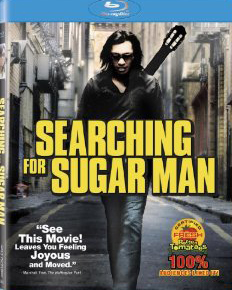
Last night I watched the documentary Sugarman“Searching for Sugar Man” and all I can say is WOW – it is probably the most incredible story I have ever heard in my life.  It’s the kind of story that’s almost to good to be true and yet it is.

It’s a story about Sixto Rodriguez, a Detroit folksinger who in the early 1970’s recorded a couple of records that were brilliant and “well received” but – they didn’t sell.  Rodriguez went on to live a simple life as a laborer, spending his time demolishing abandoned buildings in a city wracked by ruin and hard times.  Little did he know that on the other side of the world, in South Africa, he was a legendary music icon and an inspiration for generations who grew up with Apartheid. 

Back in the early ‘70’s, a young American woman went to South Africa to visit a friend and took with her one of Rodriguez’s records.  At that time, in South Africa, you could be put in jail for just listening to records like Rodriguez’s. It was a heavily censored society and ripe for rebellion.  He became a cult hero, bigger than Elvis.  Rumors grew up around this legend where it was said he committed suicide in front of his audience, at the end of a concert.  No one could find any information about him at all, because nothing had been written about him, unlike many of the popular rock musicians of his day.

Meanwhile, back in Detroit, Rodriguez had no idea his music had touched millions.  It wasn’t until the 1990’s, that a few die-hard fans tracked him down using cryptic clues from his lyrics and the Internet.  They finally found Rodriguez alive and well in the city of Detroit and brought him to South Africa.  What transpired was a series of concerts to sold out stadiums for this folksinger who had lost sight of his musical dreams.

It’s one of the most powerful inspiring stories I have ever heard.  Almost like parallel universes colliding to complete dreams across the divide.  Of course it took another 10 years for a filmmaker to bring awareness of this story in this incredible film.

When I was at the Traverse City Film Festival, I saw and met Rodriguez at the opening night outdoor party.  I couldn’t get into the screening because it was sold out and I had to wait until it was available on DVD.  It was worth the wait and it’s a film that you shouldn’t miss.

If you want to know what Rodriguez is doing now – well you’ll have to watch the movie.

PS I just bought his CD that was released in ’71. You couldn’t find in America before this film was released.  Like Orson Welles said “If  you want a happy ending that it depends on where you stop the story”.

Ten Things Photographers Should do in 2013

Be optimistic – I’m going to start with the hardest one of all, because it’s really difficult to be optimistic these days.  But I find that if I can maintain a positive attitude and turn my thoughts to what is possible, I actually open myself up to more opportunities in my life, instead of creating more roadblocks.

Be open to possibilities. – Be more flexible in how you perceive things and who you are. 500x_housecanon copyChange is always happening, but it’s usually gradual.  Most people don’t take notice until “change” forces their hand to act.  It’s always better to be proactive than reactive so embrace “change” as an ever-present fact of life that creates opportunities for those who are open to seeing them.

Collaborate – Photographers are very independent creatures and collaboration is not part of their norm. As the “photography” business continues to change, photographers will find that collaborating with other artists will make their own businesses stronger.

Diversify – I’m not quite so sure why so many photographers are so rigid in how they define who they are and what they do.  Having a “style” is great, but the trick is to not to be so narrowly defined by that style, so that when styles change, you don’t find yourself obsolete by your own design. It’s kind of like being type cast, where your audience or your clients can only see you in one way.

Concentrate more on “the story”– I had the opportunity to speak with a lot of still photographers and filmmakers this past year and I began to notice a difference in the conversations I was having with each.  Most times, filmmakers would be telling me a story, whereas still photographers would be telling me how they executed a photograph, or essentially telling me the “back story” of the creation of the image. It’s all interesting but “the story” is the bottom line – if that doesn’t come through to the viewer – the rest doesn’t matter – including how it was executed.

Be authentic – be true to yourself.  That means that you have to trust your gut instead of second guessing it.  This is hard, especially when things don’t always work out the way you had hoped.  Step away from the “noise” and listen to the voice inside.

Fail more. – Rejection is a tough pill to swallow but it usually means that you are either pushing yourself to try new things, you are too far ahead of your time or it just wasn’t meant to be.  If you look at successful people you’ll see that most have had failures and rejections in their lives but they stuck with it – instead of letting failure defeat them.

Self-Initiate more projects. – I don’t like to call non-commissioned work, “personal projects”. That co notates that there is no monetary value and these days, just the opposite could be true.  With more and more lopsided contracts  being presented to photographers for commissioned work, a photographer has a better chance to make more money and keep ownership of their work by creating self-initiated projects.  But they need to be prepared to work hard.

Forget about the past except to learn from mistakes. – You can’t change the past but you can learn from it and then, move on.  Look toward the future but make sure you take time to enjoy the “now”.

Realize that in the scheme of things, you are just one small speck in the universe. – I think we all get way too stressed about things that really don’t matter and we let those things control our life.  When we become more conscious of that, we really begin to live life.

The Difference Between Photographers & Filmmakers

Red carpet of the Palais des Festivals et des ...
Red carpet of the Palais des Festivals et des Congrès during the 2001 Cannes Film Festival. (Photo credit: Wikipedia)

I am winding down after a couple of intense months, traveling the film festival circuit with my documentary Opening Our Eyes.  I have enjoyed every bit of it, but it wore me out – in a good way.

I find that when I am “out there”, I get richly rewarded in many ways.  I think what I enjoyed the most about the film festivals, and what was the most beneficial to me, was the opportunity to dialog with other filmmakers.  I learned a lot in the process. But what stood out to me was how different these conversations were from conversations that I have with my still photographer colleagues.

Many times the conversations I was having with other filmmakers were centered on a story.  That should come as no surprise because that’s what filmmakers do – they tell stories.  But filmmakers tell stories “cinematically”, so when they are talking about the story that they are currently working, or a story idea they want to pursue, they speak in great visual detail so I see a very clear picture in my head.

My conversations with my still photographer peers, in terms of craft, are more apt to be about how they created an image.  Photographers generally talk more about the role they played in making the photo, like how they lit it or the gear they used.  Sometimes, photographers will tell me a story about what they went through to make a photograph and those stories can be very interesting and entertaining, but again the conversation is more about the execution of the image – than the story of the image.

Lately I’ve been trying to figure out how and where I fit into the mix. The truth is, I remain in the middle – a true hybrid.  I realize that ever since I can remember, I have always seen stories playing out cinematically in my head, so I guess I have always had a filmmaker’s mind even though it lay dormant for most of my professional career.  On the other hand, as a still photographer and one who has been an observer of life through my camera I see things like light and composition.

So, I am a true hybrid and I can see my still photographic “eye” in the motion work I create. Others who have seen my film have remarked about the composition and lighting, because it does look different and stands out from other documentaries.  Sometimes that has been a good thing and sometimes not.  Regardless, it is what it is – a creation from a still photographer’s eye applied to motion.

Embrace the differences – see what happens.

“Old Enough to Know Better but Still Too Young to Care”

I was talking to a friend recently about getting “older” and how it really sucks on the one hand but on the flip side, I’ve never felt more liberated in my life. He laughed and  said that I reminded him of a line in an old country/western song – depicted in the title of this post.

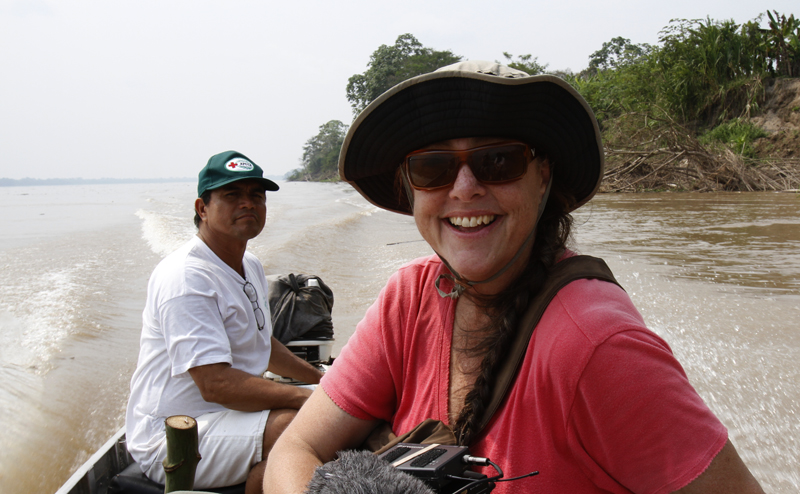
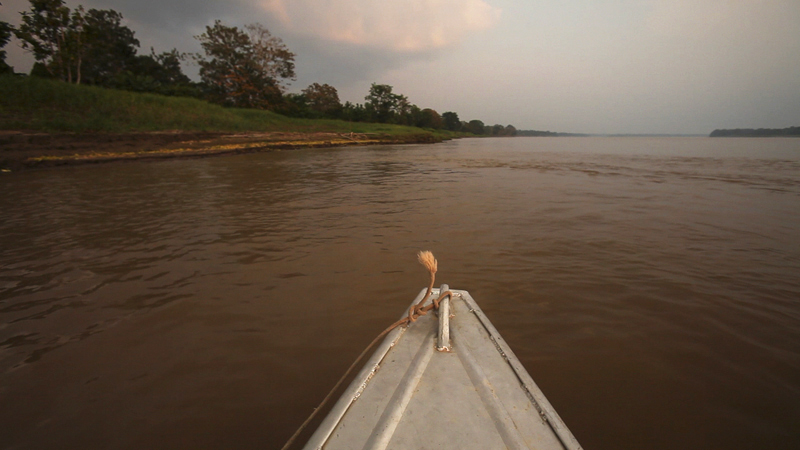
On the Amazon River, Peru

It’s pretty accurate, at least in terms of who I am.

I have never been one for “labels” of any kind.  I’m much more interested in what’s going on in the “inside” opposed to what someone is displaying on the outside.  So much so that when my daughter was younger, if she didn’t come home from school right away,  I would worry and think that I wouldn’t be able to describe what she was wearing if the police should come asking.

Our American culture seems to be obsessed with labels, more interested in the packaging and fizz than the substance.  “Older” people are invisible, dismissed and ignored as being too set in their ways, dated, and useless, when in fact some of the most interesting people I have ever taken the time to talk to, were ones that most folks seemed to overlook, simply because of their “packaging”.  I was lucky that I came to that realization at a very young age, when an art director, who was a great mentor to me in my early years, introduced me to the legends of photography.  They were all “old”, at least to my young eyes, but I quickly realized that age had nothing to do with how they saw the world.

It amazes me when seemingly intelligent people use catch phrases to describe others and don’t even realize that in the process that they are the ones with “narrow” sights and they would do better to open their eyes and see beyond.  My eyesight has gotten worse as I have aged, but at the same time, my vision has gotten so much better.

When I was younger, there was a popular saying “don’t trust anyone over 30”.  I’m glad I never really bought into that notion, because I would have been the one who was shortchanged. Don’t judge people because of gender, color or age or the type of car they drive.  Take the time and the energy to look past the packaging and really see.  You’ll probably be surprised that ignorance, narrow mindedness, fear, and pessimism comes in all sexes, shapes, sizes and ages.

“How old would you be if you didn’t know how old you was?”

Satchel Paige (1906-1982) Baseball legend who continued his successful career well into his 60’s.

The Power of Film in Making a Difference

When I set out to make a film about individuals on six continents who were making a positive difference on our planet, I didn’t set out to save the world.

Amazon River

That would not only be something impossible to achieve, but it would diminish what I could do. And in fact, if I had set out to attain such an overwhelming feat of saving the world, I may have quit before I even got started – out of pure frustration.

But I do know the power of what a film can do.  I know I can use my craft and my tools in my own small way to make a difference.  And I know that by breaking down tasks into small actions; they add up to some very big accomplishments. Even with no backing, little funds and virtually no help, my daughter and I created a film that is doing exactly what we set out to do – inspire and move people to action to do what they can do to make our planet a better place.

All too often, we over think things.  Big productions, big money, celebrities and everything else that shouts out to us on the airwaves and the Internet dazzle us.  We start to believe that anything that isn’t grandiose isn’t worthy at all.  It’s a pity because in our attempt to gain perfection or notoriety – we shortchange ourselves and everyone else on what we could have accomplished.

I’ve seen a lot of “small” films over the last few months as I travel from festival to festival with my documentary, Opening Our Eyes.  While many of these films are “small” – or at least deemed small by some – they are powerful in every way.  Sometimes, there may be only 10 people in the audience and I think what a shame, that these powerful films won’t be seen by the masses.  That is changing though, as filmmakers have access to new tools and platforms that can take their small films global.  I’ve witnessed that first hand.

As consumers we need to start taking notice of films, books and photographs that don’t have millions of dollars or stars behind them.

As filmmakers we need to stay true to ourselves, believe in our dreams and take advantage of the power of the age we live in to not only make films that create awareness but to get them seen on a global scale.

I hope I never lose sight of what’s possible through the power of film and how photographers and filmmakers can use their craft to create awareness and make our world a better place. These days, with a lot of hard work and determination, the individual has the power to make a difference globally.  We live in an amazing time – take advantage of it.