“You’re Only 25 And You’re Already Making Compromises?”

There’s a story that I love to tell because it explains why I followed the path I did – in my career and my life.

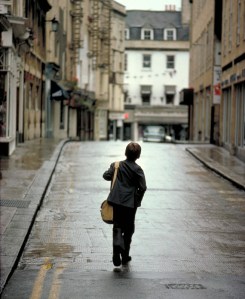
It was 1976 and I had just graduated from Brooks Institute in Santa Barbara, California.  I had my technically perfect portfolio and I was ready to set the world on fire.  British schoolboy, Bath, EnglandMy plan was to move back East, and pursue my dream of becoming a photojournalist.  That was where my heart was – “telling the story” through my images and I wanted to share those images through the pages of magazines. But even back then photo essays and the magazines that printed them were threatened by a bad economy and changing times. Look had just folded and Life was seeing its demise – the first time around.
Back then everyone told me that to make a living in photography you needed to get a studio and shoot commercially.  I bought into that, geared my first portfolio toward that and got a job assisting a commercial still life photographer.  But it didn’t feel right -it  wasn’t the right fit for me.  I had wanted to become a photographer to capture people and their cultures and what was going on in the world – not to shoot static objects in a New York City studio.

I had admired Jay Maisel’s work at the time, his eye for the detail and the streets of New York.  I decided to give him a call and ask if he had time to look at my portfolio and maybe give me a critique or some advice.  He agreed so we set up a time at his studio down in the Bowery. The late ’70’s was not a great time for NYC – economically speaking it was broke and Mayor Beame had just been turned down by the Feds for a bailout.  Just taking the trek down to that part of Manhattan at that time,  was an adventure in itself. Jay was a true pioneer in buying that old bank building back then. I’ll never forget the contrast between the graffiti covered exterior and amazing space inside.

Jay looked at every perfectly mounted print of technically perfect photographs and tossed them aside.  He looked at me and asked me if this was what I really wanted to do.  I started to go into a lengthy explanation of how I really wanted to be a photojournalist and proceeded to tell him all the reasons that I had given myself when I talked myself out of pursuing that dream.  And then I took out some snapshots of things I had shot on my travels before I even went to Brooks.  He looked at the images and told me that he could tell that this was what I should be doing.  And then he asked me how old I was.  I replied that I was 25.  He looked me straight in the eye and said “You’re 25 years old and you’re already making compromises?”.

It was a turning point in my life.  Every time I’m tempted to go off course, I remind myself of Jay’s words and I get back on track.
Tools of Change and New Distribution

Up early again, my mind restless and spinning with ideas, thoughts and reflections on last week’s Photo Expo in New York City.  Ironically this year’s Expo didn’t really reveal anything “new” for me in the way of new toys and tools of the trade.  What was new was the obvious absence of Adobe on the exhibitor floor – a sign of the economic times?  Or is it  a sign of how the photographic business is shifting – from professional to prosumer?

While in NYC I took time to see Robert Frank’s exhibition “The Americans” at the MET.  His beautiful images have stayed in my head and no doubt will provoke me to jump-start one of the many projects that continue to bubble to the surface in my mind.  But there was one thing I read in context of the exhibition and that was a statement made about the camera being a “tool of change” during Frank’s time. I started thinking about that and realize that the camera, whether it be a still camera or a motion camera is still a “tool of change”.  James Natchwey’s images are powerful examples of that.

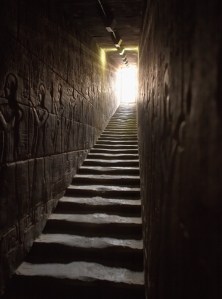
What is radically different today is our means of distribution – of getting our imagery seen.  No tool has the power to make a difference or a change if what it creates is never seen.  I started thinking about the demise of newspapers and print in general and I was dismayed about the future Temple of Horus, Edfu, Egyptand the still photos that may never be seen.
With the Internet and global distribution, the playing field has been leveled and democratized and anyone can share anything they create with the rest of the world – right?  Maybe not – because ultimately the web is controlled.  It’s controlled by what search engines find and how information is ranked. Listen to Eric Schmidt, Google’s CEO talk about the Internet of the future.  Even Facebook now is deciding which friends will see our news feed.  That default can be changed of course – but you have to be aware of it to change it.  How many of us are aware? And I mean that in the broadest sense, meaning aware of what and how our information is delivered.

All the “free” content we get these days over the web excites us all.  It’s great – but even free comes at a price.  I can only hope that future generations will understand the underlying cost of  “free content” and be aware of who is controlling distribution in this new paradigm.

Life on the Road and My Favorite Place

When I was a little girl my mom used to take my sister and I to Walgreens to get an ice cream sundae.  Back then, like other drug stores and five and dimes, you could get a bite to eat at the counter.  I had a game that I’d play every time we’d go.  I’d sit on the stool and spin myself around. I would assign exotic destinations to various landing spots that the stool would stop spinning – and determine that those were the places that I would travel to in my life.  I somehow knew back then that “the road” would become a huge part of my life.

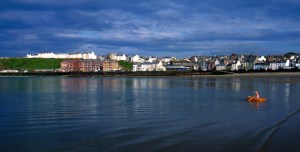
Over the years people have asked me “Where is your favorite place that you’ve ever been?”. To be honest, I hated that question because I never had an answer.  There were too many places, all different in their own way that attracted me to them.Iom peel boat And then about 10 years ago I had an assignment for Islands Magazine to cover the Isle of Man.
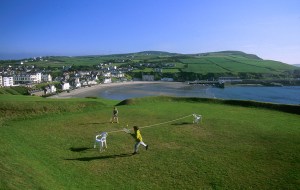
The island pulled me in from the start. I felt a strange sense of belonging, a connection that I couldn’t explain.  The air was cool and pure with a constant wind that blew across the island from one sea to the other.  It’s a small island located in the Irish Sea somewhere between Ireland and Scotland.  An island that’s reminiscent of Ireland 50 years ago –port erin an island where time seems to have stopped.
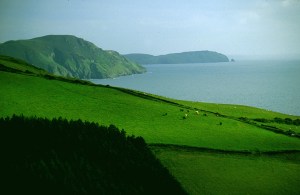
Because the island is small, I didn’t feel the usual rapid pace that I have felt on previous assignments where I was given too much to cover and too little time.  I could linger and catch the moods of the island and the vibe of the people.  It was a magical place with open, cinematic vistas of aiom scenic patchwork of every shade of green you can imagine, stretching from the barren upland’s to the blue of the sea.  The sea was always present.
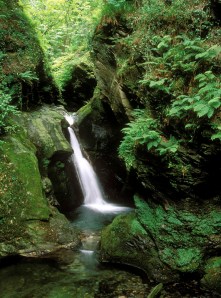
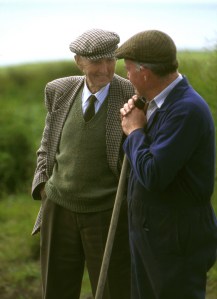
There were secret glens with waterfallwaterfalls and I thought that fairies must surely live there, somewhere beneath the ferns.  The island was enchanting on every level.  One day I came upon a crowd of people in a field.  I asked someone what was going on and they replied that it was a turnip weeding contest.  How wonderful I thought, a contest to weed a field.  I spent the morning caught up in the event, taking a few images, but mostly just talking with peoplemen iom and storing those conversations in my head.
And then like every other time I’ve taken to the road – my journey came to an end and it was time for me to leave.  There’s a legend on the island that every time the Queen of England comes to the Isle of Man (the island is an independent nation), the great god Mananan covers the island in a mist, so that she won’t find her way there and take the isle back.  The night before I left, a dense fog enveloped the isle and I thought the gods didn’t want me to leave – and I didn’t want to leave.  But the fog lifted and it was my time to go, but I knew that I finally had an answer to the question “Where is your favorite place you’ve been?”

Robert Frank, “The Americans” and The Road

I went to see Robert Frank’s “The Americans” this past week at the Met in New York City. I have always been a fan of Frank, not so much for his fashion photography but his photographic observations of “us”robertfrank_10.T – us Americans, our culture at that time in our history.  He was an observer of “all” people not just the beautiful ones captured on the pages of Harper’s Bazaar, and he captured those observations for generations to come.
As I took my time looking at the prints and contact sheets displayed, I was able to get a glimpse of how he shot – what his camera lingered on and where he went from there.  I could see his thought process in how he made his selections, looking at the frames circled with his red grease pencil. I read his letters to his colleague Walker Evans, another favorite of mine and I got a much better sense of him as a person and photographer.  I watched an early video that he filmed and was amazed by how he pushed his own photographic boundaries into another medium.  The exhibition provided a wealth of insight and information on Frank, his project “The Americans” and a time in our country’s history – and I was captivated.

His images linger in my head and remind me of my beginnings in photography and “why” I became a photographer.  Like Frank, I’m an observer of all people, of cultures and use my camera as a means to capture my observations and share them with others.  My passion is rooted in my own personal road trips; I have taken over the years with my camera. It has triggered in me the desire to explore, to embark on another journey with my camera and see where it takes me.

I’ve spent a career and a lifetime “on the road”, always the traveler, observing and capturing the daily lives of others – not the famous, but the common man.  Not the horrific, the outrageous, the exotic for those reasons  – but because they’re part of the world I live in.  My hope is that I the images I leave behind, will provide others a glimpse of that time, that space, those lives that I stumbled upon during a lifetime spent on the road.

Technology News – New Video Cameras Announced

Anyone who reads my blog knows that I’m not one to get overly infatuated with the “tools of the trade” – but this week a few new cameras and upgrades were announced.

Sony announced two new cameras the PMW-EX1R – a revision of the EX-1 and the PMW-350 with a 2/3” chip. Redesigned viewfinders on both cameras make them attractive upgrades but there are many other added features as well.

Canon announced that it is currently developing a firmware for their hybrid camera – the EOS 5D Mark II enabling the camera to record at 24fps, obviously responding from user feedback.

Canon also announced their latest still camera (that also shoots video) the EOS 1D Mark IV.  The sensor however, is a non full frame but the autofocus system has been totally revamped.

All for now as I am headed into New York for Photo Plus Expo, where I’m sure to see more new toys.  More later.

Making Still Images Move

Burlesque
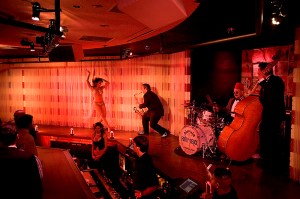
Burlesque club, Las Vegas (click image for motion sample)

I’m often asked how to prep still images and how to make them move in a multimedia/video piece.  My initial response to this question is to reply with a series of questions – “Why do you want to make your images move?” “What’s your motivation? What do you want to communicate to the viewer?” “Do you need sound and movement to better tell your story?”

I’m not one to do things just because I can – I need a reason.  For me a still image is an entity in and of itself – a moment in time to be studied and contemplated.  When I present still images in a multimedia presentation – those “moments in time” become part of a greater whole.  That new entity becomes a different visual message with sound and motion becoming the underlying spine of the piece.  Added information that’s needed to convey that particular story. The still images become sequences and the sound and movement of the piece create the “feel” and “pace” of the whole.

As far as the practical aspects of creating a multimedia piece – the first step is to choose an editing software that works into your workflow.  I use Final Cut Pro Studio on a Mac.  I use Final Cut Pro (within the suite)  if I don’t have a lot of images to edit but lately I’ve been using Motion (also included in the Studio suite)  – because it’s easy – once you know it. You don’t need the depth of these software applications  to create a simple multimedia piece.  There are plenty of software applications to choose from  – iMovie and FCP Express in the Apple family, Adobe Premiere (cross platformed if using an Intel Mac) , Sony Vegas for PC’s  and simpler programs like Soundslides or Audacity.

There are many tutorials on this subject – check out Ken Stone or Lynda.com – both great places to learn.  In the meantime I will share my recipe for how I size and prep my images for multimedia presentations.  Like anything else, there are hundreds  of ways to get to the same end – but these are my suggestions that I find work best.  Another note – I use large image sizes so that I when I bring the images into my editing timeline – I have room to zoom into the images without having to  enlarge them beyond 100% in the video application.

My sizing/prepping suggestions for still images:

RGB color mode

Srgb color profile for SD (standard def)

HDTV (Re.709) color profile for HD (hi def)

Tiff, PSD or PNG – better than Jpeg

Don’t over sharpen image – it will jitter on screen

Use de-interlace filter for web videos – but this is something you need to test – I don’t always like the effect this filter has.

Sizing – I always upsize my images 2.5 x needed for video timeline  if I will be moving them “Ken Burns” style. Below are different specs for HD and SD and different aspect ratios:

Standard Def – DV NTSC 4:3 – 1800x1350x72 (pixels)(res)

Standard Def – NTSC 16:9 – 2132x1200x72 (pixels)(res)

HD – 720p – 3200x1800x72 (pixels)(res)

HD – 1080i – 4800x2700x72 (pixels)(res)

It’s really never been easier to prep still images in an application like Photoshop because there are lots of built in presets. I always prep all my assets and import them into my editing software before I even begin to edit.  That way I don’t need to depart from the edit and lose a train of thought whenever I need to add a still image or other graphic.

Have fun – and when you do decide to move an image – ask yourself why first?

Why I (Still) Shoot Still Images

Even though I’ve been shooting motion for over 10 years, I still spend half my time shooting still images. When my story can be or should be told with images that are “moments in time” then a still camera is always my tool of choice.

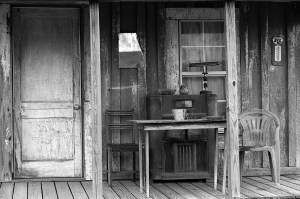
For me there is a certain timeless quality of a still image. Still images are meant to be explored by the eye while lingering on the “moment” captured. Perhaps a better way to explain the power that I find within still photographs is to show you some recent images I shot. Hopsons_shack

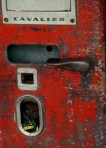
This past weekend I visited a favorite spot of mine. It’s an old plantation in Mississippi and every time I visit, I see it in a different way. But I always see it in a timeless way – it’s like time just stopped there.Hopsons_vending_J2X8487 Even though this plantation is worlds away from my cultural norm – I get a feeling of comfort mixed with a bit of melancholy for my own past when I’m there.
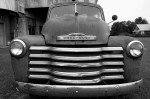
I could put these images in a multimedia format and add a narrative or a music track. But the question I ask myself is why? Hopsons_car_grillJ2X8622Will it add or will it distract? What piece of music should I use and what will that add to the story? Will the music overpower the piece – because many times it can. And too many times people try to add music to mediocre images to make them more exciting.Hopsons_car_J2X8561
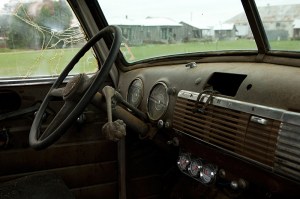
A still image has the power to capture the eye of the viewer and make them want to know more. If an image I make draws the viewer in – to see that moment in time – just as I saw it – when I shot it – then I’ve done my job as a storyteller.

Add to FacebookAdd to DiggAdd to Del.icio.usAdd to StumbleuponAdd to RedditAdd to BlinklistAdd to TwitterAdd to TechnoratiAdd to Yahoo BuzzAdd to Newsvine

The Smell of Fixer in the Morning

This is a bit off topic but was prompted by my trip yesterday to Randolph Community College in Asheboro, NC.  I was giving a seminar for ASMP  “Converging Media – Adding Video to Your Skill Set”.  After setting up for my presentation I was given a tour of the school – a wonderful facility.  After going through their impressive computer labs and studios – I asked my guide and Program Head, Chuck Egerton,  if the school still had dark rooms.  He smiled and said “I’ll show you”

The second I entered the darkroom – and got that familiar taste of fixer in my mouth – I was immediately transplanted back to Brooks Institute in Santa Barbara where I had studied 34 years ago.  It’s hard to believe it’s been 34 years but when I walked into that darkroom and saw the students making their prints – it seemed like I was back at school.

A lot of memories flashed through my mind that hadn’t surfaced in years.  Being the only woman in my class – and one of six in the entire school.  Always being in a rush because I was working full time at night and going to classes and executing my assignments during the day.  Racing from the Riviera campus to the Montecito campus at break neck speeds around the curves in my big old orange Dodge van.  And most of all living in beautiful sunny Southern California, yet spending a lot of my time – in the dark.

The changes in photography have been profound since then and I’d probably have to say that as much as I learned at Brooks – I’ve learned a lot more since – out of necessity because of technology.  I love learning more now than I ever did in my younger days.  History gives interesting perspectives and when something jogs my memory and I remember my own history – I’m amazed by how much things have changed.  Seems like only yesterday.

My Hybrid World

This is kind of off topic in the sense that it speaks a bit to my personal lifestyle as opposed to my professional one – yet in a way it’s the perfect analogy to my hybrid existence of working in both the still and the video worlds.

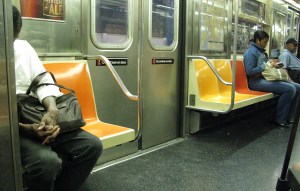
I live 38 miles west of Manhattan Island subway– close enough to commute if I were so inclined or had a “job” to commute to. But since I’m a self employed freelancer and always have been – I look at that short distance to the “city” as the bridge that connects my two worlds. The “city” can pretty much provide me with just about every cosmopolitan need that I may have and my other world – the idyllic little “bubble” where I live – a small rural town in Northwestern New Jersey – gives me space and serenity. bicycleBoth are important in my life and I don’t think I could give up one for the other.
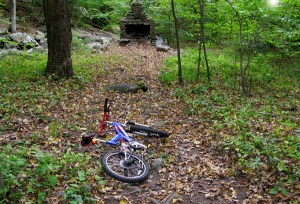
I feel this way in terms of working with both still photography and video. They each in their own way are creatively fulfilling. Because I’m a storyteller – I look to each medium in terms of being the right tool to tell the story. I think differently in each medium and for this reason it’s very difficult for me to shoot both stills and video on the same job – although I have done that on many occasions. But my head is in a totally different place – depending on which medium I am working in.

I’ve said many times that it’s not about the tool – I can’t just swap out the tool because it’s really not that simple. With still imagery it’s all about the moment in time. With video it’s time in motion. With still imagery I’m selecting that precise moment where the story gets told. With video I’m telling the story through a sequence of imagery – always thinking in terms of the beginning, middle and end and ultimately with the “whole” piece in mind.

I could never make a choice between the two mediums at this point in my life because they are each needed in their own unique ways. Each serving their own purpose in how I choose to communicate – visually and creatively. Just like the hybrid personal world that I live in.

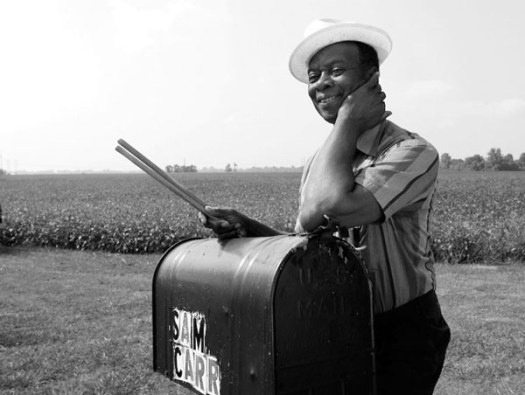
Sam Carr (1926-2009) Legendary Blues Drummer

I received some bad news today that Sam Carr died.  Sam was a legendary blues drummer – he was also one of the sweetest people that I came to know.  I interviewed and photographed Sam in 2001 at his home in Lula, Mississippi – the heart of the Mississippi Delta.

I was working on my first really ambitious documentary after getting into video the year before.  It was a personal Sam Carr, Lula, MSproject that had I tried to get funding for but then 9/11 happened and money dried up over night.  But for me this was a story that I needed to tell and now because these musicians were in their 70’s and 80’s.  I wanted to tell the story of these musicians apart from their music.  I was interested in their cultural stories – about the area they grew up in. the Delta and how that gave birth to their music – the blues.

My first trip to Mississippi was on a shoestring budget with my heart in the right place and open to whatever I may find.  My husband, my 14 year old daughter and I hit to road for the Mississippi Delta the summer of 2001. To be honest I didn’t have much in the way of a planned itinerary.  I had tried to line up interviews with some of the musicians but the cultural divide between us made it difficult to pin down a schedule.  So I was open to letting serendipity happen and it did.

I had spoken with Sam Carr and his wife Doris who had been with Sam since she was 13 years old until she passed away last year.  Sam was very cordial and kind and was quite willing to be interviewed.  I had pinned him down with a date in a vague sort of way and we all – my husband, my daughter and I – showed up at the proper time.  It was a typical August day in the South – hot and humid.  So we sat on a bunch of mismatched chairs underneath a big old shade tree.  Sam literally talked for hours and I was drawn into his stories about his childhood, his father, Robert Nighthawk a legendary guitarist who didn’t raise Sam, his music, his regrets and his life now during his older years. At times it was difficult to understand him because of his dialect but I listened carefully and his words made permanent marks on my soul.  We talked until evening and it will be an afternoon that I will never forget.

Sam’s words became a big part of my film.  That first interview also convinced me that these stories needed to be told – and by the musicians themselves.  I went on to photograph and interview – Little Milton and Robert Lockwood Jr. – who have also left this earth since my interviews.  We still have Pinetop Perkins – 96 years old, Big Jack Johnson, who played with Sam in the band Jelly Roll Kings, Willie “Big Eyes” Smith and Magic Slim. The outcome of my efforts was  a 26 minute film and a still photographic essay about The Delta Blues Musicians that has become a traveling multimedia exhibition.  View the trailor.

I heard this sad news from Pinetop’s manager who I’ve become friends with over the years.  She told me that Sam died quietly with his family and friends around.  She also told me that his family was grateful that I had captured Sam and his stories that day.  And she told me that his epitaph may be “I lived a rich man’s life in a poor man’s shoes” – the last thing that Sam told me that glorious August day.