We Are All Broadcasters

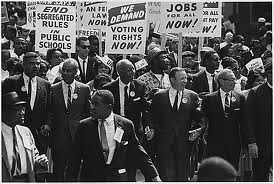
Back in the early1960’s, during the height of the Civil Rights Movement marchersthe world watched as violence and hatred played out every night on TV.  A few years later, we watched the horrors of the Vietnam War taking place on the other side of the globe, from the comfort of our living rooms. Those broadcasts made an indelible mark on me at the time, growing up in my fairly sheltered life in suburbia.  They opened my eyes to the world and I took it all in.
Yesterday, a tragic bombing occurred during the Boston Marathon that took the lives of three people and injured dozens more.  Seconds, after the first of the two bombs went off, everyone who was connected to the Internet, immediately knew what had happened, regardless of where they were in the world.  Photos, video and sound recordings went viral – globally and instantly.  Along with the “bonified” news broadcasts transmitted in real time, rumor and speculation spread instantly as well.

In the 50 plus years that have gone by since those early days of “live” news coverage, bringing “awareness” into our homes, technology continues to impact our lives in a profound way.  We are connected globally and there’s no turning back that clock.  We are no longer isolated from what is taking place anywhere and everywhere on the planet.

We are all collective participants. We can tweet, blog, post images and video on Facebook and numerous other social media platforms without really needing anyone’s validation, permission or vetting whatsoever.  Think of the power in that.  It gives everyone a voice on a global scale.  But along with that comes responsibility. It used to be that if you saw something written in a newspaper or heard it on the evening nightly news on TV, it was true and you could believe it.  But now what do we do?  How can we decipher and determine what we see and hear online is true and accurate? Ultimately, we need to make those judgments ourselves.

I’ve been thinking about this all morning, and I can only hope that as we become more connected through technology, that we start to embrace our similarities as human beings, instead of being split apart by our differences.  For those of us who are documenting the world through images and video, whether professionally or not, we are broadcasting on a global scale, on a daily basis.  Think about the power of that and the responsibility.
Building an Audience and Why It’s More Important Than SEO

If my sole goal in writing my blog were to attract as many hits as I could, I’d focus my concentration on using all the “right” SEO keywords throughout the context of my writings.  I don’t want to write like that though, with my thoughts focused on using certain key words, in order to get the most eyeballs.  I would rather write with my focus on what I have to share with my audience and what they want and value from me. That may yield a smaller audience, but it will be the right audience.

It’s nice when something I write goes viral, but I’m more interested in building an audience that is also a community of people who are interested in what I have to say, share or sell. I’m also interested in building a community who understand that by interacting with one another, they make each other stronger.  Ultimately, by finding that niche of people who are interested in, and value what I and other members of this “community” have to offer, I am building a sustainable audience. It takes a lot longer to build this type of audience, but in the long run, the returns are longer lasting.

Chris Guillebeau, is a guy who understands how to build an audience.  He writes a blog called The Art of Non-Conformity,

Yesterday he wrote:

“I used to run several little businesses that produced a good income, but they were completely dependent on external factors such as Google rankings or the lack of competition in my space. It was fun while it lasted, but when efficiency entered the marketplace, I had to move on. Looking back, I can now see that I didn’t really have a business; I was merely taking advantage of an opportunity. And most critically of all, I didn’t have an audience. “

He goes on to say:

“When you devote your attention to cultivating and enriching an audience over time, you have much more security. You aren’t dependent on the whims of Apple, the fluctuations of Google rankings, or whether a publisher will return your calls. Listen closely and the audience will tell you what they want. Even if you don’t always get it right, well, keep caring and you’ll get another chance. “

I’m a big fan of Guillebeau because he does listen to his audience. I know that I will always get something of value from his writings.  He gives me a reason to come back, whether it is to read his blog or buy another book or attend one of his World Domination Summits.

I try to apply this type of thinking in how I promote my photography and video business as well in promoting my film.  With my film, I have been able to get a very clear sense of who my audience is, through my FB fan page interactions, the film’s blog and recently by physically meeting people at various film festivals over the last couple of months.  I was able to interact with my audiences and to find out, what they liked about the film through their comments and questions.  I could see how I made them feel through the film how that prompted them to action.  Sometimes the action was to buy a DVD or ten DVD’s for friends and family. And sometimes, I find out later that I had motivated somebody who had watched the film to take some positive action.

I know that if I want to build a sustainable audience I need to do more than to just someone into a theater or to buy a DVD, I need to continue to create and share what I do best, and I will be giving the audience what they want at the same time.

It really all comes down to knowing what your audience wants or needs and being the one who has the desire and the skills to fulfill that need. To really build an audience you need to identify two things that will work together in making that happen:

What you are good at?

And

What your audience (client)  is looking for?

When those two things are in sync with one another, you’ll be building the right audience, which is far better than attracting lots of eyeballs but not giving them what they’re looking for.

The Power of Film in Making a Difference

When I set out to make a film about individuals on six continents who were making a positive difference on our planet, I didn’t set out to save the world.

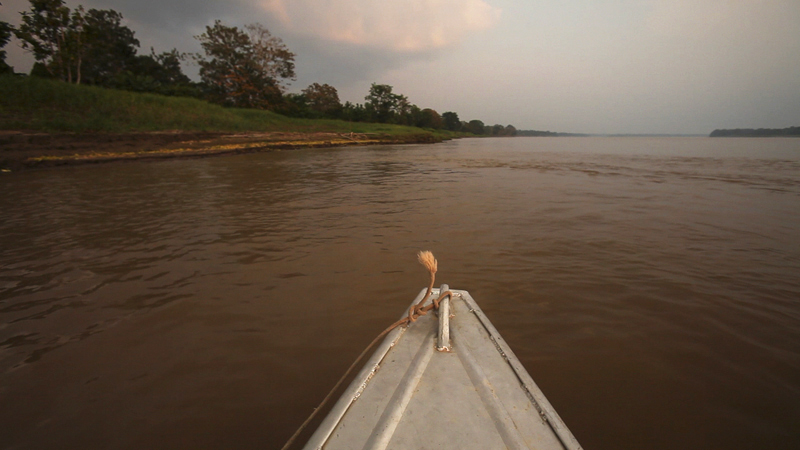
Amazon River

That would not only be something impossible to achieve, but it would diminish what I could do. And in fact, if I had set out to attain such an overwhelming feat of saving the world, I may have quit before I even got started – out of pure frustration.

But I do know the power of what a film can do.  I know I can use my craft and my tools in my own small way to make a difference.  And I know that by breaking down tasks into small actions; they add up to some very big accomplishments. Even with no backing, little funds and virtually no help, my daughter and I created a film that is doing exactly what we set out to do – inspire and move people to action to do what they can do to make our planet a better place.

All too often, we over think things.  Big productions, big money, celebrities and everything else that shouts out to us on the airwaves and the Internet dazzle us.  We start to believe that anything that isn’t grandiose isn’t worthy at all.  It’s a pity because in our attempt to gain perfection or notoriety – we shortchange ourselves and everyone else on what we could have accomplished.

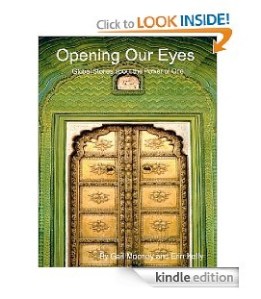
I’ve seen a lot of “small” films over the last few months as I travel from festival to festival with my documentary, Opening Our Eyes.  While many of these films are “small” – or at least deemed small by some – they are powerful in every way.  Sometimes, there may be only 10 people in the audience and I think what a shame, that these powerful films won’t be seen by the masses.  That is changing though, as filmmakers have access to new tools and platforms that can take their small films global.  I’ve witnessed that first hand.

As consumers we need to start taking notice of films, books and photographs that don’t have millions of dollars or stars behind them.

As filmmakers we need to stay true to ourselves, believe in our dreams and take advantage of the power of the age we live in to not only make films that create awareness but to get them seen on a global scale.

I hope I never lose sight of what’s possible through the power of film and how photographers and filmmakers can use their craft to create awareness and make our world a better place. These days, with a lot of hard work and determination, the individual has the power to make a difference globally.  We live in an amazing time – take advantage of it.

Tips for Young Photographers from an “Older” One

I’m not so sure if it’s true that we get wiser as we get older.  I think we just have a lot more time to make mistakes and hopefully learn by them.  When I was first starting out as a photographer, I was extremely fortunate to learn from some of the legends of my time – not just about photography – but all kinds of things.

Gail with children in small village along Amazon River, Peru

I think sometimes that we have become such a youth centric society in America that we forget what we can learn from those who came before us.

Some things I learned along the way:

  • Watch out for your “peak” years – most hit those peak earning years during their 30’s and 40’s. When you are at the height of your career, remember to live in the “now” and enjoy the ride. Things change quickly in a creative business.  Be prepared for the peaks and the valleys.
  • Stay away from trends and be authentic to yourself – Don’t emulate others’ style, find your own.  Listen to what your inner voice is telling you, despite what happens to be the trend du jour.
  • Be proactive – not reactive – Don’t fight change – it’s an impossible task.  Things are always changing. Nothing is static.  Doing nothing is not staying the same – it’s actually going backwards. By the time people react to change – it’s usually too late.
  • Say yes more than no – Whenever I’ve been brave enough to say yes to a job that I didn’t think I’d like or be able to handle, it has always turned into one of my most rewarding experiences, either creatively, financially or both.
  • Be more vulnerable – if you’re not feeling vulnerable, even at the peak of “success” – you aren’t pushing yourself enough.  During the entire making of my film, Opening Our Eyes, and even now, I have felt vulnerable – first in the journey itself around the world and the trials and tribulations that came with that and now dealing with the rejections that come with submitting the film to top tier film festivals.  But I thrive on the wins and we’ve been honored at so many wonderful festivals and that wouldn’t have happened – if I hadn’t been vulnerable.
  • When a door closes – a window always opens if you recognize opportunity – My worst moments have always been followed by my best ones.  Sometimes, something has to happen to motivate me to take the next step.  Unfortunately, when the crappy stuff happens, I feel least empowered and optimistic but I plow ahead because I know this must happen to get me where I need to be.
  • You’re never too old to be mentored – I love learning.  In fact I love it more now than I did when I was younger.  I love the whole idea of mentoring and I feel that it works both ways.  When I mentor someone else, regardless of age, I always end up learning as well in the process.
  • Marketing & Promotion: Do more pull – less push – The most effective promotion and marketing efforts on my part have been when I’ve spent more time “creating” for the sake of creating, rather than for the intent of marketing.  When I’m working on a project that I am passionate about, people who hear about it take notice and the word spreads.  When that happens, clients or media attention comes to me.  Whenever I have spent more time, “marketing” to potential clients or trying to get publicity, it has never worked.  It’s much better when it happens organically.
  • Network outside your profession – I’ve always found it more interesting to engage with people in all sorts of professions.  As a storyteller, I thrive on meeting different people.  As a photographer, it makes sense on many different levels.  I have found that by broadening my circle of friends and colleagues, it has led to many interesting collaborations.
  • Making mistakes ISN’T a bad thing – it just means you aren’t afraid to try new things.  Well I should probably not imply that I’m not afraid – quite the contrary – but I don’t let my fears become my reasons not to act on something. I often blog about my mistakes and in fact they consistently are the most read posts.  I think people would rather read about others’ mistakes than read manuals.
  • Don’t focus on the gear – focus on the story or the message.  The story never goes out of style.
  • There are no overnight successes – just ask anyone.  We just don’t hear about people until they do become a “success”.  Be prepared for rejection along the way because it comes with growth and consistently trying.

Living a Remarkable Life in a Conventional World

Have you ever had an experience that you just don’t want to end?  I have.  I have just returned from

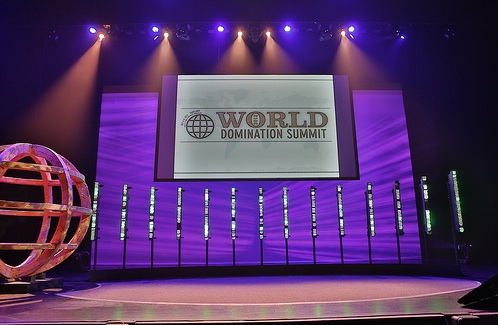
Photo WDS by Chris Guillebeau

The World Domination Summit in Portland, OR and I want the experience to linger on – I don’t want the thoughts and feelings inside to end.

It has been hard and amusing when I try to explain to someone what this conference was all about with a name like The World Domination Summit.  It sparked impromptu conversations with people I met in elevators, in restaurants, or on the street, when they spotted my tag.  I told them that it is a gathering of people – 1000 people – who wanted to live a remarkable life in the conventional world we live in. Unlike other conferences, where attendees come from similar professions – this conference was attended by people of all ages, from college kids to 70 year olds and from all walks off life.  But, everyone had one thing in common – they wanted to live a rewarding life – a life of hope, happiness and possibility.

When I signed up last January, I knew it was bound to be an interesting weekend. I had no idea who the speakers were going to be, but the first WDS that Chris Guillebeau and his team organized last year, was quickly sold out and I didn’t want miss out on this year’s event.  When the tickets were put on sale for this year’s conference – they sold out in 10 minutes.  1000 tickets were sold – 5000 people were waitlisted.  I was one of the fortunate ones.

I should point out another unique thing about this conference – it is entirely done with volunteers.  Even the amazing speakers volunteer  – speakers like Brene Brown, Scott Harrison, Scott Belsky, and Chris Brogan.  There were informative and quirky workshops like “ The Right-Brain Business Plan: Turn Passion into Profit” to “Mondo Beyondo Meetup: What are your Superpowers” and there were plenty of other meetups around town, one could find out about on the WDS.fm twitter page.

I met the most interesting people, from all over the world and it was easy to pick up on other people’s enthusiasm and energy. 1000 people who thought a little bit different from the status quo. – people who looked at the whole notion of “business” differently.  They understood the importance of both serendipity and strategy, the power of mentoring and leading by service and soul.

After the final keynote speaker, Chris Guillebeau announced that he had a surprise.  He stood on the stage with an empty chair beside him and talked about the conference itself.  How it had doubled in size from the first year to the next and how he capped it at 1000 people, even though he had another 5000 people on the waiting list.  He talked about the fact that the conference had no sponsors and that nothing was promoted – there was a table where one could buy some of the speakers’ books but they were never promoted. Chris said he decided not to have sponsors because he didn’t want to devote time to sponsor announcements. And then he said that an anonymous donor came forward and made a sizable donation.  Chris and his team talked a lot about what they would do with this money and they decided to give it back to all of the attendees.  And then he told us that when we left the theater we would be handed an envelope with a note and a $100 bill!  Chris and his team of volunteers would be handing out $100,000.

As I left the theater I received an envelope with a crisp new $100 in it wrapped around a note that said:

The $100 Investment

Thanks for making the #WDS2012 a fantastic experience.  We’d love to see how you can put these funds to good use.  Start a project, surprise someone, or do something entirely different – it’s up to you.

The World Domination Summit

Incidentally, when we first checked in for the summit, we were handed our credentials, a t-shirt, and a backpack.  Inside the backpack was a stainless steel water bottle and Chris’s new book “The $100 Startup“.

I don’t think there will be one person who received that envelope that day who won’t think twice about spending that $100.  And think about the power in that – think about the possible outcomes.  That’s a refreshing way to look at “business”.  If that type of philosophy has a chance of dominating the world – I’m all for it.

“Unused creativity is not benign. It turns into grief judgment and shame.”Brene Brown – speaker at WDS 2012

ASMP and Motion

I’m on the National Board of Directors of the ASMP, The American Society of Media Photographers.  About four years ago, I was asked if I had ever thought about running for the board.  The person who had asked me this question, knew that I had been shooting video in addition to still photography and thought that it might be a good idea to have someone on the board who had an understanding of this medium.  That was four years ago, and even though I had been shooting video for over 10 years – the “explosion” of this medium (in terms of the demand) had really just started.

I did run, served three years, ran again and got elected. I’ve shared my knowledge of this medium through meetings, seminars, blogs, emails and during Q&A’s when I screen my film.

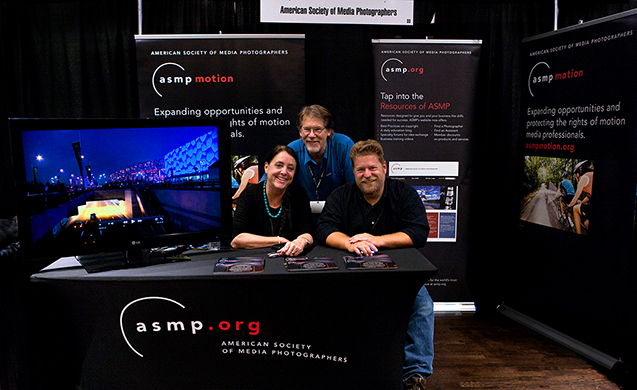
Gail Mooney, Tom Kelly and Chris Hollo at ASMP booth, DV East

This past Wednesday, I spent my day manning the ASMP booth at DV East Expo. Former national board member (and now President of the ASMP Tennessee Chapter) Chris Hollo and my partner Tom Kelly joined me.  We were well prepared with a large flat screen monitor displaying a loop of our members work. I was intimate with the reel as I had just finished editing it and I was very impressed with the quality of the work.  It certainly was an attention grabber.

So, what was ASMP, a trade organization of still photographers, doing at a video expo? Essentially, we were there to provide a community and reach out to other professionals who are shooting both mediums and provide information about sound business practices.  If this demographic does not understand the value of copyright or value the concept of licensing, then it will ultimately affect the way business is done in the still photography industry.

Some people may think that ASMP is becoming too inclusive or is creating more of a problem by suggesting that video may be the answer for its members, only for them to find out, that industry is glutted as well.  The old business models of bloated production companies with fat budgets are hanging on for dear life, along with the old business models of the film industry.  But if you think outside the box, especially in terms of how you structure your photography business – the opportunities are out there.

ASMP doesn’t cease to be an advocate for its still photographers who have no interest in motion – it’s actually making the entire industry healthier by educating the hybrid competition.  A lot of the people I talked to yesterday, shot both still photography and video, but even the ones who just shot video – called themselves “photographers” and they all had questions about “the business”.

I’m so closely associated with  “video” by members of this society; they tend to forget that I am a photographer.  I don’t call myself a photographer simply because I spend 50% of my time shooting still images, or call myself a videographer because I spend the other 50% of my time producing video. I don’t want to define myself by my tools, at all. I “see” as a photographer, with the vision of a filmmaker and the heart of a storyteller.  I also have a strong desire to stay in business doing what I love to do.  By being an advocate for sound business practices across these mediums, I get a lot more back than I give.  All photographers’ benefit, regardless of what type of cameras they shoot with.

Friend and fellow board member Ed McDonald, tells his own story about how he had become too rigid at one point in his career, as far as how he perceived himself and what kind of photographer he was. He found that when he became more flexible in how he “defined” himself, his business got better. As I think about Ed’s story, I know we have a lot in common.  For me, when I stopped restricting myself to just shooting still images – not only my business got better – so did my still photography. Shooting motion has made me a better still photographer because it has made me a better storyteller.

I got an email late last night from someone I ran into at the expo.  They wrote:

“Thanks for your vision and inspiration and all you’ve done for ASMP.”  So simple and so poignant and I thought – “isn’t that what I was supposed to do?”

Making a Movie With a DSLR and (crowd) Funding It

The first thing I will say is – I did it!  I successfully created a movie

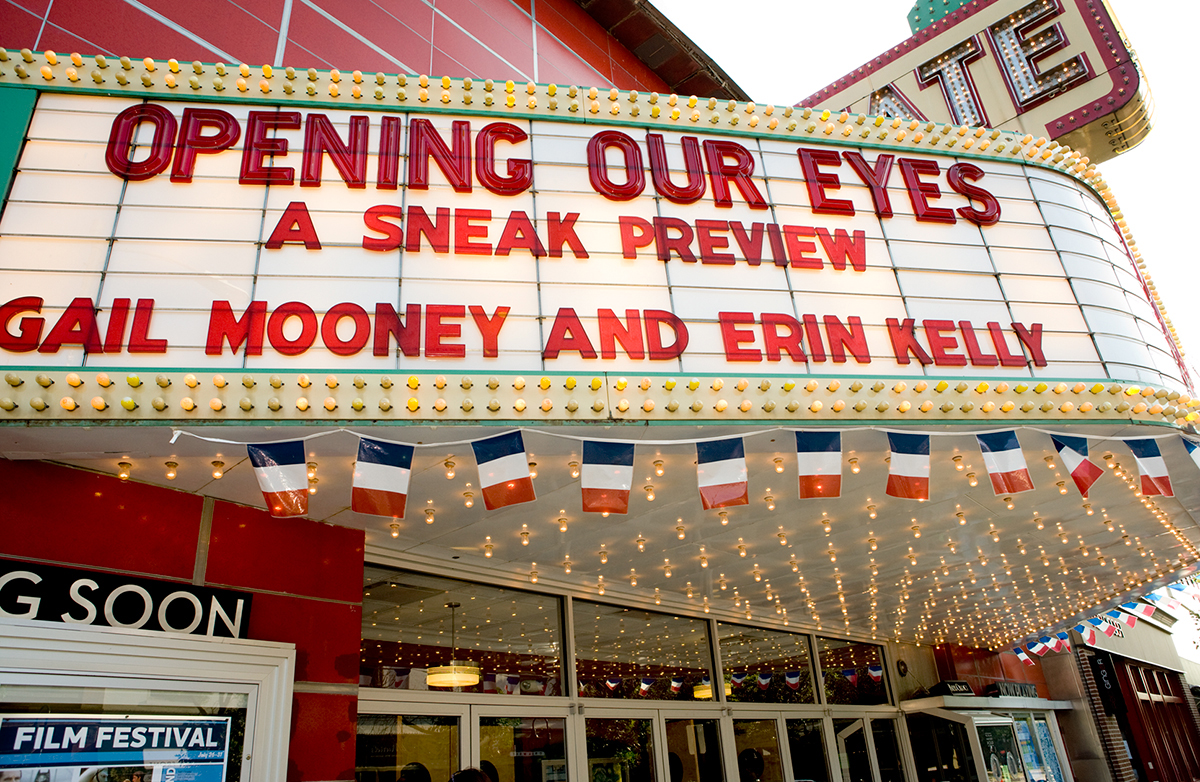
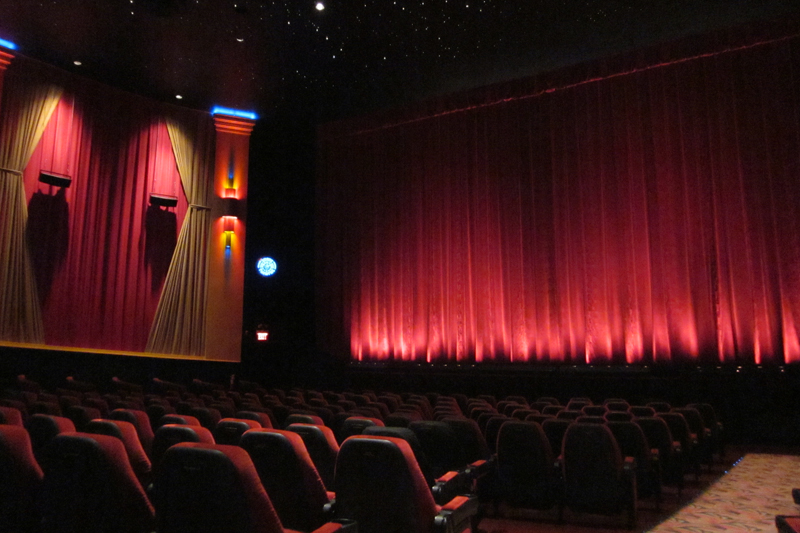
State Theater, Traverse City, MI

– from soup to nuts – with the smallest of micro-budgets, a tiny crew and a lot of hard work.  We’ve had some nice awards at film festivals along with a slew of rejections, and it has been one of the richest experiences of my life.

I’ve written about the journey and the technical aspects of the making of this film, on this blog and the Opening Our Eyes blog.  One of the most popular posts on this blog (it continues to get dozens of hits each day) is the post I wrote about gearing up for this movie. I’ve written so much about this project that I decided to collate a lot of my material and produce a couple of ePubs.  One is available now and hopefully, the 2nd one will be online soon.

A good idea, hard work and a lot of determination are essential in pulling off something like this – and to be crazy enough and confident in yourself to think you can do it.  I can tell you one thing – the confidence factor had its ebbs and tides.  I found that many times my level of confidence changed with my “hits” and my “misses”.  That certainly came into play during both my crowd funding campaigns on Kickstarter and IndieGoGo.  I’ve been thinking a lot about crowd funding lately because it seems like just about everybody is doing it these days. It certainly has exploded since I reached my Kickstarter goal, a year and a half ago. Seth Godin announced today that he is launching a Kickstarter campaign to publish his ePubs – sounds like his traditional publisher doesn’t want to take the risk and finance it until he sees if “the people” are interested.

I have to tell you that I was somewhat bothered when I read Godin’s blog. Kickstarter doesn’t accept every project that gets pitched to them.  When I did it the acceptance rate was about 40-45%.  I don’t know what it is now, but it’s got to have dropped significantly.  And that’s the thing – when “publishers” won’t take the risk, and high profile writers turn to their readers to back them, it’s going to be harder for the true “indie” to get noticed.  The same thing has happened with a lot of film festivals.  Film festivals started out, as a place for indie’s to screen their movies.  Now, at many of the festivals, the “indies” are competing with the big indie studios.

Things are constantly changing.  It becomes harder for the “indie” to get funded and noticed but it’s also easier because of social media. If  you are thinking of embarking on a project – a film or a book – and you aren’t sure if you should do it or can afford it – you can either talk yourself into it – or out of it.  It’s kind of like looking at the glass, half full or half empty.  I can choose to muse on my losses and put myself in a funk, or I can reflect on my wins and the rewards that have come into my life with the making of this film, and feel good about myself.  Each day, I ask myself which way do I want to tip? it’s up to me to determine my value – not anyone else. And today, I think I will feel pretty good about what I was able to achieve.

Monetization of Photography in Spite of a Lousy Economy

I talk to a lot of photographers. I don’t define the word “photographer” by the type of camera he or she shoots with. Whether someone is shooting with a still camera, a traditional video camera, a motion picture film camera or a hybrid camera that shoots both stills and motion – a “photographer” these days is apt to embrace more than one of these tools.

Regardless of the tools you may use, I’ve come up with a few tips on how photographers can stay afloat and make money in this continued stagnant economy.

  • Think outside the box – don’t think of yourself as one who just shoots still images. Even your “still” clients will have a need for motion imagery these days.  It may not warrant the need for them to hire a big video production crew to make a broadcast spot.  But it could be one of your corporate clients needs a “talking head” for their website. Even if you don’t shoot motion or don’t want to – collaborate with someone who has these skills to fill your client’s needs instead of sending your clients  elsewhere.
  • You don’t need someone else to commission your services in order for you to make a living. When photographers take on personal projects, not only are they creating a buzz and getting noticed by potential clients, they are also creating their own “content” to monetize. It is possible now to get our content to market without the need of a middleman. Portals are open and plentiful to all.
  • Take advantage of what is “free”, rather than be put out of business by it. There are so many ways to build your brand and get noticed without spending a fortune. The costs of building and maintaining a website have dropped significantly because of advances in technology. And utilizing social media to create a buzz and get the word out about your company is virtually free with Facebook, Twitter,LinkedIn and YouTube. But be prepared to do the work and discipline yourself because this territory is ripe with distractions.
  • Re-purpose your content. If you’ve been blogging or have something useful to share – consider packaging your “knowledge” into ePubs, podcasts or “how to” webinars. One thing I’ve learned about making an ePub is that you can either do it yourself or hire a formatter so that it gets to market quickly – via Amazon, Barnes and Noble or the iTunes platform. Price it right – and offer more than one ePub at a time. (I’m working on my 2nd ePub now) In this market, if someone has just spent $3 or $4 to buy your ePub and they see you have another one for sale – it’s not a big stretch for them to buy that other book you offer at the same time.
  • Collaborate with others. Partner with others to put on webinars, podcasts, call in phone seminars etc. Use this opportunity to build your own brand. Don’t always feel that you have to be the only “act” offered. In fact many times, if you join forces with other creatives, it will get you further than if you are the only speaker in a half filled room. Get out there and get noticed and learn from your colleagues at the same time.
  • Be authentic. I cringe when I write that word because it has become a bit trite. I guess in a way I have always been authentic. In fact I just can’t help myself. If you are true to yourself, you will be ready, eager and able to work hard on your dreams. And hard work is exactly what is necessary to make it in this profession.  You’ve got to want it bad enough in order to do the work. If you are a clone of other photographers, you’re career will be short lived. I guarantee the photographers that you are emulating will be “moving on” because their passion is driving them to new things. So, what happens to the cloned versions then?
  • Don’t focus solely on the money. Easy to say and really hard to embrace when you can’t pay your mortgage. But look at any successful person – I don’t care which business you choose to look toward in terms of finding successful people – but you’ll see that most people who have “made it big” were not driven by the money. I’m not saying that money is not important, but if you are solely focused on the money and not on the act of creating – it will show.   Being too focused on the  money part of the equation, can sometimes push it away. People sense it. It’s human nature to want to be around a “winner” – not someone who is begging for a job to keep them afloat financially.
  • Be patient. Everything turns around. While the old days and ways of doing things won’t come back, better opportunities will replace them. Don’t be paralyzed by your own fears. Do what you can that won’t cost you a lot of money and there is plenty you can do. Work social media, learn new skills – audio, editing, writing etc., network with people, create new content for ePubs, webinars, and podcasts. Use your imagination, pursue what you are passionate about and when the economy turns around – you’ll be ready.

Add to FacebookAdd to DiggAdd to Del.icio.usAdd to StumbleuponAdd to RedditAdd to BlinklistAdd to TwitterAdd to TechnoratiAdd to Yahoo BuzzAdd to Newsvine

It’s a Wonderful Life

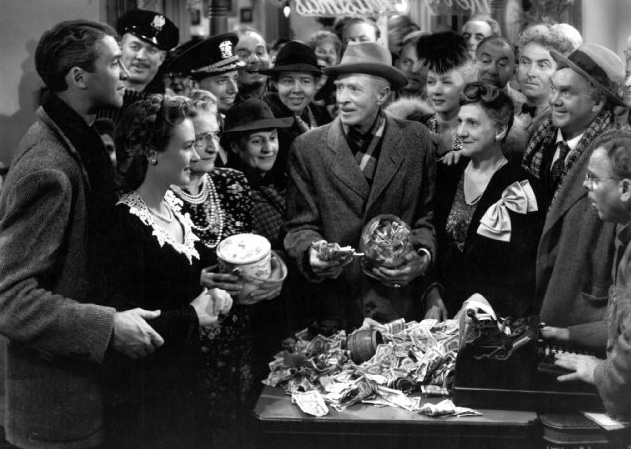
We have a holiday tradition in our family. Every Christmas Eve we watch the classic Capra movie, “It’s a Wonderful Life.” No matter how many times I have seen it – I cry every time at the end when George Bailey, Jimmy Stewart’s character, opens a book that is inscribed “no man is a failure who has friends.” The movie is about George Bailey a frustrated but compassionate businessman following in the footsteps of his father. He runs a small building and loan company, barely making a profit, but making it possible for his customers – his friends and neighbors – to get a home.

There’s a crisis in the film where George wants to end his life. An angel comes to him and shows him what it would have been like if he had never been born. That’s when George realizes how much his life has affected the lives of others and what a rich life he really has.

I think we all tend to forget how our lives affect the lives of others. In the things we say. In the things left unsaid. Often times we don’t even realize how we affect others because we are too narrowly focused on ourselves and only see our own perspective. Many times, our perspective might not be what’s really happening at all. The funny thing is that you never really know how your life has affected another’s unless they tell you – and most people don’t.

Every so often when I get frustrated by people’s actions, I remind myself that those very things that people do that make me feel bad or angry or sad – are the human imperfections that make life what it is. I remind myself that my imperfections and actions have an affect on others as well.

Every now and then, I’ll get an email or a Facebook message where somebody lets me know that I affected them in a positive way. It’s usually very something simple that I did or said, but it makes me feel good to hear that I made someone else’s life a little bit better.

Our world has changed a lot since Capra made this movie in 1946. A “friend” has taken on a different meaning – certainly a broader as we communicate globally with ease. But ultimately people are people with the basic human need of wanting to be loved and to know that someone cares about them. When we begin to understand that – it is what we do for others that brings the most rewards to our own life – then it really is a wonderful life.

Add to FacebookAdd to DiggAdd to Del.icio.usAdd to StumbleuponAdd to RedditAdd to BlinklistAdd to TwitterAdd to TechnoratiAdd to Yahoo BuzzAdd to Newsvine

Five Top Tips for Emerging Photographers

I talk to a lot of young aspiring photographers these days and invariably I am asked, “What advice would you give someone who is just starting their career in photography? – Is there a future? – Can I make a living?”

I don’t have a crystal ball but I do have 35 years of experience behind me but yet the enthusiasm and outlook of a 25 year old.  I remind myself of what I learned from my mentors when I was just starting out. One mentor, who shaped my career, was art director Adrian Taylor of Travel & Leisure Magazine. Adrian taught me a lot – about magazines, about the story, about style and taste and most importantly he gave me the confidence to believe in myself.  Adrian gave two young, naïve photographers, my partner and myself a chance and in return – we always gave it our all every time we set out to shoot a story.

Add to FacebookAdd to DiggAdd to Del.icio.usAdd to StumbleuponAdd to RedditAdd to BlinklistAdd to TwitterAdd to TechnoratiAdd to Yahoo BuzzAdd to Newsvine

With that said, I would not be where I am today if it had not been for mentors like Adrian Taylor and my greatest joy at this point in my life is to pay that forward to photographers just starting their careers.

  • Learn video – Video is no longer a “specialty niche” or in fact a separate genre at all.  In the very near future – which is already upon us – a photographer will need to know how to shoot both stills and motion – or partner with someone who does.
  • Stay true to what your inner voice is telling you.  For example, if your passion is to be a photojournalist, don’t listen to people who are telling you that photojournalism is dead and that newspapers are a thing of the past.  While “printed” newspapers may be dying out – journalism and photojournalism is not.  Don’t let others’ dogma determine what your path should be.
  • Collaborate with your peers.  When I was first starting out, photographers kept their clients, their techniques and their ideas to themselves.  But I have found that whenever I have collaborated with others – we all push the bar to the next level – each bringing their own strong suits to the project.  As a subject of my film Opening Our Eyes told me “We’ve got to shine each other up.”
  • You don’t need the validation of others to proceed with your idea and make it into a tangible plan and product.  As far as publishing and/or distribution is concerned – the gates to the kingdom are open and the kingdom is the entire world.  We are living in a time of empowerment for the individual and for a content creator that is profound.  If you are willing to do the work – the rewards are bountiful.
  • Act on the ideas that don’t go away.  It’s easy to let resistance sabotage you.  Resistance comes from many places – your loved ones, friends, your peers – but mostly yourself.  Stop talking yourself out of ideas and start acting on the ones that just won’t quit you.

I have made my work my pleasure in my life.  I have always found it difficult to separate the two.  When you feel that – you’ll know you are on the right path.