How To Survive as a Photographer or Life in General

I’m headed into New York City today to speak to college students who are studying photography.  A friend of mine who is an educator and also a photographer himself asked me to talk to his students.  My first thought was to talk to them about video, because that is what I have been doing lately – speaking to groups of photographers about video.  But then I thought about it more and thought it would be unfair to show a power point presentation about another skill set.  More importantly, I thought it would be another talk about another tool.

So this morning I switched gears and I started writing down some thoughts that I feel have helped me survive the life that I have carved out as a visual communicator. I remind myself of these ideas whenever I have drifted from my life’s purpose and it gets me back on track.

  • Seek opportunities – or better yet take notice of them when they come along – they are everywhere if you open your mind to them. I have found that some of the jobs that I almost turned down because I thought that it wasn’t for me have been the most rewarding jobs I’ve ever worked on.  Here’s a blog that I wrote about one of these opportunities that I almost didn’t embrace. “Breaking the Spirit”
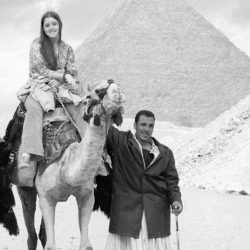
  • Find your passion – don’t define yourself by your tool – whether it’s a still camera or a video camera or something that hasn’t been invented yet.  Stay true to who you are and how you “see” the world.  I need to be reminded of that every once in a while. Recently, a friend of mine got me thinking about whom I am, and I realized that I’m really that same 19-year-old girl who took off around the world with an insatiable curiosity for people and cultures.  I became a photographer because I wanted to share this passion with others and I use my camera as a tool toward that end.
  • Don’t just “be” a photographer – By that I don’t mean that you should also shoot video – although it wouldn’t be a bad idea.  What I really mean is that in order to be a visual communicator, you need to have something to say.  When I attended Brooks Institute many, many years ago, the constant tech talk used to bore me to tears.  I had just come back from hitchhiking around the world and I knew there were more interesting topics to talk about than f/stops and shutter speeds. The funny thing is I don’t remember the technically perfect photos that were critiqued in class if they didn’t have something else going for them – something that evoked a feeling. It’s kind of like an actor who studies acting technique but doesn’t understand or portray the character they are playing.
  • Keep learning and growing – I’ve never stopped learning.  My college days and days at Brooks Institute are long over, but I’m constantly learning and trying new things.  I’m an explorer by heart and there will always be something out there to discover.
  • Take risks – The most important things that have ever happened to me have been also been the things that scared me the most. Nine out of ten times things didn’t work out as planned or what I had hoped for.  But it’s that one time when things did work out that brought great value and rewards to my life.  So when I try to talk myself out of doing something, based on my fears, I think about the times when the risk did pay off.  If I don’t take the chance – I know I won’t have a hope for anything happening at all.
  • Don’t listen to the naysayers – I try not to let others talk me out of my dreams.  I dodge the roadblocks that people try to put in my way.  Surround yourself with other dreamers – not the half empty crowd.
  • Be a publisher – Don’t wait for someone else to validate who you are by assigning you a job and handing you a lopsided contract that is not in your best interest.  Distribution is king in regards to content and it’s never been easier in these days of the internet and social media.

Lastly be true to yourself and love life – all facets of life, the bitter and the sweet.  We are all just tiny blips on the timeline of life – make the most out of it in your own way.

Add to FacebookAdd to DiggAdd to Del.icio.usAdd to StumbleuponAdd to RedditAdd to BlinklistAdd to TwitterAdd to TechnoratiAdd to Yahoo BuzzAdd to Newsvine

NAB – A Week of Gadgets, Geeks, and Great Inspiration

Today is the final day of NAB and as usual my head is exploding with ideas and information. But before everything totally leaves my head – I’ll share some cool things with everyone.

I come to NAB to learn, however this year I also needed to research and buy some things for my upcoming project Opening Our Eyes. In particular I was looking for a stabilization rig for my Canon 5D and 7D. My timing was perfect because at this year’s show just about every booth had gear for the DSLR cameras – the show was all about either the HDSLR or 3D. I settled on the Zacuto Striker because I wanted something lightweight and quick to put on a tripod. Zacuto had redesigned the plate making the weight distribution better and it felt just right for me. And that’s important – get the right rig for you – if at all possible visit a vendor where you can try these stabilization rigs out so that you buy the one that literally “fits” you and your needs.

One of the biggest buzz items was the HD Hero, a tiny wearable video camera for sports, made by GoPro and at the $200 show special – they sold out the first day. But check them out – even at the retail price of $300, they are amazing little cameras that can be used in all types of situations where you need something small.

RedRock Micro debuted their new HDSLR remote which uses sonar for auto follow focus. The booth was mobbed with attendees dying to get their hands on this accessory that is priced around $1000. Check out the review from the show floor at PhotoCineNews.

Canon unveiled their latest tapeless camera the XF305 that will give the Sony EX-3 a run for their money. Even as stunning as this camera is, Canon didn’t integrate that nice big chip/sensor that we see in their hybrid HDSLRs. But Panasonic did and they had their new prototype camera in a plexiglass box perched on a museum type pedestal. The Panasonic AG-AF100, is the first professional micro 4/3-inch video camcorder optimized for high-def recording. that did make use of that large sensor that everyone seems to be waiting for – stay tuned. Canon-are you watching and listening?

I’m maxed out right now with technology and information yet inspired and energized at the same time by the notion of possibilities. If you’re a still photographer singing the blues because of the lousy economy and the changing paradigm of print giving way to electronic delivery – I can only say one thing – convergence. Embrace that notion, get energized by the idea and open your mind to the possibilities and opportunities that are exploding in this new world of information technology.

Add to FacebookAdd to DiggAdd to Del.icio.usAdd to StumbleuponAdd to RedditAdd to BlinklistAdd to TwitterAdd to TechnoratiAdd to Yahoo BuzzAdd to Newsvine

Tools of Revolutionary Change Are In Everybody’s Hands

I heard Ray Kurzweil speak yesterday at the NAB conference. His keynote address was titled: Acceleration of Technology in the 21st Century and simply put, I was knocked out by his insights and clarity on our changing world. The Wall Street Journal describes Kurzweil as the “restless genius” and Ray has been included in PBS’ list of “16 revolutionaries who made America”, along with inventors of the past two centuries.

To hear people like Ray Kurzweil speak, is exactly why I attend the NAB conference every year. Sure, it’s fun(and overwhelming) to walk the show floor and see the latest and greatest tech tools and toys, but my focus is always on listening to and soaking up whatever bits of insights I can from visionaries like Kurzweil.

In speaking about information technology and its affect on us all, Ray stated “There’s no way to establish the same business model and social contract and protect intellectual property if the public doesn’t embrace and respect it”.  Just look at what happened in the early days of shifting from analog to digital, and how the recording industry reacted when it became easy to “share” music electronically. When they tried to hold onto their old business model and along with that bullied the “public” – it pretty much blew up in their face.

We all should have learned from that. But if you look back to when photography went from the analog to the digital world – many photographers made that same mistake with their clients. Ray goes on to say that “technology progresses in an exponential manner and if you measure the underlying trends in technology – it’s predictable”. “Our intuition is linear”. What that means is that this paradigm shift in information technology is only going to accelerate.

He went on to say that “once things become based on information technology, they progress exponentially”. This is happening right now in the world of healthcare and medicine. As it too becomes based more on information technology as far as research and development, it’s not hit and miss or trial and error anymore.

Information technology is democratizing our world. One could say that this is a prime reason for political systems like the old USSR to collapse. It’s hard to control a country’s people when they are open to information. ” The tools of revolutionary change are in everybody’s hands”. Kurzweil cites the example of the Chinese and Google. He says, “When you limit your own success like the Chinese with Google, ultimately you will strangle yourself”.

So what can photographers and other creative types get out of all this? We must recognize that if we base our business model on our gadgets and our tools – we will limit our own success or worse yet create our own demise because the tools of disruptive change are in everybody’s hands. But if we understand that and build a business model that is not based solely on technology but on our vision and it’s perceived as “fair” to our clients and the public – then we will thrive. We need to open our eyes and adjust as to how we distribute our intellectual content.

I’ll leave you with a simple analogy that Ray cites: In the early 1900’s if you saw yourself in the horse and buggy business, you should have been concerned. But if you saw yourself in the transportation business, then you saw opportunity as the automobile changed that paradigm. So, if you see yourself and define yourself by what camera you shoot with – you’re in big trouble as technology races forward. But if you see yourself as a visual communicator and embrace the opportunities made possible by technology – then you’ll survive and thrive.

Add to FacebookAdd to DiggAdd to Del.icio.usAdd to StumbleuponAdd to RedditAdd to BlinklistAdd to TwitterAdd to TechnoratiAdd to Yahoo BuzzAdd to Newsvine