Hitting a Nerve

English: camera Français : video
English: camera Français : video (Photo credit: Wikipedia)

What an interesting week it has been. This past Friday (the day before a long holiday weekend), on impulse, and feeling a little lazy, I shared a link on Facebook to a blog that I had written 8 months ago, How Motion is Changing the Future of Photography.  I didn’t expect to get thousands of hits in 2 days time – it had barely gotten noticed when I posted it the first time, back in February, 2013.

What had happened was that Rob Haggart linked to it from his blog, APhotoEditor and it went viral after that – all around the world.  That’s what amazes me about the age we live in, that something someone says, or writes can be heard globally in record time.  It truly demonstrates the power of “one”.   It’s staggering and something I never would have imagined some 35 years ago when I began my career as a still photographer.  In fact, most of what is happening now in photography. I never could have imagined – not in my grandest dreams.

What surprised me most about the comments I received from that post, was that most folks just couldn’t begin to imagine the future that I was contemplating in my writings. With the convergence of cameras, in regards to stills and video, I imagined a future, where a still image might not be captured by a “still camera” or by a “still photographer” for that matter.  A still image may come from a “frame grab” captured by a video camera.  I struck a nerve for sure, and most people thought I was predicting the demise of still photographs – perhaps because of Ron’s headline, excerpted from my text “ I think we are at a tipping point as far as the future of the still photography business”.

To be clear, I do think the photography “business” is at a tipping point, but not just because of the convergence of still and video cameras, but because of the glut of imagery.  The iPhone has been the game changer in that sense. Everyone has become a photographer and has a camera on them at all times, taking, sending and sharing millions of still images globally every day.  What that means in terms of the still photography industry is that if you want to stay in business as a professional photographer, you will need to create something that is authentic and unique to only you AND more importantly, you will need to provide a product or service that a market is willing to pay for – and pay enough that will sustain you in an industry that requires a reinvestment in tech and gear every two years, minimally.

In my attempt to “get off easy”, by rerunning a blog that I had written and previously posted more than a half a year ago, I learned a couple of things:

  1. Timing is everything
  2. It’s all perspective.

That’s the one good thing about getting older; I have a lot more perspective.  I’ve learned that the future is not at all like I imagined it would be.  I never could have imagined half the things that are happening right now.  And I’m sure that if I’m still alive 20 years from now, it will be a future filled with things and ideas that I could never even begin to imagine.

I will be moderating a panel at PPE this year, sponsored by ASMP “How Motion is Changing the Future of Still Photography”.   Our panelists include, Vincent LaForet, Brian Storm and Chase Jarvis.  Join us, it will be a discussion you won’t want to miss.
Change

  • “The secret of change, is to focus all of your energy, not on fighting the old, but on building the new.”  Socrates
  • “Change before you have to.”  Jack Welch
  • “Never believe that a few caring people can’t change the world. For, indeed, that’s all who ever have.”            Margaret Mead   block-isle-jetty
  • “If you do not change direction, you may end up where you are heading.”  Lao Tzu
  • “It is not the strongest of the species that survives, nor the most intelligent that survives. It is the one that is the most adaptable to change.”  Charles Darwin
  • “For the past 33 years, I have looked in the mirror every morning and asked myself: ‘If today were the last day of my life, would I want to do what I am about to do today?’ And whenever the answer has been ‘No’ for too many days in a row, I know I need to change something.”  Steve Jobs
  • “Progress is impossible without change, and those who cannot change their minds cannot change anything.”  George Bernard Shaw
  • “Change brings opportunity.”  Nido Qubein
  • “To improve is to change; to be perfect is to change often.”  Winston Churchill
  • “If you want to make enemies, try to change something.”  Woodrow Wilson
  • “There is nothing permanent except change.”  Heraclitus
  • “It’s the most unhappy people who most fear change.”  Mignon McLaughlin
  • “If there is no struggle, there is no progress.”  Frederick Douglass
  • “Progress is a nice word. But change is its motivator. And change has its enemies.”  Robert Kennedy
  • “One of my favorite philosophical tenets is that people will agree with you only if they already agree with you. You do not change people’s minds.”  Frank Zappa

What Professional Photographers Can Learn From Kodak

To cut right to the point, Kodak

The logo from 1987 to 2006. "Evolution of...
The logo from 1987 to 2006. “Evolution of our brand logo”. Eastman Kodak . . Retrieved 2007-09-26 . (Photo credit: Wikipedia)

found out that “quality” wasn’t necessarily what the public wanted.  In Seth Godin’s blog today, “Misunderstanding quality”, he states:

“It turns out that what people actually wanted was the ability to take and share billions of photos at vanishingly small cost. The ‘quality’ that most of the customer base wanted was cheap and easy, not museum quality.”

He goes on to say:

“Quality is not an absolute measure”

Before you shoot me, or Godin, stop and think about the world we live in where we are bombarded by millions of images daily.  Some are great, some mediocre and some are really bad in terms of quality.  Add to that the millions of videos on You Tube and we are witnessing an avalanche of imagery.  It makes my eyes glaze over and my head hurt just to think about it, let alone try to digest it all. But the fact is that we have become a culture where imagery is quickly replacing text to communicate.

So, with imagery becoming so prolific in terms of how we communicate, why are so many professional photographers struggling or going the way of Kodak and Polaroid?  Because they assume that the general public wants quality images.  Quite honestly I wonder if most people these days even notice the difference. Like Seth says, they just want to take photos and share them with their friends. Ironically, companies like Kodak, Polaroid, and other camera manufacturers, along with the ever-growing supply of electronic platforms enable us to do this easily and cheaply.

So how does a “professional” photographer compete in a culture that doesn’t always appreciate or need quality imagery?  Two suggestions – recognize what the market wants and is willing to pay for and produce something that is unique and authentic to whom you are.  Oh, and one more thing – don’t whine about the state of the industry because it won’t do you any good.  Instead, of looking in the rear view mirror and lamenting the past, embrace the opportunities that technology has brought to our craft and prosper. And remember that “change” is inevitable, so stop resisting it.

5 Tips for Filmmakers (and other artists) for Building an Audience

The good news for Indie filmmakers, musicians, photographers and new media artists is that technology enables us to take control and distribute our own work to the masses or a more targeted niche audience.  The bad news is that even though we are able to reach a global audience without giving the lion’s share of our profits to an agent or distributor – it’s a lot of hard work.

When I completed final production on my first feature documentary, Opening Our Eyes, I knew I was hardly finished with this film, not if I wanted people to see it. theater interioeIMG_0150Since most filmmakers make their movies to be seen, they need to decide how they want their movies distributed and marketed.  As a filmmaker, do you want to delegate this task to a distribution company or do it yourself?  Will you be one of the lucky 1% of filmmakers who get their films picked up for distribution?  If not, do you have a plan on how to do that?

1. Identify and build audience – Regardless if you decide to sign with a distributor or distribute your work yourself, the most important part of marketing and distributing a film is to identify and build your audience – and you should start building your audience before the film is finished.  As soon as I made a commitment to make a film, I started blogging about it.  I created a blog specifically about the film where my daughter and I talked about preparing for and taking a 99-day journey around the world. I also wrote about the making of the film on this blog where I talked about gearing up for it as well as the post-production process.  I didn’t realize it at the time, but I was building our niche audience.

2. Have a social media plan:

  • Decide on platforms – Twitter, Facebook, Tumblr, Google+, YouTube, Vimeo
  • Carve out the time to engage
  • Decide where the content will come from – behind the scenes photos or footage, blogs, podcasts?
  • Who and where is your audience? Find other Facebook groups or pages and followers who are interested in the same topic as yours.  Collaborate. Build your Twitter followers same way.

3. Finding true fans – Since most filmmakers will most likely NOT have a mega hit with huge profits, the best thing a filmmaker can do is build their “true fan” base.  First you should ask yourself how many “true fans” would you need to sustain yourself as a filmmaker? And by true fan, I mean people who are willing to buy whatever you are selling, be it a book, a DVD, a music download or a t-shirt.  The key to growing your core “true fans” is to engage them by sharing interesting content as opposed to just selling something.

4. Be consistent and stick with it – Like anything else, building an audience takes time.  Be prepared to constantly interact and engage your audience by sharing relevant and interesting content with them.  You’re building a tribe or a community.

5. Find likely partners – Making films is a collaborative effort.  Similarly, for filmmakers to be successful in marketing their films they need to find their core niche.  One great way to find your niche audience is to identify like minded groups and share links.  The non-profit my daughter works for partnered with us and we frequently share each other’s news with our followers.

The Top 5 Mistakes the Chicago Sun-Times Made

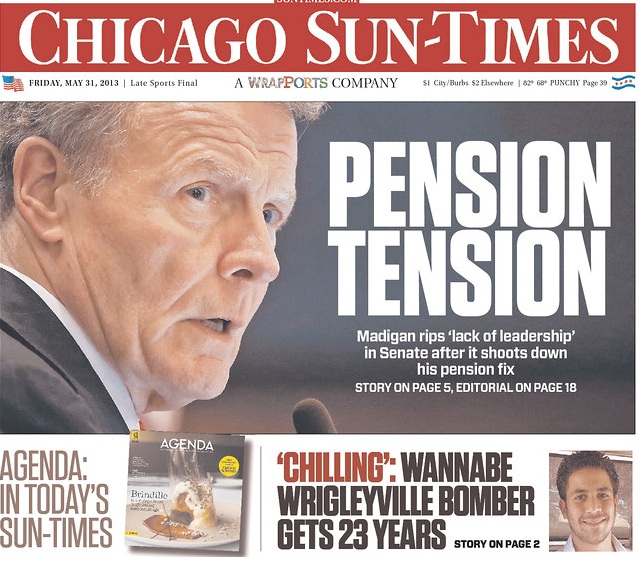
There’s been quite a lot of talk over the last couple days about the Chicago Sun-Times ChicagoSunTimeslaying off their entire staff of photographers.  When media writer Robert Feder posted on his Facebook Page , he was flooded with nasty comments about what the paper was doing.

“Sun-Times reporters begin mandatory training today on “iPhone photography basics” following elimination of the paper’s entire photography staff. “In the coming days and weeks, we’ll be working with all editorial employees to train and outfit you as much as possible to produce the content we need,” managing editor Craig Newman tells staffers in a memo.”

There has been general outrage amongst professional photographers on listservs and social media channels adding to the extreme angst that already exists in this demographic.  I’ve been giving this a lot of thought, not only over the last couple of days but over the last decade as technology has thrust enormous change on my industry.  If I allow myself to look at the state of professional photography as an unsustainable profession because of these technological changes, than that’s what it will be – an unsustainable profession for me.  But if I turn the “problem” into an “opportunity” and realize that technology has brought me a lot more possibilities in how to monetize my craft, then I will have a profession that I will be able to sustain.

Biggest Mistakes that the Sun-Times Made when they got rid of their staff photographers:

  1. Cheated their readers.  Their readers will see the difference in the photographs that their paper is running.  A professional photojournalist doesn’t just take a picture – they capture a storytelling image.  They are visual communicators and they are good at it.  They make the viewer feel, empathize or connect with their images. I don’t think it will take a long time before their readers see that the paper’s photos aren’t any better than theirs or their friends and have no reason to get the story from the Sun-Times.
  2. Focused on the technology – the iphone.  How many times have I said “It’s not about the tool”?  Do I think that the iphone isn’t a viable tool for taking good photos?  No, in fact if it is the only “camera” you have on hand when a story is breaking – then it becomes the best camera for the job.  On the other hand, the same day the paper sent the memo out to their staff about the layoffs, their front page was covered with images that one wouldn’t have a chance of getting if all they had was an iphone.
  3. Burdened their writers with another job.  Let’s face it, something is going to suffer.  Just like when I try to shoot both video and still images on the same job myself, I always feel like I have the wrong camera for the wrong moment.  A lot of my writer friends can take pretty good photographs, and some merely make a “reference” shot of what’s happening, instead of an image that captures a story.  A writer’s workflow is different than that of a photographer.  Writers go out in the field and gather facts and write the story for the most part, back at the office.  A photographer does pretty much everything in the field.  Nowadays, many times that includes the edit.  Something will suffer, when one person sets out to do two totally different types of jobs.
  4. Made their “cuts” in the wrong place.  They undermined what a professional photojournalist brings to their paper.  You can’t find a more passionate, committed group than photojournalists.  They work long hours, under terrible conditions – many times dangerous ones, receive a lousy pay, but will go above and beyond to deliver “the story”.  Some say this was a “union busting” move and that after a decent amount of time, the paper will begin to hire photographers who will work for less and no benefits.  If that’s the case, then shame on them for cutting out health benefits for such a committed group of people. In the long run,  that is not a sustainable business model.
  5. They forgot that technology works both ways.  Let’s hope that photographers don’t forget that they can use technology to their advantage – that is if they can get past their fear.  Alex Garcia of the Chicago Tribune, writes in a blog post:  “Fear is the worst and greatest enemy of photographers. Why? Physiologically, fear triggers the fight or flight complex. You can’t think creatively, imaginatively and proactively when your entire body is pumping blood and adrenaline to the parts of your body necessary to fight barbarians at the gate. It pushes your body into a reactive-about-to-become-a-victim state of mind. The very creativity that is your unique selling proposition as a photographer is crippled. Your body become’s your mind’s worst enemy.

We no longer need a publisher to publish our images.  With technology we can create and publish with a variety of platforms and portals.  Just take a look at Issuu a portal for digital publishing. With a modest amount of effort, I put together a test for a new magazine called “The Back Story”.  Future issues will be composed of my image outtakes from the dozens of commissioned assignments that I’ve shot over the years.  Maybe, down the road it will include other photographers’ work and give the readers an opportunity to see the images that never ran and get “the back story.”

Fear not, my fellow professional photographers.  We are in a position of opportunity if we begin to realize that and make a conscious effort to change our mindset.  We don’t have  control over the choices that the Sun-Times or any other newspaper makes. We only have control over how we react to those changes. If we think and act smart and not from a position of fear, maybe one of the best business decisions we can make is to take control, and create and publish story telling images that the public will want to see.  And the public  won’t be finding those kinds of images in the Chicago Sun-Times.


We Are All Broadcasters

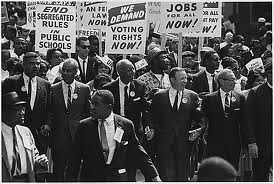
Back in the early1960’s, during the height of the Civil Rights Movement marchersthe world watched as violence and hatred played out every night on TV.  A few years later, we watched the horrors of the Vietnam War taking place on the other side of the globe, from the comfort of our living rooms. Those broadcasts made an indelible mark on me at the time, growing up in my fairly sheltered life in suburbia.  They opened my eyes to the world and I took it all in.

Yesterday, a tragic bombing occurred during the Boston Marathon that took the lives of three people and injured dozens more.  Seconds, after the first of the two bombs went off, everyone who was connected to the Internet, immediately knew what had happened, regardless of where they were in the world.  Photos, video and sound recordings went viral – globally and instantly.  Along with the “bonified” news broadcasts transmitted in real time, rumor and speculation spread instantly as well.

In the 50 plus years that have gone by since those early days of “live” news coverage, bringing “awareness” into our homes, technology continues to impact our lives in a profound way.  We are connected globally and there’s no turning back that clock.  We are no longer isolated from what is taking place anywhere and everywhere on the planet.

We are all collective participants. We can tweet, blog, post images and video on Facebook and numerous other social media platforms without really needing anyone’s validation, permission or vetting whatsoever.  Think of the power in that.  It gives everyone a voice on a global scale.  But along with that comes responsibility. It used to be that if you saw something written in a newspaper or heard it on the evening nightly news on TV, it was true and you could believe it.  But now what do we do?  How can we decipher and determine what we see and hear online is true and accurate? Ultimately, we need to make those judgments ourselves.

I’ve been thinking about this all morning, and I can only hope that as we become more connected through technology, that we start to embrace our similarities as human beings, instead of being split apart by our differences.  For those of us who are documenting the world through images and video, whether professionally or not, we are broadcasting on a global scale, on a daily basis.  Think about the power of that and the responsibility.

Abundance or Scarcity – What’s Your Choice?

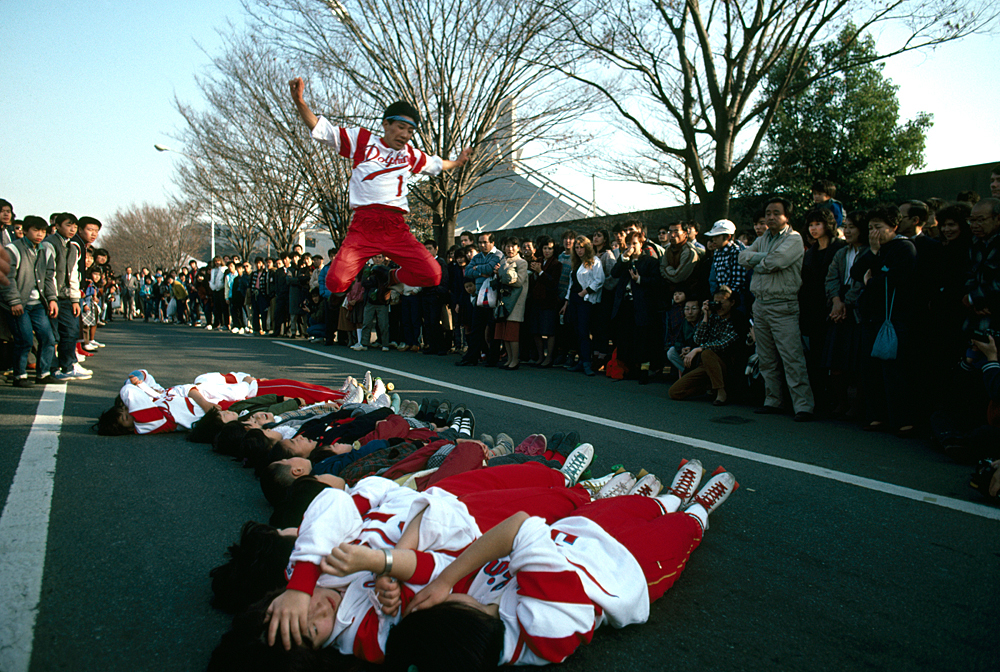
I read Seth Godin’s blog this morning and as usual, he was right on target with his observations of our culture and the shift in our economy.  We are moving out of the “industrial age”, an economy based on scarcity and into a “connection economy” Roller skaters jump over teammates, Tokyo, Japanbased on abundance – abundance of  “choice, connections and access to knowledge.”

In our new “connection economy”, we can connect with more people and “leverage our skills at a higher level.” This is leading to two races:  a race to the bottom which is forcing us to lower our prices, because it’s easy to find plenty of people who will do something cheaper or a race to the top which gives us the opportunity to use our new connections, resources and knowledge and become the one “they can’t live without.”

“The connection economy doesn’t create jobs where we get picked and then get paid; the connection economy builds opportunities for us to connect, and then demands that we pick ourselves.”  It’s no longer sufficient to just deliver a job at a fair price; a “connection economy” is all about standing out and being remarkable.

We need to invent – not duplicate.

So how do we stand out in a world of noise?  I believe we need to be authentic and true to ourselves.  We need to take the ultimate risk and listen to that voice inside because that’s the voice that should be heard.  We need to be vulnerable in order to race to the top.  At the end of the day, we are all human and we can spot a phony or an imitation when we see one.

Most of all we need to remember, we are human beings with basic human needs  – one being the need to connect with our fellow human. We don’t connect merely on devices alone – you connect by telling your “story”.   If your story resonates with others – it spreads. Today that means it gains traction quickly and spreads globally.  But you don’t connect with people by doing the same things as everyone else or regurgitating the same information.  You make connections because people are human and they’ll always spot “the real deal” in a crowd.

So be vulnerable, be different, be brave enough to stand out with a fresh approach to old problems and you won’t need to race to the bottom along with others clamoring for those “scarce” jobs.  You’ll be the one carving out the opportunities and picking yourself.

How Motion is Changing the Future of Photography

Mid-19th century "Brady stand" photo...
Mid-19th century “Brady stand” photo model’s armrest table (Photo credit: Wikipedia)

A few years ago I heard visionary Ray Kurzweil speak at NAB (National Association of Broadcasting).  He was talking about the exponential rise of technology and how that would profoundly change people’s lives – and was.  His focus and predictions were mostly related to the advances we’ll see in medicine, but he relayed an analogy that has stuck with me.  He said:  (and I’ll paraphrase) that if you were in the horse and buggy industry at the turn of the century and thought of yourself as someone who sold buggies and whips, you most likely would  have gone out of business.  But if you were in the horse and buggy business and thought of yourself in the transportation business you most likely would have adapted, recognized that the future of transportation was in motor transport – and thrived.

The thing is, the ones who adapted early on – before the majority did – were the ones who made fortunes.  The ones, who waited until everyone embraced the automobile, either struggled to keep pace with the competition or died out.  I think we are at a tipping point as far as the future of the still photography business.  If we continue to think of still photography and motion as being two separate entities in the business of visual communications, it will be our demise.

Change never happens overnight.  Change is slow.  No one gets to be 400 lbs overnight; it’s a slow process.  But once it happens, it’s really hard to get back on track.  The changes that are taking place in the way we communicate are monumental, unlike any changes in the past.  I used to shoot a lot of annual reports, but not so many anymore.  I used to make a large portion of my income from the licensing of my stock images, but that income has dropped significantly because everyone has a camera and the supply of images is more than the demand.

I’m not an alarmist in predicting this change and in fact for someone my age who is on the tail end of his or her career, I wouldn’t be alarmed at all.  However, if I were just starting out in photography or even in my late 40’s or early 50’s and had another 20 + years ahead of me, I would not be complacent.

Some things still photographers should be thinking about:

  • Understand that there will probably not be a divide between the still photography and motion businesses.  This is really hard to envision because we tend to see things, by looking at the future in terms of the knowledge that we have on hand today.  But with motion cameras able to shoot 96 frames a second, and each frame being good enough to pull out and used as a still image, the changes for still photographers will be profound.
  • The concerns are not like those that a still photographer has had to face in the past, like when digital replaced film or when one needed to reinvent themselves as their markets changed. (For example when car shooters were phased out by CGI artists)  Shooting motion is a different mindset all together.  It also has profound differences in the way you run your business. While a still photographer of today, may find opportunities to shoot motion for their existing still clients, that too is rapidly changing.   I don’t think this will be an option much longer for still photographers. I think that motion shooters will be shooting motion and in the process creating stills as opposed to still photographers providing the motion content and the stills.  Just like a professional still photographer distinguishes his or herself from an amateur photographer who has an expensive camera, so do motion shooters distinguish themselves from the still photographer who seems to have little regard for the craft and knowledge of motion and thinks they will “just” start shooting motion when the time comes. It’s not going to be “just” that simple, especially if you’re late to the game.
  • Understand that technology affects everything and will continue to do so.  You may think  in terms of what’s possible today and that it would be incredibly labor intensive to go through tens of thousands of motion frames to pull out still images. But advances in technology will change that as well in the future. Technology affects everything.   Realize that software is changing too and that the edit process for pulling out frames will be easier and more streamlined in the future.  In fact, an editor’s job description will change greatly and that may be a job that is in high demand in the future. Even now, just do a quick search on LinkedIn and you’ll see that while there are very few job listings for still photographers, there’s a lot of demand for video editors.

Bottom line – start recognizing that photography and video are not separate businesses any longer.  Start understanding that will have an affect on the  future of the still photography business especially in terms of licensing, because traditionally motion camera operators work under work for hire agreements.  While still images won’t go away, that doesn’t mean that still photographers will be creating them in the future.

What Still Photographers Need to Know About Convergence

We should not think in terms of how we can apply the newest tools of the trade to what how we are shooting today, but rather think about how these tools and future versions may be applied to what we will be doing in the years to come.  We also need to remember that it is not just creatives that are determining what we shoot with, how we shoot it and where the imagery will be used, it’s the top executives and money folks from the camera manufacturers, the advertising executives, broadcast networks, movie studios and magazine and newspaper publishers.  They set the stage and the content creators and receivers of the content or the “audience” react.

We as creatives have a choice of what tools to use – everything from an iPhone to a camera like the

English: Canon 5d Mark II set up for cinema st...
English: Canon 5d Mark II set up for cinema style shooting (Photo credit: Wikipedia)

RED, able to produce 5k resolution stills shooting at 96 frames a second at a 200th of a second.  We make our decisions when choosing which tools to use based on a number of factors – affordability  and determining which tool or camera is the best one for a particular job.  Many times, it’s the end use that is the deciding factor. We need to remember that not only our tools are changing, but so is the way the information or content is delivered as we rapidly move away from print to electronic delivery.  Simply put, mobile devices have dramatically changed the way consumers are receiving content and information.

Who could have imagined just a few years ago that a phone could take photographs that weren’t just “good enough” but really good in terms of resolution and delivery?  We need to keep in mind that the limitations of today will most likely not be there in the future.  Technology is changing our lives and our businesses in an exponential way and will continue to do so.  If we are smart and want to stay in business, we need to look forward and imagine what’s next, rather than look at what is or what was.

When I started my still photography business more than 30 years ago, a photographer needed certain technical skills.  We needed to be able to focus a camera and that was tough if you were shooting fast moving action subjects and we needed to know how to get an accurate exposure.  The cameras of today have pretty much eliminated those skills with auto focus and exposure.  Still photographers still need to know how to light but as software becomes more sophisticated will that be a necessary skill set of the future?

When I’m giving a seminar to still photographers who are thinking of moving into motion, I start out by explaining the differences of the two mediums.  Still images are moments in time and video is time in motion.  That explanation sounds simple but it’s quite profound when you think in terms of convergence.  While today’s cameras have pretty much eliminated the skill sets of knowing how to properly focus and expose an image, a photographer or camera operator still has to be able to capture the “decisive moment” – that is where the skill set comes to play.  But is that still true today and will it remain so in the future with motion cameras able to shoot at 96 frames a second at a fast shutter speed with 5K resolution? Why would a client need a photographer to shoot still images when they can pull frames from a motion shoot?  They wouldn’t, especially when most camera operators in the motion sector are working under “work for hire” contracts and they don’t hold the copyright to the footage and/or still images or frame grabs from that footage.  That’s a game changer for the still photography business and licensing of images.

I read an interview once with Vincent LaForet and he was telling a story about having a discussion with a DP at a Red event shortly after the Red One came out.  He asked, “Who in the world would want to shoot a still image with this huge Red camera with a Cine lens?  It’s insane. Why wouldn’t I go out with my 5D Mark II that shoots RAW?”  The DP answered “We want to take your still jobs away from you, just like you want to take our video jobs away from us with your HD SLR’s.”

That was a few years ago.  Now I know a lot of high end still photographers who are shooting with smaller, more affordable and high-resolution motion cameras to shoot still photography jobs and so are DP’s.  That’s convergence and who knows what the future may bring, but one thing is for sure – it’s best to be knowledgeable in both.

Photographers – Grow or Die

I’ve been a professional photographer for over 35 years.  While some may look at that sentence and think I must surely be “over the hill” – others may look at that and say “wow, she must have been doing something right, to stay in business that long”. I suppose, it all depends on the outlook of the person.

Personally, I truly believe that the secret to longevity in any career field is to be open-minded as to how they define themselves.  One thing I have never done is define myself by the tools I use. Just because one has expensive camera gear, it doesn’t make them a “professional photographer”.  If that was the case, then who are you if you have a camera that happens to shoot both still images and video?

I’m really amazed when photographers define themselves by the tools of their trade.  I think with the way things are going in terms of how technology continues to affect our industry, if a photographer defines him/herself in such narrow terms – it’s the kiss of death.

When technology enabled me to explore video production without having to make a prohibitively investment in expensive “tools”, the creative part of me wanted to take full advantage of those new opportunities that were coming my way.  After all, I’m a storyteller and I shouldn’t have to limit myself to one medium, but rather choose the

Category:Wikipedia requested photographs of ph...
(Photo credit: Wikipedia)

right  tool (camera)  to use that best tells the story that I need to tell.  Sometimes that means delivering the message in video and sometimes the story is better told with still images.

Because I was an early adaptor of video (at least from a still photographer’s point of view), many of my peers equate me with just shooting video.  Many assume I’ve abandoned still photography, which couldn’t be further from the truth.  The real truth is, my clients see me as an imaging professional, who is able to deliver their message with the medium(s) that is best suited for the job.  These days with print publication giving way to electronic delivery, clients are delighted that I am able to fulfill their needs because I am proficient in both video and stills and most times they need both.

My curiosity for exploring a variety of mediums and tools has not only kept me in business – it’s kept me from getting jaded and stale. I am a photographer.  I am a director of photography.  I am an imaging professional and am thrilled to still be in business at a time when we have so many tools and options in how we are able to deliver a visual message.