Being Authentic

There are certain words and phrases that tend to become over used just because they seem to express the idea so well.  Ironically, the word authentic is becoming over used now in our culture and in a weird way is on the brink of becoming a contradiction to what it means.  So, I cautiously use the word “authentic” in the real sense to say – be who you are meant to be.  Be authentic.

When I returned from my round the world adventure this past Fall after completing the shooting aspect of a personal project, I discovered that people were responding to me in a different way. Perhaps they sensed there was something inside of me that they wanted to connect with.  It’s a very difficult thing to explain but I think what they were sensing, was my contentment.  I was content and feeling a sense of “satisfaction” because I was following “my purpose”, both personally and creatively and in the process I was discovering many other people,  all over the world, who were doing the same.

On the outside what may have seemed like just a very long, exotic “trip”, was really more of a journey.  It was a journey that I had begun a long time ago when I became an explorer, through my eyes and through my camera.  I use the word explorer in a literal and figurative sense. Throughout my life, in my never-ending nomadic need to explore the world and its peoples, I was finding my own vision and how I “saw” and I was sharing that with others.

Ethan G. Salwen expressed it beautifully in a recent post on his After Capture blog:

“We always say that learning photography is really learning to see, and this is true. But we tend to express this sentiment in relation to a very limited sense of seeing — the visual sense. Older photographers seem to continue to learn to see on a much deeper level, in terms of what it is to be a working artist and, most important, how this relates to their continual growth and satisfaction as an individual.”

I think Ethan nailed it by talking about “learning and seeing on a much deeper level and how this brings growth and satisfaction as an individual.”  I use the words “ being on purpose” to describe “satisfaction” within oneself.  I believe that as creative individuals, when we begin to find meaning in who we are and how that fits into the world, it will shine through our work.  Some use the word “vision” to describe that certain something that they see in someone’s creative work. Maybe that’s what was in the back of my mind when I came up with the title of my project and film, Opening Our Eyes.

In a way, I use my “eyes” and my camera to do what I do best – to share and connect with others.  When I travel, it is not to assimilate with a culture, but rather to learn and exchange our cultural uniqueness, embrace that and share it with others. When I’m being authentic and true to myself, that happens in a magical way.  When someone tells me that I’m the “real deal”, that is one of the highest compliments they can give me.

I think Susana Esmoris, one of the subjects of my documentary said it best.  “Live life intensely.  Wear the color that you want in life.  Dance what you want to dance.”

Add to FacebookAdd to DiggAdd to Del.icio.usAdd to StumbleuponAdd to RedditAdd to BlinklistAdd to TwitterAdd to TechnoratiAdd to Yahoo BuzzAdd to Newsvine

Don’t Let the Music Die Inside You

Einstein said “Logic will take you from A to B but imagination will take you anywhere.”

I have always had a vivid imagination, spending many waking and sleeping hours dreaming and picturing myself in all sorts of situations. Some of my dreams were just crazy ideas running through my head and some were very real dreams that I believed would come true. I was thinking about what I wanted in my life – not what I didn’t want.

Everyone has dreams for how they want their life to be but not everyone believes their dreams will manifest. The future has to become the present in one’s imagination. And one needs to commit to their idea for it to happen – not just have intentions. Intentions without conviction is a waste of energy.

At this point in my life, I have been focusing more and more on pursuing my thoughts and ideas that have been running through my head. It was a year ago, that I made the decision to embark on the biggest personal project of my life, Opening Our Eyes. I’m now in the midst of editing hundreds of hours of footage. It’s tedious because there is so much, and there are interviews in foreign languages that need to be translated and transcribed before I can edit them. All the files need to be transcoded, which is taking far longer than I imagined it would, but now that I have my workflow down, it’s going faster.

When I’m finished with this film, it will be the most satisfying and successful project I’ve ever worked on. I use the word successful to mean that it was an incredible accomplishment for me personally and professionally. That’s not to say that it won’t be financially rewarding, and in fact every personal project I have ever self-funded has always been profitable, just not immediately.

More importantly, by executing my ideas, without needing validation from someone else, I am following my purpose. I am doing what I’m meant to be doing in my life. That in itself is the biggest reward of all.

We all have our own music inside of us. Find yours. Don’t die with the music still inside of you.

Add to FacebookAdd to DiggAdd to Del.icio.usAdd to StumbleuponAdd to RedditAdd to BlinklistAdd to TwitterAdd to TechnoratiAdd to Yahoo BuzzAdd to Newsvine

“Kickstarting” a Passion Project

For anyone who has been reading my blog, you know a few things about me – I love to dialog and share with others, my work and my pleasure are one in the same and I always have a passion project that I’m working on.

I can’t say that I’ve always been like this.  In the beginning of my career it was a lot harder to dialog and share with people – pre-social media and email.  And as my career took hold and I became busier with work, I didn’t have time for sharing or personal projects.  But for someone like me who is a dreamer, I was starting to burn out.

When I started exploring the video medium in the late 90’s, it triggered a spark in me.  I started thinking and dreaming about all the stories that I wanted to tell – that would be possible for me to tell – through this medium.  One of my first attempts at telling a story with video was a short documentary I did on my daughter’s youth symphony.  I couldn’t have picked a harder subject if I tried because it was all about sound, which I knew nothing about.  And anyone who has ever shot a musical concert knows that it’s almost impossible to do with only one camera.  But I naively pursued with this project and learned a lot in the process.

My next passion project was The Delta Blues Musicians that I envisioned as a multimedia project combining still environmental portraits of these musicians along with video interviews, capturing their life’s stories.  It was a lot of work and for the most part, I went it alone – doing everything myself.  For anyone who has ever tried to shoot both stills and video on the same job, you know it’s not an easy thing to do.  That project will always be near and dear to my heart and continues to reward me in ways that I never knew were possible.

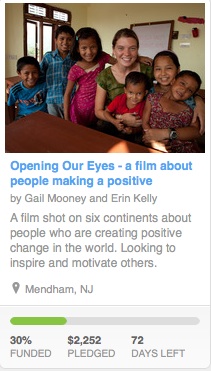
There have been other passion projects since these first two and my head is usually full of ideas that are rumbling around, just waiting for the right time to surface. I am in the midst of a project now, Opening Our Eyes that is perhaps the most ambitious one I’ve ever dreamed up. This past weekend I launched the project on Kickstarter.  Kickstarter is a website that posts creative projects for the purposes of finding funds. It’s a perfect example of crowd funding where one can donate anywhere from $1 to $10,000 to the project of their choice, and in the process make someone’s idea come to life.

I launched Opening Our Eyes on Thursday and within 3 days we reached 30 % of our goal. We still have a long way to go and have another 71 days to get fully funded.  The way Kickstarter works is that if you don’t get funded 100%, then all bets are off and you don’t receive anything.  So, I’m doing my best to do what I like the least and that is make a pitch for pledges.  My intent is to secure enough funds so that I can collaborate with a professional editor and raise the bar on the film that my daughter and I shot this past summer on our 99-day adventure around the world, about people who are making a positive difference in the world.

It’s really a win/win for anyone who chooses to give – even a pledge of $25 will get us closer to our goal and you’ll receive a DVD of our film when it’s finished.  So please check out our project on Kickstarter and pass this link along to others.  Ultimately our goal is to inspire and motivate other change-makers through the power of our film. We know we can do it with everyone’s help and it will make you feel good to give – it always does.

Add to FacebookAdd to DiggAdd to Del.icio.usAdd to StumbleuponAdd to RedditAdd to BlinklistAdd to TwitterAdd to TechnoratiAdd to Yahoo BuzzAdd to Newsvine

The Power of Yes

I’ve just experienced one of the most extraordinary weekends of my life – all because I said yes.  Barely more than a week ago, I sent an email with a link to the trailer of my documentary to Rebecca Self,

Rebecca Self at the European Summit for Global Transformation

who I was introduced to by two of the subjects in my film, Letha Sandison and Maggie Doyne.

Letha Sandison and Maggie Doyne

Rebecca is an amazing woman – she’s a connector of change makers.  The day after Rebecca got my email, she replied “Would you consider coming to Amsterdam this weekend and showing your trailer at The European Summit for Global Transformation.  My first thought was “wow” – and with a title like that, it was bound to be a gathering of very interesting people.  My next thought was, “it’s not possible – there’s not enough time – the airfare will be high” etc. etc.  All very practical thoughts – right?

And then I flipped it and told myself all the reasons I should say yes. I ‘d have the opportunity to show a culturally diverse audience a sample of my film and talk about the idea behind it. I would get to see Letha and Maggie again because they were going to be speaking.  And most importantly, I would be spending the weekend with people that not only believed that anything is possible – but are making the impossible happen, together. So I replied to Rebecca and said YES.

For two days I listened, as all kinds of people told their stories – people who are actively doing things that are making our world a better place. They awed me with their courage, their commitment and their passion.  But the most empowering part of the conference was connecting with these people, who were not only there to talk about what they were doing, but also to network with others to help them make their commitments a reality.

As I write this, on my last night in Amsterdam. I’m ready to head out to have one final dinner with some of the most fascinating  people I have ever met.  It has been a powerful weekend, being part of this group of people, from all over the world that are making extraordinary things happen.  This is what my film is all about – the power of the individual, working together to make things happen – across the globe.

To be able to show my ten-minute trailer to these amazing change makers was an honor and reward in itself.  But to spend the weekend with such a unique group of people who believe that anything is possible, was extraordinary and fortified me as I go forward in editing over 150 hours of footage.

I have a friend who is always telling me that I need to say “no” more often – because I tend to spread myself too thin.  But this time, I was glad I said “yes”.

Add to FacebookAdd to DiggAdd to Del.icio.usAdd to StumbleuponAdd to RedditAdd to BlinklistAdd to TwitterAdd to TechnoratiAdd to Yahoo BuzzAdd to Newsvine

The Thin Line Between Work and Pleasure

I’ve always been lucky because there’s a very thin line between my work and my personal life. That’s because I’ve never looked at what I do for a living as work, or at least if one defines work in negative terms.

I became a photographer and later a filmmaker because I’m a born storyteller and the camera is a means to that end for me. I come from a long line of storytellers, as evidenced by boxes of old letters telling the tales of family long gone. While they may have told their tales by pen, through their words, I have chosen the camera as my tool to tell the stories that I have to tell. So how could I possibly equate the word work with the professional life that I’ve built – telling the stories of people and companies around the world? It’s in my blood.

Sure, there have been jobs through the years that seem a lot more like work than others, especially when a client hasn’t trusted their instincts in why they hired me by allowing me to trust mine. But there have been so many other jobs where I’ve had to pinch myself to believe that they’re real.

I’m also a firm believer in following my instincts and that has led to many rewarding opportunities in my life. I’ve been doing that a lot lately and the universe is opening up for me. I’ve stopped waiting for someone else to validate me in order for me to pursue a project that I’m passionate about. I’ve stopped telling myself all the reasons that I shouldn’t do something and I’ve replaced them with all the reasons that I should. I think about the pros and don’t dwell on the cons. And that’s because I’ve blurred the lines between work and pleasure.

I’ve just completed a 99-day journey shooting a documentary on change makers – people who were making a positive difference in the world. Over the weekend I got an email, inviting me to show my ten-minute tease at the opening of the European Summit For Global Transformation in Amsterdam, this weekend. I immediately started to discount it, telling myself that I didn’t have enough notice etc. etc. Then I saw it differently – I saw it as an incredible opportunity to not only show the tease of my film but to network with like minded people. So, this evening I’m headed to Amsterdam.

Years ago when I was traveling a lot, shooting for magazines like Travel & Leisure and National Geographic Traveler, as I departed for my trips, my mother always used to say – “have a nice vacation”. I used to get annoyed because I thought that she didn’t recognize the fact that I was working and not going on vacation. But, as I reflect back on the “work dynamic” that I’ve set up for myself, I think – maybe she was the one that had it right. It’s been one long pleasure trip.

Add to FacebookAdd to DiggAdd to Del.icio.usAdd to StumbleuponAdd to RedditAdd to BlinklistAdd to TwitterAdd to TechnoratiAdd to Yahoo BuzzAdd to Newsvine

Re-Charging and Seeing

A friend reminded me recently that I needed to take some time for myself and “recharge my batteries”.  This past month has sailed by – I’ve been out of town 25 % of the time and the rest of the time, deeply focused on editing my documentary.  I needed a break from technology, airports and work. So I took his advice and with my husband, headed down to the NJ Shore for a weekend getaway.

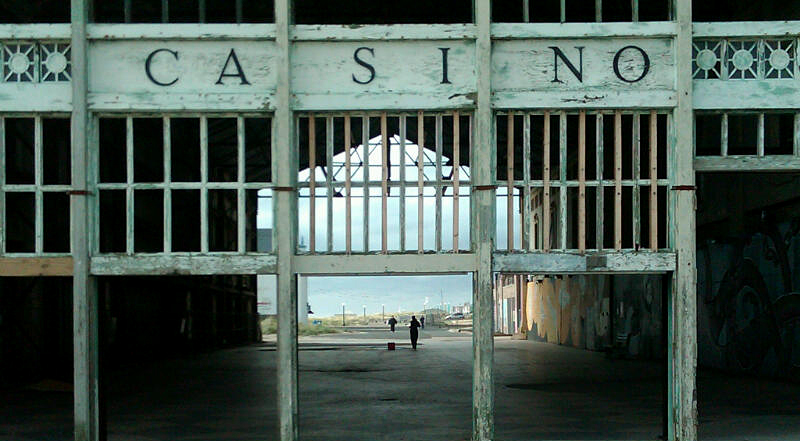
A friend of ours had invited us to her beach house in Ocean Grove, NJ, a shore town where time seems to have stood still – especially in the month of October.  Ocean Grove is an old bible town just down the boardwalk from Asbury Park, the town where Springsteen had gotten his start at the Stone Pony decades ago.

Asbury Park, NJ

Asbury Park is a town that’s slowly coming back from a state of decay and dilapidation over the last 40 years and vastly different from its religious neighbor to the south.

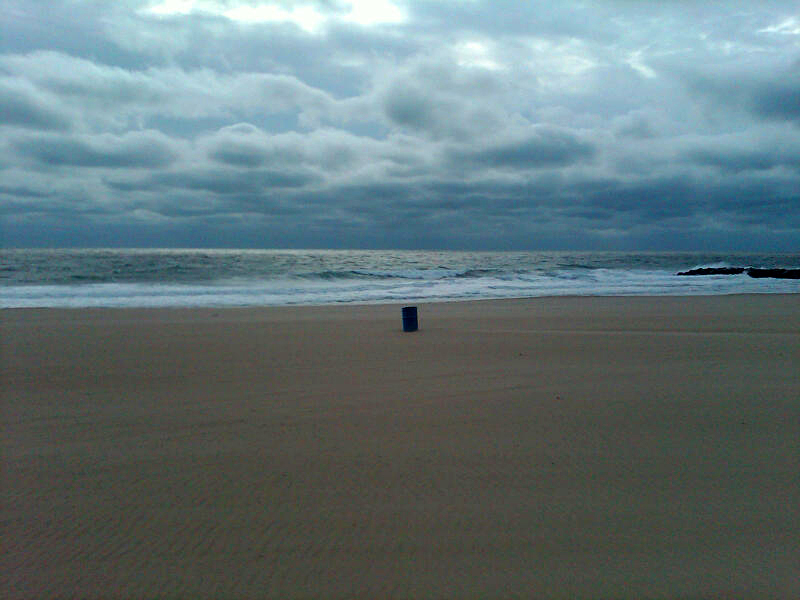
It was typical October weather – sunny and brilliant one moment –

Ocean Grove, NJ

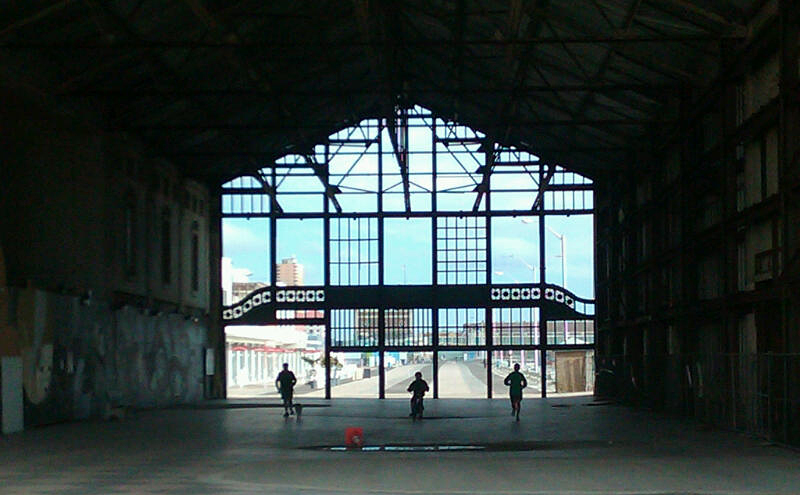
then changing to moody and melancholy, the next.  Sunday, I woke up early, got my bike and headed to the boardwalk for a ride.  I didn’t have a camera with me because I thought that I needed a break from technology.  But as I rode down the boardwalk – I started “seeing”.  I was observing everything – noticing the mundane – the ordinary

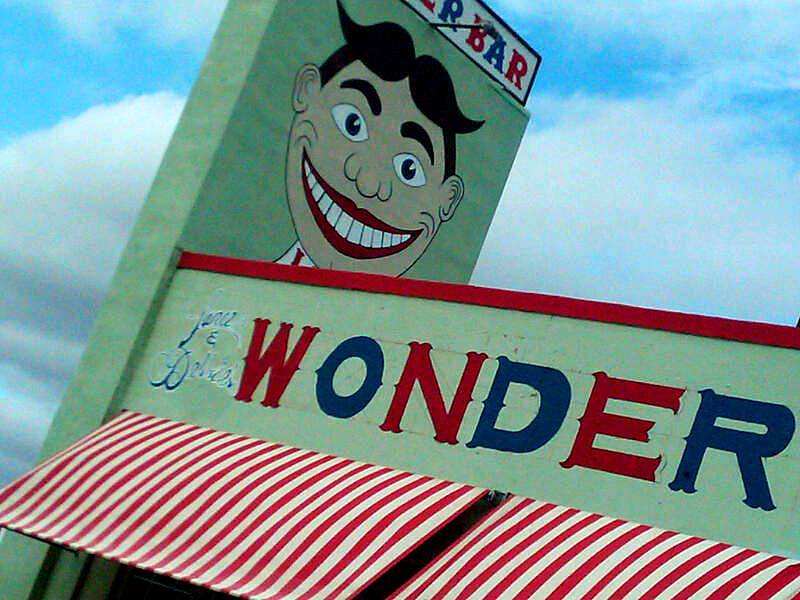
Wonder Bar, Asbury Park, NJ

– the old and the new – not the exotic that I had become accustomed to on my recent 99-day journey around the world.

I immediately thought back to when my husband and I had just moved back to the East Coast after living in Santa Barbara, CA.  Our first summer back on the East Coast, we headed “down the shore” every weekend, taking our cameras and our bikes, going to different parts of the shore each time.  We’d hop on our bikes and just ride the boardwalks – shooting and documenting things and people that we observed.  It was a wonderful summer –biking, shooting and at night, sometimes getting a room at a rooming house if we felt like splurging, or most times, sleeping in our van, awakening the next morning to explore again.

As I bicycled down the boardwalk this weekend, I realized that I had a camera in my Blackberry, which I rarely used.

Asbury Park, NJ

I pulled it out and started taking photos of my observations – just like I had done so many years earlier – and I was having the time of my life doing it.  I was  “seeing” and documenting what I saw- no preconceived notions or plans – just letting serendipity happen. Ironically, because of technology and the fact that my cell phone can capture images – I had simplified the process and gotten down to the basics of just “seeing”.

My batteries are sufficiently recharged with fresh air, solid sleep and getting back to the basics.  Perhaps, this weekend has even triggered a new project idea – or at least has planted the seed. We’ll see.

Add to FacebookAdd to DiggAdd to Del.icio.usAdd to StumbleuponAdd to RedditAdd to BlinklistAdd to TwitterAdd to TechnoratiAdd to Yahoo BuzzAdd to Newsvine

My Love/Hate Relationship – Shooting Video With a DSLR

I’ve just spent the last 2 weeks intensely editing my footage shot on my 99-day journey around the world, shooting my passion project, Opening Our Eyes.  I wanted to get a trailer ready for the PhotoCine Expo that I’ll be speaking at this weekend in Los Angeles. I knew that I couldn’t possibly go through all 2900 gigabytes of content (145 hours), let alone cull it down to a finished sample in two weeks time.  So, I took a friend’s advice and decided to focus on only two of my ten subjects that I interviewed and shot b-roll on.

Even with going through only 20 percent of my footage has been a grueling and exhausting two weeks.  But it’s also given me a much better sense of working with and analyzing the files that come out of the Canon 5D Mark II and 7D.

Some of my loves:

  1. I love the picture quality
  2. I absolutely love the picture quality
  3. You can’t beat the picture quality

It’s true, the picture quality is stunning and worth putting up with SOME of the workarounds, depending on what type of job I’m working on.  If I’m shooting a corporate event and I need to record longer than 12-minute intervals, which is the case when someone is giving a talk, then I would opt not to use a DSLR because of the limitations on the duration of a clip.  And, regardless of the type of job I shoot, editing the files from these cameras is tedious because I need to transcode them into a file that will play well in Final Cut Pro.

Some of my hates:

  1. 12 minute clip duration – this really needs to change in the next generation of these hybrids in order to make it a more       workable camera
  2. Audio – Canon really needs to come up with a more professional solution for capturing good audio with the video on           one card.  I have used a JuidedLink pre-amp with a gain disabler on it but it’s still not as good as the audio I get when         I capture it to a separate digital recorder – in my case the Samson H4N Zoom.
  3. Having to transcode all the files into a codec like Apple Pro Res so that I can edit in FCP without stutters, stops and             drop frames.
  4. Stabilization is an issue but a solvable one thanks to rigs from Zacuto. And of course you can always use a tripod – and       really should if the situation warrants.

I’m sure I’ll come to other conclusions as I dig deeper into my content and I’ll share my thoughts as I continue to immerse myself in the post production part of this film.

Add to FacebookAdd to DiggAdd to Del.icio.usAdd to StumbleuponAdd to RedditAdd to BlinklistAdd to TwitterAdd to TechnoratiAdd to Yahoo BuzzAdd to Newsvine

Editing and Workflow for DSLR’s – The First Steps

In the Field
Depending on how you are working in the field and what you are shooting, your workflow and the way you organize and manage your media will vary somewhat. If you have a crew and are shooting a scripted video, then you will probably have a computer and technician on site, downloading media as it is shot, backing it up and checking it for focus.

If you’re working solo or with just one other person, which is how I have been working for the past 3 ½ months on my project, Opening Our Eyes,

Gail at the Kopila Valley Primary School, Surkhet, Nepal

then you don’t have the manpower to work that way. I downloaded all my footage, audio and stills at the end of the day. I rarely had the time or even the battery power on my computer (electricity was scarce at times) to look at what I had shot but I did do spot checks occasionally.

Regardless of how you work in the field,

Children at the Kopila Valley Primary School

it is essential to create redundant backups of all your content. I backed everything up to two portable external hard drives, after downloading the media to my laptop via card readers. There’s a nice software application called ShotPut Pro that lets you make up to 3 copies to different drives at a time, which speeds things up quite a bit. For the most part, I had organized my media by destination and subject with each folder containing the contents of a card. Whenever I shot an interview, I put a fresh card in the camera so that the content was automatically sorted out from the b-roll. Some shooters I’ve talked to who are used to shooting tape, archive each tape or card by making a disk image (DMG) of each which can be mounted on the computer, emulating the original card.


Back in the Editing Suite

The first thing I did when I returned from my 99-day journey, was to make two backups of all my material. After my media was backed up, I started to organize it. Everything had already been separated as far as destination and subject, but I needed to separate the stills from the video and the interviews from the b-roll – if any cards contained both. I also needed to match up the interview video footage with the audio files that had been captured by a separate recording device.

After getting all my media organized and sorted by destination, subject and file type, I renamed the files and added any relevant metadata – copyright and creator info etc. This can be done in Adobe Bridge. You can also look at the video files in Bridge to preview before transcoding them. Another way to preview your video files is by using QuickTime player. Because the files coming out of these hybrid cameras are compressed H.264 files, they do not play smoothly in Final Cut Pro, so they need to be transcoded into a codec like Apple Pro Res, before editing them. This can be done in Apple Compressor which comes with the Final Cut Pro Suite or MPEG Streamclip which is a free application.

You can choose to preview your video files first using Adobe Bridge or QuickTime player or another software tool, and then make a folder of “selects” and transcode just those files before importing them into FCP, or you can transcode everything and then import everything into Final Cut Pro.

After I organized my assets (stills, video and audio), I chose to transcode ALL my video files and import everything into Final Cut Pro. That way, not only could I preview everything smoothly, but I could also start adding information to the clips and organize them into bins within FCP. And with everything transcoded, I won’t have to leave FCP if I wanted to look at content that hadn’t been previously marked “selects”.

Getting to the Fun Part

Organizing, sorting, logging and transcoding is tedious work but it’s essential in order to be able to find things quickly when you need them, when you start laying down your storyline and want to keep focused. There’s nothing worse than having to break your train of thought while you’re editing and have to leave the program to find assets or prep them. Organizing is key – it’s not fun, but a necessary step in the process.

I will continue to slog through this initial process this week, in order to get through some of my content so that I can put together a sample for the PhotoCine News Expo that I’ve been asked to speak at this month. I have way too much material to go through everything, so I’ve decided to tackle the content from two of my subjects, which will make the task more manageable. It will also provide me with the reward of working on the “fun part” of editing by crafting a short story before moving on to daunting task of assembling the entire documentary. Check out this quick sample that I put together within 24 hours after getting off the plane. http://www.vimeo.com/14645594

Little by little things will come together and I’ll keep you posted as I go along.

Add to FacebookAdd to DiggAdd to Del.icio.usAdd to StumbleuponAdd to RedditAdd to BlinklistAdd to TwitterAdd to TechnoratiAdd to Yahoo BuzzAdd to Newsvine

Post-Production – Overcoming Inertia and Getting Started

I returned back to the United States a couple of days ago and before I even did my laundry, I sat down to edit a quick behind-the-scenes interview video clip of my daughter and I discussing the documentary we had just finished shooting, traveling around the world. I was motivated by a deadline where I needed to provide a video clip from the project, right away.

I was fortunate in that we had just shot interviews of each other talking about the making of the film, while the experiences were still fresh in our heads. So it was relatively easy for me to pull a couple of soundbites from the interviews, sync the audio which had been recorded separately and add relevant B-roll.  Within less than 24 hours after stepping off the plane, I had a 5 minute behind-the-scenes short.  Nothing fancy, mind you but in addition to providing an opportunity for the film to get awareness, it forced me to start thinking about the overall structure of the piece.

The hardest part of editing is getting started – figuring out how the story will be told. In my case, I’m facing the daunting task of looking through 3 months of material – interviews, B-roll, still images, and behind-the-scenes footage that I need to figure out how I will put it all together.  There are a dozen different directions where I could take this film in the editing process.  I could choose to make each subject’s story an independent video, with the full length documentary being comprised of them all.  Or I could weave the stories together – structuring the piece more thematically.  Or I could include the mother/daughter aspect in the film and add some interview footage of the two of us talking about the project.

Just in putting together this quick sample, I have forced my mind to start thinking about the next step – crafting the story. My next deadline is to make a trailer for this film that hasn’t even been edited yet. I will be speaking at the PhotoCineNews Expo in LA in a couple of weeks and I’m motivated by this opportunity to present the workings of this project to a live audience.

As it turns out, jumping right into it was the best thing to do.  I overcame the inertia that’s always present, and started focusing on how I was going to tell the story of not only our subjects but the experience itself.

Add to FacebookAdd to DiggAdd to Del.icio.usAdd to StumbleuponAdd to RedditAdd to BlinklistAdd to TwitterAdd to TechnoratiAdd to Yahoo BuzzAdd to Newsvine

10 Things I’ve Learned Circling the Globe

I came across an interesting blog yesterday “20 Things I’ve Learned From Traveling Around the World for Three Years”, by Gary Arndt. It was pretty much on target with my observations from my very short journey of a little more than 3 months. But it got me thinking about what I have learned on these travels.

Erin and Gail and children of village along Amazon River, Peru

To travel is to experience and learn and also an opportunity to show other people from other cultures what an American (U.S. citizen) really is, beyond the news, the music and Hollywood movies.

1. People are good – Like Gary, I’d have to agree that for the most part most human beings are good. Sure there are schemers, con artists and thieves in just about every culture, but for the most part – people are good.
2. Government policies don’t always reflect who the people are – U.S. citizens are not all warmongers and not every Afghani is a terrorist.
3. The media exaggerates – Because we all get our news these days in abbreviated and sensationalized TV content – it’s distorted. I almost changed my plans to go to Thailand because of the coverage of the political unrest, which in actuality was contained to only certain sections of Bangkok.
4. There aren’t just “ugly Americans” there are “ugly tourists” – people around the world seem to equate badly behaving tourists as “ugly Americans”. I have found bad behavior is not solely exclusive to “Americans” or U.S. citizens – I have witnessed really bad manners from all types of tour groups – French, German, British, Japanese, Argentinean – you name it. I think it is more of a reflection of a “group” dynamic than a cultural one.
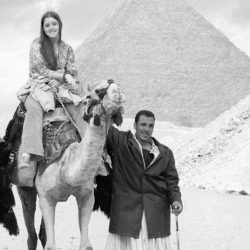
5. U.S. citizens are misunderstood – I find this is more common in countries that are more “westernized” than countries where you would think more of a discord would be present. For example – I found the people in Egypt friendly, curious and informed, unlike other “westernized” countries where the attitude was more of one of disdain. In other words, the more “westernized” a country was there seemed to be more of a preconceived yet narrow minded and naïve attitude about what an “American” was.
6. Cultural naiveté – Guess what folks – when you join those tour groups and they take you to the “untouched villages” along the Amazon River or to the hill tribe villages in the mountains of northern Thailand – they’re probably bringing you to government sanctioned tribal villages where the people have made it a business of “dressing up” for you. Some locals that I met referred to these places as “human zoos”. It’s kind of like expecting to see everyone in the U.S. wearing cowboy attire – I mean outside of Texas and Montana that doesn’t really exist anymore.
7. The Internet has changed the travel experience – you can pretty much get connected anywhere – anytime. My blackberry worked in some of the most remote places in the world. I could almost always get a cell signal – the irony was that I didn’t always have electricity to charge my battery. If you want to really get away – leave your laptop, iphones and blackberrys behind.
8. Go with the flow – don’t focus on what you miss from home whether that is a Starbucks coffee or a hamburger – discover the richness of the country you are in – the food – the music. As we become more and more connected with each other across the globe – we are beginning to lose our cultural differences.
9. I am a diplomat for my country – sure there are things that I don’t like about my country, the United States. But when I travel, I feel that this is my opportunity to interact with the people where I am visiting and to give them perhaps a more true picture of what an American is – beyond what the news and Hollywood portrays us as. That is if people give me a chance – if they haven’t closed their mind.
10. I am grateful that I can travel – and I think that everyone should travel – outside his or her country and culture. Don’t just visit the tourist sites but try to get out of the cities and interact with the people. The best thing about this journey is that our purpose was not to see the sights but to connect with the people. That made it meaningful and memorable.

Add to FacebookAdd to DiggAdd to Del.icio.usAdd to StumbleuponAdd to RedditAdd to BlinklistAdd to TwitterAdd to TechnoratiAdd to Yahoo BuzzAdd to Newsvine