The Past Always Seems Better…….But Was It?

Chris Guillebeau struck a chord with his blog today ,“ The Past Wasn’t Better. Choose the Present Instead”, .  He relayed a story about a time his friends got together for a “gaming session”. They had ordered an emulator, which allowed them to play the games of their youth on the modern gaming console of the time.  They realized after a couple of hours of playing the “old games” that the games weren’t as fun as what they remembered.  They were very simplistic and hard – dying over and over again and not advancing to the next level wasn’t fun – it was frustrating.

Chris made the point that it’s easy to look back with fondness on the good ole days, but our memories get distorted as time passes and sometimes what we looked back on with fondness, never happened.

I had an interesting and somewhat similar experience this past weekend.  I had been invited to speak and coach at the 2013 Syracuse University Fall Workshops, which ASMP had contributed to as a sponsor.tumblr_muyzapUjbp1qe6iepo1_500  It was an intensely creative 3-day workshop where journalism students from the Newhouse School, came together with some of the best editors, designers, photographers and multimedia producers working in journalism. It was a hands-on workshop, where students worked with their coaches, to produce their projects (stories), under a tight 3-day deadline. What stood out to me this weekend, was that the “learning” wasn’t a one-way experience.  I learned as much as I shared – from the other coaches, as well as from the students. I’m sure I’m not the only coach, who picked up some tips from their students this weekend. I was also inspired and amazed at what is possible now, in terms of new ways to tell a story.
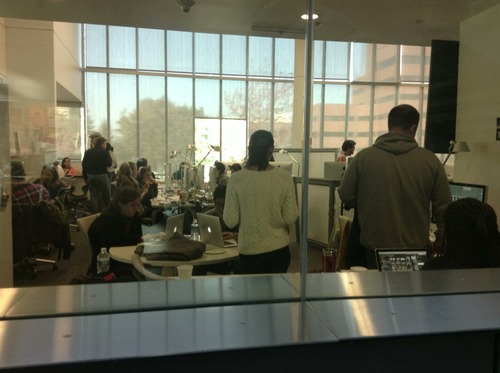
Sure, there are days when I’m simply overwhelmed by technology and the continued learning curve that comes with it.  And sometimes, I look back and fantasize how much better it was in the past.  At the workshop, one of my students had more than her share of technology mishaps.  At one point after losing hours of work, due to a software glitch along with not being able to access her audio files, somewhere in “the cloud”, she remarked with exasperation “ I wish things were like they used to be”.  She meant when things were tangible and analog. I quickly replied, “No you don’t because this 3 day workshop would have taken 3 months”. It was a moment when we both had the same realization that Chris Guillebeau had – our memories and perceptions of the old days are sometimes blurred and over glorified.

As much as we remember and long for the old days, the fact is we have it pretty good now.  There’s not a day that goes by that I don’t remind myself of that.  I choose to focus on what I am able to do in the present rather than look back at what was. If we choose to stay in the past and remember things being better then they are now, we’ll miss out on a whole lot of possibilities. As Chris beautifully sums it up: “Let go of the glory days.  Live in the present and build for the future.”
Past Predictions of the Future Have Been Greatly Exaggerated

One of the blogs that I regularly read is Copyblogger, which provides a lot of great information and insights into content marketing.  This past week, Brian Clark wrote a post entitled,  The Future of Content Marketing.   He writes:

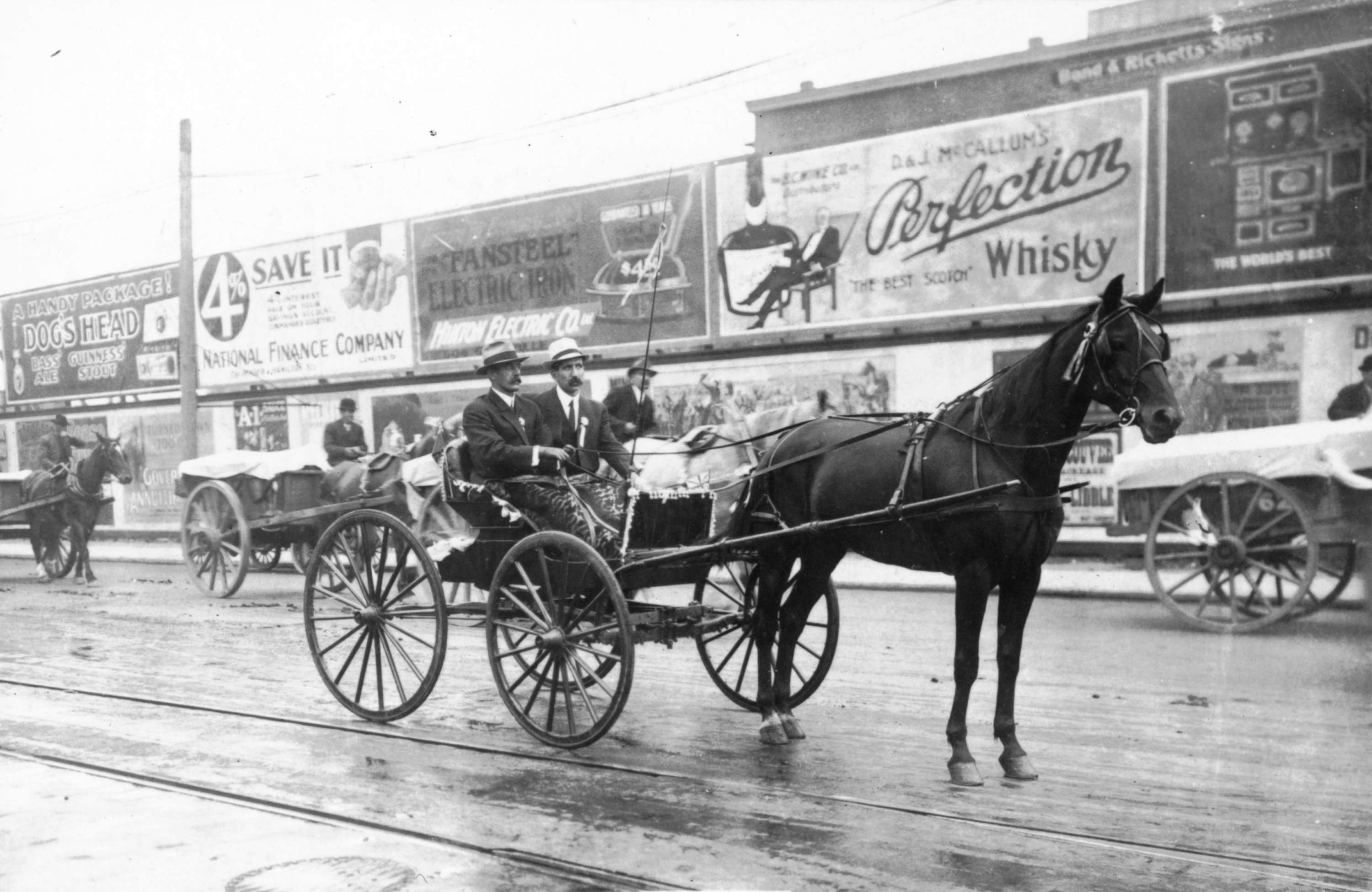
“A bunch of really smart people got together in 1880 to predict the future, according to Jeff Stibel in his intriguing book Breakpoint. These experts were called on to predict how the rapidly growing Gotham would manage into the next century and beyond.

The prognosis was not positive.

NYC was a major source of American innovation in 1880. Skyscrapers, subways, stock exchanges — and it was doubling in size every 10 years. abb36e44-0c30-4a09-9279-0cd3c3fefa9b-A01867The experts were concerned by this growth, because they projected by 1980, you’d need six million horses to transport all the people who would live there.”

Folks were predicting the future of New York City, looking at it through the eyes of what was technologically possible then.  They were more concerned about all the horses and the “crap” that would be produced, than they were about greenhouse gases, because nobody knew what that was.

When I re-ran a blog post How Motion is Changing the Future of Photography, I used a similar analogy, that Ray Kurzweil had given when I heard him speak at NAB.  Ray said that, at the turn of the century (the beginning of the 1900’s), if you thought of yourself as being in the “horse and buggy business”, you were doomed to fail because of advent of the automobile.  But if you saw yourself in the “transportation business”, you thrived, no doubt because you broadened your view to include the automobile.  In my blog, I compared that analogy to what is happening in the still photography business, as the mediums of still imagery and video converge.  I received a lot of responses from that post, mostly from people who argued that still photographs would always be around. I don’t disagree with them.  I do think there will still be still images in the future – however, I think the still photography business will drastically change from how it is now.

Interestingly enough, every year I’m asked to bid on a still photography assignment for a tourism client.  Yesterday, I received the bid packet and there was a profound change.  They were not asking for a quote for still photography.  They were asking for a quote for video – and not just video – but video shot on a RED camera so that they could pull frame grabs from the footage and use those “still images” in their ads.  Now, that’s a game changer.

There’s always a danger in predicting the future and that’s because we tend to use and be influenced by the information and the knowledge that we have now – in the present.  What I’ve learned in my many years on this Earth is that the future will be nothing like how we imagine it will be.   I know that because what I imagined the future to be, some 35 years ago when I set out to make a career as a still photographer, was very limited in terms of how technology has changed things.

The human need to create will continue to mold a future that is way beyond what most of us could ever imagine.

What’s Next for Still Photography? Things We Could Never Begin to Imagine.

One of the only good things about getting older is that I have gained a lot of perspective. Fortune teller through window, Atlantic City, NJ I never speculate what the future will hold by limiting it to what’s possible now because…..

When I began studying photography at Brooks Institute in the early 1970’s

I never would have imagined:

  • That I would own a personal computer that would change the way I communicated with people and ran my business.
  • There would be the Internet, email and mobile phones.
  • There would be auto-focus cameras and lenses.
  • Cameras would be fully automated – if you so choose to use them that way. When I began my career as a photographer, I needed to be a technician, and that meant understanding aperture and shutter speed and a lot of other things that went into making a still image.
  • I would be shooting still images without film.
  • I wouldn’t be limited to 36 frames on a roll of film.
  • I could change the ISO on my camera, as need be.
  • I could change the white balance on my camera, as need be. (No need for different types of film)
  • I wouldn’t need to “get it right” in the camera because I could “fix it later in post” with Photoshop or hundreds of other apps.
  • I could see what I shot – right after I shot it.  Without waiting for the film to come back from the lab or taking Polaroids.
  • There would be data cards and hard drives able to store thousands of images at affordable prices.
  • I could transmit my images digitally and globally with ease and speed.
  • I could share my portfolio electronically with virtually anyone, anywhere in the world.
  • That still cameras would be able to shoot video.
  • That video cameras would be able to shoot at high resolution with fast shutter speeds – good enough to take still images from the frame grabs.
  • My mobile phone would be able to shoot high res still images and video.
  • Magazines and newspapers would publish electronically,  running stories online with static and moving imagery  – and sound.
  • I would be able to watch a movie in my own home.  (without being wealthy enough to build a home theater with analog projector and sound system).  This was before the VCR and DVR were invented.
  • That feature movies and TV shows (other than soap operas) would be shot in video.
  • I would be able to make a feature length film without a Hollywood budget and big crew.
  • I could self-publish and distribute a book or a movie without a publisher or movie studio.
  • My TV would have access to the Internet (I couldn’t even imagine the Internet)
  • The Internet would give birth to  “new networks” producing original content.
  • I would be competing and doing business on a global scale  – as a small business owner.

A lot of the things I listed seem commonplace or even old technology nowadays.  But, I when I first began my career as a photographer, I never would have imagined any of them – not in my wildest dreams.

What do you imagine the future will bring?  There’s one thing for certain, if you limit your imagination to what’s possible now – you probably won’t even come close to what’s in store in the future.

Hitting a Nerve

English: camera Français : video
English: camera Français : video (Photo credit: Wikipedia)

What an interesting week it has been. This past Friday (the day before a long holiday weekend), on impulse, and feeling a little lazy, I shared a link on Facebook to a blog that I had written 8 months ago, How Motion is Changing the Future of Photography.  I didn’t expect to get thousands of hits in 2 days time – it had barely gotten noticed when I posted it the first time, back in February, 2013.

What had happened was that Rob Haggart linked to it from his blog, APhotoEditor and it went viral after that – all around the world.  That’s what amazes me about the age we live in, that something someone says, or writes can be heard globally in record time.  It truly demonstrates the power of “one”.   It’s staggering and something I never would have imagined some 35 years ago when I began my career as a still photographer.  In fact, most of what is happening now in photography. I never could have imagined – not in my grandest dreams.

What surprised me most about the comments I received from that post, was that most folks just couldn’t begin to imagine the future that I was contemplating in my writings. With the convergence of cameras, in regards to stills and video, I imagined a future, where a still image might not be captured by a “still camera” or by a “still photographer” for that matter.  A still image may come from a “frame grab” captured by a video camera.  I struck a nerve for sure, and most people thought I was predicting the demise of still photographs – perhaps because of Ron’s headline, excerpted from my text “ I think we are at a tipping point as far as the future of the still photography business”.

To be clear, I do think the photography “business” is at a tipping point, but not just because of the convergence of still and video cameras, but because of the glut of imagery.  The iPhone has been the game changer in that sense. Everyone has become a photographer and has a camera on them at all times, taking, sending and sharing millions of still images globally every day.  What that means in terms of the still photography industry is that if you want to stay in business as a professional photographer, you will need to create something that is authentic and unique to only you AND more importantly, you will need to provide a product or service that a market is willing to pay for – and pay enough that will sustain you in an industry that requires a reinvestment in tech and gear every two years, minimally.

In my attempt to “get off easy”, by rerunning a blog that I had written and previously posted more than a half a year ago, I learned a couple of things:

  1. Timing is everything
  2. It’s all perspective.

That’s the one good thing about getting older; I have a lot more perspective.  I’ve learned that the future is not at all like I imagined it would be.  I never could have imagined half the things that are happening right now.  And I’m sure that if I’m still alive 20 years from now, it will be a future filled with things and ideas that I could never even begin to imagine.

I will be moderating a panel at PPE this year, sponsored by ASMP “How Motion is Changing the Future of Still Photography”.   Our panelists include, Vincent LaForet, Brian Storm and Chase Jarvis.  Join us, it will be a discussion you won’t want to miss.

The Biggest Mistake Photographers Make in Video Post-Production

English: High end linear editing suite, 1999.
English: High end linear editing suite, 1999. (Photo credit: Wikipedia)

I’ll make it simple and provide a quick answer to the title statement  – “What is the biggest mistake photographers make in the post production process, when they are just starting out?  They think they need to do it all them selves.

Photographers are independent creatures by nature. Most are solo entrepreneurs who create visual content for a living. But when they enter into the business of video production, unless they have decided to work solely as a hired camera operator, they will have to deal with a lot of other creative needs and variables – producing, lighting, shooting, sound, editing, music, motion effects, sound mixing, and color grading to name a few.  Unless you are pursuing a career as a backpack journalist, which I have the utmost respect for; you can’t possibly do it all.  If you try, you will either go broke, or you will put limits on the quality of your product.

I know how to edit – meaning I know the editing software.  But that doesn’t make me an editor.  I realized early on, how the craft that a good editor brings to a project could greatly raise the bar on what I produce.  Generally, I try to look at all my shot footage and do a very rough first edit.  This not only familiarizes me with my material, it helps me keep costs down. I did that on my film, and with 150 hours of footage, it was a long and tedious process.  But it also made me intimate with what I had shot so I was helpful to my editor and it made the collaborative process very creative and focused on the story.

Too many photographers stop them selves from getting into video because they think they have to learn how to edit and that it would be another huge software program to learn.  Don’t let that be a stumbling block.  You can delegate that task to someone who already knows how. More than likely you won’t be composing music for your videos or creating complex motion graphics. You don’t need to learn and do everything and in fact, working with an editor frees you up to start working on another job.  It’s a more profitable use of your time, especially when you are invoicing the post-production costs as part of the job.

There are times when I love to work in a solo style or with a very small crew.  I love the intimacy it brings to the production.  But when it comes to post-production, working in a collaborative way with other professionals is one of the things I love most about video production.  It has been a very powerful and creative force in my life and has challenged me in wonderful ways.

6 Reasons Why You Shouldn’t Take a DSLR Video Workshop

So many photographers think that buying a DSLR capable of shooting video and taking a workshop on how to use it, is all they’ll need to do in order to get into the business of video production.   They couldn’t be more wrong.  It’s kind of like someone buying a really “good” camera, and thinking that’s all they need to be able to shoot a professional photography assignment.  And yet, so many of my professional photographer colleagues continue to think that it’s about the camera, instead of the skill set.

For starters, most of the professional video productions I do,I wouldn’t be able to shoot with a DSLR camera.  Don’t get me wrong, a DSLR can produce stunning video, but those cameras  fall short on certain tasks.  More importantly, they won’t necessarily meet the expectations that many high-end advertising art directors require. red cameraYou’ll look like a fool if you show up with your DSLR kit when they expected a lot more in the way of gear.

I get quite annoyed when I see the proliferation of DSLR video and filmmaking workshops that mislead photographers that this “tool” or camera will be sufficient for any and all video assignments – because it won’t.  It may be fine for a wedding shoot and I even made a feature length film with a DSLR, but for a lot of corporate jobs I shoot – it just doesn’t cut it.

My advice to photographers who want to learn video:

  • Learn how to think and shoot video.  It’s not just about the camera. When I shoot motion, I’m thinking and shooting much differently than I do for stills.
  • Pick the right camera for the job.  That means you’ll have to know how to use a traditional video camera or a more sophisticated camera like a RED or hire someone who does.
  • If you contain your video experience and knowledge to the DSLR, realize that your competition will be fierce.  The buy in price is low – so you won’t be the only one who thinks they can buy a relatively inexpensive camera and go after video jobs.
  • Stay away from DSLR workshops.  They are way too limited and limiting.  Plus, they are based on technology that changes way too fast.  It may be tempting – but you’ll place yourself in the lower end crowd and will most likely be competing on price.  How low are you prepared to go – or can you go and stay in business.
  • Learn video and/or filmmaking the right way.  Don’t make it dependent on a particular camera.  Learn the cinematic language and how to translate the message in a motion medium.
  • The business of video is much different than that of still photography.  If the workshop you are thinking about taking doesn’t address sound business practices – move on. You can lose your shirt on a video production if you don’t know how to price and/or structure your shoots.

Think about it.  If you were just starting out and learning photography – would you take a workshop that was about a particular camera?  Obviously not, so why would you approach learning video that way?

For more information about video production check out Gail’s guide  The Craft and Commerce of Video and Motion

Rejection Therapy

©Mike Rode
©Mike Rohde

A few weeks ago, I attended the World Domination Summit in Portland, OR.  Any time I‘ve mentioned this conference to my friends, their eyes get wide and they all want to know more about it.  Essentially, WDS is a worldwide gathering of creative, unconventional people who want to live a remarkable life in a conventional world.

This was my second time attending WDS and I was inspired, enlightened, invigorated and awed by the speakers like Jonathan Fields, Nancy Duarte, Tess Vigeland, Chase Jarvis and many others.  There was one speaker Jia Jiang that really resonated with me.  He talked about his 100-day “rejection therapy” project. You can watch Jia’s talk online. He must have struck a chord with a lot of other people as well, because he brought the house down.

I’m certainly not a stranger to knowing what rejection feels like.  The last two years of my life I have been rejected more times than I have probably in my entire life.  It’s not that I’ve been seeking ways to get rejected.  It’s because I’ve pushed myself into new and foreign territories – I mean that both literally and figuratively.  For example, I challenged myself in my career by producing a big film project that literally took me around the world.  But when I think about the “journey” part and the production of that film, it pales compared to the hard work, time, blood, sweat and plenty of tears on getting the film seen. I got scads of rejection letters and emails from film festivals, distributors and agents but most outsiders see only my successes.

When I heard Jia talk about his rejections that led to his “rejection therapy”, I understood exactly how he felt.  In a way, I’ve lived my life like Jia’s rejection therapy. But, it wasn’t because I set out to heal myself from some missteps and misses that didn’t work out for me.  As I look back at some of the things that I’ve done in my life, I realize now that I was simply naively bold enough to do them.

I can’t really say that I have ever gotten used to rejection.  It continues to hit me hard at times.  But when that happens, I stop and I think about all the wonderful and crazy things that I’ve done in my life that never would have happened if I had let my past rejections stop me. I suppose I’m like one of those blow up punching bags that keeps popping back up.

Storytelling – Words or Pictures?

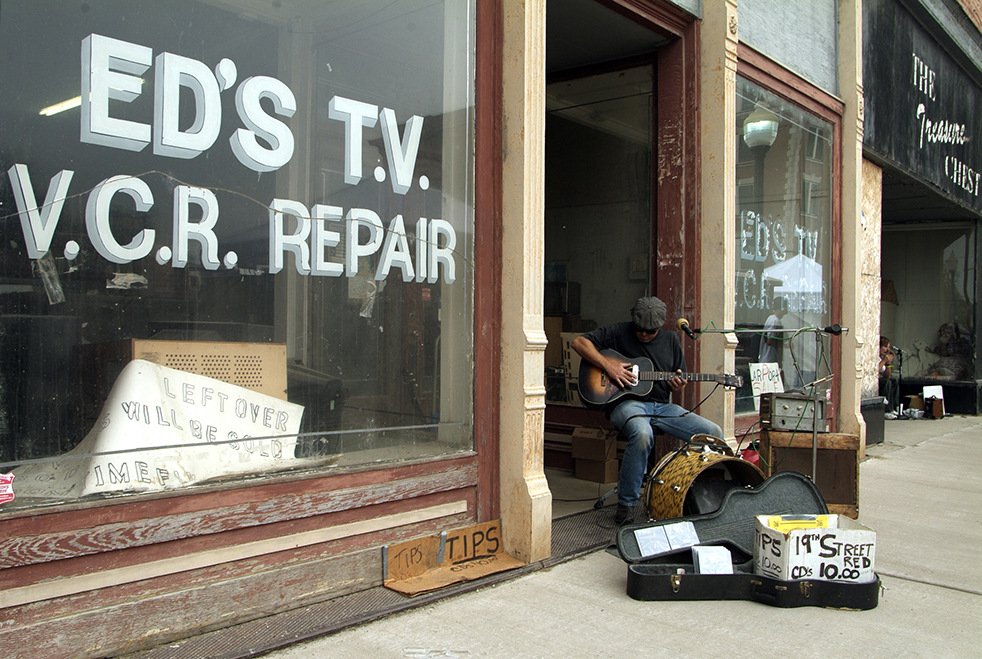
I have always been a visual communicator.  For over 35 years I have been making a living taking photographs for magazines all over the world.  I have always “seen” the world and captured its stories through visuals.  Somehow, it was far easier for me to communicate with images than with words.  Sidewalk performer King Biscuit Festival Helena, ArkansasBut it was also a bit frustrating for me because many times when I was photographing a person, I felt like I was leaving a portion of their story untold.

When I photograph people, invariably I spend a good deal of time talking and listening to them.  It’s this rapport that usually enables me to capture a more intimate photograph. For me, this has always been my favorite part of the “process”, yet I never had an outlet for my subjects’ words, other than through the captions of my photographs.

When I started producing documentaries, my conversations with my subjects finally had an outlet through their recorded interviews that became the backbone of the “script”.  Even though the script was not something that I wrote using my own words, I was instrumental in the process because I was selecting the words and giving them an order.  I was involved in the process and structure of screenwriting.

In recent years, I have become fascinated with story structure and screenwriting.  I have read numerous books on the topic of screenwriting and this past weekend I decided to immerse myself in an intensive 3-day workshop with John Truby.  John has taught some of the best screenwriters around.  I knew going into this, it was going to be a great and informative workshop, but I had no idea how rewarding it would be.  Essentially, John gave me knowledge of the “process” and the structure of storytelling to enable me to take an idea and turn it into a really good story.

I have come away from this workshop with a deeper understanding and respect for a well-written story.   We can all spot poor writing in a film.  It stands out.  Even the layman who knows nothing about “the process” or story structure can identify really bad writing.  The audience may not know why the story or the film doesn’t work – they just know it doesn’t and they’re not buying it.  Like any other craft, screenwriting has gone through stylistic changes over the years, but the fundamentals remain.  After all, telling stories is as old as time and there has always been a constant – and that is “the audience”.  Ultimately the audience will decide if a writer has done their job well.

I think those of us who are “content creators” in this era of multi-media communications need to broaden our understanding of all kinds of mediums in order to effectively communicate.  Many times, I see creatives become too narrowly focused on their one set of tools and in the process lose sight of their end goal  – and that is to deliver the message or story to the audience.  Ultimately, the audience will always let you know if you’ve hit the mark or not because they are looking at the “whole” and not the “parts” of the story.

6 Ways Video has Made Me a Better Photographer

Lately, I’m finding that I “get the job” because I know how to shoot video. What’s odd is that these are still photography assignments and I was NOT hired to shoot video, but because I knew how to shoot video. What I’ve discovered is that many clients love the “eye” of the “hybrid”.

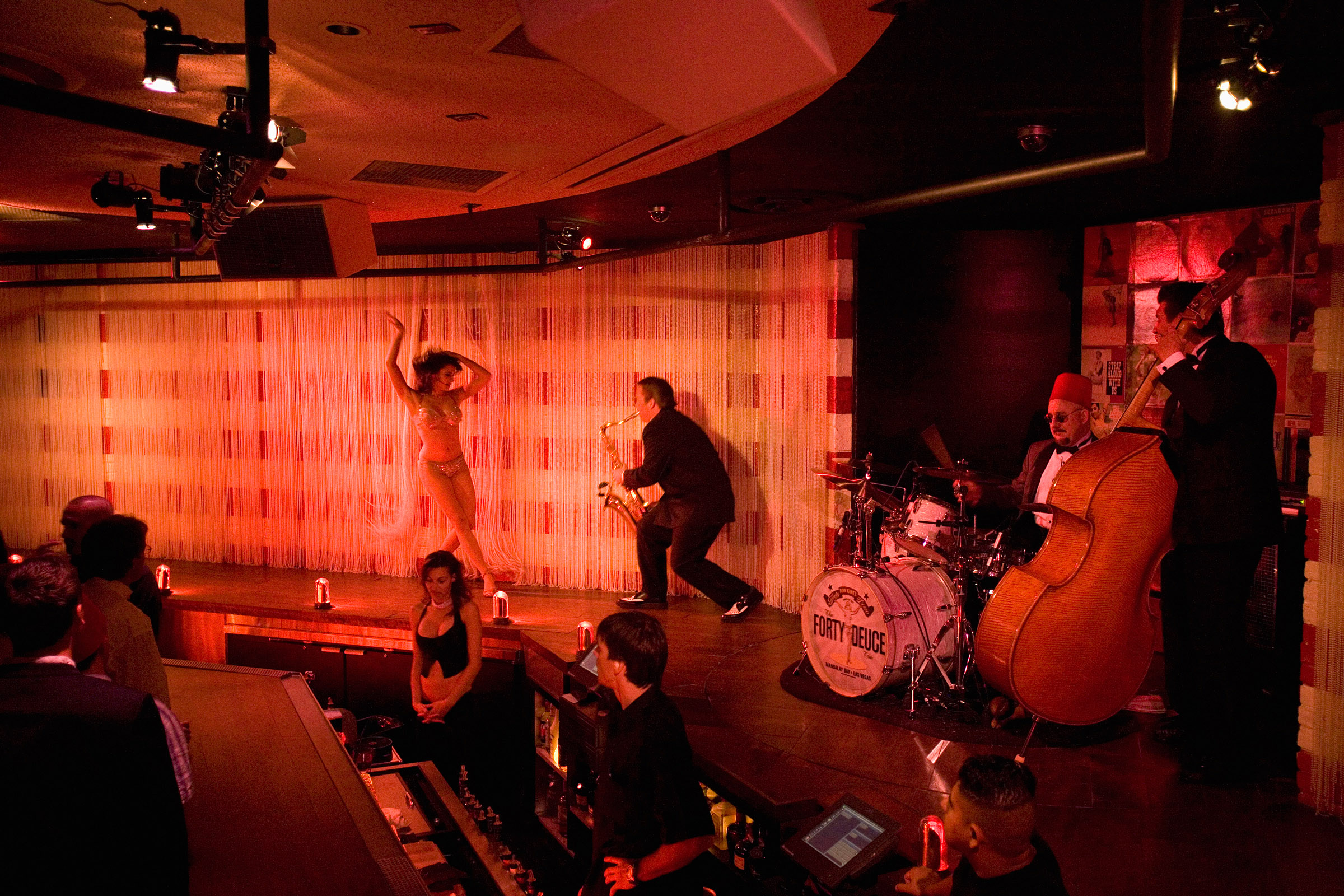
I’ve been thinking about what is it about the “eye of a hybrid” that clients are finding attractive. Forty Deuce burlesque club, Las Vegas, Nevada In a nutshell, it’s the eye of a master storyteller.  That’s because the medium of video is the perfect medium for telling a story. It encompasses movement, action, pace, rhythm and sound to engage, entice and feel.

I got a call this week for an editorial still photo assignment.  As usual, there was the customary business paperwork, but the client also provided a “shot list”.  I’ve been shooting editorial assignments for over 35 years and have had all kinds of direction. Sometimes, I’m given a writer’s manuscript and I’ve come up with my own shot list and sometimes I’m just told to come up with a variety of images.  But this “shot list” was intriguing because it read more like a shooting script for a video project.  As I read through the list, I could see how the person who had written it – had the “eye of a hybrid”.

Here are some of the suggested shots and “direction” from the list they provided:

(This is how I think and shoot in video. It has made me a better still photographer)

Cover it – Get comprehensive coverage – different perspectives, focal lengths, wide, medium and close-ups.  When I shoot video I will get a variety of angles as well as a variety of focal lengths because I know I will need plenty of b-roll to work with when editing the story together.

Get sequences – Get a variety of mini stories with people interacting. I am accustomed to thinking about how my “shots” will come together as part of the whole video that I’m working on.  Now, I approach a still editorial assignment like this as well. It’s kind of like of a moving pagination of imagery in my head.

Get storytelling images – With still photography I need to make sure those independent shots or moments in time also tell a story and stand on their own.  They can’t just be “wowy zowy” photos as Bob Gilka of the National Geographic used to say when I showed him an eye grabbing and colorful, abstract image.

Action/motion – make the images “feel”.  One that that motivated me to start exploring motion was because I was finding that it was difficult for me to convey the feeling of motion in a still image.  I’m finding that it’s easier for me to convey movement in a still image now because my eye is trained to look for it.

Give the images sound – (like a hammer hammering)Natural sound gives a video the element of reality.  It’s almost like it gives the video a well-needed extra layer or dimension.  When I’m shooting still images, I look for images that will illustrate the “sound” of an environment.

Shoot more – Give me more to choose from.  Again, you can never have enough b-roll when you are shooting video so I have naturally started shooting more on still photography shoots and my clients love having the abundance of choice.

How Video Has Helped My Still Photography Business

After a slow spell, which I can’t say I ever get used to after 30 plus years of freelancing, the phone started ringing.  The calls were all in regards to still photography assignments.  Having been a still photographer for most of my life, that wasn’t unusual, but what was interesting was that I beat out my competition – other still photographers – because I knew video.

Times have sure changed. When I started exploring the medium of video, over 15 years ago, I didn’t abandon my still photography10Ft.WaveI simply added another skill set.  Most of my clients over the years have hired me to shoot one or the other, and sometimes both.  But what I see happening now is that as print moves to electronic delivery, my still photographic clients are also looking for a “photographer” that can shoot video components on a still photography assignment.  They need multimedia content for mobile devices and online platforms that cry out for movement and sound.

I don’t think of myself as a “still photographer” or a “videographer”.  First of all, I absolutely hate the word videographer because it smacks of a dated notion of what video used to be.  I think of myself as an “imaging professional” or sometimes a “new media producer” or sometimes just a “storyteller” because that’s what I do – I tell a client’s story, or deliver their message to their targeting audience.  I don’t define myself by the tool I use.

With convergence happening not only in the cameras we shoot with but in the media we create, I will opt for the “tool” or camera(s) that enable me to tell the story I need to tell, in the best way possible.  I’ve been thinking that way since I first forayed into video.  It’s nice to know that now my clients are thinking that way too.