Personal Projects

When I first started out in photography – professionally speaking – it wasn’t customary to show “personal work” to a potential “commercial” customer.  At that time, in the late 70’s, art directors and designers wanted to see that you could “shoot” the things that they needed shot.  So, if you aspired to shoot the

English: Double Stuf Oreos, by Nabisco.
English: Double Stuf Oreos, by Nabisco. (Photo credit: Wikipedia)

Oreo cookie ads – you needed to have an image of Oreo cookies in your portfolio.

This was always a dilemma for me because my photography was “personal”. I became a photographer as a means to an end – the end being that it would enable me to live a lifestyle that I wanted to live.  I knew early on that I wanted to live a life, full of people, places and adventures along the way.  I wanted to live the kind of life that stories are written about.  And, I wanted to get paid for it. I wanted to make that lifestyle the foundation of my career. How bold and naïve of me to think that I could make my business – my pleasure.  Yet, somehow I managed to do just that and I have had the most extraordinary life because I was foolish enough to think I could.
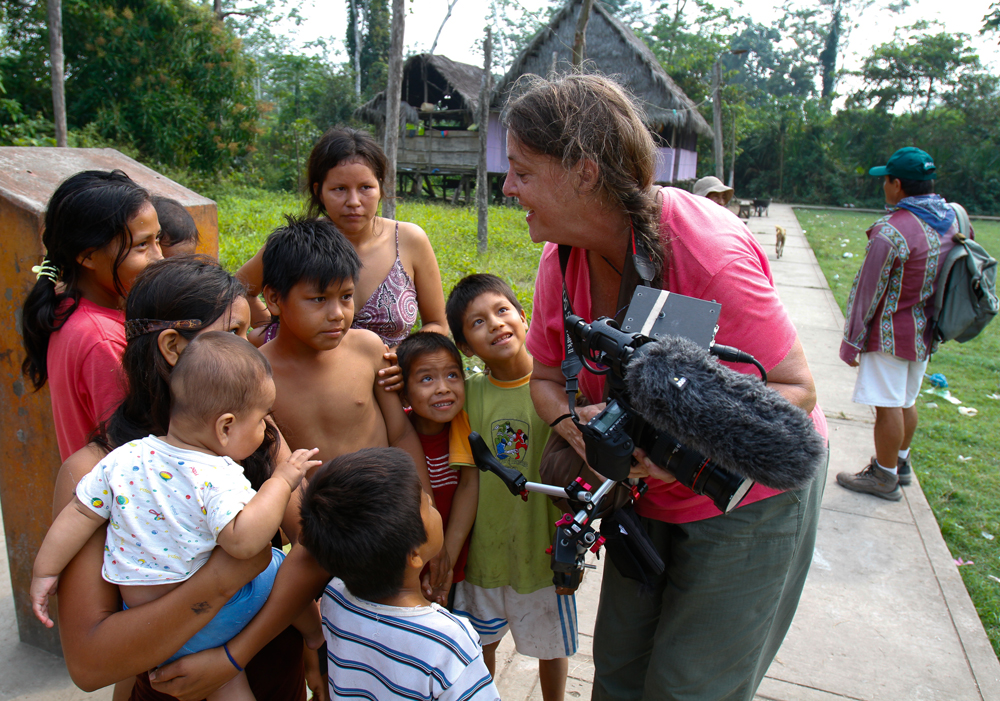
Times have changed –they always do – and now art directors want to look at a photographer’s personal work.  They want to see what a photographer “has to” shoot to fulfill their vision.  It’s not only acceptable now to show personal work to a commercial client – it’s a must.  And it’s never been easier for a photographer to show many facets of their work and career via social media platforms and blogs. It’s also a lot of  hard work.

For me, it’s never been difficult to find something that I’m passionate enough about to be able to spend the kind of time and resources that’s necessary to complete it.  I think that’s the key to starting and completing anything – it has to be something that you really want to do. If you don’t really want to do something, even though you know it will be a good thing to do, you’ll just end up giving yourself reasons and excuses whenever a task needs doing.

For the most part, my personal projects have picked me, not the other way around.  They’ve all started with an idea that just wouldn’t leave my mind. Then I’d start to see my idea in vivid imagery as it played out cinematically in my head.  That’s how my film project, Opening Our Eyes, got started – with an idea that planted itself in my brain, until it was time for me to act on it.  Thankfully, the idea didn’t go away and that I did act on it.  It’s hard to believe that I’m still acting on this idea, more than two years later.  But, I have learned that making a film is a process.  A young filmmaker told me that “a film is never finished – but there comes a time when you are ready to let go”.

I supposed you could say that this film has been my ultimate personal project.  The fact that it was collaboration with my daughter Erin makes it even more personal.  But the lines between work and personal and family have always been blurred in my life.  That’s exactly the life that I set out to live.

Teaching and Learning – Four Weeks in China

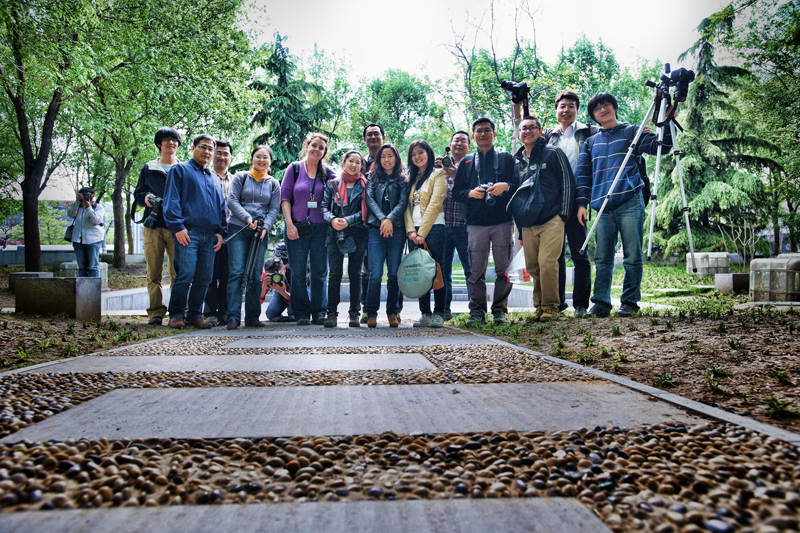
It’s the start to a beautiful day in Brookside, NJ and I’m home at last after a long and arduous 4-week trip to China.  I had been teaching Chinese journalists, video journalism or new media as they refer to it in China.

I hadn’t fully realized how hard “teaching” really is until after these past four weeks.  To begin with, I was teaching a difficult subject – “how to produce and shoot short video stories”, to journalists at the “state’s” largest news and photo agency.  I had 4 days to teach 4 weeks worth of material –how to think and shoot in motion, edit video stories and upload them online. To make things even more difficult, everything I said had to be translated by my interpreter to my students, making the instruction take three times longer.

Each week my students amazed me by their eagerness to learn, despite coming to the class with the bare minimum in the way of  “tools”.  Some students didn’t even have cameras that could shoot video. Some had dated low res video cameras and no one had any audio gear at all.  When it came to the editing part of the program, their computers were under equipped to handle Adobe Premiere CS 5.5, which they had recently downloaded and installed on their PC’s. And yet, each class managed to produce a short story after less than four days!

This entire adventure was a lesson in collaboration. My students learned to collaborate.  Like most photojournalists they were used to working solo, so collaborating was a foreign concept to them.  But, collaboration is a common way of working when it comes to video and it was a necessity in China, because the students were lacking in gear.

I was part of a team of four teachers on this trip, so I too was working in a collaborative way.  That was equally tough, as I am used to working as an independent producer and accustomed to making my own decisions.  The other three photographers/teachers were also independent photographers, used to doing things their own way.  Egos collided from time to time within the group, yet we ultimately knew we needed to maintain the “group” in order to deal with the angst that came with doing this job. On top of that, our Chinese hosts wanted to control us.

I think we all learned a lot about each other in the process as this adventure played out.  I know I did.  But, I also learned a lot about myself. Perhaps, this was the purpose of this trip – to learn more about myself and grow from the experience.  Time will tell.

I can also say that I learned from my students.  There is always one student who feels that they already know everything, and usually tries to “stump the teacher”.  When this happens, I handle it with humility and thank the student for teaching me something that I did not know. I do not hide the fact that I don’t know everything.  And then I take the opportunity to relay to the rest of the class, that I never want to stop learning, no matter how old I get.  I tell them that in living this way, it has brought many rewards in my life and I encourage them to do the same.

I’m home now.  It’s a beautiful Sunday morning in Brookside, NJ and I’m reflecting on my last weeks, which remained an adventure until the end.  Chinese activist, Chen Guangcheng was on my flight from Beijing to Newark, NJ, seeking asylum in the US and making a new life for himself and his family.  As Chen adjusts to a totally new life in America, I’m happy to be home again with my freedom and liberties in tact.

What Really is the Future of Photography?

Luis Javier Rodriguez Lopez, done for wikipedi...
Luis Javier Rodriguez Lopez, done for wikipedia, might be found at my webpage in a future; http://www.coroflot.com/yupi666 (Photo credit: Wikipedia)

No one has a crystal ball so it’s really anybody’s guess as far as what the future of anything is.  Anyone who tells you otherwise is simply a bull shitter and they probably have a bridge to sell you as well.

Does anything ever stay the same?  One quick glimpse into history will verify that nothing stays the same.  But sometimes, it difficult to “see” changes because for the most part, they happen slowly.

I’m of the mind that still photography is and always has been just one way to communicate.  Images have the power to grab our attention and linger in our minds.  If I were to ask you to think of 5 still images and to tell me what they are in just 1 minute – which images come into your mind – and why? Do they give you a reference of what what happening in your life, like a song does?  Or are they disconnected bits of pixels?

Quite honestly, I’m bored with this subject of predicting the future and I’m beyond bored with talking about gear.  Gear has nothing to do with communication.  If it did, we could take the human being out of the equation.  Is that going to be the future?  Cameras everywhere, clicking away, recording  what’s transpiring?

I used to say that video and motion was where things were heading.  But I’m questioning that answer now.  I see so many videos that don’t communicate anything, some just visual eye candy moving across the screen or the device du jour.  But then there are a few long and short videos that suck me in and take me to another place – in body and mind. I see still images that affect me the same way, as well as good films. I think all of us can recite memorable lines and scenes of movies we’ve seen.  They stay with us because they’ve hit a nerve or touched our hearts. They’ve told a story – they’ve moved us in some way.  As a visual communicator that’s what a filmmaker is supposed to do.

I am a visual person.  I like to write but I don’t think like a novelist, I think like a screenplay writer.  Don’t misunderstand me, I would never even come close to calling myself a screenplay writer, but I do recognize that is how my mind works. I think cinematically – I think I always have.

For me, the only thing I would predict as far as the future is concerned is that we all seem to be moving to a more visual world in terms of how we communicate.  Will the written word lose importance in the future?.  I don’t think so, anymore than I think that talking with one another will disappear, although there I some days I wonder when I see groups of people in a bar and everyone is looking at their phones instead of talking to one another.  Songwriters will still give verse to music.  That is as old as man has been around.  Technology has changed the way a musician “makes” his music and has certainly how it is distributed.  What hasn’t changed is the emotion and thought behind a good song.

My future will surely be visual and I will use whatever tool best communicates the stories that are within me to tell.  Other than that, I have no idea what is in our future and that is one of the greatest joys in life – to wonder and dream about what’s to come.

The Difference Between TV and New Media

It’s been a tough 3 weeks teaching video to journalists in China – perhaps the toughest thing I’ve ever had to do.  It’s not the teaching part that’s hard – it’s knowing if what I am saying is being correctly translated to my students, it’s being away from friends and family and just being away for so long that makes it tough. I have one more week to go and will take a good long rest when I return to the US.

Last week was especially difficult but yet my amazing students got me through it.  They simply amazed me in how quickly they learned.  They learned in 4 days what it takes most photographers to learn in 4 weeks or months.

Every week I have a new group of students and each week there are always one or two students that I know really “get it”.  There was one student who I coined a nickname for “Mr. Question” because he asked more questions than most.  His questions weren’t just about what settings to use on his camera or how to do something in Adobe Premiere, but more about the “big picture”.  His questions always showed me he was thinking.

One question, this particular student asked me this week, really caught my attention.  He asked me “How are we (new media producers) different than TV?

Stephen-Lee-TV-News-Presenter SMALL
Stephen-Lee-TV-News-Presenter SMALL (Photo credit: Wikipedia)

I had just read an article online that addressed this very question and it talked about how newspaper video journalists are now winning more Emmys than TV news journalists.

I responded to my student by telling him:

  • TV news makes the reporter part of the story – sometimes even the “star”
  • New media tells the story through the voice of the subjects – making them the “stars”
  • TV news is delivered to us on the network channels – 3 times a day.
  • Online news is 24/7 and on demand.  We get the news online when we want it and wherever we want it – on our desktop computers, on our iPhones or on our iPads. We also can share the news and interact with others.  We become part of the delivery chain.
  • TV news journalists rush back to the studio to get the story on air by 5 o’clock. The stories are generally very short – limited to their broadcast slot.
  • As new media producers we have the luxury of working longer on feature stories and delivering them online to a global audience.  While print newspapers and magazines are folding – there has been a rebirth of the long documentary story that can now be delivered online.  We are communicating to a wider audience around the world, no longer being restricted by time and space.

In the 1960’s newspaper executives were lamenting about the good old days and predicting that TV would kill them.  I find it ironic that the shoe seems to be on the other foot now.  I teach “motion” and “video journalism” to a lot of still photographers.  There are some who buy their DSLR’s and aspire to make broadcast spots for TV.  There are some who aspire to make feature length films for Hollywood.  And then there are some who tell me that there is nothing new about video and that field is already glutted with videographers and cinematographers. Those are the old business models for video and motion.

The ones who “get it” are the hybrid creatures that recognize that there is a shift in the way we communicate.  They understand that video is really just another medium in which to tell their stories – not a business model, nor a niche market.

My student in China who asked me this question- he “gets it”.  He understands that he is part of the future of how Chinese journalists and others around the world, will deliver the news. That’s why they call it – new media.

Pioneering in Video

I’ve been in China for the past two weeks, teaching video journalism to some of the best photojournalists in China.  Last night at dinner, the top director of the program told me (via my interpreter) that Xinhua, China’s biggest news agency, was setting up their multimedia department to stay current with how news is communicated in this day and age.  She thanked me for teaching and inspiring her journalists in this medium and said that I was an honorable “pioneer”.

I never set out to be a pioneer when I first started shooting video and motion in the mid ‘90’s – I merely recognized that when the “tools” of this medium became affordable, it was now possible for me to tell my stories in another dynamic way.  But I never turned my back on still photography and I would say that it still makes up about 50% of my business – at least in the time that I devote to it.  I would also say that while I spend 50% of my time split between both mediums – I make more than 75% of my income from shooting motion – capitalizing on not just making income from shooting video but also on the other elements like editing.

I started thinking about the aspect of being a pioneer and the more I thought about it, the more I realized that I wasn’t trying to set new ground at all – I was really just challenging myself and more importantly staying true to why I became a photographer and that was to communicate.

I’ve given a lot of workshops to still photographers who want to move into video.  Generally there are two types of photographers – the ones who think that because they have been “shooting” for many years, they “just” need to understand a new mode on their cameras and the ones who embrace the fact that this is an entirely different medium and they understand that they are novices, and are eager to learn how to communicate in a different way.  It’s usually the cocky photographers that fail miserably and end up with a string of unconnected “moments in time” to a music track.

Ever since the first DSLR that incorporated a video mode hit the scene, I’ve seen more and more still shooters, move into motion.  After only a couple of months, I even see some of them teaching workshops.  It amazes me, because many times some of these same shooters have been hypercritical of “amateurs” coming into their profession with their auto everything “point and shoot” cameras.  I’ve had some shooters tell me that they aren’t going into motion, because they think that when these tools  become easier to use and more automated – the same thing that has happened to the profession of still photography will happen in video.  I disagree with this notion but more importantly I think that this attitude is usually a mechanism people use to talk themselves out of challenging themselves and are reluctant to “change. ” Just like when still photography moved from film to digital – the ones who got left behind were usually the ones who tried to convince themselves that digital would never be as good as film.

I cannot take credit for being a pioneer in video.  There are many who came before me that were true pioneers and I feel that would discredit them and their efforts.  I’m simply a storyteller and I’m happy that I’m still passionate enough about telling the story that I continue to find the best way to tell the stories that I am meant to tell.

Thanks to the gracious people in China and the Xinhua News Agency for recognizing and embracing the future and being keen to learn.  Perhaps many of these students will not shoot multimedia – but learning how to shoot in motion has made me a better still photographer and will make them better shooters as well.

Week One – Teaching in China

I’ve just wrapped up week one, teaching Chinese photojournalists, in Beijing, to think and shoot in motion.  Like any new job or new experience – the first day or the first week – is always the hardest.  The week flowed like any good story, with “ups” and “downs” but by Friday afternoon – my students triumphed and amazed me.

It’s difficult to teach any “still” photographer “motion” because so many photographers are so gear oriented, they underestimate the most important part of the process – thinking and shooting in motion.  I find that many times, still photographers think that all they need to do is switch their DSLR’s to “video mode” and shoot.  There’s a certain attitude amongst some professional photographers – that all they really need to do is get a camera that’s capable of shooting video.  But they quickly realize that there is a lot more to learn.

Day one, we talked about thinking and shooting in sequencing.  It took longer to get this message across, simply because everything needed to be translated into Chinese.  I showed examples that helped and then gave them an assignment to shoot a sequence of video clips that told the story.  The next day we reviewed the work of the students and they quickly understood the successful attempts and the not so successful results.  They also realized how different shooting motion is from shooting stills.  I had told them in class that “stills are moments in time” and “video is time in motion” but until they actually tried to shoot that way – and then analyzed their results in the critique – did they begin to understand. Many made the common mistake of moving the camera, rather than letting the motion happen in front of the camera and many produced video clips that didn’t relate to one another.

Day two we started to talk about audio.  That’s a subject that all still photographers underestimate because they don’t realize the importance of capturing good audio.  They think that their camera mics are sufficient in this task. After all, they are capturing sound.  It’s not until they can hear the difference between good audio and bad audio that they really begin to understand that audio is more important than the visual.  I could see the light bulbs going off the next day in the critique that they were beginning to understand this important concept.

Day three we talked more about the importance of audio and that when shooting with a DSLR camera, it is essential that they capture audio with an external microphone and a separate digital audio recorder.  After a morning in the classroom, we all headed out for a field trip.  I set up a situation where I did an interview of a subject and they shot the b-roll.  That evening, we broke into 3 groups (video is a collaborative effort) and they set off to capture a story, using everything we had learned in the past 3 days

Day four, we put a small dent into learning the vast editing application, Adobe Premiere.  That was perhaps the most challenging day for all of us.  I’m somewhat new to Premiere, since I’ve been editing in Final Cut Pro for the last 10 years, but it was the most viable solution since most of the students were using PC’s and Premiere is cross plat formed.  We learned the basics in the morning and in the afternoon – the hard work began.  The next day, we would be joining the other 3 groups who had been learning things like lighting and Lightroom and the clock was ticking to get their assignments edited.  I cannot even begin to tell you how amazed I was at how far these students had come in just 4 days – it was remarkable.

The next morning we showed our completed projects to the entire student body and other faculty.  Based on the resounding applause – I believe we amazed them as well. That evening we were all beyond exhausted, but my students invited me out for a “banquet”.  I was lucky  – many in my group spoke some English – so the evening was spent sharing stories and cultural experiences and food and drink.  It created a bank of memories that I will cherish.

We had two days of rest and our first day; we headed to a remote area of the Great Wall.  I shot some still images and then I needed to just take pause.  As the other 3 teachers continued to shoot – I knew I needed to stop and just take a moment to put the camera down and really “see” where I was.  I needed that time to absorb not only the week I had spent but to relish the “now” and think about where I was in the context of the world.  It’s those moments, when I put the camera down, that always create the memories that linger in my mind forever more.

Teaching Video Journalism in China

Chinese flag, Beijing, China.
Chinese flag, Beijing, China. (Photo credit: Wikipedia)

I’m sitting in the Continental (United) airport lounge at EWR, waiting to board a flight for Beijing.  I’m headed to China for 4 weeks to teach Chinese journalists, video journalism.  My mind is spinning with ideas, questions and the usual array of “what ifs” as I take on another adventure.

About two years ago, I started saying “yes” to opportunities that presented themselves to me – or at the very least, I began to consider opportunities, rather than to talk myself out of things, right off the bat.  Because, of that mind set, I’ve been going where life seems to take me and it has presented quite a few interesting adventures.  It’s not that I’m foolhardy and doing things on a whim – it’s that I have been listening to myself – my inner voice – and it has been my guiding force.

I’m told that the Chinese are hungry for “western” knowledge.  But what I have to teach them is something universal, and that is – how to tell a story – using the medium of video.  Seems so basic and simple – how to tell a story – and I suppose it is, but like anything else, it’s simple if you understand it.  The key to understanding something is to have the desire to learn.  Some people say they want to learn – but that’s different than really having the desire to learn.

Some folks feel threatened by this seemingly insatiable desire of the Chinese to learn all things western.  I’m also finding that when people feel threatened by something – they try to “stop” whatever it is they are feeling threatened by.  It’s one of those stupid human tricks that folks have played since the beginning of mankind.  I process this behavior pattern as unproductive and unsustainable. It rarely works as far as eliminating a perceived threat.  You simply can’t totally eliminate desire.

Rather than stop others from growth – a better way is to better yourself.  I’d rather put my energies into where I want to go in my life – than in trying to squash other people’s hopes and dreams.  I’ve also found that what goes around – comes around.  When you “give” and “help” others – you ultimately create a better world – or “space” for everyone.

So, as my mind races this morning with my hopes, my expectations and enthusiasm – I try to keep the nagging doubts and fear at bay.  I tell myself that it’s natural to have concerns.  But I also tell myself that I can either let my concerns consume me and turn into fear or I can welcome the “unknown” and embrace the opportunity at hand.  I’ll let my inner voice guide me because it seems to be doing a good job.

Add to FacebookAdd to DiggAdd to Del.icio.usAdd to StumbleuponAdd to RedditAdd to BlinklistAdd to TwitterAdd to TechnoratiAdd to Yahoo BuzzAdd to Newsvine

10 Things I Learned by Making a Movie

I’m sitting in the airport lounge at LAX looking out over a rain soaked tarmac – in a mellow mood. One of those rare days when nothing really needs attention. I ran into a friend on the flight out from EWR to LAX , who had noticed that I hadn’t been writing as much of late. That’s true enough, for a couple of reasons but the simple answer is I just didn’t feel the urge.

I started writing when I needed to sort things out in my head or I happened to be thinking or experiencing something that seemed worth sharing. At times, I suppose I get very personal – that’s what I have been told. That’s comes with sorting things out in my head.

Today, I’m thinking about what brought me to LA and that is the fact that I made a film – a 76 minute documentary. I‘ve never had any formal training in the way of film school, although I have often fantasized about going to NYU and getting my Masters in film. But in the interest of time, at this point in my life – I did what I’ve done a lot in my life and that is , I just decided to “do it” – in this case, make a film.

So what did I learn?

1. The story is everything – it’s everything.
2. It IS possible to make a good film without a big crew and a Hollywood budget and lots of gear.
3. You have to have desire – when you have a small crew and a tiny budget, you do a lot more of the work yourself – so you have to be passionate about what you are working on.
4. Festivals are competitive – at least the “big” ones. Are they important? They are as far as building awareness, especially for a narrative film. For me, a festival provides an opportunity to interact with an audience and get feedback. I didn’t make this film to keep it a secret.
5. The film will take a lot more time than you can imagine, especially if you don’t have a big budget.
6. There is a cinematic language and necessary ingredients to any successful film – one being – a film needs contrasts and opposites or opposition.
7. PR and marketing is essential and most filmmakers do not dedicate enough money toward this end.
8. There are so many paths to distribution these days – DVD’s are dying out and VOD and downloads are taking their place.
9. It’s almost unheard of for a filmmaker to “own” their content – most have partners and/or investors – active and otherwise. I can’t tell you how many times, eyebrows have gone up when someone asks me who owns the film and I tell them, “I do”.
10. A film is never finished – but there comes a time when you are ready to let go.

Add to FacebookAdd to DiggAdd to Del.icio.usAdd to StumbleuponAdd to RedditAdd to BlinklistAdd to TwitterAdd to TechnoratiAdd to Yahoo BuzzAdd to Newsvine


Monetization of Photography in Spite of a Lousy Economy

I talk to a lot of photographers. I don’t define the word “photographer” by the type of camera he or she shoots with. Whether someone is shooting with a still camera, a traditional video camera, a motion picture film camera or a hybrid camera that shoots both stills and motion – a “photographer” these days is apt to embrace more than one of these tools.

Regardless of the tools you may use, I’ve come up with a few tips on how photographers can stay afloat and make money in this continued stagnant economy.

  • Think outside the box – don’t think of yourself as one who just shoots still images. Even your “still” clients will have a need for motion imagery these days.  It may not warrant the need for them to hire a big video production crew to make a broadcast spot.  But it could be one of your corporate clients needs a “talking head” for their website. Even if you don’t shoot motion or don’t want to – collaborate with someone who has these skills to fill your client’s needs instead of sending your clients  elsewhere.
  • You don’t need someone else to commission your services in order for you to make a living. When photographers take on personal projects, not only are they creating a buzz and getting noticed by potential clients, they are also creating their own “content” to monetize. It is possible now to get our content to market without the need of a middleman. Portals are open and plentiful to all.
  • Take advantage of what is “free”, rather than be put out of business by it. There are so many ways to build your brand and get noticed without spending a fortune. The costs of building and maintaining a website have dropped significantly because of advances in technology. And utilizing social media to create a buzz and get the word out about your company is virtually free with Facebook, Twitter,LinkedIn and YouTube. But be prepared to do the work and discipline yourself because this territory is ripe with distractions.
  • Re-purpose your content. If you’ve been blogging or have something useful to share – consider packaging your “knowledge” into ePubs, podcasts or “how to” webinars. One thing I’ve learned about making an ePub is that you can either do it yourself or hire a formatter so that it gets to market quickly – via Amazon, Barnes and Noble or the iTunes platform. Price it right – and offer more than one ePub at a time. (I’m working on my 2nd ePub now) In this market, if someone has just spent $3 or $4 to buy your ePub and they see you have another one for sale – it’s not a big stretch for them to buy that other book you offer at the same time.
  • Collaborate with others. Partner with others to put on webinars, podcasts, call in phone seminars etc. Use this opportunity to build your own brand. Don’t always feel that you have to be the only “act” offered. In fact many times, if you join forces with other creatives, it will get you further than if you are the only speaker in a half filled room. Get out there and get noticed and learn from your colleagues at the same time.
  • Be authentic. I cringe when I write that word because it has become a bit trite. I guess in a way I have always been authentic. In fact I just can’t help myself. If you are true to yourself, you will be ready, eager and able to work hard on your dreams. And hard work is exactly what is necessary to make it in this profession.  You’ve got to want it bad enough in order to do the work. If you are a clone of other photographers, you’re career will be short lived. I guarantee the photographers that you are emulating will be “moving on” because their passion is driving them to new things. So, what happens to the cloned versions then?
  • Don’t focus solely on the money. Easy to say and really hard to embrace when you can’t pay your mortgage. But look at any successful person – I don’t care which business you choose to look toward in terms of finding successful people – but you’ll see that most people who have “made it big” were not driven by the money. I’m not saying that money is not important, but if you are solely focused on the money and not on the act of creating – it will show.   Being too focused on the  money part of the equation, can sometimes push it away. People sense it. It’s human nature to want to be around a “winner” – not someone who is begging for a job to keep them afloat financially.
  • Be patient. Everything turns around. While the old days and ways of doing things won’t come back, better opportunities will replace them. Don’t be paralyzed by your own fears. Do what you can that won’t cost you a lot of money and there is plenty you can do. Work social media, learn new skills – audio, editing, writing etc., network with people, create new content for ePubs, webinars, and podcasts. Use your imagination, pursue what you are passionate about and when the economy turns around – you’ll be ready.

Add to FacebookAdd to DiggAdd to Del.icio.usAdd to StumbleuponAdd to RedditAdd to BlinklistAdd to TwitterAdd to TechnoratiAdd to Yahoo BuzzAdd to Newsvine

Licensing Video?

There are probably people who would argue with me as far as the practice of licensing video being the norm in the world of video production, other than the licensing of stock motion footage. Perhaps that may be true in some business models and certainly true in older business models, but I can tell you that has not been my experience.

I should clarify that I do not position myself as a “hired gun”– meaning a camera operator who turns over their footage at the end of the day. I choose to assume the role of producer and maintain control over my intellectual property or the finished video product. I cannot do this in the traditional motion picture industry but that business model is changing due to technology and the influx of indie filmmakers who are making their own rules and bringing their films to market themselves. And for the most part – I can’t do this in high-end broadcast spots when working with a middleman – or ad agency where ultimately their end customer maintains all rights.

However, the demand for video has skyrocketed in recent years and with that has created a new client base who are using video in new ways and on new platforms. I am establishing my own set of rules accordingly. One of them is licensing the finished product just as I did my still images. I can only do that with video productions that I have produced and hold the copyright to.

Typically, I will separate the licensing of my still images from the video product as well as the creative fees. I may be shooting both mediums on the same job but I handle the licensing differently. I have found that video has a shorter shelf life so I am not as concerned about the duration of the license (length of time) as I am with still imagery. But I am concerned about it’s “reach” which these days is global – thanks to YouTube.

Another thing I do is I make sure that it is stated in my contract and/or estimate that the license for the entire video production does NOT include permissions and/or licenses to any still images that are made from frame grabs pulled out of the video footage. Putting this up front in the estimate has actually proved beneficial because if a client does anticipate the need for still images – they will hire me to create stills – rather than take them from frame grabs.

We are living at a time where just about everyone’s business models are changing. So, if someone tells you that licensing video isn’t the norm – outside of the stock motion footage business – think again. What is the norm these days? It may be the precedent we are setting now.

Add to FacebookAdd to DiggAdd to Del.icio.usAdd to StumbleuponAdd to RedditAdd to BlinklistAdd to TwitterAdd to TechnoratiAdd to Yahoo BuzzAdd to Newsvine