Video – Hot Medium for Higher Ed Marketing

Last night my daughter forwarded a link to a blog entry she wrote for Lipman Hearne, the marketing firm that she works for. Lipman Hearne specialises in PR and marketing for non profits and institutions – many of their clients are colleges and universities.

She wrote about a new trend, “LipDub” that is quickly being embraced by universities and becoming part of their marketing and communications strategies. “LipDub is part virtual campus tour and part music video that showcases a college’s campus and student life in a creative and entertaining way.”

This MTV type video trend apparently started in Europe when students decided to create a video to “show the world” that studying doesn’t have to be boring. The idea quickly caught on in Canada and the US and has moved beyond its grass-roots beginnings and is being adapted by marketers who find the approach uniquely appealing in this niche.

The videos that I have seen remind me a bit of the popular “Playing for Change” – Stand By Me video that went viral on YouTube last year. They are clever, well executed and very engaging. Check out what John Hopkins created. Definitely not your run of the mill amateur video but rather a very entertaining and professionally produced web video.

The big point here is that video is the medium of choice when targeting this demographic and quickly making those glossy brochures a thing of the past.

Add to FacebookAdd to DiggAdd to Del.icio.usAdd to StumbleuponAdd to RedditAdd to BlinklistAdd to TwitterAdd to TechnoratiAdd to Yahoo BuzzAdd to Newsvine

Findings From the ASMP Motion/Video Study

ASMP recently formed a Motion/Video Study Group to explore how members have embraced video. Video has become much more prevalent in visual communications as electronic publishing continues to replace traditional print media. The increased availability and low cost of broadband has enabled and created a huge demand for video. At the same time, there is a convergence of our tools as “hybrid” cameras are capable of shooting both stills and video.

As head of the Motion/Video Study Group, I spoke at length with fourteen ASMP members who have integrated video into their businesses.

Some General Observations:

As expected, there was a wide range in responses as well as in the markets that each participant works in.

• Participants are working all across the spectrum in the video/motion sector – from simple multimedia projects (still images with sound/music) to big budget broadcast spots for ad agencies.
• Most people have either been asked by their clients if they also shoot video or they have presented video as an up sell to their existing clients.
• Participants are positioning themselves as producers, directors, camera operators or all of the above. Many have set up production companies.
• Almost all participants have created partnerships or work in collaboration with others – sound people, editors and camera operators to name a few. Video production is based on collaboration because of it’s many facets.
• The learning curve can be steep – especially for editing and motion graphics applications.
• There is a lot of confusion and chaos in terms of file and codec standardization.
• Ownership and copyright are handled in a variety of ways depending on the production, the market and how one has positioned themselves. Traditionally in video, the camera operator is a hired gun and does not maintain ownership of the content. Depending on the market – the ownership and copyright is maintained by the end client or the production company.
• Most shooters invoice their still images and video as separate line items when shooting both mediums on a job.
• All see opportunities in the video medium in almost all markets.

To see the full report please go to http://asmp.org/tutorials/getting-started.html

I would love to hear from others who have added video to their businesses.

On the Road (Again)

I’ve been doing a lot of traveling these days, quick one or two-day stays in cities all around the US. But that’s not the kind of traveling I do when I’m on a destination shoot where get totally absorbed in a city because I’m there to tell that city’s story through my images.

These days a lot of my travels are quick trips in and out of cities all around the country, giving seminars for AMSP to still photographers who are thinking about getting into video. So I rarely have time to see the “sights” of the cities and really get my bearings on where I am.

One thing I do try to do while I’m on the road is walk because that is what I do when I’m home and it helps me get clarity on the day. This morning I went out for a walk in the area just outside my hotel. As I walked by various chain restaurants and stores, I almost forgot where I was, because it could have been just about anywhere in America. And that kind of made me sad – that in the US, our towns and cities have lost their unique attributes.

When I got back to my hotel, I saw a posting from a friend on Facebook on how photography introduces you to people whose lives and stories humble you. His words really hit home because I became a photographer for this very reason – to allow me the privilege of meeting people and hearing their stories. For me, photography and my camera have always been a “means to an end”.

Then I realized, that a place isn’t really defined or not defined by its stores and restaurants but by its people. And that even though I may only be in a place for a quick overnight – I always try to connect with the people. Whether that may be a chat with a taxi driver or a waitress or with some of the wonderful people I meet when I do a seminar.

Such is my life, enjoying and being humbled by all the people and their stories as I continue my travels. How lucky I am – to be able to combine my career in photography with my passions.

Add to FacebookAdd to DiggAdd to Del.icio.usAdd to StumbleuponAdd to RedditAdd to BlinklistAdd to TwitterAdd to TechnoratiAdd to Yahoo BuzzAdd to Newsvine

The Future and Video

Video seems to be the hot topic these days amongst still photographers. Their clients are coming to them and asking them if they shoot video and many are starting to incorporate video into their still photography businesses to be able to fill their clients’ needs.

We all spend more and more time getting our information and communicating electronically. When you analyze that, you quickly realize that there has been a shift in the way that we as a culture communicate, and that has changed our industry – still photography. Not because a still photograph is obsolete or has lost it’s impact, but because the traditional outlets for still photography are slowly disappearing – print newspapers and magazines.

We can debate which medium – still photography or video – delivers a visual message better – but it would be a pointless debate. Truth is, a viewer is meant to linger on still images, while motion mediums are meant to hit us with the added dimensions of movement and sound. Neither medium is better than the other and neither medium is going away. At least not as far as I can see.

The real debate shouldn’t be which medium is better, because there isn’t a one size fits all answer. Some things are visually communicated better in stills and some things are better in motion. The real question we should all be asking ourselves from a business point of view is – What are our clients asking for? And – Are we in a position to fill our clients’ needs?

I see a future where I shoot still images and video. Some jobs will call for still photography and some will call for video depending on the message or the story that our clients want us to tell. I want to position my business to be able to solve my clients’ needs with whatever medium does that best.

Add to FacebookAdd to DiggAdd to Del.icio.usAdd to StumbleuponAdd to RedditAdd to BlinklistAdd to TwitterAdd to TechnoratiAdd to Yahoo BuzzAdd to Newsvine

Talking Techy – New Video Gadgets

As far back as I can remember, ever since being the only woman in my graduating class at Brooks Institute, I’ve been in a male dominated business. Along with that comes a lot of tech talk and I’d like to think that I can hold my own “talking techy”.

Lots of new gadgets and tools have been announced in the last couple of weeks. The much-anticipated Scarlet camera has been formally announced for spring – early summer 2010. Check out the 3K Scarlet prototype along with some other new gadgets from the RED folks, and you too will be amazed. And the proposed price – less than $3000 for a 3K video camera that shoots RAW.

Another interesting camera to debut is the Panasonic full HD 3D camcorder camera. Pretty cool, but I wondered how one will look at their 3D footage? Panasonic thought of that as well, and introduced 5 new 3D HD TV sets.

Check out MacVideo’s blog on CES 2010 predictions for digital cameras – smaller, video, interchangeable lenses and wifi enabled are all new features to watch for this year.

And Skype enabled HD televisions are coming so Skype users will now be able to make HD video (phone) calls as long as they have an HD web cam and plenty of bandwidth.

I played around with the popular hybrid cameras, the Canon 7D and Canon 5DMarkII over the holidays. I absolutely love the visuals that these cameras create but they felt clumsy to me, being the street shooter that I am, because I couldn’t look through the viewfinder to focus while shooting. I had to use the LCD monitor on the back of the camera to focus, which was tough outdoors and it also made the camera hard to stabilize because it wasn’t braced up against my eye. I do realize that there are 3rd party viewfinders available that attach to the back of the camera which help with focusing in bright sunlight but also helps with camera stabilization.

Lastly, I wanted to check out a company I heard about called Animoto.com. They provide a subscription based service where one can upload still images, video clips and text and a video is automatically created from your assets (or theirs)  in a matter of minutes. They also have an interesting selection of licensed music to choose from, which you can use in your videos. I literally spent less than an hour of my time to register, upload my video clips, choose a piece of music and create a short 30-second video.

2010 has just begun and I’m already overwhelmed by all the new toys and gadgets.

Add to FacebookAdd to DiggAdd to Del.icio.usAdd to StumbleuponAdd to RedditAdd to BlinklistAdd to TwitterAdd to TechnoratiAdd to Yahoo BuzzAdd to Newsvine

Closing out 2009

I walk every morning and regardless of the weather I go outside even for a few minutes, to get my bearings in nature. Today’s there’s a soft snow falling and as I stepped outside I saw a herd of 8 deer passing quietly through the woods.

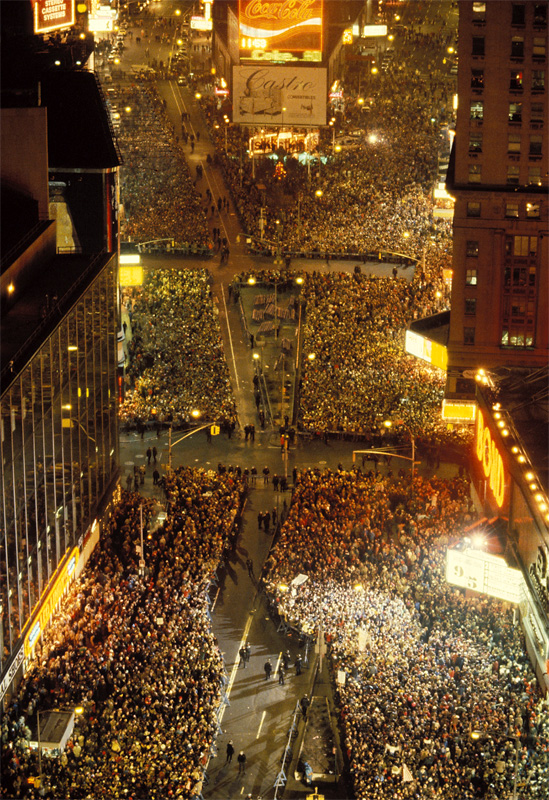
Times Square, New Years Eve

Most days I take this time to think about the upcoming day but this morning I started to think about the past year.

Like most people I talk to, I can’t say this year has been the greatest financially, but I managed and I’m grateful for all the opportunities I had. And rather than stress too much about the down time, I channeled my energy into creating new work and a new website. The redesign of the website consumed more time than anticipated but things like that usually do. And to some extent it continues to be a work in progress.

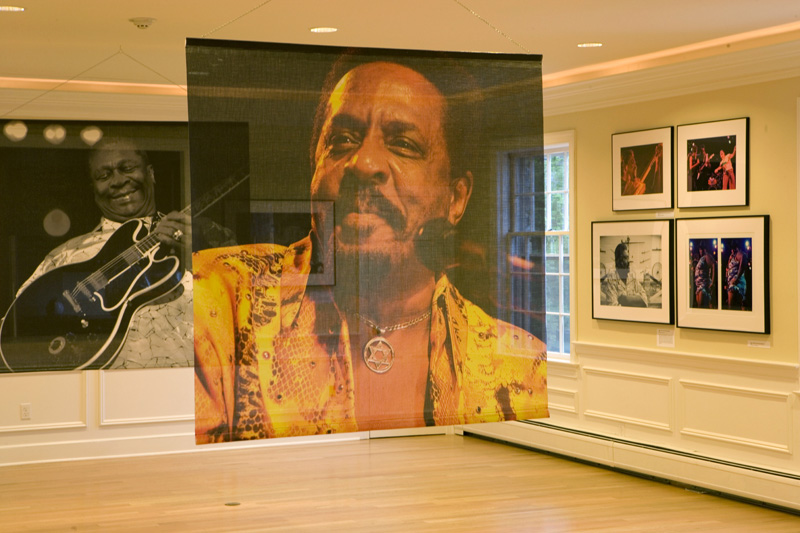
The Delta Blues Project

2009 was very rewarding for me in terms of my personal projects. My Delta Blues Project, which opened in 2008 at the Fullerton Museum, in California, was shown locally. Finally my friends and neighbors, who have heard me talk about my work over the years, could now come and see it on exhibition.  Freedom’s Ride, a documentary about two diverse group of high school students who traveled from New Jersey to Alabama, retracing the Civil Rights movement, aired on various PBS stations and continues to be shown at educational venues.

I started writing – for myself and on commission. I have discovered that I love to write. I never would have expected that because I’ve always struggled with words and usually defaulted to communicating visually. But it’s the things that I struggle with that seem to give me the most rewards.

Locally in my town of 5000 people. I have become part of a small grass roots group called TAG. We are a non-partisan group that seeks transparency and accountability in our local government. My husband and I trained a small army of volunteers on how to operate a video camera so that they can shoot town meetings. Since May, our town meetings have been televised on our local public access station, MendhamTV. What a difference that has made as far as how the citizens of my town have become more involved in their community. I’m really proud of being a part of that.

It’s been a year of change and growth. Now on to 2010. Tomorrow is the start of a new year and along with that new hopes and dreams. But it’s really just another day – a day we can shape any way we want to.

Add to FacebookAdd to DiggAdd to Del.icio.usAdd to StumbleuponAdd to RedditAdd to BlinklistAdd to TwitterAdd to TechnoratiAdd to Yahoo BuzzAdd to Newsvine

Mistakes People Make When Starting a Video Production Business

  • They focus too much on the “tools” and not the “technique”. These days video equipment is relatively cheap. Therefore the entry-level bar has been lowered for video production. Learn your skill set and be unique – have your own vision or point of view that separates you from the rest.
  • They skimp on the audio, tripod and lighting. The camera is just one piece of equipment you need. You also need independent external microphones to be able to capture good audio as well as a good tripod with a fluid head. If you’re going to be shooting indoors or doing interviews – you’ll  need some lighting equipment. You can either go the route of hot lights or LED panels which are portable and cool but costly.
  • They forget about the editing and output. Shooting  is one thing – editing it and getting it “out” is another. Learning to edit will make you a better shooter. You quickly realize in the editing room what you SHOULD have shot in the field.
  • They don’t diversify. This is important when first starting out. It will pay the bills and will help you get better at what you do. And it may also help you in find your niche.
  • They forget about marketing. Lots of people have equipment and even more people have great ideas but if they don’t promote their business, they’ll spend their days waiting for the phone to ring.
  • They don’t realize that business is about people – not just the tech. Work on your people skills and your business will flourish.
  • They don’t network. Networking of course is critical for  getting new business.  It’s also beneficial to network with other people in the video production business. Video production is all about collaboration, so it’s essential that you get to know shooters, sound mixers and editors. Join listserv groups and go to meet-ups in your area.
  • They under-estimate what a job will cost in both time and resources. There are many facets to video production – the shoot, audio, editing, music, graphics, motion graphics, scripts, voiceovers and delivery. If you won’t be facilitating all those facets – then you need to determine how much it will cost and present that in your estimate.
  • They don’t draw up a production schedule. This is essential to keeping a job on target. Make sure that each step of the project has a delivery date specified and signed off on.
  • They don’t realize that they are under insured. Many people coming from a still photography background don’t realize that their current insurance policy does not necessarily cover video production.
  • Add to FacebookAdd to DiggAdd to Del.icio.usAdd to StumbleuponAdd to RedditAdd to BlinklistAdd to TwitterAdd to TechnoratiAdd to Yahoo BuzzAdd to Newsvine

The Family Story

This time of year we all try to spend more time with our families and loved ones. It’s also a time when we reflect on the people who are no longer with us. For the most part we rely on our memories and some scattered photographs or home movies.

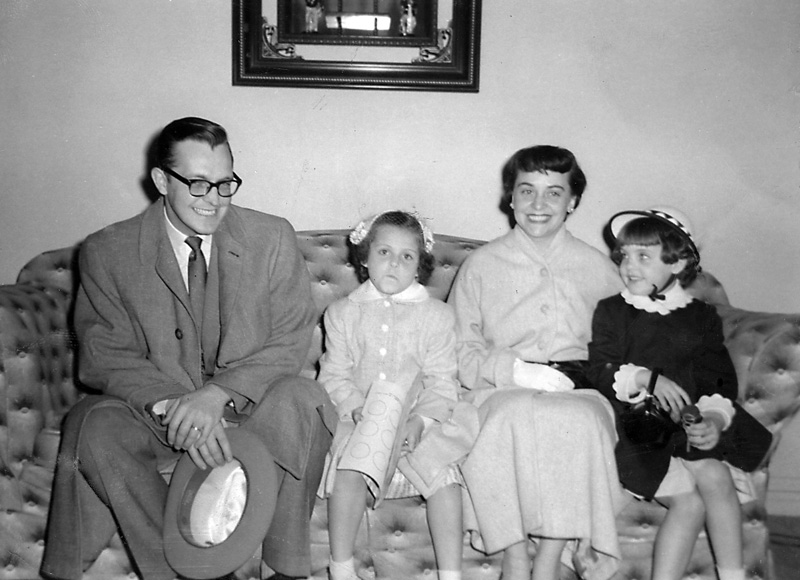
Mooney family dressed up for Easter. I'm the child smiling.

Some of the fondest memories I have of my mother, father and grandparents are of us sitting around the dinner table, long after the meal was over and listening to the family stories. Of course each person would tell the same story in an entirely different way – the way they remembered it.

Every family has stories – mine certainly does and I have started to collect information, photographs and even recordings of family members while they are still around to tell them. It’s such an easy thing to do with all the tools that technology has provided in the way of cameras and audio recorders.

I often think that as photographers and filmmakers we are not only the keepers of our own family stories but we are documenting the stories for other families through our images, recordings and videos. Here’s a recording of my Uncle Dorlen talking about fishing in Northern Michigan in the winter.

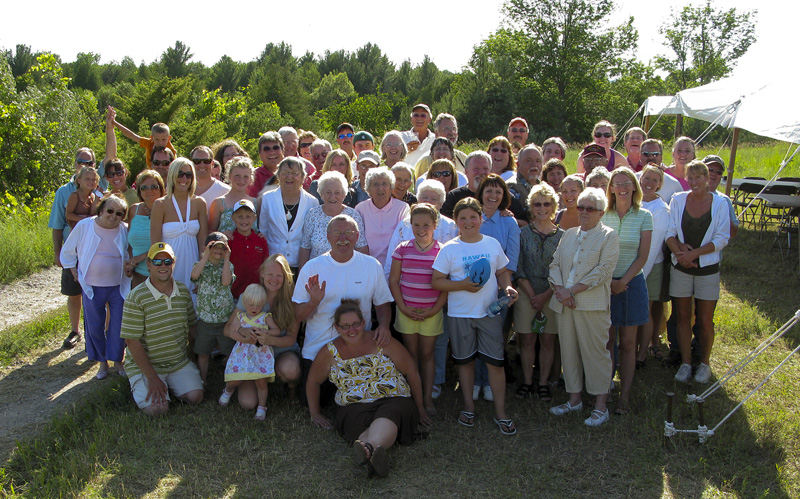
Family gathering at my Uncle "Frenchy's" memorial.

Essentially, we are creating an archive of our loved ones and the memories. And that is the most precious gift that I can give someone through the talents of my craft.

I was recently looking at someone’s vacation snapshots and it occurred to me just how precious those images are, certainly for the people in them and the people they know. I have always taken the family snapshots and have recently started video recording my relatives telling their stories through their own voices, preserving them for future generations.

So think about that – even if you just take out your iPhone or Flip this holiday season, start capturing life’s moments. You’ll be glad you did.

Add to FacebookAdd to DiggAdd to Del.icio.usAdd to StumbleuponAdd to RedditAdd to BlinklistAdd to TwitterAdd to TechnoratiAdd to Yahoo BuzzAdd to Newsvine

Mistakes Still Photographers Make When Shooting Video With a DSLR

  • They don’t understand the importance of audio and don’t use external microphones. Audio is everything in video.
  • They think in “moments in time” and start shooting video too late or stop shooting too soon. You need to let the camera linger longer.
  • They don’t shoot sequences with a beginning, middle and end.
  • They don’t think in “storyboard mode” – You should ask yourself  “How will I get into and out of a shot and what’s next in the story?”
  • They don’t shoot enough B-roll with variations in angles and focal lengths – very important in the editing process.
  • They move the camera instead of letting the motion take place in front of the camera.
  • They turn the camera vertically. There aren’t too many vertical TV sets and monitors.
  • They don’t use a tripod forgetting that video is “time in motion”.  It’s one thing to hold a camera steady for 1/60th of a second and quite another to hold the shot steady for 10 seconds.
  • They don’t consider the frame rate and how that will affect workflow and editing.
  • Aren’t careful keeping their sensors clean from dust.  Retouching video is a lot more involved than spotting still images.
  • They “throw” some video clips in with the still photography job, not putting an added value on them and thus setting a bad precedent with clients.
  • They don’t consider the output and the type of file to be delivered.  There are dozens of formats and codecs in video.  Choose according to your target audience and viewing platform or device.

Add to FacebookAdd to DiggAdd to Del.icio.usAdd to StumbleuponAdd to RedditAdd to BlinklistAdd to TwitterAdd to TechnoratiAdd to Yahoo BuzzAdd to Newsvine

Video News

I came across some interesting things this week, so I am passing them along.

One was the much anticipated announcement of the debut of the Scarlet – a new camera from the same company that makes The Red. There have been a lot of rumors about this camera over the past year and it will be rolled out in 2010.  Check out Philip Bloom’s blog about it. And here’s another post on FreshDV with information about the Scarlet.

If you’re a Sony EX-1 shooter, here’s an interesting tip along with a how-to-video on using the Zacuto Z-finder with that camera. This viewfinder was made for the Canon 5d, but Martijn Schroevers found a clever way to attach it to the LCD of the Sony EX-1.

Next up is yet another new video camera format from Sony – NXCAM. The NXCAM can record 1920 x 1080 images at 24Mbps (50i or 25p), as well as supporting 720/50p and Standard Definition recording.
Very interesting but I wish these camera manufacturers would standardize formats and codecs.

I also came across a very interesting company called Wistia. They allow you to share and host your videos but in addition they offer heatmap tracking which gives you a visual spectrum of how your visitors watch your videos and what attracts them or confuses them.

And to give you an idea of how much web video viewing has exploded, here’s an online channel Expotv where consumers send in video product reviews. No fancy production values but an interesting concept of sharing information that has really caught on.

With all those news items I figured it was about time I changed my header – gone is that template blue – replaced by something more relevant to the blogger.

Add to FacebookAdd to DiggAdd to Del.icio.usAdd to StumbleuponAdd to RedditAdd to BlinklistAdd to TwitterAdd to TechnoratiAdd to Yahoo BuzzAdd to Newsvine