Storytelling – Words or Pictures?

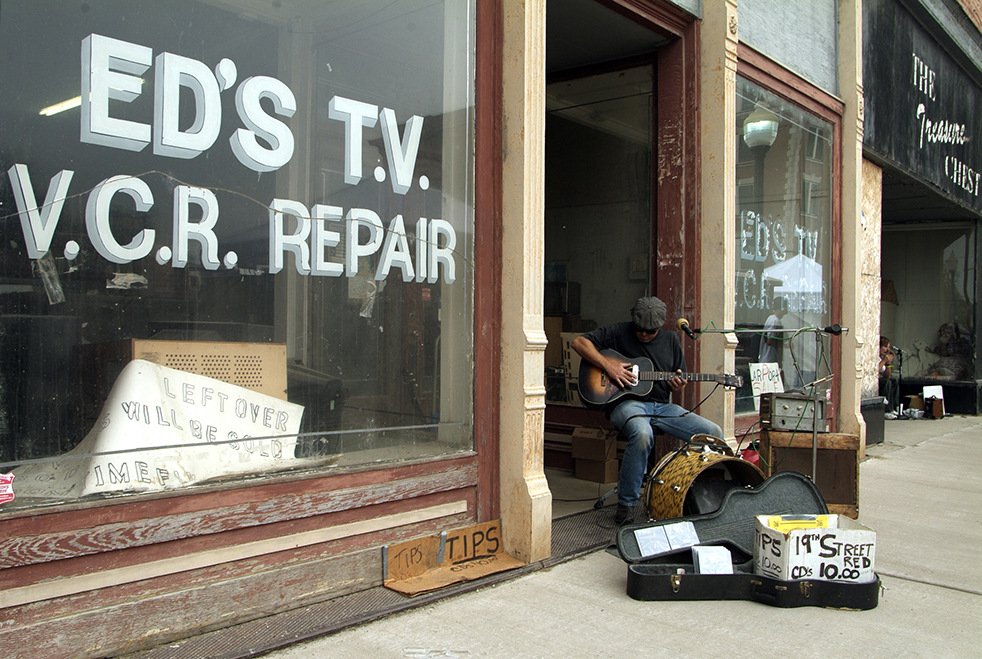
I have always been a visual communicator.  For over 35 years I have been making a living taking photographs for magazines all over the world.  I have always “seen” the world and captured its stories through visuals.  Somehow, it was far easier for me to communicate with images than with words.  Sidewalk performer King Biscuit Festival Helena, ArkansasBut it was also a bit frustrating for me because many times when I was photographing a person, I felt like I was leaving a portion of their story untold.
When I photograph people, invariably I spend a good deal of time talking and listening to them.  It’s this rapport that usually enables me to capture a more intimate photograph. For me, this has always been my favorite part of the “process”, yet I never had an outlet for my subjects’ words, other than through the captions of my photographs.

When I started producing documentaries, my conversations with my subjects finally had an outlet through their recorded interviews that became the backbone of the “script”.  Even though the script was not something that I wrote using my own words, I was instrumental in the process because I was selecting the words and giving them an order.  I was involved in the process and structure of screenwriting.

In recent years, I have become fascinated with story structure and screenwriting.  I have read numerous books on the topic of screenwriting and this past weekend I decided to immerse myself in an intensive 3-day workshop with John Truby.  John has taught some of the best screenwriters around.  I knew going into this, it was going to be a great and informative workshop, but I had no idea how rewarding it would be.  Essentially, John gave me knowledge of the “process” and the structure of storytelling to enable me to take an idea and turn it into a really good story.

I have come away from this workshop with a deeper understanding and respect for a well-written story.   We can all spot poor writing in a film.  It stands out.  Even the layman who knows nothing about “the process” or story structure can identify really bad writing.  The audience may not know why the story or the film doesn’t work – they just know it doesn’t and they’re not buying it.  Like any other craft, screenwriting has gone through stylistic changes over the years, but the fundamentals remain.  After all, telling stories is as old as time and there has always been a constant – and that is “the audience”.  Ultimately the audience will decide if a writer has done their job well.

I think those of us who are “content creators” in this era of multi-media communications need to broaden our understanding of all kinds of mediums in order to effectively communicate.  Many times, I see creatives become too narrowly focused on their one set of tools and in the process lose sight of their end goal  – and that is to deliver the message or story to the audience.  Ultimately, the audience will always let you know if you’ve hit the mark or not because they are looking at the “whole” and not the “parts” of the story.
Opportunities for Self-Initiated Projects

There seems to be a prevailing attitude of doom and gloom. We have an economy that can’t seem to turn itself around and we’re bombarded by change that technology continues to thrust upon us. We’re scared to death of the unknown and nobody seems to know what to do next and how to make any money doing it.

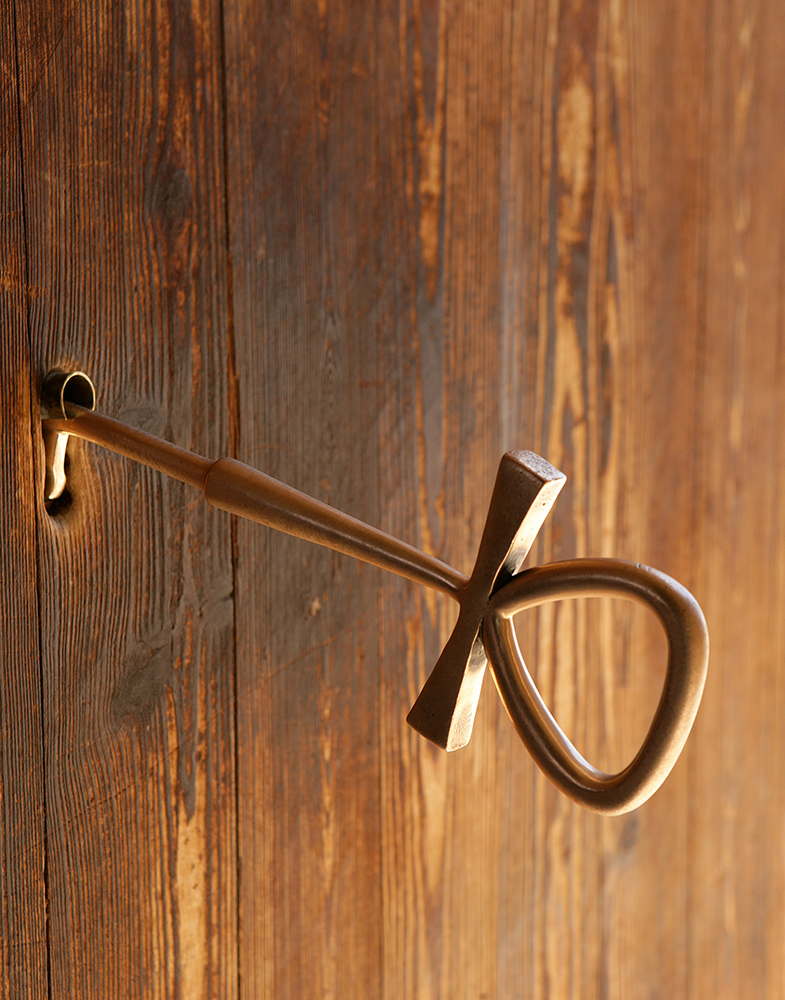
Yet, I’ve never been more hopeful in my life. Why? Key of Life, Temple of Abu Simbel, Egypt Because I no longer need someone else to validate my ideas – and that is a powerful notion.  Those of us in the communication business seem to be particularly fearful. Some believe that the “news” business is dying because print publications – newspapers and magazines are folding every week.  But the “news” business is not dying – it’s just being delivered  in another way – electronically and globally.  There are no longer just a few gatekeepers with a lock on the playing field.

Human beings are social animals and we will always have the need to communicate with each other.  These days we can communicate with one another globally.  An idea or creation can be shared around the world in a matter of minutes.  Think of the power in that and think of how we can use that power and the opportunities it presents.  I could digress into a discussion on the ethics of this thought but I’d like to focus more on the reach and influence that each one of us has in creating awareness.

Many of us get enamored with the latest devices that enable us to deliver and receive information with speed and ease. As technology’s exponential growth continues to change our lives in every way imaginable, we will constantly be incorporating and upgrading new gadgets and devices as part of our lives.  We need to be mindful that these “toys” are merely enablers and that each one of us can use these tools to create and distribute our words, images, designs and ideas across the planet.

I think that we as creative’s or journalists underestimate ourselves sometimes.  Perhaps because we chose professions that aren’t lucrative – at least in terms of money.  However, what one is paid doesn’t necessarily correlate with one’s worth. We live in a time now where we can use our creative skills to really make a difference and to tell the stories that we feel need to be told. Mass communication has been democratized. We no longer need the traditional gatekeepers to validate our ideas.

I never would have dreamed that I would be able to circumvent the globe, create a documentary with only one other person in my crew  – my daughter and then distribute it internationally. I never imagined that I would have the power to create awareness on a global level like I did when I uploaded my trailer to Vimeo.  In less than a month after it was uploaded, that trailer has been played in almost half the countries on the planet.  Staggering thought.

This was not a commissioned project by a network or a motion picture studio. If I had waited for that – it never would have happened. I assigned myself.  I was able to fund it by using my airline points, hotel rewards and doing trades with manufacturers for equipment.  I also successfully raised money via Kickstarter a crowd funding site  that made it possible for me to hire a professional editor. My daughter and I have been building an audience  since we started blogging about our journey. Our readers got more and more engaged as they followed us on our 99-day adventure around the world. They spread the word through Facebook and Twitter and via their own blogs and pretty soon word of our project spread virally. That was precisely our goal.  To use our tools and skills to create a film about the change makers of our world so that others would be inspired and motivated as to what they can do.

I often think about how things in my life and in history would have been different if we had the Internet when I was growing up.  For starters it would have had a huge effect on the Civil Rights Movement of the 1960’s and the Vietnam War.  But everything happens in its own time and when it is meant to happen.  Change can be scary or it can be embraced and sometimes both at the same time.

Never stop dreaming. Never stop learning. Always listen to that inner voice.  Then use the means and the tools of the day to do the dance you are meant to do.

We Are All Broadcasters

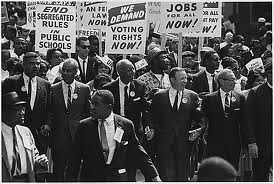
Back in the early1960’s, during the height of the Civil Rights Movement marchersthe world watched as violence and hatred played out every night on TV.  A few years later, we watched the horrors of the Vietnam War taking place on the other side of the globe, from the comfort of our living rooms. Those broadcasts made an indelible mark on me at the time, growing up in my fairly sheltered life in suburbia.  They opened my eyes to the world and I took it all in.

Yesterday, a tragic bombing occurred during the Boston Marathon that took the lives of three people and injured dozens more.  Seconds, after the first of the two bombs went off, everyone who was connected to the Internet, immediately knew what had happened, regardless of where they were in the world.  Photos, video and sound recordings went viral – globally and instantly.  Along with the “bonified” news broadcasts transmitted in real time, rumor and speculation spread instantly as well.

In the 50 plus years that have gone by since those early days of “live” news coverage, bringing “awareness” into our homes, technology continues to impact our lives in a profound way.  We are connected globally and there’s no turning back that clock.  We are no longer isolated from what is taking place anywhere and everywhere on the planet.

We are all collective participants. We can tweet, blog, post images and video on Facebook and numerous other social media platforms without really needing anyone’s validation, permission or vetting whatsoever.  Think of the power in that.  It gives everyone a voice on a global scale.  But along with that comes responsibility. It used to be that if you saw something written in a newspaper or heard it on the evening nightly news on TV, it was true and you could believe it.  But now what do we do?  How can we decipher and determine what we see and hear online is true and accurate? Ultimately, we need to make those judgments ourselves.

I’ve been thinking about this all morning, and I can only hope that as we become more connected through technology, that we start to embrace our similarities as human beings, instead of being split apart by our differences.  For those of us who are documenting the world through images and video, whether professionally or not, we are broadcasting on a global scale, on a daily basis.  Think about the power of that and the responsibility.

6 Ways Video has Made Me a Better Photographer

Lately, I’m finding that I “get the job” because I know how to shoot video. What’s odd is that these are still photography assignments and I was NOT hired to shoot video, but because I knew how to shoot video. What I’ve discovered is that many clients love the “eye” of the “hybrid”.

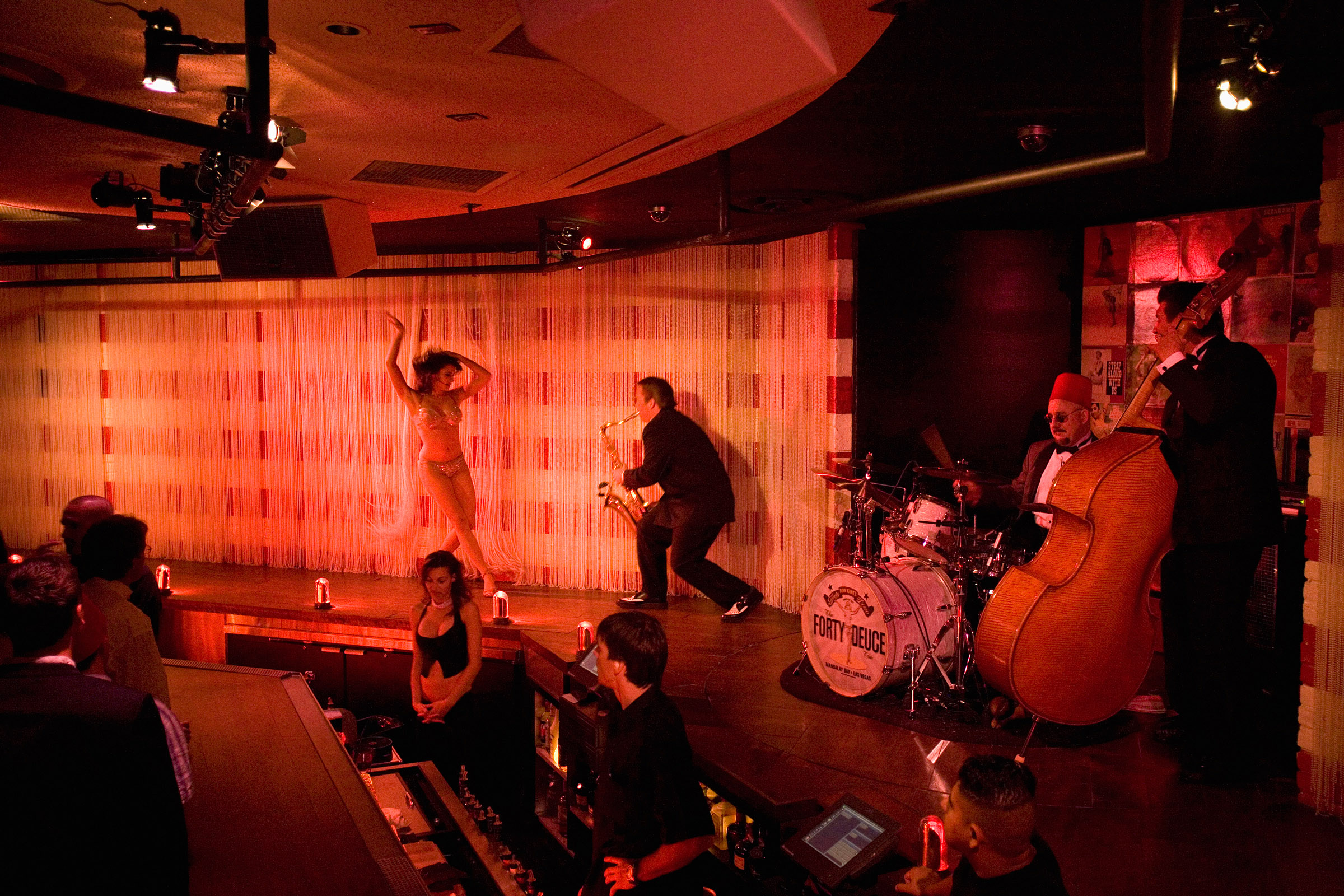
I’ve been thinking about what is it about the “eye of a hybrid” that clients are finding attractive. Forty Deuce burlesque club, Las Vegas, Nevada In a nutshell, it’s the eye of a master storyteller.  That’s because the medium of video is the perfect medium for telling a story. It encompasses movement, action, pace, rhythm and sound to engage, entice and feel.

I got a call this week for an editorial still photo assignment.  As usual, there was the customary business paperwork, but the client also provided a “shot list”.  I’ve been shooting editorial assignments for over 35 years and have had all kinds of direction. Sometimes, I’m given a writer’s manuscript and I’ve come up with my own shot list and sometimes I’m just told to come up with a variety of images.  But this “shot list” was intriguing because it read more like a shooting script for a video project.  As I read through the list, I could see how the person who had written it – had the “eye of a hybrid”.

Here are some of the suggested shots and “direction” from the list they provided:

(This is how I think and shoot in video. It has made me a better still photographer)

Cover it – Get comprehensive coverage – different perspectives, focal lengths, wide, medium and close-ups.  When I shoot video I will get a variety of angles as well as a variety of focal lengths because I know I will need plenty of b-roll to work with when editing the story together.

Get sequences – Get a variety of mini stories with people interacting. I am accustomed to thinking about how my “shots” will come together as part of the whole video that I’m working on.  Now, I approach a still editorial assignment like this as well. It’s kind of like of a moving pagination of imagery in my head.

Get storytelling images – With still photography I need to make sure those independent shots or moments in time also tell a story and stand on their own.  They can’t just be “wowy zowy” photos as Bob Gilka of the National Geographic used to say when I showed him an eye grabbing and colorful, abstract image.

Action/motion – make the images “feel”.  One that that motivated me to start exploring motion was because I was finding that it was difficult for me to convey the feeling of motion in a still image.  I’m finding that it’s easier for me to convey movement in a still image now because my eye is trained to look for it.

Give the images sound – (like a hammer hammering)Natural sound gives a video the element of reality.  It’s almost like it gives the video a well-needed extra layer or dimension.  When I’m shooting still images, I look for images that will illustrate the “sound” of an environment.

Shoot more – Give me more to choose from.  Again, you can never have enough b-roll when you are shooting video so I have naturally started shooting more on still photography shoots and my clients love having the abundance of choice.

What’s Your End Goal?

Do you ever feel stuck – like you just can’t quite make it to the finish line?  This can happen for a number of reasons – your plan wasn’t well thought through – your perfectionism has stopped you – you don’t see the big picture or you can’t break down the details – or maybe you never had a goal to begin with.

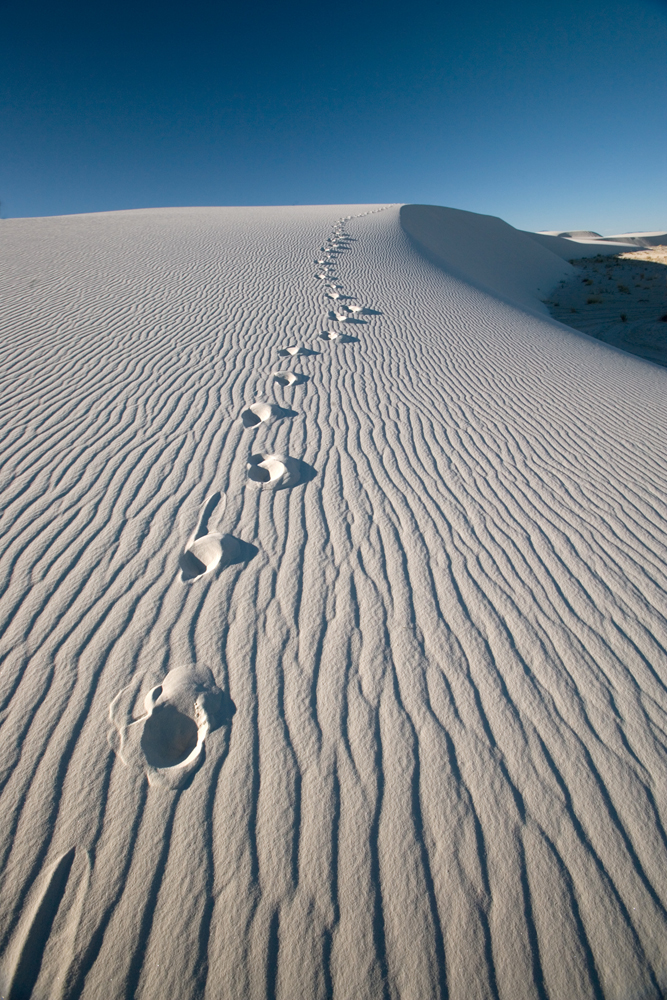
The one thing I try to do whenever I think about embarking on a project is to define my end goal – “What are my expectations?”  White Sands, New MexicoWhen I make myself think about my end goal, it forces me to clearly define it.  This allows me to assess my underlying motivations, cut out the chaff and move forward to stay on target and reach the finish line.

Sounds simple, but the problems arise when I let other people sidetrack me from my original goal.  For example: when I was working on the trailer for              Opening Our Eyes, I posted my work in progress on Vimeo and shared it with friends and colleagues.  Many people offered up advice and solutions according to how they wanted  to see the story to unfold.  Some suggested that my daughter and I (the filmmakers) should be more present in the trailer and in the film itself.  Some thought we shouldn’t be in it at all.  At one point I started to incorporate everyone’s suggestions and ended up with a trailer that was neither here nor there.  I had lost sight of my own end goal and I needed to step back from the edit, the technology and the influence and ask myself  “What is it I’m trying to say?”

Well intentioned people in our life can easily distract us from our own purpose and before you know it you’re not living the life you are meant to live and you can’t understand why you’re not getting anywhere.  When this has happened in my life’s journey, it’s usually taken something “bad” or “good” to take place, that stops me in my tracks and makes me step back from the noise and ask myself “What is my end goal? – Where is it I’m trying to get to?”  I don’t always have a clear answer but at least I’ve taken notice of the question.

I think that’s the key – to take notice of how you’re living your life and if you are on the right path.  Goals come and go and it’s all those little unexpected surprises that life throws at you that determine the outcome.  We can’t control everything in our lives but we can take notice of where we are going and ask ourselves “Is that the destination we are bound for?”

How Video Has Helped My Still Photography Business

After a slow spell, which I can’t say I ever get used to after 30 plus years of freelancing, the phone started ringing.  The calls were all in regards to still photography assignments.  Having been a still photographer for most of my life, that wasn’t unusual, but what was interesting was that I beat out my competition – other still photographers – because I knew video.

Times have sure changed. When I started exploring the medium of video, over 15 years ago, I didn’t abandon my still photography10Ft.WaveI simply added another skill set.  Most of my clients over the years have hired me to shoot one or the other, and sometimes both.  But what I see happening now is that as print moves to electronic delivery, my still photographic clients are also looking for a “photographer” that can shoot video components on a still photography assignment.  They need multimedia content for mobile devices and online platforms that cry out for movement and sound.

I don’t think of myself as a “still photographer” or a “videographer”.  First of all, I absolutely hate the word videographer because it smacks of a dated notion of what video used to be.  I think of myself as an “imaging professional” or sometimes a “new media producer” or sometimes just a “storyteller” because that’s what I do – I tell a client’s story, or deliver their message to their targeting audience.  I don’t define myself by the tool I use.

With convergence happening not only in the cameras we shoot with but in the media we create, I will opt for the “tool” or camera(s) that enable me to tell the story I need to tell, in the best way possible.  I’ve been thinking that way since I first forayed into video.  It’s nice to know that now my clients are thinking that way too.

Creating Inspiration

I’ve gotten away from writing lately, maybe because I’ve been really busy, and maybe because I’ve felt uninspired.  That’s a terrible feeling for me, it’s as if I’m void of any “feeling” at all.  It tends to happen when I’m spending more time doing the things I don’t want to do instead of what I feel I’m here to be doing.

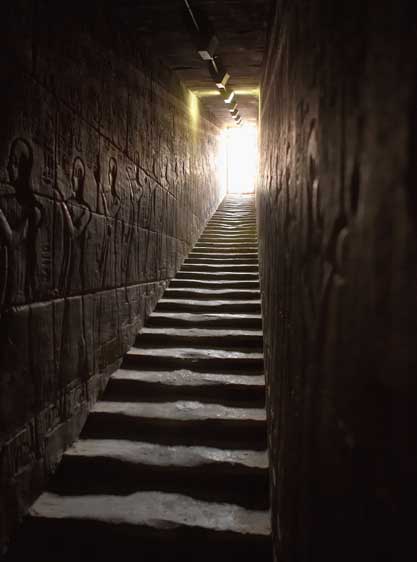
When I woke up this morning I thought, “anything can happen today”.  Temple of Horus, Edfu, EgyptThat thought in it self makes me want to get out of bed. I start thinking about the endless possibilities that can happen on any given day.  I grabbed a cup of coffee, checked my email and read Seth Godin’s blog and it was like it was written for me.  It was called “The moment of highest leverage”.  He was talking about moments when you’ve either lost something or won – when it feels hopeless or when it appears to be a lock.  He said that these were the times you can choose to do what’s in your heart and bring your real work to the world, instead of the lesser version that you think the market wants.

I’ve been struggling with feelings of hopelessness after a slew of rejections and misses. I knew I needed two things:  a change of scenery and some insightful conversation.  I went to Hawaii on impulse and got both.  One day, my good friend PF Bentley was showing me the “film” that he made for National Geographic photographer Dewitt Jones.  Dewitt has been shooting extraordinary images for the Natl. Geo for over 40 years and he had hired PF to create inspirational corporate training videos.    The “film” segments were a combination of Dewitt speaking about his life and his career in an inspirational way and b-roll of him shooting in beautiful Hawaiian settings interwoven with his amazing still images.   The piece was so touching; it brought tears to my eyes.  When it was over I started crying and I apologized to PF.  He said, “that’s ok, I know I’ve done my job right”.  PF and Dewitt had done theirs jobs right and they had inspired me.

I’ve had two speaking engagements and a screening of Opening Our Eyes this past weekend and in each situation, I was feeling good and that I had something to say and to share.  It must have come across because at each venue there was at least one person who I inspired – I could tell – I could feel it.  There was one woman at the screening, who had found out about it through one of our subject’s blog, Maggie Doyne. After the movie was over and most people had gone, I talked to her for a long time and I could see that the film had inspired her greatly.  I knew that I had done my job right and it was the best feeling in the world.  It reminded me of what is most important to me in my life and that is to create awareness with my still images or movies and move people or inspire them.

I don’t spend a lot of time on Facebook these days but I was looking at my news feed at the end of that long weekend and I noticed a photo that Ethan Browne (Jackson Browne’s son) had posted on his page.  It was a photograph of Jackson with one of his fans and Ethan had commented underneath it  “proud of   my pops – he stokes people for a living”.  I smiled and I thought, “That’s what I want to do”.

Polishing a Trailer

A trailer can attract someone to see your film or not.  It can determine if a film lives or dies. I just got back from Hawaii.  I had been visiting and working with my friend PF Bentley in Molokai and PF was color grading my trailer, balancing the audio and creating new title graphics.  I had been wanting to do that ever since I made the trailer over 2 years ago, but I didn’t have the know how, nor the proper software to do it.

Here are the BEFORE and AFTER versions of the trailer. Before and After These clips only illustrate the before and after in terms of color grading. PF also changed the title slates as well as greatly improved the audio, but these clips only show the “after” results as far as those changes.

Generally, a good trailer will peak your interest and make you want to see the film. But sometimes a trailer makes you feel like you’ve already seen the best parts of the movie, and that’s not good.  Trailers set the tone of the film.  They tease and introduce us to the characters and a bit of the story.  Thrillers evoke suspense with fast cuts while romantic love story trailers let shots linger on the screen.  Choice of music is integral to setting the tone, pace and rhythm of the trailer.  All these things combined is what makes a great trailer.

There are editors who specialize and only edit trailers.  Editing a trailer is different than editing the full film.  You don’t need to be concerned with explaining the whole story of the film. You need to tease the audience and make people want to see more. I have gone through a few variations of this trailer since the initial cut, each time shaving off a bit of time on it’s length. This latest revision was just to give the trailer more polish, smooth out the color and sound and create better graphics.  Overall it has made the trailer look more “movie” like and less like a video.

The best way to learn about making trailers is to watch a lot of them.  It’s pretty easy to find trailers online.  You can watch them on a film’s website or on a site like moviefone.com.  Check them out – It’s a great way to see first hand what makes a great trailer.

Words of Wisdom For and From Young Photographers

I’m on the advisory board of the YPA (Young Photographers Alliance) and while there are times that I feel I am on one too many boards and spreading myself too thin these days, it’s nights like last night that make it all worthwhile.

Last night was the Mentee/Mentor Exhibition and Awards Ceremony at the Calumet Gallery in New York City.  I must confess that I really didn’t want to go for a couple of reasons:  I needed to get up at 3:30AM to leave for the airport (this morning) and I’ve been in a bit of a funk that I can’t seem to shake myself out of and I didn’t want to be one of those negative cynical people bringing the “mood” down.  But I’m also one of those people that everyone can count on – so I did my best to rise to the occasion.

Before the affair, there was a meeting with the young photographers (mentees) and the mentors to receive and give feedback.  One of the students said that they wished some of their time with their mentors had been spent discussing the “business” of photography – something she didn’t feel she was learning in school.  I pointed out that there was a lot of information about business practices on the ASMP website, including contract shares and encouraged the students to check it out.  And then I told them that the best “business” advice I could give them was to be true to themselves and that if they did that and didn’t stray from their “purpose” that would set that apart from their competition because there is only one “you”.

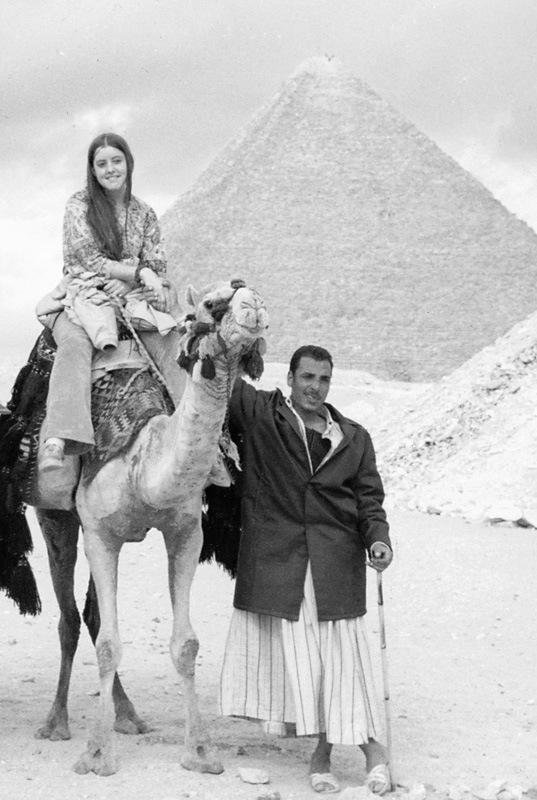
And then I relayed my “Jay Maisel” story as I have dozens of times. Gail at the Great Pyramids 1971 I had gone to see Jay when I was just starting out.  My heart and my passion was in photojournalism, but countless professional photographers had told me that I couldn’t make a living doing that kind of work – so I when I went to see Jay, I had my “commercial” portfolio with me, which I thought was pretty good.  He looked at it, pushed it back at me and said, “ This is crap – this isn’t what you want to do is it?”  I said no and told him that I wanted to be a photojournalist.  He asked me how old I was to which I replied “25 years old”.  He looked me straight in the face and said, “You’re 25 years old and you’re already making compromises”.

I told the kids that it was a turning point in my life and that whenever I strayed from my purpose – and felt it – over the last 35 years – I remembered Jay’s words.  Then one of the students asked me a question that I hadn’t ever been asked when telling that story over the years.  She said “What was it about your work that made him think your heart wasn’t in it?”  I hadn’t really ever thought about that – I had always focused on what I wanted to do instead.  But when she asked that question, I had to reply, “I really don’t know”.

I’ve been thinking about it all morning on my way from Newark to San Francisco and I wonder – was it the work that felt empty or impersonal?  Or was it the way I looked when I handed it to him?  Or was it both?  I’m waiting for my next leg to Honolulu and then on to Molokai to meet up from one of my mentors, PF Bentley who taught me everything I know about how to tell a story in motion. I’ll have another 7 hours to contemplate that question and even if I never come up with the answer, that question pulled me out of my funk.  Just in time to once again put my head in an “open” place to learn and get back on purpose.

How Motion is Changing the Future of Photography

Mid-19th century "Brady stand" photo...
Mid-19th century “Brady stand” photo model’s armrest table (Photo credit: Wikipedia)

A few years ago I heard visionary Ray Kurzweil speak at NAB (National Association of Broadcasting).  He was talking about the exponential rise of technology and how that would profoundly change people’s lives – and was.  His focus and predictions were mostly related to the advances we’ll see in medicine, but he relayed an analogy that has stuck with me.  He said:  (and I’ll paraphrase) that if you were in the horse and buggy industry at the turn of the century and thought of yourself as someone who sold buggies and whips, you most likely would  have gone out of business.  But if you were in the horse and buggy business and thought of yourself in the transportation business you most likely would have adapted, recognized that the future of transportation was in motor transport – and thrived.

The thing is, the ones who adapted early on – before the majority did – were the ones who made fortunes.  The ones, who waited until everyone embraced the automobile, either struggled to keep pace with the competition or died out.  I think we are at a tipping point as far as the future of the still photography business.  If we continue to think of still photography and motion as being two separate entities in the business of visual communications, it will be our demise.

Change never happens overnight.  Change is slow.  No one gets to be 400 lbs overnight; it’s a slow process.  But once it happens, it’s really hard to get back on track.  The changes that are taking place in the way we communicate are monumental, unlike any changes in the past.  I used to shoot a lot of annual reports, but not so many anymore.  I used to make a large portion of my income from the licensing of my stock images, but that income has dropped significantly because everyone has a camera and the supply of images is more than the demand.

I’m not an alarmist in predicting this change and in fact for someone my age who is on the tail end of his or her career, I wouldn’t be alarmed at all.  However, if I were just starting out in photography or even in my late 40’s or early 50’s and had another 20 + years ahead of me, I would not be complacent.

Some things still photographers should be thinking about:

  • Understand that there will probably not be a divide between the still photography and motion businesses.  This is really hard to envision because we tend to see things, by looking at the future in terms of the knowledge that we have on hand today.  But with motion cameras able to shoot 96 frames a second, and each frame being good enough to pull out and used as a still image, the changes for still photographers will be profound.
  • The concerns are not like those that a still photographer has had to face in the past, like when digital replaced film or when one needed to reinvent themselves as their markets changed. (For example when car shooters were phased out by CGI artists)  Shooting motion is a different mindset all together.  It also has profound differences in the way you run your business. While a still photographer of today, may find opportunities to shoot motion for their existing still clients, that too is rapidly changing.   I don’t think this will be an option much longer for still photographers. I think that motion shooters will be shooting motion and in the process creating stills as opposed to still photographers providing the motion content and the stills.  Just like a professional still photographer distinguishes his or herself from an amateur photographer who has an expensive camera, so do motion shooters distinguish themselves from the still photographer who seems to have little regard for the craft and knowledge of motion and thinks they will “just” start shooting motion when the time comes. It’s not going to be “just” that simple, especially if you’re late to the game.
  • Understand that technology affects everything and will continue to do so.  You may think  in terms of what’s possible today and that it would be incredibly labor intensive to go through tens of thousands of motion frames to pull out still images. But advances in technology will change that as well in the future. Technology affects everything.   Realize that software is changing too and that the edit process for pulling out frames will be easier and more streamlined in the future.  In fact, an editor’s job description will change greatly and that may be a job that is in high demand in the future. Even now, just do a quick search on LinkedIn and you’ll see that while there are very few job listings for still photographers, there’s a lot of demand for video editors.

Bottom line – start recognizing that photography and video are not separate businesses any longer.  Start understanding that will have an affect on the  future of the still photography business especially in terms of licensing, because traditionally motion camera operators work under work for hire agreements.  While still images won’t go away, that doesn’t mean that still photographers will be creating them in the future.