What Still Photographers Need to Know About Convergence

We should not think in terms of how we can apply the newest tools of the trade to what how we are shooting today, but rather think about how these tools and future versions may be applied to what we will be doing in the years to come.  We also need to remember that it is not just creatives that are determining what we shoot with, how we shoot it and where the imagery will be used, it’s the top executives and money folks from the camera manufacturers, the advertising executives, broadcast networks, movie studios and magazine and newspaper publishers.  They set the stage and the content creators and receivers of the content or the “audience” react.

We as creatives have a choice of what tools to use – everything from an iPhone to a camera like the

English: Canon 5d Mark II set up for cinema st...
English: Canon 5d Mark II set up for cinema style shooting (Photo credit: Wikipedia)

RED, able to produce 5k resolution stills shooting at 96 frames a second at a 200th of a second.  We make our decisions when choosing which tools to use based on a number of factors – affordability  and determining which tool or camera is the best one for a particular job.  Many times, it’s the end use that is the deciding factor. We need to remember that not only our tools are changing, but so is the way the information or content is delivered as we rapidly move away from print to electronic delivery.  Simply put, mobile devices have dramatically changed the way consumers are receiving content and information.

Who could have imagined just a few years ago that a phone could take photographs that weren’t just “good enough” but really good in terms of resolution and delivery?  We need to keep in mind that the limitations of today will most likely not be there in the future.  Technology is changing our lives and our businesses in an exponential way and will continue to do so.  If we are smart and want to stay in business, we need to look forward and imagine what’s next, rather than look at what is or what was.

When I started my still photography business more than 30 years ago, a photographer needed certain technical skills.  We needed to be able to focus a camera and that was tough if you were shooting fast moving action subjects and we needed to know how to get an accurate exposure.  The cameras of today have pretty much eliminated those skills with auto focus and exposure.  Still photographers still need to know how to light but as software becomes more sophisticated will that be a necessary skill set of the future?

When I’m giving a seminar to still photographers who are thinking of moving into motion, I start out by explaining the differences of the two mediums.  Still images are moments in time and video is time in motion.  That explanation sounds simple but it’s quite profound when you think in terms of convergence.  While today’s cameras have pretty much eliminated the skill sets of knowing how to properly focus and expose an image, a photographer or camera operator still has to be able to capture the “decisive moment” – that is where the skill set comes to play.  But is that still true today and will it remain so in the future with motion cameras able to shoot at 96 frames a second at a fast shutter speed with 5K resolution? Why would a client need a photographer to shoot still images when they can pull frames from a motion shoot?  They wouldn’t, especially when most camera operators in the motion sector are working under “work for hire” contracts and they don’t hold the copyright to the footage and/or still images or frame grabs from that footage.  That’s a game changer for the still photography business and licensing of images.

I read an interview once with Vincent LaForet and he was telling a story about having a discussion with a DP at a Red event shortly after the Red One came out.  He asked, “Who in the world would want to shoot a still image with this huge Red camera with a Cine lens?  It’s insane. Why wouldn’t I go out with my 5D Mark II that shoots RAW?”  The DP answered “We want to take your still jobs away from you, just like you want to take our video jobs away from us with your HD SLR’s.”

That was a few years ago.  Now I know a lot of high end still photographers who are shooting with smaller, more affordable and high-resolution motion cameras to shoot still photography jobs and so are DP’s.  That’s convergence and who knows what the future may bring, but one thing is for sure – it’s best to be knowledgeable in both.

Photographers – Grow or Die

I’ve been a professional photographer for over 35 years.  While some may look at that sentence and think I must surely be “over the hill” – others may look at that and say “wow, she must have been doing something right, to stay in business that long”. I suppose, it all depends on the outlook of the person.

Personally, I truly believe that the secret to longevity in any career field is to be open-minded as to how they define themselves.  One thing I have never done is define myself by the tools I use. Just because one has expensive camera gear, it doesn’t make them a “professional photographer”.  If that was the case, then who are you if you have a camera that happens to shoot both still images and video?

I’m really amazed when photographers define themselves by the tools of their trade.  I think with the way things are going in terms of how technology continues to affect our industry, if a photographer defines him/herself in such narrow terms – it’s the kiss of death.

When technology enabled me to explore video production without having to make a prohibitively investment in expensive “tools”, the creative part of me wanted to take full advantage of those new opportunities that were coming my way.  After all, I’m a storyteller and I shouldn’t have to limit myself to one medium, but rather choose the

Category:Wikipedia requested photographs of ph...
(Photo credit: Wikipedia)

right  tool (camera)  to use that best tells the story that I need to tell.  Sometimes that means delivering the message in video and sometimes the story is better told with still images.

Because I was an early adaptor of video (at least from a still photographer’s point of view), many of my peers equate me with just shooting video.  Many assume I’ve abandoned still photography, which couldn’t be further from the truth.  The real truth is, my clients see me as an imaging professional, who is able to deliver their message with the medium(s) that is best suited for the job.  These days with print publication giving way to electronic delivery, clients are delighted that I am able to fulfill their needs because I am proficient in both video and stills and most times they need both.

My curiosity for exploring a variety of mediums and tools has not only kept me in business – it’s kept me from getting jaded and stale. I am a photographer.  I am a director of photography.  I am an imaging professional and am thrilled to still be in business at a time when we have so many tools and options in how we are able to deliver a visual message.

I’m Not Cut Out For That

Systems thinking about the society
Systems thinking about the society (Photo credit: Wikipedia)

Anyone who has been reading my blog knows that I’m not the sort of person who would think or say “I’m not cut out for that”.  Most times, I tell myself that anything is possible and set out to face my fears.  But, there have been times when I’ve had to question taking on an assignment or assuming a role and ask myself, if in fact, I’m cut out for it.

There are generally two types of scenarios that mandate a decision to be made:

  • When I am listening to my inner voice that is prompting me to do something.
  • When I am listening to family, friends or colleagues who are encouraging me to do something

I’ve learned the best thing for me to do in either scenario, in order to make the right decision is to think of it in terms of what is the right fit for me. Is it in harmony with who I am?

Right now, I am working on a marketing plan so I am not only looking at what markets to target in terms of where there is a demand but also in terms of which markets I am suited for.  That doesn’t necessarily mean I’m thinking of what’s in my comfort zone, it means that I am thinking about which markets I can provide the most value to. If I do it right, everybody wins.


10 Ways Photographers are Their Own Worst Enemies

  1. They talk themselves out of things.  – Telling themselves that it wouldn’t matter if they learned new skills or shot new images or whatever they didn’t want to make the effort to do.
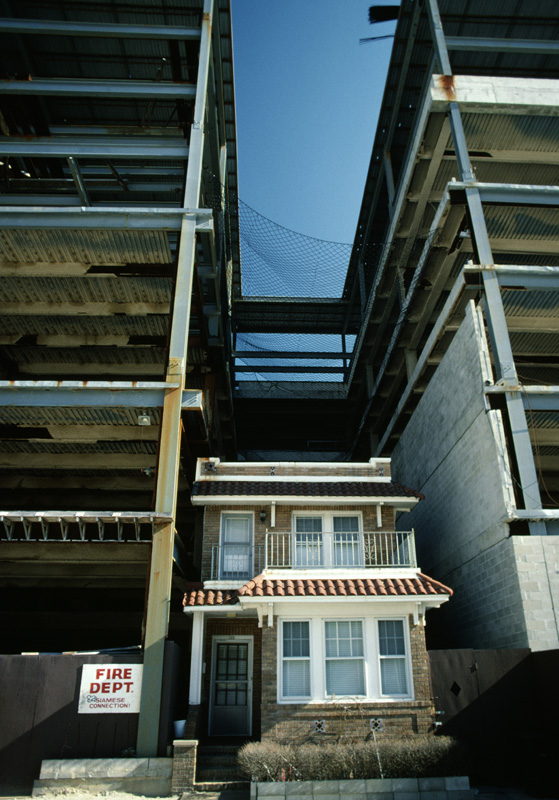
  2. They try to “educate” their clients (sometimes a bit too much) instead of collaborating and possibly learning from them.  A lot of “older” photographers are like this when they are working with younger art buyers or directors. I think the energy needs to work both ways.House surrounded by construction site, Atlantic City, NJ
  3. They give themselves an A for effort for starting something but too many times their starts lead to nowhere if they don’t have an end goal in mind.
  4. They don’t open themselves up to networking with others by attending industry meetings or events.
  5. They treat their clients like their enemies where one needs to win instead working toward a positive outcome for both.
  6. They make the mistake of creating for an audience, instead of creating for them selves.  (Thanks to Seth Godin for that thought)
  7. They take workshops or pay for a service and then don’t utilize them. I’ve been guilty of this too many times.
  8. They don’t shoot for the pleasure of it.
  9. They rely too much on commissioned work instead of taking advantage of new opportunities and ways in which to market and sell their own projects.
  10. They don’t stay true to themselves.

Ten Things Photographers Should do in 2013

Be optimistic – I’m going to start with the hardest one of all, because it’s really difficult to be optimistic these days.  But I find that if I can maintain a positive attitude and turn my thoughts to what is possible, I actually open myself up to more opportunities in my life, instead of creating more roadblocks.

Be open to possibilities. – Be more flexible in how you perceive things and who you are. 500x_housecanon copyChange is always happening, but it’s usually gradual.  Most people don’t take notice until “change” forces their hand to act.  It’s always better to be proactive than reactive so embrace “change” as an ever-present fact of life that creates opportunities for those who are open to seeing them.

Collaborate – Photographers are very independent creatures and collaboration is not part of their norm. As the “photography” business continues to change, photographers will find that collaborating with other artists will make their own businesses stronger.

Diversify – I’m not quite so sure why so many photographers are so rigid in how they define who they are and what they do.  Having a “style” is great, but the trick is to not to be so narrowly defined by that style, so that when styles change, you don’t find yourself obsolete by your own design. It’s kind of like being type cast, where your audience or your clients can only see you in one way.

Concentrate more on “the story”– I had the opportunity to speak with a lot of still photographers and filmmakers this past year and I began to notice a difference in the conversations I was having with each.  Most times, filmmakers would be telling me a story, whereas still photographers would be telling me how they executed a photograph, or essentially telling me the “back story” of the creation of the image. It’s all interesting but “the story” is the bottom line – if that doesn’t come through to the viewer – the rest doesn’t matter – including how it was executed.

Be authentic – be true to yourself.  That means that you have to trust your gut instead of second guessing it.  This is hard, especially when things don’t always work out the way you had hoped.  Step away from the “noise” and listen to the voice inside.

Fail more. – Rejection is a tough pill to swallow but it usually means that you are either pushing yourself to try new things, you are too far ahead of your time or it just wasn’t meant to be.  If you look at successful people you’ll see that most have had failures and rejections in their lives but they stuck with it – instead of letting failure defeat them.

Self-Initiate more projects. – I don’t like to call non-commissioned work, “personal projects”. That co notates that there is no monetary value and these days, just the opposite could be true.  With more and more lopsided contracts  being presented to photographers for commissioned work, a photographer has a better chance to make more money and keep ownership of their work by creating self-initiated projects.  But they need to be prepared to work hard.

Forget about the past except to learn from mistakes. – You can’t change the past but you can learn from it and then, move on.  Look toward the future but make sure you take time to enjoy the “now”.

Realize that in the scheme of things, you are just one small speck in the universe. – I think we all get way too stressed about things that really don’t matter and we let those things control our life.  When we become more conscious of that, we really begin to live life.

The Difference Between Photographers & Filmmakers

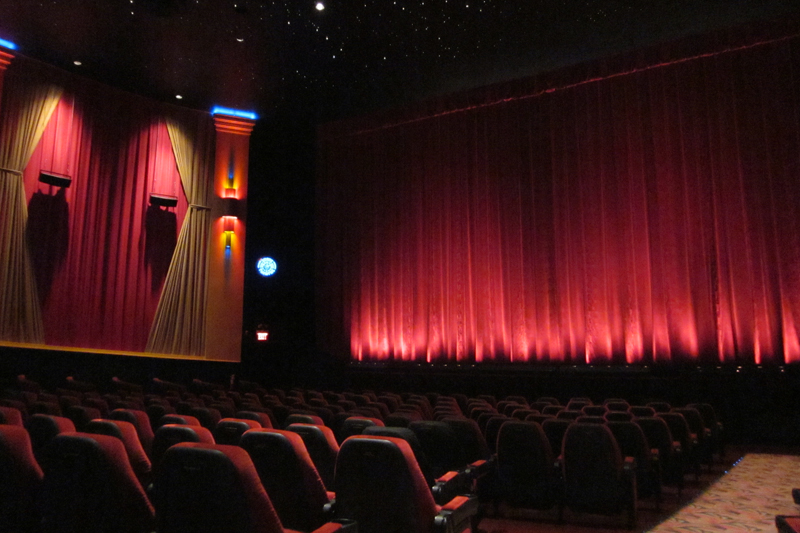
Red carpet of the Palais des Festivals et des ...
Red carpet of the Palais des Festivals et des Congrès during the 2001 Cannes Film Festival. (Photo credit: Wikipedia)

I am winding down after a couple of intense months, traveling the film festival circuit with my documentary Opening Our Eyes.  I have enjoyed every bit of it, but it wore me out – in a good way.

I find that when I am “out there”, I get richly rewarded in many ways.  I think what I enjoyed the most about the film festivals, and what was the most beneficial to me, was the opportunity to dialog with other filmmakers.  I learned a lot in the process. But what stood out to me was how different these conversations were from conversations that I have with my still photographer colleagues.

Many times the conversations I was having with other filmmakers were centered on a story.  That should come as no surprise because that’s what filmmakers do – they tell stories.  But filmmakers tell stories “cinematically”, so when they are talking about the story that they are currently working, or a story idea they want to pursue, they speak in great visual detail so I see a very clear picture in my head.

My conversations with my still photographer peers, in terms of craft, are more apt to be about how they created an image.  Photographers generally talk more about the role they played in making the photo, like how they lit it or the gear they used.  Sometimes, photographers will tell me a story about what they went through to make a photograph and those stories can be very interesting and entertaining, but again the conversation is more about the execution of the image – than the story of the image.

Lately I’ve been trying to figure out how and where I fit into the mix. The truth is, I remain in the middle – a true hybrid.  I realize that ever since I can remember, I have always seen stories playing out cinematically in my head, so I guess I have always had a filmmaker’s mind even though it lay dormant for most of my professional career.  On the other hand, as a still photographer and one who has been an observer of life through my camera I see things like light and composition.

So, I am a true hybrid and I can see my still photographic “eye” in the motion work I create. Others who have seen my film have remarked about the composition and lighting, because it does look different and stands out from other documentaries.  Sometimes that has been a good thing and sometimes not.  Regardless, it is what it is – a creation from a still photographer’s eye applied to motion.

Embrace the differences – see what happens.

Five Things Photographers Should Do if They Want a Future in Photogaphy

An RKO publicity still of Astaire and Rogers d...
An RKO publicity still of Astaire and Rogers dancing to “Smoke Gets in Your Eyes” in Roberta (1935) (Photo credit: Wikipedia)

Understand there’s no such thing as “just do it”.  Nobody “just” does anything; even the folks that make it look that way. I used to watch old Fred Astaire movies and he always made dancing look effortless and easy. But he worked every day of his life on perfecting his skills. It takes a lot of hard work to make a life “your own”, rather than follow a more conventional path.  If you want to sustain yourself financially with a profession like photography, you have to be prepared and willing to do what it takes to make that happen.

Don’t just say no – come up with alternatives. About a decade ago, photographers started rallying together to stand up and say no to bad contracts.  It didn’t work and still doesn’t because there’s always going to be somebody that will say yes.  The problem with “just” saying no is that photographers are only focusing on the problem and not coming up with better options or solutions.  These days photographers have the benefit of technology that has made possible a variety of new options photographers can use to promote and market their work. If we all start focusing on what we can do, instead of just saying no to bad deals, we’d all be better off.

Collaborate/Partner with other creatives.  Photographers have always been fiercely independent creatures.  That has its benefits creatively but can be a real detriment in business.  These days it is a lot easier to connect and collaborate with others, even virtually, and in the process we become stronger as a team of creatives.  Think about teaming up with people who are good at skills you don’t possess, whether it is video or CGI or graphic design.

Walk the Walk – Don’t Just Talk the Talk.  If you have something to say, then by all means say it.  Don’t be a whiner or hang around other whiners and say, “somebody should do something”.  If you don’t like what is happening around you – then do something about it. I am on the board of directors of my trade association, ASMP (American Society of Media Photographers).  I feel that my role on the board is to share my knowledge and skills at this “table” so our members may benefit and the industry stays healthy.  I can only do that if I have something to share and that means I need to be walking the walk – not just talking the talk.  If you are an ASMP member and feel you have something to share with your colleagues, I encourage you to run for the board and become part of the solution. You can declare your candidacy up until December 31st.

Don’t aspire to be part of the status quo.  That just doesn’t work in photography.  You need to be better than the rest to stand out.  What does that mean and how does one do that?  There’s only one way – listen to the voice inside you – and shut out the “noise”.  If you can remember to be true to who you are, you’ll knock the socks off the status quo.


Building an Audience and Why It’s More Important Than SEO

If my sole goal in writing my blog were to attract as many hits as I could, I’d focus my concentration on using all the “right” SEO keywords throughout the context of my writings.  I don’t want to write like that though, with my thoughts focused on using certain key words, in order to get the most eyeballs.  I would rather write with my focus on what I have to share with my audience and what they want and value from me. That may yield a smaller audience, but it will be the right audience.

It’s nice when something I write goes viral, but I’m more interested in building an audience that is also a community of people who are interested in what I have to say, share or sell. I’m also interested in building a community who understand that by interacting with one another, they make each other stronger.  Ultimately, by finding that niche of people who are interested in, and value what I and other members of this “community” have to offer, I am building a sustainable audience. It takes a lot longer to build this type of audience, but in the long run, the returns are longer lasting.

Chris Guillebeau, is a guy who understands how to build an audience.  He writes a blog called The Art of Non-Conformity,

Yesterday he wrote:

“I used to run several little businesses that produced a good income, but they were completely dependent on external factors such as Google rankings or the lack of competition in my space. It was fun while it lasted, but when efficiency entered the marketplace, I had to move on. Looking back, I can now see that I didn’t really have a business; I was merely taking advantage of an opportunity. And most critically of all, I didn’t have an audience. “

He goes on to say:

“When you devote your attention to cultivating and enriching an audience over time, you have much more security. You aren’t dependent on the whims of Apple, the fluctuations of Google rankings, or whether a publisher will return your calls. Listen closely and the audience will tell you what they want. Even if you don’t always get it right, well, keep caring and you’ll get another chance. “

I’m a big fan of Guillebeau because he does listen to his audience. I know that I will always get something of value from his writings.  He gives me a reason to come back, whether it is to read his blog or buy another book or attend one of his World Domination Summits.

I try to apply this type of thinking in how I promote my photography and video business as well in promoting my film.  With my film, I have been able to get a very clear sense of who my audience is, through my FB fan page interactions, the film’s blog and recently by physically meeting people at various film festivals over the last couple of months.  I was able to interact with my audiences and to find out, what they liked about the film through their comments and questions.  I could see how I made them feel through the film how that prompted them to action.  Sometimes the action was to buy a DVD or ten DVD’s for friends and family. And sometimes, I find out later that I had motivated somebody who had watched the film to take some positive action.

I know that if I want to build a sustainable audience I need to do more than to just someone into a theater or to buy a DVD, I need to continue to create and share what I do best, and I will be giving the audience what they want at the same time.

It really all comes down to knowing what your audience wants or needs and being the one who has the desire and the skills to fulfill that need. To really build an audience you need to identify two things that will work together in making that happen:

What you are good at?

And

What your audience (client)  is looking for?

When those two things are in sync with one another, you’ll be building the right audience, which is far better than attracting lots of eyeballs but not giving them what they’re looking for.

Copyright, Contracts and the Independent Photographer

Most photographers hold copyright sacred.  By law, (in the United States) a photographer holds the copyright to his or her work, unless they transfer it to another person, company, institution or organization.  Generally, this happens in a “work for hire” situation.  But it appears that this is becoming more and more the standard in contracts between photographers and the clients who are commissioning them.

This is happening more frequently in editorial markets, where magazines see the added value of the photographs that they commission, beyond their original usage and want to keep that additional revenue, rather than relinquish it to the photographer.  Many publications have partnered with stock agencies for the purpose of “reselling” the images.  Historically, photographers would benefit from relicensing their photographs when shooting for publications. Editorial assignments paid much lower rates than commercial commissions so in return a photographer would receive a credit and in most cases could make additional money by relicensing their images for other uses.  That is quickly changing.

Photographers have been so narrowly focused on just holding on to their copyright, they haven’t been paying much attention to the details in the contracts. Some contracts being offered, transfer the photographer’s copyright to the magazine and in turn offer the photographer a small percentage of any future commissions made from the “resale” of their images, but this of course is a percentage of the magazine’s commission after the stock agency takes their cut.  A lot of photographers think that’s better than not getting anything at all.  But is it?

What’s most alarming in some of the recent contracts that I have seen, is a clause that states that the photographer will hold the magazine harmless if there should be any legal consequences resulting from their images.  So, contractually, even though a photographer no longer holds the copyright to the images they were commissioned to create, nor maintains any control over how those images are used (by the magazine or the stock agency) they are liable if there are legal consequences.

The devil is in the details.  Read the contracts. Do the math and ask yourself if you’ll still be in business in 5 years.  As for me, I see new opportunities beyond commissioned work and one of the many rewards is that I will hold the copyright to the images (still or motion) that I create.

The Power of Film in Making a Difference

When I set out to make a film about individuals on six continents who were making a positive difference on our planet, I didn’t set out to save the world.

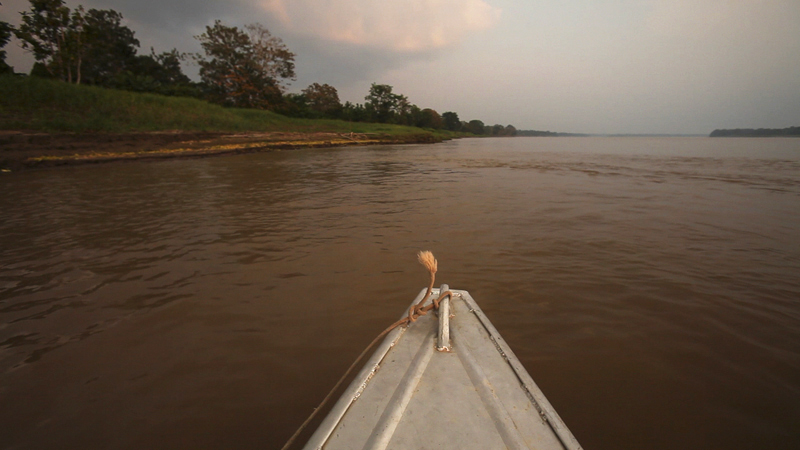
Amazon River

That would not only be something impossible to achieve, but it would diminish what I could do. And in fact, if I had set out to attain such an overwhelming feat of saving the world, I may have quit before I even got started – out of pure frustration.

But I do know the power of what a film can do.  I know I can use my craft and my tools in my own small way to make a difference.  And I know that by breaking down tasks into small actions; they add up to some very big accomplishments. Even with no backing, little funds and virtually no help, my daughter and I created a film that is doing exactly what we set out to do – inspire and move people to action to do what they can do to make our planet a better place.

All too often, we over think things.  Big productions, big money, celebrities and everything else that shouts out to us on the airwaves and the Internet dazzle us.  We start to believe that anything that isn’t grandiose isn’t worthy at all.  It’s a pity because in our attempt to gain perfection or notoriety – we shortchange ourselves and everyone else on what we could have accomplished.

I’ve seen a lot of “small” films over the last few months as I travel from festival to festival with my documentary, Opening Our Eyes.  While many of these films are “small” – or at least deemed small by some – they are powerful in every way.  Sometimes, there may be only 10 people in the audience and I think what a shame, that these powerful films won’t be seen by the masses.  That is changing though, as filmmakers have access to new tools and platforms that can take their small films global.  I’ve witnessed that first hand.

As consumers we need to start taking notice of films, books and photographs that don’t have millions of dollars or stars behind them.

As filmmakers we need to stay true to ourselves, believe in our dreams and take advantage of the power of the age we live in to not only make films that create awareness but to get them seen on a global scale.

I hope I never lose sight of what’s possible through the power of film and how photographers and filmmakers can use their craft to create awareness and make our world a better place. These days, with a lot of hard work and determination, the individual has the power to make a difference globally.  We live in an amazing time – take advantage of it.