10 Tips For Getting GOOD Audio When Using a DSLR

If you’re like most of the professional still photographers I know, you have either expanded your business and offer videomicrophones (in addition to your still photography) to your clients, or have plans to.  If you do have future plans to offer video to your clients, then you are either learning the particulars of that skill set, or you are collaborating with others who are in the know, or both.
Perhaps, one of the most daunting components of video, for still photographers is audio. Capturing audio is totally foreign to a still photographer, yet it is the most important component of all, in video production.

Here are a few tips for getting good audio:

  • You’ll never get good audio using the camera’s built in microphone, – at least not for interviews. Don’t turn the camera’s audio off however.  You can use it later for reference audio when syncing sound later in post-production.
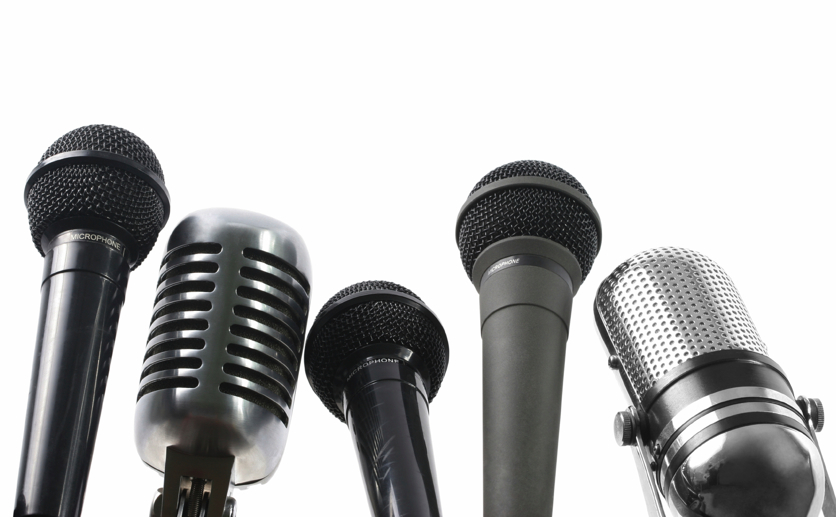
  • Use external microphones for capturing audio interviews.  Ideally, you should record your interview audio using a digital recorder like the Samson Zoom H6 or the Tascam DR-60D with XLR connections.  I usually place a “lav” microphone on my subjects. I will also use a shotgun microphone, mounted (with shock mount) on a boom pole that’s on a fixed stand.  I rely on the microphone on the fixed stand, as opposed to hiring a boom operator, especially if I don’t have the budget for a big crew. If you should decide to use an amateur or assistant as a “boom operator”, rather than hire an experienced operator who knows how to capture “consistent” audio, you’ll most likely end up with poor audio captured at inconsistent levels. The shotgun microphone should be about 12-18 inches away from your subject. You can sync the sound with the video, later in post- production, using the software Plural Eyes.
  • Don’t cross your audio cords with your electrical cords. This causes a hum that you will detect if you are wearing headphones.
  • For run and gun” situations, you can probably get away with using a microphone mounted on the camera, as long as you are close to your audio source. You can either run a microphone (with a mini plug) directly to the camera OR you can run a microphone with an XLR adaptor through a pre-amp like a JuicedLink or a Beachtek, which will yield a cleaner audio capture. This works well for capturing ambient sound for b-roll or live action, and your audio will be recorded to the same card as your video. If you do want to capture your interview audio using a microphone mounted on the camera, make sure that you get your camera in close to your subject (not more than 18 inches away), and that you us a mixer or a pre-amp.
  • Microphones – Use an omni-directional or cardiod microphone when you are in a more controlled situation and you want your sound coming from more directions – like on a sound stage.  “Lav” microphones can be used for interviews, either hard wired or with a wireless kit. Be careful when you attach it to your subject and position it to avoid any unnecessary noise coming from hair or jewelry rubbing up against it. A good camera mounted microphone is the Sennheiser MKE 400 (compact shotgun). For interviews I use my cardiod Sennheiser ME66 with K6 powering module.
  • Use a wireless system only when you NEED to. In cities like New York you can get a lot of interference on various frequencies. Always go wired when you can. A great and affordable hard-wired “lav”, is the SonyECM44B And if you find yourself needing a wireless system, spend the money to get a system that has a good range.
  • Use a good windscreen or “dead cat” when outside. Even if you’re inside, on a windy day, with windows open, you can pick up wind noise.
  • Use headphones. Don’t just look at your meters.  Your meter may indicate that you are recording sound, but it may not be good sound – it could be you are picking up interference or getting distorted and clipped audio. Wear headphones and make sure that you are getting quality sound.
  • Always consider that you will be using the audio – even for your b-roll.  You will need clean usable audio for b-roll, even if it’s only intended as ambient, background sound.
  • Pay attention to audio. Start by letting your ears do more of the work. Every room and situation has its own sound. Listen up. Be quiet and tell your crew to be quiet as well. You never know when you’ll want to use the audio – even if you think you won’t need it.

You can read more about what I brought with me in the way of gear, when I literally circled the globe, creating my first feature length film.  The film is now available on DVD.

If you’d like to know more about “moving into motion”, check out my book, The Craft and Commerce of Motion and Video.
Letting Go

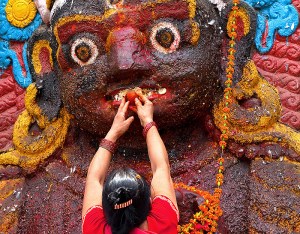
This past weekend our film, Opening Our Eyes, Kathmandu, Nepalhad its premiere in New York City. We have been in dozens of film festivals and events all over the world but for whatever insignificant reasons, we had never screened in New York.  I think of NYC as my “hometown”, even though I have never lived inside “the city”. It’s where many of our friends, clients and colleagues are and it has been our “home base” for over 35 years.

Despite the fact that the temperatures were in the single digits and there had been a major snowstorm the night before, so many of our oldest and dearest friends, along with some new ones, showed up. Even Nisha, a young Nepalese girl who is in the movie – came out on that cold night. I have been in front of many audiences over the years and have enjoyed it immensely, but I can honestly say that this was the most meaningful experience I’ve ever had. To be able to share my film – a body of work that I put a lot of hard work, heart and soul into – with my peers and people I’ve known since my beginnings, was pure joy.

In a way, the night brought things full circle in regards to the film.  A lot of filmmakers “open” or premiere in their hometowns.  Once again, I did things a little backwards, by “closing” in my home turf, as this may be the film’s last festival screening. I don’t have plans to pursue more festivals – but I never know what’s lies ahead, in the way of opportunities, and am open to possibilities.  This project and this journey have rewarded me in hundreds of ways and no doubt will continue to enrich my life. The film will still be available for screenings at educational venues and community events.  It’s also available on DVD and streaming.  My daughter, Erin and I made this film to inspire and motivate others to create positive change in our world, and we hope that message continues to spread globally.

A young filmmaker I met at one of the festivals I attended told me, “a filmmaker never finishes a film – he(she) just knows when to let go.”  I am able to “let go”,  because I know that this experience has set the stage for the next events in my life.

“Everyone has Oceans to fly, if they have the Heart to do it. Is it reckless? Maybe. But what do dreams know of boundaries?”
 
– Amelia Earhart

6 Social Media Marketing Mistakes to Avoid

I must admit, I’m not an SEO or Social Media guru.  In fact, on a scale of 1 – 10 (10 being extremely interesting), I’d give this topic a 3.  But, after reading Gary Vaynerchuk’s book “Jab, Jab, Jab, Right Hook,” (which I would give a 10), I’ve shifted my thinking entirely.  I also realized why, the topic has had little interest for me – most of the books, articles and blogs I had read were full of formulaic tips  – but none of the advice and tips felt like a good fit who I was and what I had to offer.  And in fact if I had applied some those tips to my blog or my Facebook posts, I would have done myself and my business a disservice by not being “myself” – or authentic.

Some social media marketing mistakes to avoid:

  • Putting the wrong content on a platform – Each platform, (Facebook, Twitter, LinkedIn, Pinterest, Instagram etc.) has it’s own “native” language or how the community communicates  and interacts with one another.  A good marketer understands that “context” is just as important as content.  Your content must provide the same value to the viewer that is native to that platform. Your content should fit in with what drives people to that platform.
  • Content is not memorable – Your content should be something that people want to share. ooe fb [age Facebook uses edge rank, which determines who and how many people see your posts.  The more shares, comments and likes, the better your edge rank and the more people who see your posts.  Keep your content, informative, entertaining or both and give people the desire to share.
  • Selling too often – You have to “give” more than you “sell” on social media platforms. If every post you make is a pitch for your products, no one will be interested, let alone want to share them.
  • Text is too long – Twitter has a cut off, but Facebook doesn’t.  Keep in mind that more and more people are viewing your posts on mobile devices and simply won’t read lots of information.  Provide more info via links. Make sure your text is provocative and entertaining.
  • No use of imagery – If you don’t have an image in your posts on platforms like Facebook or Tumblr, you won’t attract attention.  People will just move on to something that catches their eye on their news feed.  And, make sure the images you post are good and professional – they’re a reflection of your business. Make sure you overlay your logo on your images.
  • No call to action – Remember you are ultimately selling your products and your services, so don’t forget to give your viewers a call to action.  But don’t confuse them by giving them too many.

New Business Models in Photography and Motion – in a Global Economy

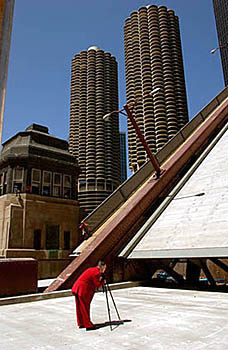
Manchester Airport, Manchester, England

This topic comes up a lot these days.  You  could apply “new business models” to just about any business – not just photography and video. Photography and video, in and of themselves are not business models at all, but rather they are mediums that are used commercially, non-commercially and personally. The business end of photography and video comes when you determine how you want to apply them in terms of today’s markets.

Today’s markets are global.  That’s good news and bad news, depending on the type of work you do.  If you are a stock photographer or even if you have expanded that into also shooting stock motion footage – your inventory or your content must be unique in some way in order to sustain that type of business model in our global economy. You will need to stand out and offer something unique,  if you pursue this type of market.

If you are a commissioned commercial or editorial photographer, cinematographer, or director, the competition is fierce and once again, if you don’t have a unique style or vision, most likely you will end up playing by others’ rules or signing “their” lopsided contracts.  It comes down to supply and demand of talent and work, and you will either compete with price or offer something that you do better than your competition.

The good news is, if you are willing to do the work, the world is your stage.  The portals for distribution of your “content” are open to all and as “creatives” we are no longer dependent on middlemen.  When I get asked to talk about “new business models”, I always look for where the new opportunities are.  Where will I be able to carve out my own “new business model”, rather than having to adapt others’ ideas of what that may be.  There is a big difference in those two approaches.

I am carving out a business model for who I am creatively, and where I see the most opportunities for what I do well.  When I am authentic to who I am and apply this to my work, I am able to deliver my own unique vision and reach the right audience,  while maintaining ownership and control over the licensing of my work.  I am able to do that not only because technology has enabled me to do that, but more importantly because I have set myself apart from everyone else who has a camera.

Think about it.  What are your strengths? What are your passions?  Now imagine a business model based on your answers. The world is our stage.

What Makes a Professional (Photographer)?

I heard a remark made recently, by a colleague of mine.  I was with a group of photographers and we were discussing what makes a photographer, professional. stock-80 At a time when it seems like just about everybody is a photographer, and we are bombarded with thousands of images on a daily basis, what separates a “pro” from an amateur? My colleague stated, “A pro “makes” photographs – an amateur “takes” them”.  While that sounded like a reasonable distinction, it implied that photographers who shot “found moments” were not “professionals”.  What about photojournalists then, who are bound by ethics not to contrive an image?  So, I started thinking, “What set of criteria is used to determine what makes a photographer, a professional?”

Inspired by Steven Pressfield’s book The War of Art, I will paraphrase, some of the qualities that Pressfield points out that define us as professionals:

  • “We show up every day” – no matter what.
  • We are committed for the long haul and the stakes are high. We need to feed our families and survive.
  • “We accept remuneration for our labor.” (I’ll add, we expect remuneration)  We love what we do but we work for the money.
  • We master our craft. This doesn’t stop. A professional is always trying to master their technique.
  • We act in the face of fear.  This is certainly applicable to a “war photographer”, but I would go further and say that it takes courage to follow a career path of photography.  Courage and commitment.
  • “A professional self-validates.”  We don’t need others to commission us, in order for us to work.  We are passionate about what we do and we will create regardless if we are commissioned or not.
  • “A professional reinvents himself. “  If you aren’t reinventing yourself, then you probably aren’t taking enough risks.  A professional knows not to play it safe – not in a creative profession.
  • A professional doesn’t take rejection or failure personally.  I have learned first hand, that whenever I have taken a leap and challenged myself, it has always come with rejection or some may say, failure.  Personally, I don’t equate rejection with failure.  Failure implies it’s the end of the story.  Rejection needs to take place, in order to get to the next chapter of the story.

I would highly recommend reading, The War of Art. It’s a must for anyone contemplating a creative career.  As far as my thoughts about using the criteria,  “making” or “taking” a photo to determine who is a professional photographer – let’s just say that a professional photographer is always “making” a photograph, regardless if it is contrived or not.  It is a conscious decision of a professional photographer, when and which “moments” to capture.  We show up every day, to do our job, whether it’s in a studio or a war zone. We are consistent, responsible and accountable.  We are in it for the long haul.  It’s our passion.  It’s our life. It’s our craft and our gift to the world, a legacy of images that define the time we live in.

The Value of Photography

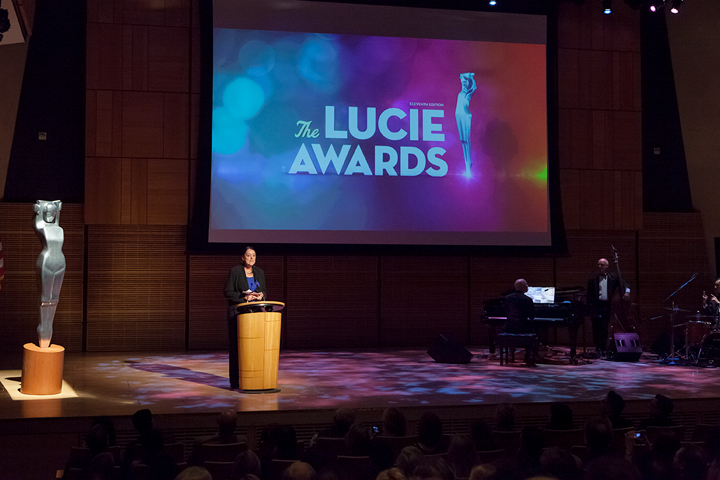
The who’s who of photography gathered last night, at Carnegie Hall to honor the “masters” of their trade at the Lucie Awards. The Lucies are like the Oscars of the “photographic industry”.

2013 Lucie Awards, Carnegie Hall ©Thomas Kelly
2013 Lucie Awards, Carnegie Hall
©Thomas Kelly

I had been asked to step in to present the “2013 Deeper Perspective Photographer of the Year Award”. on behalf of the ASMP when Executive Director, Gene Mopsik and President, Ed McDonald couldn’t attend.

I don’t usually get nervous about things like this, but I was last night. As I stood in the wings with photographer John H. White, who was waiting to go on stage to accept his Lucie, for Achievement in Photojournalism, I was mesmerized as I watched John.  He seemed to glow and I felt his grace, his humility and his gratitude.  It was a moment in my life that will stay with me forever.  It was calming. I watched and listened to his acceptance speech on the monitor backstage, and I was deeply touched.  So was the audience, as evidenced in their standing ovation.

John H. White is not a “rock star” type of photographer.  His images don’t “shock and awe”, not in the way a war photographer’s images do. John’s photographs capture the subtle moments of the human experience.  His legacy of images show us life as it really is.

This past spring, after 35 years with the Chicago Sun Times, John and the rest of the newspaper’s photographic staff were fired.  It was a huge blow to the photographic community, magnified by the fact that even John H. White, the “chairman” was “let go”, without even as much as a thank you. John wasn’t bitter about it though.  Michelle Agins wrote a wonderful article for the New York Times where she quoted John: “A job’s not a job because of labor law,” he said. “It’s just something you love. It’s something you do because it gives you a mission, a life, a purpose, and you do it for the service of others.”

All he had wanted to hear from the executives who let him go was two words that never came: thank you. But even then, he did not respond with anger.

John spoke more about the Sun Times’ firings in an interview with NPR where he said: “I will not curse the darkness. I will light candles. I will live by my three “F” words: faith, focus and flight. I’ll be faithful to life, my purpose in life, my assignment from life. Stay focused on what’s really important, what counts.” He repeated those three “F” words last night as he accepted his award.  The audience was humbled.  John had shed his light.

I have been thinking a lot lately, about the value of photography and the value that a professional brings to this craft.  John H. White and his archive of work is a stellar example.  His images, capturing the subtleties of life stand out amongst the noise.  They make us take notice of what is often over looked – the quieter moments of life.

As far as what a professional photographer brings to the world, I think John stated it best: “Every day, a baby is born. Every day, someone dies. Every single day. And we capture everything in between. You think of this thing called life and how it’s preserved. It’s preserved through vision, through photographs.”

As John walked off the stage and back into the wings, I felt enveloped by his glow that had seemed to magnify.  I caught his eye for a moment and said “thank you”. He nodded, and flashed his wonderful smile and in that moment, we connected and shared our understanding, of the “value” of photography.

The Past Always Seems Better…….But Was It?

Chris Guillebeau struck a chord with his blog today ,“ The Past Wasn’t Better. Choose the Present Instead”, .  He relayed a story about a time his friends got together for a “gaming session”. They had ordered an emulator, which allowed them to play the games of their youth on the modern gaming console of the time.  They realized after a couple of hours of playing the “old games” that the games weren’t as fun as what they remembered.  They were very simplistic and hard – dying over and over again and not advancing to the next level wasn’t fun – it was frustrating.

Chris made the point that it’s easy to look back with fondness on the good ole days, but our memories get distorted as time passes and sometimes what we looked back on with fondness, never happened.

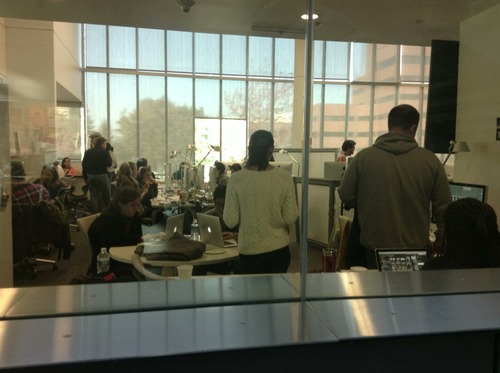
I had an interesting and somewhat similar experience this past weekend.  I had been invited to speak and coach at the 2013 Syracuse University Fall Workshops, which ASMP had contributed to as a sponsor.tumblr_muyzapUjbp1qe6iepo1_500  It was an intensely creative 3-day workshop where journalism students from the Newhouse School, came together with some of the best editors, designers, photographers and multimedia producers working in journalism. It was a hands-on workshop, where students worked with their coaches, to produce their projects (stories), under a tight 3-day deadline. What stood out to me this weekend, was that the “learning” wasn’t a one-way experience.  I learned as much as I shared – from the other coaches, as well as from the students. I’m sure I’m not the only coach, who picked up some tips from their students this weekend. I was also inspired and amazed at what is possible now, in terms of new ways to tell a story.

Sure, there are days when I’m simply overwhelmed by technology and the continued learning curve that comes with it.  And sometimes, I look back and fantasize how much better it was in the past.  At the workshop, one of my students had more than her share of technology mishaps.  At one point after losing hours of work, due to a software glitch along with not being able to access her audio files, somewhere in “the cloud”, she remarked with exasperation “ I wish things were like they used to be”.  She meant when things were tangible and analog. I quickly replied, “No you don’t because this 3 day workshop would have taken 3 months”. It was a moment when we both had the same realization that Chris Guillebeau had – our memories and perceptions of the old days are sometimes blurred and over glorified.

As much as we remember and long for the old days, the fact is we have it pretty good now.  There’s not a day that goes by that I don’t remind myself of that.  I choose to focus on what I am able to do in the present rather than look back at what was. If we choose to stay in the past and remember things being better then they are now, we’ll miss out on a whole lot of possibilities. As Chris beautifully sums it up: “Let go of the glory days.  Live in the present and build for the future.”

What Happened to Attribution?

English: Logo of LIFE magazine.
English: Logo of LIFE magazine. (Photo credit: Wikipedia)

We lost one of the icons of photojournalism last week, Bill Eppridge.  If you haven’t heard of his name, then surely you have seen his photographs.  One of his photographs, a black & white image of the lifeless body of Senator Robert Kennedy on the floor of a hotel kitchen after he had been murdered, has become one of the signature images of the 1960’s. It has been etched into my memory since the first time I saw it in 1968.

Bill was one of his generation’s greatest photojournalists.  His images graced the pages of Life Magazine, documenting the tumultuous decade of the ‘60’s.  His colleagues at Life at that time included notables such as Alfred Eisenstaedt, George Silk, Paul Schutzer, Eve Arnold and Bob Gomel.  I know that because I used to pour over our weekly copy of Life Magazine and I saw their names printed under their photographs.

Imagine that, a photographer’s credit appearing under their image. I say that sarcastically because nowadays photographers’ credits seem to have all but disappeared.  If an image (especially a stock image) is credited in a magazine, many times it will only say “Getty Images” or “AP”.  Why is that?  It doesn’t cost the magazine any more money to credit the photographer who shot it – nor does it take anything away from Getty or AP.  Why not credit an image  ie: photographer name/Getty Images?  When and why did someone somewhere at Getty or a publishing house decide to omit a photographer’s name?

It seems to me, that in the virtual world we live in, where trust and authenticity has given way to blurred or hidden identities, we would want to know who the person was that took the picture we are looking at.  We all know a corporation didn’t go out and shoot it – sometimes putting their life on the line.

As a photographer, I insert a clause in my contracts that states that  a penalty will be charged if my credit is omitted. That is if it’s my contract, but too many times stock photo agencies don’t require a photographer’s credit and in fact don’t seem to want it.  Why?  I would love to know why. I also wonder if this new precedent will affect our future photographic archives by making them less tangible, less personal.  That would be a tragedy.  What makes an image linger in our minds, decades after a picture is taken is that it makes the captured moment – real.  I can assure you that when a photographer decides which moment to capture, it’s about as real and personal as it gets.  Why not give credit to that moment and that photographer who captured it? Don’t you think that future generations will appreciate it if we do?

Don’t Let Resistance Win

“Resistance is fueled by fear.  Resistance has no strength of its own.  Every ounce of juice it possesses comes from us.  We feed it with power by our fear of it.  Master that fear and we conquer Resistance.”

Steven Pressfield, “The War of Art

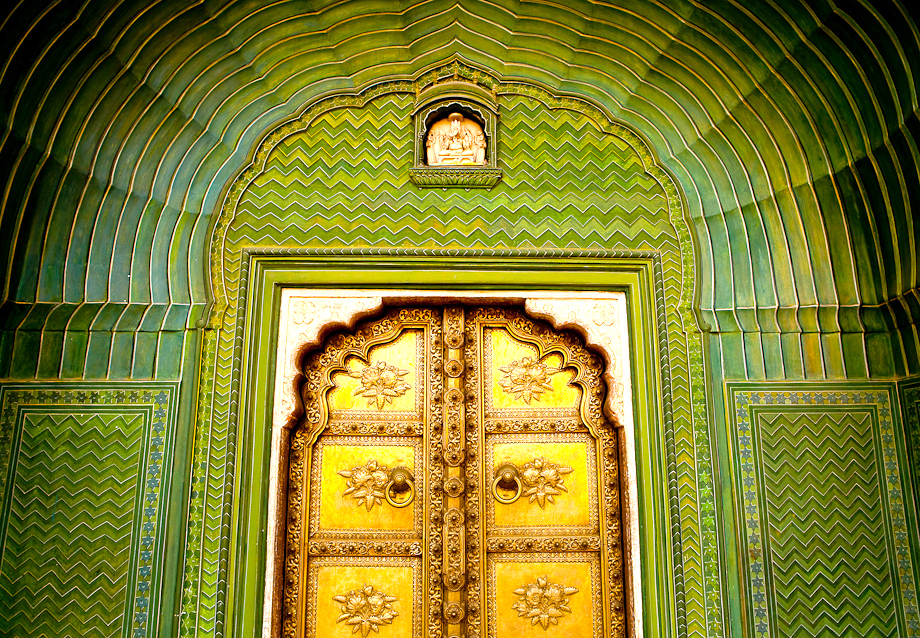
Resistance manifests itself in many ways. Jaipur, India Most of us do everything we can, not to recognize the “resistance” in our own lives.  We plod along through life, just trying to maintain the status quo of our daily existence and habits, that we never “see” the sharp reefs buried beneath the surface of our relationships, our careers or how we are living our life.   We don’t see the reefs, because we don’t want to.  We think it’s easier to live a life of denial and that’s exactly what resistance wants.

Misery loves company.  Somehow, it makes us feel better about ourselves, when we compare ourselves to other under achievers, procrastinators, people down on their luck or just ordinary people who are extremely unhappy.  Essentially, people who don’t take control of their lives, but rather blame circumstances or others.  These people are victims of resistance.

There’s a saying “When a door closes – a window opens”.  I’ve always been one to focus on the “open window”, rather than the “closed door” but it’s not easy.  Any time I’ve had a shift in my life, or a “door closed”, my first instincts are to curl up in a ball, bury my head in the covers, admit failure and give up – or give in to resistance. But I know that if I succumb to those instincts, I won’t even notice the windows that have opened.  The funny thing is, most times, those windows were always open – I just never saw them.

I try to recognize those open windows in my life, but in order to do that, I need to battle resistance. That may mean, closing some doors myself.

Past Predictions of the Future Have Been Greatly Exaggerated

One of the blogs that I regularly read is Copyblogger, which provides a lot of great information and insights into content marketing.  This past week, Brian Clark wrote a post entitled,  The Future of Content Marketing.   He writes:

“A bunch of really smart people got together in 1880 to predict the future, according to Jeff Stibel in his intriguing book Breakpoint. These experts were called on to predict how the rapidly growing Gotham would manage into the next century and beyond.

The prognosis was not positive.

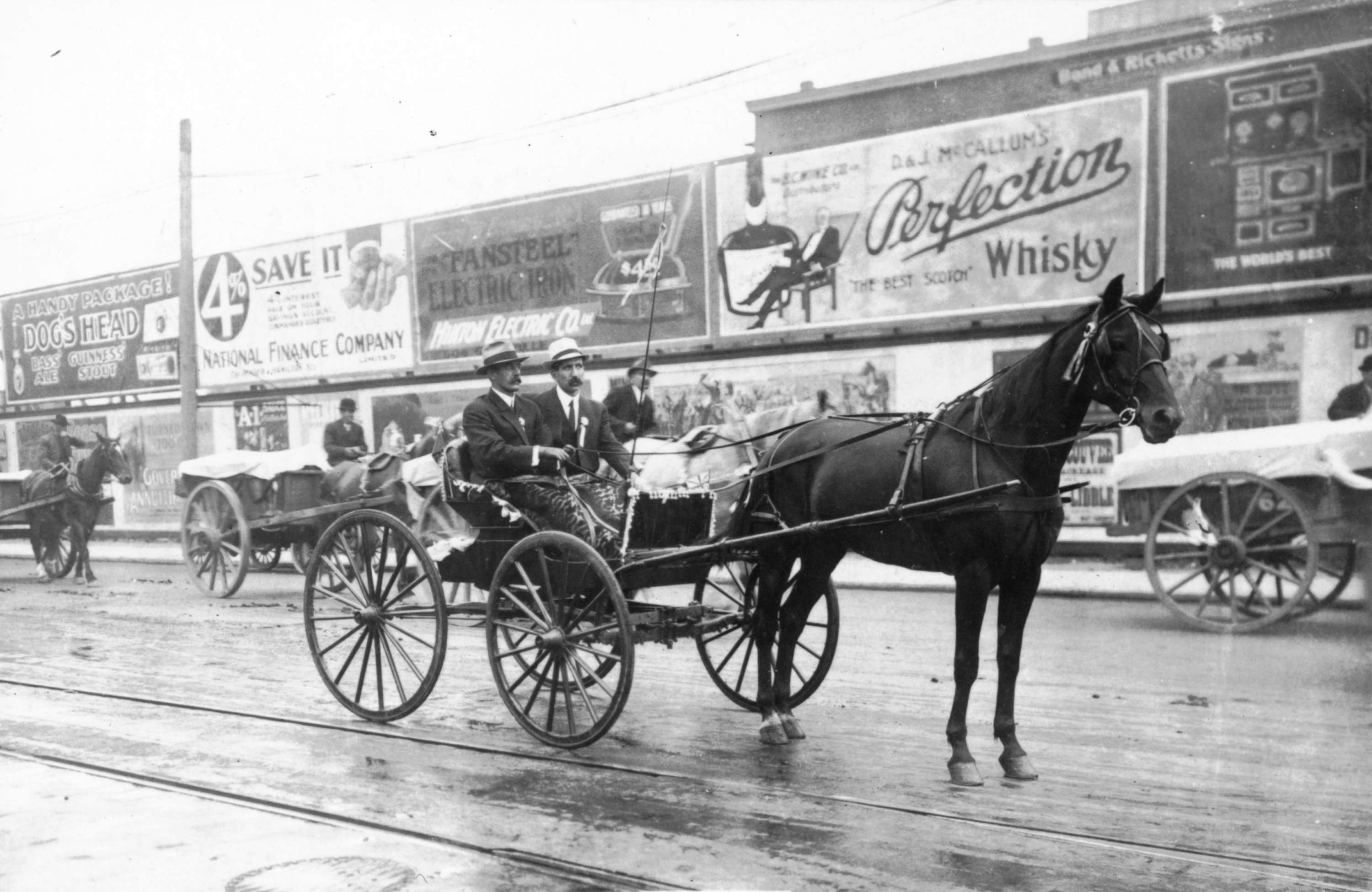
NYC was a major source of American innovation in 1880. Skyscrapers, subways, stock exchanges — and it was doubling in size every 10 years. abb36e44-0c30-4a09-9279-0cd3c3fefa9b-A01867The experts were concerned by this growth, because they projected by 1980, you’d need six million horses to transport all the people who would live there.”

Folks were predicting the future of New York City, looking at it through the eyes of what was technologically possible then.  They were more concerned about all the horses and the “crap” that would be produced, than they were about greenhouse gases, because nobody knew what that was.

When I re-ran a blog post How Motion is Changing the Future of Photography, I used a similar analogy, that Ray Kurzweil had given when I heard him speak at NAB.  Ray said that, at the turn of the century (the beginning of the 1900’s), if you thought of yourself as being in the “horse and buggy business”, you were doomed to fail because of advent of the automobile.  But if you saw yourself in the “transportation business”, you thrived, no doubt because you broadened your view to include the automobile.  In my blog, I compared that analogy to what is happening in the still photography business, as the mediums of still imagery and video converge.  I received a lot of responses from that post, mostly from people who argued that still photographs would always be around. I don’t disagree with them.  I do think there will still be still images in the future – however, I think the still photography business will drastically change from how it is now.

Interestingly enough, every year I’m asked to bid on a still photography assignment for a tourism client.  Yesterday, I received the bid packet and there was a profound change.  They were not asking for a quote for still photography.  They were asking for a quote for video – and not just video – but video shot on a RED camera so that they could pull frame grabs from the footage and use those “still images” in their ads.  Now, that’s a game changer.

There’s always a danger in predicting the future and that’s because we tend to use and be influenced by the information and the knowledge that we have now – in the present.  What I’ve learned in my many years on this Earth is that the future will be nothing like how we imagine it will be.   I know that because what I imagined the future to be, some 35 years ago when I set out to make a career as a still photographer, was very limited in terms of how technology has changed things.

The human need to create will continue to mold a future that is way beyond what most of us could ever imagine.