Commitment

Commitment is everything.  It’s what makes us get things done.  It’s what makes relationships work.
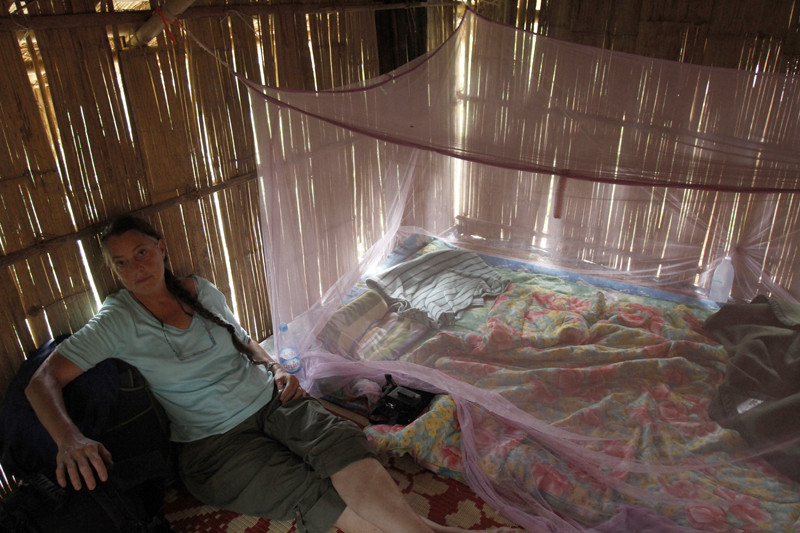
Gail in bamboo hut in hill tribe village, northern Thailand

It’s what makes us not give up, no matter how bleak it may look at times. It’s what gets us to stay focused on “the story” and be true to ourselves.

To some people, commitment can be frightening.  Their heads are filled with negative “what if” thoughts of failure that hold them back.  So, they plod along through life letting things happen to them instead of going after what they want. Those are the people who let resistance win.

I’ve always been a determined and committed person – if I say I’m going to do something, you can count on me to do it.  It’s tough sometimes though, to stay committed to myself and to what my true purpose is – it’s far too easy to get caught up with the regular flow of work and life.  But every now and then I get an idea for a creative project that just won’t go away.   When I finally decide to stop ignoring the idea and do something, I have a mechanism I use to help me make the commitment – I tell someone about it.  I’m the type of person that feels, once I’ve told someone I’m going to do something, then I have to do it – just to save face.  I call it “forced accountability.”

Seth Godin writes today about commitment: “One way to play in the digital age is to appeal to those that browse, the window shoppers, the mass audience that can’t and won’t commit.  The alternative is to focus on impact, not numbers and impact comes from commitment. “ He says: “ price is more than an exchange of coins. Price is a story.” Essentially, Godin is saying that in our noisy digital world, where ideas and content are free – we’ve got to be better, to make an impact.  In order to connect with the buyers on an emotional level, we’ve got to be “better than free”.

Every commitment that I’ve ever made has come with tremendous personal growth.  When I traveled around the world a couple of years ago making a feature length documentary, Opening Our Eyes, I not only challenged myself physically and creatively, but spiritually as well and I feel that I became a better person because of it.  I would not have been able to endure the hardships of that journey, nor the intense workload of post production had I not been committed to the idea.

What are you willing to commit to?  Commitment may be frightening, but without it, you may be spending your later years wondering, “what if I had”

Let the Good Times Roll (Laissez les bons temps rouler)

If there is one thing I’ve learned from a lifetime of travel, it’s that the more you immerse yourself into the culture of where you are, the more rewarding the experience will be.

This past weekend I flew to New Orleans for a friend’s big birthday bash weekend. 100 of her friends traveled to the Big Easy”Cajun musician playing accordian, New Orleans, Louisiana from all over the world to her help celebrate her 50th in a way that only this city can offer. Most of the activities stayed clear of the French Quarter and the tourist scene and took place in parts of the city that felt “real”.  You can’t help but feel the deep culture and history of this city, once you get yourself beyond the “sleaze”.

We had a couple of memorable dinners but one stands out in my mind, not just for the incredible cuisine, but also because of the company that evening. I was seated between a very distinguished young man from South Africa and a writer from Los Angeles. Across from me was an Italian who was living in London and a couple from Mississippi.  Some folks I had met 10 years ago at the 40th birthday bash. The conversations were diverse and entertaining.

After dinner our group left the restaurant and formed our own parade in typical New Orleans style.  Two NOLA cops on motorcycles led us and a second line band as we marched a few blocks to our next stop. It was a first for me – to be dancing up a New Orleans street, along with 100 other folks enjoying the moment.  It was pure happiness and not just for our group but for all those who came out of their houses or restaurants and bars to watch our small parade go by. I enjoyed every bit of that 4-block walk and it is etched in my mind forever.  And that’s the sort of thing that separates a city like New Orleans from a city like “Vegas”.

I was blissfully exhausted when I boarded my flight home Sunday night. When I ordered a glass of wine, the flight attendant happily announced that the man in 1 A is buying everyone on board a drink tonight. He was getting married and wanted to celebrate with his fellow passengers.  Le bon temps continued to roll.

How to Sustain a Long Career in Photography

I came across this old “tear sheet” in the process of cleaning out the attic.  Tom and I have dozens of boxes containing over 35 years of printed collateral with our “work” in it.

Tom Kelly and Gail Mooney

This brochure cover was from a shoot for I Love NY.  Clearly it was a low budget job, based on the fact that we were also the “talent” in our own photograph.  When this photo was shot, we were just starting out in the business of photography. It’s hard to believe that it’s been over 35 years since we started Kelly/Mooney Photography, because it seems like yesterday.   As I sifted through decades of work, I started thinking  – “What is it that sustains a career?”

Some thoughts:

Don’t let age define you.  Let’s face it; we’re a youth obsessed culture. It’s not easy getting older, especially when you’re in a creative business like photography where “fresh” is equated with “young”. But there’s absolutely nothing you can do about your age.  You can’t change it.  It’s like your height – it is what it is.  But you can choose how you think about it. If you tell yourself that you’re old – you will be.

Take more risks – not less. Why not?  What is the worst that could happen?  Am I the only one who thinks this way?  I guess I was lucky that my mom and dad put those types of thoughts in my head a long time ago and they’ve served me well.  Why should I change my outlook now, when I have fewer years on the planet?

You’ll fail more than you succeed.  I sure have.  In the last couple of years I’ve been rejected more times than not, but only because I have been challenging myself more than at any other time in my career.  I have always “been on the move” in my life and my career and I am not one to stay too complacent or static.  There are just too many things left to explore.

Fear comes with the territory.  Fear is what motivated me to start writing.  For me fear would often visit in the wee small hours of the morning.  My mind would bounce from one unfounded worry to another and I couldn’t turn off the chaos in my head. So rather than toss and turn for hours, I got out of bed and started to write down my thoughts. It’s amazing how trivial some of the worries looked in the light of the day, written on a sheet of paper.

Listen to the ideas that don’t go away.  We all have ideas.  But how many of us act on them?  Less than 5%.  When I have an idea that just won’t “quit me”, I take action. The first thing I do is I commit to the idea.  Then I tell someone – someone I respect, because then I have to carry it out – just to save face.  I call it forced accountability.

Don’t take things for granted.  Nothing stays the same or lasts forever.  Be grateful for your loyal clients and show your gratitude.  Business is all about relationships and it is amazing how people seem to pop in and out of your life.  Doors are always closing and windows are eternally opening in a well-lived life.  Recognize those times when they happen.

Always wonder.  My spirit has not aged past 25 years old.  I still have dreams and they are vivid and real in my mind.  My dreams are propelled by my insatiable curiosity about everything. Many years ago I made the choice to become a professional photographer because I knew that my camera would give me access to a rich and rewarding life and to interesting people, places and cultures. My cameras (“my tools”) are still a means to a life of wonderment.

How the Beatles Influenced Me as a Photographer & Businesswoman

With all the hype happening this week around the 50th Anniversary of the Beatles coming to America, I couldn’t help but reflect how much this band influenced my own career as a photographer and filmmaker.

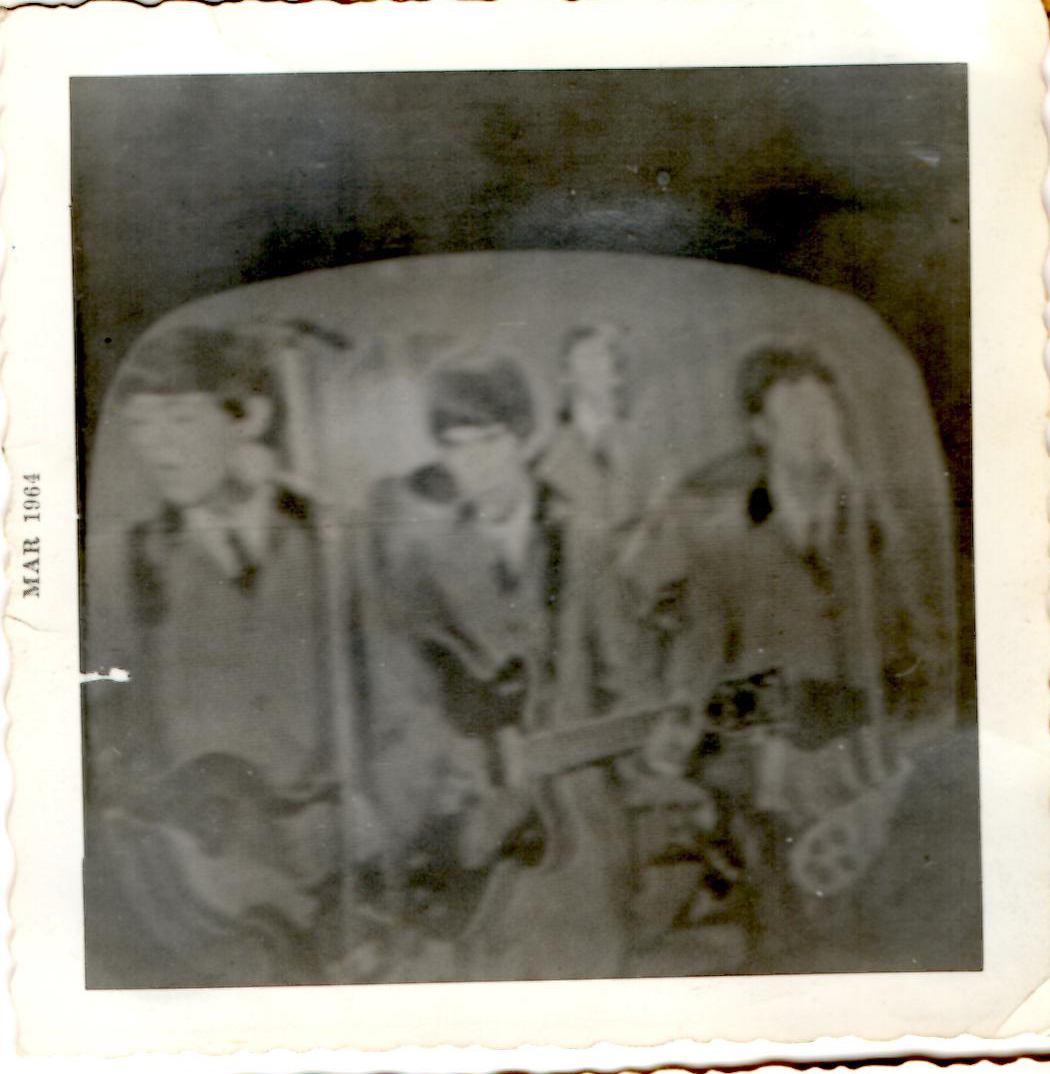
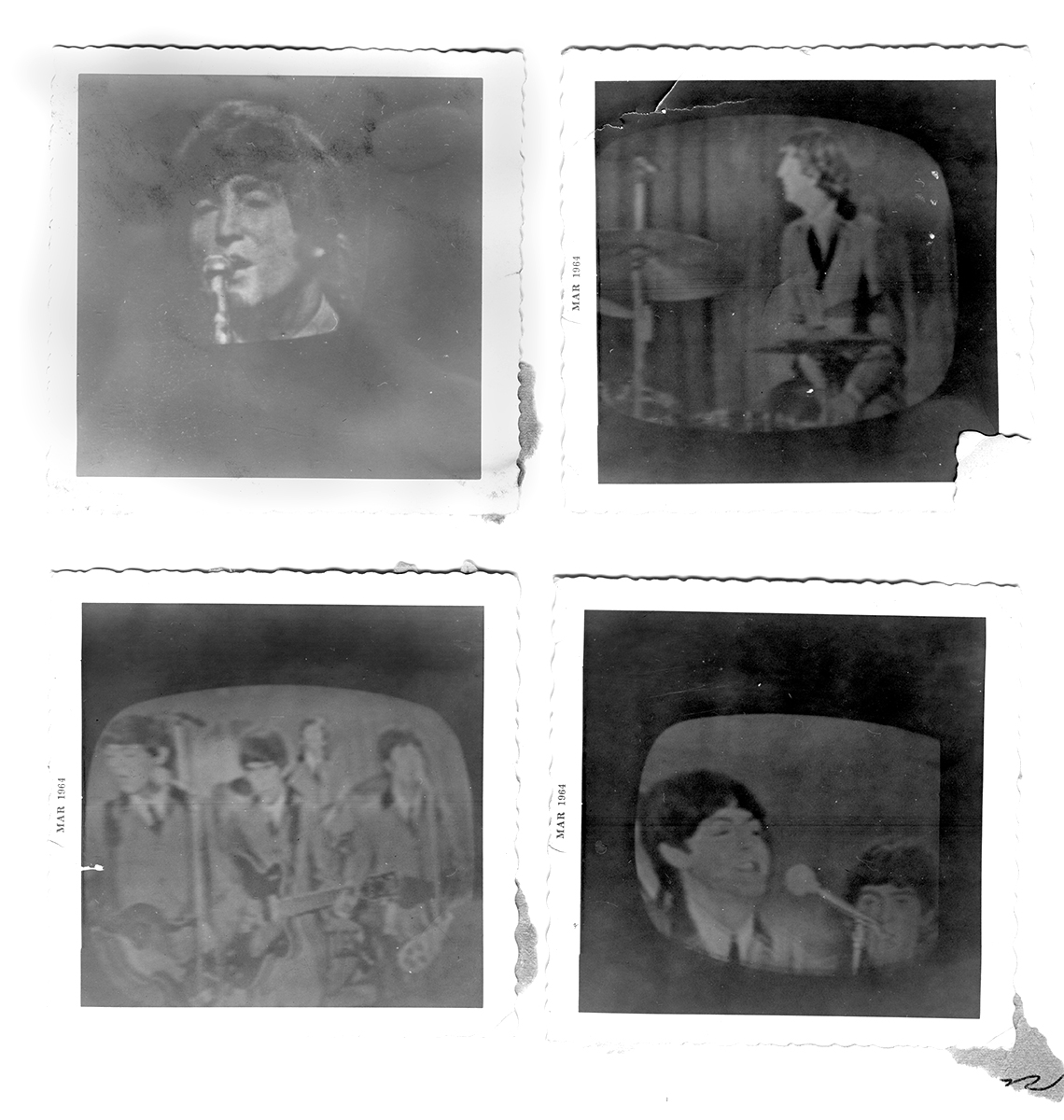
  1. I was inspired me to “capture” history (and use my camera as a means to that end). Beatles on Ed Sullivan Show - February 9, 1964To start with, the first pictures that I remember taking as a child were photos I snapped of the Beatles on the Ed Sullivan Show.  I vividly remember as I anxiously awaited the show to begin, that I needed to document it somehow.  It was just too important not too.  In fact it was so important that I have kept that snapshot in a small box of memorabilia for 50 years! I’ve spent a career documenting some of the most incredible places, people and events of my time.
  2. They inspired me to be a storyteller.  I used to orally tell stories to just about anyone who would listen to me when I was a very young child.  But when the Beatles hit the scene, about the same time I started noticing the opposite sex, I turned my fantasies into my own written stories.  I’m still writing stories and now translating them into ePubs, books and movies.
  3. They expanded my universe.  I began to “see” things differently because of the Beatles.  I became aware of different cultures, countries, music and wit. It was like an awakening for me and I knew then that I wanted to explore as many cultures and experiences as I could. I’ve spent a lifetime exploring the unknown.
  4. They taught me to always learn, grow and challenge myself. I grew up as a child and later a teenager, during one of the most pivotal and changing decades in America. As the Beatles moved beyond the “feel good” and innocent lyrics of songs like “She loves you…..yeah, yeah, yeah”, to the lyrical depths found on the Sergeant Pepper’s Lonely Hearts Club Band album, I too was changing.  It was like we were growing together. I remind myself daily to always be learning, exploring, growing and challenging myself and that has helped me stay fresh in my career.
  5. I learned that “The Beatles” were more than the sum of 4 individuals. John, Paul, George and Ringo all brought their own unique talents and personalities to make up the most phenomenal band of all time.  But they were also savvy enough to know they needed expert guidance and collaborated with great people like Brian Epstein and George Martin.  It taught me the importance of collaboration and to surround myself with people who have talents that I don’t possess.

How This Beatlemanic Became a Photographer

It’s hard to believe it’s been almost 50 years since I took these pictures off of our TV screen. Beatles on Ed Sullivan Show - February 9, 1964 I remember that night like it was yesterday, in vivid detail.

The Beatles had just come to America for the first time, and I was counting down the days until they were scheduled to appear on the Ed Sullivan Show.  I had been soaking up every bit of news about the Beatles all week. In those days that meant listening to the radio as DJ’s gave a blow-by-blow account of what those “crazy lads from Liverpool” were doing.

My family and I were living in Rochester, NY at the time.  I was not quite a teenager, and it was the very first time I fell in love. First with Paul, because he was the cutest and non-threatening.  Later with John, because he was a bit rebellious and he appealed to the adventurous part of me that was emerging.

The day the Beatles were to appear on the Ed Sullivan Show just dragged by.  Dinner was particularly excruciating and each minute seemed like an hour.  My sister and I had commandeered the TV set and no one was getting near it to change the channel.  It was a black & white set – a color TV was prohibitively expensive in those days. I don’t remember who had the idea to take pictures that night but luckily we had some film in the Instamatic. I took just four shots that night.  It was the end of the roll and each click was precious and I remember waiting for the right moments.

I can see by the date stamps on the prints (March 1964), that it took us a month to get the film developed.  That was record speed for my family.  We usually had a year’s worth of holiday pictures on one roll of film when we dropped it off at the drug store for processing.  Luckily the film in the camera was at the end of the roll that evening – otherwise it may have taken months to see photos.

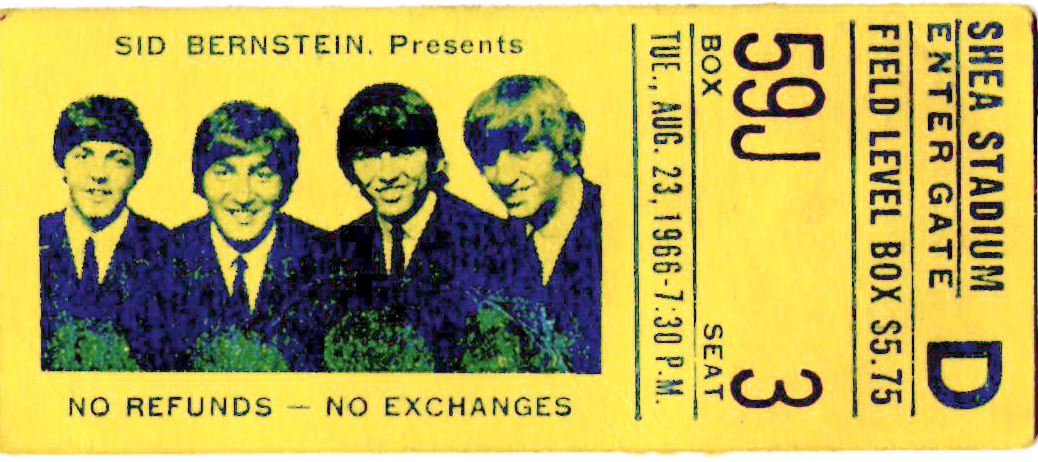
I pasted those photos into my scrapbookBeatlesTicket4 copy almost 50 years ago and they’ve been there ever since, along with my other Beatle memorabilia including my ticket for their performance at Shea Stadium in 1966.  We had moved to the NYC area about a year after I shot these photos, and I actually got to see the Beatles perform twice at Shea – ’65 and ’66.

As I look back at that night on February 9, 1964, I can see where my passion for recording moments in history came from and I’ve been photographing them ever since.

What Happened to Professionalism – or Manners?

What does it mean to be a professional?  Regardless of the business you’re in, a professional is someone who treats their clients and their vendors with respect.  That means that everyone should be mindful of his or her manners.8__CS_d_072151  Yes, manners! That may sound old fashioned but being courteous to people never goes out of style.

Some things that define a “professional”:

  • Professionals know how to get the job done, on time and on schedule.
  • Professionals don’t learn on the job.
  • A professional should respect everyone on his or her team – EVERYONE plays a part that makes the whole stronger, even the “guy” who gets coffee.
  • A professional has good manners – that usually means treating people how they wish to be treated.
  • A professional understands that situations change.  That means that the assistant you are dealing with at a magazine or ad agency may just be in a position to hire YOU some day.  Don’t burn your bridges.
  • A professional has an understanding of their clients’ position.  Understanding works both ways. Good clients who are professional will also have an understanding of what their “vendors” are up against.
  • Professionals understand that they don’t work in a vacuum – especially these days.  Bad manners don’t stay isolated – they trickle down.
  • A professional doesn’t ignore people, especially people who they depend on. We are all busy and we all have only 24 hours in our day.  That doesn’t give you a reason to ignore someone.  Unfortunately, this happens all the time, but if you have asked someone to provide you with an estimate for a job that you need to produce and they take their time to provide you with one – give them the courtesy of letting them know if they didn’t get the job.  Remember, they are helping you come up with figures you need to produce the job.  If someone invests their time to do that, don’t you think they deserve to know the outcome?

Remember, we are all connected.  We are all humans, with families, bills to pay, kids to put in college, parents who may be sick etc. etc.  Regardless if we are the one who is dangling the proverbial carrot or on the receiving end of it – I think perhaps we should realize that respect and good manners is the hallmark of a professional.

Business Tips for Photographers in a Multi-Media World

In the blogging world of photography and motion, there is a lot written about gear and how to use it, red camerabut precious little written about “the business”.  Chances are, if you are photographer who has been in business for more than 10 years, then you know that technology has not only changed our tools, it has changed the way we do business.

For starters, we are doing business in a global economy, and with that comes pluses and minuses. One big plus is that we are able to reach a much wider audience, than ever before. That is, if you have an understanding of how to do that and take advantage of the opportunities that are out there.  The minus or downside is, if we don’t adapt our dated business models, in a business that has seen monumental changes, we will not be able to compete.

Commercial photographers are in the visual communications business.  We create imagery that delivers a message or tells a story for a variety of “markets” including; advertising, corporate, architectural and editorial.  Each market has a need for visual content and these days that encompasses both still photography and video.  In the last couple of years, the lines dividing these two mediums have faded away, at least in terms of how content is consumed in our culture.

Here are a couple of tips to help photographers prosper in our “multi-media” world:

  • Decide what your company will offer.  Will you only provide still imagery?  Or will you expand your business and offer both still photography and video? Are you quick to answer: “I don’t want anything to do with video” ? The problem with that answer is that most of your clients will probably have a need for video.  Are you going to send them away to your competition?  Or will you keep your clients “in house” and take care of their video needs and hire or outsource your competition? That’s a different way of thinking and has the potential to broaden your revenue stream.
  • Decide what role you will play if your company does offer video?  Will you be the director and work with a camera operator?  Or will you assume the role of a DP (Director of Photography) and direct as well as operate the camera?
  • What will you outsource and what will you keep in house?  Maybe you want to expand your business by offering both still photography and motion, but you’d prefer to just shoot the still photography and outsource the video.  In that case, you could assume the role of producer and oversee or outsource the video production.
  • Reassess your insurance.  Video productions have a lot more variables. They also usually have larger crews.  More than likely, you will need to upgrade your current insurance policy to accommodate and cover that.
  • Change your paperwork.  Make sure that you go through your talent and property releases and modify the language for multi-media.  Change any boilerplate contract language to include video (motion).
  • Licensing.  Regardless, if you decide not to expand into video production, you will have to contend with the fact that your still images won’t always be used in a stand-alone fashion.  Many still images will be commissioned and/or licensed as part of multi-media projects and that has a dramatic effect on licensing. And if you do decide to expand into video production, in your role as a producer, you will be licensing other people’s work.
  • Understand new business models.  Let’s face it, things have changed in the business of photography.  Photography has become ubiquitous and the competition is fierce.  You are not only competing with professional photographers – you’re competing with semi-pros, amateurs AND video production companies.  One thing is certain, it’s never been more important to have an understanding of multiple mediums and to be unique and stand out amongst the noise. There are no templates you should follow.  You have to be authentic and true to yourself.

Check out more tips and information in my ePub, The Craft and Commerce of Video and Motion.

10 Tips For Getting GOOD Audio When Using a DSLR

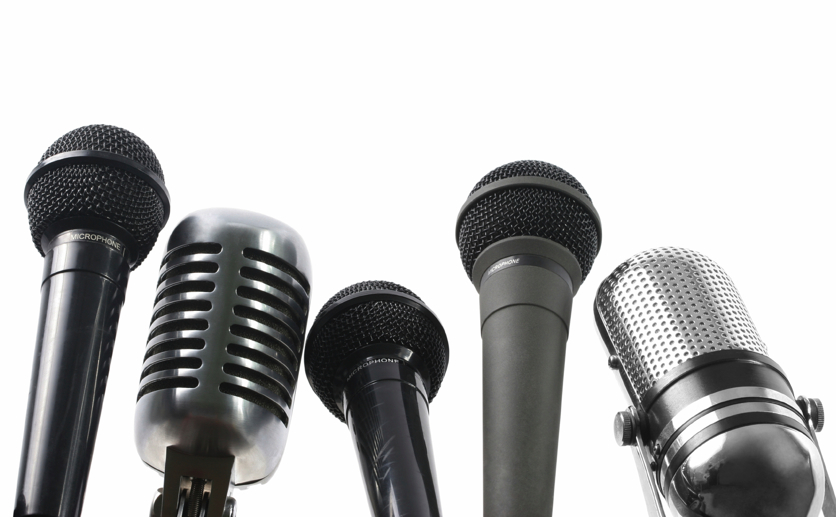
If you’re like most of the professional still photographers I know, you have either expanded your business and offer videomicrophones (in addition to your still photography) to your clients, or have plans to.  If you do have future plans to offer video to your clients, then you are either learning the particulars of that skill set, or you are collaborating with others who are in the know, or both.

Perhaps, one of the most daunting components of video, for still photographers is audio. Capturing audio is totally foreign to a still photographer, yet it is the most important component of all, in video production.

Here are a few tips for getting good audio:

  • You’ll never get good audio using the camera’s built in microphone, – at least not for interviews. Don’t turn the camera’s audio off however.  You can use it later for reference audio when syncing sound later in post-production.
  • Use external microphones for capturing audio interviews.  Ideally, you should record your interview audio using a digital recorder like the Samson Zoom H6 or the Tascam DR-60D with XLR connections.  I usually place a “lav” microphone on my subjects. I will also use a shotgun microphone, mounted (with shock mount) on a boom pole that’s on a fixed stand.  I rely on the microphone on the fixed stand, as opposed to hiring a boom operator, especially if I don’t have the budget for a big crew. If you should decide to use an amateur or assistant as a “boom operator”, rather than hire an experienced operator who knows how to capture “consistent” audio, you’ll most likely end up with poor audio captured at inconsistent levels. The shotgun microphone should be about 12-18 inches away from your subject. You can sync the sound with the video, later in post- production, using the software Plural Eyes.
  • Don’t cross your audio cords with your electrical cords. This causes a hum that you will detect if you are wearing headphones.
  • For run and gun” situations, you can probably get away with using a microphone mounted on the camera, as long as you are close to your audio source. You can either run a microphone (with a mini plug) directly to the camera OR you can run a microphone with an XLR adaptor through a pre-amp like a JuicedLink or a Beachtek, which will yield a cleaner audio capture. This works well for capturing ambient sound for b-roll or live action, and your audio will be recorded to the same card as your video. If you do want to capture your interview audio using a microphone mounted on the camera, make sure that you get your camera in close to your subject (not more than 18 inches away), and that you us a mixer or a pre-amp.
  • Microphones – Use an omni-directional or cardiod microphone when you are in a more controlled situation and you want your sound coming from more directions – like on a sound stage.  “Lav” microphones can be used for interviews, either hard wired or with a wireless kit. Be careful when you attach it to your subject and position it to avoid any unnecessary noise coming from hair or jewelry rubbing up against it. A good camera mounted microphone is the Sennheiser MKE 400 (compact shotgun). For interviews I use my cardiod Sennheiser ME66 with K6 powering module.
  • Use a wireless system only when you NEED to. In cities like New York you can get a lot of interference on various frequencies. Always go wired when you can. A great and affordable hard-wired “lav”, is the SonyECM44B And if you find yourself needing a wireless system, spend the money to get a system that has a good range.
  • Use a good windscreen or “dead cat” when outside. Even if you’re inside, on a windy day, with windows open, you can pick up wind noise.
  • Use headphones. Don’t just look at your meters.  Your meter may indicate that you are recording sound, but it may not be good sound – it could be you are picking up interference or getting distorted and clipped audio. Wear headphones and make sure that you are getting quality sound.
  • Always consider that you will be using the audio – even for your b-roll.  You will need clean usable audio for b-roll, even if it’s only intended as ambient, background sound.
  • Pay attention to audio. Start by letting your ears do more of the work. Every room and situation has its own sound. Listen up. Be quiet and tell your crew to be quiet as well. You never know when you’ll want to use the audio – even if you think you won’t need it.

You can read more about what I brought with me in the way of gear, when I literally circled the globe, creating my first feature length film.  The film is now available on DVD.

If you’d like to know more about “moving into motion”, check out my book, The Craft and Commerce of Motion and Video.

Letting Go

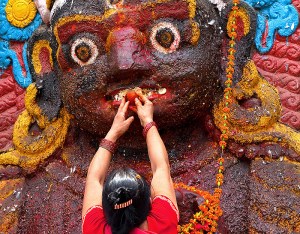
This past weekend our film, Opening Our Eyes, Kathmandu, Nepalhad its premiere in New York City. We have been in dozens of film festivals and events all over the world but for whatever insignificant reasons, we had never screened in New York.  I think of NYC as my “hometown”, even though I have never lived inside “the city”. It’s where many of our friends, clients and colleagues are and it has been our “home base” for over 35 years.

Despite the fact that the temperatures were in the single digits and there had been a major snowstorm the night before, so many of our oldest and dearest friends, along with some new ones, showed up. Even Nisha, a young Nepalese girl who is in the movie – came out on that cold night. I have been in front of many audiences over the years and have enjoyed it immensely, but I can honestly say that this was the most meaningful experience I’ve ever had. To be able to share my film – a body of work that I put a lot of hard work, heart and soul into – with my peers and people I’ve known since my beginnings, was pure joy.

In a way, the night brought things full circle in regards to the film.  A lot of filmmakers “open” or premiere in their hometowns.  Once again, I did things a little backwards, by “closing” in my home turf, as this may be the film’s last festival screening. I don’t have plans to pursue more festivals – but I never know what’s lies ahead, in the way of opportunities, and am open to possibilities.  This project and this journey have rewarded me in hundreds of ways and no doubt will continue to enrich my life. The film will still be available for screenings at educational venues and community events.  It’s also available on DVD and streaming.  My daughter, Erin and I made this film to inspire and motivate others to create positive change in our world, and we hope that message continues to spread globally.

A young filmmaker I met at one of the festivals I attended told me, “a filmmaker never finishes a film – he(she) just knows when to let go.”  I am able to “let go”,  because I know that this experience has set the stage for the next events in my life.

“Everyone has Oceans to fly, if they have the Heart to do it. Is it reckless? Maybe. But what do dreams know of boundaries?”
 
– Amelia Earhart

6 Social Media Marketing Mistakes to Avoid

I must admit, I’m not an SEO or Social Media guru.  In fact, on a scale of 1 – 10 (10 being extremely interesting), I’d give this topic a 3.  But, after reading Gary Vaynerchuk’s book “Jab, Jab, Jab, Right Hook,” (which I would give a 10), I’ve shifted my thinking entirely.  I also realized why, the topic has had little interest for me – most of the books, articles and blogs I had read were full of formulaic tips  – but none of the advice and tips felt like a good fit who I was and what I had to offer.  And in fact if I had applied some those tips to my blog or my Facebook posts, I would have done myself and my business a disservice by not being “myself” – or authentic.

Some social media marketing mistakes to avoid:

  • Putting the wrong content on a platform – Each platform, (Facebook, Twitter, LinkedIn, Pinterest, Instagram etc.) has it’s own “native” language or how the community communicates  and interacts with one another.  A good marketer understands that “context” is just as important as content.  Your content must provide the same value to the viewer that is native to that platform. Your content should fit in with what drives people to that platform.
  • Content is not memorable – Your content should be something that people want to share. ooe fb [age Facebook uses edge rank, which determines who and how many people see your posts.  The more shares, comments and likes, the better your edge rank and the more people who see your posts.  Keep your content, informative, entertaining or both and give people the desire to share.
  • Selling too often – You have to “give” more than you “sell” on social media platforms. If every post you make is a pitch for your products, no one will be interested, let alone want to share them.
  • Text is too long – Twitter has a cut off, but Facebook doesn’t.  Keep in mind that more and more people are viewing your posts on mobile devices and simply won’t read lots of information.  Provide more info via links. Make sure your text is provocative and entertaining.
  • No use of imagery – If you don’t have an image in your posts on platforms like Facebook or Tumblr, you won’t attract attention.  People will just move on to something that catches their eye on their news feed.  And, make sure the images you post are good and professional – they’re a reflection of your business. Make sure you overlay your logo on your images.
  • No call to action – Remember you are ultimately selling your products and your services, so don’t forget to give your viewers a call to action.  But don’t confuse them by giving them too many.