Some DOs and DON’Ts of Social Media

This past weekend I put together a presentation on Social Media Tips for the group, Professional Women Photographers, this coming Wednesday, Jan. 6th in New York City.
Here are a couple of tips that I will talk about.

• Be consistent and strategic with your “brand” – Create a plan. Who are you? What do you have to say?
• Listen first – then engage in the conversation.
• Build your community – Who will you follow? Who do you want to attract?
• Be authentic and share – provide value – relevant and useful content.
• Don’t sell.
• Use links – provide news.
• Create and sort groups of Facebook “friends” – separate personal and business “friends”
• Set up a Facebook Fan Page for your business – complete the profile, including photo.
• Take part in discussions or answers on Linkedin.
• Set up an editorial calendar for blog – this will give you a structure.
• Comment on other blogs – become an expert.
• Use tools like Hootsuite, Tweetdeck, SocialOomph, SocialToo, Ping.fm, involver – to organize and automate tweets.
• Don’t create tweets with more than 120 characters – leave room for retweets
• Use www.search.twitter.com for topics and people
• Set up “alerts” with Google alert or tweetbeep – to see where your name is being mentioned
• Use @(name) in tweet for someone who is not a follower
• Set up a daily routine – will help with time management

Please add to the list. Interact and share.

Add to FacebookAdd to DiggAdd to Del.icio.usAdd to StumbleuponAdd to RedditAdd to BlinklistAdd to TwitterAdd to TechnoratiAdd to Yahoo BuzzAdd to Newsvine

Closing out 2009

I walk every morning and regardless of the weather I go outside even for a few minutes, to get my bearings in nature. Today’s there’s a soft snow falling and as I stepped outside I saw a herd of 8 deer passing quietly through the woods.

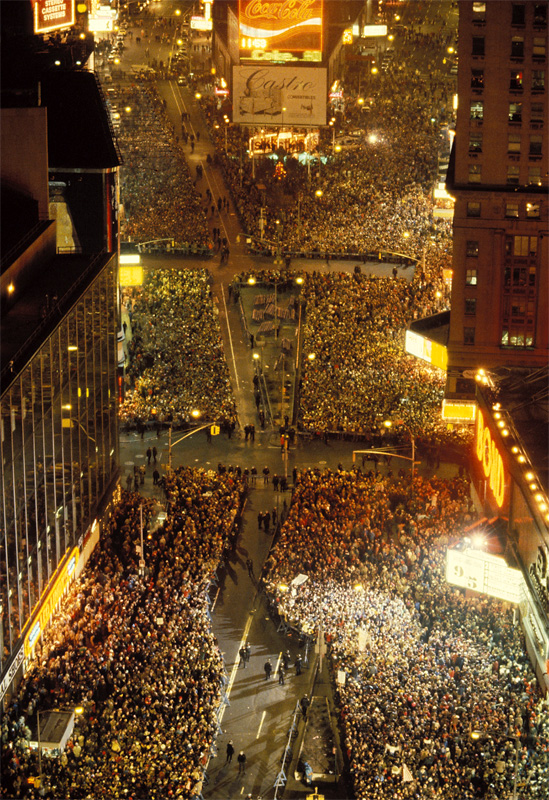
Times Square, New Years Eve

Most days I take this time to think about the upcoming day but this morning I started to think about the past year.

Like most people I talk to, I can’t say this year has been the greatest financially, but I managed and I’m grateful for all the opportunities I had. And rather than stress too much about the down time, I channeled my energy into creating new work and a new website. The redesign of the website consumed more time than anticipated but things like that usually do. And to some extent it continues to be a work in progress.

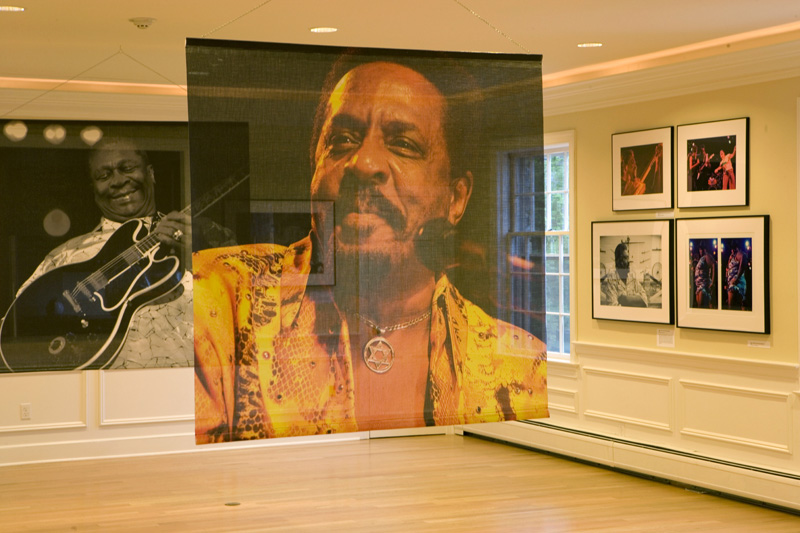
The Delta Blues Project

2009 was very rewarding for me in terms of my personal projects. My Delta Blues Project, which opened in 2008 at the Fullerton Museum, in California, was shown locally. Finally my friends and neighbors, who have heard me talk about my work over the years, could now come and see it on exhibition.  Freedom’s Ride, a documentary about two diverse group of high school students who traveled from New Jersey to Alabama, retracing the Civil Rights movement, aired on various PBS stations and continues to be shown at educational venues.

I started writing – for myself and on commission. I have discovered that I love to write. I never would have expected that because I’ve always struggled with words and usually defaulted to communicating visually. But it’s the things that I struggle with that seem to give me the most rewards.

Locally in my town of 5000 people. I have become part of a small grass roots group called TAG. We are a non-partisan group that seeks transparency and accountability in our local government. My husband and I trained a small army of volunteers on how to operate a video camera so that they can shoot town meetings. Since May, our town meetings have been televised on our local public access station, MendhamTV. What a difference that has made as far as how the citizens of my town have become more involved in their community. I’m really proud of being a part of that.

It’s been a year of change and growth. Now on to 2010. Tomorrow is the start of a new year and along with that new hopes and dreams. But it’s really just another day – a day we can shape any way we want to.

Add to FacebookAdd to DiggAdd to Del.icio.usAdd to StumbleuponAdd to RedditAdd to BlinklistAdd to TwitterAdd to TechnoratiAdd to Yahoo BuzzAdd to Newsvine

Mistakes People Make When Starting a Video Production Business

  • They focus too much on the “tools” and not the “technique”. These days video equipment is relatively cheap. Therefore the entry-level bar has been lowered for video production. Learn your skill set and be unique – have your own vision or point of view that separates you from the rest.
  • They skimp on the audio, tripod and lighting. The camera is just one piece of equipment you need. You also need independent external microphones to be able to capture good audio as well as a good tripod with a fluid head. If you’re going to be shooting indoors or doing interviews – you’ll  need some lighting equipment. You can either go the route of hot lights or LED panels which are portable and cool but costly.
  • They forget about the editing and output. Shooting  is one thing – editing it and getting it “out” is another. Learning to edit will make you a better shooter. You quickly realize in the editing room what you SHOULD have shot in the field.
  • They don’t diversify. This is important when first starting out. It will pay the bills and will help you get better at what you do. And it may also help you in find your niche.
  • They forget about marketing. Lots of people have equipment and even more people have great ideas but if they don’t promote their business, they’ll spend their days waiting for the phone to ring.
  • They don’t realize that business is about people – not just the tech. Work on your people skills and your business will flourish.
  • They don’t network. Networking of course is critical for  getting new business.  It’s also beneficial to network with other people in the video production business. Video production is all about collaboration, so it’s essential that you get to know shooters, sound mixers and editors. Join listserv groups and go to meet-ups in your area.
  • They under-estimate what a job will cost in both time and resources. There are many facets to video production – the shoot, audio, editing, music, graphics, motion graphics, scripts, voiceovers and delivery. If you won’t be facilitating all those facets – then you need to determine how much it will cost and present that in your estimate.
  • They don’t draw up a production schedule. This is essential to keeping a job on target. Make sure that each step of the project has a delivery date specified and signed off on.
  • They don’t realize that they are under insured. Many people coming from a still photography background don’t realize that their current insurance policy does not necessarily cover video production.
  • Add to FacebookAdd to DiggAdd to Del.icio.usAdd to StumbleuponAdd to RedditAdd to BlinklistAdd to TwitterAdd to TechnoratiAdd to Yahoo BuzzAdd to Newsvine

Video News

I came across some interesting things this week, so I am passing them along.

One was the much anticipated announcement of the debut of the Scarlet – a new camera from the same company that makes The Red. There have been a lot of rumors about this camera over the past year and it will be rolled out in 2010.  Check out Philip Bloom’s blog about it. And here’s another post on FreshDV with information about the Scarlet.

If you’re a Sony EX-1 shooter, here’s an interesting tip along with a how-to-video on using the Zacuto Z-finder with that camera. This viewfinder was made for the Canon 5d, but Martijn Schroevers found a clever way to attach it to the LCD of the Sony EX-1.

Next up is yet another new video camera format from Sony – NXCAM. The NXCAM can record 1920 x 1080 images at 24Mbps (50i or 25p), as well as supporting 720/50p and Standard Definition recording.
Very interesting but I wish these camera manufacturers would standardize formats and codecs.

I also came across a very interesting company called Wistia. They allow you to share and host your videos but in addition they offer heatmap tracking which gives you a visual spectrum of how your visitors watch your videos and what attracts them or confuses them.

And to give you an idea of how much web video viewing has exploded, here’s an online channel Expotv where consumers send in video product reviews. No fancy production values but an interesting concept of sharing information that has really caught on.

With all those news items I figured it was about time I changed my header – gone is that template blue – replaced by something more relevant to the blogger.

Add to FacebookAdd to DiggAdd to Del.icio.usAdd to StumbleuponAdd to RedditAdd to BlinklistAdd to TwitterAdd to TechnoratiAdd to Yahoo BuzzAdd to Newsvine

Print vs Electronic – What Is The Future?

Just yesterday I was talking about the good and bad of social media and the potential pitfalls with time management. My routine each morning is to check for any news items on Twitter or Facebook or bookmarked blogs after catching up on my email. This morning there was one post on Facebook that caught my eye and was definitely worth the click through.

Via Mashable.com was Time Inc. Show Us Their Idea of The Future of Magazines [Video]. It was about how publishers are preparing digital versions of their magazines for the Apple Tablet. Apple hasn’t even officially confirmed they are working on this device. Embedded in the post was a pretty sophisticated demo of Sports Illustrated.

Amazing as the demo was – it had its critics. Check out Gizmodo’s post Time’s Manhattan Project Will Explode Like the Atomic Bomb It Is. The article questions how it’s any different from a web page and at ten times the cost. They state it’s pretty packaging but still stale and dead.

The future of publishing is an interesting debate. I suppose it really all comes down to how we the consumers want our information. What do you think?

Add to FacebookAdd to DiggAdd to Del.icio.usAdd to StumbleuponAdd to RedditAdd to BlinklistAdd to TwitterAdd to TechnoratiAdd to Yahoo BuzzAdd to Newsvine

Input Overload

John Lennon once voiced in a song “everybody’s talking and no one says a word”. That was 30 years ago – way before social media. Nowadays it seems like everyone is talking – everywhere – a constant electronic pipeline into our lives. But with all this talking I wonder sometimes if anybody is really being heard. And isn’t that the point – to be heard?

I admit I’m guilty of the same thing. The very fact that I write a blog adds to the cyber babble. To be honest I really do it for myself. It helps me focus my thoughts. Sometimes what I write is not meant for anyone other than myself or maybe a close friend. Other times, I put it out there when I feel I have something to share. And every once in a while I say something that resonates with someone “out there” and a connection is made. And that can be a powerful thing.

That’s the appeal of social media – to connect with others. A basic human need. Ironically sometimes we spend so much time in the cyber world “connecting” we become more insular in the process. And when we do spend face-to-face time with others – many of us are multitasking plugged into whatever portable devices we have at the time. In other words not totally “there”.

These days I try to manage the time I spend on Facebook, Twitter, Linkedin, YouTube and so on. It can be a real time suck if you’re not careful about managing your time. I go online with the social media sites 2 or 3 times a day and I give myself time limits when I do. It’s all about maintaining a balance.

Ultimately all this talking we do on social media platforms is not good or bad – it’s not that black and white. I’ve made some incredible connections through social media. I’ve also reconnected with people I’ve lost track of over the years. I’ve promoted my business utilizing social media and gotten work from people I wouldn’t have connected with otherwise. But I’ll always prefer a real connection with people – outside the cyber world. I think most people do – that’s just being human.

Add to FacebookAdd to DiggAdd to Del.icio.usAdd to StumbleuponAdd to RedditAdd to BlinklistAdd to TwitterAdd to TechnoratiAdd to Yahoo BuzzAdd to Newsvine

A Time of Opportunity

You can look in the rear view mirror and lament the past or you can get excited about the future. With all the gloom and doom in the photography business in this poor economic climate, I remain optimistic and see it as a time of opportunity.  It’s tough to be an optimist in times like this but if you look back through history you’ll see that many businesses got their starts in bad economic times.

There’s nothing new about video but with increased bandwidth and the proliferation of mobile devices video is “hot” right now.  In some markets like the corporate and institutional sectors, I’m seeing more of a demand for video.  I’m hearing from traditional print graphic designers who are asking me if I shoot video because their clients are requesting it. Their clients want to add a video presence to their online communications that can be distributed internally and externally. And can also be spread virally through social media networking.

Editorial markets have expanded into video.  Just about every magazine has an online presence and nowadays it’s not just a regurgitation of their print edition but a lot more.  Take a look at NY Magazine or Zagats.com.

The travel market is ripe for video. When I’m researching a destination I like to get as much information as possible so if I can watch a 2 minute video – it usually hooks me further into that website to explore more and link to other sites where I can  facilitate my travel plans.  Many times videos made for online travel sites are repurposed and used at trade shows. Check out what Intercontinental offers as destination pieces about places where they have properties.

Of course there are hundreds of instructional videos and pod casts, and on the retail end there’s weddings and family biographies.

Even if you don’t shoot video or want to offer video to your clients, you may want to consider using it to promote your own business.  A short web video about your business or your creative approach with some behind the scenes footage of you working provides added insight and information to potential clients.

These are just some of the areas I see opportunities in.  I love to hear from other optimists where they think the opportunities are.

Add to FacebookAdd to DiggAdd to Del.icio.usAdd to StumbleuponAdd to RedditAdd to BlinklistAdd to TwitterAdd to TechnoratiAdd to Yahoo BuzzAdd to Newsvine

Converging Technologies and Photo Plus Expo 2009

I’ve been attending the Photo Expo for as long as I can remember, back when it used to be at the old Convention Center at Columbus Circle.  It changed over the years, growing in size, moving to Javits and now shrinking, taking up ½ the floor space it used to.  Times SquareThat could be yet another sign of the economy, or how the photographic industry has changed over the years – or both.

This year is the first year there will be a Video Pavilion, where manufacturers can showcase their products and attendees can get a glimpse of how the converging industries of photography and video continue to change the paradigm of how we deliver our visual message.

Another profound change on the floor this year is the absence of the Adobe booth.  I can’t remember a time when Adobe has not been an exhibitor at Photo Expo.  Has the economy played a part in that – or is it another sign of changing times in the photography business?

It will be interesting this year to observe who is exhibiting and what the new “cool” tools are?  Like last year when Canon displayed their first hybrid camera the 5D – a still camera that also shoots video – their booth, along with Nikon will be the “main attraction”. Video continues to be the hot topic.

Gone are the manufacturers of lab equipment, along with the last vestiges of film. Gone are Apple and Adobe – maybe next year?  Or will next year look more like NAB”s (National Association of Broadcasters) show in Las Vegas as we continue to move from ink and print to electronic delivery?

The Business of Video

The “business” of video encompasses a lot of things –  your marketing strategy, your cost of doing business, your skill set needed to survive in business, your management of employees or outside contractors and paperwork.  For now I’ll speak to paperwork and how critical it is in communicating with clients.

A paperwork trail starts with an estimate for a job and I don’t take the process of estimating lightly.  I try to get as much information that I can when a client comes to me and asks me to bid on a job – or asks me  to provide an estimate for a job I’ve already been hired to do.  I keep a database of past SOW’s (Statement of Work) to use as references. While every job is different, I use these archived SOW’s as a starting point.

In addition to estimating the costs of crew, equipment, location needs, pre-production and post-production, I  clearly state terms as well as a schedule for post-production – including client response time and completion dates.

Terms – Here is where I state rights and  “usage” of the finished product – where will it be used and for how long.  I also spell out payment terms, cancellation fees as well as provide an accurate description of exactly what I’m going to deliver.  For instance:

  • 10-minute video to be delivered on DVD and compressed files for the web.
  • One day shoot on location at………….includes 2 interviews and b-roll
  • Post production – edit will include x amount of still images – sized and digitally provided by client – logos  provided by client– stock photos and/or footage – narrative (voiceover) track and music.
  • Payment – one third upon signed SOW – one third after shoot – and balance due upon delivery of final product.
  • Cancellation terms and fees
  • Change fees
  • How many edit revisions are included and the additional hourly editing costs if more revisions are needed.

Schedule – This is extremely important in video production – a schedule sign off by the client that stipulates delivery dates for each part of the process. The reason this is critical is that if the client delays things on their end – it’s clearly understood that the rest of the schedule gets extended in terms of deadline dates.  Otherwise if your client needs their boss to approve things  and their boss has an unexpected out of town trip come up – thus delaying the process – you won’t be left with half the time you need to deliver the final product.  Example of post production schedule:

  • Aug. 31 –  Script approved by client
  • Sept. 1  –   Casting reel delivered to client
  • Sept. 7  –   Talent decisions made by client
  • Sept. 20  – Shoot date
  • Sept. 25  – Voiceover recorded
  • Sept. 26  – All logos, graphics and still images provided by client
  • Oct. 5 –     Rough Cut delivered to client for review
  • Oct. 12 –   Any edit changes noted by client and communicated to production house.
  • Oct. 19 –   Final cut delivered.

Lastly here’s a link to AICP (Association of Independent Commercial Producers) with examples of bid forms and contracts that are helpful in terms of bringing to mind all the things that should be covered in your SOW.

Mobile Video Explosion

Apple’s new iPhone 3Gs has had a huge impact on YouTube since it’s debut this month. In fact video uploads are up 400% each day since the new iPhone came on the market. But aside from the impact of the iPhone, YouTube uploads have increased 1700% over the last six months.

Those statistics are not only phenomenal, but could be the tip of the iceberg when it comes to uploading and sharing videos. No doubt there will be a deluge of some really bad videos that will be bounced around.  But just think how this technology can effectively  convey your message or your company’s message – if presented in a creative, and strategic way. When a web video is done well – it can circle the globe exponentially and virally in a matter of hours. Never before has it been as easy to share video.

The downside of course to any new technology or gadgets is that people jump on the bandwagon without first defining what it is they want to do with it – and why. Just like with the rise in popularity of social media marketing, a business needs to determine how and when to embrace these new tools and do so in a way that’s consistent with their brand or message.

Some thoughts on how you can utilize web videos in your business:
1. How to’s or instructional videos
2. Behind the scenes showing how you or your staff work
3. Client testimonials
4. Relaying your company’s message

And remember just because every one is doing it – doesn’t mean it’s right for you. You need to answer that question for yourself.  But if you do embrace video in your marketing efforts – if done right, it can create awareness around the world and it’s never been easier.