Business Tips for Photographers Who (Also) Shoot Video

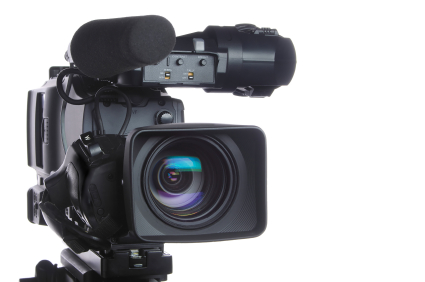
In the blogging world of photography and motion, there is a lot written about gear and how to use it, but precious little written about “the business”.  Chances are, if you are a photographer who has been in business for more than 10 years, then you know that technology has not only changed our tools, it has changed the way we do business.Professional high definition video camera, isolated on white background
For starters, we are doing business in a global economy, and with that comes pluses and minuses. One big plus is that we are able to reach a much wider audience, than ever before. That is, if you have an understanding of how to do that and take advantage of the opportunities that are out there.  The minus or downside is, if we don’t adapt our dated business models, in a business that has seen monumental changes, we will not be able to compete.

Commercial photographers are in the visual communications business.  We create imagery that delivers a message or tells a story for a variety of “markets” including; advertising, corporate, architectural and editorial.  Each market has a need for visual content and these days that encompasses both still photography and video.  In the last couple of years, the lines dividing these two mediums have faded away, at least in terms of how content is consumed in our culture.

Here are a couple of tips to help photographers prosper in our “multi-media” world:

  • Decide what your company will offer.  Will you only provide still imagery?  Or will you expand your business and offer both still photography and video? Are you quick to answer: “I don’t want anything to do with video”? The problem with that answer is that most of your clients will probably have a need for video.  Are you going to send them away to your competition?  Or will you keep your clients “in house” and take care of their video needs and hire or outsource your competition? That’s a different way of thinking and has the potential to broaden your revenue stream.
  • Decide what role you will play if your company does offer video?  Will you be the director and work with a camera operator?  Or will you assume the role of a DP (Director of Photography) and direct as well as operate the camera?
  • What will you outsource and what will you keep in house?  Maybe you want to expand your business by offering both still photography and motion, but you’d prefer to just shoot the still photography and outsource the video.  In that case, you could assume the role of producer and oversee or outsource the video production.
  • Reassess your insurance.  Video productions have a lot more variables. They also usually have larger crews.  More than likely, you will need to upgrade your current insurance policy to accommodate and cover that.
  • Change your paperwork.  Make sure that you go through your talent and property releases and modify the language for multi-media.  Change any boilerplate contract language to include video (motion).
  • Licensing.  Regardless, if you decide not to expand into video production, you will have to contend with the fact that your still images won’t always be used in a stand-alone fashion.  Many still images will be commissioned and/or licensed as part of multi-media projects and that has a dramatic effect on licensing. And if you do decide to expand into video production, in your role as a producer, you will be licensing other people’s work.
  • Understand new business models.  Let’s face it, things have changed in the business of photography.  Photography has become ubiquitous and the competition is fierce.  You are not only competing with professional photographers – you’re competing with semi-pros, amateurs AND video production companies.  One thing is certain, it’s never been more important to have an understanding of multiple mediums and to be unique and stand out amongst the noise. There are no templates you should follow.  You have to be authentic and true to yourself.

Check out more tips and information in my ePub, The Craft and Commerce of Video and Motion.
 

10 Things Freelance Photographers Should Do in 2016

Be optimistic – I’m going to start with the hardest one of all, because it’s really difficult to be optimistic these days.  But I find that if I can maintain a positive attitude and turn my thoughts to what is possible, I actually open myself up to more opportunities in my life, instead of creating more roadblocks.

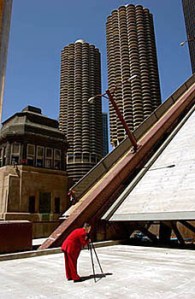
Be open to possibilities. – Be more flexible in how you perceive thingsphotographer on bridge, Chicago, IL and who you are. Change is always happening, but it’s usually gradual.  Most people don’t take notice until “change” forces their hand to act.  It’s always better to be proactive than reactive so embrace “change” as an ever-present fact of life that creates opportunities for those who are open to seeing them.

Collaborate – Photographers are very independent creatures and collaboration is not part of their norm. As the “photography” business continues to change, photographers will find that collaborating with other artists will make their own businesses stronger.

Diversify – I’m not quite so sure why so many photographers are so rigid in how they define who they are and what they do.  Having a “style” is great, but the trick is to not to be so narrowly defined by that style, so that when styles change, you don’t find yourself obsolete by your own design. It’s kind of like being type cast, where your audience or your clients can only see you in one way.

Concentrate more on “the story”– I had the opportunity to speak with a lot of still photographers and filmmakers this past year and I began to notice a difference in the conversations I was having with each.  Most times, filmmakers would be telling me a story, whereas still photographers would be telling me how they executed a photograph, or essentially telling me the “back story” of the creation of the image. It’s all interesting but “the story” is the bottom line – if that doesn’t come through to the viewer – the rest doesn’t matter – including how it was executed.

Be authentic – be true to yourself.  That means that you have to trust your gut instead of second guessing it.  This is hard, especially when things don’t always work out the way you had hoped.  Step away from the “noise” and listen to the voice inside.

Fail more. – Rejection is a tough pill to swallow but it usually means that you are either pushing yourself to try new things, you are too far ahead of your time or it just wasn’t meant to be.  If you look at successful people you’ll see that most have had failures and rejections in their lives but they stuck with it – instead of letting failure defeat them.

Self-Initiate more projects. – I don’t like to call non-commissioned work, “personal projects”. That co notates that there is no monetary value and these days, just the opposite could be true.  With more and more lopsided contracts  being presented to photographers for commissioned work, a photographer has a better chance to make more money and keep ownership of their work by creating self-initiated projects.  But they need to be prepared to work hard.

Forget about the past except to learn from mistakes. – You can’t change the past but you can learn from it and then, move on.  Look toward the future but make sure you take time to enjoy the “now”.

Realize that in the scheme of things, you are just one small speck in the universe. – I think we all get way too stressed about things that really don’t matter and we let those things control our life.  When we become more conscious of that, we really begin to live life.

Labels, Finger Pointing, Fear, and the Real Value of Photography

I read an interesting blog post “On Real Photographers” by David duChemin recently. He talks about growing weary of the photographers’ complaints that “now everyone has a camera and suddenly everyone’s a photographer”.

My first experiences of being part of a group of my peers did not go well. My memories of being in school are mostly filled with my efforts to fit in, and the efforts of others to keep me out. The new kid. The smaller kid. The kid with the funny name. So I come honestly by my desire to see others included.

 So when I hear people complain that “now everyone has a camera and suddenly everyone’s a photographer” I hear the same old, fear-driven, mean-spirited, zeitgeist of the schoolyard.

 The same craft, beautiful for it’s democratic nature, that admitted you, and admitted me, will admit others. And with the same tools we picked up with such wonder, those others will make photographs. That’s what cameras do. And it’s what people who own them do. And they will, in that moment, become photographers: makers of photographs.

They are not faux-tographers. They are not necessarily “just camera-owners”. Neither are they DSLR-monkeys, or whatever other pejorative seems clever at the time. Shame on you. Shame on us as an industry.”

Gail shooting feature doc "Opening Our Eyes" at the Kopila Valley Primary School, Surkhet, Nepal
Gail shooting her feature documentary “Opening Our Eyes” at the Kopila Valley Primary School, Surkhet, Nepal

It hit home. As the perennial “new kid” (moving 11 times before I graduated from high school), being one of only six women when I attended Brooks Institute and now being dismissed or frequently feeling invisible because of my age, I’ve personally faced a lifetime of the “same old, fear-driven, mean-spirited, zeitgeist of the schoolyard.”

I despise our seemingly human need for “definitions and categories” and placing people into boxes defined by gender, age, race or religion. So I question why do we determine the creative value of photographers based on whether they are “professionals” or “amateurs” or if photography is their sole means of making a living? It’s exclusionary and judgmental based on fear and the notion that someone has to be excluded for the rest of us to win. This attitude has no business in a creative business because creativity has no boundaries dictated by “who’s in” or “who’s not”.

I have always been more interested in the power of what a good photograph or film can do – not who created it and what box that creator fits into. I’m interested in the story one has to tell. We are visual communicators and we are all unique but only if we listen to our own voice and create from that voice. Whenever I have trusted and listened to my internal voice and created from my own unique perspective and my life’s experiences, I have been “on purpose” and my work has resonated across genders, race and age. I suppose I could copy or mimic the “style du jour” whether it is HDR or photographing hipsters with tattoos and attempt to be someone I’m not. I don’t have the desire to do that because that is not why I became a photographer or filmmaker. That’s not to say that I don’t like and appreciate photographers who are following these styles but it’s not me and creativity doesn’t come from mimicking others. I’ve seen a lot of styles and techniques over the decades I’ve been in the photo business. They come and they go – just like the photographers who chase after the latest trend.

David states so eloquently:

‘Our categories are useless. Harmful, even. They separate us. They keep us siloed and cut off from generosity and openness and collaboration. They keep us focused on our own “qualifications” and not on the audiences and markets we should be finding new ways to serve, to inspire, to connect with. Our scarcity mentality is hurting us. It’s stopping us from being creative about making a living. The world owes us nothing, which is hard to accept when we’ve paid for a degree, invested in gear, or bought business cards, only to find out the universe doesn’t give a damn, and cares only about what value we bring.’

I too am weary of the blame, the finger pointing and all the stupid human tricks based on fear, and the notion that someone has to lose in order for me to win, because ultimately that comes from a place of insecurity and ego and rarely does that produce something of value. I don’t need a license that proclaims I’m a professional or feel the need to hide my age in order to compete. My value comes from a lifetime of experiences that made me who I am. If I choose to allow someone to define who I am or what I am capable of, or allow myself to be stopped by the naysayers, then I only have myself to blame.

It would have been so much easier to quit or stop myself every time someone threw roadblocks in my way based on their own notions of “what’s in” or “what’s not” and that would have led to an empty life. I chose instead to follow my heart and my convictions and accept the rejections that ultimately come when one faces their fears and stays true to who they are. It has never been easy but I’ve never sought easy. I’ve too busy living a full and rich life, using my craft to create awareness, impact social change or just to bring a smile to someone’s face and create a memory.

Still Photographers and the New Media Landscape

I’ve been around long enough to know that nothing lasts forever. I’ve experienced the up and down cycles of business and life in general and can tell you that nothing ever stays the same. Having an understanding and acceptance of that gives me the freedom to look around corners for opportunities red cameraand think outside the confines of my box. What I’m seeing is a growing demand for mixed media storytelling content from communications and marketing people to fill a plethora of needs –social media campaigns, TV spots, online pre-roll ads, and print ads.

Last September while attending the Next Video Conference and Expo in Pasadena, CA a light bulb went off after seeing a presentation given by Max Kaiser, Founder/Director of Hand Crank Films called Make Content That Resonates and Multi-Purpose. It was eye opening. Max explained how he demonstrates to clients the value of creating content that not only resonates with an audience but can also be multi-purposed and fill their other visual needs – including provide still images from his frame grabs. He said because he shoots 6K – he is able to produce high quality still images.  I could see that still photographers aren’t just competing with other still photographers any more, they’re competing with guys like Max and small production companies that are providing solutions to all their visual needs.

There’s no reason still photographers can’t provide mixed media for their clients’ visual needs, but they need to scale the way they think about their business and their role and become more of a visual assets producer. Most photographers are producers anyway, so why not provide more services to a client and keep them in house – in your house.

I think sometimes it seems easier to give ourselves reasons not to do something but change is going to happen regardless if you embrace it or not.

Some things to keep in mind:

Video is not a business model – It’s a medium and one that is well suited for storytelling.

There is a demand for mixed media. Video is not new. But these days it’s easier, faster and cheaper to distribute, stream and watch motion content online – anytime -anywhere. Our phones and other mobile devices are our “go to” platforms for news, shopping and even entertainment. Position your brand and business to fit with today’s communication needs.

Make content that resonates and multi-purpose it. Video + Stills + Sound = Storytelling messaging. Content should be well-planned, scripted with high production values and should feel authentic. Create from your own point of view and identify the niches and needs in the marketplace that fit with your vision and style. Demonstrate value to a client by providing solutions to more of their visual needs.


Goodbye 2014 – Not Sorry to See You Go

Another year gets ticked off the books tonight. Personally, I’ll be happy to sign off on 2014. it’s been a year of extreme peaks and valleys but also a year of personal growth. Despite the challenges, I’ve come through this year a better person – certainly more humble.

I’ve never been a big fan of making New Year’s resolutions. If I’m going to commit to making a behavior change, I know that I have to want to make that change. If I’m not mentally ready and willing to commit on News Years Day, then I’m doomed to fail. But, I do like to look back at the old year, reflect on lessons learned and close the door on the unnecessary garbage in my life.

Lessons learned in 2014Open door

  • It’s none of my business what others think of me. I cannot control what others think or say about me. But I can control how I let it affect me. This year was challenging but I found that when I didn’t allow the gossip and back talk to cloud my perspective, I became a better person. Let go of the petty drama that others try to suck you into.
  • Trust my gut – Whenever I am in a difficult situation and everything seems to be in chaos I take a moment, calm my mind and listen to my inner voice. It’s always there but it’s difficult to shut out the noise and clutter and tune into it. When I do, it never steers me wrong. I actually learned this lesson early in my life and it served me quite well in 2014.
  • Find hope – Finding a glimmer of hope saved me on some of my darkest days. I’m an optimist by nature but a few of life’s punches hit me hard this year. Finding that bit of hope got me through it.
  • Let go of the past – Sometimes, you have to let go. It could be a relationship, a job or a lifestyle pattern that just isn’t beneficial any longer. It’s tough to change especially when habits are so deeply entrenched they’ve become part of your identity. When you begin to see clearly the areas of resistance in your life, you need to decide whether you will stay on that path or take an alternative route and pursue something better.
  • Have gratitude – There are so many things I am grateful for in my life. It’s far better to focus on them than to dwell on what I don’t have. That’s tough to do in a consumer society but it leads to true happiness. We are all in charge of our own happiness.

“What use is the moon

If you don’t have the night

What use is a windmill

With no Quixote left who’ll fight”

Jackson Browne, Walls and Doors

What is Your Value as a Professional Photographer?

Let’s face it, these days, professional photographers Bouncer at Pure Night Club, Las Vegas, NVaren’t only competing with other pros – they are competing with anyone and everyone with an iPhone. Before you get upset and kill the messenger – ask yourself “What is my value proposition?” What do you offer that your competition doesn’t’?

I started making a list of things that professional photographers could offer to boost their value to potential clients:

  • Skills – Do you have any unique skills that can set you apart from your competition? If you define yourself by a specialized piece of gear that’s new – keep in mind, you may have just 5 years or less before ‘everyone” has it.
  • Vision – Make sure your “vision” comes from you and isn’t just a copy of what’s “hot” or trendy at the moment.
  • Access – Do you have access that others don’t? I realized when I was shooting for National Geographic that I was given access to a lot of photo opportunities that others didn’t have. Sometimes these opportunities yield photo opps that are off limits to others and make some stand out portfolio samples.
  • Rapport – If you are working in video and part of your job is doing interviews, then having a good rapport with your subjects will give you results that only you will get. Good interviews are dependent on social chemistry.
  • Your audience or following – These days, even getting a commissioned assignment may be dependent on your own social media following. Advertisers want to capitalize on that if it’s the same target audience they are trying to reach.
  • Project management skills – Getting the shot is only one skill set that photographers need to compete. Clients expect you to manage the project from soup to nuts and deliver the goods. That could mean wrangling large crews, getting access or simply making sure that everything that needs to get done to complete a project – is done.
  • Sensitivity – Be sensitive not only to your clients’ needs and problems but to whomever you are working with. I know a very good photographer who began burning most of his bridges with his clients. He was more interested in getting his point across and making demands than he was listening to the needs of his clients.
  • Likeability – Similar to above. There are just too many photographers out there to choose from that if you aren’t likable – well – you may want to look for work that doesn’t require any social skills.

If all this sounds simple –  it is. It’s applying it that’s the tough part. But if you do, you will set yourself apart from your competition.

Thinking of moving into motion?  Check out The Craft and Commerce of Video and Motion

How to Sustain a Long Career in Photography

I came across this old “tear sheet” in the process of cleaning out the attic.  Tom and I have dozens of boxes containing over 35 years of printed collateral with our “work” in it.

Tom Kelly and Gail Mooney

This brochure cover was from a shoot for I Love NY.  Clearly it was a low budget job, based on the fact that we were also the “talent” in our own photograph.  When this photo was shot, we were just starting out in the business of photography. It’s hard to believe that it’s been over 35 years since we started Kelly/Mooney Photography, because it seems like yesterday.   As I sifted through decades of work, I started thinking  – “What is it that sustains a career?”

Some thoughts:

Don’t let age define you.  Let’s face it; we’re a youth obsessed culture. It’s not easy getting older, especially when you’re in a creative business like photography where “fresh” is equated with “young”. But there’s absolutely nothing you can do about your age.  You can’t change it.  It’s like your height – it is what it is.  But you can choose how you think about it. If you tell yourself that you’re old – you will be.

Take more risks – not less. Why not?  What is the worst that could happen?  Am I the only one who thinks this way?  I guess I was lucky that my mom and dad put those types of thoughts in my head a long time ago and they’ve served me well.  Why should I change my outlook now, when I have fewer years on the planet?

You’ll fail more than you succeed.  I sure have.  In the last couple of years I’ve been rejected more times than not, but only because I have been challenging myself more than at any other time in my career.  I have always “been on the move” in my life and my career and I am not one to stay too complacent or static.  There are just too many things left to explore.

Fear comes with the territory.  Fear is what motivated me to start writing.  For me fear would often visit in the wee small hours of the morning.  My mind would bounce from one unfounded worry to another and I couldn’t turn off the chaos in my head. So rather than toss and turn for hours, I got out of bed and started to write down my thoughts. It’s amazing how trivial some of the worries looked in the light of the day, written on a sheet of paper.

Listen to the ideas that don’t go away.  We all have ideas.  But how many of us act on them?  Less than 5%.  When I have an idea that just won’t “quit me”, I take action. The first thing I do is I commit to the idea.  Then I tell someone – someone I respect, because then I have to carry it out – just to save face.  I call it forced accountability.

Don’t take things for granted.  Nothing stays the same or lasts forever.  Be grateful for your loyal clients and show your gratitude.  Business is all about relationships and it is amazing how people seem to pop in and out of your life.  Doors are always closing and windows are eternally opening in a well-lived life.  Recognize those times when they happen.

Always wonder.  My spirit has not aged past 25 years old.  I still have dreams and they are vivid and real in my mind.  My dreams are propelled by my insatiable curiosity about everything. Many years ago I made the choice to become a professional photographer because I knew that my camera would give me access to a rich and rewarding life and to interesting people, places and cultures. My cameras (“my tools”) are still a means to a life of wonderment.

Business Tips for Photographers in a Multi-Media World

In the blogging world of photography and motion, there is a lot written about gear and how to use it, red camerabut precious little written about “the business”.  Chances are, if you are photographer who has been in business for more than 10 years, then you know that technology has not only changed our tools, it has changed the way we do business.

For starters, we are doing business in a global economy, and with that comes pluses and minuses. One big plus is that we are able to reach a much wider audience, than ever before. That is, if you have an understanding of how to do that and take advantage of the opportunities that are out there.  The minus or downside is, if we don’t adapt our dated business models, in a business that has seen monumental changes, we will not be able to compete.

Commercial photographers are in the visual communications business.  We create imagery that delivers a message or tells a story for a variety of “markets” including; advertising, corporate, architectural and editorial.  Each market has a need for visual content and these days that encompasses both still photography and video.  In the last couple of years, the lines dividing these two mediums have faded away, at least in terms of how content is consumed in our culture.

Here are a couple of tips to help photographers prosper in our “multi-media” world:

  • Decide what your company will offer.  Will you only provide still imagery?  Or will you expand your business and offer both still photography and video? Are you quick to answer: “I don’t want anything to do with video” ? The problem with that answer is that most of your clients will probably have a need for video.  Are you going to send them away to your competition?  Or will you keep your clients “in house” and take care of their video needs and hire or outsource your competition? That’s a different way of thinking and has the potential to broaden your revenue stream.
  • Decide what role you will play if your company does offer video?  Will you be the director and work with a camera operator?  Or will you assume the role of a DP (Director of Photography) and direct as well as operate the camera?
  • What will you outsource and what will you keep in house?  Maybe you want to expand your business by offering both still photography and motion, but you’d prefer to just shoot the still photography and outsource the video.  In that case, you could assume the role of producer and oversee or outsource the video production.
  • Reassess your insurance.  Video productions have a lot more variables. They also usually have larger crews.  More than likely, you will need to upgrade your current insurance policy to accommodate and cover that.
  • Change your paperwork.  Make sure that you go through your talent and property releases and modify the language for multi-media.  Change any boilerplate contract language to include video (motion).
  • Licensing.  Regardless, if you decide not to expand into video production, you will have to contend with the fact that your still images won’t always be used in a stand-alone fashion.  Many still images will be commissioned and/or licensed as part of multi-media projects and that has a dramatic effect on licensing. And if you do decide to expand into video production, in your role as a producer, you will be licensing other people’s work.
  • Understand new business models.  Let’s face it, things have changed in the business of photography.  Photography has become ubiquitous and the competition is fierce.  You are not only competing with professional photographers – you’re competing with semi-pros, amateurs AND video production companies.  One thing is certain, it’s never been more important to have an understanding of multiple mediums and to be unique and stand out amongst the noise. There are no templates you should follow.  You have to be authentic and true to yourself.

Check out more tips and information in my ePub, The Craft and Commerce of Video and Motion.

New Business Models in Photography and Motion – in a Global Economy

Manchester Airport, Manchester, England

This topic comes up a lot these days.  You  could apply “new business models” to just about any business – not just photography and video. Photography and video, in and of themselves are not business models at all, but rather they are mediums that are used commercially, non-commercially and personally. The business end of photography and video comes when you determine how you want to apply them in terms of today’s markets.

Today’s markets are global.  That’s good news and bad news, depending on the type of work you do.  If you are a stock photographer or even if you have expanded that into also shooting stock motion footage – your inventory or your content must be unique in some way in order to sustain that type of business model in our global economy. You will need to stand out and offer something unique,  if you pursue this type of market.

If you are a commissioned commercial or editorial photographer, cinematographer, or director, the competition is fierce and once again, if you don’t have a unique style or vision, most likely you will end up playing by others’ rules or signing “their” lopsided contracts.  It comes down to supply and demand of talent and work, and you will either compete with price or offer something that you do better than your competition.

The good news is, if you are willing to do the work, the world is your stage.  The portals for distribution of your “content” are open to all and as “creatives” we are no longer dependent on middlemen.  When I get asked to talk about “new business models”, I always look for where the new opportunities are.  Where will I be able to carve out my own “new business model”, rather than having to adapt others’ ideas of what that may be.  There is a big difference in those two approaches.

I am carving out a business model for who I am creatively, and where I see the most opportunities for what I do well.  When I am authentic to who I am and apply this to my work, I am able to deliver my own unique vision and reach the right audience,  while maintaining ownership and control over the licensing of my work.  I am able to do that not only because technology has enabled me to do that, but more importantly because I have set myself apart from everyone else who has a camera.

Think about it.  What are your strengths? What are your passions?  Now imagine a business model based on your answers. The world is our stage.

Hitting a Nerve

English: camera Français : video
English: camera Français : video (Photo credit: Wikipedia)

What an interesting week it has been. This past Friday (the day before a long holiday weekend), on impulse, and feeling a little lazy, I shared a link on Facebook to a blog that I had written 8 months ago, How Motion is Changing the Future of Photography.  I didn’t expect to get thousands of hits in 2 days time – it had barely gotten noticed when I posted it the first time, back in February, 2013.

What had happened was that Rob Haggart linked to it from his blog, APhotoEditor and it went viral after that – all around the world.  That’s what amazes me about the age we live in, that something someone says, or writes can be heard globally in record time.  It truly demonstrates the power of “one”.   It’s staggering and something I never would have imagined some 35 years ago when I began my career as a still photographer.  In fact, most of what is happening now in photography. I never could have imagined – not in my grandest dreams.

What surprised me most about the comments I received from that post, was that most folks just couldn’t begin to imagine the future that I was contemplating in my writings. With the convergence of cameras, in regards to stills and video, I imagined a future, where a still image might not be captured by a “still camera” or by a “still photographer” for that matter.  A still image may come from a “frame grab” captured by a video camera.  I struck a nerve for sure, and most people thought I was predicting the demise of still photographs – perhaps because of Ron’s headline, excerpted from my text “ I think we are at a tipping point as far as the future of the still photography business”.

To be clear, I do think the photography “business” is at a tipping point, but not just because of the convergence of still and video cameras, but because of the glut of imagery.  The iPhone has been the game changer in that sense. Everyone has become a photographer and has a camera on them at all times, taking, sending and sharing millions of still images globally every day.  What that means in terms of the still photography industry is that if you want to stay in business as a professional photographer, you will need to create something that is authentic and unique to only you AND more importantly, you will need to provide a product or service that a market is willing to pay for – and pay enough that will sustain you in an industry that requires a reinvestment in tech and gear every two years, minimally.

In my attempt to “get off easy”, by rerunning a blog that I had written and previously posted more than a half a year ago, I learned a couple of things:

  1. Timing is everything
  2. It’s all perspective.

That’s the one good thing about getting older; I have a lot more perspective.  I’ve learned that the future is not at all like I imagined it would be.  I never could have imagined half the things that are happening right now.  And I’m sure that if I’m still alive 20 years from now, it will be a future filled with things and ideas that I could never even begin to imagine.

I will be moderating a panel at PPE this year, sponsored by ASMP “How Motion is Changing the Future of Still Photography”.   Our panelists include, Vincent LaForet, Brian Storm and Chase Jarvis.  Join us, it will be a discussion you won’t want to miss.