What Professional Photographers Can Learn From Kodak

To cut right to the point, Kodak

The logo from 1987 to 2006. "Evolution of...
The logo from 1987 to 2006. “Evolution of our brand logo”. Eastman Kodak . . Retrieved 2007-09-26 . (Photo credit: Wikipedia)

found out that “quality” wasn’t necessarily what the public wanted.  In Seth Godin’s blog today, “Misunderstanding quality”, he states:

“It turns out that what people actually wanted was the ability to take and share billions of photos at vanishingly small cost. The ‘quality’ that most of the customer base wanted was cheap and easy, not museum quality.”

He goes on to say:

“Quality is not an absolute measure”

Before you shoot me, or Godin, stop and think about the world we live in where we are bombarded by millions of images daily.  Some are great, some mediocre and some are really bad in terms of quality.  Add to that the millions of videos on You Tube and we are witnessing an avalanche of imagery.  It makes my eyes glaze over and my head hurt just to think about it, let alone try to digest it all. But the fact is that we have become a culture where imagery is quickly replacing text to communicate.

So, with imagery becoming so prolific in terms of how we communicate, why are so many professional photographers struggling or going the way of Kodak and Polaroid?  Because they assume that the general public wants quality images.  Quite honestly I wonder if most people these days even notice the difference. Like Seth says, they just want to take photos and share them with their friends. Ironically, companies like Kodak, Polaroid, and other camera manufacturers, along with the ever-growing supply of electronic platforms enable us to do this easily and cheaply.

So how does a “professional” photographer compete in a culture that doesn’t always appreciate or need quality imagery?  Two suggestions – recognize what the market wants and is willing to pay for and produce something that is unique and authentic to whom you are.  Oh, and one more thing – don’t whine about the state of the industry because it won’t do you any good.  Instead, of looking in the rear view mirror and lamenting the past, embrace the opportunities that technology has brought to our craft and prosper. And remember that “change” is inevitable, so stop resisting it.

The Biggest Mistake Photographers Make in Video Post-Production

English: High end linear editing suite, 1999.
English: High end linear editing suite, 1999. (Photo credit: Wikipedia)

I’ll make it simple and provide a quick answer to the title statement  – “What is the biggest mistake photographers make in the post production process, when they are just starting out?  They think they need to do it all them selves.

Photographers are independent creatures by nature. Most are solo entrepreneurs who create visual content for a living. But when they enter into the business of video production, unless they have decided to work solely as a hired camera operator, they will have to deal with a lot of other creative needs and variables – producing, lighting, shooting, sound, editing, music, motion effects, sound mixing, and color grading to name a few.  Unless you are pursuing a career as a backpack journalist, which I have the utmost respect for; you can’t possibly do it all.  If you try, you will either go broke, or you will put limits on the quality of your product.

I know how to edit – meaning I know the editing software.  But that doesn’t make me an editor.  I realized early on, how the craft that a good editor brings to a project could greatly raise the bar on what I produce.  Generally, I try to look at all my shot footage and do a very rough first edit.  This not only familiarizes me with my material, it helps me keep costs down. I did that on my film, and with 150 hours of footage, it was a long and tedious process.  But it also made me intimate with what I had shot so I was helpful to my editor and it made the collaborative process very creative and focused on the story.

Too many photographers stop them selves from getting into video because they think they have to learn how to edit and that it would be another huge software program to learn.  Don’t let that be a stumbling block.  You can delegate that task to someone who already knows how. More than likely you won’t be composing music for your videos or creating complex motion graphics. You don’t need to learn and do everything and in fact, working with an editor frees you up to start working on another job.  It’s a more profitable use of your time, especially when you are invoicing the post-production costs as part of the job.

There are times when I love to work in a solo style or with a very small crew.  I love the intimacy it brings to the production.  But when it comes to post-production, working in a collaborative way with other professionals is one of the things I love most about video production.  It has been a very powerful and creative force in my life and has challenged me in wonderful ways.

6 Reasons Why You Shouldn’t Take a DSLR Video Workshop

So many photographers think that buying a DSLR capable of shooting video and taking a workshop on how to use it, is all they’ll need to do in order to get into the business of video production.   They couldn’t be more wrong.  It’s kind of like someone buying a really “good” camera, and thinking that’s all they need to be able to shoot a professional photography assignment.  And yet, so many of my professional photographer colleagues continue to think that it’s about the camera, instead of the skill set.

For starters, most of the professional video productions I do,I wouldn’t be able to shoot with a DSLR camera.  Don’t get me wrong, a DSLR can produce stunning video, but those cameras  fall short on certain tasks.  More importantly, they won’t necessarily meet the expectations that many high-end advertising art directors require. red cameraYou’ll look like a fool if you show up with your DSLR kit when they expected a lot more in the way of gear.

I get quite annoyed when I see the proliferation of DSLR video and filmmaking workshops that mislead photographers that this “tool” or camera will be sufficient for any and all video assignments – because it won’t.  It may be fine for a wedding shoot and I even made a feature length film with a DSLR, but for a lot of corporate jobs I shoot – it just doesn’t cut it.

My advice to photographers who want to learn video:

  • Learn how to think and shoot video.  It’s not just about the camera. When I shoot motion, I’m thinking and shooting much differently than I do for stills.
  • Pick the right camera for the job.  That means you’ll have to know how to use a traditional video camera or a more sophisticated camera like a RED or hire someone who does.
  • If you contain your video experience and knowledge to the DSLR, realize that your competition will be fierce.  The buy in price is low – so you won’t be the only one who thinks they can buy a relatively inexpensive camera and go after video jobs.
  • Stay away from DSLR workshops.  They are way too limited and limiting.  Plus, they are based on technology that changes way too fast.  It may be tempting – but you’ll place yourself in the lower end crowd and will most likely be competing on price.  How low are you prepared to go – or can you go and stay in business.
  • Learn video and/or filmmaking the right way.  Don’t make it dependent on a particular camera.  Learn the cinematic language and how to translate the message in a motion medium.
  • The business of video is much different than that of still photography.  If the workshop you are thinking about taking doesn’t address sound business practices – move on. You can lose your shirt on a video production if you don’t know how to price and/or structure your shoots.

Think about it.  If you were just starting out and learning photography – would you take a workshop that was about a particular camera?  Obviously not, so why would you approach learning video that way?

For more information about video production check out Gail’s guide  The Craft and Commerce of Video and Motion

6 Ways Video has Made Me a Better Photographer

Lately, I’m finding that I “get the job” because I know how to shoot video. What’s odd is that these are still photography assignments and I was NOT hired to shoot video, but because I knew how to shoot video. What I’ve discovered is that many clients love the “eye” of the “hybrid”.

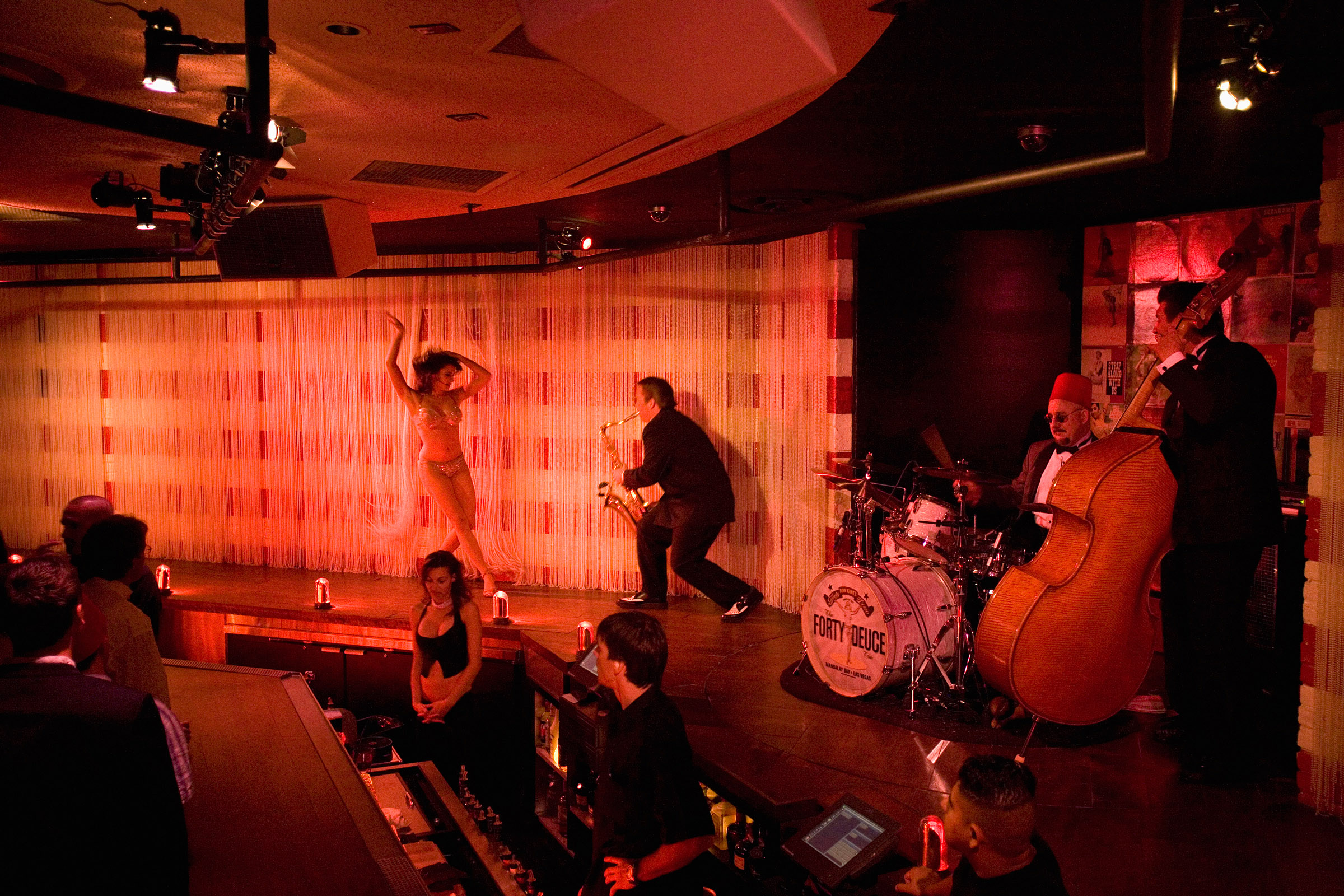
I’ve been thinking about what is it about the “eye of a hybrid” that clients are finding attractive. Forty Deuce burlesque club, Las Vegas, Nevada In a nutshell, it’s the eye of a master storyteller.  That’s because the medium of video is the perfect medium for telling a story. It encompasses movement, action, pace, rhythm and sound to engage, entice and feel.

I got a call this week for an editorial still photo assignment.  As usual, there was the customary business paperwork, but the client also provided a “shot list”.  I’ve been shooting editorial assignments for over 35 years and have had all kinds of direction. Sometimes, I’m given a writer’s manuscript and I’ve come up with my own shot list and sometimes I’m just told to come up with a variety of images.  But this “shot list” was intriguing because it read more like a shooting script for a video project.  As I read through the list, I could see how the person who had written it – had the “eye of a hybrid”.

Here are some of the suggested shots and “direction” from the list they provided:

(This is how I think and shoot in video. It has made me a better still photographer)

Cover it – Get comprehensive coverage – different perspectives, focal lengths, wide, medium and close-ups.  When I shoot video I will get a variety of angles as well as a variety of focal lengths because I know I will need plenty of b-roll to work with when editing the story together.

Get sequences – Get a variety of mini stories with people interacting. I am accustomed to thinking about how my “shots” will come together as part of the whole video that I’m working on.  Now, I approach a still editorial assignment like this as well. It’s kind of like of a moving pagination of imagery in my head.

Get storytelling images – With still photography I need to make sure those independent shots or moments in time also tell a story and stand on their own.  They can’t just be “wowy zowy” photos as Bob Gilka of the National Geographic used to say when I showed him an eye grabbing and colorful, abstract image.

Action/motion – make the images “feel”.  One that that motivated me to start exploring motion was because I was finding that it was difficult for me to convey the feeling of motion in a still image.  I’m finding that it’s easier for me to convey movement in a still image now because my eye is trained to look for it.

Give the images sound – (like a hammer hammering)Natural sound gives a video the element of reality.  It’s almost like it gives the video a well-needed extra layer or dimension.  When I’m shooting still images, I look for images that will illustrate the “sound” of an environment.

Shoot more – Give me more to choose from.  Again, you can never have enough b-roll when you are shooting video so I have naturally started shooting more on still photography shoots and my clients love having the abundance of choice.

Abundance or Scarcity – What’s Your Choice?

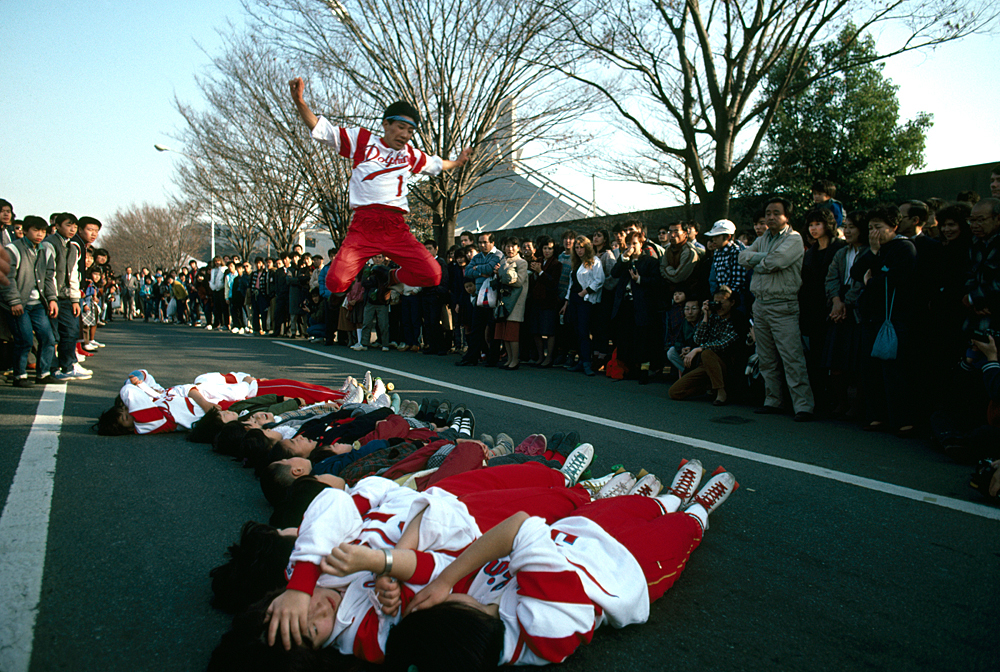
I read Seth Godin’s blog this morning and as usual, he was right on target with his observations of our culture and the shift in our economy.  We are moving out of the “industrial age”, an economy based on scarcity and into a “connection economy” Roller skaters jump over teammates, Tokyo, Japanbased on abundance – abundance of  “choice, connections and access to knowledge.”

In our new “connection economy”, we can connect with more people and “leverage our skills at a higher level.” This is leading to two races:  a race to the bottom which is forcing us to lower our prices, because it’s easy to find plenty of people who will do something cheaper or a race to the top which gives us the opportunity to use our new connections, resources and knowledge and become the one “they can’t live without.”

“The connection economy doesn’t create jobs where we get picked and then get paid; the connection economy builds opportunities for us to connect, and then demands that we pick ourselves.”  It’s no longer sufficient to just deliver a job at a fair price; a “connection economy” is all about standing out and being remarkable.

We need to invent – not duplicate.

So how do we stand out in a world of noise?  I believe we need to be authentic and true to ourselves.  We need to take the ultimate risk and listen to that voice inside because that’s the voice that should be heard.  We need to be vulnerable in order to race to the top.  At the end of the day, we are all human and we can spot a phony or an imitation when we see one.

Most of all we need to remember, we are human beings with basic human needs  – one being the need to connect with our fellow human. We don’t connect merely on devices alone – you connect by telling your “story”.   If your story resonates with others – it spreads. Today that means it gains traction quickly and spreads globally.  But you don’t connect with people by doing the same things as everyone else or regurgitating the same information.  You make connections because people are human and they’ll always spot “the real deal” in a crowd.

So be vulnerable, be different, be brave enough to stand out with a fresh approach to old problems and you won’t need to race to the bottom along with others clamoring for those “scarce” jobs.  You’ll be the one carving out the opportunities and picking yourself.

How Motion is Changing the Future of Photography

Mid-19th century "Brady stand" photo...
Mid-19th century “Brady stand” photo model’s armrest table (Photo credit: Wikipedia)

A few years ago I heard visionary Ray Kurzweil speak at NAB (National Association of Broadcasting).  He was talking about the exponential rise of technology and how that would profoundly change people’s lives – and was.  His focus and predictions were mostly related to the advances we’ll see in medicine, but he relayed an analogy that has stuck with me.  He said:  (and I’ll paraphrase) that if you were in the horse and buggy industry at the turn of the century and thought of yourself as someone who sold buggies and whips, you most likely would  have gone out of business.  But if you were in the horse and buggy business and thought of yourself in the transportation business you most likely would have adapted, recognized that the future of transportation was in motor transport – and thrived.

The thing is, the ones who adapted early on – before the majority did – were the ones who made fortunes.  The ones, who waited until everyone embraced the automobile, either struggled to keep pace with the competition or died out.  I think we are at a tipping point as far as the future of the still photography business.  If we continue to think of still photography and motion as being two separate entities in the business of visual communications, it will be our demise.

Change never happens overnight.  Change is slow.  No one gets to be 400 lbs overnight; it’s a slow process.  But once it happens, it’s really hard to get back on track.  The changes that are taking place in the way we communicate are monumental, unlike any changes in the past.  I used to shoot a lot of annual reports, but not so many anymore.  I used to make a large portion of my income from the licensing of my stock images, but that income has dropped significantly because everyone has a camera and the supply of images is more than the demand.

I’m not an alarmist in predicting this change and in fact for someone my age who is on the tail end of his or her career, I wouldn’t be alarmed at all.  However, if I were just starting out in photography or even in my late 40’s or early 50’s and had another 20 + years ahead of me, I would not be complacent.

Some things still photographers should be thinking about:

  • Understand that there will probably not be a divide between the still photography and motion businesses.  This is really hard to envision because we tend to see things, by looking at the future in terms of the knowledge that we have on hand today.  But with motion cameras able to shoot 96 frames a second, and each frame being good enough to pull out and used as a still image, the changes for still photographers will be profound.
  • The concerns are not like those that a still photographer has had to face in the past, like when digital replaced film or when one needed to reinvent themselves as their markets changed. (For example when car shooters were phased out by CGI artists)  Shooting motion is a different mindset all together.  It also has profound differences in the way you run your business. While a still photographer of today, may find opportunities to shoot motion for their existing still clients, that too is rapidly changing.   I don’t think this will be an option much longer for still photographers. I think that motion shooters will be shooting motion and in the process creating stills as opposed to still photographers providing the motion content and the stills.  Just like a professional still photographer distinguishes his or herself from an amateur photographer who has an expensive camera, so do motion shooters distinguish themselves from the still photographer who seems to have little regard for the craft and knowledge of motion and thinks they will “just” start shooting motion when the time comes. It’s not going to be “just” that simple, especially if you’re late to the game.
  • Understand that technology affects everything and will continue to do so.  You may think  in terms of what’s possible today and that it would be incredibly labor intensive to go through tens of thousands of motion frames to pull out still images. But advances in technology will change that as well in the future. Technology affects everything.   Realize that software is changing too and that the edit process for pulling out frames will be easier and more streamlined in the future.  In fact, an editor’s job description will change greatly and that may be a job that is in high demand in the future. Even now, just do a quick search on LinkedIn and you’ll see that while there are very few job listings for still photographers, there’s a lot of demand for video editors.

Bottom line – start recognizing that photography and video are not separate businesses any longer.  Start understanding that will have an affect on the  future of the still photography business especially in terms of licensing, because traditionally motion camera operators work under work for hire agreements.  While still images won’t go away, that doesn’t mean that still photographers will be creating them in the future.

Photographers – Grow or Die

I’ve been a professional photographer for over 35 years.  While some may look at that sentence and think I must surely be “over the hill” – others may look at that and say “wow, she must have been doing something right, to stay in business that long”. I suppose, it all depends on the outlook of the person.

Personally, I truly believe that the secret to longevity in any career field is to be open-minded as to how they define themselves.  One thing I have never done is define myself by the tools I use. Just because one has expensive camera gear, it doesn’t make them a “professional photographer”.  If that was the case, then who are you if you have a camera that happens to shoot both still images and video?

I’m really amazed when photographers define themselves by the tools of their trade.  I think with the way things are going in terms of how technology continues to affect our industry, if a photographer defines him/herself in such narrow terms – it’s the kiss of death.

When technology enabled me to explore video production without having to make a prohibitively investment in expensive “tools”, the creative part of me wanted to take full advantage of those new opportunities that were coming my way.  After all, I’m a storyteller and I shouldn’t have to limit myself to one medium, but rather choose the

Category:Wikipedia requested photographs of ph...
(Photo credit: Wikipedia)

right  tool (camera)  to use that best tells the story that I need to tell.  Sometimes that means delivering the message in video and sometimes the story is better told with still images.

Because I was an early adaptor of video (at least from a still photographer’s point of view), many of my peers equate me with just shooting video.  Many assume I’ve abandoned still photography, which couldn’t be further from the truth.  The real truth is, my clients see me as an imaging professional, who is able to deliver their message with the medium(s) that is best suited for the job.  These days with print publication giving way to electronic delivery, clients are delighted that I am able to fulfill their needs because I am proficient in both video and stills and most times they need both.

My curiosity for exploring a variety of mediums and tools has not only kept me in business – it’s kept me from getting jaded and stale. I am a photographer.  I am a director of photography.  I am an imaging professional and am thrilled to still be in business at a time when we have so many tools and options in how we are able to deliver a visual message.

I’m Not Cut Out For That

Systems thinking about the society
Systems thinking about the society (Photo credit: Wikipedia)

Anyone who has been reading my blog knows that I’m not the sort of person who would think or say “I’m not cut out for that”.  Most times, I tell myself that anything is possible and set out to face my fears.  But, there have been times when I’ve had to question taking on an assignment or assuming a role and ask myself, if in fact, I’m cut out for it.

There are generally two types of scenarios that mandate a decision to be made:

  • When I am listening to my inner voice that is prompting me to do something.
  • When I am listening to family, friends or colleagues who are encouraging me to do something

I’ve learned the best thing for me to do in either scenario, in order to make the right decision is to think of it in terms of what is the right fit for me. Is it in harmony with who I am?

Right now, I am working on a marketing plan so I am not only looking at what markets to target in terms of where there is a demand but also in terms of which markets I am suited for.  That doesn’t necessarily mean I’m thinking of what’s in my comfort zone, it means that I am thinking about which markets I can provide the most value to. If I do it right, everybody wins.


10 Ways Photographers are Their Own Worst Enemies

  1. They talk themselves out of things.  – Telling themselves that it wouldn’t matter if they learned new skills or shot new images or whatever they didn’t want to make the effort to do.
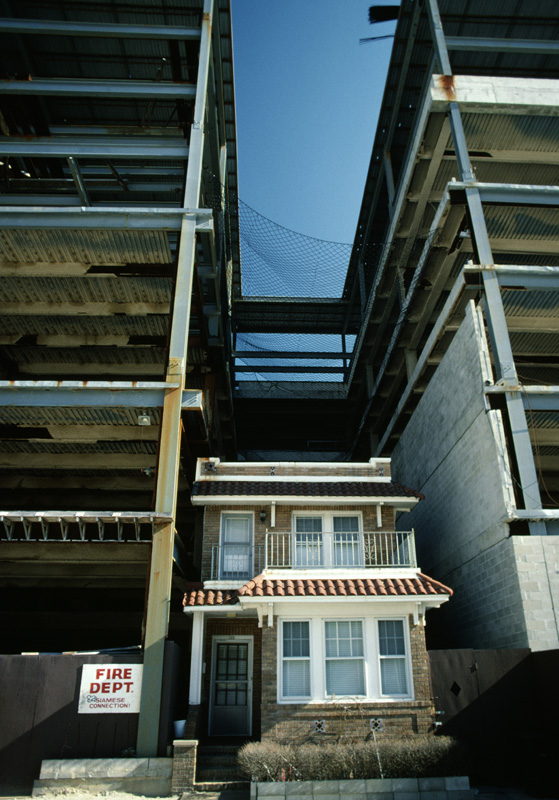
  2. They try to “educate” their clients (sometimes a bit too much) instead of collaborating and possibly learning from them.  A lot of “older” photographers are like this when they are working with younger art buyers or directors. I think the energy needs to work both ways.House surrounded by construction site, Atlantic City, NJ
  3. They give themselves an A for effort for starting something but too many times their starts lead to nowhere if they don’t have an end goal in mind.
  4. They don’t open themselves up to networking with others by attending industry meetings or events.
  5. They treat their clients like their enemies where one needs to win instead working toward a positive outcome for both.
  6. They make the mistake of creating for an audience, instead of creating for them selves.  (Thanks to Seth Godin for that thought)
  7. They take workshops or pay for a service and then don’t utilize them. I’ve been guilty of this too many times.
  8. They don’t shoot for the pleasure of it.
  9. They rely too much on commissioned work instead of taking advantage of new opportunities and ways in which to market and sell their own projects.
  10. They don’t stay true to themselves.

Ten Things Photographers Should do in 2013

Be optimistic – I’m going to start with the hardest one of all, because it’s really difficult to be optimistic these days.  But I find that if I can maintain a positive attitude and turn my thoughts to what is possible, I actually open myself up to more opportunities in my life, instead of creating more roadblocks.

Be open to possibilities. – Be more flexible in how you perceive things and who you are. 500x_housecanon copyChange is always happening, but it’s usually gradual.  Most people don’t take notice until “change” forces their hand to act.  It’s always better to be proactive than reactive so embrace “change” as an ever-present fact of life that creates opportunities for those who are open to seeing them.

Collaborate – Photographers are very independent creatures and collaboration is not part of their norm. As the “photography” business continues to change, photographers will find that collaborating with other artists will make their own businesses stronger.

Diversify – I’m not quite so sure why so many photographers are so rigid in how they define who they are and what they do.  Having a “style” is great, but the trick is to not to be so narrowly defined by that style, so that when styles change, you don’t find yourself obsolete by your own design. It’s kind of like being type cast, where your audience or your clients can only see you in one way.

Concentrate more on “the story”– I had the opportunity to speak with a lot of still photographers and filmmakers this past year and I began to notice a difference in the conversations I was having with each.  Most times, filmmakers would be telling me a story, whereas still photographers would be telling me how they executed a photograph, or essentially telling me the “back story” of the creation of the image. It’s all interesting but “the story” is the bottom line – if that doesn’t come through to the viewer – the rest doesn’t matter – including how it was executed.

Be authentic – be true to yourself.  That means that you have to trust your gut instead of second guessing it.  This is hard, especially when things don’t always work out the way you had hoped.  Step away from the “noise” and listen to the voice inside.

Fail more. – Rejection is a tough pill to swallow but it usually means that you are either pushing yourself to try new things, you are too far ahead of your time or it just wasn’t meant to be.  If you look at successful people you’ll see that most have had failures and rejections in their lives but they stuck with it – instead of letting failure defeat them.

Self-Initiate more projects. – I don’t like to call non-commissioned work, “personal projects”. That co notates that there is no monetary value and these days, just the opposite could be true.  With more and more lopsided contracts  being presented to photographers for commissioned work, a photographer has a better chance to make more money and keep ownership of their work by creating self-initiated projects.  But they need to be prepared to work hard.

Forget about the past except to learn from mistakes. – You can’t change the past but you can learn from it and then, move on.  Look toward the future but make sure you take time to enjoy the “now”.

Realize that in the scheme of things, you are just one small speck in the universe. – I think we all get way too stressed about things that really don’t matter and we let those things control our life.  When we become more conscious of that, we really begin to live life.