Looking Back

Today, I’ve been looking back through two year’s worth of blog posts that I have written. Wow – I’ve written a lot!  I really surprised myself at just how much when I started gathering the content that I had written in regards to the making of my documentary, Opening Our Eyes. I’m putting together my 2nd ePub that will be a companion to my first ePub, recently published on Amazon and Barnes and Noble.

My focus is centered on the “craft” and the making of the film, and I talk about everything from “the gear” I put together for our 99-day journey around the world to the distribution process for the final film. A bulk of the content has already been written with photographs ready to upload and links.  It’s just a matter of consolidating the information and presenting it in a more concise way.

Earlier in the year, I paid my dues in the learning department when I put together the first ePub.  After my experience working with a professional formatter, I quickly realized what not to do.  One big thing I learned was not to get too heavy with the images because the first generations of Kindles have only b&w displays.  I also learned not to create intricate designs in Pages because later I had to undo all the work I had done for a PDF version of the printed book.

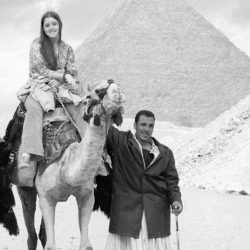
I am amazed at how much I have written over the last few years.  It was interesting to look back through some of my blog entries, and see how I was “processing things”  at the time I was writing those posts.  I’ve never really kept a journal before, accept for a one year period in my life, between the ages of 19 and 20, when I was making my first journey around the world.

I’m really happy that I have archived these stories and records of my life, but that’s not what motivated me to first start writing. I used to wake up super early in the morning – my mind spinning with ideas and random thoughts, not allowing me to get back to sleep.  So, I would get up and I started writing down my random thoughts and I found it therapeutic.  It was like having a conversation with someone and sorting things out.

There are chunks of time in my life that I simply don’t feel like writing or that I have nothing to really say.  My mind seems to go into a dormant phase where I convalesce with other distractions – usually mindless ones. But then there are days when I just have the need to get my thoughts down on paper.  I’m grateful for those days – on days like this when I take the time to look back from where I’ve been.

Add to FacebookAdd to DiggAdd to Del.icio.usAdd to StumbleuponAdd to RedditAdd to BlinklistAdd to TwitterAdd to TechnoratiAdd to Yahoo BuzzAdd to Newsvine

Monetization of Photography in Spite of a Lousy Economy

I talk to a lot of photographers. I don’t define the word “photographer” by the type of camera he or she shoots with. Whether someone is shooting with a still camera, a traditional video camera, a motion picture film camera or a hybrid camera that shoots both stills and motion – a “photographer” these days is apt to embrace more than one of these tools.

Regardless of the tools you may use, I’ve come up with a few tips on how photographers can stay afloat and make money in this continued stagnant economy.

  • Think outside the box – don’t think of yourself as one who just shoots still images. Even your “still” clients will have a need for motion imagery these days.  It may not warrant the need for them to hire a big video production crew to make a broadcast spot.  But it could be one of your corporate clients needs a “talking head” for their website. Even if you don’t shoot motion or don’t want to – collaborate with someone who has these skills to fill your client’s needs instead of sending your clients  elsewhere.
  • You don’t need someone else to commission your services in order for you to make a living. When photographers take on personal projects, not only are they creating a buzz and getting noticed by potential clients, they are also creating their own “content” to monetize. It is possible now to get our content to market without the need of a middleman. Portals are open and plentiful to all.
  • Take advantage of what is “free”, rather than be put out of business by it. There are so many ways to build your brand and get noticed without spending a fortune. The costs of building and maintaining a website have dropped significantly because of advances in technology. And utilizing social media to create a buzz and get the word out about your company is virtually free with Facebook, Twitter,LinkedIn and YouTube. But be prepared to do the work and discipline yourself because this territory is ripe with distractions.
  • Re-purpose your content. If you’ve been blogging or have something useful to share – consider packaging your “knowledge” into ePubs, podcasts or “how to” webinars. One thing I’ve learned about making an ePub is that you can either do it yourself or hire a formatter so that it gets to market quickly – via Amazon, Barnes and Noble or the iTunes platform. Price it right – and offer more than one ePub at a time. (I’m working on my 2nd ePub now) In this market, if someone has just spent $3 or $4 to buy your ePub and they see you have another one for sale – it’s not a big stretch for them to buy that other book you offer at the same time.
  • Collaborate with others. Partner with others to put on webinars, podcasts, call in phone seminars etc. Use this opportunity to build your own brand. Don’t always feel that you have to be the only “act” offered. In fact many times, if you join forces with other creatives, it will get you further than if you are the only speaker in a half filled room. Get out there and get noticed and learn from your colleagues at the same time.
  • Be authentic. I cringe when I write that word because it has become a bit trite. I guess in a way I have always been authentic. In fact I just can’t help myself. If you are true to yourself, you will be ready, eager and able to work hard on your dreams. And hard work is exactly what is necessary to make it in this profession.  You’ve got to want it bad enough in order to do the work. If you are a clone of other photographers, you’re career will be short lived. I guarantee the photographers that you are emulating will be “moving on” because their passion is driving them to new things. So, what happens to the cloned versions then?
  • Don’t focus solely on the money. Easy to say and really hard to embrace when you can’t pay your mortgage. But look at any successful person – I don’t care which business you choose to look toward in terms of finding successful people – but you’ll see that most people who have “made it big” were not driven by the money. I’m not saying that money is not important, but if you are solely focused on the money and not on the act of creating – it will show.   Being too focused on the  money part of the equation, can sometimes push it away. People sense it. It’s human nature to want to be around a “winner” – not someone who is begging for a job to keep them afloat financially.
  • Be patient. Everything turns around. While the old days and ways of doing things won’t come back, better opportunities will replace them. Don’t be paralyzed by your own fears. Do what you can that won’t cost you a lot of money and there is plenty you can do. Work social media, learn new skills – audio, editing, writing etc., network with people, create new content for ePubs, webinars, and podcasts. Use your imagination, pursue what you are passionate about and when the economy turns around – you’ll be ready.

Add to FacebookAdd to DiggAdd to Del.icio.usAdd to StumbleuponAdd to RedditAdd to BlinklistAdd to TwitterAdd to TechnoratiAdd to Yahoo BuzzAdd to Newsvine

Why Did You Want to Become a Photographer?

That was one of the questions posed to me during an interview this past weekend. A young woman had asked to interview me for a college paper she was writing. The call and the questions started out somewhat clinical, most likely another task or paper that she needed to check off her list. She proceeded through the usual list of questions: “Did you go to photography school?” “What type of photography are you interested in?” So on and so forth.
I could hear her typing my answers and I paused to let her catch up. But then she asked a question that really struck me on many levels. “Did you get into photography because it was cheaper?” I asked her what she meant by that – did she mean the tools of the trade were cheaper? When she responded “yes”, I told her that was somewhat of a misnomer and that the first cameras I bought (mechanical ones) I had used for 10 years. I added that now, because of the exponential impact of technology on my profession, my cameras and the software I need on the post end, have to be upgraded at least every two or three years, and that was only part of the investment required in the “tools of the trade.”

As she typed my response, I felt myself getting a bit anxious and I started speaking rapidly. I told her that even if that were true – meaning that I got into the photographic profession because it was cheaper – that would have been the absolute worst reason for me or anyone else, to choose photography as a profession. I went on to say that you need to be passionate about some aspect of photography that makes you want to do it more than anything, if you want to have a chance of sustaining yourself financially in this profession. Pursue photography because it brings you joy and that if you are getting into it because the entry level costs were “cheaper” you’ll simply be competing with thousands or tens of thousands of button pushers.

I went on to tell her that I became a photographer as a means to an end. I had been studying architecture in college and after two years left school to travel. I traveled the world for a year and came back knowing that I wanted to pursue a lifestyle that would incorporate travel but more importantly fill my endless curiosity of people and cultures and exploration. I wanted to become a storyteller, and became a photographer as a means to that end.

As the interview progressed I noticed the typing started to diminish as I told her that I have never separated my business from my pleasure and that they have always been tied together throughout my life. Simply put – my business is my pleasure. I talked about my frustrations starting out as one of a handful of women in a man’s world and for the most part a man’s profession – at least in the early days. I talked about the endless stream of rejections and the “wins” that seemed to pop into my life when I needed them most, rescuing me in the knick of time, just when I was thinking of quitting and moving into another career. I told her that unless she really wanted to do photography, she wouldn’t survive in this profession. I talked about my mentors when I was her age and how grateful I am that I had those people in my life. I relayed a couple of anecdotes about things my mentors had said to me and how those words had been pivotal moments in my life and that when things got tough, I drew upon those words of wisdom to get me through the day.

Then there was a very loud audible sigh, followed by a long period of silence and my mind raced through the various things that I had said to her. Was I too harsh? Did I paint too bleak of picture? Or worse yet – did I make it sound too easy and that all she had to do was “just do it”. I felt this overwhelming sense of responsibility that maybe I said something that was going to dictate the rest of her life and I kind of panicked in that moment of silence. And then she said “thank you so much for talking to me today, I started out just wanting to write my paper, and I’m going to have a great paper, but you have no idea how much talking to you has helped me.” She went on to tell me that she had been struggling with a decision that she was trying to make between going to law school and going to film school. I told her that she needed to make that decision all by herself and that it wasn’t a decision that anyone else could make for her – not I – not her parents – not anyone else. I told her to dig down deep into herself for the answer, beyond the influence of others, the dogma of the day and all the noise. And most importantly to remember that it was her life and that she got to choose how to live it and that she had every right to change her mind along the way.

Quite honestly, it has been one of those “onion” months for me, with layers of setbacks and second-guessing myself. I got off the phone feeling good about paying forward what I have learned along my way and in that moment, I realized that this might be my “purpose” at this point in my life. The day had turned into one of those sweet “strawberry days”. She didn’t know it, but she had helped me as much as she said I had helped her. It’s those conversations and those little moments that keep me going, and come to my rescue, just in the knick of time.

I would love to hear from you all – why did you want to become a photographer?  Something you say or write just may help someone and paying it forward is the best feeling in the world.

Add to FacebookAdd to DiggAdd to Del.icio.usAdd to StumbleuponAdd to RedditAdd to BlinklistAdd to TwitterAdd to TechnoratiAdd to Yahoo BuzzAdd to Newsvine

Licensing Video?

There are probably people who would argue with me as far as the practice of licensing video being the norm in the world of video production, other than the licensing of stock motion footage. Perhaps that may be true in some business models and certainly true in older business models, but I can tell you that has not been my experience.

I should clarify that I do not position myself as a “hired gun”– meaning a camera operator who turns over their footage at the end of the day. I choose to assume the role of producer and maintain control over my intellectual property or the finished video product. I cannot do this in the traditional motion picture industry but that business model is changing due to technology and the influx of indie filmmakers who are making their own rules and bringing their films to market themselves. And for the most part – I can’t do this in high-end broadcast spots when working with a middleman – or ad agency where ultimately their end customer maintains all rights.

However, the demand for video has skyrocketed in recent years and with that has created a new client base who are using video in new ways and on new platforms. I am establishing my own set of rules accordingly. One of them is licensing the finished product just as I did my still images. I can only do that with video productions that I have produced and hold the copyright to.

Typically, I will separate the licensing of my still images from the video product as well as the creative fees. I may be shooting both mediums on the same job but I handle the licensing differently. I have found that video has a shorter shelf life so I am not as concerned about the duration of the license (length of time) as I am with still imagery. But I am concerned about it’s “reach” which these days is global – thanks to YouTube.

Another thing I do is I make sure that it is stated in my contract and/or estimate that the license for the entire video production does NOT include permissions and/or licenses to any still images that are made from frame grabs pulled out of the video footage. Putting this up front in the estimate has actually proved beneficial because if a client does anticipate the need for still images – they will hire me to create stills – rather than take them from frame grabs.

We are living at a time where just about everyone’s business models are changing. So, if someone tells you that licensing video isn’t the norm – outside of the stock motion footage business – think again. What is the norm these days? It may be the precedent we are setting now.

Add to FacebookAdd to DiggAdd to Del.icio.usAdd to StumbleuponAdd to RedditAdd to BlinklistAdd to TwitterAdd to TechnoratiAdd to Yahoo BuzzAdd to Newsvine

The Problem With (Most) Video/Motion Workshops

This has been something that has been weighing on my mind for months now – ever since the seemingly “overnight sensation” of people giving video workshops as well as the growing number of still photographers that are feeling the need to take these workshops.

The biggest problem that I see with all the video/motion workshops that are out there is that they oversimplify video production and take the approach that the single independent still photographer can learn and do it all – produce, operate the camera, capture good audio and manage the post-production and edit.  I suppose to be fair – while it may be true that the independent still shooter can learn all facets of video production, that is not the best approach as far as setting up a viable business model for a video production company.

Video is a collaborative medium.  While I may be able take just about any video production from soup to nuts single handedly – I know that the production would suffer if I did.  I learned a long time ago to build a team of good sound people, editors and even camera operators that I can draw on to hire on a need be basis.  They make the production and me look good and that’s what keeps my clients coming back.  It also allows my business to grow because I can take on more projects. If I’m not entrenched in all aspects of the production. It frees me up to start production on another project while still in post-production of a previous project.  If you are a one-man band, you not only don’t have this option but you actually make yourself look small in the process.

Video and motion have many facets to them.  I advocate that the best business models are when one positions themselves at the top of the content creation ladder by overseeing the production of the whole and hiring the appropriate crew that will facilitate the process.  By recognizing the differences between this business model and the “solo” model that most independent photographers work under, you’ll have a much better shot of maintaining ownership of your work and creative vision as well as having the potential to grow your business beyond your own singular capabilities.

The other problem with workshops that over simplify the process of video production by promising that you will be up and running after a one day workshop is that they are centered around learning the gear and the software which changes by the month.  If you learn just the gear du jour and not focus on the business of video production you will be in competition with other independent dabblers and that’s a quick way to the poor house in terms of sustainability.

A week doesn’t go by when I don’t get at least a dozen calls or emails from still photographers who feel they need to get into video and are overwhelmed by the learning curve.  I tell them that the best thing they can do is NOT to try and learn all these skills themselves and that in fact that will only delay their entry into the video production, business if that is what they are after.  A better way is to keep your focus on your vision, apply that to a sustainable business model that will incorporate video and collaborate with others who will make you look good and help you grow your business.

Add to FacebookAdd to DiggAdd to Del.icio.usAdd to StumbleuponAdd to RedditAdd to BlinklistAdd to TwitterAdd to TechnoratiAdd to Yahoo BuzzAdd to Newsvine

There Are No Prince Charmings or Overnight Successes

I think we all buy into a lot of crap in our American culture – in a lot of cultures actually.

Let’s start with “Prince Charming”. Young girls grow up believing in the fantasy that there is ”the ideal man” out there who is perfect in every way. And young boys grow up with their own version of this fairytale.  It’s really too bad because it’s all those flaws and differences that make us all human and drive us all crazy, that are the very things we should embrace. In our expectations for perfection and our intolerance for less, we often see only the “blemishes” or the cons and overlook the overall person.  We fail to see that it is all of those things that go into the make up of a person’s character. It took my husband and I many years to figure out that the very things that annoyed us about one another – our differences – made us stronger as a couple.

There is no such thing as an “overnight success”.  We believe that because in our culture we only hear about the successes.  For some reason we don’t look at the big picture and everything that led to that recognition. Success is an interesting concept to me anyway.  Many people define it by winning or attaining financial wealth.  Ultimately, it’s defined by a final destination rather than the journey.  Is it really about the final destination? If so how does one determine if only one win is enough or how much money is enough?

Talk to anyone who has risen to celebrity status and they will talk about the ups and the downs and the constantly evolving journey. A lot of musicians, who have had big hits and have gotten rave reviews, don’t always get the same glory the 2nd, 3rd or 4th time around. Their careers are made up of the highs and the lows and everything inbetween.

I’ve had my share of highs and lows.  Last week I got my rejection notice from the Sundance Film Festival for my film, Opening Our Eyes.  Rather than be despondent about it, I will frame this email rejection as a reminder to myself that I entered and had the courage to try.  There were over 11,000 entries and only 16 documentaries will be shown this year. I am proud to be in this 99%. This rejection is but one of many that I’ve had over the years of my career.  I’ve certainly had more rejections than I’ve had successes, but the failures have only made the successes that much sweeter.

This film in particular has been an evolving journey for me – with no destination in sight.  While it may never be a “success” in terms of how some people define that word, for me it has already brought many unexpected rewards to my life. For example,  I’ve just returned from Sao Brazil, Brazil where I had been invited to do a TEDx talk. It was one of those weekends that gave me great hope for the future as I dialoged with amazing people who were doing extraordinary things with their lives and for the lives of others.  The next evening I was given the opportunity to screen my film at MIS, a beautiful museum in Sao Paulo.  During the Q&A, a man asked me if making this film had changed my life.  I didn’t have to give it a second thought before I answered “yes and it continues to do so in amazing ways.”

I will continue to embrace the entire journey – the lows as well as the highs.

Add to FacebookAdd to DiggAdd to Del.icio.usAdd to StumbleuponAdd to RedditAdd to BlinklistAdd to TwitterAdd to TechnoratiAdd to Yahoo BuzzAdd to Newsvine

Being Grateful but Overwhelmed

What’s the old saying – “be careful what you wish for?”

I have a lot to be thankful for this Thanksgiving morning, because so many of my wishes are coming true.  But they haven’t come without a cost or a compromise somewhere along the line.

For example, I’ve been highly focused on the making and promoting of my film Opening Our Eyes.  While that has brought many rewards into my life, it has also taken time away from my business.  It’s helped my business by bringing awareness to it. But it’s also hurt my business because it’s taken some of my attention away– or at least for the time being. There are only so many hours in the day.

When I take time to take a breathe these days, I wonder how it will all turn out.  I feel that I’m taking a risk for once in my life. I’m listening to myself and not questioning it or pulling back at the wrong time because I’m doubting myself.

I think we all have to decide the kind of life we want to live and live it the best we know how.  The older I get the more I realize that.

On this Thanksgiving morning, I’m thankful that I’m living a full life and open to possibilities.

Happy Thanksgiving everyone.

The Money Game

I’ve learned a lot about the “entertainment” industry in the process of creating our documentary Opening Our Eyes. But I was a bit surprised to learn how one show derives its content. I won’t mention specifics, because I don’t believe that this particular way of doing business is unique to this one show.

A couple of days ago, I received an email from one of the subjects in our film asking for my counsel about a high profile program that is syndicated on various cable channels. The show essentially does short segments on organizations and/or companies that have stories of educational value.

I looked through the electronic info kit that they had sent and it sounded great, because they guaranteed placement for the 5-6 minute piece within the program, which would run on a couple of large cable networks. They also guaranteed a 1- minute spot on CNN and Fox News. Plus the production company would deliver a file ready for web so that an organization could upload it to their site and/or deliver DVD’s to potential funders or clients.

I continued to read the attached PDF’s which listed the production requirements and workflow that would take place if “they” were selected to be profiled. But what stood out and surprised me was the line that stated that a payment of almost $30,000 would be required, if they were chosen to participate. Quite honestly, I was a bit shocked. Here was a production company that was creating a syndicated program and expecting the subjects to finance it.

I’m almost certain that this company also makes a hefty sum from the cable networks who in turn get money from their advertisers. That doesn’t surprise me a bit. But I didn’t know that it had become part of the game to make revenue off the subjects of the stories!

Perhaps that might not sound all that bad because it’s just business in a free economy, but quite honestly it has really changed my thinking about networks that run stories about people, organizations or institutions that have educational value. Now when I watch a show like this, I will question the credibility of the causes and organizations that are being profiled, because I know that this “door to distribution” is only open for those who can pay. And that doesn’t necessarily mean that the stories they run are about the most deserving subjects or even the most compelling stories. It simply means that the people behind these stories had the funds to “pay to play”.

I think back on all the extraordinary people that we met last summer while making our documentary. Most of them would be hard put to find this kind of money and if they did they would probably put it right back into their causes and the people they are trying to help – not a production company that is making money off both ends. I went in the “red” doing this documentary with the hopes that it will cause a shift in the way we think and that it will move people to action to make a difference in the world. I figured that’s the least I could do – use my skills as a storyteller to create a film that would raise awareness and help all our subjects and their programs.
Would I like to make money on this film? I’d be happy if I broke even. I’d be even happier if this film was seen by hundreds of thousands of people. But I wouldn’t dream of charging my subjects money.

Ronni Kahn of Oz Harvest told me “Just go out and do something – not for the money not for the recognition but for the sake of doing”. I suppose that’s exactly what Erin and I did. And that in itself has been the biggest reward of all.

Add to FacebookAdd to DiggAdd to Del.icio.usAdd to StumbleuponAdd to RedditAdd to BlinklistAdd to TwitterAdd to TechnoratiAdd to Yahoo BuzzAdd to Newsvine

Burning Bridges

I used to have a friend who would tell me that my life was made up of circles, each one completing the ring like segments of my life.  The truth is that’s not unique to me – that’s life in general.

It’s Photo Plus Expo week in New York City, when photographers from around the world gather at Javits to look at new gear, take part in seminars and network.  I don’t think I have missed an Expo since they began over 30 years ago. A lot has changed in the photography business over the past 30 years, but one thing is for certain and that is – it’s a very small world as far as the people who are part of this business.

Last night, I went to a couple of parties where I ran into quite a few people that I’ve met over the span of my career.  Some I had done commissioned assignments for, some I had met through seminars that I had given and some were just old friends that I hadn’t seen in a very long time.  But a couple of folks who approached me last night, and struck up a conversation, were people who had totally blown me off in years past – people who had simply ignored me.  In every instance, these had been people who had recently experienced a shift in their own lives and now had a sudden interest in me and in what I was doing – to further their own gain.

I know that I have burned a few bridges in my lifetime and I’m sure there are some I’m not even aware of. (Anyone who tells you that they haven’t burned bridge is just simply not aware.)  Some of those bridges, I have tried to rebuild and have succeeded. and some were beyond repair.  What I have learned – and wish I had learned 20 years ago – is that everything comes around in your life, no matter how much you have grown or changed – the past is always present. And it seems easier sometimes to change the past – but of course that’s not possible.

What I’m finding now is that due to profound changes in the photography business as well as the lingering lousy economy, that the same people, who had ignored me or dismissed me a few years ago, were now acting like my “best friend”.  I’m sure they didn’t remember how dismissive they had been to me – in fact I doubt that I was even on their radar at the time.  But circumstances had changed in their lives and now they were taking notice of me and even asking for my help. I suppose I could say that they had burned a bridge with me but then again in most of these situations there had never been a bridge to burn to begin with.
The point is, you never know how your past will affect your future.  You may think that you are in a position where you have no need for certain people in your life and be dismissive.  But nothing lasts forever and if there is anything that I’ve learned by getting older – it’s just that.  Our lives are made up of circles, each one connecting our past with our future.  Consider that when dealing with people who come in and out of your life – because nothing ever stays the same.  Many times you’ll find out that those people that you thought  you had no use for in your past – may be key in your future.   Hindsight is the best sight and you always get the best light from a burning bridge.

Add to FacebookAdd to DiggAdd to Del.icio.usAdd to StumbleuponAdd to RedditAdd to BlinklistAdd to TwitterAdd to TechnoratiAdd to Yahoo BuzzAdd to Newsvine

What to do When in a Slump

There are all types of slumps – creative, financial, relationship and personal. I’m sure there are others, but those are what come to mind – I’ve experienced all of them. I think that comes with living the kind of life I lead. There are times when it seems like I’m on a never ending roller coaster ride with lots of ups and lots of downs. The one thing I try to do when I’m in whatever kind of slump I’m experiencing,  is to focus on the areas that seem to be working in my life.  I’ve learned to take the bitter with the sweet.

Here’s some other remedies I have found that help get me out of a slump:

  • GET OUT – I mean that literally as well as figuratively. I break the pattern of what I am doing that doesn’t seem to be working and “get out” of that place. I also literally – get out – I change my environs – I get together with friends.
  • TRY SOMETHING NEW – I do something that I may have been thinking about, but I usually talk myself out of with every rational reason I shouldn’t do it. So, I follow my irrational instincts.
  • WALK AWAY – This is especially true when you are dealing with something technical and you just don’t “get it”. There have been days when I have struggled with something that wasn’t working – like when editing in Final Cut Pro – and I need to give myself some time away from the problem. But this only works if you aren’t up against a tight deadline. I try not to force a learning curve into situations with tight deadlines.
  •  FOCUS ON WHAT IS GOING RIGHT – There is always something to be grateful for – focus on that.
  • BE STILL – I think this is perhaps the most important remedy that I have learned to embrace and that is – to give something time and not  force it. If something is meant to happen then it will – and in its own time.

Every one of these “remedies” is pretty much centered around the same thing,  and that is to recognize that there will always be slumps in one way or another – but they will make those sweet times that much sweeter.

Add to FacebookAdd to DiggAdd to Del.icio.usAdd to StumbleuponAdd to RedditAdd to BlinklistAdd to TwitterAdd to TechnoratiAdd to Yahoo BuzzAdd to Newsvine