Should I Be Thinking of Video – Or Not?

I give a seminar to still photographers for ASMP entitled “Should I Be Thinking of Video?” It’s a broad overview of the different facets of video production along with how I have positioned myself in this medium and where I think some of the opportunities are. I’m quick to point out what it’s not – it’s not going to tell you everything you need to know to make video part of your business and it’s not about how to use your DSLR. And if anyone promises that they can teach you that in two hours – they’re lying. But most importantly, I can’t possibly answer the question “should I be shooting video” for each individual in the room. And that’s because there is no ONE answer to that question – that’s up to the individuals to decide for themselves.

I think perhaps I should point out some reasons why one shouldn’t be thinking of video:

Fear – Because you are consumed with fear of your future. It’s understandable to be afraid when the world as you know it,  is changing. But if you are so focused on the thought that you have to do something because technology has changed your business to the extent that it just isn’t there anymore, instead of focusing on how you can use technology to grow your business – then you’ll paralyze your mind to new possibilities.
The Camera – If you are getting into video because your still camera is capable of shooting video and you’re not concentrating on thinking and seeing in motion, then you’ll end up with isolated video clips that have no relation to one another and you’ll have a rude awakening in the editing room when you realize you have no clue on how you’re going to put together a cohesive story.
Because everyone else is – With all this talk of video of late, everyone feels they need to jump on board. The truth is video may not be the answer for some photographers. And it may not be the best medium for the markets you work in.

You should be thinking of video if:
• You think that motion and sound is the best way to visually communicate your clients’ story or message.
• You recognize the power of collaboration in this medium
• You understand that there’s a learning curve and there’s no magic bullet.

I cannot tell you if video is the answer for you – that’s up to you to make that decision for yourself. I can only tell you what’s involved and guide you through the process.

When my daughter was growing up, I was always careful not to make all her decisions for her. It was a hard thing to do because many times she wanted me to and I wanted to but I didn’t. I knew if I made all her decisions for her that I wouldn’t be doing her any favors in the long run – because sooner or later she’d be out on her own without me there telling her what she should or shouldn’t do. I think it was one of the hardest things I had to do as a parent.

It’s been challenge this year scheduling time for my production business, along with traveling around giving these seminars. As much as I enjoy sharing information with others through these seminars, I know that I need to be doing what I love most and that is being a visual communicator. So, I’m taking to the road on May 25th – around the world actually, working on a personal project Opening Our Eyes. I need to get back to some real quality time of creating. And the best part – my daughter decided that she wants to join me and be part of this – and she made this decision all on her own.

Add to FacebookAdd to DiggAdd to Del.icio.usAdd to StumbleuponAdd to RedditAdd to BlinklistAdd to TwitterAdd to TechnoratiAdd to Yahoo BuzzAdd to Newsvine

Ten Things Still Photographers Need to Know About Video

1.    Buying a DSLR is only a start.  Choose the right tool for the job.  A DSLR might not be the right tool for many video productions.  And keep in mind that most shooters spend sometimes twice as much as the price of these cameras on add-ons to make these cameras a viable solution.
2.    It’s more than just the shoot. There are many facets to video production. In fact positioning yourself as just a camera operator may not be the best business model.
3.    Shooting video is a different mind set than shooting still images.  I think differently when shoot video.  I think in sequences and in storyboard mode – not in moments in time.
4.    Audio is everything.  You can have the best visual in the world but if you don’t capture your audio properly – you’ve got nothing.
5.    Shoot horizontals.  There are no vertical TV sets – yet.
6.    Editing – Again the shoot is just one part of video production.  Editing is just as important and there is a steep learning curve that comes with it. But learning to edit and editing your own material will make you a better shooter.
7.    There’s no standardization of codec’s and formats.  It’s like the Wild West when it comes to standardization of codec’s.  There is no standardization!  Every time a new camera gets rolled out – it seems like there’s yet another format.
8.    Output – Here’s where a lot of people get confused.  How are you going to output it?  What type of file?  What platform – TV, web, big screen?
9.    Interviews – A lot of video productions require on camera interviews.  Many times the interviews drive the story – or create the backbone of the audio track.  Pay attention to good interviews and interviewers to learn the art  of getting good sound bites.
10.    Collaboration – Video production is ripe for collaboration.  Still photographers are more independent creatures.  Learn to surround yourself with people that will make you look god.

Add to FacebookAdd to DiggAdd to Del.icio.usAdd to StumbleuponAdd to RedditAdd to BlinklistAdd to TwitterAdd to TechnoratiAdd to Yahoo BuzzAdd to Newsvine

Fast, Cheap and Good

A colleague of mine, Blake Discher just wrapped up a seminar series for ASMP entitled I Stink at Negotiating. In his presentation, Blake says I tell my clients when they ask for fast, cheap and good – they can pick two.  Such a simple statement – but right on target as far as advice for negotiating.

Photographers want their clients to know the difference between what they can offer as professionals compared to any amateur with a camera.  They want to be paid accordingly for their experience.  They want their clients to understand the difference between what they bring to the table compared to a non professional.

But there seems to be a disconnect between that philosophy and how still photographers perceive themselves in terms of adding video to their business. Many think that by buying a DSLR camera that shoots stunning video visuals, that’s all it takes to get into the video production business. The problem is they are thinking the same way their clients are who can’t discern the difference between a professional and someone who has a camera that also shoots video.

Technology has once again lowered the bar for entry level into video production. And still photographers who equate buying a still camera capable of shooting video with being a professional motion shooter or videographer are forgetting some real important factors.

1.    You think totally differently when shooting video.
2.    There’s a lot more facets to video production than just the shoot.
3.    Most people who are working on professional motion productions and are using a DSLR or VSLR camera have spent more than twice the price of the camera on third party accessories.
4.    There’s a steep learning curve of other aspects of video production – namely capturing good audio, editing, and output.
5.    Video is a collaborative process with an entirely different workflow than still photography.

Still photographers have a hard time with #5 because by nature they are independent creatures used to controlling and doing everything themselves.  But video is all about collaboration and as soon as one realizes the power of networking, collaborating and partnerships – they understand the concept of video production and raising their own bar by collaborating with others.

I recently gave a seminar in Portland, OR where I had a chance to talk to Andy Batt who is quite knowledgeable with VSLR’s and has produced some beautiful work with them.  I learned a lot from Andy about some of the idiosyncrasies of theses cameras.  I don’t own one yet, although I will be purchasing a Canon 5d and 7D along with additional Zacuto accessories for a personal project I’ll be working on, where I will be shooting both stills and video and will be living out of a backpack for three months. So to economize on space – this seemed like the right way to go.
Andy and I do totally different things and work in totally different markets but we can learn from each other.  Andy works with large crews and on big productions.  I work more journalisticaly, with small crews in direct corporate and institutional markets.  But we both know that it’s not just about the equipment and it’s not a one size fits all when it comes to choices made in that regard.  We also know that it’s not a one size fits all when it comes to pricing and in terms of usage and licensing.  What might play in one market – simply won’t in another.

The point is buying a VSLR isn’t what will get you in the game of video production.  There’s more to it.  And there isn’t just a rack of template prices that apply to all.  We are hired for who we are, how we see, how we work and our experience. The ones who will be successful will understand that it’s not about just having a camera capable of shooting good visuals.  The ones who don’t understand will be expected to deliver Fast, Cheap and Good.

Add to FacebookAdd to DiggAdd to Del.icio.usAdd to StumbleuponAdd to RedditAdd to BlinklistAdd to TwitterAdd to TechnoratiAdd to Yahoo BuzzAdd to Newsvine

Funding A Personal Project

I have learned from past experience with other personal projects that getting funding for an idea is no easy task.  But I have also found that with a lot of careful planning, saving and budgeting I have been able to self fund my projects and have been compensated on many levels later on – after the projects are underway or near completion. As I continue to blog and to talk to people about Opening Our Eyes, the documentary my daughter and I are creating which involves us traveling around the world, I get asked a lot of questions.  One question that is asked quite frequently is “who is funding your project?”  The short answer is – we are self-funding our trip and our documentary.

I had managed to save up about 330,000 miles with Continental Airlines and another 329,000 points with American Express over the years.  I was saving them for something, just didn’t know what until a few months ago when I decided to cash all my points and miles in to subsidize our journey around the world.

So far, I have exhausted all but 4,000 Continental miles in ticketing my Round The World plane ticket as well as getting my daughter and I to, from and around South America.  My husband Tom donated his Continental miles to my daughter Erin for her Round The World fare.  I will still need to pay for airplane tickets to Iquitos, Peru from Lima as well as for flights to Nepal from Delhi, India. That still leaves picking up the costs of air or train tickets from Istanbul to Warsaw and Moscow. I will use about a third of my Amex points to pay for the flights from Lima to Iquitos, Peru because those tickets are costly.

I’ll use the rest of my American Express points to fund some of our accommodations, along with any hotel points that I have.  We’ll be staying at guesthouses, people’s homes and budget hotels whenever possible.  We’ll use public transportation for getting us around once we get to our destinations because renting a car isn’t in our budget.

Of course there’s food and miscellaneous expenses on the road like Internet and admission fees.  The vaccinations for the two of us have cost more than $1500 and the visa costs may reach $1000.  And we’ll both need backpacks and other personal needs for the trip.

My biggest expense will be for photo/video gear but that is the purpose of the trip.  I have pretty much figured out the gear that I’ll need: read my blog entry Putting Together a DSLR Video Kit.  When all is said and done, including buying an additional laptop as a backup, I’ll have spent about $12,000 on equipment needs.

So, how will I pay for it?  When my mother died about six years ago she left me a little money.  I never really wanted to spend it and was fortunate that I never had to – so I will use it for this project and this trip.  Somehow, I think she would love the idea of what her daughter and granddaughter were doing.  And if she were still here she might very well have wanted to join us.

I’ll be reaching out to Canon, Apple and others as potential sponsors.  I’m also reaching out to my friends and connections that I have made over the years for donations in kind. If you have any hotel points that you may not be using and would like to donate those points to our trip it would be greatly appreciated.  Or any other type of “in kind” donations you may provide.

Please email: gail@kellymooney.com or call 973-543-6868

Add to FacebookAdd to DiggAdd to Del.icio.usAdd to StumbleuponAdd to RedditAdd to BlinklistAdd to TwitterAdd to TechnoratiAdd to Yahoo BuzzAdd to Newsvine

Putting Together a DSLR Video Kit – And Why

I was in Chicago a couple of weeks ago and stopped by Zacuto. Zacuto is a business that has made outfitting DSLR cameras for video a specialty. They have cleverly engineered an assortment of their 3rd party add-ons that take these cameras to a higher level. They have also provided solutions to overcome some of these cameras shortcomings. Depending on the genre you are working in, documentary work, corporate, indie films or photojournalism will ultimately determine which way you’ll need to “trick” these cameras out.

I was looking for products that were designed to help with camera stability, focus aids and audio when using the Canon 5D or 7D which I will soon be purchasing. My motivation for buying these cameras wasn’t because I was moving to video for the first time, because I’ve been shooting video for 11 years and already have a high-end HD camera – the Sony EX-1.   The main reason that I will be buying these hybrid cameras is that I am undertaking a global project where I will be shooting both still images and video where I will literally be traveling around the world for a three month period and I can only bring what I can carry on my back. So taking two camera systems was out of the question.

I tested quite a few items at Zacuto but finally settled on the following solutions. For my audio needs I will use my existing Sennheiser shot gun mic and lav/transmitter/receiver kit. But I decided to capture my audio independently using the Samson H4 Zoom digital audio recorder and will sync it later in post. I also opted for the EZ-Finder that is an eyepiece that snaps on over the monitor. This not only makes it easier to focus in the sunlight, but provides a point of stabilization as well. Speaking of stabilization, I have also opted for the DSLR Sharp Shooter rig that comes with a shoulder mount, Zgrip Z-mount and mini baseplate with quick release adaptor. I supplemented that rig with a FLEX-DSLR remote trigger and a 3.4 lb. counterbalance weight.

I’m glad that I personally visited Zacuto and tried out the rig – fitted to me. It felt right and fit with the way I am accustomed to shooting. A hybrid solution that bridges the still photo and video worlds. I’ll need a lighter weight tripod and am hoping to keep my Manfrotto fluid head. I’ll need to purchase a backup MacBook Pro and portable hard drives because my workflow will be tapeless and therefore redundant.

That’s going to be a lot of gear on my back. Guess I’ll be packing light when it comes to my personal needs.

Add to FacebookAdd to DiggAdd to Del.icio.usAdd to StumbleuponAdd to RedditAdd to BlinklistAdd to TwitterAdd to TechnoratiAdd to Yahoo BuzzAdd to Newsvine

Talking Techy – New Video Gadgets

As far back as I can remember, ever since being the only woman in my graduating class at Brooks Institute, I’ve been in a male dominated business. Along with that comes a lot of tech talk and I’d like to think that I can hold my own “talking techy”.

Lots of new gadgets and tools have been announced in the last couple of weeks. The much-anticipated Scarlet camera has been formally announced for spring – early summer 2010. Check out the 3K Scarlet prototype along with some other new gadgets from the RED folks, and you too will be amazed. And the proposed price – less than $3000 for a 3K video camera that shoots RAW.

Another interesting camera to debut is the Panasonic full HD 3D camcorder camera. Pretty cool, but I wondered how one will look at their 3D footage? Panasonic thought of that as well, and introduced 5 new 3D HD TV sets.

Check out MacVideo’s blog on CES 2010 predictions for digital cameras – smaller, video, interchangeable lenses and wifi enabled are all new features to watch for this year.

And Skype enabled HD televisions are coming so Skype users will now be able to make HD video (phone) calls as long as they have an HD web cam and plenty of bandwidth.

I played around with the popular hybrid cameras, the Canon 7D and Canon 5DMarkII over the holidays. I absolutely love the visuals that these cameras create but they felt clumsy to me, being the street shooter that I am, because I couldn’t look through the viewfinder to focus while shooting. I had to use the LCD monitor on the back of the camera to focus, which was tough outdoors and it also made the camera hard to stabilize because it wasn’t braced up against my eye. I do realize that there are 3rd party viewfinders available that attach to the back of the camera which help with focusing in bright sunlight but also helps with camera stabilization.

Lastly, I wanted to check out a company I heard about called Animoto.com. They provide a subscription based service where one can upload still images, video clips and text and a video is automatically created from your assets (or theirs)  in a matter of minutes. They also have an interesting selection of licensed music to choose from, which you can use in your videos. I literally spent less than an hour of my time to register, upload my video clips, choose a piece of music and create a short 30-second video.

2010 has just begun and I’m already overwhelmed by all the new toys and gadgets.

Add to FacebookAdd to DiggAdd to Del.icio.usAdd to StumbleuponAdd to RedditAdd to BlinklistAdd to TwitterAdd to TechnoratiAdd to Yahoo BuzzAdd to Newsvine

Mistakes People Make When Starting a Video Production Business

  • They focus too much on the “tools” and not the “technique”. These days video equipment is relatively cheap. Therefore the entry-level bar has been lowered for video production. Learn your skill set and be unique – have your own vision or point of view that separates you from the rest.
  • They skimp on the audio, tripod and lighting. The camera is just one piece of equipment you need. You also need independent external microphones to be able to capture good audio as well as a good tripod with a fluid head. If you’re going to be shooting indoors or doing interviews – you’ll  need some lighting equipment. You can either go the route of hot lights or LED panels which are portable and cool but costly.
  • They forget about the editing and output. Shooting  is one thing – editing it and getting it “out” is another. Learning to edit will make you a better shooter. You quickly realize in the editing room what you SHOULD have shot in the field.
  • They don’t diversify. This is important when first starting out. It will pay the bills and will help you get better at what you do. And it may also help you in find your niche.
  • They forget about marketing. Lots of people have equipment and even more people have great ideas but if they don’t promote their business, they’ll spend their days waiting for the phone to ring.
  • They don’t realize that business is about people – not just the tech. Work on your people skills and your business will flourish.
  • They don’t network. Networking of course is critical for  getting new business.  It’s also beneficial to network with other people in the video production business. Video production is all about collaboration, so it’s essential that you get to know shooters, sound mixers and editors. Join listserv groups and go to meet-ups in your area.
  • They under-estimate what a job will cost in both time and resources. There are many facets to video production – the shoot, audio, editing, music, graphics, motion graphics, scripts, voiceovers and delivery. If you won’t be facilitating all those facets – then you need to determine how much it will cost and present that in your estimate.
  • They don’t draw up a production schedule. This is essential to keeping a job on target. Make sure that each step of the project has a delivery date specified and signed off on.
  • They don’t realize that they are under insured. Many people coming from a still photography background don’t realize that their current insurance policy does not necessarily cover video production.
  • Add to FacebookAdd to DiggAdd to Del.icio.usAdd to StumbleuponAdd to RedditAdd to BlinklistAdd to TwitterAdd to TechnoratiAdd to Yahoo BuzzAdd to Newsvine

Video News

I came across some interesting things this week, so I am passing them along.

One was the much anticipated announcement of the debut of the Scarlet – a new camera from the same company that makes The Red. There have been a lot of rumors about this camera over the past year and it will be rolled out in 2010.  Check out Philip Bloom’s blog about it. And here’s another post on FreshDV with information about the Scarlet.

If you’re a Sony EX-1 shooter, here’s an interesting tip along with a how-to-video on using the Zacuto Z-finder with that camera. This viewfinder was made for the Canon 5d, but Martijn Schroevers found a clever way to attach it to the LCD of the Sony EX-1.

Next up is yet another new video camera format from Sony – NXCAM. The NXCAM can record 1920 x 1080 images at 24Mbps (50i or 25p), as well as supporting 720/50p and Standard Definition recording.
Very interesting but I wish these camera manufacturers would standardize formats and codecs.

I also came across a very interesting company called Wistia. They allow you to share and host your videos but in addition they offer heatmap tracking which gives you a visual spectrum of how your visitors watch your videos and what attracts them or confuses them.

And to give you an idea of how much web video viewing has exploded, here’s an online channel Expotv where consumers send in video product reviews. No fancy production values but an interesting concept of sharing information that has really caught on.

With all those news items I figured it was about time I changed my header – gone is that template blue – replaced by something more relevant to the blogger.

Add to FacebookAdd to DiggAdd to Del.icio.usAdd to StumbleuponAdd to RedditAdd to BlinklistAdd to TwitterAdd to TechnoratiAdd to Yahoo BuzzAdd to Newsvine

More Convergence – DSLR’s + Video = VSLR

It seems like this has been the year of the video capable DSLR or VSLR. Not only are manufacturers continuing to roll out new models but third party companies have made a big business out of selling attachments or add-ons for these cameras.

Dabblers as well as professional still photographers have gotten into video because the entry level has become easier and more affordable with the advent of these cameras. While traditional news crews haven’t embraced the new hybrid cameras yet, filmmakers have created a cult around them. I must confess that although technically I have had my hands on these cameras, I have not done any test runs using them in the field.  But it is on my list of things to do.

What’s Out There Now

The Nikon D90 shooting 720p was the first DSLR camera to shoot video in HD.  Canon followed with its impressive 5D Mark II which raised the bar by shooting full frame 1080p with external mic input and recently rolled theyout the Canon 7D with variable frame rates for under $2000!

The most attractive features of these hybrid cameras besides the price, is the ability to change lenses, have controllable depth of field and large sensors that work phenomenally in low light situations. However there are limitations that traditional video cameras that come at a higher price don’t have.  Camera stability is one problem due to how the shooter needs to hold the camera because they are designed to shoot in video mode with the mirror up. Since the camera operator must see and focus using the LCD monitor instead of steadying their eye up against the viewfinder, it’s harder to stabilize the camera when hand holding it. Audio capture is very basic as well and must be supplemented in some way.

Third Party Options

Because of these limitations, third party manufacturers have gotten in the game by designing add-ons. Zacuto

zfinderfeature
Z-Finder

has come up with a few interesting items.  One item is the Z-Finder DSLR Viewfinder, which is a device that fits over a 3” LCD and provides magnification for better focusing. It runs around $400.  Hoodman lpp3.0(front)provides a lower cost version called the Hoodloupe without the same optics but at a quarter of the cost.

An added benefit to using these viewfinders is that it provides another contact point with the shooter’s body and therefore provides more stability.  There are also camera support systems available that help remedy the need for better stability in “run and gun”

RapidfireFeaturepic
Rapid Fire

situations where the shooter can’t use a tripod.  Zacuto makes two stabilization devices, the DSLR Rapid Fire and the Quick Draw each designed with a different type of shooting situation in mind. In addition a Cavision has come up with a shoulder mount device the  RS5DM2SET-S.

Package for 5DII-8
Cavision shoulder mount

As far as audio is concerned, if you want to move beyond a supplemental external mic that’s plugged into the camera and use a more professional audio solution you’ll need balanced XLR inputs which will also enable you to use multiple external mics off the camera. Beachtek makes the DXA-5D for around $375 and juiceLink has come up with the juicedLink CX231 for about $300.

H4n_slant-web
Samson H4n

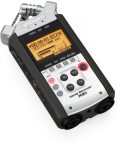
Or you can capture your audio with a stand-alone recorder like the Samson Zoom H4n, also around $300 and sync it later in post.

Regardless of how you ultimately “trick out” your VSLR (video single lens reflex)  you can be sure that there will continually be newer models and solutions as technology keeps moving forward.   Pro Video Coalition puts out a great newsletter online keeping us abreast of the latest tools.  Check out their DSLR Shootout where they test these hybrids and adaptors. Take Dirck Halstead’s Platypus Workshop now incorporating the new DSLR’s in the program. And become a Facebook fan of From Still to Motion for ongoing information and updates.  It’s an exciting time with loads of possibilities.

Add to FacebookAdd to DiggAdd to Del.icio.usAdd to StumbleuponAdd to RedditAdd to BlinklistAdd to TwitterAdd to TechnoratiAdd to Yahoo BuzzAdd to Newsvine

Tools of Change and New Distribution

Up early again, my mind restless and spinning with ideas, thoughts and reflections on last week’s Photo Expo in New York City.  Ironically this year’s Expo didn’t really reveal anything “new” for me in the way of new toys and tools of the trade.  What was new was the obvious absence of Adobe on the exhibitor floor – a sign of the economic times?  Or is it  a sign of how the photographic business is shifting – from professional to prosumer?

While in NYC I took time to see Robert Frank’s exhibition “The Americans” at the MET.  His beautiful images have stayed in my head and no doubt will provoke me to jump-start one of the many projects that continue to bubble to the surface in my mind.  But there was one thing I read in context of the exhibition and that was a statement made about the camera being a “tool of change” during Frank’s time. I started thinking about that and realize that the camera, whether it be a still camera or a motion camera is still a “tool of change”.  James Natchwey’s images are powerful examples of that.

What is radically different today is our means of distribution – of getting our imagery seen.  No tool has the power to make a difference or a change if what it creates is never seen.  I started thinking about the demise of newspapers and print in general and I was dismayed about the future Temple of Horus, Edfu, Egyptand the still photos that may never be seen.

With the Internet and global distribution, the playing field has been leveled and democratized and anyone can share anything they create with the rest of the world – right?  Maybe not – because ultimately the web is controlled.  It’s controlled by what search engines find and how information is ranked. Listen to Eric Schmidt, Google’s CEO talk about the Internet of the future.  Even Facebook now is deciding which friends will see our news feed.  That default can be changed of course – but you have to be aware of it to change it.  How many of us are aware? And I mean that in the broadest sense, meaning aware of what and how our information is delivered.

All the “free” content we get these days over the web excites us all.  It’s great – but even free comes at a price.  I can only hope that future generations will understand the underlying cost of  “free content” and be aware of who is controlling distribution in this new paradigm.