How a Film Can Make a Difference

I never fully realized the power that is within me to make a difference, until recently.  Last summer, my daughter and I spent time with extraordinary people who were providing homes for orphans, feeding the hungry and curing the ill.  They were all people we met while making a documentary about the change makers in our world – people who are making our planet a better place.
Our goal was to inspire and motivate others as to what they can do to make a difference in their own communities. Our goal was to cause a shift, in culture and in thought – from “what in it for me?” to “what can I do?” We’ve just begun to submit this documentary to film festivals and show sneak previews to small audiences but I can already tell that this film has affected change and the potential it has to move people to action.

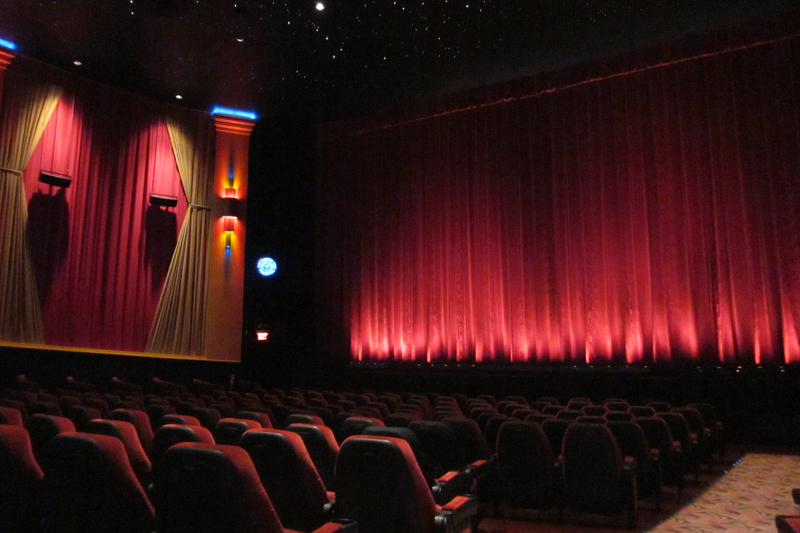
From our first sneak preview at the beautiful State Theater in Traverse City, MI to a recent screening at MIS in Sao Paulo, Brazil, I feel the energy in the room and the collective desire to strive for a better world.  I feel the power of film and the power within me as a storyteller and filmmaker. I feel the time for this film is now and that people are hungry for hope.

Many documentaries take the critical point of view and certainly have more conflict. Opening Our Eyes is different from other docs in that it shines a light on what IS being done to create positive change by individuals all over the world.  Somehow by showing the small acts, this film makes all of us believe that we can create change as well. It empowers us to believe in the possibilities and gives us the hope we seem to be yearning for these days.

When I first conceived of the idea for this film, inspired by friend and neighbor Maggie Doyne, I was looking for some positive hope myself.  I was tired of listening to the hundreds of “experts” on TV talking and all of them needing to be “right” – and nothing was getting any better. That was long before the Arab Spring and the Occupy movements. What I was sensing was the rest of the world was feeling the same way I was and decided to do something about it.

Time will tell if the film continues to create awareness and moves people to action, but at least I’m hopeful again.

Please consider supporting our effort by making a contribution to our IndieGoGo campaign, which only has a few weeks, left to go. And it’s tax deductible.

We can’t do it without your help.

Add to FacebookAdd to DiggAdd to Del.icio.usAdd to StumbleuponAdd to RedditAdd to BlinklistAdd to TwitterAdd to TechnoratiAdd to Yahoo BuzzAdd to Newsvine

The NON Convergence of Still Photography and Video

Many people, myself included have written about the convergence of stills and video. In fact ever since Vincent LaFloret paved the way, shooting video in a cinematic way with the Canon Eos 5D Mark II, it seems like every still  photographer wants to shoot video with a DSLR . At the same time, high end “video cameras” – not still cameras that also shoot video – but a high end camera like the RED is capable of capturing stunning stills from frame grabs and they aren’t just good enough – they’re great.

I suppose in this sense one could argue that there is not only a convergence of our tools – meaning a camera that is capable of shooting high quality video and still images – but that it also may mean – the end of still photography. I don’t have a crystal ball but if one defines a still image as a “moment in time” then still photography will never go away. If you have a camera that shoots hi res video and can pick and choose the exact frame that fits your still image needs – then we need to realize that this is a convergence of our “tools”  not the the end of creating still imagery.

I love to point out the differences of still photography and video because for me, and many others who shoot both still photographs and video, we think differently when shooting these mediums.

  • A still image is a moment in time.
  • Video is time in motion
  • A still image is one that is meant to linger on – where one can take pause
  • Motion imagery is made up of  a variety of shots and sequences
  • Video provides more information – there’s sound and  movement
  • Still images leave more for viewer interpretation
  • Still images deliver a message visually
  • Video delivers a message utilizing sight and sound

Everyone of these differences requires us to put our minds in a different place. When shooting video, I need to think about what shot will come before and what shot will come after the shot I’m about to shoot. I have to think that way or I won’t have the goods to cut with in the editing room. The message or story gets crafted further in post production with music and interviews and each element plays its part in the feel and arc of the story.

When I’m shooting still images, I must tell the story in that one frame and timing is everything – it’s the “decisive moment”. So, one must ask is it the same – is it even fair – to grab that “moment in time” from a video clip where the camera operator didn’t make a conscious decision when shooting that decisive moment ?

The point is with everyone talking about “convergence” and taking that to mean the demise of still photography – I have to wonder. Is it the end of still photography? Personally, I don’t think so. I think that it merely means a convergence of the tools – not what we create with those tools.

Add to FacebookAdd to DiggAdd to Del.icio.usAdd to StumbleuponAdd to RedditAdd to BlinklistAdd to TwitterAdd to TechnoratiAdd to Yahoo BuzzAdd to Newsvine

Editing 150 Hours of Footage From a DSLR

As I roll away the miles, driving the ten hour trip to Michigan to rendezvous with my daughter Erin to film the last of our subjects for our documentary Opening Our Eyes, I realize how desperately I needed a long road trip – just cruising down the highway.  I have been in utter isolation for the past month, editing over 150 hours of footage that we had shot over our ultimate road trip around the world this past summer.  Little did I know that the 99-day journey would be the easy part of this project.

This past month there have been many times that I became so overwhelmed with the process of editing that I wanted to throw my hands up in surrender and just give up.  But somehow I plowed through it, many days putting in 14 plus hours.  I was on a mission and listening to the words of my subjects got me through it.  After all these were some of the most inspirational people I had every met, so revisiting them through their interviews was a constant reminder of the goal of this film which is to create awareness and inspire and motivate others to make a difference and create change.

Ultimately, my challenge is to take ten (soon to be eleven) different stories of people across the globe who are making a positive difference in the world.  After finally getting the tedious tasks finished, of transcoding files and sorting through the good from the bad clips, I arrived at a point where I needed to start telling “THE” story.  Meaning I needed to determine how I could best structure the film to convey the common themes between my subjects.

In order to see the story clearly – I needed to get away from the technology. So as the miles roll by, the story becomes  more vivid in my head.  I see the hero(s), the themes, the commonality and the arc of the story as the stories intertwine.  I won’t give away too much information other than to say that the solution is simple.  They aren’t eleven different stories after all. It’s really a global story about the power of one.  How one individual can create positive change and not only effect generations to come but change themselves as well. It’s a basic human story that resonates with all of us.

When I started writing this blog I was going to talk about editing tech tips. Somehow as the miles rolled by and my head became clear of the intense electronic input from the past month, I not only saw the story, but I felt it.  I had gotten back on track and gotten to the heart of the story.

Add to FacebookAdd to DiggAdd to Del.icio.usAdd to StumbleuponAdd to RedditAdd to BlinklistAdd to TwitterAdd to TechnoratiAdd to Yahoo BuzzAdd to Newsvine