Letting Go

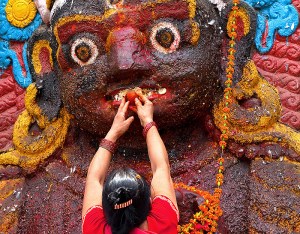
This past weekend our film, Opening Our Eyes, Kathmandu, Nepalhad its premiere in New York City. We have been in dozens of film festivals and events all over the world but for whatever insignificant reasons, we had never screened in New York.  I think of NYC as my “hometown”, even though I have never lived inside “the city”. It’s where many of our friends, clients and colleagues are and it has been our “home base” for over 35 years.
Despite the fact that the temperatures were in the single digits and there had been a major snowstorm the night before, so many of our oldest and dearest friends, along with some new ones, showed up. Even Nisha, a young Nepalese girl who is in the movie – came out on that cold night. I have been in front of many audiences over the years and have enjoyed it immensely, but I can honestly say that this was the most meaningful experience I’ve ever had. To be able to share my film – a body of work that I put a lot of hard work, heart and soul into – with my peers and people I’ve known since my beginnings, was pure joy.

In a way, the night brought things full circle in regards to the film.  A lot of filmmakers “open” or premiere in their hometowns.  Once again, I did things a little backwards, by “closing” in my home turf, as this may be the film’s last festival screening. I don’t have plans to pursue more festivals – but I never know what’s lies ahead, in the way of opportunities, and am open to possibilities.  This project and this journey have rewarded me in hundreds of ways and no doubt will continue to enrich my life. The film will still be available for screenings at educational venues and community events.  It’s also available on DVD and streaming.  My daughter, Erin and I made this film to inspire and motivate others to create positive change in our world, and we hope that message continues to spread globally.

A young filmmaker I met at one of the festivals I attended told me, “a filmmaker never finishes a film – he(she) just knows when to let go.”  I am able to “let go”,  because I know that this experience has set the stage for the next events in my life.

“Everyone has Oceans to fly, if they have the Heart to do it. Is it reckless? Maybe. But what do dreams know of boundaries?”
 
– Amelia Earhart

6 Social Media Marketing Mistakes to Avoid

I must admit, I’m not an SEO or Social Media guru.  In fact, on a scale of 1 – 10 (10 being extremely interesting), I’d give this topic a 3.  But, after reading Gary Vaynerchuk’s book “Jab, Jab, Jab, Right Hook,” (which I would give a 10), I’ve shifted my thinking entirely.  I also realized why, the topic has had little interest for me – most of the books, articles and blogs I had read were full of formulaic tips  – but none of the advice and tips felt like a good fit who I was and what I had to offer.  And in fact if I had applied some those tips to my blog or my Facebook posts, I would have done myself and my business a disservice by not being “myself” – or authentic.

Some social media marketing mistakes to avoid:

  • Putting the wrong content on a platform – Each platform, (Facebook, Twitter, LinkedIn, Pinterest, Instagram etc.) has it’s own “native” language or how the community communicates  and interacts with one another.  A good marketer understands that “context” is just as important as content.  Your content must provide the same value to the viewer that is native to that platform. Your content should fit in with what drives people to that platform.
  • Content is not memorable – Your content should be something that people want to share. ooe fb [age Facebook uses edge rank, which determines who and how many people see your posts.  The more shares, comments and likes, the better your edge rank and the more people who see your posts.  Keep your content, informative, entertaining or both and give people the desire to share.
  • Selling too often – You have to “give” more than you “sell” on social media platforms. If every post you make is a pitch for your products, no one will be interested, let alone want to share them.
  • Text is too long – Twitter has a cut off, but Facebook doesn’t.  Keep in mind that more and more people are viewing your posts on mobile devices and simply won’t read lots of information.  Provide more info via links. Make sure your text is provocative and entertaining.
  • No use of imagery – If you don’t have an image in your posts on platforms like Facebook or Tumblr, you won’t attract attention.  People will just move on to something that catches their eye on their news feed.  And, make sure the images you post are good and professional – they’re a reflection of your business. Make sure you overlay your logo on your images.
  • No call to action – Remember you are ultimately selling your products and your services, so don’t forget to give your viewers a call to action.  But don’t confuse them by giving them too many.

The Advantages of a Disadvantage

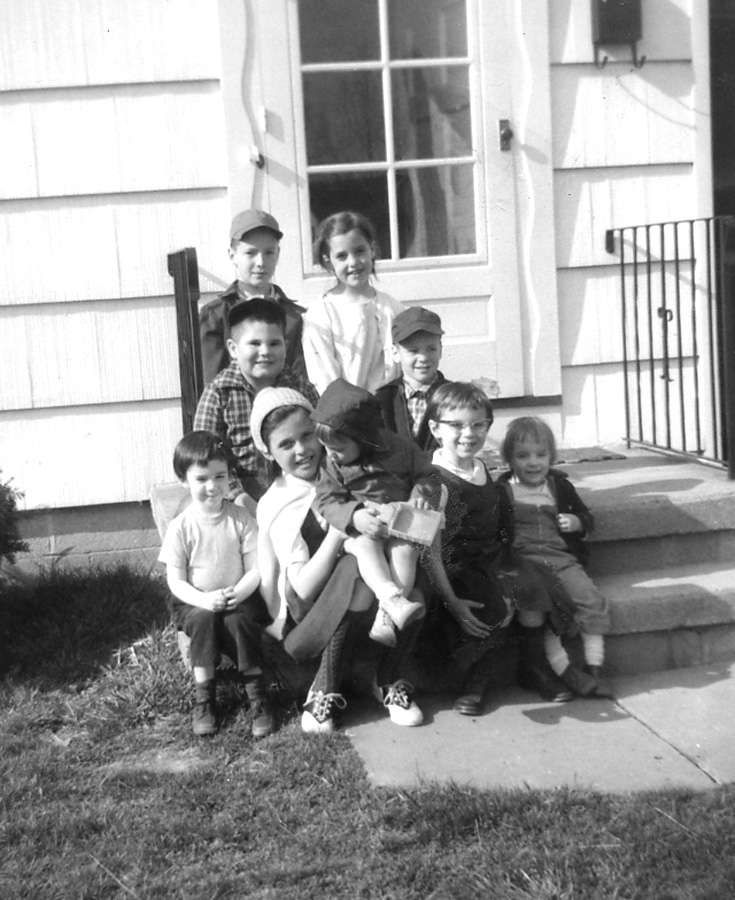
My gang of friends.  I'm on the top step.
One of my early childhood tribes, Rochester, NY  (I’m on top step)

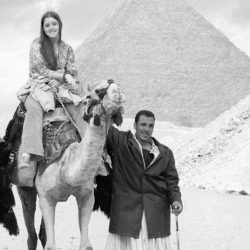
I re-connected with an old friend last week.  We hadn’t seen each other in 43 years!  Other than my family members, I have known this friend longer than anyone else in my life, except for one other.  But we hadn’t been in contact with each other, until a few months ago.  We’ve had  a wonderful exchange of emails and a bit of serendipity that led to an in person reunion. It’s been a cathartic experience for both of us.

We were teenagers, who used to “hang out” together. We went to different schools and we lived in different neighborhoods but for a couple of quick years, he, I and a few other friends, hung out together, on the warm spring and summer evenings of our youth. Until I moved…..again.  It was probably the tenth time that I had moved and changed schools, and I was only 16 years old and mid-way through my junior year of high school.   I suppose you could say that I had lived the life of a rolling stone. But it was what I knew.  In one of our dialogs, I reminded him about that move, and he looked at it, as tragic.

In a way, I suppose growing up in a transient lifestyle was a bit tragic.  Just when I would make friends, and feel like I was part of my “new school”, we would move again, to a new community. My dad was climbing the “corporate ladder” and with each promotion came a series of moves. I was the perpetual “new kid” and I guess I was always in search of a “new tribe”.  I grew up, a product of change.

I recently finished reading Malcom Gladwell’s new book, “David and Goliath: Underdogs, Misfits and the Art of Battling Giants”.  He talks about people who have turned the disadvantages  that they’ve had in their lives, into advantages.  Each chapter unfolds into a story about a highly successful person who had to overcome obstacles or disadvantages in their lives – everything from losing a parent to being dyslexic.  One example Gladwell cites is about a high profile Hollywood producer who had worked his way from his impoverished beginnings to fame and fortune.  His children had everything, but he was worried about their future.  He knew that if they didn’t have to “work” for something, they wouldn’t know the feeling of accomplishment and success.  They would not have the “advantage” that he had growing up, the advantage of being poor.

I realized after reading Gladwell’s book that what I might have looked at as a disadvantage, my nomadic life, was probably the biggest advantage I had.  It has made me take chances in my life and not be afraid to initiate an interaction.  If I hadn’t, I wouldn’t have made friends.  It made me love school because I knew that was where I would connect to people in my new community. I learned to adapt to change.  If I didn’t I would have been miserable all the time or afraid – or both. Instead, I have lived my life, continually exploring my curiosities, whether it is visiting a foreign country, embarking on a new creative project or expanding my craft.

Would I have wished my nomadic life on my daughter?  Probably not, it wasn’t easy. But it certainly had its rewards.

Being Thankful

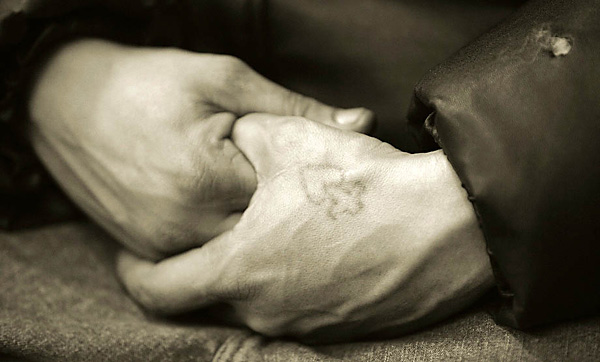
Next week is Thanksgiving.Hands of man in homeless shelter, New York City Call me corny but I’m one of those people that like to think about the real meaning behind the holidays that we celebrate. So today I’m taking pause to think about all the things that I’m thankful for this year. Sure there’s plenty of angst, jobs are less and money is tight but I have a lot to give thanks for.

• My health – for this I am most grateful.
• My family – both my immediate family and my far-flung relatives who I don’t get to see often but are always in my thoughts and I know are always there for me.
• My freedom – I think about this a lot. No matter how many times I feel that things have gotten off track in my country – I have the freedom to speak my mind, pursue my dreams and to change the things that I don’t like.
• My home – I’m lucky to have a home where I feel safe because I know there are so many who aren’t as fortunate these days. I never take this for granted.
• My passion – Sure I have my down days, but I’m thankful that I have an inner spirit that won’t let me give up on my pursuits.
• My friends and my peers – Because of my career and my collaborations with others, I have good friends – some I’ve recently gotten to know and others I’ve known for a long time. And some who I’ve recently reconnected with.
• My sharing of knowledge and making a difference. My husband and I trained a small army of volunteers in our town to shoot our town meetings and get them broadcast on our public access station. And I can see it has made a difference – people have become more civic minded and taken more of an interest in their community.
• I’m thankful that I am able to use my craft and create awareness through my personal projects in both stills and video.  I’m thankful they can be seen globally, via the Internet and the power that has.
• I’m thankful for the many volunteers everywhere who give their time generously to others who are in need.
• I’m thankful for all the little things that are so precious – the sun that warms me on a cold day, the rain that nourishes the land, the colors and calm of a beautiful dawn and the thousands of stars on a clear night.

I’d love to hear what others are thankful for. I have found many times that those who seem to be less fortunate are also the ones who are the most thankful for what they have.

New Business Models in Photography and Motion – in a Global Economy

Manchester Airport, Manchester, England

This topic comes up a lot these days.  You  could apply “new business models” to just about any business – not just photography and video. Photography and video, in and of themselves are not business models at all, but rather they are mediums that are used commercially, non-commercially and personally. The business end of photography and video comes when you determine how you want to apply them in terms of today’s markets.

Today’s markets are global.  That’s good news and bad news, depending on the type of work you do.  If you are a stock photographer or even if you have expanded that into also shooting stock motion footage – your inventory or your content must be unique in some way in order to sustain that type of business model in our global economy. You will need to stand out and offer something unique,  if you pursue this type of market.

If you are a commissioned commercial or editorial photographer, cinematographer, or director, the competition is fierce and once again, if you don’t have a unique style or vision, most likely you will end up playing by others’ rules or signing “their” lopsided contracts.  It comes down to supply and demand of talent and work, and you will either compete with price or offer something that you do better than your competition.

The good news is, if you are willing to do the work, the world is your stage.  The portals for distribution of your “content” are open to all and as “creatives” we are no longer dependent on middlemen.  When I get asked to talk about “new business models”, I always look for where the new opportunities are.  Where will I be able to carve out my own “new business model”, rather than having to adapt others’ ideas of what that may be.  There is a big difference in those two approaches.

I am carving out a business model for who I am creatively, and where I see the most opportunities for what I do well.  When I am authentic to who I am and apply this to my work, I am able to deliver my own unique vision and reach the right audience,  while maintaining ownership and control over the licensing of my work.  I am able to do that not only because technology has enabled me to do that, but more importantly because I have set myself apart from everyone else who has a camera.

Think about it.  What are your strengths? What are your passions?  Now imagine a business model based on your answers. The world is our stage.

The Value of Photography

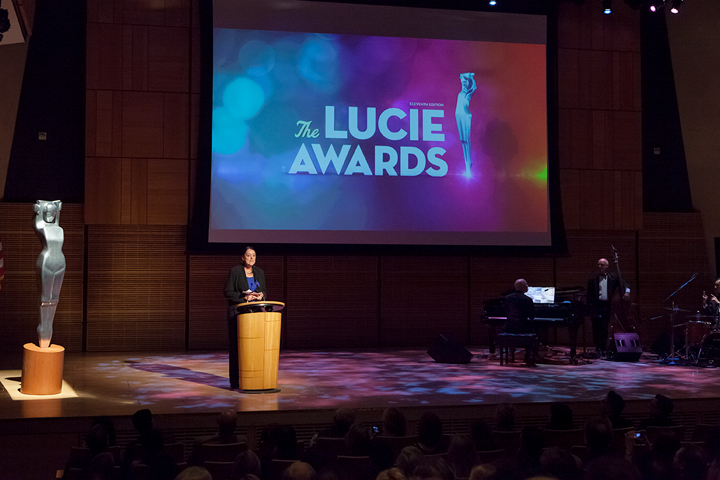
The who’s who of photography gathered last night, at Carnegie Hall to honor the “masters” of their trade at the Lucie Awards. The Lucies are like the Oscars of the “photographic industry”.

2013 Lucie Awards, Carnegie Hall ©Thomas Kelly
2013 Lucie Awards, Carnegie Hall
©Thomas Kelly

I had been asked to step in to present the “2013 Deeper Perspective Photographer of the Year Award”. on behalf of the ASMP when Executive Director, Gene Mopsik and President, Ed McDonald couldn’t attend.

I don’t usually get nervous about things like this, but I was last night. As I stood in the wings with photographer John H. White, who was waiting to go on stage to accept his Lucie, for Achievement in Photojournalism, I was mesmerized as I watched John.  He seemed to glow and I felt his grace, his humility and his gratitude.  It was a moment in my life that will stay with me forever.  It was calming. I watched and listened to his acceptance speech on the monitor backstage, and I was deeply touched.  So was the audience, as evidenced in their standing ovation.

John H. White is not a “rock star” type of photographer.  His images don’t “shock and awe”, not in the way a war photographer’s images do. John’s photographs capture the subtle moments of the human experience.  His legacy of images show us life as it really is.

This past spring, after 35 years with the Chicago Sun Times, John and the rest of the newspaper’s photographic staff were fired.  It was a huge blow to the photographic community, magnified by the fact that even John H. White, the “chairman” was “let go”, without even as much as a thank you. John wasn’t bitter about it though.  Michelle Agins wrote a wonderful article for the New York Times where she quoted John: “A job’s not a job because of labor law,” he said. “It’s just something you love. It’s something you do because it gives you a mission, a life, a purpose, and you do it for the service of others.”

All he had wanted to hear from the executives who let him go was two words that never came: thank you. But even then, he did not respond with anger.

John spoke more about the Sun Times’ firings in an interview with NPR where he said: “I will not curse the darkness. I will light candles. I will live by my three “F” words: faith, focus and flight. I’ll be faithful to life, my purpose in life, my assignment from life. Stay focused on what’s really important, what counts.” He repeated those three “F” words last night as he accepted his award.  The audience was humbled.  John had shed his light.

I have been thinking a lot lately, about the value of photography and the value that a professional brings to this craft.  John H. White and his archive of work is a stellar example.  His images, capturing the subtleties of life stand out amongst the noise.  They make us take notice of what is often over looked – the quieter moments of life.

As far as what a professional photographer brings to the world, I think John stated it best: “Every day, a baby is born. Every day, someone dies. Every single day. And we capture everything in between. You think of this thing called life and how it’s preserved. It’s preserved through vision, through photographs.”

As John walked off the stage and back into the wings, I felt enveloped by his glow that had seemed to magnify.  I caught his eye for a moment and said “thank you”. He nodded, and flashed his wonderful smile and in that moment, we connected and shared our understanding, of the “value” of photography.

Past Predictions of the Future Have Been Greatly Exaggerated

One of the blogs that I regularly read is Copyblogger, which provides a lot of great information and insights into content marketing.  This past week, Brian Clark wrote a post entitled,  The Future of Content Marketing.   He writes:

“A bunch of really smart people got together in 1880 to predict the future, according to Jeff Stibel in his intriguing book Breakpoint. These experts were called on to predict how the rapidly growing Gotham would manage into the next century and beyond.

The prognosis was not positive.

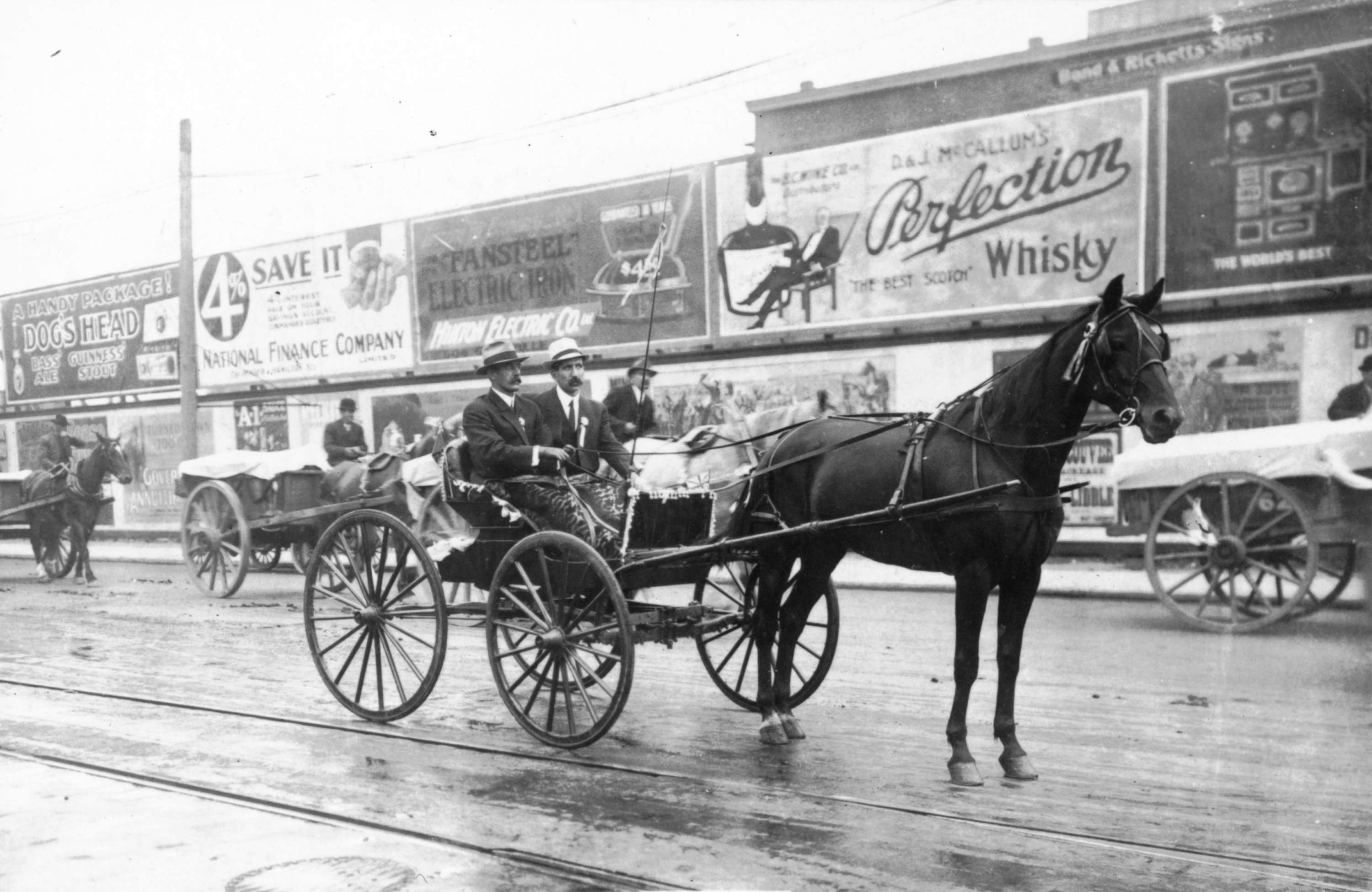
NYC was a major source of American innovation in 1880. Skyscrapers, subways, stock exchanges — and it was doubling in size every 10 years. abb36e44-0c30-4a09-9279-0cd3c3fefa9b-A01867The experts were concerned by this growth, because they projected by 1980, you’d need six million horses to transport all the people who would live there.”

Folks were predicting the future of New York City, looking at it through the eyes of what was technologically possible then.  They were more concerned about all the horses and the “crap” that would be produced, than they were about greenhouse gases, because nobody knew what that was.

When I re-ran a blog post How Motion is Changing the Future of Photography, I used a similar analogy, that Ray Kurzweil had given when I heard him speak at NAB.  Ray said that, at the turn of the century (the beginning of the 1900’s), if you thought of yourself as being in the “horse and buggy business”, you were doomed to fail because of advent of the automobile.  But if you saw yourself in the “transportation business”, you thrived, no doubt because you broadened your view to include the automobile.  In my blog, I compared that analogy to what is happening in the still photography business, as the mediums of still imagery and video converge.  I received a lot of responses from that post, mostly from people who argued that still photographs would always be around. I don’t disagree with them.  I do think there will still be still images in the future – however, I think the still photography business will drastically change from how it is now.

Interestingly enough, every year I’m asked to bid on a still photography assignment for a tourism client.  Yesterday, I received the bid packet and there was a profound change.  They were not asking for a quote for still photography.  They were asking for a quote for video – and not just video – but video shot on a RED camera so that they could pull frame grabs from the footage and use those “still images” in their ads.  Now, that’s a game changer.

There’s always a danger in predicting the future and that’s because we tend to use and be influenced by the information and the knowledge that we have now – in the present.  What I’ve learned in my many years on this Earth is that the future will be nothing like how we imagine it will be.   I know that because what I imagined the future to be, some 35 years ago when I set out to make a career as a still photographer, was very limited in terms of how technology has changed things.

The human need to create will continue to mold a future that is way beyond what most of us could ever imagine.

Embrace Unpopularity

There have been more than a few times in my life when I have said something or spoken my mind that made me “unpopular”.   You would think that I would learn.  Learn to keep my mouth shut.  Learn to be more diplomatic.  Learn to say the things that people want to hear, rather than say the things that I feel need to be said.  But, yet I seem to have a knack of saying and doing things that make me “unpopular”.

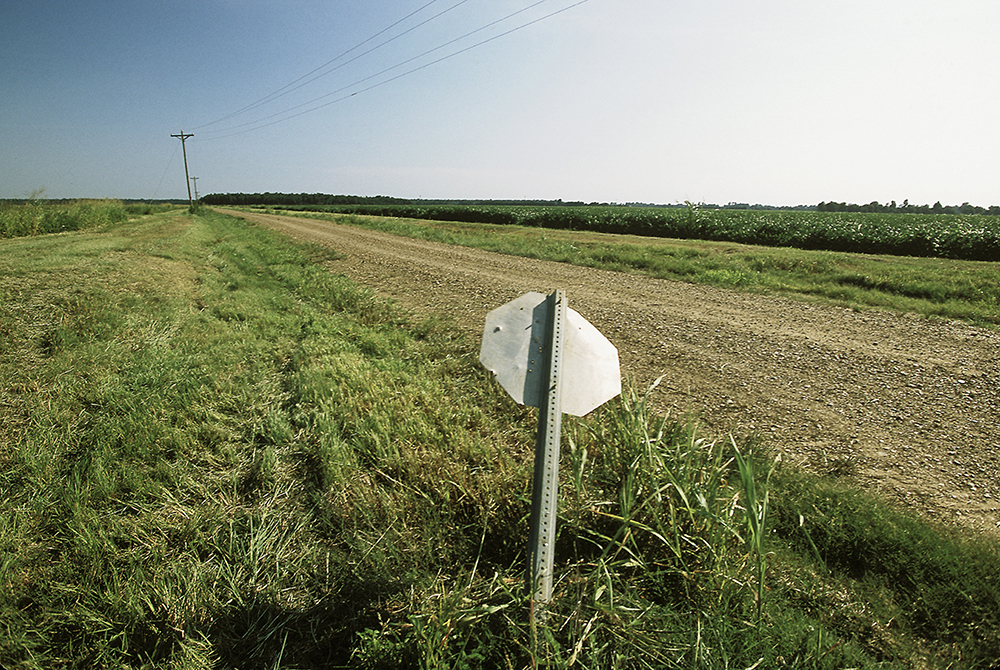
I just can’t seem to help myself from being true to who I am.  And each time, I’ve done or said something that seems to polarize the status quo; I beat myself up for it.  Bent stop sign at crossroads, Mississippi DeltaYou would think I would learn.  After listening to this TED talk this morning, I have learned.  And what I have learned is that maybe I’ve been trying to appeal to the wrong demographic.

In the talk, speaker Erika Napoletano, states:  “We spend our lives trying to build ourselves into something that other people think that we should be, when in fact we should be spending our time trying to actively polarize our audience.  Give them tools to help them know whether or not they should love us and give it early and give it often. Because that’s when we stop wasting time, both ours and every one else’s”.  Erika went on to say some things that really resonated with me because she was being perfectly honest.

I am a creative being – a photographer, a filmmaker, a writer and an explorer of what the world has in store.  After listening to Erika’s talk, I realized that I have wasted an awful lot of time and effort trying to appeal to the wrong demographic – the “popular” and the “majority”.  When I think about the things that I have created that I am most proud of, and that have been the most gratifying, I realize that every one of those triumphs have come when I’ve been honest and true to myself.  In other words – I’m at my best, when I stop apologizing for who I am and instead, I embrace it.

So, when I wake up on those mornings after I’ve beaten myself black and blue for being who I am, I try to remember that “being myself” is better than the alternative – trying to politely appeal to the “popular” crowd.  While, it may be easier to fall in step with the “status quo”, it is not only counter-productive to being true to oneself, it stifles creativity.

It’s tough to stay true to oneself in a society that often teaches us to favor politeness over honesty but at the end of the day, it’s far more rewarding.

“Here’s to the Crazy Ones.  The misfits.  The rebels. The troublemakers. The round pegs in the square holes.  The ones who see things differently”.  Steve Jobs