The Future and Video

Video seems to be the hot topic these days amongst still photographers. Their clients are coming to them and asking them if they shoot video and many are starting to incorporate video into their still photography businesses to be able to fill their clients’ needs.
We all spend more and more time getting our information and communicating electronically. When you analyze that, you quickly realize that there has been a shift in the way that we as a culture communicate, and that has changed our industry – still photography. Not because a still photograph is obsolete or has lost it’s impact, but because the traditional outlets for still photography are slowly disappearing – print newspapers and magazines.

We can debate which medium – still photography or video – delivers a visual message better – but it would be a pointless debate. Truth is, a viewer is meant to linger on still images, while motion mediums are meant to hit us with the added dimensions of movement and sound. Neither medium is better than the other and neither medium is going away. At least not as far as I can see.

The real debate shouldn’t be which medium is better, because there isn’t a one size fits all answer. Some things are visually communicated better in stills and some things are better in motion. The real question we should all be asking ourselves from a business point of view is – What are our clients asking for? And – Are we in a position to fill our clients’ needs?

I see a future where I shoot still images and video. Some jobs will call for still photography and some will call for video depending on the message or the story that our clients want us to tell. I want to position my business to be able to solve my clients’ needs with whatever medium does that best.

Add to FacebookAdd to DiggAdd to Del.icio.usAdd to StumbleuponAdd to RedditAdd to BlinklistAdd to TwitterAdd to TechnoratiAdd to Yahoo BuzzAdd to Newsvine

The Power of Social Media

My last blog entry, I wrote about the DO’s and DON’T’s of Social Media. The next day I put some of some of those tips to work.

I am embarking on a personal project, Opening Our Eyes. The idea behind the project is to make a documentary that features people who are making a difference around the world – people who have followed their dreams, passions and ambitions and started their own personal projects that help make the world a better place. Ordinary people who are doing extraordinary things.

In looking for these people or subjects of the documentary, I wanted to utilize the power of social media and my connections and friends, to not only find “leads” but also to make the entire project an interactive experience from the start. So, two days ago I launched a simple website and blog and gave the idea a name, “Opening Our Eyes – Global Stories About the Power of One”.

My daughter Erin is teaming up with me on this project. She lives in Chicago – I live in NJ – but with social media we can bridge that divide as well as get the involvement of all our separate “friends”. Using a company called SquareSpace and their amazing publishing software, I was able to set up a simple blog and website and get it online in less than a day. It site will grow as we both continue to add content and relevant links and information, but by getting the idea “out there” and providing a way for feedback and dialog to take place – we are building our own community at the same time.

After the site was created, I created a fan page on Facebook with information about the project and links to the website. I also registered the blog with Network Blogs and inserted a “follow this blog” button on the fan page. And then I tweeted about project on Twitter, which automatically shows up, on my own personal FB . I also sent out about 50 emails to people I know.

The response has been overwhelming. Within a day I have received over 50 ideas about people and their projects. We’ve had well over 300 hits on the site and almost 40 fans on Facebook. Now that might not seem like a lot to some people – but to us it was an amazing response in such a short time.

As the project takes shape fueled by the interest and eagerness of our participants we are building a community and opening others’ eyes to the “power of one”.

Add to FacebookAdd to DiggAdd to Del.icio.usAdd to StumbleuponAdd to RedditAdd to BlinklistAdd to TwitterAdd to TechnoratiAdd to Yahoo BuzzAdd to Newsvine

Merry Christmas

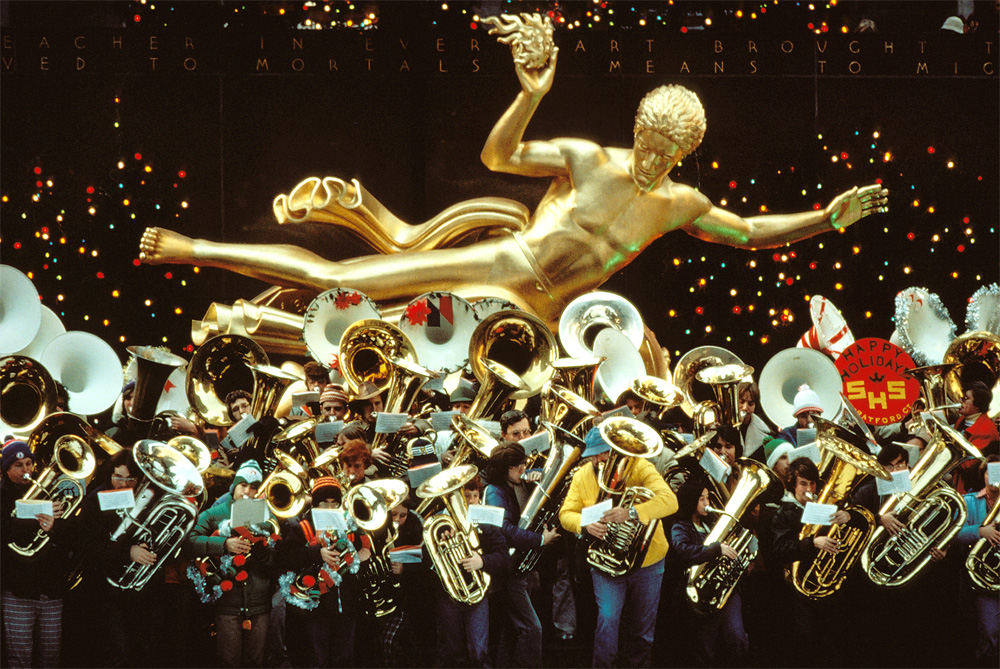
Tuba concert, Rockefeller Center, NYC

I’m home and looking forward to spending a few days with family and friends. The presents are bought and wrapped (well almost) and it’s time to just enjoy.

We all spend so much time “connected” to computers, ipods, iphones and every other device, we forget to enjoy some of the simplest things in life like a nice fire or a good bowl of soup on a snowy day. So for the next couple of days I will take joy in really “connecting” with the people I love through conversation,  good food and lots of laughter.

And I will be grateful for what I have and think of those less fortunate. I’ll remind myself to be kind to others and recognize the power of that.

It’s a time for love and peace and taking time to breathe.

Add to FacebookAdd to DiggAdd to Del.icio.usAdd to StumbleuponAdd to RedditAdd to BlinklistAdd to TwitterAdd to TechnoratiAdd to Yahoo BuzzAdd to Newsvine

Watching TV Without The Sound – A Lesson In Editing

Every morning I spend an hour on the treadmill while plugged into my iPod listening to music. Sometimes the TV is turned on but with the sound turned off. I have found that just “watching” TV and in particular the commercials, is a great way to learn editing technique. I’m not distracted by the audio so I can better see how the elements get cut together.

Commercials need to get their message out in 15 seconds so the cuts are generally quick and the story needs to be told in an efficient manner. Action-reaction shots, cutaways, close-ups, sequencing – all stand out to my eye because I’m not distracted by the sound. It makes for a great lesson in editing. I notice the visual storyline – what shots are bumped up together, how long they stay on the screen and how they all make up the whole in presenting the message.

Conversely, if I have the TV on in another room (with the audio) and I’m just listening, I can usually get the message without seeing any visuals. That’s why great audio is essential – it drives the story. If people can’t hear something or understand it because the audio is poor quality, the piece fails to engage.

So try it sometime. Watch TV without the sound and notice how the story is told through the visuals and how they are cut together. It will help make you a better editor. And then try watching a video that you create with and without the sound. It’s a great way to see if you are telling the story that you meant to tell.

Add to FacebookAdd to DiggAdd to Del.icio.usAdd to StumbleuponAdd to RedditAdd to BlinklistAdd to TwitterAdd to TechnoratiAdd to Yahoo BuzzAdd to Newsvine

Print vs Electronic – What Is The Future?

Just yesterday I was talking about the good and bad of social media and the potential pitfalls with time management. My routine each morning is to check for any news items on Twitter or Facebook or bookmarked blogs after catching up on my email. This morning there was one post on Facebook that caught my eye and was definitely worth the click through.

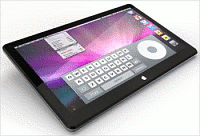
Via Mashable.com was Time Inc. Show Us Their Idea of The Future of Magazines [Video]. It was about how publishers are preparing digital versions of their magazines for the Apple Tablet. Apple hasn’t even officially confirmed they are working on this device. Embedded in the post was a pretty sophisticated demo of Sports Illustrated.

Amazing as the demo was – it had its critics. Check out Gizmodo’s post Time’s Manhattan Project Will Explode Like the Atomic Bomb It Is. The article questions how it’s any different from a web page and at ten times the cost. They state it’s pretty packaging but still stale and dead.

The future of publishing is an interesting debate. I suppose it really all comes down to how we the consumers want our information. What do you think?

Add to FacebookAdd to DiggAdd to Del.icio.usAdd to StumbleuponAdd to RedditAdd to BlinklistAdd to TwitterAdd to TechnoratiAdd to Yahoo BuzzAdd to Newsvine

Input Overload

John Lennon once voiced in a song “everybody’s talking and no one says a word”. That was 30 years ago – way before social media. Nowadays it seems like everyone is talking – everywhere – a constant electronic pipeline into our lives. But with all this talking I wonder sometimes if anybody is really being heard. And isn’t that the point – to be heard?

I admit I’m guilty of the same thing. The very fact that I write a blog adds to the cyber babble. To be honest I really do it for myself. It helps me focus my thoughts. Sometimes what I write is not meant for anyone other than myself or maybe a close friend. Other times, I put it out there when I feel I have something to share. And every once in a while I say something that resonates with someone “out there” and a connection is made. And that can be a powerful thing.

That’s the appeal of social media – to connect with others. A basic human need. Ironically sometimes we spend so much time in the cyber world “connecting” we become more insular in the process. And when we do spend face-to-face time with others – many of us are multitasking plugged into whatever portable devices we have at the time. In other words not totally “there”.

These days I try to manage the time I spend on Facebook, Twitter, Linkedin, YouTube and so on. It can be a real time suck if you’re not careful about managing your time. I go online with the social media sites 2 or 3 times a day and I give myself time limits when I do. It’s all about maintaining a balance.

Ultimately all this talking we do on social media platforms is not good or bad – it’s not that black and white. I’ve made some incredible connections through social media. I’ve also reconnected with people I’ve lost track of over the years. I’ve promoted my business utilizing social media and gotten work from people I wouldn’t have connected with otherwise. But I’ll always prefer a real connection with people – outside the cyber world. I think most people do – that’s just being human.

Add to FacebookAdd to DiggAdd to Del.icio.usAdd to StumbleuponAdd to RedditAdd to BlinklistAdd to TwitterAdd to TechnoratiAdd to Yahoo BuzzAdd to Newsvine

Wipe Your Knees Before Entering

Back in the eighties when I was starting out, every six months or so I made the pilgrimage to Washington DC to see Bob Gilka, The Director of Photography at the National Geographic Magazine.  He was the guy who decided if you would shoot for the magazine.  He was accessible, answered his own phone and made appointments to look at work. How times have changed.

Gilka was a man of few words and because of that seeing him was always a bit intimidating.  If all you had were images to show – and nothing to say, you’d pretty much be in and out of his office in the amount of time it took to click through your slides. Knowing this, I did my homework prior to the appointment. I’d come up with about 10 query ideas, research back issues of the magazine to make sure they hadn’t been done before and have at least one idea written up in a story proposal.
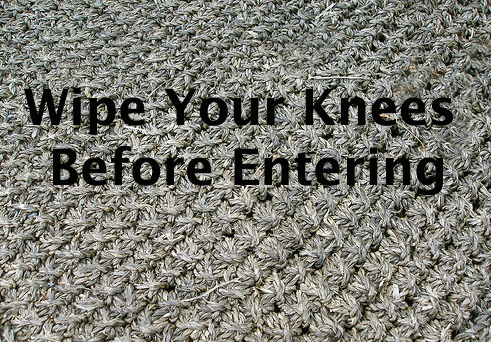
I’ll never forget the first time I went to Gilka’s office.  His secretary met me in the lobby, and led me to a small area just outside his office.  There on his door was a doormat –with words that read “Wipe Your Knees Before Entering”.  Talk about feeling intimidated – as if it wasn’t intimidating enough just to be meeting with the Director of Photography  at the  National Geographic.

So every six months or so I would show my images and pitch my ideas.  This went on for about two years.  Each time I went I would almost test myself to see how long I could stay in his office.  I would do my best to sell my story pitches that I felt the strongest about and he would reply – “done it –doing it – or – don’t want to do it”.  This coupled with a few words of encouragement in regards to some of my photographs would pretty much be it as far as feedback.

Then one day he kept me waiting.  He had been detained in a meeting.  I had scheduled a pretty tight day to maximize my trip to Washington – so the delay had thrown a wrench into me keeping my other appointments that I had scheduled.  When Gilka did show up and apologized, I was already feeling quite anxious and showed it.  I told him that I didn’t have much time because I had to be across town at the Smithsonian in 20 minutes.  He picked up the phone, called Declan Haun, the picture editor I was headed to see at Smithsonian Magazine and explained that Gail Mooney was running late due to his tardiness.  Then he proceeded to look at my pictures and hear me out.

When I did get to the Smithsonian, it was amusing to see how curious Declan Haun was to find out who this Gail Mooney was that got Bob Gilka to call ahead for her. The very next month, I got a call from Bob Gilka offering me my first assignment.  Guess I just needed to show my real self. I had sufficiently shown my interest and determination in wanting to shoot for them. And I had demonstrated my photographic ability through my images.  But it was when I showed my true spirit that he knew that I could shoot for them.  I just had to get over my fright.

Add to FacebookAdd to DiggAdd to Del.icio.usAdd to StumbleuponAdd to RedditAdd to BlinklistAdd to TwitterAdd to TechnoratiAdd to Yahoo BuzzAdd to Newsvine

A Time of Opportunity

You can look in the rear view mirror and lament the past or you can get excited about the future. With all the gloom and doom in the photography business in this poor economic climate, I remain optimistic and see it as a time of opportunity.  It’s tough to be an optimist in times like this but if you look back through history you’ll see that many businesses got their starts in bad economic times.

There’s nothing new about video but with increased bandwidth and the proliferation of mobile devices video is “hot” right now.  In some markets like the corporate and institutional sectors, I’m seeing more of a demand for video.  I’m hearing from traditional print graphic designers who are asking me if I shoot video because their clients are requesting it. Their clients want to add a video presence to their online communications that can be distributed internally and externally. And can also be spread virally through social media networking.

Editorial markets have expanded into video.  Just about every magazine has an online presence and nowadays it’s not just a regurgitation of their print edition but a lot more.  Take a look at NY Magazine or Zagats.com.

The travel market is ripe for video. When I’m researching a destination I like to get as much information as possible so if I can watch a 2 minute video – it usually hooks me further into that website to explore more and link to other sites where I can  facilitate my travel plans.  Many times videos made for online travel sites are repurposed and used at trade shows. Check out what Intercontinental offers as destination pieces about places where they have properties.

Of course there are hundreds of instructional videos and pod casts, and on the retail end there’s weddings and family biographies.

Even if you don’t shoot video or want to offer video to your clients, you may want to consider using it to promote your own business.  A short web video about your business or your creative approach with some behind the scenes footage of you working provides added insight and information to potential clients.

These are just some of the areas I see opportunities in.  I love to hear from other optimists where they think the opportunities are.

Add to FacebookAdd to DiggAdd to Del.icio.usAdd to StumbleuponAdd to RedditAdd to BlinklistAdd to TwitterAdd to TechnoratiAdd to Yahoo BuzzAdd to Newsvine

If the Idea Just Won’t Quit Ya – Take Notice

If anyone’s been paying attention to my last few posts you would have noticed that I’ve been very introspective of late.  That’s usually what happens to me when I’m about to make a change or embark on a personal project. '60's psychedelic VW vanI have found that when unexpected and random events happen in my life and I take notice and then question why – I’m ready for my next chapter.
I have a friend who is a freelance writer and lives nearby. We frequently take long walks through the miles of preserved natural open land that lie within our community.  We are both creatives and we’ve discovered that it’s a wonderful environment for conversation and bouncing ideas off of one another.  On a recent walk I was talking about an idea that just won’t leave my head and another thought that’s just starting to morph into a more concrete plan.

At one point she questioned that perhaps I should segway the ideas into assignments from magazines or online publishers – like that would somehow legitimize my effort.  I told her that if I have an idea that I feel so strongly about that I’m ready to proceed on my own  – then I didn’t feel the need to get validation from someone else. That my passion for the subject matter usually carried me through and was all the validation I needed.

I’ve worked on a quite few personal projects over the years, both still photography and video as well as combinations of both.  There hasn’t been one project that hasn’t been rewarding on many levels. Of course there’s the personal satisfaction and growth that I initially receive.  And there’s the incredible feeling I get from knowing my work has touched someone or had an impact on them.  And there are always the residual rewards that lead to new connections and future projects or jobs.

Someone once told me “pay attention to those thoughts in your head that just won’t quit ya”. So I think I will.

Add to FacebookAdd to DiggAdd to Del.icio.usAdd to StumbleuponAdd to RedditAdd to BlinklistAdd to TwitterAdd to TechnoratiAdd to Yahoo BuzzAdd to Newsvine

Tools of Change and New Distribution

Up early again, my mind restless and spinning with ideas, thoughts and reflections on last week’s Photo Expo in New York City.  Ironically this year’s Expo didn’t really reveal anything “new” for me in the way of new toys and tools of the trade.  What was new was the obvious absence of Adobe on the exhibitor floor – a sign of the economic times?  Or is it  a sign of how the photographic business is shifting – from professional to prosumer?

While in NYC I took time to see Robert Frank’s exhibition “The Americans” at the MET.  His beautiful images have stayed in my head and no doubt will provoke me to jump-start one of the many projects that continue to bubble to the surface in my mind.  But there was one thing I read in context of the exhibition and that was a statement made about the camera being a “tool of change” during Frank’s time. I started thinking about that and realize that the camera, whether it be a still camera or a motion camera is still a “tool of change”.  James Natchwey’s images are powerful examples of that.

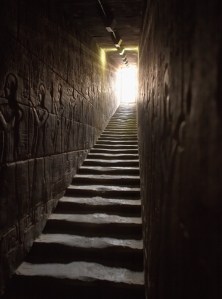
What is radically different today is our means of distribution – of getting our imagery seen.  No tool has the power to make a difference or a change if what it creates is never seen.  I started thinking about the demise of newspapers and print in general and I was dismayed about the future Temple of Horus, Edfu, Egyptand the still photos that may never be seen.

With the Internet and global distribution, the playing field has been leveled and democratized and anyone can share anything they create with the rest of the world – right?  Maybe not – because ultimately the web is controlled.  It’s controlled by what search engines find and how information is ranked. Listen to Eric Schmidt, Google’s CEO talk about the Internet of the future.  Even Facebook now is deciding which friends will see our news feed.  That default can be changed of course – but you have to be aware of it to change it.  How many of us are aware? And I mean that in the broadest sense, meaning aware of what and how our information is delivered.

All the “free” content we get these days over the web excites us all.  It’s great – but even free comes at a price.  I can only hope that future generations will understand the underlying cost of  “free content” and be aware of who is controlling distribution in this new paradigm.