The DSLR as a Business Model

Sounds silly doesn’t it – “The DSLR as a Business Model”? That’s because it is silly to think that a camera can define or be a business model. But that’s what so many still photographers are doing – thinking that because they buy a DSLR capable of shooting video, they have gotten got into the business of video production.

Let’s start with the fact that in video production, the shoot and the camera is just one part of the process. There’s also sound, script writing, editing and output that one must know how to do or collaborate with people who know how. And if you position yourself as “just” a camera operator, you will quickly find out that not only you will have no ownership and control over the full process – but you will be missing out on making income on other facets of the video production process. For this reason, I position myself as a producer/director.

Even if you want to position yourself as a shooter, you shouldn’t be defining yourself by your tool – but by your vision. If you do define yourself by a camera that is very affordable and that lowers the bar on the entry level into video production – you’ll be competing with everyone else at that bottom level. Not to mention that shooting video is much different than shooting still images. I think and shoot differently when I’m shooting video – keeping my eye on the big picture and how I will get into and out of a shot.

Lastly, there are a lot of things I like about the DSLR’s, namely the extraordinary visual and the fact that I can shoot both mediums with one camera. But there are some shortcomings of these cameras that will keep you out of certain markets in the video arena.

Here are a few disadvantages these hybrid cameras have:

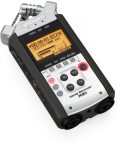
Audio – The built-in mic is not acceptable and the camera doesn’t have a professional XLR input. There is also no way to monitor audio with headphones. Best way to achieve good audio with these cameras is to capture it with a separate digital recorder like the Samson H4 Zoom.

Stability – With video you are shooting time in motion – not moments in time – so it’s critical to hold the camera steady. This is no easy feat when you have no brace points. Because you are shooting with the mirror up – you aren’t looking through the viewfinder and thus bracing your eye against the camera body. There are attachments that go over the LCD monitor and provide an eyepiece like the Zacuto Ez-finder.

Rolling Shutter or Jello Effect – The effect occurs when you quickly pan the camera and causes vertical lines to distort. So don’t do fast pans and eliminate anyone walking into and out of the frame quickly.

Editing – DSLR cameras record in AVCHD format using the H.264 codec. This usually means more time spent converting or rendering the files when you bring them into your editing system.

Frames Rates – 30P vs 24P – Converting your frame rate from 30P to 24P to achieve that film-like look – can be somewhat problematic with audio drifting and getting out of sync. Some cameras now have variable frame rates to choose from.

Bottom line – think beyond the camera if you’re thinking about getting into video production.  Define yourself by your vision – not your tool.

Add to FacebookAdd to DiggAdd to Del.icio.usAdd to StumbleuponAdd to RedditAdd to BlinklistAdd to TwitterAdd to TechnoratiAdd to Yahoo BuzzAdd to Newsvine

Findings From the ASMP Motion/Video Study

ASMP recently formed a Motion/Video Study Group to explore how members have embraced video. Video has become much more prevalent in visual communications as electronic publishing continues to replace traditional print media. The increased availability and low cost of broadband has enabled and created a huge demand for video. At the same time, there is a convergence of our tools as “hybrid” cameras are capable of shooting both stills and video.

As head of the Motion/Video Study Group, I spoke at length with fourteen ASMP members who have integrated video into their businesses.

Some General Observations:

As expected, there was a wide range in responses as well as in the markets that each participant works in.

• Participants are working all across the spectrum in the video/motion sector – from simple multimedia projects (still images with sound/music) to big budget broadcast spots for ad agencies.
• Most people have either been asked by their clients if they also shoot video or they have presented video as an up sell to their existing clients.
• Participants are positioning themselves as producers, directors, camera operators or all of the above. Many have set up production companies.
• Almost all participants have created partnerships or work in collaboration with others – sound people, editors and camera operators to name a few. Video production is based on collaboration because of it’s many facets.
• The learning curve can be steep – especially for editing and motion graphics applications.
• There is a lot of confusion and chaos in terms of file and codec standardization.
• Ownership and copyright are handled in a variety of ways depending on the production, the market and how one has positioned themselves. Traditionally in video, the camera operator is a hired gun and does not maintain ownership of the content. Depending on the market – the ownership and copyright is maintained by the end client or the production company.
• Most shooters invoice their still images and video as separate line items when shooting both mediums on a job.
• All see opportunities in the video medium in almost all markets.

To see the full report please go to http://asmp.org/tutorials/getting-started.html

I would love to hear from others who have added video to their businesses.

The Future and Video

Video seems to be the hot topic these days amongst still photographers. Their clients are coming to them and asking them if they shoot video and many are starting to incorporate video into their still photography businesses to be able to fill their clients’ needs.

We all spend more and more time getting our information and communicating electronically. When you analyze that, you quickly realize that there has been a shift in the way that we as a culture communicate, and that has changed our industry – still photography. Not because a still photograph is obsolete or has lost it’s impact, but because the traditional outlets for still photography are slowly disappearing – print newspapers and magazines.

We can debate which medium – still photography or video – delivers a visual message better – but it would be a pointless debate. Truth is, a viewer is meant to linger on still images, while motion mediums are meant to hit us with the added dimensions of movement and sound. Neither medium is better than the other and neither medium is going away. At least not as far as I can see.

The real debate shouldn’t be which medium is better, because there isn’t a one size fits all answer. Some things are visually communicated better in stills and some things are better in motion. The real question we should all be asking ourselves from a business point of view is – What are our clients asking for? And – Are we in a position to fill our clients’ needs?

I see a future where I shoot still images and video. Some jobs will call for still photography and some will call for video depending on the message or the story that our clients want us to tell. I want to position my business to be able to solve my clients’ needs with whatever medium does that best.

Add to FacebookAdd to DiggAdd to Del.icio.usAdd to StumbleuponAdd to RedditAdd to BlinklistAdd to TwitterAdd to TechnoratiAdd to Yahoo BuzzAdd to Newsvine

Talking Techy – New Video Gadgets

As far back as I can remember, ever since being the only woman in my graduating class at Brooks Institute, I’ve been in a male dominated business. Along with that comes a lot of tech talk and I’d like to think that I can hold my own “talking techy”.

Lots of new gadgets and tools have been announced in the last couple of weeks. The much-anticipated Scarlet camera has been formally announced for spring – early summer 2010. Check out the 3K Scarlet prototype along with some other new gadgets from the RED folks, and you too will be amazed. And the proposed price – less than $3000 for a 3K video camera that shoots RAW.

Another interesting camera to debut is the Panasonic full HD 3D camcorder camera. Pretty cool, but I wondered how one will look at their 3D footage? Panasonic thought of that as well, and introduced 5 new 3D HD TV sets.

Check out MacVideo’s blog on CES 2010 predictions for digital cameras – smaller, video, interchangeable lenses and wifi enabled are all new features to watch for this year.

And Skype enabled HD televisions are coming so Skype users will now be able to make HD video (phone) calls as long as they have an HD web cam and plenty of bandwidth.

I played around with the popular hybrid cameras, the Canon 7D and Canon 5DMarkII over the holidays. I absolutely love the visuals that these cameras create but they felt clumsy to me, being the street shooter that I am, because I couldn’t look through the viewfinder to focus while shooting. I had to use the LCD monitor on the back of the camera to focus, which was tough outdoors and it also made the camera hard to stabilize because it wasn’t braced up against my eye. I do realize that there are 3rd party viewfinders available that attach to the back of the camera which help with focusing in bright sunlight but also helps with camera stabilization.

Lastly, I wanted to check out a company I heard about called Animoto.com. They provide a subscription based service where one can upload still images, video clips and text and a video is automatically created from your assets (or theirs)  in a matter of minutes. They also have an interesting selection of licensed music to choose from, which you can use in your videos. I literally spent less than an hour of my time to register, upload my video clips, choose a piece of music and create a short 30-second video.

2010 has just begun and I’m already overwhelmed by all the new toys and gadgets.

Add to FacebookAdd to DiggAdd to Del.icio.usAdd to StumbleuponAdd to RedditAdd to BlinklistAdd to TwitterAdd to TechnoratiAdd to Yahoo BuzzAdd to Newsvine

Mistakes Still Photographers Make When Shooting Video With a DSLR

  • They don’t understand the importance of audio and don’t use external microphones. Audio is everything in video.
  • They think in “moments in time” and start shooting video too late or stop shooting too soon. You need to let the camera linger longer.
  • They don’t shoot sequences with a beginning, middle and end.
  • They don’t think in “storyboard mode” – You should ask yourself  “How will I get into and out of a shot and what’s next in the story?”
  • They don’t shoot enough B-roll with variations in angles and focal lengths – very important in the editing process.
  • They move the camera instead of letting the motion take place in front of the camera.
  • They turn the camera vertically. There aren’t too many vertical TV sets and monitors.
  • They don’t use a tripod forgetting that video is “time in motion”.  It’s one thing to hold a camera steady for 1/60th of a second and quite another to hold the shot steady for 10 seconds.
  • They don’t consider the frame rate and how that will affect workflow and editing.
  • Aren’t careful keeping their sensors clean from dust.  Retouching video is a lot more involved than spotting still images.
  • They “throw” some video clips in with the still photography job, not putting an added value on them and thus setting a bad precedent with clients.
  • They don’t consider the output and the type of file to be delivered.  There are dozens of formats and codecs in video.  Choose according to your target audience and viewing platform or device.

Add to FacebookAdd to DiggAdd to Del.icio.usAdd to StumbleuponAdd to RedditAdd to BlinklistAdd to TwitterAdd to TechnoratiAdd to Yahoo BuzzAdd to Newsvine

Video News

I came across some interesting things this week, so I am passing them along.

One was the much anticipated announcement of the debut of the Scarlet – a new camera from the same company that makes The Red. There have been a lot of rumors about this camera over the past year and it will be rolled out in 2010.  Check out Philip Bloom’s blog about it. And here’s another post on FreshDV with information about the Scarlet.

If you’re a Sony EX-1 shooter, here’s an interesting tip along with a how-to-video on using the Zacuto Z-finder with that camera. This viewfinder was made for the Canon 5d, but Martijn Schroevers found a clever way to attach it to the LCD of the Sony EX-1.

Next up is yet another new video camera format from Sony – NXCAM. The NXCAM can record 1920 x 1080 images at 24Mbps (50i or 25p), as well as supporting 720/50p and Standard Definition recording.
Very interesting but I wish these camera manufacturers would standardize formats and codecs.

I also came across a very interesting company called Wistia. They allow you to share and host your videos but in addition they offer heatmap tracking which gives you a visual spectrum of how your visitors watch your videos and what attracts them or confuses them.

And to give you an idea of how much web video viewing has exploded, here’s an online channel Expotv where consumers send in video product reviews. No fancy production values but an interesting concept of sharing information that has really caught on.

With all those news items I figured it was about time I changed my header – gone is that template blue – replaced by something more relevant to the blogger.

Add to FacebookAdd to DiggAdd to Del.icio.usAdd to StumbleuponAdd to RedditAdd to BlinklistAdd to TwitterAdd to TechnoratiAdd to Yahoo BuzzAdd to Newsvine

Print vs Electronic – What Is The Future?

Just yesterday I was talking about the good and bad of social media and the potential pitfalls with time management. My routine each morning is to check for any news items on Twitter or Facebook or bookmarked blogs after catching up on my email. This morning there was one post on Facebook that caught my eye and was definitely worth the click through.

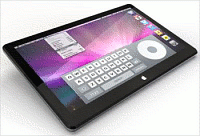
Via Mashable.com was Time Inc. Show Us Their Idea of The Future of Magazines [Video]. It was about how publishers are preparing digital versions of their magazines for the Apple Tablet. Apple hasn’t even officially confirmed they are working on this device. Embedded in the post was a pretty sophisticated demo of Sports Illustrated.

Amazing as the demo was – it had its critics. Check out Gizmodo’s post Time’s Manhattan Project Will Explode Like the Atomic Bomb It Is. The article questions how it’s any different from a web page and at ten times the cost. They state it’s pretty packaging but still stale and dead.

The future of publishing is an interesting debate. I suppose it really all comes down to how we the consumers want our information. What do you think?

Add to FacebookAdd to DiggAdd to Del.icio.usAdd to StumbleuponAdd to RedditAdd to BlinklistAdd to TwitterAdd to TechnoratiAdd to Yahoo BuzzAdd to Newsvine

A Time of Opportunity

You can look in the rear view mirror and lament the past or you can get excited about the future. With all the gloom and doom in the photography business in this poor economic climate, I remain optimistic and see it as a time of opportunity.  It’s tough to be an optimist in times like this but if you look back through history you’ll see that many businesses got their starts in bad economic times.

There’s nothing new about video but with increased bandwidth and the proliferation of mobile devices video is “hot” right now.  In some markets like the corporate and institutional sectors, I’m seeing more of a demand for video.  I’m hearing from traditional print graphic designers who are asking me if I shoot video because their clients are requesting it. Their clients want to add a video presence to their online communications that can be distributed internally and externally. And can also be spread virally through social media networking.

Editorial markets have expanded into video.  Just about every magazine has an online presence and nowadays it’s not just a regurgitation of their print edition but a lot more.  Take a look at NY Magazine or Zagats.com.

The travel market is ripe for video. When I’m researching a destination I like to get as much information as possible so if I can watch a 2 minute video – it usually hooks me further into that website to explore more and link to other sites where I can  facilitate my travel plans.  Many times videos made for online travel sites are repurposed and used at trade shows. Check out what Intercontinental offers as destination pieces about places where they have properties.

Of course there are hundreds of instructional videos and pod casts, and on the retail end there’s weddings and family biographies.

Even if you don’t shoot video or want to offer video to your clients, you may want to consider using it to promote your own business.  A short web video about your business or your creative approach with some behind the scenes footage of you working provides added insight and information to potential clients.

These are just some of the areas I see opportunities in.  I love to hear from other optimists where they think the opportunities are.

Add to FacebookAdd to DiggAdd to Del.icio.usAdd to StumbleuponAdd to RedditAdd to BlinklistAdd to TwitterAdd to TechnoratiAdd to Yahoo BuzzAdd to Newsvine

More Convergence – DSLR’s + Video = VSLR

It seems like this has been the year of the video capable DSLR or VSLR. Not only are manufacturers continuing to roll out new models but third party companies have made a big business out of selling attachments or add-ons for these cameras.

Dabblers as well as professional still photographers have gotten into video because the entry level has become easier and more affordable with the advent of these cameras. While traditional news crews haven’t embraced the new hybrid cameras yet, filmmakers have created a cult around them. I must confess that although technically I have had my hands on these cameras, I have not done any test runs using them in the field.  But it is on my list of things to do.

What’s Out There Now

The Nikon D90 shooting 720p was the first DSLR camera to shoot video in HD.  Canon followed with its impressive 5D Mark II which raised the bar by shooting full frame 1080p with external mic input and recently rolled theyout the Canon 7D with variable frame rates for under $2000!

The most attractive features of these hybrid cameras besides the price, is the ability to change lenses, have controllable depth of field and large sensors that work phenomenally in low light situations. However there are limitations that traditional video cameras that come at a higher price don’t have.  Camera stability is one problem due to how the shooter needs to hold the camera because they are designed to shoot in video mode with the mirror up. Since the camera operator must see and focus using the LCD monitor instead of steadying their eye up against the viewfinder, it’s harder to stabilize the camera when hand holding it. Audio capture is very basic as well and must be supplemented in some way.

Third Party Options

Because of these limitations, third party manufacturers have gotten in the game by designing add-ons. Zacuto

zfinderfeature
Z-Finder

has come up with a few interesting items.  One item is the Z-Finder DSLR Viewfinder, which is a device that fits over a 3” LCD and provides magnification for better focusing. It runs around $400.  Hoodman lpp3.0(front)provides a lower cost version called the Hoodloupe without the same optics but at a quarter of the cost.

An added benefit to using these viewfinders is that it provides another contact point with the shooter’s body and therefore provides more stability.  There are also camera support systems available that help remedy the need for better stability in “run and gun”

RapidfireFeaturepic
Rapid Fire

situations where the shooter can’t use a tripod.  Zacuto makes two stabilization devices, the DSLR Rapid Fire and the Quick Draw each designed with a different type of shooting situation in mind. In addition a Cavision has come up with a shoulder mount device the  RS5DM2SET-S.

Package for 5DII-8
Cavision shoulder mount

As far as audio is concerned, if you want to move beyond a supplemental external mic that’s plugged into the camera and use a more professional audio solution you’ll need balanced XLR inputs which will also enable you to use multiple external mics off the camera. Beachtek makes the DXA-5D for around $375 and juiceLink has come up with the juicedLink CX231 for about $300.

H4n_slant-web
Samson H4n

Or you can capture your audio with a stand-alone recorder like the Samson Zoom H4n, also around $300 and sync it later in post.

Regardless of how you ultimately “trick out” your VSLR (video single lens reflex)  you can be sure that there will continually be newer models and solutions as technology keeps moving forward.   Pro Video Coalition puts out a great newsletter online keeping us abreast of the latest tools.  Check out their DSLR Shootout where they test these hybrids and adaptors. Take Dirck Halstead’s Platypus Workshop now incorporating the new DSLR’s in the program. And become a Facebook fan of From Still to Motion for ongoing information and updates.  It’s an exciting time with loads of possibilities.

Add to FacebookAdd to DiggAdd to Del.icio.usAdd to StumbleuponAdd to RedditAdd to BlinklistAdd to TwitterAdd to TechnoratiAdd to Yahoo BuzzAdd to Newsvine

Tools of Change and New Distribution

Up early again, my mind restless and spinning with ideas, thoughts and reflections on last week’s Photo Expo in New York City.  Ironically this year’s Expo didn’t really reveal anything “new” for me in the way of new toys and tools of the trade.  What was new was the obvious absence of Adobe on the exhibitor floor – a sign of the economic times?  Or is it  a sign of how the photographic business is shifting – from professional to prosumer?

While in NYC I took time to see Robert Frank’s exhibition “The Americans” at the MET.  His beautiful images have stayed in my head and no doubt will provoke me to jump-start one of the many projects that continue to bubble to the surface in my mind.  But there was one thing I read in context of the exhibition and that was a statement made about the camera being a “tool of change” during Frank’s time. I started thinking about that and realize that the camera, whether it be a still camera or a motion camera is still a “tool of change”.  James Natchwey’s images are powerful examples of that.

What is radically different today is our means of distribution – of getting our imagery seen.  No tool has the power to make a difference or a change if what it creates is never seen.  I started thinking about the demise of newspapers and print in general and I was dismayed about the future Temple of Horus, Edfu, Egyptand the still photos that may never be seen.

With the Internet and global distribution, the playing field has been leveled and democratized and anyone can share anything they create with the rest of the world – right?  Maybe not – because ultimately the web is controlled.  It’s controlled by what search engines find and how information is ranked. Listen to Eric Schmidt, Google’s CEO talk about the Internet of the future.  Even Facebook now is deciding which friends will see our news feed.  That default can be changed of course – but you have to be aware of it to change it.  How many of us are aware? And I mean that in the broadest sense, meaning aware of what and how our information is delivered.

All the “free” content we get these days over the web excites us all.  It’s great – but even free comes at a price.  I can only hope that future generations will understand the underlying cost of  “free content” and be aware of who is controlling distribution in this new paradigm.