Technology News – New Video Cameras Announced

Anyone who reads my blog knows that I’m not one to get overly infatuated with the “tools of the trade” – but this week a few new cameras and upgrades were announced.

Sony announced two new cameras the PMW-EX1R – a revision of the EX-1 and the PMW-350 with a 2/3” chip. Redesigned viewfinders on both cameras make them attractive upgrades but there are many other added features as well.

Canon announced that it is currently developing a firmware for their hybrid camera – the EOS 5D Mark II enabling the camera to record at 24fps, obviously responding from user feedback.

Canon also announced their latest still camera (that also shoots video) the EOS 1D Mark IV.  The sensor however, is a non full frame but the autofocus system has been totally revamped.

All for now as I am headed into New York for Photo Plus Expo, where I’m sure to see more new toys.  More later.

Converging Technologies and Photo Plus Expo 2009

I’ve been attending the Photo Expo for as long as I can remember, back when it used to be at the old Convention Center at Columbus Circle.  It changed over the years, growing in size, moving to Javits and now shrinking, taking up ½ the floor space it used to.  Times SquareThat could be yet another sign of the economy, or how the photographic industry has changed over the years – or both.

This year is the first year there will be a Video Pavilion, where manufacturers can showcase their products and attendees can get a glimpse of how the converging industries of photography and video continue to change the paradigm of how we deliver our visual message.

Another profound change on the floor this year is the absence of the Adobe booth.  I can’t remember a time when Adobe has not been an exhibitor at Photo Expo.  Has the economy played a part in that – or is it another sign of changing times in the photography business?

It will be interesting this year to observe who is exhibiting and what the new “cool” tools are?  Like last year when Canon displayed their first hybrid camera the 5D – a still camera that also shoots video – their booth, along with Nikon will be the “main attraction”. Video continues to be the hot topic.

Gone are the manufacturers of lab equipment, along with the last vestiges of film. Gone are Apple and Adobe – maybe next year?  Or will next year look more like NAB”s (National Association of Broadcasters) show in Las Vegas as we continue to move from ink and print to electronic delivery?

Why I (Still) Shoot Still Images

Even though I’ve been shooting motion for over 10 years, I still spend half my time shooting still images. When my story can be or should be told with images that are “moments in time” then a still camera is always my tool of choice.

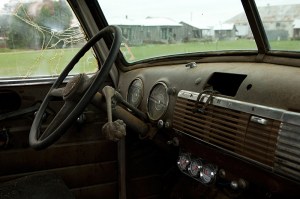
For me there is a certain timeless quality of a still image. Still images are meant to be explored by the eye while lingering on the “moment” captured. Perhaps a better way to explain the power that I find within still photographs is to show you some recent images I shot. Hopsons_shack

This past weekend I visited a favorite spot of mine. It’s an old plantation in Mississippi and every time I visit, I see it in a different way. But I always see it in a timeless way – it’s like time just stopped there.Hopsons_vending_J2X8487 Even though this plantation is worlds away from my cultural norm – I get a feeling of comfort mixed with a bit of melancholy for my own past when I’m there.

I could put these images in a multimedia format and add a narrative or a music track. But the question I ask myself is why? Hopsons_car_grillJ2X8622Will it add or will it distract? What piece of music should I use and what will that add to the story? Will the music overpower the piece – because many times it can. And too many times people try to add music to mediocre images to make them more exciting.Hopsons_car_J2X8561

A still image has the power to capture the eye of the viewer and make them want to know more. If an image I make draws the viewer in – to see that moment in time – just as I saw it – when I shot it – then I’ve done my job as a storyteller.

Add to FacebookAdd to DiggAdd to Del.icio.usAdd to StumbleuponAdd to RedditAdd to BlinklistAdd to TwitterAdd to TechnoratiAdd to Yahoo BuzzAdd to Newsvine

Why Shoot Video Instead of Stills

Video seems to be the “hot” topic these days.  There’s nothing really new about video – it’s been around for quite some time.  So why do we see and hear it everywhere? You Tube gets one billion hits a day!  Perhaps the short, simple answer is because society interacts and communicates more and more via the web through social media sites.  And because of broadband capabilities – we “can” watch videos without the painful experience of watching stuttering video while it downloads.

So as the economy stays soft and still photographers try to stay afloat and camera manufacturers incorporate video capabilities  into still cameras – there seems to be more and more photographers who feel the need to start shooting video.  I’m a big advocate of video – but for all the right reasons and those reasons are different for each and everyone of us.  But – you must have a reason why to shoot video from a story point of view.  Because visual communication should be all about telling the story or relaying a message.

I used to shoot a lot of stories for the National Geographic Traveler – mostly city stories.  I spent quite a bit of my time – observing life and waiting for the “moments”.  I’d also spend a lot of time talking to people and listening to their stories.  I stored a lot of those conversations in my head over the years but because I am a photographer – my images were published – but not those conversations. So in a sense there was a large part of my experience that was never shared.

When I started shooting video projects, along with it came the need to do interviews. A big part of many of my videos are interviews that drive the narrative of the story.   Interviewing someone on video can be a powerful thing. That is truly one of the most powerful aspects of video  and the reason “why” I choose that tool when I do.  When I sit down and speak with someone  face to face – I get the type of experience and interview that one can only get in person.  I pick up on all the nuances – the body language – of the subject.  When I really care about my subject – the connection becomes that much stronger – the questions are answered not only with words but with the body and the eyes and everything in between.  And that shows – on camera and can drive the story in a meaningful way.

So when I need to tell someone’s story and that person tells their story not solely through their words but with every inflection of their voice and body – then video is my tool of choice.  That choice is made because it makes the story stronger.  Not just because I “can” because my camera has video capabilities. Choose your tool wisely.  I’d love to hear how and why others decide on which tool to choose. There’s so many reasons.

Convergence – Defining Yourself By Your Vision – Not Your Tool

It’s 4AM as I write this entry.  I can’t sleep.  That often happens when my mind is in overdrive as it has been all week – over stimulated by the process of editing video. I’ve also spent a lot of time this past week speaking with quite a few photographers who are working in both the still photography and video mediums.  Some shooters I spoke with got into video because the entry level became cheaper when hybrid cameras that shoot both stills and video came on the market.  Other people I talked to weren’t “camera operators” at all – they were DP’s or Directors of Photography on high-end commercial broadcast productions.

One question I asked these shooters was “What do you call yourself these days?” Personally I’m struggling with that question myself.  Am I a  photographer?, a videographer? (I hate that term), a DP?, a media producer?  Who am I ?  What do I call myself? I have yet to answer that question for myself, but the answers that I got from everyone I spoke with, ran the gamut, encompassing all the titles above.  As I replayed these conversations in my head, I realized that for me the problem was I was trying to define myself by my tool.  And that just doesn’t work.

The problem is if we define ours by our tools – then we are diminishing the value of our creativity or our visionboy_viewer in the process.  We aren’t placing the value on what is unique in all of us – our vision. At the same time we’re placing too much value on the tool – in this case the camera.  As technology accelerates the production of more sophisticated cameras that are cheaper and easier to use – and we’ve placed our value on being the technician – we’re in big trouble.  Because ultimately anyone with a vision who has the “ability” to realize that vision, can put together a crew of technicians to facilitate their vision or idea – and do it cheaper these days because of technology.  And there’s nothing wrong with that.

Professional photographers get defensive when a potential client places no value on what is unique about them (their vision) and approaches them with the attitude that if you won’t work for the prices they dictate – they will just find another photographer.  But what they are really saying is that they feel that they can “just” find another camera operator. The problem is that these photographers haven’t presented their vision and because of that they are perceived as being interchangeable. That’s not a good place to be and never will be.  And for that reason when a professional still photographer comes to me and says that they are interested in getting into video and asks the question “What video camera should I buy?” I gently tell them – well sometimes not so gently tell them – it’s not about the camera.

How does one define what they are?  Great question that has a lot of answers, as it should.  Technology is amazing – but it’s the human part of the process that excites me because we’re all so different in how we see.


My Hybrid World

This is kind of off topic in the sense that it speaks a bit to my personal lifestyle as opposed to my professional one – yet in a way it’s the perfect analogy to my hybrid existence of working in both the still and the video worlds.

I live 38 miles west of Manhattan Island subway– close enough to commute if I were so inclined or had a “job” to commute to. But since I’m a self employed freelancer and always have been – I look at that short distance to the “city” as the bridge that connects my two worlds. The “city” can pretty much provide me with just about every cosmopolitan need that I may have and my other world – the idyllic little “bubble” where I live – a small rural town in Northwestern New Jersey – gives me space and serenity. bicycleBoth are important in my life and I don’t think I could give up one for the other.


I feel this way in terms of working with both still photography and video. They each in their own way are creatively fulfilling. Because I’m a storyteller – I look to each medium in terms of being the right tool to tell the story. I think differently in each medium and for this reason it’s very difficult for me to shoot both stills and video on the same job – although I have done that on many occasions. But my head is in a totally different place – depending on which medium I am working in.

I’ve said many times that it’s not about the tool – I can’t just swap out the tool because it’s really not that simple. With still imagery it’s all about the moment in time. With video it’s time in motion. With still imagery I’m selecting that precise moment where the story gets told. With video I’m telling the story through a sequence of imagery – always thinking in terms of the beginning, middle and end and ultimately with the “whole” piece in mind.

I could never make a choice between the two mediums at this point in my life because they are each needed in their own unique ways. Each serving their own purpose in how I choose to communicate – visually and creatively. Just like the hybrid personal world that I live in.

Letting Go of What We Know

There’s so much angst these days in the “photography” community and not just the photo community but everywhere.  People are almost paralyzed from fear – fear of the future.

I don’t think we ever get anywhere if we let “fear” take over our lives.  Certainly not if we live and work in a creative field.  The fear seems to creep up when what we are “used to” is no longer there.  Anyone who works for newspapers can relate to that statement.  But we can’t change “what is”. I don’t look “back” often but when I do – I do it to get perspective.  And when “fear” of the future manifests itself so strongly – to quote Jackson Browne “it seems it’s easier sometimes to change the past”.

We all know we can’t change the past – so why do we dwell on it?  Because it’s really scary to face a future where all the rules have changed.  Technology has forever changed the game.  We can moan that our clients don’t respect us and that they just want work that is “good enough” and worse yet – coming to terms with the fact that maybe, just maybe “good enough” is good enough for their needs. As we communicate visually over electronic platforms like the “web”, do we need an image file that is 8000 pixels in its longest dimension with 300 res – like we did for those glossy brochures?

On the other side of the table is that nagging notion that we all must learn to shoot “motion” and “video” and we’re intimidated by it because it’s not what we know.  I guess I’m an oddball because I’ve never really been too intimidated by what I don’t know – I’m actually drawn to it and excited by it.  Sometimes I rush to the unknown almost carelessly without even considering the consequences. And there’s always consequences – many times negative ones – or ones that may seem negative at the time.  But every now and then – if you just “let go” of holding on to what may not be working anymore in your life – you’ll find that you’ve opened yourself up to wonderful possibilities.  I keep my eye on those possibilities and it’s so much better than holding onto the past.

Are You a DP or a Hybrid? – What’s the Difference?

I’m searching for “the word” the “title” of what I am these days.  I’m a photographer.  I also shoot video but I hate the word “videographer” because it sounds a bit cheap to me or at least dated. I generally think to myself that I’m a “visionographer” but I tend to “title” myself as a “media producer”. With all the talk recently about getting into video, I feel the need to make a distinction between being a shooter or a DP as opposed to a producer.

There is nothing new about still photographers moving forward in their careers and segwaying into commercial motion work.  Traditionally they take on the role of the DP (Director of Photography).  Many times they don’t man the camera but direct the shooter instead.  Generally speaking they work in large crews and with agencies.  The biggest distinction is that most times it’s a “work for hire” situation because the production company owns the finished product.

With the explosion of video and in particular web video, come new buyers for this medium.  Buyers from the corporate world as well as institutions and even ad agencies that may have been historically just “print”.  With the advancement of technology and being able to deliver a high end product because of it – leaner and meaner small production companies have come along.  When you have a shooter using the RED and able to deliver not only the motion part of the job but able to pull stills from the shoot, once again still photographers feel threatened.

When I got started in video, I made a conscious decision to take on the producer’s role.  I could choose to shoot or edit or I could delegate these roles to outside contractors.  I could also form partnerships that were fluid as the needs may be.  But more importantly, I maintained ownership of the final product – which was what I was used to coming from my still photographer background.

Still photographers are essentially producers anyway so it’s not such a mental leap.  So when your client comes to you and asks you if you shoot video (and you don’t) think before you answer that with a NO answer.  It may be better to form some partnerships with people who do and not only keep the money in house – but not send your client off to someone who does.

Codecs and Confusion

It seems like every month manufacturers roll out new video cameras along with more new “proprietary” codecs.  With over 18 standard formats and hundreds of variations it has made “workflow” for digital video very complicated. We’ve got everything from DV, HDV, DVCPRO HD, XDCAM EX , Cinealta to The RED.  It makes multi camera shoots – a potential nightmare with different cameras shooting different codecs. And on top of that each camera offers a variety of frame sizes and rates to shoot in.  Ultimately, there are no guaranteed workflows anymore.

Here’s an interesting round table discussion of various experts in the field  – Ken Stone, Michael Horton, Philip Hodgetts and Andrew Balis – discussing codecs and standards.  http://tiny.cc/nRGOV

So how can we take some of the confusion out of all this and determine the proper camera and workflow for ourselves?  To answer this question it’s best to determine “where you want to go” and “then you’ll know where to start”.  What do you need to deliver?  Is it a video for the web,broadcast or the big screen?

Many times choice of camera and workflow is driven by budget.  A lower end camera producing a codec with less resolution will be “good enough” for a web video. Will the “good enough” attitude being driven by budgets lower our expectations for quality?  Some feel that it’s changing our aesthetic judgment. I don’t think the high end will go away.  In fact advances in technology has enabled more people to make a living doing what they love because there are more choices within their budget.

One thing’s for sure – technology is a double-edged sword and it will continue to change our lives.  I just wish that soon there would be a coordinated effort amongst the camera manufacturers to standardize for the sake of workflow.

Field of Dreams (and Video)

I love baseball – not sure why.  Maybe it’s just the idea of baseball that I love.  It’s traditional, American and a nostalgic reminder of summers past – at least for me.  I’m also a Cubs fan and I know what it’s like to be the eternal underdog, yet forever hopeful.  And that’s me – forever hopeful and optimistic. cubs_fans

I watched the movie “Field of Dreams” recently and I realized that it’s not really about baseball at all.  But about a belief in your dreams and following through with what you believe in.  And to do that you must be hopeful.

What does that have to do with video?  Nothing really, but it’s why I started exploring this medium 10 years ago, when technology was transforming video because it was going from an analog to a digital world.  And because of that, it was dramatically changing not only that “industry” but our culture as well.  It became “possible” to further your dreams – because of technology.  Whether that be shooting a full length “film” from a creator’s stand point or presenting and distributing your “brand” in a new way via a new platform (the web) and one where you can interact with your “target audience”.

Ten years have gone by since I started shooting digital video.  It’s been a challenging, yet rewarding time in my life and my career.  I have a tremendous sense of hope and see opportunities in this medium because I think it’s just the beginning of how we’ll see, hear and experience  video in our lives.

The video world is full of crazy formats and codecs as well as other unknowns and it can be scary for a photographer to jump into an entirely different mind set – let alone skill set. But taking risks can yield great rewards.  You just never know unless you take the chance.