Being Yourself

Yesterday, I gave a talk and showed a bit of my film, Opening Our Eyes,

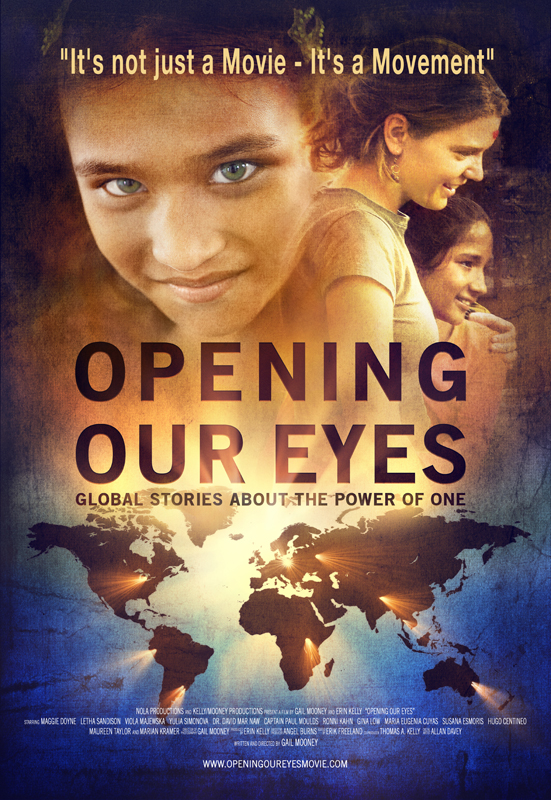
Movie poster for Opening Our Eyes

at the PACA conference in New York City.  I had been asked by ASPP to speak about the making of the film and my plans for distribution.  To tell you the truth, even though I’m always thrilled to show and/or talk about the film, I was a bit nervous with this crowd.  PACA stands for the Picture Archive Council of America and its member include some of the biggest stock photo agencies in the world, including Getty, Corbis, Masterfile and Alamy. I was nervous because part of my message was that I no longer needed the validation or others to get my stories to market.

I thought my message would be somewhat threatening, because I was telling the audience that content creators no longer needed the traditional gatekeepers of the past, to get their stories “out there.”  That because of technology, it was possible for the individual to have a global reach and if one is willing to do the work – the prize is all theirs – meaning the monetary rewards.

I had a tough time slot to speak – right after lunch  –  I knew that I would be dimming the lights for the film and that is never a good thing to do in that time slot.  But, Tom Kennedy had given his very inspirational talk about new media and new opportunities in the  marketplace.  I had heard Tom’s talk  as part of ASMP’s SB 3 series this past year – and I knew that my presentation was a great follow up to his – and in fact it was almost like a case study example of what Tom was talking about.

My presentation went amazingly well and as I looked out into the dimly lit audience as the film was playing – I couldn’t see any closed eyes.  I felt that I made a connection, and that perhaps in some small way, I had made a difference.  Maybe, I just got people thinking about what they could do to make a difference in their own lives.  And maybe I had influence beyond that.  But, I know that I stayed true to myself.  My intent was not to come off as threatening  – but I did want to make people feel a tiny bit uncomfortable.  It’s when we get uncomfortable that we push ourselves to a better place.

My message was simple.  Someone doesn’t need to lose – in order for someone else to win.

Add to FacebookAdd to DiggAdd to Del.icio.usAdd to StumbleuponAdd to RedditAdd to BlinklistAdd to TwitterAdd to TechnoratiAdd to Yahoo BuzzAdd to Newsvine

Status Quo, Fear and Other Stupid Human Tricks

I went to my town meeting last night. It was a typical “town meeting” where everyone needed to be “right”, and no one was winning. A citizen came up to the mic during the public hearing session and made a statement that really resonated with me. He said “ No one ever wants to change the status quo It’s human nature not to want change. Everyone has their little power centers that they want to hold onto”.

I had a flashback that brought me back to a smoke filled room of dirty dishes with leftover remnants of brown rice and a whole lot of people having the same old discussion of how we all needed to stop “ the War” and change the world. That was almost 40 years ago but I’ll remember like it was yesterday when a “freak” came in and said “Why doesn’t somebody f……. do something? You’re all just sitting around and talking – like the status quo”

Photo Source Mr. Snodgrass

To be honest, I don’t think there is a status quo. Nothing ever stays the same. You either move forward or drop back, but there is no stepping in place. It’s not sustainable. And that’s nothing new – it’s always been true – but never more than today due to the exponential rise in technology. And it has never been more true in regards to the state of the photographic industry. I see so many photographers paralyzed by their own fears of taking a risk and thinking outside their own boxes.

Few people overcome their fear of change and rise to the occasion of “doing something” as opposed to reacting to something. Most plod along, feeling no control over their destiny – letting fate take its course. A lot of photographers are just hoping to “ride it out” until there is nothing left of their businesses.

Every once in a while, somebody makes a bold move and looks at “change” as an opportunity. History proves me right. If you look back through time, you will see a pattern. At the most pivotal times of change – the cream always rises to the top – and the sludge gets left behind – on the bottom.

As far as the photography industry – I think it’s time to decide if we are ready to “embrace” change and rise to the top or die a slow death. But we have to start seeing the opportunities that always come with change.

Add to FacebookAdd to DiggAdd to Del.icio.usAdd to StumbleuponAdd to RedditAdd to BlinklistAdd to TwitterAdd to TechnoratiAdd to Yahoo BuzzAdd to Newsvine

Conversation with Director/Editor Erik Freeland

I was extremely fortunate that Erik Freeland of Springhouse Films was the editor on our film Opening Our Eyes.  I learned a lot from Erik through our collaboration.  I thought I would share some of Erik’s insights about the art of editing.

What makes a good editor?

Knowing a little bit about everything. Art history, popular culture, physics, linguistics, music… it gives you more points of reference for understanding and presenting the story. Attention to detail is very important because in the end, nothing goes unnoticed by the audience. I guess I’d have to say patience is tremendously important –– even though computers do amazing things, editing is at its core a tedious process.

We all seem to wear more than one hat these days – do you? If so do those skill sets complement each other and how?

I started in this business as an editor but really wanted to have more control over the material I was editing. I’ve have been fortunate to be able to also have a career as a director. Understanding those two disciplines and knowing what is possible in each allows me to visualize the editing process more during the shoot.

I know from editing projects myself, it has made me a better shooter. For still photographers who may not want to edit their own projects – what tips can you give to them about shooting video and motion?

Don’t cut too soon. Be patient and let a shot evolve.

When shooting a scene or a moment in time, think of it as different framings: the wide establishing shot, a medium shot of the main action or subject and little details that can serve as cutaways to prolong the scene or intercut the other shots while masking breaks in continuity.

Plan your movement of the camera and commit to it. When you start a pan, resist the temptation to reframe the shot mid-move. Keep it moving for long enough to make the shot usable in the edit and cut only if it really falls apart.

Keep in mind how much footage you are shooting vis a vis what you will want to end up with. You don’t want to miss anything important but a lot of redundant footage can really be a liability in your edit.

What does a well-edited film mean to you?

Many things. I think first and foremost, it’s about clear storytelling. It shouldn’t be confusing and leave the viewer behind. The editing shouldn’t stylistically overpower the story. Secondly, the rhythm of the cutting should help move the film and should be sympathetic to its tone. Third, it should move you, surprise you, change your mind, do something… I suppose I could say the same things are equally important in directing a film.

As an editor, you can have a lot of influence over the meaning and arc of a story. How much influence should an editor have? Does it depend on the director?

An editor should exercise as much as they can… without upsetting the collaborative balance. Everyone involved in the film should influence it to the best of their ability. Otherwise, their contribution to the process is short-changed. Of course, every working relationship is different and some are less collaborative.

What makes a good director?

I think some of the same qualities that make a good editor are part of a being good director. Knowing a little bit about everything as a director for instance, allows you to tell many types of stories and immerse yourself in the subject matter. Attention to detail, multi-tasking capabilities, being able to verbally communicate about visuals are of course all important skills. There is also a balance between focus and objectivity. A good director is fused with the film –– totally absorbed in every detail. At the same time, they have to be able to look at it and all decisions objectively and from a distance, almost like the eventual viewer.

What makes a good story?

Characters you care about, conflict and location, location, location…

What’s more difficult – editing a 2 minute piece for the web or a feature length film?

Hmmm, that’s a hard one. Kind of like asking which is better night or day.

Does editing have trends? Maybe you can point out a couple of examples of style over the years.

OK, first I don’t profess to be a film historian but I try to keep up on things. I tend to watch the films I like the most over and over. Technology has certainly created trends in film editing and directing. Advancements in keying technologies, motion tracking and motion capture as well as realistic CGI environments are but some of the major trends that have changed the way films look and are edited. Probably the closest things to trends specific to editing have been related to timing and pacing. The time-lapse of “Koyaanisqatsi” in the early 80’s, the repetition and multiple outcomes of “Run Lola Run” and the quick cutting shorthand jump-cuts and time-compression in Guy Ritchie’s films like “Snatch” have all had a huge influence over the editing of their time.

The Movie “One Sheet”

If I thought that by finishing my film, I was done – I was sorely mistaken.  My work has just begun.  What would have been the point of putting my heart and soul into a film for the past year and a half, if no one sees it? That means there’s a lot more work on my part, getting it out there – distributing it, marketing it and promoting it.  All that takes time, money and expertise.

I’ve been reading Jon Resiss’ book “Think Outside the Box Office” “The Ultimate Guide to Film Distribution and Marketing for the Digital Era”.  It’s become my bible. For starters, it lays out what a filmmaker needs to do to get their film out there, create an audience and make money.

In terms of publicity, every film needs a good press kit, which should include:
•    One Sheet – with tag line
•    Synopses – long and short
•    Cast and Crew Bios
•    Director’s statement or interview
•    Production stills and video interviews for the electronic press kit.
•    Production stories – something interesting about the making of the film.
•    Technical specs

When I first heard the term “one sheet”, I wasn’t quite sure what that was.  It’s pretty much what it says it is – a one-sheet piece of paper describing your film, but it it’s concise with provocative visuals and a catchy “tag line”, designed to peak interest, whether it is with the press or the movie going public.

A “one sheet” can also be what most of us call movie posters.  They are essentially the same thing – a one sheet with imagery and text to capture someone’s attention.   Some movie one sheets are works of art in their own right and become collectibles.  Think of some of the best ones that you have seen over the years.

Sounds like it should be fun – coming up with a “one sheet” for the movie, but even though I have a lot of great content for a “one sheet”, I don’t have the skills needed to create a composite for a movie poster. There are people who just design movie posters – that’s their niche.

I’ve learned a lot in the process of making a film.  The most important thing, I’ve learned is to make relationships and collaborate with others who can bring their expertise to the project.  It’s not only a rewarding process, but it raises the bar on the final outcome.

Add to FacebookAdd to DiggAdd to Del.icio.usAdd to StumbleuponAdd to RedditAdd to BlinklistAdd to TwitterAdd to TechnoratiAdd to Yahoo BuzzAdd to Newsvine

The D.I.Y. Age

The world is full of possibilities these days.  In fact, for the individual and their “reach” globally – it’s staggering how many possibilities exist that didn’t just a couple of years ago.

We can not only create in a more affordable way with inexpensive equipment and leaner crews – we can also get our creations out to the world without the need for a publisher or a stock agency or a film distributor.

We can do all those things due to the exponential growth of technology.  But we also need to recognize that all those possibilities come with a cost, in terms of dollars as well as man-hours.  Each one of those possibilities takes time and money in order to become a reality.

Even the path to getting money or financing these days has changed because of crowd funding.  But like anything else you need to stand out amongst the noise, so who knows how long this trend can sustain itself.

If you’re planning a personal project, keep in mind that you will need to not only create it but find a way to get it out there after completion.  Expect to put time and money into:

•    Self – Publishing – this includes hiring a designer and researching self-publishing partners like www.lulu.com in the print publishing world. They also offer downloads. In the motion world, you have options like Amazon, iTunes and Netflix.
•    Marketing, PR and advertising – This is definitely an area where you will need money and expertise. Jon Reiss in his book “Think Outside the Box Office” suggests that it will take an investment for at least as much as you spent creating your film.
•    Crowd funding – The crowd funding sites provide you a portal if your project is accepted but you need to do the work as far as getting people to know about your project and fund it.
•    Bookings – Whether it is an exhibit or a movie or a lecture – you need someone to book venues for you.  This could also mean finding sponsors.

The bottom line is really kind of an old fashioned notion in a high tech age and that is – the prize is out there is you’re willing to do the work.

Add to FacebookAdd to DiggAdd to Del.icio.usAdd to StumbleuponAdd to RedditAdd to BlinklistAdd to TwitterAdd to TechnoratiAdd to Yahoo BuzzAdd to Newsvine

Authenticity

It’s a humid, Saturday morning in the dog days of summer.  There’s a dozen things I should be doing – paying the bills, doing the laundry, filling out film festival submissions and catching up on the endless little details that have consumed me with my film.

And yet, I write.  I started writing about 7 years ago when I would wake up super early in the morning with my mind spinning with ideas and not allowing me to turn over and go back to sleep.  So, I ‘d get out of bed and write about whatever was running through my mind at the time and I would put those thoughts out there in my blog. Colleen Wainwright is running a whole series of interviews with writers on her blog as part of a fund raiser and I was honored to be included.

In the beginning, I got a lot of encouragement from a friend who gave me the confidence to write more and I did. Some days the words would just pour out of me and many times, I’d see them quoted later in other people’s blogs and I couldn’t believe that I had written them – almost like an out of body experience.   Now, writing has become a habit and a way for me to organize my thoughts and turn chaos into order and thus my dreams into realities.

Many people tell me that I’m incredibly open and honest.  I’ve always found that interesting – the fact that was something to comment on – but at the same time feeling very flattered.  If someone tells me that I’m the “real deal”, that’s about as high of a compliment that one can give me.

If “authenticity” comes across in my writing or in the visuals that I create, then I think that I’m must be doing something right, because I use my words and my images to connect with people and that really only happens when I’m being true to myself.  I think people can sense that – it’s not something you can fake.  You’re either genuine – or you’re not.

To be honest, because I am “genuine” and tend to “tell it like it is” – it has been a blessing and a curse – but I can’t seem to help myself.  I’m a sucker for a good cause and I’m one to always strive for consensus as opposed to “getting my way” or motivated by a personal agenda.  When, I’m on purpose and not driven by ego – good things happen – and like-minded people are “attracted” to me like little magnets in the universe.

Now, I’ll go do the laundry.

Add to FacebookAdd to DiggAdd to Del.icio.usAdd to StumbleuponAdd to RedditAdd to BlinklistAdd to TwitterAdd to TechnoratiAdd to Yahoo BuzzAdd to Newsvine

Don’t Re-Invent Yourself

I’ve come to hate the expression “re-invent” yourself.  It’s not only become a bit trite, but it’s caused a lot of unnecessary anxiety.

If one feels that they need to do a makeover, he/she is often coming from a place in one’s life where they feel they have failed.  They may be at a low point in their life, either financially or emotionally and they have the desire to become someone else.

I’ve been thinking that perhaps we all have it wrong.  I don’t think we need to abandon who we really are and try to become someone we aren’t.  That never works. Creatively speaking, whenever I have approached my work as in need of a “makeover”, I have fallen victim to trends.  We all do I suppose, in an effort to “look current”.

That may work for a while, at least financially speaking – but then again maybe not.  I think my best work has come from my true self.  It’s pure but it can be raw. It’s what I just can’t stop myself from doing.  That is what resonates with others.  I think that happens when I am very clear on my vision. It affects people in a primal, yet subtle way.

Maybe we shouldn’t try to re-invent ourselves. Maybe we should just listen to who we really are and trust that voice.

Add to FacebookAdd to DiggAdd to Del.icio.usAdd to StumbleuponAdd to RedditAdd to BlinklistAdd to TwitterAdd to TechnoratiAdd to Yahoo BuzzAdd to Newsvine

More Stuff I Learned While Making a Movie

The day finally arrived – our first screening of Opening Our Eyes – a film that I have poured my heart and soul into over the last year and a half.  Sounds like a cliché, but this project has consumed me in every way imaginable – good and bad.

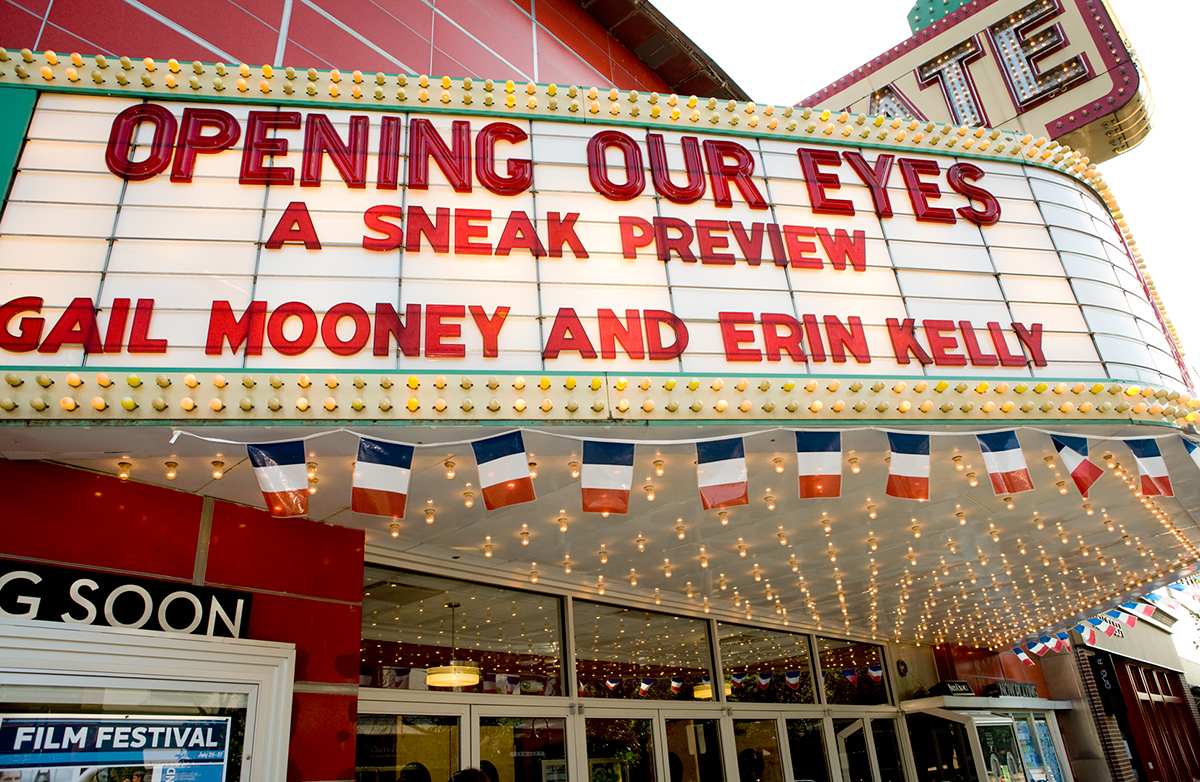
As I looked up at the marquee of the State Theater in Traverse City, MI last Sunday morning, it hit me – we had done it.  My daughter Erin and I had set out to make a film last Spring about people all over the world who were making it a better place – and we did it.

It was and will continue to be a lot of work – a lot more than I ever could have imagined.  There have been some of the lowest of lows and the highest of highs along the way.  There have been times of disappointment from unexpected sources and times of encouragement and support from remarkable people who came into my life because of this project.

I have learned so much since embarking on this journey – here are just a few things:

Believe in your dream.  Lots of us have dreams but most of us don’t really believe in them.  I think that makes all the difference as far as making your dream a reality – the ability to believe that your dream will happen.  I have felt that this would happen from the first moment that I conceived the idea – I saw it – I heard it – This idea picked me – not the other way around.

Trust – I knew all along that for this film to be what I had envisioned it to be – I couldn’t do it alone.  It could only succeed through the support  of all the people who have contributed to this project from the beginning, whether by supporting it financially or just by being there  for me to spring ideas off of.  I really had to open myself up and trust that would happen  – and it did.  That’s not to say that I haven’t had my share of disappointments along the way, but I had to get past them and then learn to trust – again.

Work with people who share your vision.  I used to think I could edit.  but after working with my brilliant editor, Erik Freeland – now I just think I’m a hack.  Finding Erik was a blessing.  It’s not all that hard to find a good editor,  but to find an editor who has the same drive and passion as I do for what this film is or can be – is a rare gift – and I know that. There have been a handful of times in my life, when this serendipity has happened and sometimes, I’ve been too busy to take notice – but this time, I not only took notice – I welcomed Erik’s vision.  Because I was open to what Erik could bring to the film – it’s so much stronger.

Friends – As much as I know that I should never do anything for the sake of other people’s approval, there is always a part of me (my ego) that surfaces and seeks that approval or validation.  Funny thing is that when you create something that is coming from such a sincere place in your own heart – a project that you’re so passionate about – people come into your life because of it.  They are drawn in by your own enthusiasm.  So when others, disappoint you or even take no notice at all – you realize their approval doesn’t really matter.
Chris Guillebeau has a wonderful blog post about this.

Feedback – One reason I had a couple of sneak previews this past week was to solicit feedback.  When I get consumed with the mechanics of making a movie, especially the editing of the movie, I often get caught up in the nit picky stuff, (which is very important) but I need to step back and digest it as the overall movie.  It’s tough when I’m so close to it, so I always solicit other’s input. I know I can’t accommodate everyone’s suggestions because I’d end up with a big mess if I tried.  Some comments ring true and I may take them to heart, while other comments aren’t really along the same line of my thinking,  so I discount them.  Some people’s comments are brutal and cut deep, but after I get past the initial hurt, I realize sometimes, that the comments that cut deepest are the one’s that strike closest to the heart of the matter – and my inner voice takes notice.

Overcoming resistance – The most important thing of all.  I did what I set out to do and that is to make a film that will motivate others and move them to action. During the first Q&A last week, a man stood up and thanked me for making the film.  He told me that he hadn’t even intended to see a movie that morning – he had been looking at the posters announcing the lineup for the TC film festival this week and saw the marquee and came in.  He told me that it changed his way of thinking – that it changed his life.  And then he told me that I needed to screen this film for as many people as possible.  That’s my ultimate goal – to share this film with others – and if one person in every audience reacts that way – well what more could I ask for?

This film may not be perfect and it may not be for everybody (certainly not the cynics), but I did something a lot of others never do – I executed my idea – rather than give myself lots of goods reasons why I couldn’t.   I could cite plenty of reasons right now that could have or should have stopped me in my tracks.  But I didn’t stop because I had such a strong belief in this dream – I saw it too clearly.

Whenever I pull back from my dreams and succumb to my own resistance, I stop and think about a line from a Joni Mitchell tune where she writes about old friends being “cynical and drunk and boring someone in some dark café”.  I stop and I think about that. I sure don’t want to end up being one of those people who piss away their own life by passing judgment about other people’s efforts or causes. And then, I get out and do something.  That’s how I’m making a difference.

Add to FacebookAdd to DiggAdd to Del.icio.usAdd to StumbleuponAdd to RedditAdd to BlinklistAdd to TwitterAdd to TechnoratiAdd to Yahoo BuzzAdd to Newsvine

The “Real” Cost of Shooting Video With the DSLR

There was an interesting thread on  ASMP’s video listservlast week. It started when a still photographer asked if a particular

My DSLR Gear

DSLR camera would help him get into the game  – of video.

Jan Allklier, a Seattle based photographer, shooting both stills and motion summed it up:

“If you simply want to ‘explore the medium’ a hybrid DSLR may well be the right ROI, although it really will only give you a flavor for moving images, not the workflow of professional moving image production, which encompasses a wide range all the way from feature film, to corporate work, to webisodes for small business; and many tools and skills well beyond the image capture device at hand.”

Kevin Kamin, Minneapolis based shooter, reminds us that it’s not just about the camera (or tool), but about the story:

“I understand why some photographers are looking to expand into video, it’s definitely doable, but I believe there is a tremendous underestimation of what  is required to do so. I feel like video is being perceived as simply moving photographs-95% of the videos I’ve seen on commercial photographer’s website are not at a professional level (most feel like overly long, clunky, rough cuts that lack sophistication and a clarity of message). They say that ‘people who are good with a hammer tend to think everything is a nail’ So along that idea, many 
of the videos feel like videos made by photographers, who haven’t fully grasped the spirit of the medium. People can enjoy a still photograph for a minute or 
two, if it is compelling and engaging, but if you have three seconds of video footage that doesn’t move the story or lingers 15 frames too long, you just lost your viewer no matter how pretty it looks. Photography functions differently 
within time based media. 
 Storytelling is the core of video. “

And Chuck Fadely, of the Miami Herald, connects the dots for us, first by passing along a link to Shane Hurlbut Visuals blog that lists the “standard” movie making rental gear for DSLR video. More importantly, Chuck  reminds us that shooting motion is a skill set.  It’s a different way of seeing and shooting.

“The hardest thing about video for a still photographer is learning to shoot in a totally different way. You’ve got to learn to shoot in sequences, with transitions. It takes years to overcome the habits you’ve built up as a still photog — like reframing, adjusting exposure, following action — which are death in video. 

I was a news and feature photog with several decades of experience, with extensive lighting skills, good technical ability, and a knack for learning new stuff. I switched over to video full time and it was shocking how little transferred over. Video is a different beast.”

This was one of the easiest blog posts that I’ve ever written and maybe the most beneficial for readers.  It brings up another important point and that is how much we can learn from each other.  When I started shooting motion back in the mid ‘90’s – there really weren’t any listservs or social media forums where my peers were so forthcoming with information.

When people ask me why I’m so giving and sharing with my knowledge, I always tell them that I get back so much more than I give. What a great time to be alive.

Add to FacebookAdd to DiggAdd to Del.icio.usAdd to StumbleuponAdd to RedditAdd to BlinklistAdd to TwitterAdd to TechnoratiAdd to Yahoo BuzzAdd to Newsvine

Avoiding the Pitfalls When Working from Home

A lot of my photographer friends have closed their studios this year, due to a lousy economy and changes with the type of work they do. They’ve set up offices in their home and some have faired better than others. It seems like this transition is a lot harder for some of my male friends than my female friends.

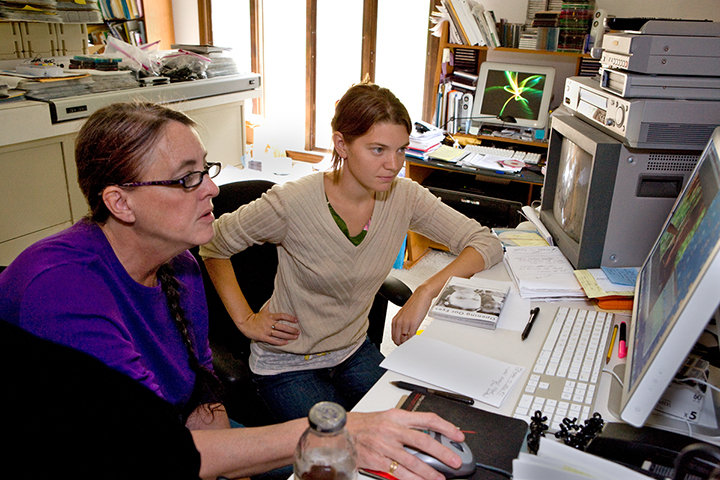
Gail in her "home office" - cluttered but productive.

I think it’s kind of a “hunter/gatherer” type thing where some men feel the need to head off to a “place of work” and if they don’t have that – they feel less “legitimate”.

This past winter one of my friends was having a particularly tough time making this transition and he was ready to pack it all in and get a “real” job. He called me because he knew that I’ve always worked from home, and he wanted to know how I dealt with it and stayed productive. We had a long and very honest conversation and he thanked me.

I saw him at a party this weekend and he came up to me, thanked me again and told me things were looking up for him. Quite honestly, I had forgotten the conversation but he reminded me of some things I said to him and suggested that I blog about it. So here goes.

Some tips and some things to avoid:

  • Start off by calling it your “home office” – not “working from home”. Somehow it’s different psychologically.
  • Be prepared for well meaning family and friends to encourage you to get a “real job”. This happens a lot with people who have creative careers. It’s hard, but you need to explain to your loved ones that what you do IS a real job. Just because you’ve had to lower your overhead and work from a home office, doesn’t mean that you’ve failed. It does mean that you’ve had to make adjustments just like a lot of others have had to do these days to make ends meet.
  • Avoid falling into the trap of taking care of personal tasks during your business hours. My friend found himself spending a lot of time on errands that his spouse asked him to do – “since he was home”. That’s fine once in awhile, but if you find yourself spending half your day doing personal stuff – you are sabotaging yourself and your business. And personal stuff includes putting together Aunt Ann’s birthday bash photos in a fun presentation for all to see. Sure do that – but not during business hours because this is not your hobby – it’s your business.
  • Don’t get overly complacent as soon as you get rid of the expense of your studio. I’ve seen this happen a lot. The pressure to make that overhead is gone so you let your guard down and along with that your clients start to disappear. But it’s because you’ve disappeared – you’re not marketing yourself anymore – and you’re off your clients’ radar.
    • • Have a routine just like you would if you walked out the door to go to work.
    • • Get up at a set time and get dressed – sounds simple but it’s important
    • • Have set work hours
    • • Have a plan – just because you’re in your home doesn’t mean you shouldn’t have a business plan with action items.
    • • Avoid distractions – tough one. If you find yourself doing something that a “boss” wouldn’t approve of – then stop yourself. You’re the boss so stop cheating yourself.
  • Network and connect with your peers and colleagues. This is important, especially in a creative business. You need to have people you can bounce things off of. I have a couple of friends in my life that I’m really grateful for because I know I can share my vulnerabilities and ideas with them without being judged. Friends can do that for you because they don’t have anything personally at stake and can look at things with unbiased eyes. These connections are critical when working from home. These days it’s easy to connect with others. If you can’t do a face-to-face – you’ve got hundreds of other options with social media, listservs or just pick up the phone.
  •  Remember on your darkest days when it seems like it’s hopeless and you’re ready to pack it in and get one of those “real jobs” – don’t totally abandon your dream just yet – leave the door cracked open at least. Maybe get a part time job to start. It will take some of the pressure off and if photography or music or writing or whatever – is your passion – then you’ll quickly find out that a “real job” may not be what makes you happy. The cynics may say that you shouldn’t expect happiness with a job and that the expectation of a job should be to just pay your bills. Maybe so, but do you want to spend most of your life being miserable or counting down the hours to your next vacation? Many times that part time job gives you the push you need to re-invigorate your business because you’ve had a taste of the alternative.
  • Don’t burn your bridges. If you’ve had even the slightest bit of success in the past, following your passions but are in a slump – don’t be so quick to announce to the world that you’re moving on to another career – unless you are thoroughly convinced that you will never have any regrets making that decision. You get the best light from a burning bridge – but it’s usually too late by then. If there’s one thing I’ve learned the hard way – it’s not to burn bridges – because life has a way of making you regret it.

Add to FacebookAdd to DiggAdd to Del.icio.usAdd to StumbleuponAdd to RedditAdd to BlinklistAdd to TwitterAdd to TechnoratiAdd to Yahoo BuzzAdd to Newsvine