Editing a Trailer

Like anything else the best way to learn how to do something is to “see” how it’s done.  I wanted to create a trailer for my documentaryI’m working with a professional editor on this project but while he is getting acquainted with over 160 hours of footage, I wanted to challenge myself to see if I could create a trailer.

For me, it’s always much harder to edit a very short piece. Everything becomes more critical – every cut – every shot – every sound bite and sound effect – every slate and every high and low in the music. And trailers are the ultimate shorts. You need to peak someone’s interest and make them wanting more.

I started paying attention to the trailers on DVD’s and online. I watched them to see how they were constructed. I analyzed them and paid close attention to things like sound effects, music and slates and if it made me want to see the movie.  There were a couple of trailers in particular that I really liked, each for different reasons.  One trailer was for the film I Am.  This trailer gave me some ideas on how to use music and text to deliver the story idea in a concise way and get people’s attention. I also liked it because it was just vague enough to intrigue me but not to confuse me.  Another trailer I like is Dennis Connor’s Breaking Boundaries; the Art of Alex Masket.  There are a lot of things I love about this trailer.  Dennis’s subject Alex Masket couldn’t communicate verbally so Dennis blended visuals of Alex using other people’s sound bites as the narrative.  He also had a beautiful jazzy musical score composed for the trailer.

My challenge was that I had to make a trailer for a film that was about 11 stories. The first thing that I needed to remind myself was that it really wasn’t about  11 stories.  It was about 11 people but ultimately one story.  With that thought I started pulling together  my strongest sound bites.  One benefit of spending all that time editing the past few months was that I was very intimate with the interview footage and I knew where to look for the gems.  I was looking for provocative remarks that left one wondering and they needed to be short and to the point.

Once I got the stand out sound bites on a timeline I started looking for some live action footage and other b-roll.  Then I began to interweave the appropriate visuals with the sound bites – pacing them – giving the piece a bit of time to breathe.  I also added slates with text to help tell the story.

Once I got it down to a reasonable length – in my case 3:45 – which is still a minute too long – I started looking for the perfect music.  I came across Neosounds.com a royalty free music site with some of the best RF music out there.  Picking music for me is like picking wallpaper, going back and forth until everything starts to sound the same.  After making a few painful decisions, I integrated my musical choices into the timeline.  There was still something missing and that was sound effects.  There are hundreds of great free sound effects that come with Soundtrack Pro.  I picked a couple of them to boost and emphasize certain spots in the trailer but I wanted to keep them subtle.  For example I used a sound effect of a motorcycle in one spot and a jet engine taking off in another.

What has resulted from this exercise are two variations of a trailer.  I am sharing these both with everyone because I would like feedback. I don’t want to influence opinion here, other than to say one trailer has a bit of more information than the other. One is also 15 sec. longer. Any and all comments are welcome.

Which one should I use?

Watch the links in this order.

http://www.vimeo.com/21241911

http://www.vimeo.com/21376387

Add to FacebookAdd to DiggAdd to Del.icio.usAdd to StumbleuponAdd to RedditAdd to BlinklistAdd to TwitterAdd to TechnoratiAdd to Yahoo BuzzAdd to Newsvine

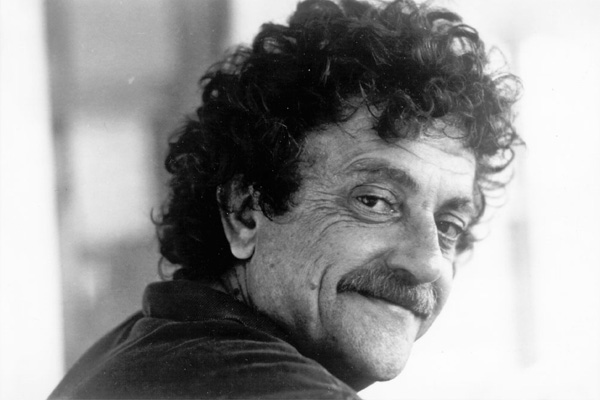
Editing Tips From Kurt Vonnegut

Recently I came across a blog article entitled “Writing Tips from Kurt Vonnegut” which was posted on Melody Godfred’s blog “Write in Color”. It was short and sweet and to the point, listing 8 great tips. Two of those tips really resonated with me because at the time I read them, I was entrenched in editing my documentary and I was struggling with a couple of story issues.

  • Write to please just one person. If you open a window and make love to the world, so to speak, your story will get pneumonia.
  • Start as close to the end as possible.

For the most part when I write I’m usually writing with someone in mind. But I realized when I was editing the 11 stories of this documentary, I was getting caught up in trying to tell too many stories for too many people with their needs in mind. And in the process, I wasn’t getting anywhere in telling the central story of the film. After reading these words of wisdom from Vonnegut, the master of storytelling, I stepped back and envisioned myself with a friend, telling the story of my film and it became clear what I needed to do.

One thing I’ve always done when editing video is to create the beginning and the end first and then fill in the middle. So when I read the tip about starting as close to the end as possible, it reinforced the idea that I needed to have a very clear idea on how I was going to end this film. I had already decided that I wanted to contrast the beginning and the ending visuals so I applied this thinking to the story itself.

I get a lot of questions from people about the mechanics of editing video – like how to do certain things in Final Cut Pro or Adobe Premiere – and I answer the best I can. But I also point out that it’s easy to get caught up in what the software can do and forget about the story that you’re trying to tell. My advice is to read as much as you can about the craft of storytelling. I learned a lot about story structure from Blake Snyder’s book Save the Cat. I learned that every good story has a few key ingredients – irony, conflict, resolution, a hero, change – all basic universal themes. Tutorials on Final Cut aren’t going to help your storytelling skills and without a good story – you might just have some “eye candy” to music.

There is just one more tip from Vonnegut that I’ll leave you with – make sure you check out the other 5 tips.

  • Use the time of a total stranger in such a way that he or she will not feel the time was wasted.

Add to FacebookAdd to DiggAdd to Del.icio.usAdd to StumbleuponAdd to RedditAdd to BlinklistAdd to TwitterAdd to TechnoratiAdd to Yahoo BuzzAdd to Newsvine

Editing 150 Hours of Footage From a DSLR

As I roll away the miles, driving the ten hour trip to Michigan to rendezvous with my daughter Erin to film the last of our subjects for our documentary Opening Our Eyes, I realize how desperately I needed a long road trip – just cruising down the highway.  I have been in utter isolation for the past month, editing over 150 hours of footage that we had shot over our ultimate road trip around the world this past summer.  Little did I know that the 99-day journey would be the easy part of this project.

This past month there have been many times that I became so overwhelmed with the process of editing that I wanted to throw my hands up in surrender and just give up.  But somehow I plowed through it, many days putting in 14 plus hours.  I was on a mission and listening to the words of my subjects got me through it.  After all these were some of the most inspirational people I had every met, so revisiting them through their interviews was a constant reminder of the goal of this film which is to create awareness and inspire and motivate others to make a difference and create change.

Ultimately, my challenge is to take ten (soon to be eleven) different stories of people across the globe who are making a positive difference in the world.  After finally getting the tedious tasks finished, of transcoding files and sorting through the good from the bad clips, I arrived at a point where I needed to start telling “THE” story.  Meaning I needed to determine how I could best structure the film to convey the common themes between my subjects.

In order to see the story clearly – I needed to get away from the technology. So as the miles roll by, the story becomes  more vivid in my head.  I see the hero(s), the themes, the commonality and the arc of the story as the stories intertwine.  I won’t give away too much information other than to say that the solution is simple.  They aren’t eleven different stories after all. It’s really a global story about the power of one.  How one individual can create positive change and not only effect generations to come but change themselves as well. It’s a basic human story that resonates with all of us.

When I started writing this blog I was going to talk about editing tech tips. Somehow as the miles rolled by and my head became clear of the intense electronic input from the past month, I not only saw the story, but I felt it.  I had gotten back on track and gotten to the heart of the story.

Add to FacebookAdd to DiggAdd to Del.icio.usAdd to StumbleuponAdd to RedditAdd to BlinklistAdd to TwitterAdd to TechnoratiAdd to Yahoo BuzzAdd to Newsvine

Grow or Die

I’m borrowing the title from Ian Summers, a creative coach and visionary. Through personal sessions with Ian as well as from his writings, I’ve learned that there is joy in any exploration, especially the exploration of the creative self. Ian expresses what he does more beautifully on his blog: Heartstorming

“ I co-create an environment where people are safe to bring what they love and what matters to come into being by being a compassionate teacher and expressive painter.”

There is so much to learn simply because it’s such an amazing age we live in. I try to take advantage of that and embrace new skills and knowledge to further my creative self. Learning and exploration is a necessary ingredient in my life. It stimulates me, it brings me wonder and joy and it empowers me. The more I learn, the more I grow, and the more the universe opens to me and sets my creative spirit free to be the one I am meant to be. Learning is happiness.

Here are some links to some wonderful sources for learning – some technical and some inspirational – but all valuable in their own way.

To start with don’t miss Selina Maitreya’s Clarion Call 2011, a free 2-day professional photography telesummit.
I’ll be on at 10AM Friday, Feb. 11th.

If you’d rather have the benefit of networking face to face with your peers then sign up for ASMP’s Strictly Business 3
Next one coming up is in Philadelphia Feb. 25-27, 2011.

Here’s a few a my favorite links to continued learning:

Video Vimeo School – Tutorials, articles
Creative Cow – Tutorials, forums, articles
2 Pop – Forum, articles
Ken Stone –Tutorials video

If you have any real or virtual places that you frequent to learn, please feel free to share.

The key of course to learning is to apply the knowledge that you’ve learned. So be ready to grow when you set out on your explorations of learning. Embrace that thought and ready your mind to be open and receptive to new ideas and ways of seeing.

Add to FacebookAdd to DiggAdd to Del.icio.usAdd to StumbleuponAdd to RedditAdd to BlinklistAdd to TwitterAdd to TechnoratiAdd to Yahoo BuzzAdd to Newsvine

Telling the Story with the DSLR

The sub-title should read…”or with any camera for that matter”.  For those of you not new to this blog, you know that my mantra is “it’s not about the tool”.  And my other mantra is “embrace collaboration”.

But back to the thought behind this blog entry and that is “telling the story”.  I recently read a great book that a dear friend had given me about screenwriting called “Save the Cat” by Blake Snyder. Snyder’s book is geared more toward writing a fictional screenplay, as opposed to writing a narrative for a documentary, but I thought it would be helpful for me as far as learning more about the dynamics of story telling – and indeed it was.

Snyder talks about the different genres that most movies fall into.  The category that my documentary came closest to if I was writing a fictional piece was what he referred to as The Golden Fleece. Blake writes:

“The name comes from the myth of Jason and the Argonauts and yet it’s always about the same thing: A hero goes “on the road” in search of one thing and winds up discovering something else – himself.”

“Like the twists of any story, the milestones of The Golden Fleece are the people and incidents that our hero or heroes encounter along the way.  The theme of every Golden Fleece movie is internal growth, how the incidents affect the hero is, in fact, the plot.

“It’s not the mileage we’re racking up that makes a good Golden Fleece, it’s the way the hero changes as he goes”.

Wow, I thought as Snyder’s words resonated with me and how I “saw” the documentary that I was in the midst of editing.  In my case, I had many heroes who in setting out to make a positive difference in the world had also experienced intense and rewarding personal growth.  I too had changed and grown, along with my daughter who journeyed with me to tell our subjects’ stories.

As I read more of Snyder’s book, my vision of our film became much clearer in my head.  This week, I had a meeting with the editor who will be collaborating with me on this film.  I’m thankful that I was able to have a face to face meeting with him where we could both get a better feel for each other and more importantly  – the story.  We had a wonderful conversation about the story that I wanted to tell – the heroes – the conflicts – all those things that are part of a good story.  I knew we were on the same page when he said: “It’s not about the trip – it’s about the journey”.

Or as Snyder writes:
“It’s not the incidents encountered.  It’s what the hero(es) learn about himself from the incidents that make the story work.”

We’ll see if I can do my heroes justice in telling their stories, but I’m not alone in this task.  I’ll be collaborating with an editor who not only has an understanding of “the story” but the skills and ability to make it come to life. What joy.

Add to FacebookAdd to DiggAdd to Del.icio.usAdd to StumbleuponAdd to RedditAdd to BlinklistAdd to TwitterAdd to TechnoratiAdd to Yahoo BuzzAdd to Newsvine

Being Authentic

There are certain words and phrases that tend to become over used just because they seem to express the idea so well.  Ironically, the word authentic is becoming over used now in our culture and in a weird way is on the brink of becoming a contradiction to what it means.  So, I cautiously use the word “authentic” in the real sense to say – be who you are meant to be.  Be authentic.

When I returned from my round the world adventure this past Fall after completing the shooting aspect of a personal project, I discovered that people were responding to me in a different way. Perhaps they sensed there was something inside of me that they wanted to connect with.  It’s a very difficult thing to explain but I think what they were sensing, was my contentment.  I was content and feeling a sense of “satisfaction” because I was following “my purpose”, both personally and creatively and in the process I was discovering many other people,  all over the world, who were doing the same.

On the outside what may have seemed like just a very long, exotic “trip”, was really more of a journey.  It was a journey that I had begun a long time ago when I became an explorer, through my eyes and through my camera.  I use the word explorer in a literal and figurative sense. Throughout my life, in my never-ending nomadic need to explore the world and its peoples, I was finding my own vision and how I “saw” and I was sharing that with others.

Ethan G. Salwen expressed it beautifully in a recent post on his After Capture blog:

“We always say that learning photography is really learning to see, and this is true. But we tend to express this sentiment in relation to a very limited sense of seeing — the visual sense. Older photographers seem to continue to learn to see on a much deeper level, in terms of what it is to be a working artist and, most important, how this relates to their continual growth and satisfaction as an individual.”

I think Ethan nailed it by talking about “learning and seeing on a much deeper level and how this brings growth and satisfaction as an individual.”  I use the words “ being on purpose” to describe “satisfaction” within oneself.  I believe that as creative individuals, when we begin to find meaning in who we are and how that fits into the world, it will shine through our work.  Some use the word “vision” to describe that certain something that they see in someone’s creative work. Maybe that’s what was in the back of my mind when I came up with the title of my project and film, Opening Our Eyes.

In a way, I use my “eyes” and my camera to do what I do best – to share and connect with others.  When I travel, it is not to assimilate with a culture, but rather to learn and exchange our cultural uniqueness, embrace that and share it with others. When I’m being authentic and true to myself, that happens in a magical way.  When someone tells me that I’m the “real deal”, that is one of the highest compliments they can give me.

I think Susana Esmoris, one of the subjects of my documentary said it best.  “Live life intensely.  Wear the color that you want in life.  Dance what you want to dance.”

Add to FacebookAdd to DiggAdd to Del.icio.usAdd to StumbleuponAdd to RedditAdd to BlinklistAdd to TwitterAdd to TechnoratiAdd to Yahoo BuzzAdd to Newsvine

Collaboration in Video and….

During one portion of my career, I spent a lot of time shooting still photography assignments for magazines like the National Geographic Traveler, Smithsonian and Travel & Leisure, to name a few. I was hired to shoot the images. A writer was hired to write the story.

Every magazine and every story worked differently as far as how I would collaborate with the writer. Sometimes the writer and I would just have a conversation about focus and approach and then we’d be off on our own, each bringing our own perspective to the piece.

Sometimes, I’d be given a manuscript that had already been written and I was expected to illustrate it. This worked well when I, the writer and the magazine would agree on the focus of the “story” and match our talents to that end. But there were times when a magazine would want very literal illustrations of the words, which not only stifled the images but weakened the words. One time I was asked to photograph “the lurkage of limousines.”

And then there were times when I went to a destination with a writer to do a story on that destination and even though we were there at the same time, we came back with different stories. I got my story done on site and the writer did most of his/her work after returning from the destination.

With video collaboration is essential because there are so many facets, each calling for different skill sets. Some collaborations occur simultaneously on set and some later in post-production but all have to work well in order to get to the same end in harmony. Harmony meaning, not just being able to get along but to communicate and work well together as one, but also where each respects each other’s role in the process.

It’s very tricky to assemble the right mix of people, but here are some important things to look for when building a team or even a partnership:

  • Trust – You have to be able to count on someone to do their job. And likewise, you have to also commit to uphold your end of the deal. The team is only as good as the weakest link. That becomes even more critical, the smaller the team is. If you’re only working with one person and you can’t count on them – you’ll be doing the work yourself. It’s important to know that someone has your back.
  • Working Style – While it’s not important for all to be morning people or night people or have similar working styles in that sense, it can be extremely frustrating for all concerned if there are procrastinators on the team. That’s because timing in video production is important for workflow. If someone doesn’t deliver when they promised – it holds up the whole production. We had one situation where a motion graphics artist held the entire post-production up for months.
  • Expertise – Surround yourself with experts. They will make you look good. But remember, just because someone is expensive doesn’t mean they are the best for your job. There could be someone who is more right for the project who is less expensive. Keep style and vision in mind. Talk to potential crew members and get references.
  • Right for the job – The “best” editor in terms of the commercial world might not be the right person for your project. For me, I want to work with an editor that is also interested in the project besides the money it pays. I look for an editor who will also bring a different perspective as to how the story gets told.
  • Bottom line – Work with people you can count on – otherwise the job might not get done.

Add to FacebookAdd to DiggAdd to Del.icio.usAdd to StumbleuponAdd to RedditAdd to BlinklistAdd to TwitterAdd to TechnoratiAdd to Yahoo BuzzAdd to Newsvine

Editing Tips for Multimedia and Video

A few days ago, I wrote a blog about “having a point” – or telling a story when you create multimedia pieces. Of course you have to have an overall idea and focus to start with, but below are some editing tips on how to make it come together in the editing room.

  • Edit with a purpose. Why are you making the “cut” where you are? Are you cutting on the action? Are you cutting on the beat of the music? What’s the reason behind your cut?
  • Set a pace or rhythm. Just like writing, where you have pauses in sentences with commas, edit your visuals to your narrative or interview soundbites, cutting after words and phrases.
  • Use image sequences to transition between different ideas and themes.
  • Let your images linger on the screen, giving time to breathe between them.
  • Cut on the beat or against the beat of music. Edit the music and let it become part of your piece, rather than just a background soundtrack.
  • Adjust the volume of your music – lowering it during interviews and raising it when there is no narrative or dialog.
  • Use audio fades between music cuts to soften the cut.
  • Insert room tone between cuts in interview soundbites, making the cuts less apparent.
  • Use interview footage sparingly – when introducing someone or when someone is expressing emotion on the screen.
  • Identify interview subject with name and title text in lower third.
  • Use text that’s easy to read and break it up over many slates. Leave the slate on the screen long enough to read twice.
  • Always start with your strongest images.
  • Don’t “move” all your still images – leave some static on the screen.
  • Don’t use dissolves.
  • When working with media from DSLR cameras, keep the media in the DCIM folders for logging and transferring into Final Cut Pro with the plug-in. If you have taken your media out of the DCIM folders – then create a new DCIM folder for the purposes of importing the media into FCP.

Remember to keep the story in mind at all times. When you think you have the story laid down in a rough cut – have friends over to watch it. Ask them what the story was. If they don’t know or can’t tell you, then you have more work to do.

Add to FacebookAdd to DiggAdd to Del.icio.usAdd to StumbleuponAdd to RedditAdd to BlinklistAdd to TwitterAdd to TechnoratiAdd to Yahoo BuzzAdd to Newsvine

“Here’s an Idea – Have a Point”

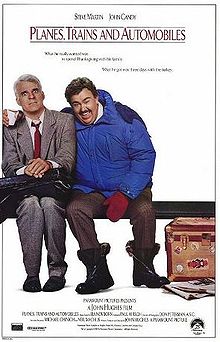
One of my favorite holiday movies is “Planes, Trains and Automobiles” with Steve Martin and John Candy. There’s a great scene in the movie where Steve Martin loses it and starts a rant directed toward Candy’s character, Del Griffith. Del, is a “nice guy” who talks incessantly. Martin’s character, Neal Page, an uptight ad man, frustrated by the day’s travel mishaps, finally explodes at his travel companion Del after one too many stories and says – “here’s an idea – when you tell a story, have a point!”

Am I the only one who has been oversaturated with multimedia and video pieces that are little more than pretty visuals to music? Don’t get me wrong, there are plenty of pieces that I do like, but there are far too many where I get bored and bail mid-way through because there is no point – there is no story.

Worse yet, the audio or music track many times feels like it has no connection to the visuals. It may be a great piece of music and provide pacing for the video, but it doesn’t complement the story. And there are times that the music is the most interesting part about the piece – if you take it away, what do you have? Most likely a pagination of moving and/or still images – like pages in a magazine or prints on a gallery wall. Independent and isolated vignettes with a music track – but no story- just eye candy.

What holds my interest is a story, where all the elements of audio, music, video clips, stills, text and narrative are parts of the whole and each one is integral in telling the story. I don’t think I’m alone in being interested in the story. Humans have enjoyed “the story” since the beginning of time. It doesn’t matter if it’s told verbally in a one on one conversation, in a multimedia piece, or in a major motion picture – a good story is a key ingredient for human interest. We all love a good story.

Personally, there is so much out there to watch these days on any given site that hosts videos, if I’m going to invest time in viewing something – I want it to have a point. If it doesn’t when I get to the end – I feel somehow let down.

I’m sure some of you will disagree with me on these thoughts and many of you may get loads of satisfaction from watching pretty visuals laid down to music and that’s OK. I’ve just had my fill of pretty content splashed before me, becoming a blurred palette in my head.

So, here’s an idea – have a point.

Add to FacebookAdd to DiggAdd to Del.icio.usAdd to StumbleuponAdd to RedditAdd to BlinklistAdd to TwitterAdd to TechnoratiAdd to Yahoo BuzzAdd to Newsvine

How Do You Tell the Story?

I’ve said it hundreds of times – “the story is everything”, “without a story, you’ve got pretty pictures to a soundtrack”. So, how do you tell a story? How do you do it?

A friend called me the other day, struggling with this very question, of how do you tell the story? He was putting together a multimedia piece and he had captured sound and had taken photos during an event and was about to record an audio interview. I wasn’t sure at first, if he was asking about the mechanics of how to edit a story together in Final Cut– or was he asking me for guidance on how to tell the story? Those are two completely different discussions.

I thought back to when I was just starting to learn video journalism and had taken the Platypus Workshop. We had to tell our commitment or our story idea to an instructor, before we could start executing it. If the idea wasn’t delivered clearly and concisely, we went back to the drawing board to nail down the idea or the focus.

Every story starts out with an idea. Ideas have always come pretty easily to me, usually in spurts. All sorts of environments or activities can trigger ideas.

Seth Godin did a blog about a week ago titled, Where do ideas come from? Here are a couple of my favorites:

  • Ideas come out of the corner of the eye, or in the shower, when we’re not trying
  • Ideas come in spurts, until you get frightened. Willie Nelson wrote three of his biggest hits in one week
  • Ideas occur when dissimilar universes collide
  • Ideas fear experts, but they adore beginner’s mind. A little awareness is a good thing
  • Ideas hate conference rooms, particularly conference rooms where there is a history of criticism, personal attacks or boredom

Once I get the idea, I then start focusing it in my head. I play out the movie in my mind. What is the message? Whose message is it – mine? – the client’s? What is the motivation for the piece? A call to action? Once I get a pretty clear idea of what the story is that I’m trying to tell, then I start to put the pieces together. First I gather and capture all the assets that I’ll need, the interviews, b-roll, still photos etc. Then, when it’s time to edit the story, I’ll have a much clearer focus of how I will edit the pieces together to deliver the message.

Right now, I’m editing a feature length documentary, that is made up of ten different stories about ten different people in various corners of the globe. All together, the ten stories are unified by the theme of “the power of the individual in making a difference in the world”. Essentially the idea is, global stories about the power of one. That has been my underlying story from the moment of concept, to shooting it, to editing it all together.

So, how do you tell the story?  For me, it’s focusing on the “idea” at all times and editing toward that purpose.  There are hundreds of ways to tell the same story, but you need to know what the story is before you can begin to tell it.

Add to FacebookAdd to DiggAdd to Del.icio.usAdd to StumbleuponAdd to RedditAdd to BlinklistAdd to TwitterAdd to TechnoratiAdd to Yahoo BuzzAdd to Newsvine