
I’ve grown to love the editing part of the video production process. It’s where I “craft” the story and take it where I want it to go.
Last Spring I attended a conference at the Grand Hotel in Mackinac Island, Michigan. 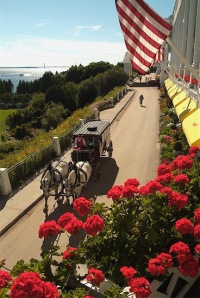 While staying at this historic gem, my goal was to create a short web video on the hotel and the island. I shot the property in a dozen different ways getting b-roll footage of carriages, guests on the porch, tea in the parlor, the orchestra and other areas of the hotel as well as scenes in town. I also interviewed third generation owner and President, Dan Musser III and carriage driver Tom McCarthy. Those interviews as well as some soundbites from a talk given by concierge Bob Tagatz – gave me my narrative track.
When I returned I gathered all my assets – interviews, b-roll and music and started to layout the story. Generally, I lay down my best soundbites first. This drives the story. I’ll then go through all my b-roll and live action shots and select the best clips that best illustrate the narrative track. I was fortunate on this piece because I was able to capture footage of the harpist at the Grand Hotel and this not only provided me with some nice visuals, but it gave me a music track to work with that made sense in the context of the story.
After piecing together the story in Final Cut Pro, I then went back and “cut” it. Given time, I may even live with it a bit, going back and cutting more each time giving it more punch. I’ve uploaded my first two cuts on vimeo. Here’s a link to my latest rough cut. http://www.vimeo.com/5889700 I’ll probably live with it a bit and then go back and cut out another 20%. It’s always hard to cut but it makes the piece stronger and these days – people don’t take the time to look at long web videos.
 Journeys of a Hybrid