How the Beatles Influenced Me as a Photographer & Businesswoman

With all the hype happening this week around the 50th Anniversary of the Beatles coming to America, I couldn’t help but reflect how much this band influenced my own career as a photographer and filmmaker.

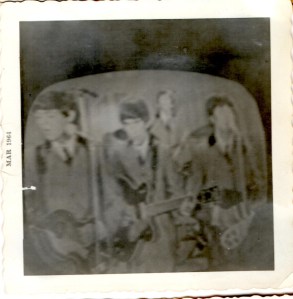
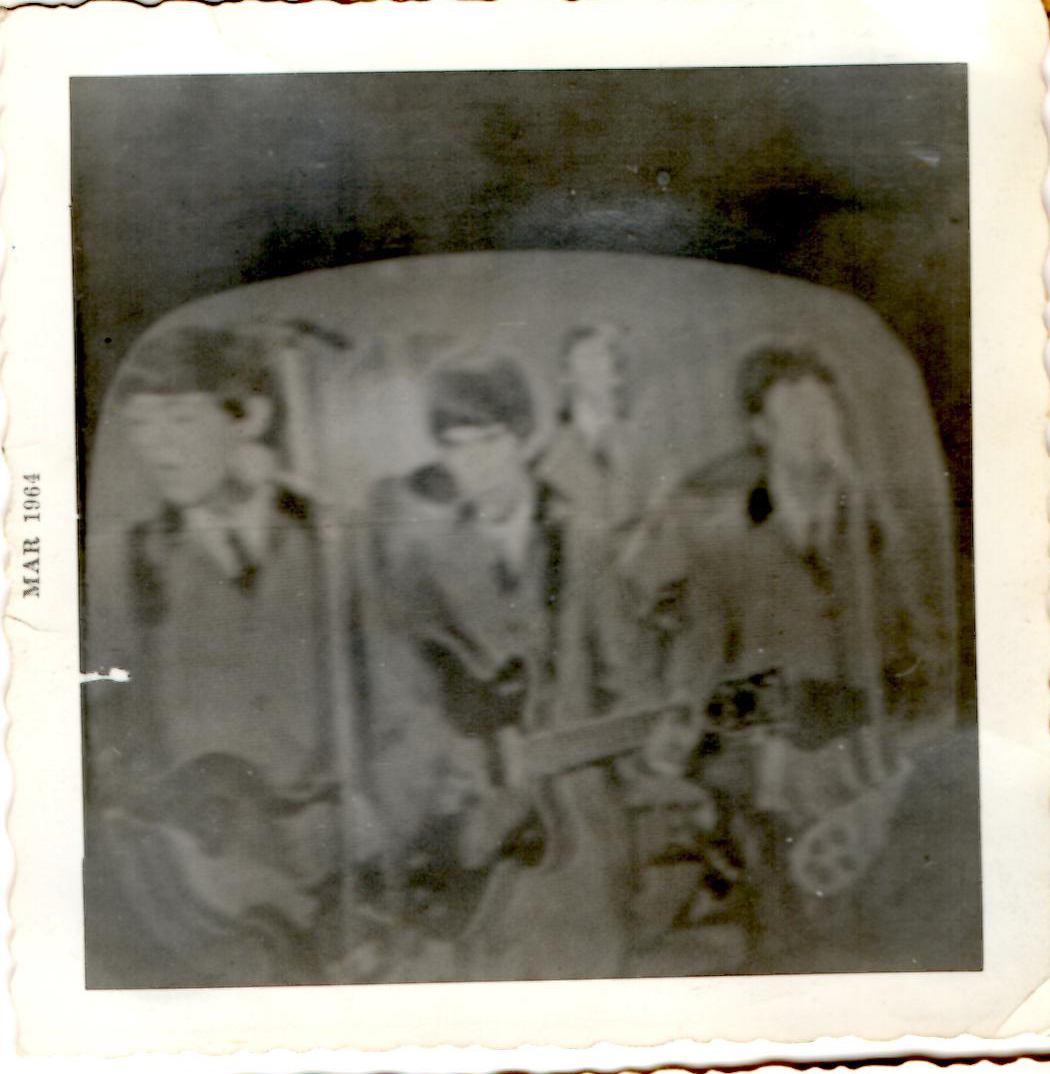
  1. I was inspired me to “capture” history (and use my camera as a means to that end). Beatles on Ed Sullivan Show - February 9, 1964To start with, the first pictures that I remember taking as a child were photos I snapped of the Beatles on the Ed Sullivan Show.  I vividly remember as I anxiously awaited the show to begin, that I needed to document it somehow.  It was just too important not too.  In fact it was so important that I have kept that snapshot in a small box of memorabilia for 50 years! I’ve spent a career documenting some of the most incredible places, people and events of my time.
  2. They inspired me to be a storyteller.  I used to orally tell stories to just about anyone who would listen to me when I was a very young child.  But when the Beatles hit the scene, about the same time I started noticing the opposite sex, I turned my fantasies into my own written stories.  I’m still writing stories and now translating them into ePubs, books and movies.
  3. They expanded my universe.  I began to “see” things differently because of the Beatles.  I became aware of different cultures, countries, music and wit. It was like an awakening for me and I knew then that I wanted to explore as many cultures and experiences as I could. I’ve spent a lifetime exploring the unknown.
  4. They taught me to always learn, grow and challenge myself. I grew up as a child and later a teenager, during one of the most pivotal and changing decades in America. As the Beatles moved beyond the “feel good” and innocent lyrics of songs like “She loves you…..yeah, yeah, yeah”, to the lyrical depths found on the Sergeant Pepper’s Lonely Hearts Club Band album, I too was changing.  It was like we were growing together. I remind myself daily to always be learning, exploring, growing and challenging myself and that has helped me stay fresh in my career.
  5. I learned that “The Beatles” were more than the sum of 4 individuals. John, Paul, George and Ringo all brought their own unique talents and personalities to make up the most phenomenal band of all time.  But they were also savvy enough to know they needed expert guidance and collaborated with great people like Brian Epstein and George Martin.  It taught me the importance of collaboration and to surround myself with people who have talents that I don’t possess.
How This Beatlemanic Became a Photographer

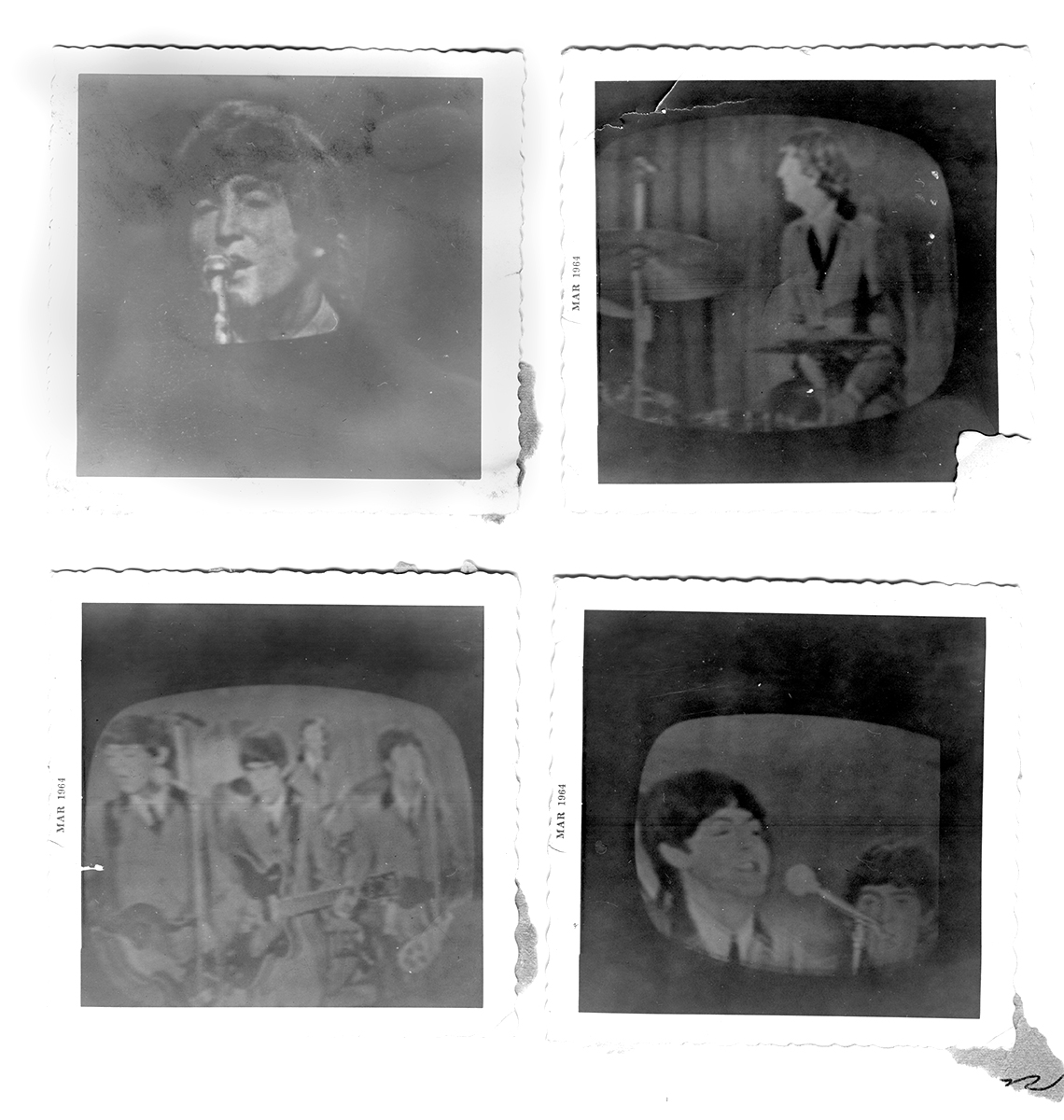
It’s hard to believe it’s been almost 50 years since I took these pictures off of our TV screen. Beatles on Ed Sullivan Show - February 9, 1964 I remember that night like it was yesterday, in vivid detail.

The Beatles had just come to America for the first time, and I was counting down the days until they were scheduled to appear on the Ed Sullivan Show.  I had been soaking up every bit of news about the Beatles all week. In those days that meant listening to the radio as DJ’s gave a blow-by-blow account of what those “crazy lads from Liverpool” were doing.

My family and I were living in Rochester, NY at the time.  I was not quite a teenager, and it was the very first time I fell in love. First with Paul, because he was the cutest and non-threatening.  Later with John, because he was a bit rebellious and he appealed to the adventurous part of me that was emerging.

The day the Beatles were to appear on the Ed Sullivan Show just dragged by.  Dinner was particularly excruciating and each minute seemed like an hour.  My sister and I had commandeered the TV set and no one was getting near it to change the channel.  It was a black & white set – a color TV was prohibitively expensive in those days. I don’t remember who had the idea to take pictures that night but luckily we had some film in the Instamatic. I took just four shots that night.  It was the end of the roll and each click was precious and I remember waiting for the right moments.

I can see by the date stamps on the prints (March 1964), that it took us a month to get the film developed.  That was record speed for my family.  We usually had a year’s worth of holiday pictures on one roll of film when we dropped it off at the drug store for processing.  Luckily the film in the camera was at the end of the roll that evening – otherwise it may have taken months to see photos.

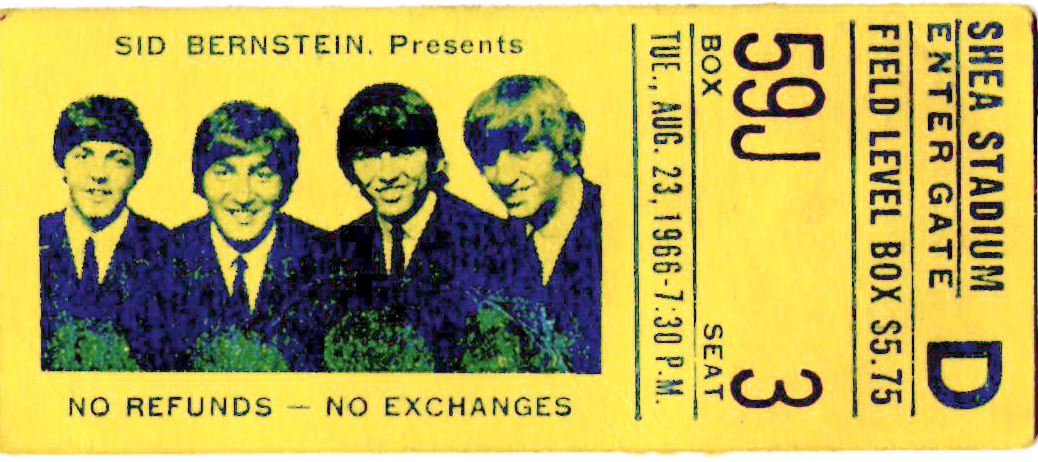
I pasted those photos into my scrapbookBeatlesTicket4 copy almost 50 years ago and they’ve been there ever since, along with my other Beatle memorabilia including my ticket for their performance at Shea Stadium in 1966.  We had moved to the NYC area about a year after I shot these photos, and I actually got to see the Beatles perform twice at Shea – ’65 and ’66.

As I look back at that night on February 9, 1964, I can see where my passion for recording moments in history came from and I’ve been photographing them ever since.

Business Tips for Photographers in a Multi-Media World

In the blogging world of photography and motion, there is a lot written about gear and how to use it, red camerabut precious little written about “the business”.  Chances are, if you are photographer who has been in business for more than 10 years, then you know that technology has not only changed our tools, it has changed the way we do business.

For starters, we are doing business in a global economy, and with that comes pluses and minuses. One big plus is that we are able to reach a much wider audience, than ever before. That is, if you have an understanding of how to do that and take advantage of the opportunities that are out there.  The minus or downside is, if we don’t adapt our dated business models, in a business that has seen monumental changes, we will not be able to compete.

Commercial photographers are in the visual communications business.  We create imagery that delivers a message or tells a story for a variety of “markets” including; advertising, corporate, architectural and editorial.  Each market has a need for visual content and these days that encompasses both still photography and video.  In the last couple of years, the lines dividing these two mediums have faded away, at least in terms of how content is consumed in our culture.

Here are a couple of tips to help photographers prosper in our “multi-media” world:

  • Decide what your company will offer.  Will you only provide still imagery?  Or will you expand your business and offer both still photography and video? Are you quick to answer: “I don’t want anything to do with video” ? The problem with that answer is that most of your clients will probably have a need for video.  Are you going to send them away to your competition?  Or will you keep your clients “in house” and take care of their video needs and hire or outsource your competition? That’s a different way of thinking and has the potential to broaden your revenue stream.
  • Decide what role you will play if your company does offer video?  Will you be the director and work with a camera operator?  Or will you assume the role of a DP (Director of Photography) and direct as well as operate the camera?
  • What will you outsource and what will you keep in house?  Maybe you want to expand your business by offering both still photography and motion, but you’d prefer to just shoot the still photography and outsource the video.  In that case, you could assume the role of producer and oversee or outsource the video production.
  • Reassess your insurance.  Video productions have a lot more variables. They also usually have larger crews.  More than likely, you will need to upgrade your current insurance policy to accommodate and cover that.
  • Change your paperwork.  Make sure that you go through your talent and property releases and modify the language for multi-media.  Change any boilerplate contract language to include video (motion).
  • Licensing.  Regardless, if you decide not to expand into video production, you will have to contend with the fact that your still images won’t always be used in a stand-alone fashion.  Many still images will be commissioned and/or licensed as part of multi-media projects and that has a dramatic effect on licensing. And if you do decide to expand into video production, in your role as a producer, you will be licensing other people’s work.
  • Understand new business models.  Let’s face it, things have changed in the business of photography.  Photography has become ubiquitous and the competition is fierce.  You are not only competing with professional photographers – you’re competing with semi-pros, amateurs AND video production companies.  One thing is certain, it’s never been more important to have an understanding of multiple mediums and to be unique and stand out amongst the noise. There are no templates you should follow.  You have to be authentic and true to yourself.

Check out more tips and information in my ePub, The Craft and Commerce of Video and Motion.

10 Tips For Getting GOOD Audio When Using a DSLR

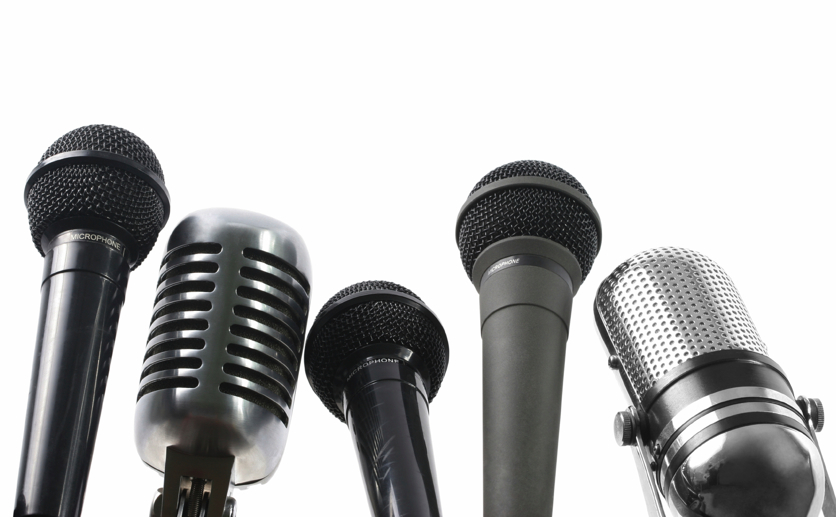
If you’re like most of the professional still photographers I know, you have either expanded your business and offer videomicrophones (in addition to your still photography) to your clients, or have plans to.  If you do have future plans to offer video to your clients, then you are either learning the particulars of that skill set, or you are collaborating with others who are in the know, or both.

Perhaps, one of the most daunting components of video, for still photographers is audio. Capturing audio is totally foreign to a still photographer, yet it is the most important component of all, in video production.

Here are a few tips for getting good audio:

  • You’ll never get good audio using the camera’s built in microphone, – at least not for interviews. Don’t turn the camera’s audio off however.  You can use it later for reference audio when syncing sound later in post-production.
  • Use external microphones for capturing audio interviews.  Ideally, you should record your interview audio using a digital recorder like the Samson Zoom H6 or the Tascam DR-60D with XLR connections.  I usually place a “lav” microphone on my subjects. I will also use a shotgun microphone, mounted (with shock mount) on a boom pole that’s on a fixed stand.  I rely on the microphone on the fixed stand, as opposed to hiring a boom operator, especially if I don’t have the budget for a big crew. If you should decide to use an amateur or assistant as a “boom operator”, rather than hire an experienced operator who knows how to capture “consistent” audio, you’ll most likely end up with poor audio captured at inconsistent levels. The shotgun microphone should be about 12-18 inches away from your subject. You can sync the sound with the video, later in post- production, using the software Plural Eyes.
  • Don’t cross your audio cords with your electrical cords. This causes a hum that you will detect if you are wearing headphones.
  • For run and gun” situations, you can probably get away with using a microphone mounted on the camera, as long as you are close to your audio source. You can either run a microphone (with a mini plug) directly to the camera OR you can run a microphone with an XLR adaptor through a pre-amp like a JuicedLink or a Beachtek, which will yield a cleaner audio capture. This works well for capturing ambient sound for b-roll or live action, and your audio will be recorded to the same card as your video. If you do want to capture your interview audio using a microphone mounted on the camera, make sure that you get your camera in close to your subject (not more than 18 inches away), and that you us a mixer or a pre-amp.
  • Microphones – Use an omni-directional or cardiod microphone when you are in a more controlled situation and you want your sound coming from more directions – like on a sound stage.  “Lav” microphones can be used for interviews, either hard wired or with a wireless kit. Be careful when you attach it to your subject and position it to avoid any unnecessary noise coming from hair or jewelry rubbing up against it. A good camera mounted microphone is the Sennheiser MKE 400 (compact shotgun). For interviews I use my cardiod Sennheiser ME66 with K6 powering module.
  • Use a wireless system only when you NEED to. In cities like New York you can get a lot of interference on various frequencies. Always go wired when you can. A great and affordable hard-wired “lav”, is the SonyECM44B And if you find yourself needing a wireless system, spend the money to get a system that has a good range.
  • Use a good windscreen or “dead cat” when outside. Even if you’re inside, on a windy day, with windows open, you can pick up wind noise.
  • Use headphones. Don’t just look at your meters.  Your meter may indicate that you are recording sound, but it may not be good sound – it could be you are picking up interference or getting distorted and clipped audio. Wear headphones and make sure that you are getting quality sound.
  • Always consider that you will be using the audio – even for your b-roll.  You will need clean usable audio for b-roll, even if it’s only intended as ambient, background sound.
  • Pay attention to audio. Start by letting your ears do more of the work. Every room and situation has its own sound. Listen up. Be quiet and tell your crew to be quiet as well. You never know when you’ll want to use the audio – even if you think you won’t need it.

You can read more about what I brought with me in the way of gear, when I literally circled the globe, creating my first feature length film.  The film is now available on DVD.

If you’d like to know more about “moving into motion”, check out my book, The Craft and Commerce of Motion and Video.

Letting Go

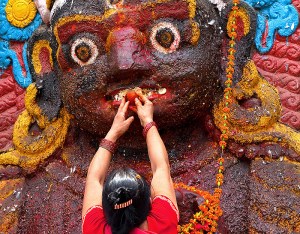
This past weekend our film, Opening Our Eyes, Kathmandu, Nepalhad its premiere in New York City. We have been in dozens of film festivals and events all over the world but for whatever insignificant reasons, we had never screened in New York.  I think of NYC as my “hometown”, even though I have never lived inside “the city”. It’s where many of our friends, clients and colleagues are and it has been our “home base” for over 35 years.

Despite the fact that the temperatures were in the single digits and there had been a major snowstorm the night before, so many of our oldest and dearest friends, along with some new ones, showed up. Even Nisha, a young Nepalese girl who is in the movie – came out on that cold night. I have been in front of many audiences over the years and have enjoyed it immensely, but I can honestly say that this was the most meaningful experience I’ve ever had. To be able to share my film – a body of work that I put a lot of hard work, heart and soul into – with my peers and people I’ve known since my beginnings, was pure joy.

In a way, the night brought things full circle in regards to the film.  A lot of filmmakers “open” or premiere in their hometowns.  Once again, I did things a little backwards, by “closing” in my home turf, as this may be the film’s last festival screening. I don’t have plans to pursue more festivals – but I never know what’s lies ahead, in the way of opportunities, and am open to possibilities.  This project and this journey have rewarded me in hundreds of ways and no doubt will continue to enrich my life. The film will still be available for screenings at educational venues and community events.  It’s also available on DVD and streaming.  My daughter, Erin and I made this film to inspire and motivate others to create positive change in our world, and we hope that message continues to spread globally.

A young filmmaker I met at one of the festivals I attended told me, “a filmmaker never finishes a film – he(she) just knows when to let go.”  I am able to “let go”,  because I know that this experience has set the stage for the next events in my life.

“Everyone has Oceans to fly, if they have the Heart to do it. Is it reckless? Maybe. But what do dreams know of boundaries?”
 
– Amelia Earhart

6 Social Media Marketing Mistakes to Avoid

I must admit, I’m not an SEO or Social Media guru.  In fact, on a scale of 1 – 10 (10 being extremely interesting), I’d give this topic a 3.  But, after reading Gary Vaynerchuk’s book “Jab, Jab, Jab, Right Hook,” (which I would give a 10), I’ve shifted my thinking entirely.  I also realized why, the topic has had little interest for me – most of the books, articles and blogs I had read were full of formulaic tips  – but none of the advice and tips felt like a good fit who I was and what I had to offer.  And in fact if I had applied some those tips to my blog or my Facebook posts, I would have done myself and my business a disservice by not being “myself” – or authentic.

Some social media marketing mistakes to avoid:

  • Putting the wrong content on a platform – Each platform, (Facebook, Twitter, LinkedIn, Pinterest, Instagram etc.) has it’s own “native” language or how the community communicates  and interacts with one another.  A good marketer understands that “context” is just as important as content.  Your content must provide the same value to the viewer that is native to that platform. Your content should fit in with what drives people to that platform.
  • Content is not memorable – Your content should be something that people want to share. ooe fb [age Facebook uses edge rank, which determines who and how many people see your posts.  The more shares, comments and likes, the better your edge rank and the more people who see your posts.  Keep your content, informative, entertaining or both and give people the desire to share.
  • Selling too often – You have to “give” more than you “sell” on social media platforms. If every post you make is a pitch for your products, no one will be interested, let alone want to share them.
  • Text is too long – Twitter has a cut off, but Facebook doesn’t.  Keep in mind that more and more people are viewing your posts on mobile devices and simply won’t read lots of information.  Provide more info via links. Make sure your text is provocative and entertaining.
  • No use of imagery – If you don’t have an image in your posts on platforms like Facebook or Tumblr, you won’t attract attention.  People will just move on to something that catches their eye on their news feed.  And, make sure the images you post are good and professional – they’re a reflection of your business. Make sure you overlay your logo on your images.
  • No call to action – Remember you are ultimately selling your products and your services, so don’t forget to give your viewers a call to action.  But don’t confuse them by giving them too many.

The Advantages of a Disadvantage

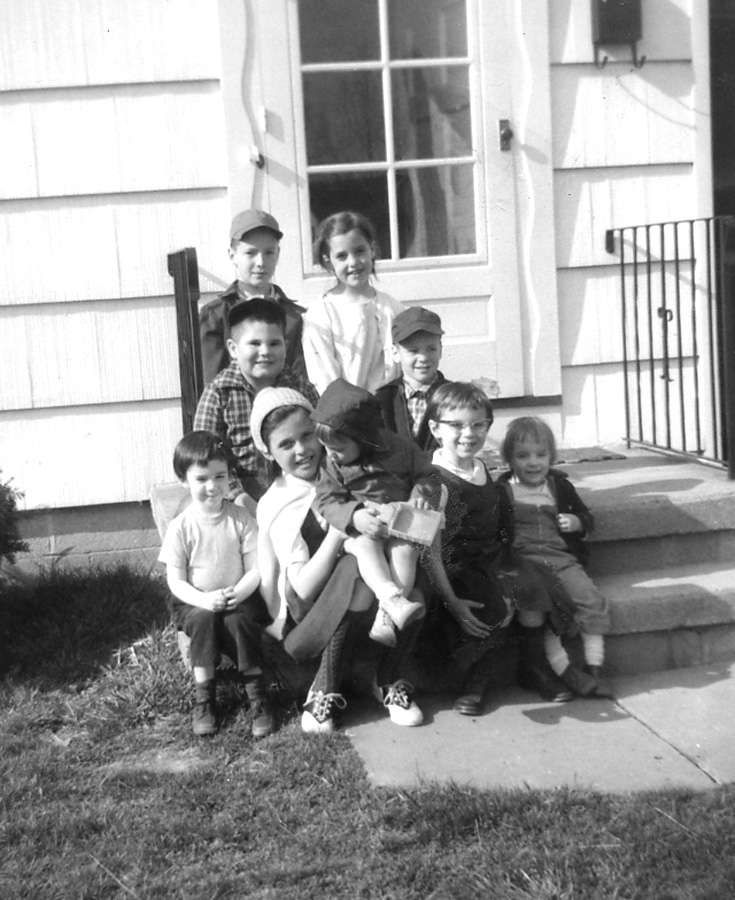
My gang of friends.  I'm on the top step.
One of my early childhood tribes, Rochester, NY  (I’m on top step)

I re-connected with an old friend last week.  We hadn’t seen each other in 43 years!  Other than my family members, I have known this friend longer than anyone else in my life, except for one other.  But we hadn’t been in contact with each other, until a few months ago.  We’ve had  a wonderful exchange of emails and a bit of serendipity that led to an in person reunion. It’s been a cathartic experience for both of us.

We were teenagers, who used to “hang out” together. We went to different schools and we lived in different neighborhoods but for a couple of quick years, he, I and a few other friends, hung out together, on the warm spring and summer evenings of our youth. Until I moved…..again.  It was probably the tenth time that I had moved and changed schools, and I was only 16 years old and mid-way through my junior year of high school.   I suppose you could say that I had lived the life of a rolling stone. But it was what I knew.  In one of our dialogs, I reminded him about that move, and he looked at it, as tragic.

In a way, I suppose growing up in a transient lifestyle was a bit tragic.  Just when I would make friends, and feel like I was part of my “new school”, we would move again, to a new community. My dad was climbing the “corporate ladder” and with each promotion came a series of moves. I was the perpetual “new kid” and I guess I was always in search of a “new tribe”.  I grew up, a product of change.

I recently finished reading Malcom Gladwell’s new book, “David and Goliath: Underdogs, Misfits and the Art of Battling Giants”.  He talks about people who have turned the disadvantages  that they’ve had in their lives, into advantages.  Each chapter unfolds into a story about a highly successful person who had to overcome obstacles or disadvantages in their lives – everything from losing a parent to being dyslexic.  One example Gladwell cites is about a high profile Hollywood producer who had worked his way from his impoverished beginnings to fame and fortune.  His children had everything, but he was worried about their future.  He knew that if they didn’t have to “work” for something, they wouldn’t know the feeling of accomplishment and success.  They would not have the “advantage” that he had growing up, the advantage of being poor.

I realized after reading Gladwell’s book that what I might have looked at as a disadvantage, my nomadic life, was probably the biggest advantage I had.  It has made me take chances in my life and not be afraid to initiate an interaction.  If I hadn’t, I wouldn’t have made friends.  It made me love school because I knew that was where I would connect to people in my new community. I learned to adapt to change.  If I didn’t I would have been miserable all the time or afraid – or both. Instead, I have lived my life, continually exploring my curiosities, whether it is visiting a foreign country, embarking on a new creative project or expanding my craft.

Would I have wished my nomadic life on my daughter?  Probably not, it wasn’t easy. But it certainly had its rewards.

Being Thankful

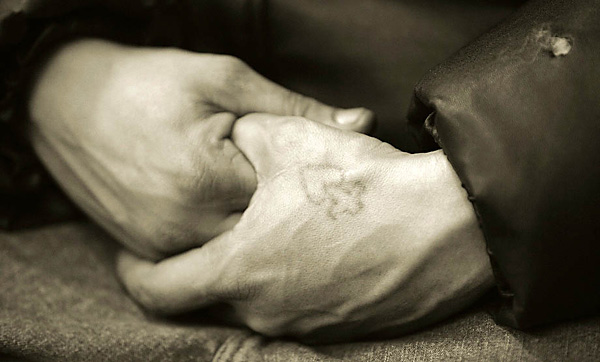
Next week is Thanksgiving.Hands of man in homeless shelter, New York City Call me corny but I’m one of those people that like to think about the real meaning behind the holidays that we celebrate. So today I’m taking pause to think about all the things that I’m thankful for this year. Sure there’s plenty of angst, jobs are less and money is tight but I have a lot to give thanks for.

• My health – for this I am most grateful.
• My family – both my immediate family and my far-flung relatives who I don’t get to see often but are always in my thoughts and I know are always there for me.
• My freedom – I think about this a lot. No matter how many times I feel that things have gotten off track in my country – I have the freedom to speak my mind, pursue my dreams and to change the things that I don’t like.
• My home – I’m lucky to have a home where I feel safe because I know there are so many who aren’t as fortunate these days. I never take this for granted.
• My passion – Sure I have my down days, but I’m thankful that I have an inner spirit that won’t let me give up on my pursuits.
• My friends and my peers – Because of my career and my collaborations with others, I have good friends – some I’ve recently gotten to know and others I’ve known for a long time. And some who I’ve recently reconnected with.
• My sharing of knowledge and making a difference. My husband and I trained a small army of volunteers in our town to shoot our town meetings and get them broadcast on our public access station. And I can see it has made a difference – people have become more civic minded and taken more of an interest in their community.
• I’m thankful that I am able to use my craft and create awareness through my personal projects in both stills and video.  I’m thankful they can be seen globally, via the Internet and the power that has.
• I’m thankful for the many volunteers everywhere who give their time generously to others who are in need.
• I’m thankful for all the little things that are so precious – the sun that warms me on a cold day, the rain that nourishes the land, the colors and calm of a beautiful dawn and the thousands of stars on a clear night.

I’d love to hear what others are thankful for. I have found many times that those who seem to be less fortunate are also the ones who are the most thankful for what they have.

What Makes a Professional (Photographer)?

I heard a remark made recently, by a colleague of mine.  I was with a group of photographers and we were discussing what makes a photographer, professional. stock-80 At a time when it seems like just about everybody is a photographer, and we are bombarded with thousands of images on a daily basis, what separates a “pro” from an amateur? My colleague stated, “A pro “makes” photographs – an amateur “takes” them”.  While that sounded like a reasonable distinction, it implied that photographers who shot “found moments” were not “professionals”.  What about photojournalists then, who are bound by ethics not to contrive an image?  So, I started thinking, “What set of criteria is used to determine what makes a photographer, a professional?”

Inspired by Steven Pressfield’s book The War of Art, I will paraphrase, some of the qualities that Pressfield points out that define us as professionals:

  • “We show up every day” – no matter what.
  • We are committed for the long haul and the stakes are high. We need to feed our families and survive.
  • “We accept remuneration for our labor.” (I’ll add, we expect remuneration)  We love what we do but we work for the money.
  • We master our craft. This doesn’t stop. A professional is always trying to master their technique.
  • We act in the face of fear.  This is certainly applicable to a “war photographer”, but I would go further and say that it takes courage to follow a career path of photography.  Courage and commitment.
  • “A professional self-validates.”  We don’t need others to commission us, in order for us to work.  We are passionate about what we do and we will create regardless if we are commissioned or not.
  • “A professional reinvents himself. “  If you aren’t reinventing yourself, then you probably aren’t taking enough risks.  A professional knows not to play it safe – not in a creative profession.
  • A professional doesn’t take rejection or failure personally.  I have learned first hand, that whenever I have taken a leap and challenged myself, it has always come with rejection or some may say, failure.  Personally, I don’t equate rejection with failure.  Failure implies it’s the end of the story.  Rejection needs to take place, in order to get to the next chapter of the story.

I would highly recommend reading, The War of Art. It’s a must for anyone contemplating a creative career.  As far as my thoughts about using the criteria,  “making” or “taking” a photo to determine who is a professional photographer – let’s just say that a professional photographer is always “making” a photograph, regardless if it is contrived or not.  It is a conscious decision of a professional photographer, when and which “moments” to capture.  We show up every day, to do our job, whether it’s in a studio or a war zone. We are consistent, responsible and accountable.  We are in it for the long haul.  It’s our passion.  It’s our life. It’s our craft and our gift to the world, a legacy of images that define the time we live in.

The Value of Photography

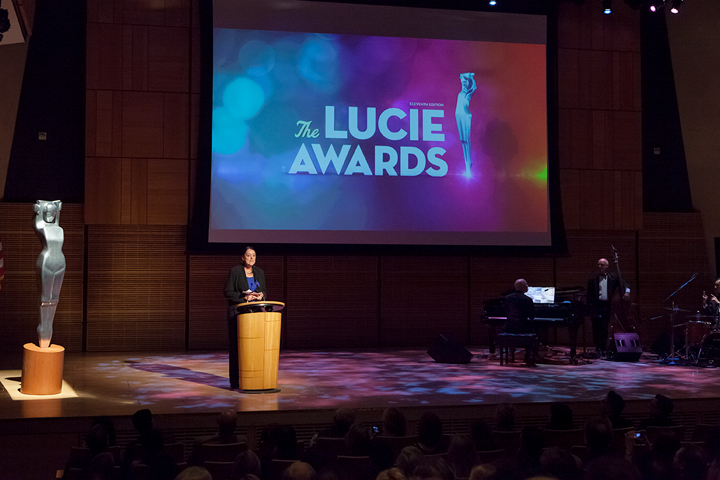
The who’s who of photography gathered last night, at Carnegie Hall to honor the “masters” of their trade at the Lucie Awards. The Lucies are like the Oscars of the “photographic industry”.

2013 Lucie Awards, Carnegie Hall ©Thomas Kelly
2013 Lucie Awards, Carnegie Hall
©Thomas Kelly

I had been asked to step in to present the “2013 Deeper Perspective Photographer of the Year Award”. on behalf of the ASMP when Executive Director, Gene Mopsik and President, Ed McDonald couldn’t attend.

I don’t usually get nervous about things like this, but I was last night. As I stood in the wings with photographer John H. White, who was waiting to go on stage to accept his Lucie, for Achievement in Photojournalism, I was mesmerized as I watched John.  He seemed to glow and I felt his grace, his humility and his gratitude.  It was a moment in my life that will stay with me forever.  It was calming. I watched and listened to his acceptance speech on the monitor backstage, and I was deeply touched.  So was the audience, as evidenced in their standing ovation.

John H. White is not a “rock star” type of photographer.  His images don’t “shock and awe”, not in the way a war photographer’s images do. John’s photographs capture the subtle moments of the human experience.  His legacy of images show us life as it really is.

This past spring, after 35 years with the Chicago Sun Times, John and the rest of the newspaper’s photographic staff were fired.  It was a huge blow to the photographic community, magnified by the fact that even John H. White, the “chairman” was “let go”, without even as much as a thank you. John wasn’t bitter about it though.  Michelle Agins wrote a wonderful article for the New York Times where she quoted John: “A job’s not a job because of labor law,” he said. “It’s just something you love. It’s something you do because it gives you a mission, a life, a purpose, and you do it for the service of others.”

All he had wanted to hear from the executives who let him go was two words that never came: thank you. But even then, he did not respond with anger.

John spoke more about the Sun Times’ firings in an interview with NPR where he said: “I will not curse the darkness. I will light candles. I will live by my three “F” words: faith, focus and flight. I’ll be faithful to life, my purpose in life, my assignment from life. Stay focused on what’s really important, what counts.” He repeated those three “F” words last night as he accepted his award.  The audience was humbled.  John had shed his light.

I have been thinking a lot lately, about the value of photography and the value that a professional brings to this craft.  John H. White and his archive of work is a stellar example.  His images, capturing the subtleties of life stand out amongst the noise.  They make us take notice of what is often over looked – the quieter moments of life.

As far as what a professional photographer brings to the world, I think John stated it best: “Every day, a baby is born. Every day, someone dies. Every single day. And we capture everything in between. You think of this thing called life and how it’s preserved. It’s preserved through vision, through photographs.”

As John walked off the stage and back into the wings, I felt enveloped by his glow that had seemed to magnify.  I caught his eye for a moment and said “thank you”. He nodded, and flashed his wonderful smile and in that moment, we connected and shared our understanding, of the “value” of photography.