The Past Always Seems Better…….But Was It?

Chris Guillebeau struck a chord with his blog today ,“ The Past Wasn’t Better. Choose the Present Instead”, .  He relayed a story about a time his friends got together for a “gaming session”. They had ordered an emulator, which allowed them to play the games of their youth on the modern gaming console of the time.  They realized after a couple of hours of playing the “old games” that the games weren’t as fun as what they remembered.  They were very simplistic and hard – dying over and over again and not advancing to the next level wasn’t fun – it was frustrating.

Chris made the point that it’s easy to look back with fondness on the good ole days, but our memories get distorted as time passes and sometimes what we looked back on with fondness, never happened.

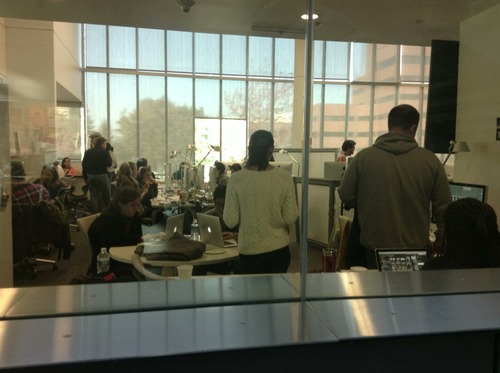
I had an interesting and somewhat similar experience this past weekend.  I had been invited to speak and coach at the 2013 Syracuse University Fall Workshops, which ASMP had contributed to as a sponsor.tumblr_muyzapUjbp1qe6iepo1_500  It was an intensely creative 3-day workshop where journalism students from the Newhouse School, came together with some of the best editors, designers, photographers and multimedia producers working in journalism. It was a hands-on workshop, where students worked with their coaches, to produce their projects (stories), under a tight 3-day deadline. What stood out to me this weekend, was that the “learning” wasn’t a one-way experience.  I learned as much as I shared – from the other coaches, as well as from the students. I’m sure I’m not the only coach, who picked up some tips from their students this weekend. I was also inspired and amazed at what is possible now, in terms of new ways to tell a story.
Sure, there are days when I’m simply overwhelmed by technology and the continued learning curve that comes with it.  And sometimes, I look back and fantasize how much better it was in the past.  At the workshop, one of my students had more than her share of technology mishaps.  At one point after losing hours of work, due to a software glitch along with not being able to access her audio files, somewhere in “the cloud”, she remarked with exasperation “ I wish things were like they used to be”.  She meant when things were tangible and analog. I quickly replied, “No you don’t because this 3 day workshop would have taken 3 months”. It was a moment when we both had the same realization that Chris Guillebeau had – our memories and perceptions of the old days are sometimes blurred and over glorified.

As much as we remember and long for the old days, the fact is we have it pretty good now.  There’s not a day that goes by that I don’t remind myself of that.  I choose to focus on what I am able to do in the present rather than look back at what was. If we choose to stay in the past and remember things being better then they are now, we’ll miss out on a whole lot of possibilities. As Chris beautifully sums it up: “Let go of the glory days.  Live in the present and build for the future.”

Don’t Let Resistance Win

“Resistance is fueled by fear.  Resistance has no strength of its own.  Every ounce of juice it possesses comes from us.  We feed it with power by our fear of it.  Master that fear and we conquer Resistance.”

Steven Pressfield, “The War of Art

Resistance manifests itself in many ways. Jaipur, India Most of us do everything we can, not to recognize the “resistance” in our own lives.  We plod along through life, just trying to maintain the status quo of our daily existence and habits, that we never “see” the sharp reefs buried beneath the surface of our relationships, our careers or how we are living our life.   We don’t see the reefs, because we don’t want to.  We think it’s easier to live a life of denial and that’s exactly what resistance wants.

Misery loves company.  Somehow, it makes us feel better about ourselves, when we compare ourselves to other under achievers, procrastinators, people down on their luck or just ordinary people who are extremely unhappy.  Essentially, people who don’t take control of their lives, but rather blame circumstances or others.  These people are victims of resistance.

There’s a saying “When a door closes – a window opens”.  I’ve always been one to focus on the “open window”, rather than the “closed door” but it’s not easy.  Any time I’ve had a shift in my life, or a “door closed”, my first instincts are to curl up in a ball, bury my head in the covers, admit failure and give up – or give in to resistance. But I know that if I succumb to those instincts, I won’t even notice the windows that have opened.  The funny thing is, most times, those windows were always open – I just never saw them.

I try to recognize those open windows in my life, but in order to do that, I need to battle resistance. That may mean, closing some doors myself.

Past Predictions of the Future Have Been Greatly Exaggerated

One of the blogs that I regularly read is Copyblogger, which provides a lot of great information and insights into content marketing.  This past week, Brian Clark wrote a post entitled,  The Future of Content Marketing.   He writes:

“A bunch of really smart people got together in 1880 to predict the future, according to Jeff Stibel in his intriguing book Breakpoint. These experts were called on to predict how the rapidly growing Gotham would manage into the next century and beyond.

The prognosis was not positive.

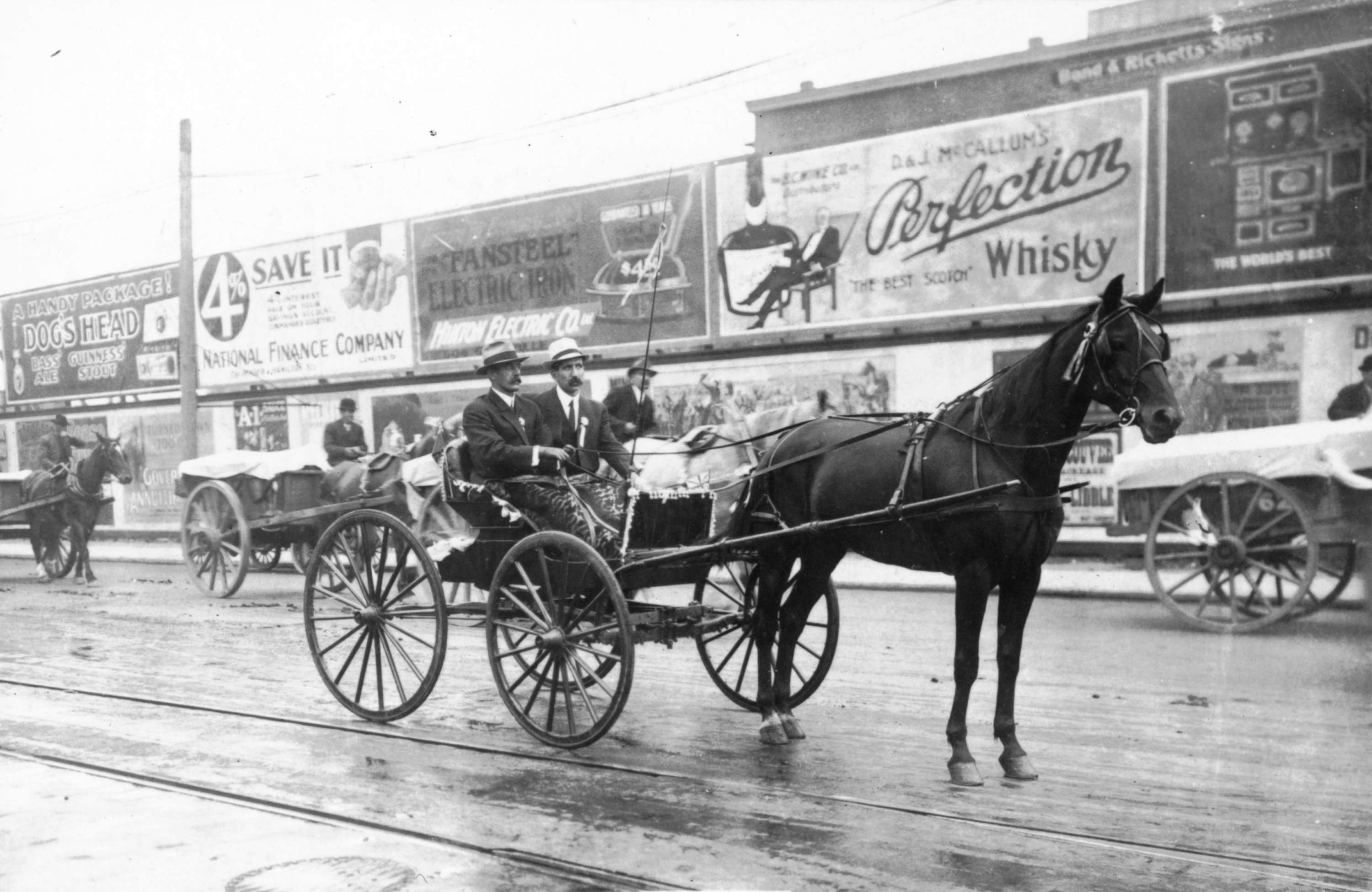
NYC was a major source of American innovation in 1880. Skyscrapers, subways, stock exchanges — and it was doubling in size every 10 years. abb36e44-0c30-4a09-9279-0cd3c3fefa9b-A01867The experts were concerned by this growth, because they projected by 1980, you’d need six million horses to transport all the people who would live there.”

Folks were predicting the future of New York City, looking at it through the eyes of what was technologically possible then.  They were more concerned about all the horses and the “crap” that would be produced, than they were about greenhouse gases, because nobody knew what that was.

When I re-ran a blog post How Motion is Changing the Future of Photography, I used a similar analogy, that Ray Kurzweil had given when I heard him speak at NAB.  Ray said that, at the turn of the century (the beginning of the 1900’s), if you thought of yourself as being in the “horse and buggy business”, you were doomed to fail because of advent of the automobile.  But if you saw yourself in the “transportation business”, you thrived, no doubt because you broadened your view to include the automobile.  In my blog, I compared that analogy to what is happening in the still photography business, as the mediums of still imagery and video converge.  I received a lot of responses from that post, mostly from people who argued that still photographs would always be around. I don’t disagree with them.  I do think there will still be still images in the future – however, I think the still photography business will drastically change from how it is now.

Interestingly enough, every year I’m asked to bid on a still photography assignment for a tourism client.  Yesterday, I received the bid packet and there was a profound change.  They were not asking for a quote for still photography.  They were asking for a quote for video – and not just video – but video shot on a RED camera so that they could pull frame grabs from the footage and use those “still images” in their ads.  Now, that’s a game changer.

There’s always a danger in predicting the future and that’s because we tend to use and be influenced by the information and the knowledge that we have now – in the present.  What I’ve learned in my many years on this Earth is that the future will be nothing like how we imagine it will be.   I know that because what I imagined the future to be, some 35 years ago when I set out to make a career as a still photographer, was very limited in terms of how technology has changed things.

The human need to create will continue to mold a future that is way beyond what most of us could ever imagine.

Change

  • “The secret of change, is to focus all of your energy, not on fighting the old, but on building the new.”  Socrates
  • “Change before you have to.”  Jack Welch
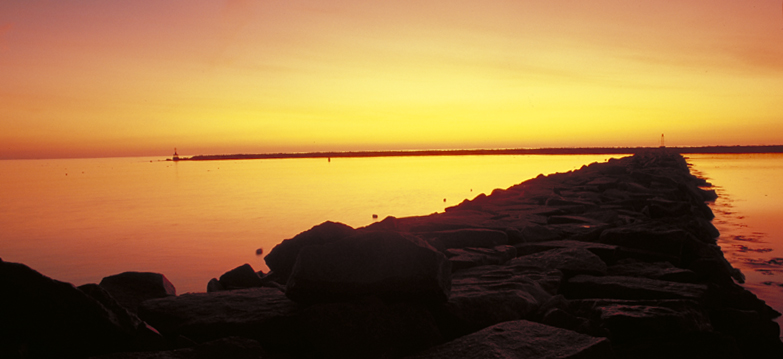
  • “Never believe that a few caring people can’t change the world. For, indeed, that’s all who ever have.”            Margaret Mead   block-isle-jetty
  • “If you do not change direction, you may end up where you are heading.”  Lao Tzu
  • “It is not the strongest of the species that survives, nor the most intelligent that survives. It is the one that is the most adaptable to change.”  Charles Darwin
  • “For the past 33 years, I have looked in the mirror every morning and asked myself: ‘If today were the last day of my life, would I want to do what I am about to do today?’ And whenever the answer has been ‘No’ for too many days in a row, I know I need to change something.”  Steve Jobs
  • “Progress is impossible without change, and those who cannot change their minds cannot change anything.”  George Bernard Shaw
  • “Change brings opportunity.”  Nido Qubein
  • “To improve is to change; to be perfect is to change often.”  Winston Churchill
  • “If you want to make enemies, try to change something.”  Woodrow Wilson
  • “There is nothing permanent except change.”  Heraclitus
  • “It’s the most unhappy people who most fear change.”  Mignon McLaughlin
  • “If there is no struggle, there is no progress.”  Frederick Douglass
  • “Progress is a nice word. But change is its motivator. And change has its enemies.”  Robert Kennedy
  • “One of my favorite philosophical tenets is that people will agree with you only if they already agree with you. You do not change people’s minds.”  Frank Zappa

What Professional Photographers Can Learn From Kodak

To cut right to the point, Kodak

The logo from 1987 to 2006. "Evolution of...
The logo from 1987 to 2006. “Evolution of our brand logo”. Eastman Kodak . . Retrieved 2007-09-26 . (Photo credit: Wikipedia)

found out that “quality” wasn’t necessarily what the public wanted.  In Seth Godin’s blog today, “Misunderstanding quality”, he states:

“It turns out that what people actually wanted was the ability to take and share billions of photos at vanishingly small cost. The ‘quality’ that most of the customer base wanted was cheap and easy, not museum quality.”

He goes on to say:

“Quality is not an absolute measure”

Before you shoot me, or Godin, stop and think about the world we live in where we are bombarded by millions of images daily.  Some are great, some mediocre and some are really bad in terms of quality.  Add to that the millions of videos on You Tube and we are witnessing an avalanche of imagery.  It makes my eyes glaze over and my head hurt just to think about it, let alone try to digest it all. But the fact is that we have become a culture where imagery is quickly replacing text to communicate.

So, with imagery becoming so prolific in terms of how we communicate, why are so many professional photographers struggling or going the way of Kodak and Polaroid?  Because they assume that the general public wants quality images.  Quite honestly I wonder if most people these days even notice the difference. Like Seth says, they just want to take photos and share them with their friends. Ironically, companies like Kodak, Polaroid, and other camera manufacturers, along with the ever-growing supply of electronic platforms enable us to do this easily and cheaply.

So how does a “professional” photographer compete in a culture that doesn’t always appreciate or need quality imagery?  Two suggestions – recognize what the market wants and is willing to pay for and produce something that is unique and authentic to whom you are.  Oh, and one more thing – don’t whine about the state of the industry because it won’t do you any good.  Instead, of looking in the rear view mirror and lamenting the past, embrace the opportunities that technology has brought to our craft and prosper. And remember that “change” is inevitable, so stop resisting it.

Condensing a Life

I have lived in the house that I am in for 19 years. For a kid who grew up going to a new school every year until the fourth grade, this has been the longest I have ever lived anywhere.  My husband and I raised a child in this home.  We also work here, running our photography business out of a separate section of the house.  What that means is that we’ve done a lot of living in this house and with that comes the accumulation of “stuff”.

When you live the kind of life I do, always moving forward with new projects and exploring the world, you don’t realize what a past you’ve had until you begin the process of getting rid of things you no longer need.  That’s what I have been doing recently, sorting through years worth of “stuff” and tossing what I don’t need anymore.

I spent the day yesterday, taking on just one small corner of my office, going through folders that contained everything from old stock photo delivery memos, caption information for dozens of destinations, financial information, old contact info, lists of goals and good intentions and LOTS of correspondence.

And that’s where I got totally sidetracked from my mission, looking through almost 20 years of correspondence.  There were many letters from a friend who died long ago.  My friend had also been a mentor to me, and his letters were thoughtful, insightful and full of encouragement. I suppose I have kept those letters all these years to remind me of where I was at during that time in my life.

There were plenty of other letters and note cards from people who have been part of my life, including a card from my daughter withErin+Paris at the beach 1995 Happy Birthday Mommy a crayon drawing inside that she had made.  It brought back of vivid memory of when I had received it.  It was my birthday and I had been on a very long assignment, shooting in France, and as great as that sounds, (and it was) it was also hard because I missed my family terribly.

It was a bittersweet experience, going through decades of correspondence, but I’m grateful that I kept some of it.  It was like tangible evidence of chapters of my life and it somehow felt more real than my electronic archives do.  And so, while I spent hours shredding documents, feeling like I was in the movie Argo, there’s just some things I’m not quite ready to let go of. For now those tangible memoirs will stay in that corner of the office until the next edit.