The Problems and Pitfalls of HDSLR’s and Video

I have been working intensively with the Canon 5D Mark II and the Canon 7D, filming a documentary Opening Our Eyes.  I have discovered the good and the bad with the video functions of these cameras.

The visual is stunning and there is no argument there but there is a lot more to video than the image and therein lies the difference between the HDSLR’s and a traditional video camera.

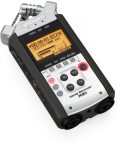
First and foremost the audio is a bit clunky.  I’m shooting both interviews and b-roll.  For my interviews, I opted to capture my audio separately and I will sync it later in postproduction.  I am using the Samson H4N digital recorder.  It is a phenomenal tool but I did discover one big issue that I should make everyone aware of – especially those of you that don’t like to read manuals.  You can use this device with “AA” batteries or with an AC adaptor.  Because of some of the remote locations I’m working in, I am mostly using it in battery mode.  It devours batteries.  It says the battery life is about 6 hours – but I think perhaps it’s more like 4 hours realistically.  It seems like we barely get through an interview session and we need to change batteries.

Here is where I need to issue a WARNING – when changing batteries – always turn the unit off or you can corrupt the audio files.  I found that out the hard way and I had numerous files corrupted.  The information was there but it could not be accessed.  Had I fully read the manual – I would have known this problem, but I didn’t and in my haste so as not to keep my subject waiting, I didn’t turn the unit off because it takes some time to boot up again.  Luckily in my case I have the camera audio, which I always use as a reference, and even though the audio is not ideal, I will only be using the audio as a low-level background audio with an interpreter’s voiceover as the primary audio.

Another problem I have with these cameras is the short durations that you can film – less than 12 minutes for the Canons.  A couple of times my subjects have been deep in conversation with very emotional moments – and the camera stops.  I know this will happen, but what am I to do – stop them in mid sentence as they tell their stories with tears in their eyes?  So for me working in documentary style as opposed to storyboarded films – these short durations is a major issue.

Lastly, the fact that you can change lenses has its pluses and minuses.  The pluses are obvious but when shooting video I am shooting lots of variations – wide, medium and tight shots from different angles and moving quickly as I do.  It slows me down to change lenses and since I’m shooting journalistically, I’m apt to miss some good moments when I do.

Like anything else, these cameras have their pros and cons.  But what I’d really like to see is a video camera with a big chip.  I’m hoping the manufacturers are listening and that will be the next generation of cameras.

Add to FacebookAdd to DiggAdd to Del.icio.usAdd to StumbleuponAdd to RedditAdd to BlinklistAdd to TwitterAdd to TechnoratiAdd to Yahoo BuzzAdd to Newsvine

Back to My Beginnings

I became a visual artist , not as a photographer, not as a filmmaker, but as a storyteller using images and later video to tell the tales of other cultures, lands and people through my eyes and my journeys. My camera was my tool – it was a means to an end. The end being the story that needed to be told.

I’ve spent the last 30 some years documenting the world through my lens, whether it be for magazines like the National Geographic Traveler, Smithsonian or Travel & Leisure or for major corporations. I’ve been blessed and have truly lived a charmed life. But there have been times when I’ve started to go off kilter – or stray from the essence of my being. It’s easy to do, especially in a culture that is obsessed with the drive to succeed – the definition of success being to make a lot of money and have a lot of “things”. Don’t get me wrong – I also enjoy the rewards that money brings – but for me that means having the resources that help me to live a full life.

A few years back I was shooting a documentary on the Delta Blues Musicians and I spent a memorable afternoon with blues drummer Sam Carr. As we were winding up our conversation under the shade of old tree he sat back and said “I’ve lived a rich man’s life in a poor man’s shoes”. That comment has stayed with me over time and when Sam died last year, I was told that his family was grateful for the interview that I captured that day and used his comment as his epitaph. I was humbled and honored, but mostly felt richly rewarded that my personal project had touched the lives of others.

As we wind up our first stop in Africa on our round-the-world trip, some of the fears and trepidations I had that came with taking a risk, and heading out to the unknown for 3 months, have vanished. In their place is the calming realization that this was what I needed to do at this point in my life and I was grateful I had the means to do it and the stamina to travel on a shoestring budget. Africa puts things into perspective – this vast continent is so wild, colorful, rich, poor, exhausting and exhilarating all at the same time. Africa has taken its hold on me and has sparked my true spirit.

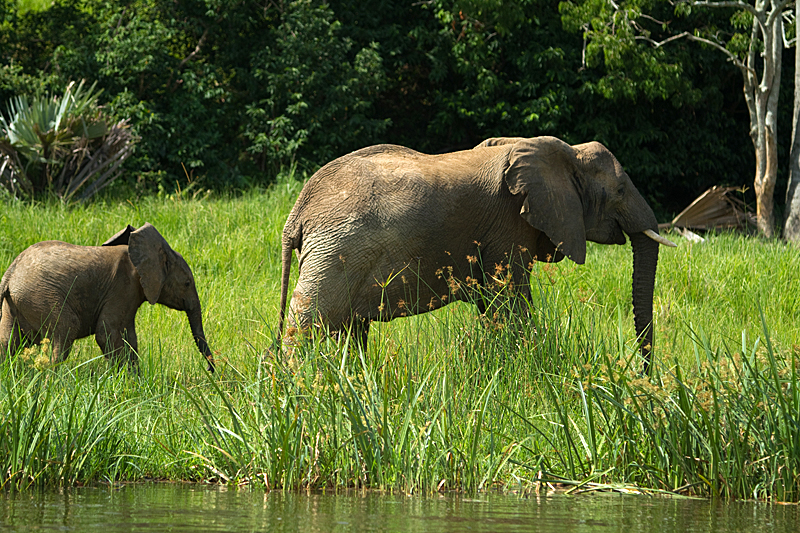
My daughter and I decided to take some time to get out of the city and go to Murchison Falls National Park, after shooting the first part of our documentary about people making a positive difference in the world. We saw

Elephants along the Nile

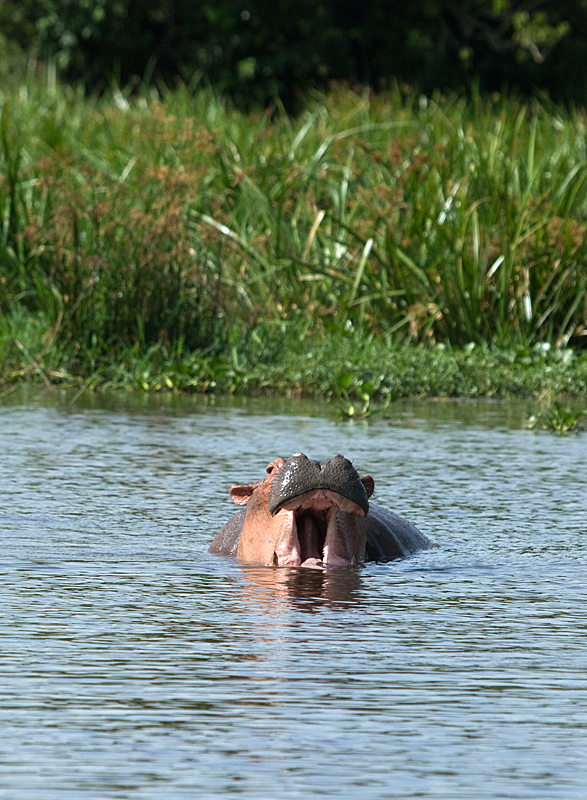
elephants, hippos,

Hippo on the Nile

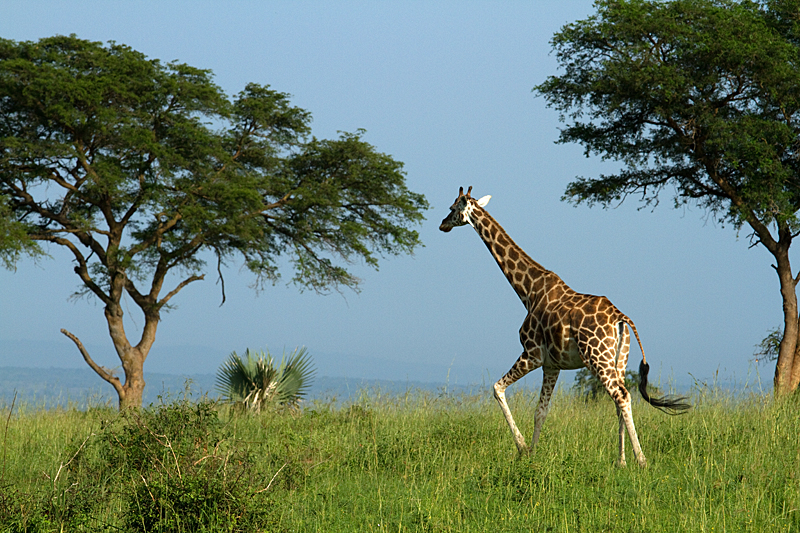
giraffes,

Giraffe, Murchison Falls National Park, Uganda

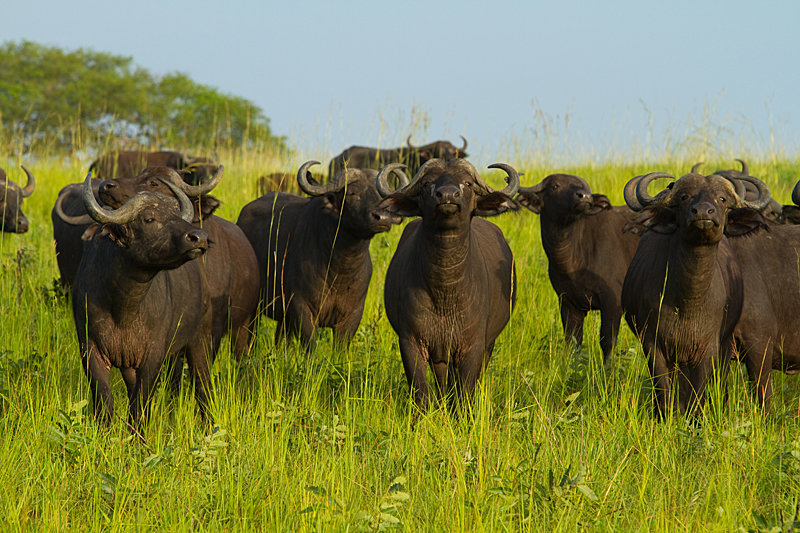
antelope, cape buffalo, baboons,

Baboon, Murchison Falls National Park, Uganda

slept in a tent and sat by a fire in the evenings under a canopy of stars that stretched from horizon to horizon. We chatted with people from countries all over the globe – all of us different yet with a common cause – the love of the journey.

Of course I shot still photos

Cape Buffalo, Murchison Falls National Park, Uganda

as well as some VIDEO but more importantly I absorbed this rich experience and it energized my spirit and my soul. This is the “fire” that I need every now and then. I think we all need a spark every once in awhile and to get past the science of the photographic craft and back to the essence of the art and the story. That is what ultimately leads us to create the kind of visuals that will resonate with others. That spark is different for all of us but nevertheless an essential ingredient for the creative process. It’s not the tools, nor the techniques that define the message or create the images that strike a lasting chord with those who see them. I was fortunate that I learned that years ago and now I’m reminded of those lessons as I get back to my beginnings.

We leave Africa today and continue our journey – next stop Istanbul, Turkey and then on to Poland where our next subject awaits.

Add to FacebookAdd to DiggAdd to Del.icio.usAdd to StumbleuponAdd to RedditAdd to BlinklistAdd to TwitterAdd to TechnoratiAdd to Yahoo BuzzAdd to Newsvine

Photographers and Video

I’ve been reading a lot of the still photography forums over the past few weeks and I’ve seen a lot of questions about capturing sound with the hybrid HDSLR’s.  I’ve also seen some misleading information so I’ve decided to take a few minutes to clear up some misconceptions.

First – Audio is everything in video.  People can tolerate a mediocre image but if they can’t understand or hear the audio – they won’t watch.  See for yourself – turn the sound down on your TV and see how long you stay interested in the program – even if the image is stunning.

Second – You have many options of capturing audio with the HDSLR’s depending on what you are shooting.  I think many still photographers assume everyone is going to be shooting “indie films” with crews.  One of the things I find appealing about some of the new technology is that you don’t necessarily need a large crew and a Hollywood budget.  And sometimes, if discretion is in order, you’re better off with a small crew.  With that said – you should know how to capture good audio.

Third – NEVER use the camera to capture audio – it just isn’t good enough.  And I would probably say that you shouldn’t plug an external mic into the camera via the mini plug.  I don’t think the audio quality is good enough, especially for an interview.

Fourth – Either use a pre-amp with XLR inputs like a Beachtek or JuicedLink and an external microphone.  Make sure you get the mic close to the audio you want to capture.  And most importantly monitor the audio through a good set of headphones.

Fifth
– Capture your audio independently with a good quality digital recorder like the Samson H4n Zoom and sync it later in post.  Syncing sound in post is a snap with a great software application called Plural Eyes.

Lastly – Audio is everything!  And remember as you add video to your skill set, you’ll be using your ears as much as your eyes.

Add to FacebookAdd to DiggAdd to Del.icio.usAdd to StumbleuponAdd to RedditAdd to BlinklistAdd to TwitterAdd to TechnoratiAdd to Yahoo BuzzAdd to Newsvine

Outside My Comfort Zone

The older one gets and the more settled one gets in their own ways, the more difficult it is to push oneself outside their own comfort zone.  I know this full well, as I am now immersed in a project and a journey where I’m pushing myself every minute of my day and will be doing so for the next three months.

I’m in Uganda, Africa right now and every day I face several challenges.  Everything from attending to my personal needs and safety, to negotiating taxi rides and reconfirming upcoming flights to making sure that I’m getting the content that I will need to create the documentary I’m working on, Opening Our Eyes.  Little things become much harder and take a lot longer to deal with than if I were at home.  And every minute it seems like I’m facing a new learning curve.

Last night, for some inexplicable reason I couldn’t get an internet connection with my laptop.  Nothing had changed from the night before when I was online for a good 3 hours, yet all of a sudden – I couldn’t get online.  Since I’m working with a digital workflow and totally dependent on a computer, I brought a backup laptop just in case.  The “just in case” scenario has already come into play and that backup laptop has become my connection.  A few weeks ago when I wrote the blog My DSLR Kit for My 3-Month Road Trip, I received numerous comments telling me that I was taking too much stuff.  A part of me agreed but after only one week into this trip, I have used every piece of gear that I had packed.  Call it paranoia or the voice of experience but I’m glad that I have the backup, regardless of the extra gear it necessitates.

Building a comfort zone happens gradually, where you set up your business and lifestyle and things click into place over time.  But nothing ever stays the same in life and if you’re not proactive, before you know it you get in a rut – whether it be a creative rut or otherwise and when change happens – and it always does – your comfort zone disappears regardless if you were the one that made that a conscious decision or not.

I’ve always known when to “rock my own boat”  – when I’ve become dangerously too complacent.  I knew at this point in my life it was time that I really push myself outside my norm and as hard as it is at times, I’m confident it will bring great rewards my way.  It already has.

Any time I leave the country, especially since I’m usually shooting when I do, I challenge myself on many levels.  Yesterday, we were following one of our subjects through a crowded downtown area in Kampala as she went about her errands and searched for just the right fabric in various shops. It was chaotic and a test of nerves as we made our way through the crowded streets dodging vendors, scooters and buses.  We were also testing our GoPro Hero helmet cam which was a lot of fun.  It was hard enough to blend in being the only “mzungus” (whites) on the street, let alone wearing a camera on your forehead.  But check out the VIDEO and see for yourself how it is to negotiate your way through the streets of Kampala.  And that’s what I love about this little “adventure sports” camera – it makes the viewer feel like they are part of the action.  You can also see what I mean when I say that I am pushing myself out of my comfort zone.

Add to FacebookAdd to DiggAdd to Del.icio.usAdd to StumbleuponAdd to RedditAdd to BlinklistAdd to TwitterAdd to TechnoratiAdd to Yahoo BuzzAdd to Newsvine

Shooting Video in the Field with the Canon 5D Mark II

The first two days of our Round the World Journey, shooting the documentary Opening Our Eyes has been quite full and I’ve faced numerous situations – really putting my tools to the test.

Our first full day was spent at the offices of Wrap Up Africa, which are located in Kampala, Uganda. In addition to shooting b-roll of tailors at work, we shot several interviews. Our main interview was with Wrap Up Africa’s founder, Letha Sandison, followed by interviews of a couple of her staff members. We also did interviews of some of the cancer victims that Letha has helped. Here is where I not only needed to be attentive to my technical details but be sensitive to the situation and the people that I was interviewing. Hearing some of their stories is heartbreaking and hard for many Americans to fathom. Sure, we all watch the travesties taking place throughout the world on the nightly news, but it’s quite another experience to speak with people who have experienced horrendous tragedies in their lives that are simply unimaginable.

One woman, Evelyn who works for Letha had been abducted and held captive by the LRA, which stands for the Lord’s Resistance Army, and is not exactly a charitable group. She managed to escape after most of her family had been killed in front of her. She is now raising three orphans who had been victims as well and works with Letha, helping others.

Our set up was simple and deliberately so. I set up the Canon 5D Mark II and captured my audio separately with the H4N Zoom. I had two mics – one shotgun on a small boom stand and another lav. I will sync them later in post. We chose a room that had ample window light as we are traveling with only a small camera light and nothing else. Our biggest challenge was that the cabinet installer decided to do his work the day we were shooting – so the sounds of hammering and drilling made up our ambient background sound. But the mics were placed close to our subjects and did a pretty good job of boosting their audio above the din of the environment.

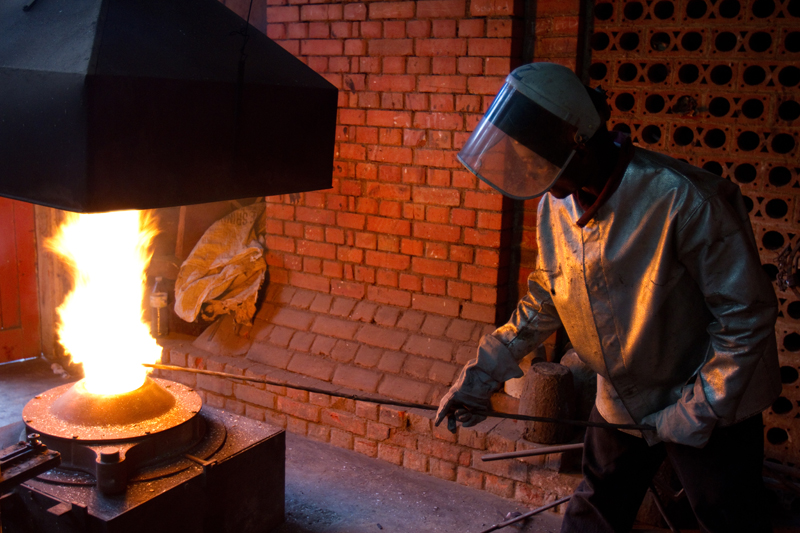
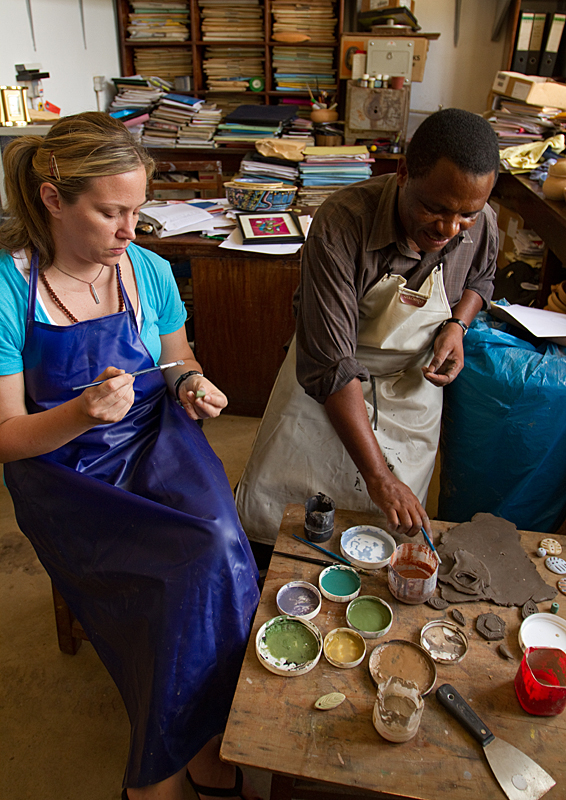
The next situation we faced was shooting b-roll in the dirty environments of a potter’s studio and a foundry. Again we used the Zoom to pick up the ambient sound of the environments. After a morning with the artists, we packed up quickly and headed to Mulago Hospital to visit the children’s cancer ward. We were not allowed to shoot video but we did shoot some still images and was happy to have the hybrid cameras that captured beautiful files – far better than frame grabs from a traditional video camera.

Then we headed to the market, which as usual is always a trying experience. For anyone who has traveled to congested third world environments, you know what I mean by “trying experience”. You must be aware of your personal belongings at all times, while shooting and I wish at times that I had eyes in the back of my head. On top of that I’m sensitive to those that don’t want to be photographed. It’s exhausting but at the same time exhilarating because of the exotic nature of the environment. My daughter wore the GoPro Hero helmet cam that is a tiny camera made for adventure sports but she had a lot of fun walking through the market recording the event with running video as we walked through the market.

I was shooting video with the Canon 5D Mark II and used a shotgun mic on top of the camera and run through a JuicedLink audio mixer. I’m embarrassed to say that somehow, even after lots of testing – I came back with no audio! Luckily the helmet cam Hero picked up very good ambient audio so I’m able to use that and layer it in post. In the chaos and confusion of the market, I probably didn’t set it up right and today I will do additional testing so as not to make that mistake in the future. But the video was captured beautifully and I will interweave those clips into the documentary with sound from the interviews and ambient sound from the Hero.

I am realizing one thing though and that there is nothing easy or streamlined when shooting video with these hybrid cameras. The results are stunning, but the shoot and workflow are much more tedious than when shooting with a video camera. Perhaps at the end of this three-month journey, I’ll be singing a different tune – I certainly hope so.

I’ll keep you posted as I get access to the Internet, which is iffy, and we’ve been off line for the last two days. But there’s something humbling about being off the grid and I’m learning to take it in stride and appreciate what I have. Today is Sunday and we are resting and storing up a bit of energy for the coming week. Please read more about our journey at Opening Our Eyes.

Add to FacebookAdd to DiggAdd to Del.icio.usAdd to StumbleuponAdd to RedditAdd to BlinklistAdd to TwitterAdd to TechnoratiAdd to Yahoo BuzzAdd to Newsvine

Gearing Up With HD DSLR’s

Last week was incredibly stressful. I had been dealing with obtaining visas – a somewhat monumental task of which I had no control over, in preparation for my upcoming project Opening Our Eyes, that will literally take me around the world.

On one of my many trips to New York City, I went to B&H and purchased some gear I needed for the Opening Our Eyes documentary that I will be shooting. The gear I bought included – Canon 5D and Canon 7D cameras with extra batteries, (2) 16 GB Sandisk Extreme compact flash cards (I’ll need more), Manfrotto 190CX3 light weight carbon fiber tripod with the Manfrotto 701 fluid head (I needed a small tripod and head that will fit in a backpack),  Samson Zoom H4N digital audio recorder, 2 GB Sandisk SD card for audio, recorder, Rode Shotgun mic with “dead cat”, Delvcam Camera Mount Adaptor (this attaches to bottom of H4N Zoom recorder giving it a hot shoe plate), Rycote Hot Shoe Extension/Extender (this attaches to the hot shoe on the top of the camera giving you extra room for devices – for me, the H4N Zoom recorder and a shock mount for the Rode mic) an adaptor so I can hardwire my Tram lav to the Zoom digital recorder, XLR cords of various lengths, and a couple of Rugged Lacie portable hard drives (500GB)

This weekend, I decided to familiarize myself with the new gear and do some testing. I was looking forward to getting back to my “purpose” for the trip and leave the administrative nightmares behind. I am not a shopper, nor am I a gadget freak. I buy new equipment when I have a need for it as opposed to because it exists. There’s something to be said about sticking with gear that you are comfortable with so that you can concentrate solely on the creative, but because of the pace of technology we are somewhat forced to keep current with our tools.

Whenever I add a new tool to my bag of tricks – I go through a process. First experiencing the thrill of something brand new in my hands. When I first took the Samson H4N Zoom out if it’s little coffin like plastic case and held it in my hands it was a sensual experience because of its design and what they make it out of. The second phase of the “new gear process” is reading the manuals and figuring out how things work. With the Zoom this was a bit frustrating and I am one who is already familiar with audio devices, so I can only imagine the frustration for someone who is not audio savvy. It’s such a sophisticated little mixer with so many choices that it took some time getting used to it. After much testing I settled on the 4Channel mode.

Over the weekend I tested both the Canon 5D and 7D cameras, recording sound with their internal mics as well as with a shotgun mic on camera plugged directly into the camera with an XLR to mini plug cord. I also tested both cameras, recording the audio separately through the H4N Zoom using the shotgun on the camera, and with the shotgun on a boom closer to the subject. Then I tested my Tram mic hard wired into the recorder and finally I did a test with the Tram and shotgun mics recorded on separate tracks on the Zoom.

After the tests, I brought both the video and audio files into Final Cut Pro. I had also purchased Philip Blooms 7D tutorial and in the workflow section he mentions how sluggish and problematic it is to work with the H264 files that come directly out of the camera. He recommends converting the files to Apple Pro Res LT either using compressor or MPEG StreamClip which is faster. I tried it both ways and he’s right the MPEG StreamClip is much faster. After I converted the files into Apple Pro Res LT, I imported them into Final Cut along with the WAV audio files. Incidentally, I shot everything at 24 frames a second and recorded the audio as WAV files at 48KHZ. In addition, I recorded sound through the camera, even though I was capturing my audio with an independent device. I knew I would use it as a reference when syncing the sound in post. My next step was to sync the audio files with the video/audio files coming from the camera. I used a clapper when recording so syncing was pretty easy. Philip Bloom mention using a software called PluralEyes for help with syncing audio and video in post but I have not yet purchased it. I did find out that you need to keep good organizational notes when shooting so that you can easily match up the audio files with the camera files later on. I decided that I like using the 4Channel mode with the digital recorder and using two external mics along with the stereo pair on the recorder. In post I can uncheck “stereo pair” and work on each channel independently.

So after a weekend of playing with the new gear, I went through the gamut of emotions from the thrill of newness to the incredible frustration of learning something new before the light bulb goes off. It will take a while to get to the third phase of the “new gear process” and that’s becoming very comfortable with the tools. And I can almost guarantee when that comfortable feeling start to happen, there will be something new that I’ll need to buy.

Add to FacebookAdd to DiggAdd to Del.icio.usAdd to StumbleuponAdd to RedditAdd to BlinklistAdd to TwitterAdd to TechnoratiAdd to Yahoo BuzzAdd to Newsvine

More Convergence – DSLR’s + Video = VSLR

It seems like this has been the year of the video capable DSLR or VSLR. Not only are manufacturers continuing to roll out new models but third party companies have made a big business out of selling attachments or add-ons for these cameras.

Dabblers as well as professional still photographers have gotten into video because the entry level has become easier and more affordable with the advent of these cameras. While traditional news crews haven’t embraced the new hybrid cameras yet, filmmakers have created a cult around them. I must confess that although technically I have had my hands on these cameras, I have not done any test runs using them in the field.  But it is on my list of things to do.

What’s Out There Now

The Nikon D90 shooting 720p was the first DSLR camera to shoot video in HD.  Canon followed with its impressive 5D Mark II which raised the bar by shooting full frame 1080p with external mic input and recently rolled theyout the Canon 7D with variable frame rates for under $2000!

The most attractive features of these hybrid cameras besides the price, is the ability to change lenses, have controllable depth of field and large sensors that work phenomenally in low light situations. However there are limitations that traditional video cameras that come at a higher price don’t have.  Camera stability is one problem due to how the shooter needs to hold the camera because they are designed to shoot in video mode with the mirror up. Since the camera operator must see and focus using the LCD monitor instead of steadying their eye up against the viewfinder, it’s harder to stabilize the camera when hand holding it. Audio capture is very basic as well and must be supplemented in some way.

Third Party Options

Because of these limitations, third party manufacturers have gotten in the game by designing add-ons. Zacuto

zfinderfeature
Z-Finder

has come up with a few interesting items.  One item is the Z-Finder DSLR Viewfinder, which is a device that fits over a 3” LCD and provides magnification for better focusing. It runs around $400.  Hoodman lpp3.0(front)provides a lower cost version called the Hoodloupe without the same optics but at a quarter of the cost.

An added benefit to using these viewfinders is that it provides another contact point with the shooter’s body and therefore provides more stability.  There are also camera support systems available that help remedy the need for better stability in “run and gun”

RapidfireFeaturepic
Rapid Fire

situations where the shooter can’t use a tripod.  Zacuto makes two stabilization devices, the DSLR Rapid Fire and the Quick Draw each designed with a different type of shooting situation in mind. In addition a Cavision has come up with a shoulder mount device the  RS5DM2SET-S.

Package for 5DII-8
Cavision shoulder mount

As far as audio is concerned, if you want to move beyond a supplemental external mic that’s plugged into the camera and use a more professional audio solution you’ll need balanced XLR inputs which will also enable you to use multiple external mics off the camera. Beachtek makes the DXA-5D for around $375 and juiceLink has come up with the juicedLink CX231 for about $300.

H4n_slant-web
Samson H4n

Or you can capture your audio with a stand-alone recorder like the Samson Zoom H4n, also around $300 and sync it later in post.

Regardless of how you ultimately “trick out” your VSLR (video single lens reflex)  you can be sure that there will continually be newer models and solutions as technology keeps moving forward.   Pro Video Coalition puts out a great newsletter online keeping us abreast of the latest tools.  Check out their DSLR Shootout where they test these hybrids and adaptors. Take Dirck Halstead’s Platypus Workshop now incorporating the new DSLR’s in the program. And become a Facebook fan of From Still to Motion for ongoing information and updates.  It’s an exciting time with loads of possibilities.

Add to FacebookAdd to DiggAdd to Del.icio.usAdd to StumbleuponAdd to RedditAdd to BlinklistAdd to TwitterAdd to TechnoratiAdd to Yahoo BuzzAdd to Newsvine

Utilizing the Tools – Convergence of Video and Photography

Every once in awhile I see a blog or a video that really strikes a chord. Today I saw a video that caught my attention for all the right reasons. It was a video that was produced by a photographer Alexx Henry demonstrating how he used technology in a new way to create a One Sheet, commonly referred to as a movie poster.

He had an idea to make the typically static movie poster, come to life with motion. His ultimate goal was to shoot the movie poster and have it appear like a still photograph in his customary style – but with the surprise of coming alive with motion. He chose as his tool the amazing HD video camera, THE RED. But first he needed to do some testing and to sell the idea to his client. For that he used the hybrid camera, the Canon 5D Mark II. He also needed to use hot lights. Because he was shooting motion, he couldn’t use flash. He chose to use HMI lights to get the same look and feel of the lighting style he brings to his still photographs.

Watch the video – it will give you more insight into his project. I loved his last statement. “A great photographer once told me that if you deliver exactly what a client expects, you aren’t doing your job”. He not only delivered the “surprise” he was looking for, but then some.

http://bit.ly/IFsje