Mistakes Professional Still Photographers Make When “Moving” to Video

1.  They forget about the story – it’s not your camera that tells the story – it’s the person using the camera. Pretty visuals, slapped into a motion timeline with music, doesn’t necessarily tell a story.  Video is a story telling medium – don’t forget that.

2.  They think they already know how to shoot – if you think because you are a professional photographer and all you need to do is get a camera with a “video mode” on it, you are mistaken. Shooting in motion is far different than shooting still images. An experienced motion shooter can spot a video shot by a still photographer with little know how, right away.

3.  Thinking audio isn’t important – audio is more important than the visual when producing video.  Hire a sound person to do it right, but don’t discount it.

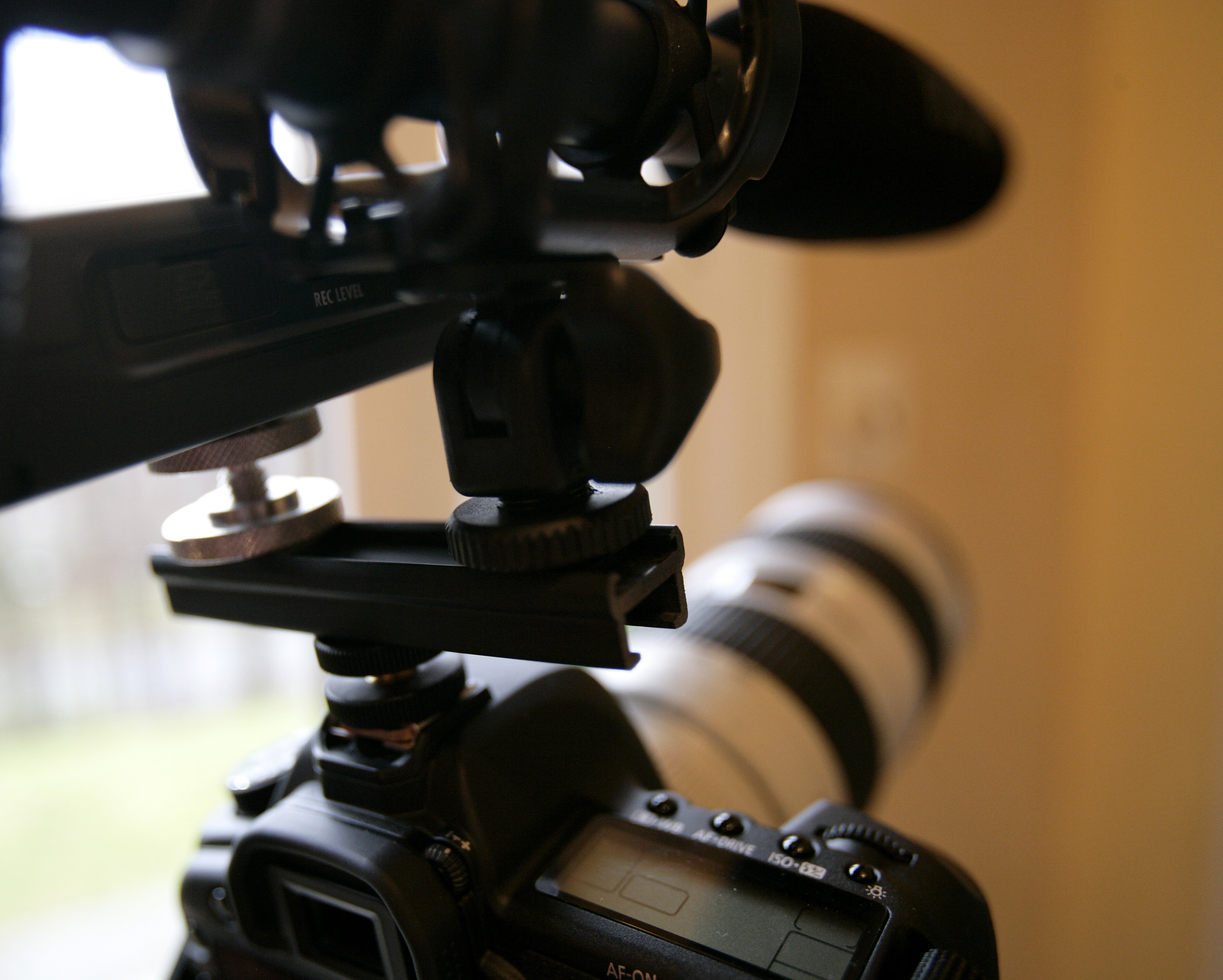
4.  Thinking the DSLR camera is all you need for video productions – this is a biggie.  How are you going to go after professional video jobs if this is the only tool in your kit?  Sure you can rent a RED – but make sure you are as proficient with this tool as your competition is before hanging out your “motion” shingle.
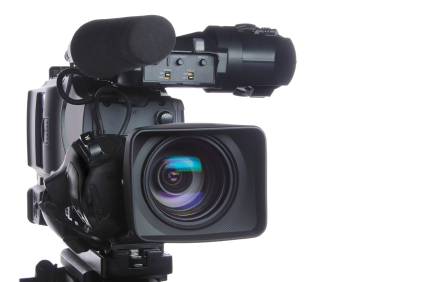
5.  Positioning themselves just as DP’s or Directors and thinking you’ll maintain ownership of your work. If you assume the role of a camera operator, DP or even a director – you will be in a work for hire position in most markets.  Position yourself as a producer – shoot if you want to – and direct – but realize that you’ll be just one rung on the “content ladder”.

6.  They don’t learn interview skills – this is what separates the pros from the still shooters who have DSLR cameras and think that’s all they need.  I’d say about  70% of my work includes on camera interviews.  Even though I ask the questions- I’m not on camera, my subject is.   I not only need to know how to ask the right questions and get great audio, but I need to produce a usable interview clip for an editor. That means knowing how to get great soundbites. This is one area I excel in – it’s all about rapport with your subject.

7.  They try to compete in “old business model” markets – Everyone wants to shoot broadcast spots and feature films (or short films) so they think that after shooting motion for only a few months – or even a year – they will be able to compete in the high end business of video production.  First, this market, like the still photography market,  has changed drastically, mostly marginalized by still photographers who are just starting to shoot motion,  shooting jobs for next to nothing because they have no understanding of this “business”.

8.  Learning the “how to’s” in terms of gear – but nothing about the business – this is also a biggie.  There are so many “how to shoot motion” workshops and roadshows out there but no one seems to be teaching the business end of things.  Still photographers think they already know “the business” but quickly realize that they don’t, and they put themselves out of business in this medium – before they’ve barely started.

9.  Teaching “how to” workshops in video with little or no experience – I can’t tell you how many photographers have called me for technical advice about some pretty basic stuff in terms of video,  and four months later they are teaching workshops. Please don’t become part of the problem and send more shooters out into this field without teaching them something about business. And if you are considering taking a workshop – do your homework and take the workshop from someone who is accomplished in this field and has done something.

10. They forget about the story – I know that’s #1 but it needs reinforcing.
ASMP and Motion

I’m on the National Board of Directors of the ASMP, The American Society of Media Photographers.  About four years ago, I was asked if I had ever thought about running for the board.  The person who had asked me this question, knew that I had been shooting video in addition to still photography and thought that it might be a good idea to have someone on the board who had an understanding of this medium.  That was four years ago, and even though I had been shooting video for over 10 years – the “explosion” of this medium (in terms of the demand) had really just started.

I did run, served three years, ran again and got elected. I’ve shared my knowledge of this medium through meetings, seminars, blogs, emails and during Q&A’s when I screen my film.

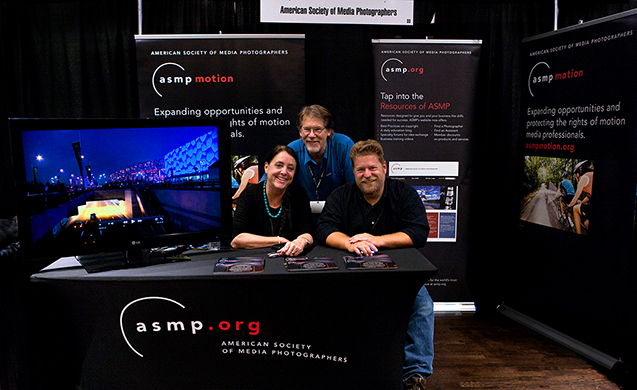
Gail Mooney, Tom Kelly and Chris Hollo at ASMP booth, DV East

This past Wednesday, I spent my day manning the ASMP booth at DV East Expo. Former national board member (and now President of the ASMP Tennessee Chapter) Chris Hollo and my partner Tom Kelly joined me.  We were well prepared with a large flat screen monitor displaying a loop of our members work. I was intimate with the reel as I had just finished editing it and I was very impressed with the quality of the work.  It certainly was an attention grabber.

So, what was ASMP, a trade organization of still photographers, doing at a video expo? Essentially, we were there to provide a community and reach out to other professionals who are shooting both mediums and provide information about sound business practices.  If this demographic does not understand the value of copyright or value the concept of licensing, then it will ultimately affect the way business is done in the still photography industry.

Some people may think that ASMP is becoming too inclusive or is creating more of a problem by suggesting that video may be the answer for its members, only for them to find out, that industry is glutted as well.  The old business models of bloated production companies with fat budgets are hanging on for dear life, along with the old business models of the film industry.  But if you think outside the box, especially in terms of how you structure your photography business – the opportunities are out there.

ASMP doesn’t cease to be an advocate for its still photographers who have no interest in motion – it’s actually making the entire industry healthier by educating the hybrid competition.  A lot of the people I talked to yesterday, shot both still photography and video, but even the ones who just shot video – called themselves “photographers” and they all had questions about “the business”.

I’m so closely associated with  “video” by members of this society; they tend to forget that I am a photographer.  I don’t call myself a photographer simply because I spend 50% of my time shooting still images, or call myself a videographer because I spend the other 50% of my time producing video. I don’t want to define myself by my tools, at all. I “see” as a photographer, with the vision of a filmmaker and the heart of a storyteller.  I also have a strong desire to stay in business doing what I love to do.  By being an advocate for sound business practices across these mediums, I get a lot more back than I give.  All photographers’ benefit, regardless of what type of cameras they shoot with.

Friend and fellow board member Ed McDonald, tells his own story about how he had become too rigid at one point in his career, as far as how he perceived himself and what kind of photographer he was. He found that when he became more flexible in how he “defined” himself, his business got better. As I think about Ed’s story, I know we have a lot in common.  For me, when I stopped restricting myself to just shooting still images – not only my business got better – so did my still photography. Shooting motion has made me a better still photographer because it has made me a better storyteller.

I got an email late last night from someone I ran into at the expo.  They wrote:

“Thanks for your vision and inspiration and all you’ve done for ASMP.”  So simple and so poignant and I thought – “isn’t that what I was supposed to do?”

Making a Movie With a DSLR and (crowd) Funding It

The first thing I will say is – I did it!  I successfully created a movie

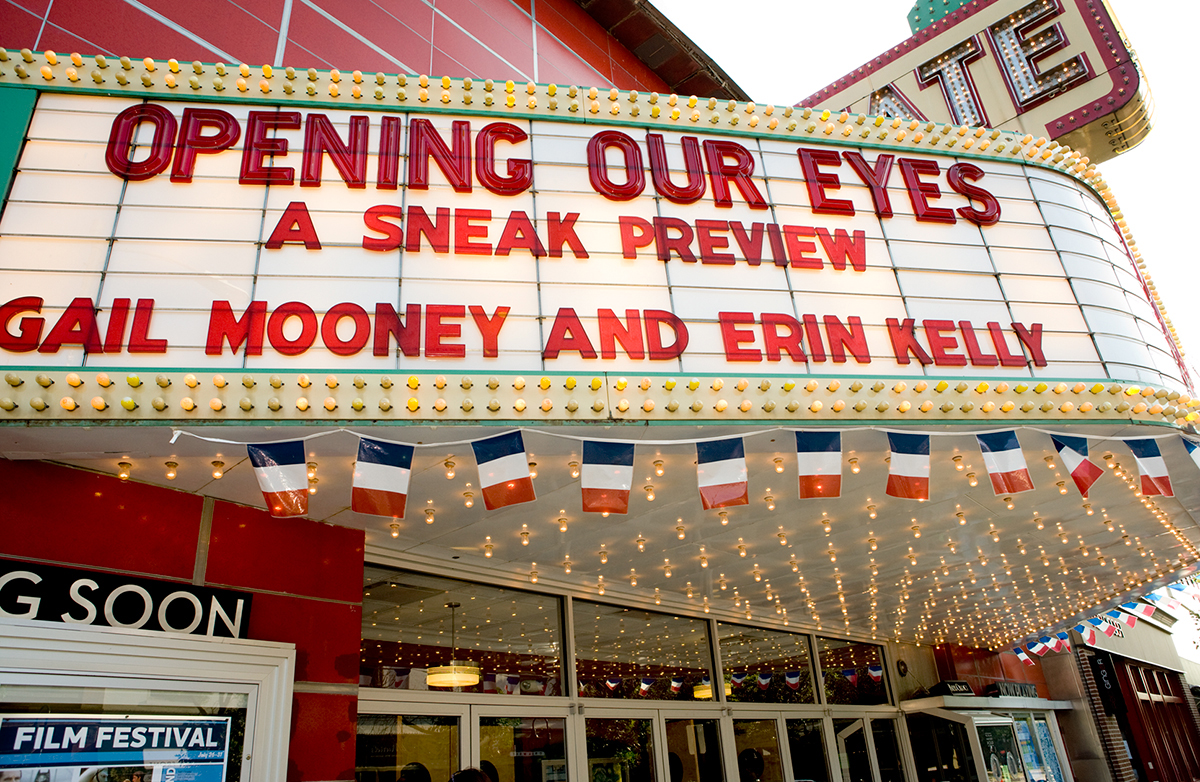
State Theater, Traverse City, MI

– from soup to nuts – with the smallest of micro-budgets, a tiny crew and a lot of hard work.  We’ve had some nice awards at film festivals along with a slew of rejections, and it has been one of the richest experiences of my life.

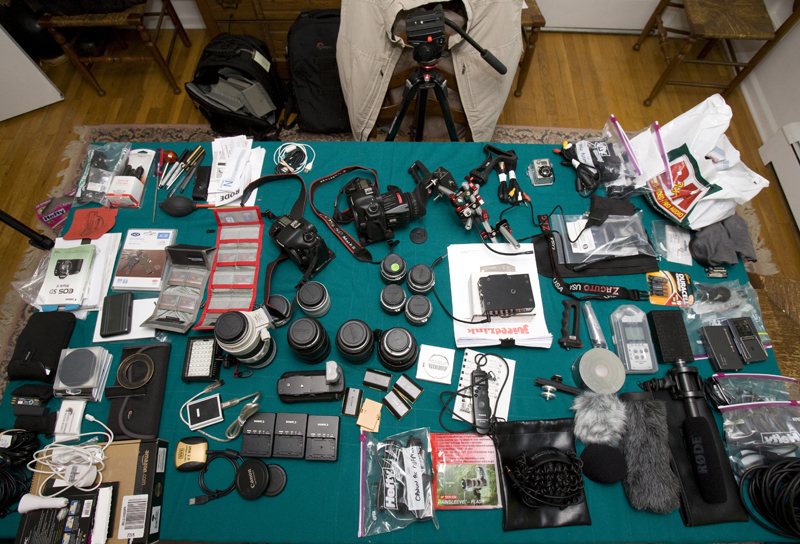
I’ve written about the journey and the technical aspects of the making of this film, on this blog and the Opening Our Eyes blog.  One of the most popular posts on this blog (it continues to get dozens of hits each day) is the post I wrote about gearing up for this movie. I’ve written so much about this project that I decided to collate a lot of my material and produce a couple of ePubs.  One is available now and hopefully, the 2nd one will be online soon.

A good idea, hard work and a lot of determination are essential in pulling off something like this – and to be crazy enough and confident in yourself to think you can do it.  I can tell you one thing – the confidence factor had its ebbs and tides.  I found that many times my level of confidence changed with my “hits” and my “misses”.  That certainly came into play during both my crowd funding campaigns on Kickstarter and IndieGoGo.  I’ve been thinking a lot about crowd funding lately because it seems like just about everybody is doing it these days. It certainly has exploded since I reached my Kickstarter goal, a year and a half ago. Seth Godin announced today that he is launching a Kickstarter campaign to publish his ePubs – sounds like his traditional publisher doesn’t want to take the risk and finance it until he sees if “the people” are interested.

I have to tell you that I was somewhat bothered when I read Godin’s blog. Kickstarter doesn’t accept every project that gets pitched to them.  When I did it the acceptance rate was about 40-45%.  I don’t know what it is now, but it’s got to have dropped significantly.  And that’s the thing – when “publishers” won’t take the risk, and high profile writers turn to their readers to back them, it’s going to be harder for the true “indie” to get noticed.  The same thing has happened with a lot of film festivals.  Film festivals started out, as a place for indie’s to screen their movies.  Now, at many of the festivals, the “indies” are competing with the big indie studios.

Things are constantly changing.  It becomes harder for the “indie” to get funded and noticed but it’s also easier because of social media. If  you are thinking of embarking on a project – a film or a book – and you aren’t sure if you should do it or can afford it – you can either talk yourself into it – or out of it.  It’s kind of like looking at the glass, half full or half empty.  I can choose to muse on my losses and put myself in a funk, or I can reflect on my wins and the rewards that have come into my life with the making of this film, and feel good about myself.  Each day, I ask myself which way do I want to tip? it’s up to me to determine my value – not anyone else. And today, I think I will feel pretty good about what I was able to achieve.

Teaching Video Journalism in China

Chinese flag, Beijing, China.
Chinese flag, Beijing, China. (Photo credit: Wikipedia)

I’m sitting in the Continental (United) airport lounge at EWR, waiting to board a flight for Beijing.  I’m headed to China for 4 weeks to teach Chinese journalists, video journalism.  My mind is spinning with ideas, questions and the usual array of “what ifs” as I take on another adventure.

About two years ago, I started saying “yes” to opportunities that presented themselves to me – or at the very least, I began to consider opportunities, rather than to talk myself out of things, right off the bat.  Because, of that mind set, I’ve been going where life seems to take me and it has presented quite a few interesting adventures.  It’s not that I’m foolhardy and doing things on a whim – it’s that I have been listening to myself – my inner voice – and it has been my guiding force.

I’m told that the Chinese are hungry for “western” knowledge.  But what I have to teach them is something universal, and that is – how to tell a story – using the medium of video.  Seems so basic and simple – how to tell a story – and I suppose it is, but like anything else, it’s simple if you understand it.  The key to understanding something is to have the desire to learn.  Some people say they want to learn – but that’s different than really having the desire to learn.

Some folks feel threatened by this seemingly insatiable desire of the Chinese to learn all things western.  I’m also finding that when people feel threatened by something – they try to “stop” whatever it is they are feeling threatened by.  It’s one of those stupid human tricks that folks have played since the beginning of mankind.  I process this behavior pattern as unproductive and unsustainable. It rarely works as far as eliminating a perceived threat.  You simply can’t totally eliminate desire.

Rather than stop others from growth – a better way is to better yourself.  I’d rather put my energies into where I want to go in my life – than in trying to squash other people’s hopes and dreams.  I’ve also found that what goes around – comes around.  When you “give” and “help” others – you ultimately create a better world – or “space” for everyone.

So, as my mind races this morning with my hopes, my expectations and enthusiasm – I try to keep the nagging doubts and fear at bay.  I tell myself that it’s natural to have concerns.  But I also tell myself that I can either let my concerns consume me and turn into fear or I can welcome the “unknown” and embrace the opportunity at hand.  I’ll let my inner voice guide me because it seems to be doing a good job.

Add to FacebookAdd to DiggAdd to Del.icio.usAdd to StumbleuponAdd to RedditAdd to BlinklistAdd to TwitterAdd to TechnoratiAdd to Yahoo BuzzAdd to Newsvine

Paying it Forward – It’s Amazing

I got the best email yesterday. It was from a young man who had attended a seminar I had given at Yale for ASMP on “Should I Be Thinking of Video”. I remember that evening well. I had recently returned from a 3-month journey circling the globe with my daughter creating a documentary on people making a positive difference in the world.
I was still very much in the same head-set that I had been for the past few months – one full of peace and belief in myself. I had just come off an intensive period where I was “walkin’ the walk” and I was practicing what I preached.

The young man, Brian, wrote, that he had attended my seminar with his father, who was a photographer and that he, himself had grown up wanting to make movies. So, my seminar was a perfect combination for them. Then Brian wrote “That night you inspired me.” My heart jumped when I read it. He went on to remind me of things that I had said that evening – about overcoming fears in order to realize your dreams – in my case traveling the world to make a movie. Leaving the known behind – for the unknown. Telling yourself “yes” instead of giving yourself reasons not to.

Brian said that he had recently landed his first job of his career as a structural engineer. He loved it, but he also had a great desire to travel. That night he went home and furiously “googled” anything about traveling the world and beyond. He came across the website of “Engineers Without Borders” and as serendipity would have it, they were having their monthly meeting that week.

To make a long, but interesting story, short, Brian went to that meeting that week, and talked with some people during a break who were organizing a trip to a village in India.

©Brian Skelcher

Then they invited him to go with them in February. He was astounded. And then he did the same thing many of us do in similar situations – he started giving himself every rational reason why he shouldn’t/couldn’t possibly do something like this. In Brian’s case – how could he ask his new boss for 3 weeks of time off?

That night when Brian heard me speak, was about a year and a half ago. In the email he sent to me yesterday, he talked about spending the last year editing his 15 hours of footage, down to a 40 minute piece. He told me that it hadn’t been easy and that he frequently read my blog posts where I had written about my similar experiences with post-production – magnified. What I had shared had helped him through it – angst and all.

My favorite line in his email read:

“So, I’m finally done with my movie, although there’s things I wish I had done differently, I did my best and I’m glad it’s finished! The final product is one thing, but the journey to get there is another, and the past 18 months have been such an amazing experience for me! I owe it all to you! Sorry for the long email but I’ve been waiting 18 months to tell you my story!!”

Brian just launched a Kickstarter campaign to send another engineer to Nepal for a similar project. You can find out more about it here: http://www.kickstarter.com/projects/videotaping/welcome-to-abheypur-the-movie

I think back on that evening and the year and a half in between. I’ve gone through two tough winters, doing the kind of work that needs to be done, but nevertheless takes its toll on my heart and my soul. That evening, my spirit was alive and well. Brian and others felt it and it moved them to a place they wanted to be. And now, after a tough winter, that same “energy” has come back around to me through Brian’s email. It has reminded me to stay the course and stay on purpose. Thanks Brian.

Add to FacebookAdd to DiggAdd to Del.icio.usAdd to StumbleuponAdd to RedditAdd to BlinklistAdd to TwitterAdd to TechnoratiAdd to Yahoo BuzzAdd to Newsvine

Looking Back

Today, I’ve been looking back through two year’s worth of blog posts that I have written. Wow – I’ve written a lot!  I really surprised myself at just how much when I started gathering the content that I had written in regards to the making of my documentary, Opening Our Eyes. I’m putting together my 2nd ePub that will be a companion to my first ePub, recently published on Amazon and Barnes and Noble.

My focus is centered on the “craft” and the making of the film, and I talk about everything from “the gear” I put together for our 99-day journey around the world to the distribution process for the final film. A bulk of the content has already been written with photographs ready to upload and links.  It’s just a matter of consolidating the information and presenting it in a more concise way.

Earlier in the year, I paid my dues in the learning department when I put together the first ePub.  After my experience working with a professional formatter, I quickly realized what not to do.  One big thing I learned was not to get too heavy with the images because the first generations of Kindles have only b&w displays.  I also learned not to create intricate designs in Pages because later I had to undo all the work I had done for a PDF version of the printed book.

I am amazed at how much I have written over the last few years.  It was interesting to look back through some of my blog entries, and see how I was “processing things”  at the time I was writing those posts.  I’ve never really kept a journal before, accept for a one year period in my life, between the ages of 19 and 20, when I was making my first journey around the world.

I’m really happy that I have archived these stories and records of my life, but that’s not what motivated me to first start writing. I used to wake up super early in the morning – my mind spinning with ideas and random thoughts, not allowing me to get back to sleep.  So, I would get up and I started writing down my random thoughts and I found it therapeutic.  It was like having a conversation with someone and sorting things out.

There are chunks of time in my life that I simply don’t feel like writing or that I have nothing to really say.  My mind seems to go into a dormant phase where I convalesce with other distractions – usually mindless ones. But then there are days when I just have the need to get my thoughts down on paper.  I’m grateful for those days – on days like this when I take the time to look back from where I’ve been.

Add to FacebookAdd to DiggAdd to Del.icio.usAdd to StumbleuponAdd to RedditAdd to BlinklistAdd to TwitterAdd to TechnoratiAdd to Yahoo BuzzAdd to Newsvine

Closing Thoughts and Best of Best

It’s been a very full year for me. I mean that in every sense of the word full – full of new experiences, full of hope, full of achievements – but also full of my share of rejections and disappointments. I’ve shared a lot of these experiences through this blog.

There have been times I haven’t written in a while because I didn’t feel like I’ve had anything worthwhile to say. And there have been times when I did write but I probably shouldn’t have because it wasn’t worth reading. I always told myself that when I didn’t feel like writing in my blog, that I just wouldn’t do it. So if there are long periods of time when I haven’t posted a new entry – it’s because for whatever reason, the desire may not be there. I have always appreciated the comments and feedback.

Here are the top 5 posts as far as number of hits:

My DSLR Kit for a Three-Month Road Trip

Gearing Up With HD DSLR’s


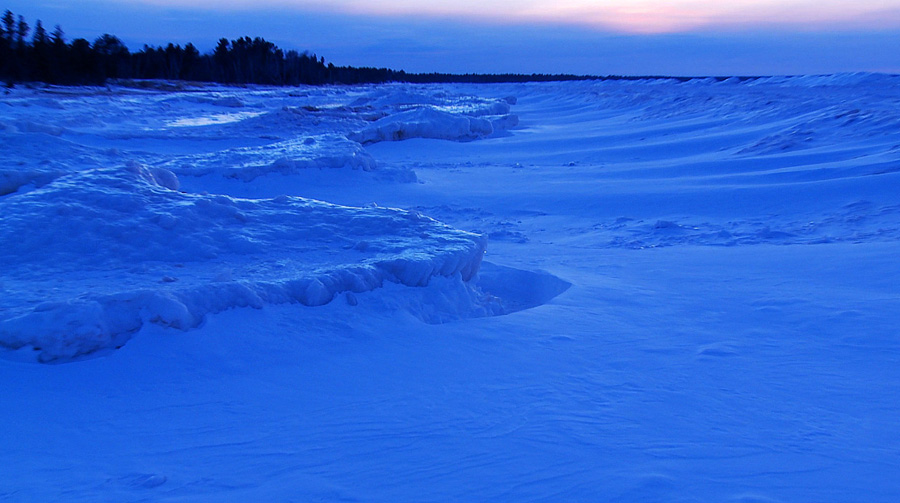
Standing on a 10-Foot Frozen Wave

Putting Together a DSLR Video Kit – and Why

Cultural Context and Photography

As you can see, the blogs about DSLR (for video) gear is where the interest was.  But I’d have to say that out of those 5 posts, “Standing on a 10 Foot Frozen Wave” was my favorite.  For me, it’s all about the story. And as Orson Welles once said “If you want a happy ending, it depends on where you stop the story”.

Happy New Year everyone.

Add to FacebookAdd to DiggAdd to Del.icio.usAdd to StumbleuponAdd to RedditAdd to BlinklistAdd to TwitterAdd to TechnoratiAdd to Yahoo BuzzAdd to Newsvine

A Solo Act

Video is very much a collaborative effort, and that’s exactly what I love about it. I’ve made some wonderful connections and partnerships while creating my documentary, Opening Our Eyes.

But every now and then, I find that I need to go “solo”.  I am a storyteller and a bit of a wanderer by heart and it had led to an interesting life – a life full of people, cultures and far flung destinations around the world. I have found that when I travel solo, I become more absorbed into the culture of where I am. I have no one with me to distract me or draw my attention away.

I’ve spent many years, traveling, observing and shooting stories for magazines all over the globe. In looking at my old work or even when editing new work, I’ve noticed a similarity in “feeling” among many of my images. There’s a quiet contemplative mood that shows through. In my people photos this “mood” is apparent in the connection that I make with my subjects – whether in a posed or candid photo. With my landscapes there’s more of a serene, yet melancholy moment.

I’ve come to realize that this “feeling” in many of my still images come my perspective as an”individual” who is solo when shooting. I can always tell which images I’ve shot when I’ve been by myself as opposed to those shot when traveling with a group. It’s hard to put into words, but when I’m alone and I’m exploring, I shoot differently. I see differently. I interact differently and people react differently to me.

So, I will always make room for both ways of working in my life – collaboratively and as a solo act. Each one brings its own rewards into my life and to my craft.

Add to FacebookAdd to DiggAdd to Del.icio.usAdd to StumbleuponAdd to RedditAdd to BlinklistAdd to TwitterAdd to TechnoratiAdd to Yahoo BuzzAdd to Newsvine

The Problem With (Most) Video/Motion Workshops

This has been something that has been weighing on my mind for months now – ever since the seemingly “overnight sensation” of people giving video workshops as well as the growing number of still photographers that are feeling the need to take these workshops.

The biggest problem that I see with all the video/motion workshops that are out there is that they oversimplify video production and take the approach that the single independent still photographer can learn and do it all – produce, operate the camera, capture good audio and manage the post-production and edit.  I suppose to be fair – while it may be true that the independent still shooter can learn all facets of video production, that is not the best approach as far as setting up a viable business model for a video production company.

Video is a collaborative medium.  While I may be able take just about any video production from soup to nuts single handedly – I know that the production would suffer if I did.  I learned a long time ago to build a team of good sound people, editors and even camera operators that I can draw on to hire on a need be basis.  They make the production and me look good and that’s what keeps my clients coming back.  It also allows my business to grow because I can take on more projects. If I’m not entrenched in all aspects of the production. It frees me up to start production on another project while still in post-production of a previous project.  If you are a one-man band, you not only don’t have this option but you actually make yourself look small in the process.

Video and motion have many facets to them.  I advocate that the best business models are when one positions themselves at the top of the content creation ladder by overseeing the production of the whole and hiring the appropriate crew that will facilitate the process.  By recognizing the differences between this business model and the “solo” model that most independent photographers work under, you’ll have a much better shot of maintaining ownership of your work and creative vision as well as having the potential to grow your business beyond your own singular capabilities.

The other problem with workshops that over simplify the process of video production by promising that you will be up and running after a one day workshop is that they are centered around learning the gear and the software which changes by the month.  If you learn just the gear du jour and not focus on the business of video production you will be in competition with other independent dabblers and that’s a quick way to the poor house in terms of sustainability.

A week doesn’t go by when I don’t get at least a dozen calls or emails from still photographers who feel they need to get into video and are overwhelmed by the learning curve.  I tell them that the best thing they can do is NOT to try and learn all these skills themselves and that in fact that will only delay their entry into the video production, business if that is what they are after.  A better way is to keep your focus on your vision, apply that to a sustainable business model that will incorporate video and collaborate with others who will make you look good and help you grow your business.

Add to FacebookAdd to DiggAdd to Del.icio.usAdd to StumbleuponAdd to RedditAdd to BlinklistAdd to TwitterAdd to TechnoratiAdd to Yahoo BuzzAdd to Newsvine

There Are No Prince Charmings or Overnight Successes

I think we all buy into a lot of crap in our American culture – in a lot of cultures actually.

Let’s start with “Prince Charming”. Young girls grow up believing in the fantasy that there is ”the ideal man” out there who is perfect in every way. And young boys grow up with their own version of this fairytale.  It’s really too bad because it’s all those flaws and differences that make us all human and drive us all crazy, that are the very things we should embrace. In our expectations for perfection and our intolerance for less, we often see only the “blemishes” or the cons and overlook the overall person.  We fail to see that it is all of those things that go into the make up of a person’s character. It took my husband and I many years to figure out that the very things that annoyed us about one another – our differences – made us stronger as a couple.

There is no such thing as an “overnight success”.  We believe that because in our culture we only hear about the successes.  For some reason we don’t look at the big picture and everything that led to that recognition. Success is an interesting concept to me anyway.  Many people define it by winning or attaining financial wealth.  Ultimately, it’s defined by a final destination rather than the journey.  Is it really about the final destination? If so how does one determine if only one win is enough or how much money is enough?

Talk to anyone who has risen to celebrity status and they will talk about the ups and the downs and the constantly evolving journey. A lot of musicians, who have had big hits and have gotten rave reviews, don’t always get the same glory the 2nd, 3rd or 4th time around. Their careers are made up of the highs and the lows and everything inbetween.

I’ve had my share of highs and lows.  Last week I got my rejection notice from the Sundance Film Festival for my film, Opening Our Eyes.  Rather than be despondent about it, I will frame this email rejection as a reminder to myself that I entered and had the courage to try.  There were over 11,000 entries and only 16 documentaries will be shown this year. I am proud to be in this 99%. This rejection is but one of many that I’ve had over the years of my career.  I’ve certainly had more rejections than I’ve had successes, but the failures have only made the successes that much sweeter.

This film in particular has been an evolving journey for me – with no destination in sight.  While it may never be a “success” in terms of how some people define that word, for me it has already brought many unexpected rewards to my life. For example,  I’ve just returned from Sao Brazil, Brazil where I had been invited to do a TEDx talk. It was one of those weekends that gave me great hope for the future as I dialoged with amazing people who were doing extraordinary things with their lives and for the lives of others.  The next evening I was given the opportunity to screen my film at MIS, a beautiful museum in Sao Paulo.  During the Q&A, a man asked me if making this film had changed my life.  I didn’t have to give it a second thought before I answered “yes and it continues to do so in amazing ways.”

I will continue to embrace the entire journey – the lows as well as the highs.

Add to FacebookAdd to DiggAdd to Del.icio.usAdd to StumbleuponAdd to RedditAdd to BlinklistAdd to TwitterAdd to TechnoratiAdd to Yahoo BuzzAdd to Newsvine