NAB Show 2011 Afterthoughts

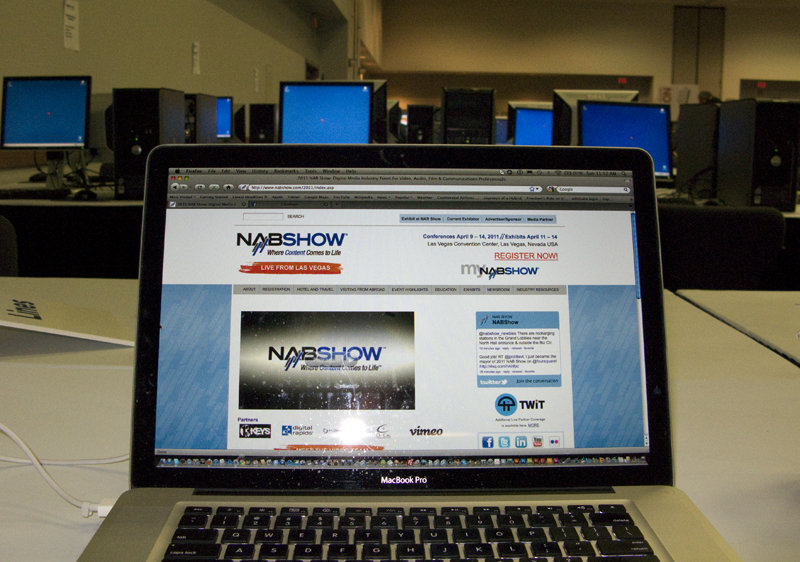
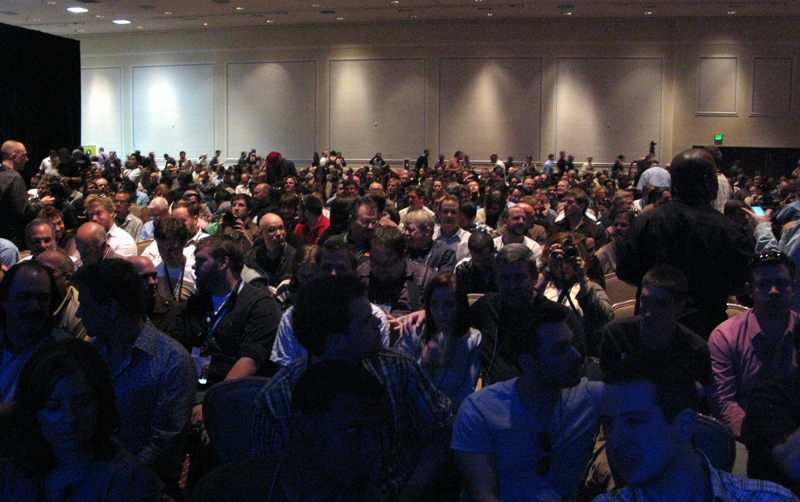
Whew!  I’m fatigued in every way imaginable – in a good way though as I always am after attending the National Association of Broadcaster’s annual show in Las Vegas.  It’s overwhelming and over stimulating and after I get home and decompress for a day I’ll make some sense out of what I learned and how to apply it in my hybrid world.

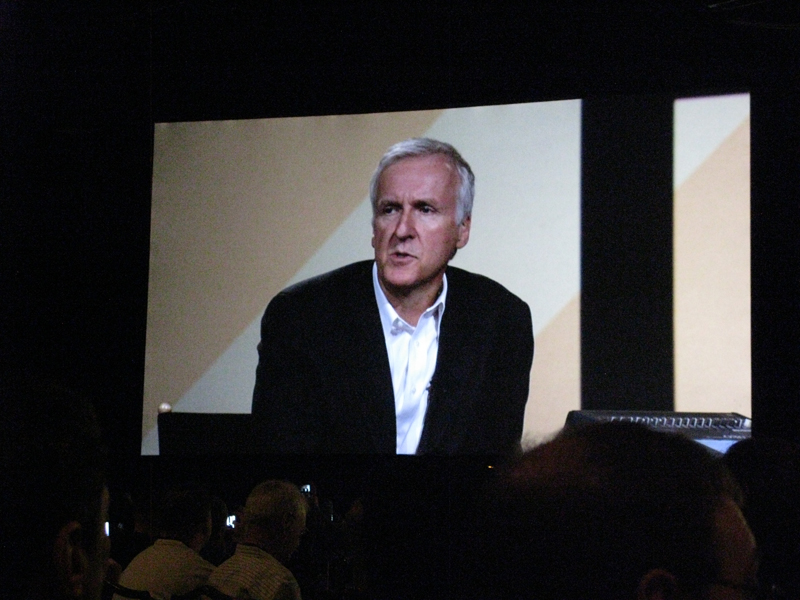
What springs to the forefront of my mind as I wait for my flight, which is delayed, is that convergence and/or “integration” continues at a rapid pace.  3D, which seemed to be the big topic last year is still present but not commanding all of the attention.  This year the conversation seemed to be centered on the integration of TV and Broadband.  But I couldn’t help but wonder as I went from James Cameron’s keynote where he talked about his continued thrust into 3D, to a session on TV and Broadband convergence – where does 3D fit into the Broadband world?

Many attendees infatuated with the HDSLR solution wondered why Canon didn’t roll out the next “hybrid”.  I’d like to think that Canon is working on a video camera that will utilize a “big chip” than working on  a still camera that has less work arounds in an attempt to make them more video friendly.

Adobe announced CS5.5 and the next day Apple made their worldwide premier of Final Cut Pro X at the Final Cut Pro Users Group Supermeet.  The crowd went wild as each new feature was demo’d – no transcoding, auto rendering in the background while still working, no more clip collisions and so forth.  At the end of the demo everyone’s jaw dropped when they announced the price at $299.  What Apple didn’t tell us – is if and how it will integrate with the other apps in Final Cut Studio like Soundtrack Pro, Motion, Compressor and Color.

Another very cool product was the Ninja by Atomos an Australian outfit.  The Ninja is a monitor  – but not just a monitor because it takes your media out as 8/10 bit uncompressed HDMI and stores it on insertable 500 G hard drives.  Unbelievable and at a price of less than $1000.  That means that compressed media gets output at a quality 8 – 10 times better than recording it to cards.  Sorry, DSLR users but it doesn’t work with Canon’s DSLR’s  because for some reason there is no way to record the data without the display.  That’s a question for Canon as to why it can’t over ride that and output and record without the display recorded on the data.

As always my favorite part of NAB is sitting in on the Super Sessions with big time directors, editors, CEO’s of broadcast networks and manufacturers.  That’s where you truly get to engage the movers and shakers in the industry and learn and ask questions.  One of my favorite sessions was with filmmaker Kevin Smith.  He is the kind of guy that constantly pushes the envelope and he made a comment that stuck with me.  He said “Hang with the people who ask why not – not the people who ask why”.  It’s a lot easier to question why and in the process never get anywhere but to have to courage to say “why not” – well that’s when things get created and invented.

So, as I head home thoroughly exhausted in a good way; I’ll hang onto that thought and seek out others who say “why not?”

Add to FacebookAdd to DiggAdd to Del.icio.usAdd to StumbleuponAdd to RedditAdd to BlinklistAdd to TwitterAdd to TechnoratiAdd to Yahoo BuzzAdd to Newsvine

Embrace Disruption

Every now and then disruption needs to take place and does.  Technology is causing disruption in all our lives but it need not be looked at as a negative thing.  We can embrace it and find opportunities or we can shut ourselves off and become obsolete.

It’s Day 3 of the NAB Show Every April the National Association of Broadcasters have one of the largest conferences in the world but these days this show is not just attended by broadcasters.  As TV converges with the Internet the attendees have become more and more diverse.

On a very small scale there is the DSLR contingent along with all the vendors that cater to this group with their third party add ons – a big business these days for sure. At Canon’s display, Hollywood DP’s and cinematographers like Gale Tattersall of House and Russell Carptenter of Titantic (to name just one of his films) tout the merits of the Canon 5d MarkII and make the point how these hybrid cameras have created a new aesthetic.  They are also quick to point out that these “affordable” cameras are not chosen because of budget but rather because they are small and discreet and create a beautiful image in low light.  One digital “rebel” filmmaker remarked how he shot a scene for his film on an airplane with an actor and no one even took notice because its such a low profile camera.

But back to the word disruption.  Convergence works both ways. As much as the DSLR has rocked the still photographic world and created a huge hunger amongst still photographers who want to learn how to shoot motion and capture good sound, it has also rocked the world of motion shooters who are providing stills for their clients and learning the language of photography.

TV and Internet are converging.  There is a whole generation that has no need for a cable hook up.  They watch what they want – when they want – online.  Just like they never get a landline – many never get hooked up to cable.  The small affiliate broadcast stations are feeling just as threatened these days as magazine photographers are because of the demise of print publications.  Their worlds have changed because the patterns of the end user have changed.

Director James Cameron (Titanic, Avatar) just formed a partnership with a 3D company.  As TV’s are manufactured with 3D capability and the tech hurdles are overcome, he feels that 3D will become mainstream. But he goes on to say that the big problem is content because the only content created now is coming from the motion picture industry.

And Apple made their worldwide announcement last night with Final Cut Pro X.  I was in the room and all I can tell you is that it is REVOLUTIONARY.  Watch out Adobe.

But at the end of the day – of every NAB day – as I sort through all the information and announcements – I ground myself and think about what I will choose to embrace.  How can I use technology and apply it to what I do and why.  If disruption means that I can tell my stories in a better way or reach more people – that I welcome it with open arms.

Add to FacebookAdd to DiggAdd to Del.icio.usAdd to StumbleuponAdd to RedditAdd to BlinklistAdd to TwitterAdd to TechnoratiAdd to Yahoo BuzzAdd to Newsvine

The Amazing Age of Convergence ….

…where anything is possible. I’ve haven’t written in awhile because I’ve been traveling. Last week I was in Chicago presenting a seminar at ASMP’s SB3 Seminar. It was the last one in a series and now I’m kind of going through withdrawal. There was so much sharing of information and ideas that no one wanted the conferences to end. But now we all need to initiate some of those ideas and apply some of the things we’ve learned. And that’s the part we can’t forget about – doing the work that will bring our ideas to fruition.

In my last blog I wrote about believing that the impossible is possible. I don’t mean to over simplify that notion and to say that all we have to do is have a positive mindset and things will happen for us. What I really mean to say is that without the belief that we have the power to do anything we put our minds to –we would never try – we would never give something a chance to happen. But along with that comes plenty of times when it just doesn’t happen – the first time, the second and third time and many times after that. And that’s when we need try again – and maybe harder.

The good news is that these days it seems like all our tools are converging to make just about anything possible. We no longer need someone to validate our ideas because we can validate our own. We have affordable cameras that shoot stunning still images and video. We have non-linear editing software to create the stories and we have Facebook and Twitter to get the word out about them. We have crowd funding sites like Kickstarter to raise money so that we can make our ideas a reality. And when our videos are finished we can upload them to YouTube or Vimeo and share them. We can also distribute our creations through image portals, downloaded Apps or through iTunes.

Last week I uploaded a trailer for my documentary Opening Our Eyes. As of today people in 71 countries have played the trailer! I sent the link to less than 30 people and they passed it on, embedded it on Facebook and blogs and it took on a life of its own. That simply amazes me because of the power that we now have to connect and communicate with just about anyone, anywhere in the world. That’s revolutionary. That’s a game changer. That’s powerful.

I’ve just arrived in Las Vegas to attend the NAB show. The National Association of Broadcasters has one of the world’s largest broadcast conferences in the world. All the movers and shakers of the broadcast world are here to network, make announcements about new products and learn. It will be another solid week of input overload with my head bursting with ideas and possibilities. And every one of the ideas has the real possibility of happening because of the age we live in.

If only I had more time.

Grow or Die

I’m borrowing the title from Ian Summers, a creative coach and visionary. Through personal sessions with Ian as well as from his writings, I’ve learned that there is joy in any exploration, especially the exploration of the creative self. Ian expresses what he does more beautifully on his blog: Heartstorming

“ I co-create an environment where people are safe to bring what they love and what matters to come into being by being a compassionate teacher and expressive painter.”

There is so much to learn simply because it’s such an amazing age we live in. I try to take advantage of that and embrace new skills and knowledge to further my creative self. Learning and exploration is a necessary ingredient in my life. It stimulates me, it brings me wonder and joy and it empowers me. The more I learn, the more I grow, and the more the universe opens to me and sets my creative spirit free to be the one I am meant to be. Learning is happiness.

Here are some links to some wonderful sources for learning – some technical and some inspirational – but all valuable in their own way.

To start with don’t miss Selina Maitreya’s Clarion Call 2011, a free 2-day professional photography telesummit.
I’ll be on at 10AM Friday, Feb. 11th.

If you’d rather have the benefit of networking face to face with your peers then sign up for ASMP’s Strictly Business 3
Next one coming up is in Philadelphia Feb. 25-27, 2011.

Here’s a few a my favorite links to continued learning:

Video Vimeo School – Tutorials, articles
Creative Cow – Tutorials, forums, articles
2 Pop – Forum, articles
Ken Stone –Tutorials video

If you have any real or virtual places that you frequent to learn, please feel free to share.

The key of course to learning is to apply the knowledge that you’ve learned. So be ready to grow when you set out on your explorations of learning. Embrace that thought and ready your mind to be open and receptive to new ideas and ways of seeing.

Add to FacebookAdd to DiggAdd to Del.icio.usAdd to StumbleuponAdd to RedditAdd to BlinklistAdd to TwitterAdd to TechnoratiAdd to Yahoo BuzzAdd to Newsvine

Telling the Story with the DSLR

The sub-title should read…”or with any camera for that matter”.  For those of you not new to this blog, you know that my mantra is “it’s not about the tool”.  And my other mantra is “embrace collaboration”.

But back to the thought behind this blog entry and that is “telling the story”.  I recently read a great book that a dear friend had given me about screenwriting called “Save the Cat” by Blake Snyder. Snyder’s book is geared more toward writing a fictional screenplay, as opposed to writing a narrative for a documentary, but I thought it would be helpful for me as far as learning more about the dynamics of story telling – and indeed it was.

Snyder talks about the different genres that most movies fall into.  The category that my documentary came closest to if I was writing a fictional piece was what he referred to as The Golden Fleece. Blake writes:

“The name comes from the myth of Jason and the Argonauts and yet it’s always about the same thing: A hero goes “on the road” in search of one thing and winds up discovering something else – himself.”

“Like the twists of any story, the milestones of The Golden Fleece are the people and incidents that our hero or heroes encounter along the way.  The theme of every Golden Fleece movie is internal growth, how the incidents affect the hero is, in fact, the plot.

“It’s not the mileage we’re racking up that makes a good Golden Fleece, it’s the way the hero changes as he goes”.

Wow, I thought as Snyder’s words resonated with me and how I “saw” the documentary that I was in the midst of editing.  In my case, I had many heroes who in setting out to make a positive difference in the world had also experienced intense and rewarding personal growth.  I too had changed and grown, along with my daughter who journeyed with me to tell our subjects’ stories.

As I read more of Snyder’s book, my vision of our film became much clearer in my head.  This week, I had a meeting with the editor who will be collaborating with me on this film.  I’m thankful that I was able to have a face to face meeting with him where we could both get a better feel for each other and more importantly  – the story.  We had a wonderful conversation about the story that I wanted to tell – the heroes – the conflicts – all those things that are part of a good story.  I knew we were on the same page when he said: “It’s not about the trip – it’s about the journey”.

Or as Snyder writes:
“It’s not the incidents encountered.  It’s what the hero(es) learn about himself from the incidents that make the story work.”

We’ll see if I can do my heroes justice in telling their stories, but I’m not alone in this task.  I’ll be collaborating with an editor who not only has an understanding of “the story” but the skills and ability to make it come to life. What joy.

Add to FacebookAdd to DiggAdd to Del.icio.usAdd to StumbleuponAdd to RedditAdd to BlinklistAdd to TwitterAdd to TechnoratiAdd to Yahoo BuzzAdd to Newsvine

Crowd Funding and What I’ve Learned

There’s a scene at the end of my favorite holiday movie “It’s a Wonderful Life”

It's a Wonderful Life

where George Bailey, a character played by Jimmy Stewart is surrounded by his friends as they come to his aid and bail him out of his financial shortcomings, caused by his crazy Uncle Billy. I’ve seen this film at least a dozen times and ok – I admit it – I cry every time George Bailey’s little girl opens a book that mysteriously appears under the Christmas tree with the inscription “No man is a failure who has friends”.

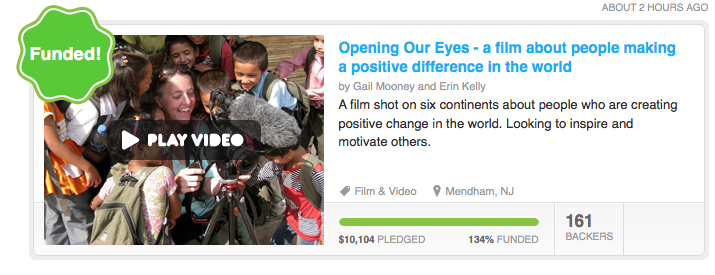
I felt like George Bailey today when I saw the email from Kickstarter telling me that my daughter’s and my film project, Opening Our Eyes had been officially funded.  We actually exceeded our goal of $7500 and raised just over $10,000! What a feeling – what a triumph and all possible because of our “friends”. Through crowd funding – our friends had helped us reach our goal and made our film a reality.

This would not have been possible just two years ago.  But, Kickstarter and other crowd funding sites like it, provide other options for artists and entrepreneurs who are seeking funds to make their creative ideas come to life. Many times these ideas might not fit within the confines of what a traditional bank would finance, but there are some great ideas that have a chance now of becoming a reality –  and we all benefit by that.

Here are some things that I have learned through the process of getting our film funded on Kickstarter.

•    You have to do the work.  Once you launch your project page on Kickstarter, you need to let potential backers know about it, using social media or email blasts or word of mouth.  Just like getting traffic to your website, you can’t expect people to stumble upon your project and fund it.
•    You have to make it fun.  Have fun with the “rewards” that you offer your backers, and on Kickstarter every project must have rewards.  People love to give, but they also love to feel like they are part of something or that they have helped to make something happen.  If a backer contributed to my project at the $500 reward level, they will receive an Associate Producer credit in the film and on the project’s website, along with DVD’s of the film when it’s completed, as well as a signed print and an e-book from the project’s journey.
•    Keep your financial goal realistic.  Look at other projects that are similar to yours and see what the “market will bear”.  See what has been successful and ask yourself why. Remember that if you ask for too much money and don’t meet 100% of your goal by the time the funding period is over for your project, then you won’t receive anything.  Only projects that are successfully funded at 100%, will receive funds.
•    Use social media and email blasts with common sense – don’t be obnoxious.  If you do send emails – don’t send  an email again to someone who has already backed your project.  Ask people to share your project link on social media but don’t overdo it.
•    Post updates on your project to keep your backers and potential backers informed.  Use visuals if you have them,  both on your page site as well as in your updates. Photographs and videos really give a project presence and are a must have. You want to stand out from the crowd.
•    There is no such thing as a pledge too small.  They say the average pledge on Kickstarter is around $25 and I can attest to that.  Out of our 161 backers – 69 had made pledges of $25.  It all adds up.  And every time someone backs your project there is also the opportunity that they may share it with someone they know who may in turn make a contribution.
•    Be grateful and appreciative.  I made it a point to send each and every one of my backers a personal thank you note.
•    Have faith – because anything is truly possible these days.

Add to FacebookAdd to DiggAdd to Del.icio.usAdd to StumbleuponAdd to RedditAdd to BlinklistAdd to TwitterAdd to TechnoratiAdd to Yahoo BuzzAdd to Newsvine

Listen Up – Audio is Everything

Audio is everything in video. I can’t stress this enough. Most times “capturing audio” is a skill that still photographers don’t have. If your job is on the line – my suggestion is hire a good sound guy. If you’re doing a personal project and want to learn more about getting good sound, here are some tips.

• Don’t use the camera’s internal microphones, except for reference.
• Never use “auto” when recording audio. Turn off the AGC (automatic gain control) on the DSLR cameras.
• Get your microphones in close. For b-roll situations, you can get away with a shotgun mic mounted on the camera. But microphones mounted on cameras can pick up camera noises.
• Use a good wind screen or dead cat when outside. Even if you’re inside, on a windy day, with windows open, you can pick up wind noise.
• Use a good set of headphones. Over the ear is best but earbuds can be used in a pinch. Your audio meters tell you that you’re getting sound, but not if the sound is any good.
• Use shotgun microphones for your interviews. Get them in close to your subject – no more than 1-3 feet away.
• Lav microphones, attached to lapels can be used wired or wirelessly. Be careful with your positioning to avoid unnecessary noise from hair or jewelry.
• Go wired whenever you can. Resort to wireless solution if wired isn’t possible.
• Use an omni-directional or cardiod microphone when you are in more acontrolled situation and you want your sound coming from more directions.
• Don’t cross your audio cords with your electrical cords. This causes a hum that you will detect if you are wearing headphones.

Pay attention to audio. Start letting your ears do more of the work. Every room and situation has its own sound. Listen up.

Add to FacebookAdd to DiggAdd to Del.icio.usAdd to StumbleuponAdd to RedditAdd to BlinklistAdd to TwitterAdd to TechnoratiAdd to Yahoo BuzzAdd to Newsvine

“Here’s an Idea – Have a Point”

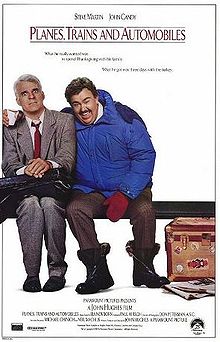
One of my favorite holiday movies is “Planes, Trains and Automobiles” with Steve Martin and John Candy. There’s a great scene in the movie where Steve Martin loses it and starts a rant directed toward Candy’s character, Del Griffith. Del, is a “nice guy” who talks incessantly. Martin’s character, Neal Page, an uptight ad man, frustrated by the day’s travel mishaps, finally explodes at his travel companion Del after one too many stories and says – “here’s an idea – when you tell a story, have a point!”

Am I the only one who has been oversaturated with multimedia and video pieces that are little more than pretty visuals to music? Don’t get me wrong, there are plenty of pieces that I do like, but there are far too many where I get bored and bail mid-way through because there is no point – there is no story.

Worse yet, the audio or music track many times feels like it has no connection to the visuals. It may be a great piece of music and provide pacing for the video, but it doesn’t complement the story. And there are times that the music is the most interesting part about the piece – if you take it away, what do you have? Most likely a pagination of moving and/or still images – like pages in a magazine or prints on a gallery wall. Independent and isolated vignettes with a music track – but no story- just eye candy.

What holds my interest is a story, where all the elements of audio, music, video clips, stills, text and narrative are parts of the whole and each one is integral in telling the story. I don’t think I’m alone in being interested in the story. Humans have enjoyed “the story” since the beginning of time. It doesn’t matter if it’s told verbally in a one on one conversation, in a multimedia piece, or in a major motion picture – a good story is a key ingredient for human interest. We all love a good story.

Personally, there is so much out there to watch these days on any given site that hosts videos, if I’m going to invest time in viewing something – I want it to have a point. If it doesn’t when I get to the end – I feel somehow let down.

I’m sure some of you will disagree with me on these thoughts and many of you may get loads of satisfaction from watching pretty visuals laid down to music and that’s OK. I’ve just had my fill of pretty content splashed before me, becoming a blurred palette in my head.

So, here’s an idea – have a point.

Add to FacebookAdd to DiggAdd to Del.icio.usAdd to StumbleuponAdd to RedditAdd to BlinklistAdd to TwitterAdd to TechnoratiAdd to Yahoo BuzzAdd to Newsvine

Don’t Let the Music Die Inside You

Einstein said “Logic will take you from A to B but imagination will take you anywhere.”

I have always had a vivid imagination, spending many waking and sleeping hours dreaming and picturing myself in all sorts of situations. Some of my dreams were just crazy ideas running through my head and some were very real dreams that I believed would come true. I was thinking about what I wanted in my life – not what I didn’t want.

Everyone has dreams for how they want their life to be but not everyone believes their dreams will manifest. The future has to become the present in one’s imagination. And one needs to commit to their idea for it to happen – not just have intentions. Intentions without conviction is a waste of energy.

At this point in my life, I have been focusing more and more on pursuing my thoughts and ideas that have been running through my head. It was a year ago, that I made the decision to embark on the biggest personal project of my life, Opening Our Eyes. I’m now in the midst of editing hundreds of hours of footage. It’s tedious because there is so much, and there are interviews in foreign languages that need to be translated and transcribed before I can edit them. All the files need to be transcoded, which is taking far longer than I imagined it would, but now that I have my workflow down, it’s going faster.

When I’m finished with this film, it will be the most satisfying and successful project I’ve ever worked on. I use the word successful to mean that it was an incredible accomplishment for me personally and professionally. That’s not to say that it won’t be financially rewarding, and in fact every personal project I have ever self-funded has always been profitable, just not immediately.

More importantly, by executing my ideas, without needing validation from someone else, I am following my purpose. I am doing what I’m meant to be doing in my life. That in itself is the biggest reward of all.

We all have our own music inside of us. Find yours. Don’t die with the music still inside of you.

Add to FacebookAdd to DiggAdd to Del.icio.usAdd to StumbleuponAdd to RedditAdd to BlinklistAdd to TwitterAdd to TechnoratiAdd to Yahoo BuzzAdd to Newsvine

New Stuff

I haven’t done a lot of tech talking lately, but a couple of new items have me thinking that way. Here’s some interesting news about products, firmware upgrades and video delivery.

To start with, for all of you who own a Samson H4N Zoom digital recorder, and have been frustrated that you aren’t able to independently change recording levels on inputs 1 and 2 – you now can. Here is a link to the firmware download and instructions.

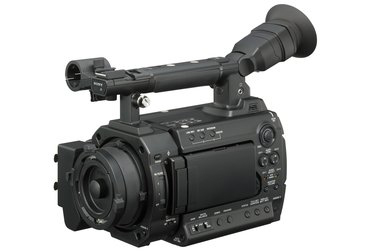
For all you “big chip” aficionados, Sony just announced the PMW-F3

Sony PMW F3

camera with a 35mm CMOS imager. However, with a price tag around $16,000 for the body and an extra $7000 for a set of three Sony prime lenses, it seems more like a competitor in the RED market, rather than in the DSLR niche.

Read more about it on engadget

PhotoCinenews.com had a great blog post by August Bradley, a couple of weeks ago that I almost missed, Thoughts On Motion Portfolios.

August writes:

“We recently went through the process of re-designing our website with one of the primary new objectives being adding motion content. So I did extensive research on the websites of directors, cinematographers, and leading production companies to see how they presented videos. I was surprised at how little effort most are making in this area.

I suspect the thinking of the directors and cinematographers is that nobody hires them for a serious commercial gig by discovering their website. It’s very much a matter of relationships and playing the inside game.

But I also think the world is changing fast with the barriers to entry lowering in the motion world, and with talented people increasingly able to compete on creativity rather than on access to expensive cameras and lights. The importance of a strong web presence is rising and becoming fundamental for directors and cinematographers.

So I set out to find the best-in-class practices and leading suppliers of related tools. I found some methods of integrating and presenting video to be more engaging than others.”

Read more

PhotoCinenews has also announced that the DVD set of their 2010 PhotoCine Expo is hot off the presses. It’s an 8 disc set of presentations from 14 filmmakers. I am honored to be one of them and as one who attended many of the other presentations, I can tell you it’s worth every penny. Check it out.

Here’s a big piece of news released yesterday. ” Steve Jobs to launch iPad Newspaper with Rupert Murdock” by Chris Matyszczyk.

Chris writes:

“Women’s Wear Daily offers a report that this iPad-o-newsthingy, which has been in covert development for several months, will be called “The Daily.” It will, apparently, have as its pulsating spirit “a tabloid sensibility with a broadsheet intelligence.”

Oh, and there is a price for this melange of the tabloid heart with a broadsheet mind. A ticklingly enticing 99 cents a week.

The Daily will, apparently not enjoy such dated concepts as a print edition or even a Web edition. Instead it will be beamed straight to the iPad (or Galaxy, if you can afford one) from News Corp.’s high pod somewhere in Manhanttan.”

And here’s another milestone news item about YouTube. “YouTube: 35 hours of video uploaded every minute” by Don Reisinger

“YouTube attributes the growth to several factors. First, the company’s decision to increase time limits from 10 minutes to 15 minutes per video has helped. It also pointed to the site’s file size limit of 2GB. With the help of mobile phones, YouTube said that consumers are finding it relatively simple to quickly add videos to the site. It also doesn’t hurt that “more companies [are] integrating our APIs to support upload from outside of YouTube.com.”

Lastly, a thank you to everyone who has contributed to my film Opening Our Eyes, on Kickstarter.  We have gone past our half way point, meaning we are more than halfway toward our goal.  And to anyone who may be thinking of making a contribution – it’s a win/win because you get a DVD of the film if you make a $25 contribution.  The money will all go toward the hire of a professional editor who will give the film the polish it needs to have a chance at wider distribution – and with that, the possibility of inspiring more change makers in the world.  Here’s the link – please pass it along to people you know who may like to be a backer.

There you have it – a mixed bag of some interesting “new stuff”.

Add to FacebookAdd to DiggAdd to Del.icio.usAdd to StumbleuponAdd to RedditAdd to BlinklistAdd to TwitterAdd to TechnoratiAdd to Yahoo BuzzAdd to Newsvine