6 Ways Video has Made Me a Better Photographer

Lately, I’m finding that I “get the job” because I know how to shoot video. What’s odd is that these are still photography assignments and I was NOT hired to shoot video, but because I knew how to shoot video. What I’ve discovered is that many clients love the “eye” of the “hybrid”.

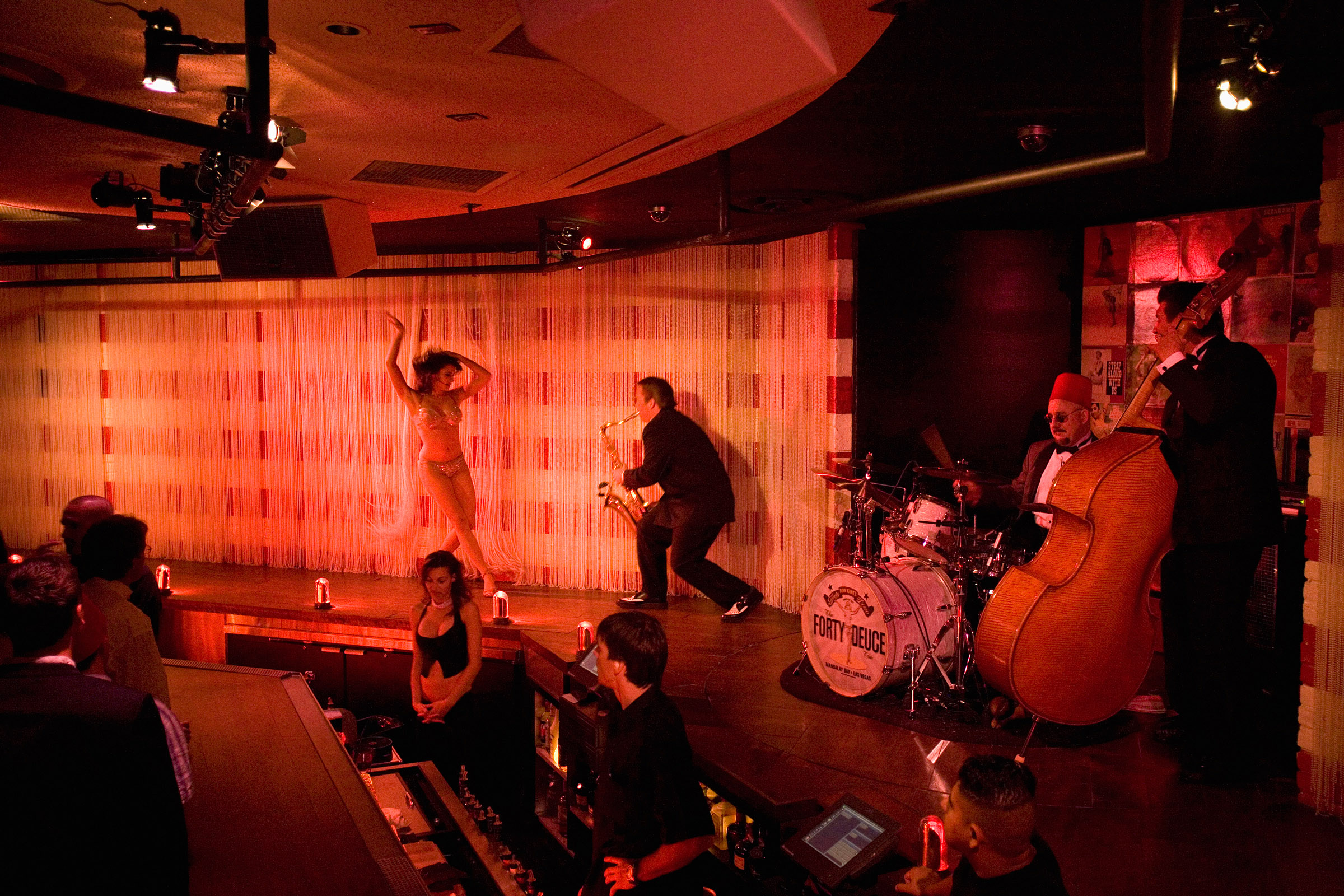
I’ve been thinking about what is it about the “eye of a hybrid” that clients are finding attractive. Forty Deuce burlesque club, Las Vegas, Nevada In a nutshell, it’s the eye of a master storyteller.  That’s because the medium of video is the perfect medium for telling a story. It encompasses movement, action, pace, rhythm and sound to engage, entice and feel.
I got a call this week for an editorial still photo assignment.  As usual, there was the customary business paperwork, but the client also provided a “shot list”.  I’ve been shooting editorial assignments for over 35 years and have had all kinds of direction. Sometimes, I’m given a writer’s manuscript and I’ve come up with my own shot list and sometimes I’m just told to come up with a variety of images.  But this “shot list” was intriguing because it read more like a shooting script for a video project.  As I read through the list, I could see how the person who had written it – had the “eye of a hybrid”.

Here are some of the suggested shots and “direction” from the list they provided:

(This is how I think and shoot in video. It has made me a better still photographer)

Cover it – Get comprehensive coverage – different perspectives, focal lengths, wide, medium and close-ups.  When I shoot video I will get a variety of angles as well as a variety of focal lengths because I know I will need plenty of b-roll to work with when editing the story together.

Get sequences – Get a variety of mini stories with people interacting. I am accustomed to thinking about how my “shots” will come together as part of the whole video that I’m working on.  Now, I approach a still editorial assignment like this as well. It’s kind of like of a moving pagination of imagery in my head.

Get storytelling images – With still photography I need to make sure those independent shots or moments in time also tell a story and stand on their own.  They can’t just be “wowy zowy” photos as Bob Gilka of the National Geographic used to say when I showed him an eye grabbing and colorful, abstract image.

Action/motion – make the images “feel”.  One that that motivated me to start exploring motion was because I was finding that it was difficult for me to convey the feeling of motion in a still image.  I’m finding that it’s easier for me to convey movement in a still image now because my eye is trained to look for it.

Give the images sound – (like a hammer hammering)Natural sound gives a video the element of reality.  It’s almost like it gives the video a well-needed extra layer or dimension.  When I’m shooting still images, I look for images that will illustrate the “sound” of an environment.

Shoot more – Give me more to choose from.  Again, you can never have enough b-roll when you are shooting video so I have naturally started shooting more on still photography shoots and my clients love having the abundance of choice.

How Shooting Video Can Make You a Better Still Photographer

So, many people identify me with video, they tend to forget, that I still create still photos and have had a l-o-n-g career in making them.  I’ve been shooting still images for over 30 years for magazines, corporate clients and advertising, as well as just shooting for the pure joy of doing it – without the need for an assignment or validation from anyone else.

Because so many people seem to assume that I abandoned my still photography when I started to shoot motion, I was surprised and delighted to get a note from a colleague when they spotted a still photograph that I had recently shot in New Zealand.

“Gail, I often hear your voice when I see your still images.  I can’t quite articulate what I mean by that, other than to say that when I look at many of your images, I hear your laugh and feel your smile and warmth come through”. 

He then wrote: “You photo reminded me of the following quote”:

“This is a hard world to be ludicrous in, with so many human beings so reluctant to laugh, so incapable of thought, so eager to believe and snarl and hate.

Kurt Vonnegut

“Thank you Gail for giving us a glimpse of joy and laughter”

I was quite touched by his note and it got me thinking about how my exploration into shooting motion may have played a big part in how I now approach shooting my still images.

 Here are a couple of things that I’ve identified:

  • Video has made me a better visual storyteller – That’s because the medium of video is all about storytelling and no other medium does it so well.  It’s made me think about how I will “tell the story” in one still image that is captured as a moment in time.  A good still image should not have to rely on a caption – to tell the story.
  • Video has made me think in sequences, with a beginning, middle and end –, This has been a huge boost when I’m creating a pagination of stills.  I think beyond the one image, and what will come before as well as after it, on the printed page. I plan and shoot images with that in mind, thinking not just about the parts of the story, but the whole as well.
  • My still images now have a voice – For me one of the most frustrating, yet fulfilling dimensions of video is sound.  Still images on their own, obviously don’t have audio, but they can have a voice.  When I’m shooting stills, I want the viewer to “hear” them as well as to “see” them.
  • When I’m shooting video I’m using all manual settings – I’m not on auto-pilot. This makes me think more about the desired look I want to achieve in the final image.
  • My still images have become more personal – more authentic. – Now, maybe video didn’t play a direct role in this, but it has pushed me into new territory. When that happens, habits get broken and make way for new possibilities.  In a way, it’s like a new start – a new beginning and that is always an exciting place to be, creatively. It has opened up my eyes to see things differently.

Perhaps most importantly, shooting video has reinforced the notion that my creativity, whether it be motion or stills, has nothing to do with the particular camera that’s in my hands.  The camera is just the facilitator for the stories and images that play out in my head.

At the end of the day – I am a photographer.

The NON Convergence of Still Photography and Video

Many people, myself included have written about the convergence of stills and video. In fact ever since Vincent LaFloret paved the way, shooting video in a cinematic way with the Canon Eos 5D Mark II, it seems like every still  photographer wants to shoot video with a DSLR . At the same time, high end “video cameras” – not still cameras that also shoot video – but a high end camera like the RED is capable of capturing stunning stills from frame grabs and they aren’t just good enough – they’re great.

I suppose in this sense one could argue that there is not only a convergence of our tools – meaning a camera that is capable of shooting high quality video and still images – but that it also may mean – the end of still photography. I don’t have a crystal ball but if one defines a still image as a “moment in time” then still photography will never go away. If you have a camera that shoots hi res video and can pick and choose the exact frame that fits your still image needs – then we need to realize that this is a convergence of our “tools”  not the the end of creating still imagery.

I love to point out the differences of still photography and video because for me, and many others who shoot both still photographs and video, we think differently when shooting these mediums.

  • A still image is a moment in time.
  • Video is time in motion
  • A still image is one that is meant to linger on – where one can take pause
  • Motion imagery is made up of  a variety of shots and sequences
  • Video provides more information – there’s sound and  movement
  • Still images leave more for viewer interpretation
  • Still images deliver a message visually
  • Video delivers a message utilizing sight and sound

Everyone of these differences requires us to put our minds in a different place. When shooting video, I need to think about what shot will come before and what shot will come after the shot I’m about to shoot. I have to think that way or I won’t have the goods to cut with in the editing room. The message or story gets crafted further in post production with music and interviews and each element plays its part in the feel and arc of the story.

When I’m shooting still images, I must tell the story in that one frame and timing is everything – it’s the “decisive moment”. So, one must ask is it the same – is it even fair – to grab that “moment in time” from a video clip where the camera operator didn’t make a conscious decision when shooting that decisive moment ?

The point is with everyone talking about “convergence” and taking that to mean the demise of still photography – I have to wonder. Is it the end of still photography? Personally, I don’t think so. I think that it merely means a convergence of the tools – not what we create with those tools.

Add to FacebookAdd to DiggAdd to Del.icio.usAdd to StumbleuponAdd to RedditAdd to BlinklistAdd to TwitterAdd to TechnoratiAdd to Yahoo BuzzAdd to Newsvine

Editing Tips for Multimedia and Video

A few days ago, I wrote a blog about “having a point” – or telling a story when you create multimedia pieces. Of course you have to have an overall idea and focus to start with, but below are some editing tips on how to make it come together in the editing room.

  • Edit with a purpose. Why are you making the “cut” where you are? Are you cutting on the action? Are you cutting on the beat of the music? What’s the reason behind your cut?
  • Set a pace or rhythm. Just like writing, where you have pauses in sentences with commas, edit your visuals to your narrative or interview soundbites, cutting after words and phrases.
  • Use image sequences to transition between different ideas and themes.
  • Let your images linger on the screen, giving time to breathe between them.
  • Cut on the beat or against the beat of music. Edit the music and let it become part of your piece, rather than just a background soundtrack.
  • Adjust the volume of your music – lowering it during interviews and raising it when there is no narrative or dialog.
  • Use audio fades between music cuts to soften the cut.
  • Insert room tone between cuts in interview soundbites, making the cuts less apparent.
  • Use interview footage sparingly – when introducing someone or when someone is expressing emotion on the screen.
  • Identify interview subject with name and title text in lower third.
  • Use text that’s easy to read and break it up over many slates. Leave the slate on the screen long enough to read twice.
  • Always start with your strongest images.
  • Don’t “move” all your still images – leave some static on the screen.
  • Don’t use dissolves.
  • When working with media from DSLR cameras, keep the media in the DCIM folders for logging and transferring into Final Cut Pro with the plug-in. If you have taken your media out of the DCIM folders – then create a new DCIM folder for the purposes of importing the media into FCP.

Remember to keep the story in mind at all times. When you think you have the story laid down in a rough cut – have friends over to watch it. Ask them what the story was. If they don’t know or can’t tell you, then you have more work to do.

Add to FacebookAdd to DiggAdd to Del.icio.usAdd to StumbleuponAdd to RedditAdd to BlinklistAdd to TwitterAdd to TechnoratiAdd to Yahoo BuzzAdd to Newsvine